
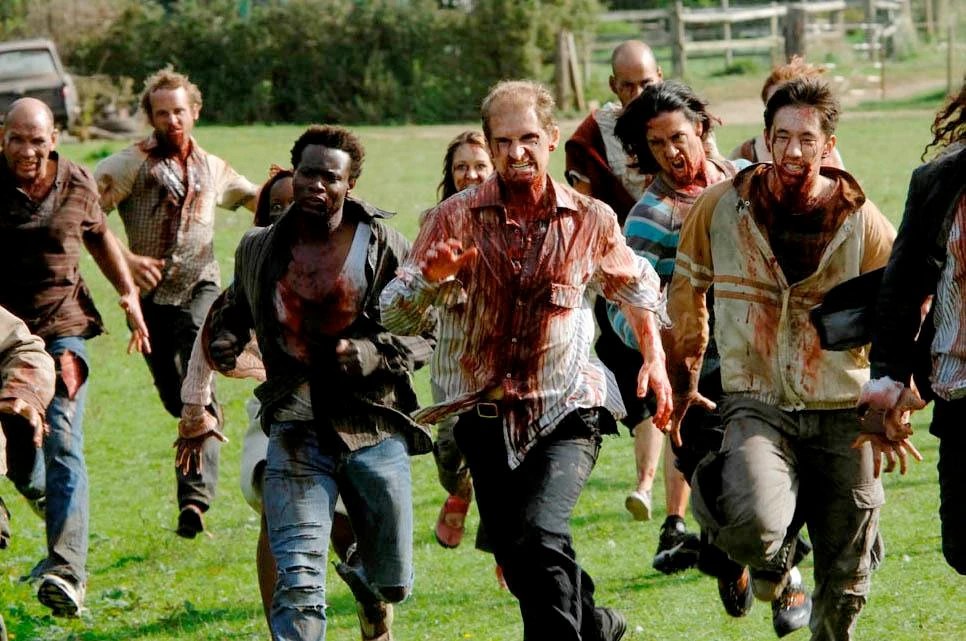
28 Years Later is the latest entry into the 28 Days Later franchise that jumpstarted the zombie genre over 20 years ago. While technically, the “infected” savages that attack humans are still human and not zombies, they are still deadly savages that quickly overran a nation. The premise in the first film is that an artificial virus derived from the Ebola virus is let loose from a lab and soon wipes out the United Kingdom. This happens in the space of about 28 days as the virus was highly contagious and fast spreading. Once infected, the victims of the Rage Virus, turn into mindless, rage-fueled savages in mere seconds and lose all their humanity as they kill anyone within reach. As terrifying as it seems, is this possible? Not just the virus itself, but the entire premise of the films which culminate in 28 Years Later with the UK and Ireland under permanent quarantine from the outside world.

One of the most disturbing aspects of the Rage Virus is by how quickly it turns victims into murderous monsters in seconds. But this is hard to believe. Sure, this is just a film which requires a suspension of belief, but viruses are not capable of having an instant effect in host bodies. Yes, it can rapidly spread in a host body and symptoms can appear quickly, but viruses need some time to manifest. In reality, an infected person will have some time, as short as hours, to remain cognizant and quarantine or kill themselves to protect their loved ones. So while it’s possible that viruses can quickly spread, as we saw with COVID-19, they would not overrun a country the size of the UK within a month. Not with symptoms being so noticeable. Maybe if the virus mutates to be less noticeable and a viral mutation is something that is shown in 28 Years Later.
Then there is the quarantining of the UK. Again as we’ve seen with COVID-19, cutting off communities, even nations won’t stop the spread of a virus. It will slow it down, but in the end, given how interconnected we are, the Rage Virus would’ve been much more widespread by at least in the timeframe of the first sequel 28 Weeks Later. Actually, this was shown to be the case at the end of that film when it’s revealed that the infected reached Paris, France. On the other hand, given how deadly the Rage Virus is, you can bet the world would have gone to great lengths to keep it from spreading. Also, since the UK is largely a group of islands, in theory the spread of the virus could at least be slowed down with a quarantine, but it would not last. Do not be surprised if future sequels have the virus spreading throughout the world.
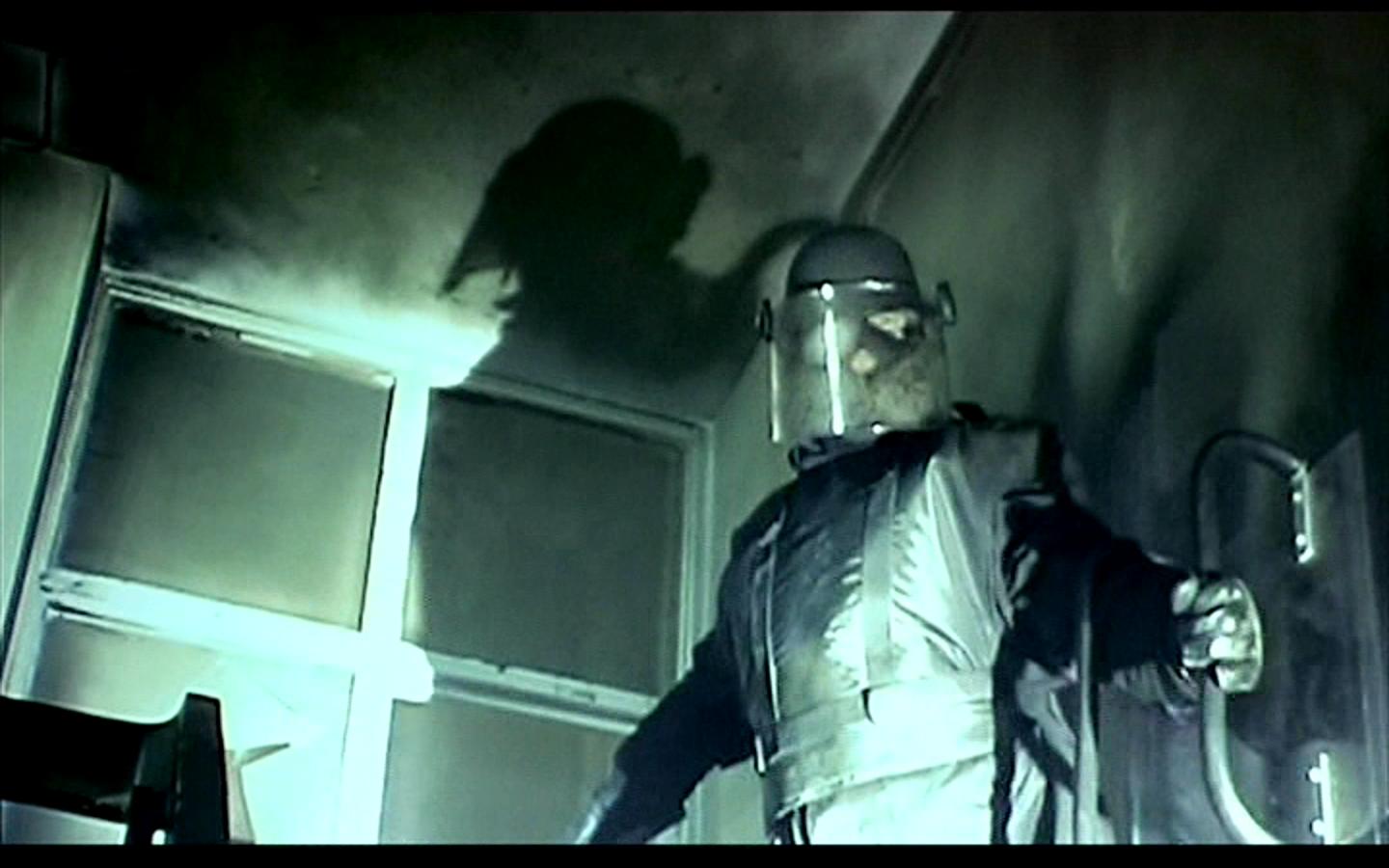
When it comes to curbing the virus’s spread, as most of us resorted to wearing face masks and did not deny the virus during the pandemic, people would have adapted to wearing full face masks to keep infectious fluids from entering the body. Of course, this would not protect them from the murderous wrath of an infected who would tear and bite them. Then again perhaps most people would have started wearing protective clothing or body armor. We actually saw one of the main characters doing this in the first film.
Another puzzling point in the franchise is that there seems to be little to no effort to fight the Rage Virus in the scientific field. Aside from a plot point in 28 Weeks Later where the U. S. Army doctor wants to study an asymptomatic victim, before everything went to hell, there is not any mention of attempts to combat the virus. As we saw with the recent real-life pandemic, our society threw massive resources to find a way to treat COVID-19 and were able to devise vaccines in months. Shouldn’t a vaccine have been developed to curb the Rage Virus, especially in the years that passed up to the latest film? We see in the sequels that it is possible to be asymptomatic of the virus and in 28 Years Later, an uninfected child is born from an infected mother. It would probably be difficult to find a cure as we see with AIDS and other viruses, but a vaccine would certainly have been created 28 years after the first film.
Is the Rage Virus and what happens after it spreads likely in the real world? Most likely, no. But the chances are not zero. The virus was artificially created in the film, so who knows if in the future some fool will create a similar virus and it gets loose in our world. It is a disturbing thought and part of the reason why the 28 Days Later films are so captivating while being horrifying.
 Starloggers
Science fiction, from The Andromeda Strain and Terry Nation’s Survivors to the 28 Days Later franchise, has presented plenty of examples of how a science-fictional viral outbreak might mirror a real one. If the quite identifiable human drama is predominating enough for the audience, maybe the scientific accuracy or lack of it goes pretty much noticed. I can still appreciate a scientific explanation if it fuels the human drama for finding a cure. The Andromeda Strain quite ingeniously achieved that much. When I look back on how 28 Days Later made its mark to begin with, I can grasp how it might have hit close enough to home for some audiences to spawn sequels. Thank you for sharing your analysis.
The Andromeda Strain set the standard for sci-fi disease films and is still relevant. Meanwhile, the 28 Days Later films hit a nerve for many viewers with its depiction of out of control viruses mixed with the zombie genre.
The zombie genre has always had much to say on human frailty and vulnerability. So it was interesting to see how 28 Days Later could take that to a significantly new level for its time.