Zombies Impossible

securing-yard

Ever since George Romero popularized flesh-eating zombies in his masterpiece Night Of The Living Dead, the creatures’ popularity have grown. Undoubtedly, zombies are the most popular monsters today, beating out the ubiquitous vampires.

The thought of a deceased loved one, reanimating into a decaying ghoul that only wants to consume you is a terrifying idea. It cuts down to our primal fears of being eaten alive by predators. Zombies have also come to symbolizes the supposed coming apocalyptic breakdown of civilization. As dreadful as all that sounds, we have to ask ourselves how likely is it that the dead will rise up and eat us?

From a scientific standpoint, there isn’t any way that will happen. Let’s think about the concept and go into the logistics.

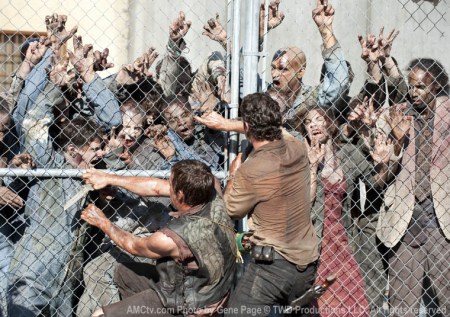
When a person dies, all their bodily functions cease to function. No blood is being pumped, the brain doesn’t send any signals via nerves to tell the body what to do and so on. Now when zombies are reanimated in these films and other media, a point is made that the zombies are immune to bodily harm. Shoot them, stab them,more brains they keep on coming. Remember that scene in Day Of The Dead when that loony scientist was reporting that the organs in a zombie weren’t working, yet the creatures were animated and hungry. Along the way in these stories, it’s stated that something in the brain is keeping the dead body going, which is why you have to shoot or bludgeon the undead in the head. This was seen in The Walking Dead episode “TS-19” where CDC scientist Dr. Edwin Jenner reported this fact to the show’s main characters.

On the surface it makes sense. Something, a virus, radiation, chemicals, nanobots, and or something else have taken over a dead person’s brain and are sending signals to the body to move and consume flesh. Cut off or destroy the brain and the problem is solved.

The problem is that taking over the brain isn’t enough. The mind needs a system to send out messages, hence the nervous system. A zombie’s brain has to be able to send signals throughout the body, via the spinal cord. Once a message is received, the body still needs energy and the means to move. That is where muscles and blood come in. The heart is the organ that pumps blood throughout the body and the blood transports nutrients and oxygen to mobilize the muscles enabling movement. So a zombie needs a functioning circulatory and nervous system. Therefore, humans should be able to shoot zombies in the heart and elsewhere to kill them.
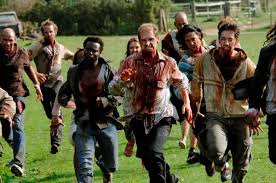
28 weeks laterA more realistic look at zombies are the creatures seen in films like I Am Legend and 28 Days Later. Deadly viruses are to blame for people being transformed into deadly killers, yet they never actually die, but instead mutate. And they can be killed through normal means. That would explain why the infected are able to run after their victims, unlike the lumbering undead in Night Of The Living Dead. In fact, in 28 Weeks Later (the sequel to 28 Days Later) humanity just waited for the infected humans in Great Britain to starve to death before attempting to resettle the decimated country.

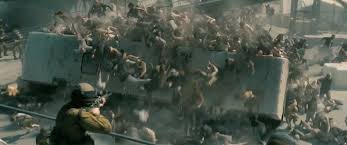
But one thing that doesn’t ring true in those films is how fast the virus mutates a person. Anyone who was infected in 28 Days Later would transform in seconds. This was also seen to varying degree with the walkers in The Walking Dead, the film version of World War Z and other zombie stories. Viruses can’t work that fast. It takes time for the invading viruses to replicate, travel throughout the body and infect the brain. Depending on where a victim was bitten, that person would have a few hours before transforming into a monster.

bicycle-woman[1]Now let’s look at their diets. Why would a zombie eat? To get energy that is needed by the body. This suggests that a zombie would need a working digestive system to break down and process the meat. We go back to the zombie’s body needing circulating blood to help in the process. Yet in these stories, people point out that the zombies aren’t processing the consumed flesh. If that is so, where does the flesh go? If they’re not processed the meat would just collect in the stomach until that organ would burst. We never see any zombies with bloated bellies, do we?
world war z

Of course, the conclusion is that zombies are something that belong strictly in the fantasy/horror realm. George Romero’s films and other works like Dark Horse Comics’ Zombie World speculate or flat out state that the dead are reanimating due to supernatural means. In other words,  magic spells, curses, demonic possessions, pick your poison. Based on how our reality works, zombies can’t exist except in the fervent imaginations of creators and fans. So anyone watching the latest episode of The Walking Dead or playing Resident Evil can relax…for now.

Lewis T. Grove
Gravity Won’t Let You Go

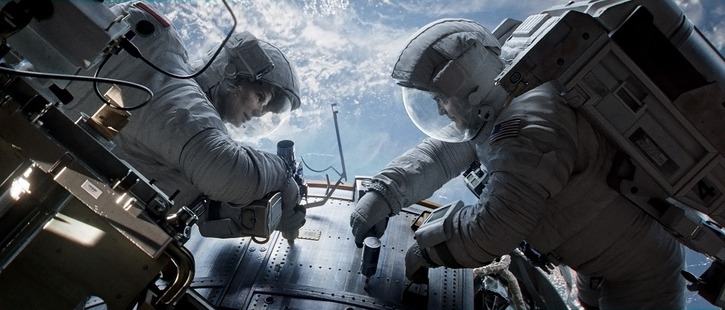
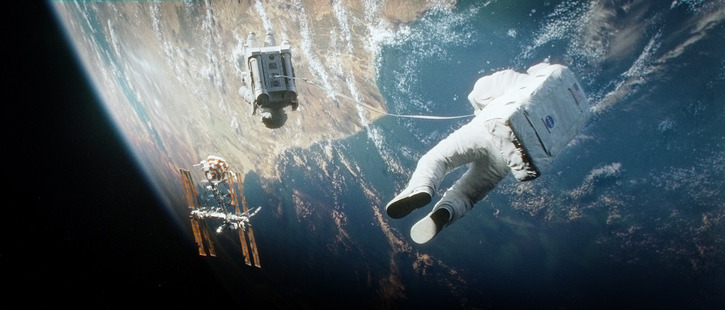
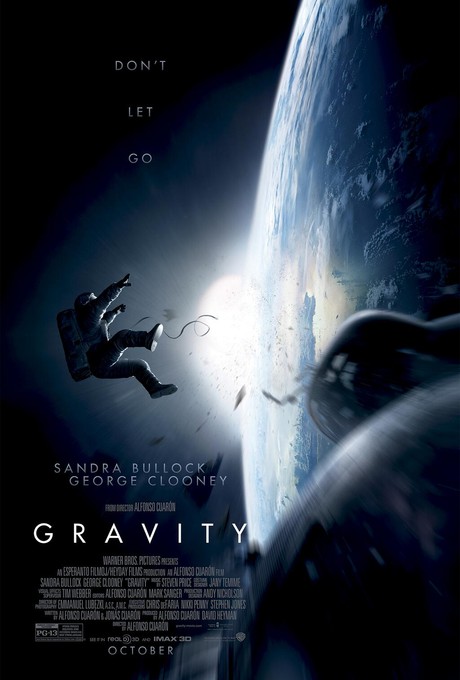
gpWhat Alfonso Cuarón, Sandra Bullock and George Clooney pull off with the film Gravity is nearly miraculous. It’s astonishingly accurate in its depiction of being in outer space, as we experience its dangerous but beautiful aspects.

Director Alfonso Cuarón triumphantly filmed this unforgettable movie experience starting with the very first shot. It’s one of his signature minutes-long takes that begins with the majestic vista of the Earth seen from orbit as a space shuttle slowly appears, seemingly out of nowhere. The spacecraft gradually fills the screen as we are introduced to Gravity’s main characters. Darting around the shuttle are Dr. Ryan Stone (Sandra Bullock), a rookie astronaut, who is repairing the Hubble telescope that is docked to the shuttle’s main bay. Darting around her and the ship, almost playfully, is retiring veteran astronaut Matt Kowalski (George Clooney), who still can’t get enough of the space experience. Stone, on the other hand, seems unimpressed with the magnitude of where she is and is somewhat withdrawn. Later in the film, we learn why.

GRAVITY

Before Gravity can turn into another one of those pleasantly relaxing IMAX films about space travel, the astronauts are abruptly warned about an approaching debris field from a destroyed satellite. Then the chilling terror begins as metal debris showers the shuttle. The astronauts are thrown about like rag dolls and the shuttle is damaged beyond use. These pulse-pounding scenes create a sense of terror since we see early on how fragile our heroes are and realize the enormity of their life-and-death situation. Despite the turmoil, Kowalski stays cool and collected, while Stone, like most of us, is in panic mode and for good reason. Somehow, she has to fight her terror and find a way to safely return to Earth.

Bullock gives one of her very best performances in this film. Through minimal dialogue and tension-filled sequences we feel an empathy for her. Stone is a rather nuanced person; GRAVITYwhen we first meet her she is passive and gives in to her feelings of helplessness. She almost seems innocent, and the moments when she is floating in a space station curled up like an infant drive this point home. But by the end of the film, she undergoes a rebirth of sorts as an intense, spiritual metamorphosis takes place. Stone develops an inner, steely resolve. She becomes a fighter, not in the screaming warrior sense, but as someone who can think clearly during a crisis, while displaying a indomitable fighting spirit.

The director uses a minimalist approach to express these themes. There aren’t any great mysteries or philosophical questions to ponder. It’s a movie about survival and finding that inner strength that most of us have to fight against the odds. In this case, Stone has to find a way to return to Earth despite overwhelming odds and her tenuous circumstances. That’s what is so inspiring about Gravity.

GRAVITYAlfonso Cuarón demonstrates why he is a filmmaker to be revered. His work drew me into the film and made me feel like I was there. There are so many little touches that sell the impression that the characters are in space. Things like the lack of sound, except what is heard inside the spacesuits, and the cramped interiors of the I.S.S. with all the floating objects. It’s so realistically rendered that a part of me wondered at times how he filmed all those scenes of weightlessness. It seems like Cuarón took a camera up to the I.S.S. and filmed segments in zero gravity. It’s needless to say that the special effects and cinematography are beyond flawless.

Are there flaws with Gravity? Of course, there are. But so does Star Wars, Avatar, 2001: A Space Odyssey and other groundbreaking movies. Without going into details, let’s just say that a careful observer can spot when dramatic licenses were taken during pivotal moments. But that’s just nitpicking, and such instances don’t approach the level of inaccuracies and plot flaws seen in other recent blockbuster films. Without sounding too hyperbolic, Gravity is a game changer. We see the majestic wonder of observing the Earth from above, but are made too aware of how precarious life is outside of the world’s protective influence. However, its core message was about the resiliency of the human spirit and the fragile but beauteous nature of life. That along with breathtaking visuals, auteur direction and bravura performances, is why Gravity won’t let you go long after seeing it.

José Soto

2012 Doomsday Scenarios: Month Eleven

earth

Ever since the first atom bomb was detonated people became aware of our capacity to bring about our own extinction. One of the big fears spawning from the splitting of the atom was the likelihood of scientific accidents bringing about our downfall. Being that we’re so prone to making mistakes, it’s easy to worry that such destructive power has fallen on our clumsy hands.

Doomsday Scenario No. 2: Accidents Happen

The idea of a loaded gun given to a child is an apt metaphor of this doomsday scenario. Many people feel that we as a species are developing way too fast in terms of science and technology before we’re ready to truly understand the implications of new discoveries. By that concern, they point to our recent history with nuclear power.

Nuclear Fears

One of humanity’s deepest fears is that of an accidental nuclear weapons exchange. While it’s true the world powers that possess nuclear weapons have stringent safeguards there are the nagging doubt about their reliability. Back in the 1990s after the Cold War ended it became notoriously easy to acquire nuclear weapons from the former Soviet Union. The thought of such WMDs in the wrong hands is horrifying. But there is the possibility of failed safeguards. This was seen in the film and book Fail-Safe where U.S. bombers are mistakenly sent to bomb the Soviet Union. Despite all efforts, Moscow is destroyed and to avert World War III, the U.S. president arranges to restore the balance by having New York City nuked. A similar situation happened in the Stanley Kubrick film Dr. Strangelove but to a more comedic effect. Accidental nuclear war has also been the subjects of many songs like Nena’s “99 Luftballons” (“99 Red Balloons”) or Men At Work’s “It’s A Mistake”. But what is deeply chilling is that many times military personnel and governments almost used nuclear weapons by mistake. One such incident happened in the mid 1990s when a rocket test launched in Europe was mistaken by Russia to be a nuclear first strike against them and Russian leader Boris Yeltsin was urged by his military to launch a nuclear counter-attack.

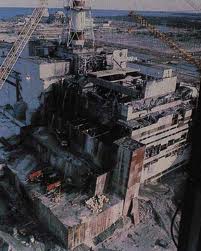
chernobylThen there are the problems with nuclear fission used as an energy source. For the most part, nuclear power plants are safe but the idea of a meltdown and the environmental impact is enough to keep most people leery about them. There was the Three Mile Island incident which thankfully ended well, but on the other hand we’ve had a nuclear meltdown in Chernobyl and most recently there was the Fukushima disaster in Japan. With Chernobyl that disaster left that city abandoned and uninhabitable to this day, while the impact of the Fukushima meltdown is still ongoing with an untold number of people having been exposed to deadly radiation.

Tomorrow’s Experiments

In the world of science fiction, wondrous discoveries and promising experiments often turn into worldwide disasters. In the film The Quiet Earth, a scientist working for a company worked on a global energy grid. What happens next is that the experiment makes all the people, except for the scientist and two other persons, disappear without a trace. At the end of The Quiet Earth, the scientist tries to undo the effect of his experiment but the result leaves him stranded in another reality by himself.

quiet earth

In Kurt Vonnegut’s book Cat’s Cradle, there is an artificial substance called ice-nine which is a type of water that is solid at room temperature. By the novel’s end, ice-nine is accidently released into the ocean which turns practically all the water in the world into solid ice and nearly all life on the planet ends a few days later.

Some scientific experiments and discoveries aren’t as world devastating as those found in The Quiet Earth and Cat’s Cradle, but they come close. In the book FlashForward, an experiment at CERN (European Organization For Nuclear Research) regarding Higgs boson particles unleashes a side effect wherein the entire world population briefly loses consciousness and experiences a few moments of the future. In the TV show based on the book, CERN isn’t responsible for the blackouts but rather a consortium of sinister scientists.

Then there are the dinosaurs of Jurassic Park. In the books and films, dinosaurs are brought back to life through cloning and chaos erupts. The humans are unable to control the dinosaurs in the upcoming Jurassic Park theme park, and this results with the unhindered dinosaurs driving out humans from the park. In the sequel book The Lost World and the film Jurassic Park III dinosaurs are multiplying and beginning to move past their island boundaries. This was dramatically shown at the end of Jurassic Park III when several pteranodons are shown flying out of their island. If dinosaurs were to invade other territories, they would decimate local flora and threaten humanity. Basically our world could turn into a monster film where humanity is at war with giant creatures.

Scientific WMDs

Sometimes the plot lines in these tales has it that the military is secretly testing new weapons or devices with unexpected results. The urban legend about the Philadelphia Experiment details how supposedly during World War II the U.S. Navy performed an experiment onboard the U.S.S. Eldridge to render it invisible but harmed the sailors onboard. A film based on the incident also called The Philadelphia Experiment took the premise a step further and the experiment threatened the Earth when it created a vortex.

The military is also responsible for the catastrophes that ravage the world in the movie The Core. It turns out that after testing a seismic weapon by the U.S. military, the Earth’s core stops rotating, which begins to collapse the protective electromagnetic field  surrounding the world. As the heroes in The Core journey to the Earth’s center to explode nukes that will restart the core’s rotation (!), electromagnetic storms raze the world and structures like the Golden Gate Bridge and the Roman Coliseum are destroyed.

the core 2

This fear about the military experimenting with secret weapons and technology is influenced by their secretive nature and the fact that so little is known about them. Take the H.A.A.R.P. (High Frequency Active Auroral Research Program) project for example. Reportedly, its purpose is to study the ionosphere for applications in advanced communications and surveillance. A lot of conspiracy theorists are convinced that H.A.A.R.P. is being used to create natural disasters like superstorms and earthquakes. Some even claim that it was used a week before the recent U.S. presidential election to create Superstorm Sandy so that the president had an opportunity to appear presidential and win the election. H.A.A.R.P. has also been used in fiction like The X-Files and in several Marvel comics.

Mini Holes and Goo

Some worry that uncontrolled or careless science experiments could lead to the decimation of food, water and oil supplies (in the case of water, this was presented in Cat’s Cradle). But two dominant concerns have arisen about consequential scientific research.

grey gooIn addition to Jurassic Park, author Michael Crichton also penned a book called Prey which was also about technology run amok. In Prey’s case, it was nanotechnology which worries many scientists. Nanobots are recognized as the next step in medical technology. Tiny self-multiplying robots that are invisible to the naked eye can be injected into patients to treat them for cancers and other ailments more effectively than with conventional methods. The same nanotechnology also has other applications but all of this is in the research phase.

One drawback with nanobots is that people may lose control over the self-replicating machines. This would result in out-of-control and rapid propagation. The nanobots will then consume all matter to self-multiply which results in the grey goo phenomenon. In that case unhindered, runaway nanobots will turn everything on Earth into shapeless masses. Grey goo has also covered in other novels like Wil McCarthy’s Bloom and Greg Bear’s The Forge Of God.

Another developing concern has to do with the Large Hadron Collider at CERN, which is the world’s largest particle accelerator. Many fear that the Collider can create mini black holes in the Earth as it collides protons together at near light speeds. Once the miniature black holes are created, they will grow and consume the Earth. However, this hasn’t happened and probably won’t. Scientists believe that any micro black holes will dissipate and actually these proton collisions take place naturally in our atmosphere and we’re still here.

 black hole 2

These micro black holes have plagued several science fiction stories and books like the novel Earth by David Brin is about an artificially created black hole that burrows itself in the planet’s interior which threatens the Earth. Other examples include Larry Niven’s The Hole Man and The Borderland Of Sol, Dan Simmons’ books Ilium and Olympos, and Martin Caidin’s Star Bright.

cern

It was also feared that the Collider would also create strangelets or strange matter. This subatomic matter is largely theoretical but if they were to be formed they would tear holes on our planet. The novel Impact by Douglas Preston has an alien machine that creates strangelets and the TV special End Day featured a scenario where a created strangelet destroyed the Earth.

2012 Doomsday Scenarios: Month Nine

As intriguing as it is to conjure up many doomsday scenarios, one common worry is the likelihood of them. But one scenario is especially disconcerting because it’s entirely plausible and based on recent events all too likely. What is it? What is the greatest threat? Why us, of course, and it need not be anything exotic, all the ingredients for an apocalypse are right here.

Doomsday Scenario No. 4: Our Own Worst Enemy

Take a pick, there are so many mundane yet deadly ways to bring about our downfall. The result may not necessarily mean humanity’s extinction or the end of the world but our way of life, our society, order itself can easily topple due to the following:

Social Unrest & Despots

Look around the news and see all the upheavals and strife throughout the world. The Middle East as always seems to be on the precipice of Armageddon with all the saber rattling, riots and terrorist attacks. Here in the West we think we’re somewhat inoculated from all that anarchy. But it’s always there. In the U.S. there is brewing antagonism between those on the left and right. It is a powder keg that isn’t going away. All it takes is for some protestor or anarchist or an overwhelmed officer or citizen to light the fuse. Back in the 1960s the controversial Vietnam War nearly led to a civil war in the U.S. In fact, throughout U.S. history there have been many tenuous moments with the worst being the Civil War. The country and others will always be dealing with keeping order. In Star Trek: Deep Space Nine there was a two-part episode “Past Tense” where Ben Sisko accidently time travels to the 2020s and takes part in the social movement called the Bell Riots. It’s stated in those episodes that the aftermath of that deadly period of time led to positive societal changes and ultimately the founding of the Federation.

Though social discourse can lead to positive changes, other times it can usher in dark historic chapters. Sad examples of that includes Germany, Cambodia, Bosnia and Rwanda where evil despots and their minions rose to power and unleashed horrendous genocides against others.

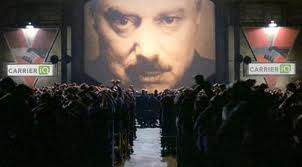
In science fiction, there are countless novels and films dealing with future dictators coming to power and creating totalitarian societies. One of the more famous sci-fi dictators is Khan from Star Trek, but the original show often made references to future human despots named Krotus and Lee Kuan. The most famous dictatorships is in George Orwell’s 1984, where citizens live under perpetual surveillance and paranoia. In Allen Steele’s Coyote novels, North America is ruled in the late 21st century by an extreme right-wing government and later by a left-wing power. Both of which spurred the migration to the habitable moon Coyote. The popular book and film The Hunger Games details the totalitarian country Panem, which arose from the ashes of the U.S. sometime in the future. In The Handmaid’s Tale, a theocratic dictatorship rules what was once the U.S. and persecutes its citizens. Another instance of harsh theocratic rule comes in Octavia Butler’s Parable Of The Sower where non-Christians are placed in re-education camps in a North America withered by poverty and scarce resources.

Scarce Resources

One underlying cause of war and societal stress boils down to resources. Right now, energy is the primary resource that is driving and hampering our civilization. There is the issue of oil and finding a viable alternative. The problem with oil is that it is becoming scarce and contributes to global warming. Until a successful alternative is found, we’re stuck with it. The Persian Gulf War was fought because Iraq’s conquest of Kuwait and threat to Saudi Arabia would’ve affected oil production and global economies.

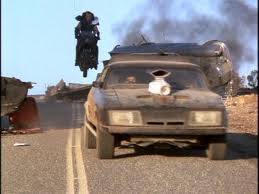
There is a special that often runs on the National Geographic channel called Aftermath: When The Oil Runs Out that explores what would happen if that event occurred. Basically, civilization is turned upside down as martial law then conflicts and famine strike the world.  In the Road Warrior, major battles are fought between factions over dwindling gasoline supplies.

But energy isn’t the only resource to fight over. There is food, land, and raw materials. Native Americans were driven off their ancestral lands by Americans in order to exploit the riches found in those lands. Avatar was of course a metaphor for what happened with the Native Americans. However, a now plentiful resource is on its way to becoming scarce and tomorrow’s most sought after commodity: water. Many predict that wars will be fought in the near future over dwindling water supplies. Cameron Stracher’s book The Water Wars depicts a future where the scarcity of fresh water decimates society.

Economic Meltdown

The U.S. is in the grip of Great Recession while Europe is facing an economic collapse. This is a genuine cause for alarm since the specter of an economically devastated nation will have a cascading effect. Just look at the Great Depression to get an idea of what will happen. Mass migration, social strife, riots, overwhelmed communities, the list goes on. And it’s a prime opportunity for radicals and dictators to gain power. Basically chaos will reign unhindered. Many sci-fi works like the TV mini-series The Fire Next Time predict that economic collapse will come from extraordinary events, with The Fire Next Time it was global warming. In the TV show Dark Angel, the U.S. was in the midst of a crippling depression caused years before by an EMP detonation. While those factors will indeed destroy economies, mundane events like the current housing crises can just as easily disrupt our global economy.

In Norman Spinrad’s novel Russian Spring, America is a nation in economic decline while Russia is experiencing an economic renaissance and has become the de facto super power in the world. The consequence is that some of the main American characters wound up leaving the U.S. for better opportunities abroad.

On the other hand, there is a fear that corporations will dominate our governments. Many would say that has happened already. Transnational corporations control the world in Kim Stanley Robinson’s Mars trilogy, and this concept was seen in the film Rollerball. If  governments give up sovereignty to companies, what would happen to our rights?

State Of War

The idea of world peace is a noble one, but no matter how many times it seems to be on the horizon, our dark side emerges. Today many are rightfully concerned by the threat of Iran acquiring nuclear weapons and a military response. It’s believed this could cause World War III. But the Middle East isn’t the only tinderbox to potentially ignite a Third World War. One could easily begin in Asia as China gains more power. Already there are new tensions between China and Japan. Then there is the issue of Taiwan, the U.S. is committed to protecting it from China. Plus, look at North Korea, the people there live in complete despair yet seem all too eager to die for their insane leaders.

The fictional Oceania in 1984 always seemed to be in some state of war as its citizens were constantly whipped up into a war fervor over that country’s rivals. H.G. Wells novel The Shape Of Things To Come, showcases a world under the grip of a decades-long, alternate account of World War II that lasted much longer than in real life. Eventually civilization collapses and is reformed under a so-called benign dictatorship that brings order.

Conclusion

The above are just some issues that our society faces. Humanity needs to undergo a fundamental change to purge dark impulses. Perhaps an evolutionary step is needed where it becomes ingrained not to give in to our hatred and fear. That will take a very long time and much more misery. Maybe a cataclysmic event will do it, which is what happened with the Vulcan culture in Star Trek. The Vulcans are renowned for their peaceful ways but only true fans know that once they were a barbaric race that nearly killed themselves off with nuclear wars. Only by turning to a new belief system, in their case logic, did they save themselves.

Looking back at history, it’s apparent that society is always straddling between order and peace and war and chaos. The fact that we’re aware of our faults and are trying to fight them is a reason to hope for a better tomorrow.

2012 Doomsday Scenarios: Month Eight

Ever since humans looked up to space and its vastness, it was easy to imagine possible dangers coming from above. And they had good reason because Earth has dealt with cosmic threats ever since its creation. Whether by meteors, gamma ray bursts or wandering black holes, the possibility of our destruction coming from outer space is unfortunately a very likely scenario.

Doomsday Scenario No. 5: Cosmic Threats

We as people cower and fret over major disasters that come our way. But trying to imagine how we would face certain extinction from astronomical events is difficult. That is because in our recorded history we haven’t dealt with that kind of phenomenon. What is really frightening is that if we found out tomorrow that any one of these threats were to happen, there is very little that can be done to cope with it. Here are some of them:

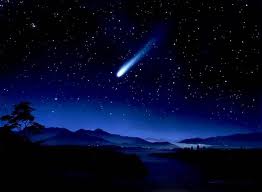
Comets and Meteors: This scenario is probably the best known cosmic threat. Every school kid knows that about the theory that a comet or meteor struck Earth and wiped out the dinosaurs 65 million years ago. Earth is constantly threatened by these celestial objects. In fact, meteors enter our atmosphere all the time. Luckily most are tiny and harmless and make great light shows. But all it takes is that one large rock or ice ball to wreck havoc. It happened most recently in Tunguska, Russia in 1908. Though no remains of the meteor or comet have ever been found, the destroyed forest stands as a stark reminder of how powerful the collisions can be.  Some notable sci-fi books about such impacts are Lucifer’s Hammer by Larry Niven and Jerry Pournelle, The Hammer Of God by Arthur C. Clarke and Moonfall by Jack McDevitt, which is a variant of the theme in that a comet destroys Earth’s moon and the lunar debris is what threatens our planet. For films, there is Deep Impact, Meteor and the much-maligned Michael Bay epic Armageddon. Even though there are efforts underway to catalog all the asteroids and comets in our vicinity and have an early warning system, a rogue rock or iceball can slip by our sensors. Oddly enough, thanks to our technology, this is one disaster that can in theory be prevented. Most now know that lobbing nukes at them won’t work, but if there is enough warning then it’s possible to use rockets or satellites to nudge the orbits of the threatening meteors and comets.

Cosmic Collisions: Some scientists believe that our moon was created from another planetary body colliding with Earth. This happened way before life emerged on Earth but if it were to happen today, it would be devastating. Life will not be able to recover. Our only hope as a species would be to do as the characters did in the book and film When Worlds Collide, build a spaceship to escape and settle elsewhere. In When Worlds Collide, the survivors were lucky that they found a habitable world to colonize. For us, our best bet is to head to Mars and try to terraform the planet.  Of course in these situations a lot depends on how much time and capability we have. In the film Melancholia there wasn’t anything that could be done to save humanity and the Earth when it collided with a rogue planet. One thing to note is that a near collision is enough to disrupt life on Earth by causing the world’s orbit to shift and radically altering our ecosystem.

Gamma Ray Bursts: This is caused by the death of a nearby star when the energy is released from the star’s poles. According to scientists this happens in our galaxy every day. If Earth were to be bombarded by these bursts the ozone layer would be depleted and all life would be subjected to lethal exposure to radiation. Thankfully the bursts are too far away to threaten us.  Scientists believe that any supernova occurring about 8,000 light years or closer to us would be a concern. Actually some scientists theorized that gamma ray bursts are responsible for the periodic mass extinctions in our planet’s prehistory. In the book Starfire by Charles Sheffield, our planet is threatened by the radiation unleashed when our closest solar neighbor Alpha Centauri undergoes a supernova. Of course, if our own star were to undergo a supernova, life on Earth would be wiped out. However, our sun still has a few billion years left before it decays. That is unless the sun undergoes that transformation by artificial means. but that would take technology way beyond what we have today.

Solar Storms: Our sun often ejects solar flares or radiation. Back before we became technologically advanced this phenomenon had little effect on us. We would (and still) get brilliant light shows a.k.a auroras in the skies. But today, the electromagnetic pulses (EMP) from a solar flare would fry our computers and machines’ circuits and render them useless. It’s unlikely our civilization would be able to rebuild circuitry and transformers fast enough to stave off a technological collapse. Knocking on wood, this hasn’t happened yet. The most powerful solar storm in the past 500 years happened in 1859 (a.k.a the Carrington Event) and resulted in auroras appearing as far south as the Caribbean. Our technology was in its infancy then and the only machinery affected were the telegraph systems in North America and Europe. Solar storms also pose a grave risk to manned spaceflight in that astronauts would be bombarded by lethal radiation during a solar storm. In the novel Aftermath by Charles Scheffield (which is the prequel to Starfire) Earth undergoes a severe EMP when Alpha Centauri undergoes a supernova. The electronics worldwide are fried and society has to cope with the sudden loss of power and prevent a return to the Dark Ages.

Traveling Black Holes: It’s not likely to happen in our lifetime or even centuries from now, but it is a danger to regard. Scientists believe that our galaxy if filled with wandering black holes, many of them are supermassive black holes; in fact, they occupy the galaxy’s center. Their immense gravity fields would literally rip apart a solar system. If one were to pass by our solar system, its effect would be felt years before it actually arrived. Just on Earth, the orbit would be shifted and massive. By the time the black hole would siphon off our world atom by atom, all life would be long gone. In science fiction, there are many stories about creating artificial black holes and the consequences. This was shown in the last Star Trek film where the villain Nero created a black hole on the planet Vulcan and destroyed it. Later in the film, Nero tries to create a black hole on Earth to destroy it as well. So far, our world is safe from black holes and these other phenomenon. But they should serve as a drive for us to become a true space-faring civilization. This is the best way to guarantee that we would survive far into the future.