2012 Doomsday Scenarios: Month Six

As we go about our daily routines one thing we may or may not pay heed to is the weather…unless it gets bad. Our civilization deals with constant disasters that strike us like hurricanes, volcanoes, tsunamis, blizzards and whatnot. But a very rare but real occurrence are the super disasters that threaten not only our way of life but all life on Earth.

Doomsday Scenario No. 7: Super Disasters Cometh

Ever since Hurricane Katrina, the deadly tsunamis in Japan and Southeast Asia and the cries about global warming, we’ve become all-too-aware about how nature can suddenly uproot us; sometimes without warning. There are several movies, cable programs and books that go into detail about these so-called super disasters. One of the mainstays on Syfy’s Saturday night schedule are movies about unlikely yet destructive disasters. While The History and Science Channels have a plethora of specials about these potential super disasters. Here are just a sampling:
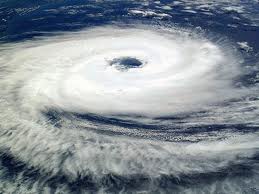
  • Hypercanes: As its name sounds, a hypercane is a super hurricane that could occur if ocean temperatures reach about 120 degrees Fahrenheit. What causes this would be asteroid strikes, supervolcanoes or climate change. Hypercanes could be large enough to cover an area the size of North America and would have wind speeds of over 500 mph. That is inconceivable to our thinking when a Category Five hurricane is one that has wind speeds of over 157 mph. The storm surges would devastate coastal regions leading to countless death and destruction, but what is really frightening is that they could last a long time. A recent movie that depicted a hypercane (though its accuracy has been called into question) is The Day After Tomorrow.
  • Megatsunamis: Think of those deleted scenes from The Abyss where the underwater aliens threaten humanity’s coastal cities with gigantic tidal waves and that gives you an idea of what to expect from a megatsunami. What would cause such a catastrophe would be impact events like a meteor hitting the ocean or a supervolcano. Many scientist believe that if the Canary Islands’ Cumbre Vieja volcano were to erupt the event would create megatsunamis that would devastate England and the North American east coast.
  • Global Warming Effects: The controversy over what causes global warning or climate change rages on but the impact is starting to be felt by Earth. Let’s flash forward a few decades or centuries from now and look at what is in store. First of all, the ice sheets in both poles melt completely. Not only does this doom indigenous wildlife there but will probably raise the ocean levels by about forty feet. That is enough to flood parts of Florida, Louisiana, London, Southeast Asia, Belgium and The Netherlands, and other low-lying regions. That would result in mass migrations, droughts, scarce resources and finally civil unrest. At first the world’s temperatures would rise, including the oceans, thus leading to hypercanes. But it has been theorized that ultimately climate change would bring about a premature ice age. The film A.I. Artificial Intelligence showed this happening to Earth most famously with those scenes showing a flooded Manhattan and later with an ice age occurring two thousand years later. The Day After Tomorrow inaccurately has an ice age happening seemingly instantly as the Earth suffers through the devastating effects of global warming.
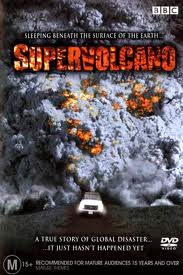
  • Supervolcanoes: This mega disaster is especially frightening for two reasons. We have very little means to accurately predict them, let alone locate all the supervolcanoes or calderas on Earth (scientists believe our planet may have as many as forty supervolcanoes). The other reason is because this event is fast and incredibly destructive. The Discovery Channel/BBC One aired a special years ago called Supervolcano about the eruption of the Yellowstone Caldera in Wyoming. Also Harry Turtledove penned a new trilogy of books about the same caldera (the first book out is Supervolcano: Eruption).The special presented a fairly accurate and frightening account of what would happen when the caldera erupts. First there will be constant earthquakes before the eruption. When the supervolcano blows, it will unleash toxic gas clouds and sulfuric ash that will blanket the skies over Earth for years. This in turns makes the air unbreathable and block sunlight. Obviously plant life will die off and food supplies will dwindle for the remaining humans who by then will be reduced to a meager stone-age level of existence. It actually happened 74,000 years ago in Toba, Sumatra. Fossil records show that humanity nearly went extinct from that event. But what curdles the mind is that the Yellowstone Supervolcano erupts roughly every 600,000 years and it turns out it is overdue. So it can happen in our lifetime.
There are many other mega disasters that Earth faces that are nearly incomprehensible because we haven’t experienced them (or they happened in our prehistory). Frankly if or when they occur there is very little we can do to prevent them. At that point the best we can do is literally hunker down and plan on surviving as a species.
2012 Doomsday Scenarios: Month Five

Sure we celebrate the exploits of our favorite superheroes on screen and print, but many comic book fans know about the dark side of having super powers. Whether they’re extremely powerful villains out to destroy the world or well-intentioned heroes who lose control over their powers, super-powered individuals are a world threat, at least in fiction.

Doomsday Scenario No. 8: Man and Superman

Of course, the real world isn’t threatened by superhumans. That doesn’t mean that it cannot happen sometime in our future. With advancements in bioengineering it is feasible to create super-powered humans, but that is a long way off. What is more plausible in the near future are new technologies to create battle suits like Iron Man’s. But that is another subject.

Who Watches Them? So what would happen if superhumans were to emerge? If artificially created for military use ala Captain America, this would set off a new kind of arms race as nations try to acquire their own super-powered operatives to keep up with rivals. Never mind trying to get nukes, having superhumans would give any country a definite edge. This theme has been explored somewhat in comic books and Captain America was a response to the creation of his enemy the Red Skull. In an obscure Epic mini-series called The One, the United States and the Soviet Union unleash superhumans against each other after nuclear weapons are made obsolete by an advanced entity. Also, who will keep them in check? Will the heroes in turn rule us as seen with the Squadron Supreme mini-series? It really becomes a case of “who watches the Watchmen?” as shown by DC Comics’ Kingdom Come and Watchmen or Marvel Comics’ Civil War. But even if the superhumans can be controlled what is their place in society? Can they fit in? It’s doubtful, since humanity tends to hate and fear what is different. Sadly, it is very easy to imagine a scenario where superhumans become ostracized; this will inevitably lead to conflicts between the superhumans and normal humans. The X-Men and its numerous spin-offs are perfect examples of this concept as the comic book mutants endured bigotry and hatred from humans. This hatred motivates villainous mutants like Magneto and frankly can anyone blame them for wanting to strike out against humanity? This ambiguity is what makes the X-Men comics so well-renowned. Is it possible to live harmoniously with superhumans? Well, humans have never been known to be the sharing type. It’s theorized that humanity drove Neanderthals to extinction from competition and humanity used its advantages to dominate the world. In that case, superhumans will have an edge over ordinary people and conquer or destroy us. Many supervillains try to do just that in comic books and movies.

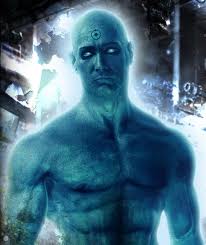
With Great Power… Another worrying aspect are superhumans with incredible God-like powers. One of the Watchmenheroes, Dr. Manhattan was the only person in that world that possessed super powers and had the ability to destroy it. Lucky for them, he wasn’t interested in doing that and had complete control over his ability. Unfortunately, the same couldn’t be said for Solar.

Art by Barry Windsor Smith

He was a superhero that appeared in Valiant and Dark Horse Comics (having made his debut in Gold Key Comics) and had the power to manipulate energy much like Dr. Manhattan. During the course of his story it was revealed that he accidently destroyed his universe and wound up recreating it. The inability to control power was also shown in the classic X-Men storyline the “Dark Phoenix Saga” where mutant telepath Jean Grey is unable to reign in her growing powers and ultimately kills herself before she wound up destroying the Earth (this was also to atone for her destruction of an alien sun which destroyed an alien society). The endowment of such power on one person is very terrifying. The bottom line is that powers do bring great responsibility but staying in control is very difficult. In these instances, power does corrupt. This was seen earlier this year in the film Chronicle where a lonely teenager develops telekinetic powers and becomes dangerous despite his sympathetic background. Even Star Trek very early in its history explored the aftermath of developing super powers with its second pilot “Where No Man Has Gone Before” and of course, the famous episode “Space Seed” that introduced the genetic superhuman Khan. Then there is the Star Trek: The Next Generation episode “Hide And Q” where Commander Riker is gifted with Q’s vast powers and learns some harsh lessons. Seriously, if such people were to come into existence there isn’t any way to counteract them. Humanity and the world will be doomed or at the least changed radically. Thankfully, this isn’t going to happen to us soon. But these comic book tales and movies and TV shows should serve as a reminder to us about the ramifications of having super powers.

2012 Doomsday Scenarios: Month Two

We’re in the middle of the cold and flu season but the next big pandemic is just around the corner. In fact, many doctors and scientists say we’re overdue for one.

Doomsday Scenario No. 11: The Killers Within

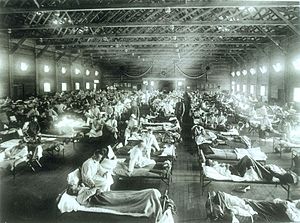
The idea of a pandemic is terrifying and in recent years we’ve dodged the bullet with the onset of AIDS, Ebola, SARS and recently with the H1N1 virus. The last really major pandemic that humanity faced was the Spanish Flu that occurred during World War I in 1918 and killed roughly 50 to 100 million people worldwide. The disease was so widespread and lethal to soldiers that many feel that the disease helped end the war. It is still considered to be the worst modern pandemic to strike humanity. The other horrible pandemic that threatened humanity further back in history was the Black Plague that wiped out a third of Europe’s population in the middle ages. But history is littered with waves of pandemics from assorted diseases like smallpox, typhus and many flu variants. Due to medical advances, we as a whole have been lulled into complacency until very recently. But recent events show that we are still vulnerable. Many fear that soon our antibiotics and other medicines will fail and we’ll be vulnerable to mass death just as our ancestors were.

Add to this fear is the specter of biological terrorism. This threat is all too real as seen with the anthrax terror attacks in 2001. It’s very feasible that some nut can obtain a rare flu strain or a manufactured disease and find a way to spread it to the populace.

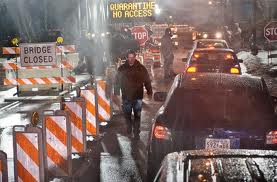
Quarantines and Breakdowns

It’s all too easy for our society to fall apart in the wake of a deadly pandemic if a cure or treatment isn’t quickly found. With modern transportation, diseases can spread rapidly and before the medical community is fully mobilized, the contagion could have manifested everywhere.

Social norms will be frayed as the disease spreads. People will demand quarantines and closed borders but that won’t do anything to stop the disease. Nevertheless, fear and distrust will worsen with the new migrations of those wanting to avoid contracting the disease. Unfortunately, many of these refugees will be carriers themselves. Additionally governments will try to futilely treat victims and provide adequate health services. It’s easy to imagine hospitals and care centers guarded by mobilized soldiers, who would also enforce curfews and quarantines. But eventually public services will shut down as the death toll climbs. With fewer and fewer guards, cops and soldiers to enforce the law, anarchy follows and thugs will gain control. Once the disease has run its course, there won’t be much of anything left. Humanity will be forced to rebuild.

Fictional Examples Of The Aftermaths

Such fears have been the basis of many science fiction films, books and shows that postulate on the impact of a true pandemic today and the aftermath. The basic storyline usually goes like this: a disease wipes out 99% of the human (and sometimes animal) population. A handful of survivors then struggle to rebuild civilization. Other times, the story is about the valiant efforts to contain an exotic disease before it spreads.

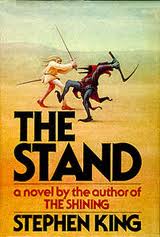
Some popular books that deal with this include Stephen King’s epic The Stand,  Michael Crichton’s The Andromeda Strain, Richard Matheson’s I Am Legend, Max Brooks’ World War Z , George R. Stewart’s Earth Abides, and most recently with Clemens P. Suter’s Two Journeys.

There are many films that deal with this subject. For example there are three adaptations of I Am Legend (the first being The Last Man On Earth and most recently the 2007 Will Smith version), which is about a plague that turns most of humanity into vampire-like creatures. In 28 Days Later (and its sequel) a man-made virus is accidently released that turns its victims in the U.K. into savage, zombie-like killers. Then there is George Romero’s film The Crazies about a bio-weapon that induces homicidal madness. The Andromeda Strain, about a scientific team trying to eradicate a supposedly extra-terrestrial disease, was made into a film released in 1971 and a recent mini-series. A similar approach was utilized with the 1995 film Outbreak but the disease was less exotic in origin but just as deadly. The Stand was made into a well-received mini-series in 1994 and there are efforts to have a remake done. Twelve Monkeys shows us a future where a disease has decimated the world and the protagonist time travels back to modern times to discover how the disease started. The most recent film about pandemics was Steven Soderbergh’s Contagion, which covers in dismaying detail how our society unravels with the onset of a killer virus.

With television there are few examples of a modern pandemic wiping out humanity. Two that come to mind are Jeremiah, which is based on a Belgian comic book, and starred Luke Perry as the title character. In Jeremiah, a plague has killed off most adults in the world and it picks up a generation later when the surviving children have now reached adulthood. The other one is BBC’s Survivors, a remake of a series produced in the 1970s, and the premise was about the usual plague survivors finding a way to work together and rebuild society. UPN’s The Burning Zone wasn’t about a post-apocalyptic world but rather about a team of bio-agents who dealt with deadly, unusual diseases including some engineered by a mysterious group who considered humanity to be vermin that needed to be eradicated by diseases.

Like many doomsday scenarios there isn’t any way to anticipate the onset of the catastrophe.  A pandemic could arrive tomorrow or in a few years, but it will happen. So it pays to be alert and safe though and to wash your hands often.

2012 Doomsday Scenarios: Month One

Okay it’s 2012 now, supposedly our final year according to the Mayan calendar. Earth was put on notice last week with that big solar flare that could’ve disrupted our satellites (but thankfully didn’t). With all the hoopla about the end of the world, one has to wonder if this is our swan song, how will it end? Here at Starloggers, we’re going to examine the possible doomsday scenarios each month as a sort of countdown.

Doomsday Scenario No. 12: The Aliens Are Coming, The Aliens Are Coming

Whether the E.T.s are friendly, cuddly visitors or blood thirsty, destructive invaders, it can’t be denied that once they do arrive life as we know it is over. So even if the first contact is benevolent our isolation in the universe is gone and with it the way we see ourselves. This scenario would bring about an end of our world. These are the possible scenarios:

  • Friendly, curious neighbors come by to say hello: Think of E.T. or Starman or the alien greys from Close Encounters Of The Third Kind. They mean well, they’re just explorers but their arrival is nonetheless disruptive. A variation of this scenario is explored in Carl Sagan’s book Contact (and film based on his work), where just the radio signals from another star changes our society.
  • We’re invited: Continuing to look at Contact, the aliens willingly or unwittingly give humanity the technology to travel to their world. This theme is also seen with the film Stargate and its TV shows, the John Carter books and Adam Strange in comic books.
  • The Enforcers: The gist of this scenario goes like this, aliens make first contact with humans. But we’re given a stern warning to clean up our act and play nice otherwise either  A) we can’t join their club or B) they’ll wipe us off the map. Option A was presented in Allen Steele’s Coyote universe books and option B was best shown with the classic The Day The Earth Stood Still.
  • Caught up in an interplanetary conflict: This is the plot for those Transformers films. We’re standing by innocently in our little blue world obsessed with nonsense like taxes, the presidential election and Snookie until BAM! A bunch of aliens from two different sides arrive and duke it out, using our planet as a battlefield. This also happened in the book The Last World War and the Aliens Vs. Predators films.
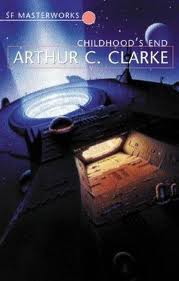
  • Aliens with a mysterious agenda: Most recently seen with the V series but a terrific example is Arthur C. Clarke’s novel Childhood’s End. What happens is that aliens arrive in mammoth motherships over major cities. They claim to be peaceful and want to help humanity but have another agenda they’re keeping from us. With V (the original show, the remake was pretty vague–could be why the show failed) the aliens wanted our water and us for food. In Childhood’s End the mysterious Overlords arrived to shepherd in our next evolutionary stage and move our descendants into the cosmos. Another example is that show from the late ’90s Gene Roddenberry’s Earth: Final Conflict, where the mysterious Taelons arrive on Earth bringing an era of peace but have secret motives for coming to our world.
  • This Petri dish Earth or we taste like chicken: The first V show and mini-series fit this bill. And if the UFO fanatics are to be believed, alien greys come to our planet to create human/alien hybrids and to conduct painful, invasive experiments on humans. On the big screen, this was best shown with the underrated film A Fire In The Sky.
  • INVASION: The tried and true plotline of alien contact. Aliens arrive in huge ships and proceed to stomp us into smithereens until the heroes in the third act find a way to beat them. Examples in film, shows and books are numerous and include War Of The Worlds, Independence Day, Battle: Los Angeles, Footfall, the Worldwar books, etc. A variation of the invasion scenario is the clandestine invasion where the aliens slowly infiltrate us until it’s too late. Check out the shows Threshold,  The X-Files, The Invaders, and First Wave (this invasion scenario is probably prevalent on TV for budgetary reasons) as examples. On film the most famous example is Invasion Of The Body Snatchers.

That’s one look at how 2012 could the end of the world as we know it (apologies to R.E.M.). One month down, eleven more to go; be prepared.

Special thanks to GEO for his contribution