Let’s Recast The Fantastic Four The Right Way

ff21It looks like 20th Century Fox is going ahead with their reboot of the Fantastic Four, and many fans are already up in arms over that development. They fear the reboot will be as bad as previous attempts and the negative reaction is so intense that many are hoping it stays in development hell rather than being filmed.

What is so troubling for them and myself included are the casting choices being mentioned in the trade papers. While Michael B. Jordan as the Human Torch is an intriguing, though out-of-left-field possibility, some like Miles Teller as Mr. Fantastic just left me wondering what the hell is going on with the casting director. Has anyone looked tellerat this actor? He looks like a dweeb! I’m sorry but nothing about Teller gives the impression that he is a gifted scientist type. And given how young he is, it’s pretty clear that the filmmakers are going to emulate the Ultimate Fantastic Four comic book, which if you ask me wasn’t good at all. The comic book isn’t even being published anymore! Making the superhero team a bunch of child prodigies was a mistake and took out vital parts of what makes the team so fun. See, they’re a family unit, with Reed Richards as the father figure, Ben Grimm as the grumpy but lovable uncle, Sue Storm as the mother figure and her brother Johnny being the impulsive kid in the bunch.

But that doesn’t seem to be the way that Fox is going. Getting a bunch of young actors for these roles is more important to them since they want the movie to appeal to the teenagers. The problem is that the kind of teenagers they’re trying to attract don’t care about the Fantastic Four and probably wouldn’t see the reboot anyway. Then many of the teenagers that do care about the FF will probably be so turned off by the radical changes that they will boycott the film.

Let’s pretend that we’re actually in charge of casting the Fantastic Four reboot. Forget about trying to get the popular young actor and let’s try to stay faithful to the comics. After all, the Fantastic Four put Marvel Comics on the map with their novel approach to super heroics. Now I know that the following choices won’t even be considered, but they’re who I would pick for a new Fantastic Four film.

hammReed Richards/Mr. Fantastic: Going with a twentysomething is the wrong approach to Marvel’s premier scientist. Reed is the 21st century equivalent of an Einstein and he should look the part. As the leader of the Fantastic Four, Mr. Fantastic should be portrayed by a more mature yet fit actor. There are many excellent choices out there for the role and even Ioan Gruffudd did a decent job as Mr. Fantastic. For the reboot Jon Hamm would be fabulous (pun intended) as Reed Richards. He’s the right age for the part (Reed is roughly in his early forties), looks intelligent and emotes a grounded and mature quality needed for the leadership role. Other choices: Casey Affleck; Misha Collins

Sue Storm/Invisible Woman: Jessica Alba, the previous actress to portray Richards’ fiancé then wife rankled many alice evefans who didn’t think she was right for the part. Putting aside her ethnicity, Alba lacked that motherly/big sister/peacekeeper quality needed for the role, but she wasn’t the worst casting choice–more on that later. Now hands down, Alice Eve, most recently seen on Star Trek Into Darkness is a perfect pick for Sue Storm. She looks the part and has the acting chops to pull off the role easily. Eve can do the more brainy and modern interpretation of Storm seen in the comics and can be a tough lady when needed. Other choices: Evan Rachel Wood; Blake Lively Continue reading

Summer Of 1982 Revisited


It’s strange to say but even back in the spring of 1982 many genre fans knew that summer would be special when it came to movies. Unlike previous summers, it seemed as if many film releases were catered to genre fans and that was a correct assumption.

Conventional wisdom has it that the summer season begins with the Memorial Day weekend. While that’s true for many aspects of summer, for the past few years it seemed as if the summer movie season didn’t begin with that holiday but on the first weekend of May. That reputation began with the release of several movies based on Marvel superheroes, which by the way, coincides with Free Comic Book Day. But even back in 1982, the summer movie season began in mid-May with the release of Conan The Barbarian, Arnold Schwarzenegger’s first big hit.

While previous summer movie seasons boasted huge genre hits like The Empire Strikes Back and Alien, often there weren’t many genre films released in that time period. 1982 was the first year that the summer schedule was full of films that would appeal to fans of sci-fi, fantasy and horror. Since 1982, many summers featured a plethora of genre films; some were big hits, others didn’t do well and that continues to this day (case in point, the runaway success of The Avengers and the dismal box office performances of Battleship and Dark Shadows).

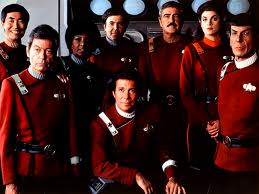
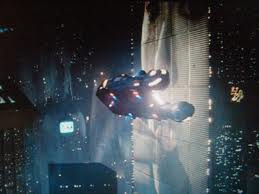
What makes the summer of 1982 so memorable for fans is that not only was it the first time there were many films to choose from but that so many of them are classics. For instance, Star Trek II: The Wrath Of Khan is considered to be the best Star Trek film to this day, then there’s Blade Runner, Ridley Scott’s masterpiece about a human hunting down rogue replicants in a decaying, future Los Angeles. Or there are the two opposing alien visitation films that are as different from each other as night and day, and are both classics, Steven Spielberg’s E.T. The Extra-Terrestrial and director John Carpenter’s remake of The Thing. The sad thing about these two films is the general audience’s reaction to them. While E.T. won universal acclaim and became the biggest box office hit until the mid-90s, The Thing was scorned by critics and audiences. In fact, it made its debut near the bottom of that week’s top ten and disappeared from theaters quickly. It’s unfortunate that people back then weren’t open to a dark and horrifying movie about an alien invader because of the happy feelings they were getting from a stranded, friendly alien and his buddy human boy.

Blade Runner suffered a similar fate, while its opening was better than The Thing’s, many viewers and critics didn’t take to Scott’s moody, future noir tale. With Harrison Ford as the lead, fresh off his breakthrough hit Raiders Of The Lost Ark, many expected a similar rousing adventure film. But both Blade Runner and The Thing had happy endings as many discovered the films on cable and home video, elevating their statures from cult hits to genuine masterpieces (Blade Runner actually made AFI’s list of 100 Years…100 Films, along with E.T.).

Of course, there were a few stinkers and some films that were generally good, but didn’t leave a lasting impression. The most infamous stinker is Megaforce, a poor man’s G.I. Joe directed by Hal Needham (who helmed those awful Burt Reynolds car chase films) and it is laughably bad. Then there’s this terrible Scott Baio comedy called Zapped about a student who gets psychic powers and the less said about it the better. Meanwhile, some underrated genre films worth looking out for are Clint Eastwood’s Firefox (about a fighter pilot who steals an advanced, thought-operated Soviet plane), and Don Bluth’s first animated film The Secret Of NIMH (astonishing, Disneyesque animation highlighted this tale about a wood mouse and rats with advanced intelligence).

While the rest of that year featured some great films like The Dark Crystal, the summer of 1982 will always be fondly remembered and the milestone to compare with other summer movie seasons. The following are some of the more noteworthy films that were released that summer and thrilled fans thirty years ago. If you haven’t seen any of them, check them out.

Conan The Barbarian, Poltergeist, Star Trek II: The Wrath Of Khan, E.T. The Extra-Terrestrial, The Thing, Blade Runner, Tron, The Road Warrior

José Soto

For Dakota

Top Ten Sci-Fi Movie Monsters


Cloverfield_monster_reveal

When it comes to monsters, the science fiction genre has many worthy contributions. Whether they’re from outer space, developed in a lab or a byproduct of our amok science, sci-fi monsters have thrilled audiences for decades and will continue to do so. Here’s the ten best sci-fi monsters on film.

10. Giant Ants (Them!): Sure they look hokey by anyone’s standards, but that spooky noise the behemoth ants created is memorable and the film (about efforts to destroy deadly gigantic ants created by nuclear radiation) is one of the best examples of giant animal monster movies from the ’50s.

9. The Judas Breed (Mimic): Guillermo del Toro directed this underrated monster movie about a genetically engineered insect (a cross of a praying mantis and termite) that evolves to feed on humans in subways and alleys. The creepy insects do this by appearing somewhat humanoid in the dark to lure their prey. Vicious, deadly and hard to kill, the Breed are a classic.

8. Ymir (20 Million Miles To Earth): An alien egg is brought back by a space expedition to Venus and hatches in Italy. The hatchling soon grows to humongous proportions and goes on a rampage in Rome in this Ray Harryhausen masterpiece.

7. The Creatures from The Mist (The Mist): Yeah the ending was too bleak but the film’s extra-dimensional creatures that plague the trapped shoppers in the supermarket are truly terrifying. An army experiment breaks the seal between dimensions unleashing a mist filled with assorted deadly carnivorous life forms that spit out corrosive webbing, lay eggs on human hosts and are just outright nightmare inducing.

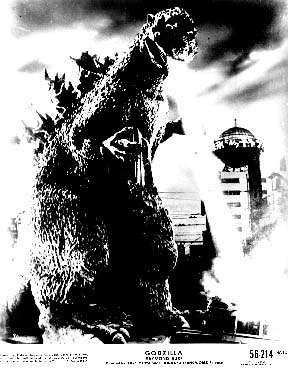
6. Godzilla (Godzilla, King of the Monsters): The ultimate statement of nuclear radiation being bad for the environment as atomic bombs awaken and mutate a gargantuan dinosaur that destroys Tokyo with its atomic breath and destructive might. The original is still the best and most dire film of this genre. Let’s not talk about that abomination put out in 1998 which starred that Ferris Bueller guy.

5. Brundlefly (The Fly): David Cronenberg’s AIDS allegory cleverly updates and amps up the horror in this remake of the ’50s film. Jeff Goldblum’s scientist Seth Brundle has his genes accidently spliced with a fly when he teleports himself, and the result is a hideous amalgamation of the two.

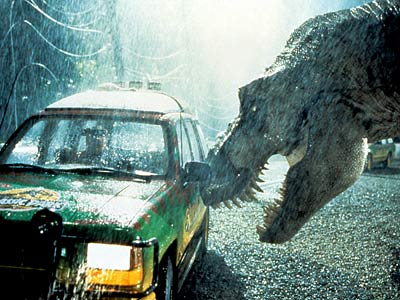
4. T-Rex and Raptors (Jurassic Park trilogy): Let the extinct stay extinct! That message comes across in this Steven Spielberg classic about cloned dinosaurs that break loose and eat people in a soon-to-be-opened island theme park. The effects were groundbreaking then and are still impressive as the T-Rex is shown to be the badass that it was and the velociraptors nearly upstage the tyrant king with their cunning and agility.

3. Frankenstein’s Monster (Frankenstein): Boris Karloff’s quiet and eerie portrayal of the creature created out of dead human body parts by Dr. Frankenstein is still unsettling. Some thanks should go to Jack Pierce’s makeup and the atmospheric directing by James Whale in this classic statement of humanity’s folly in trying to control nature through science.

the-thing-movie11

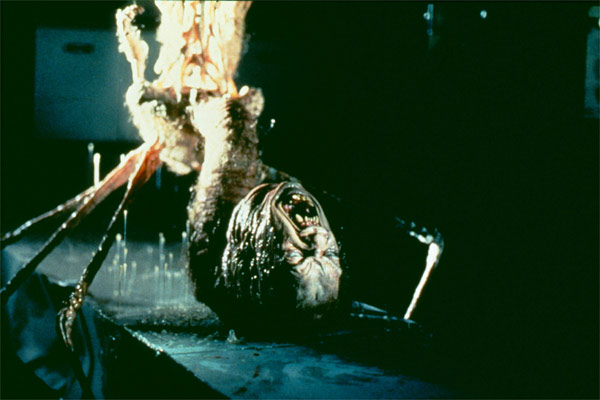
2. The Thing (The Thing): John Carpenter’s 1982 remake of Howard Harwks’ film from the ’50s set a standard in moody paranoia and gross creature makeup effects. Not having a defined shape, the chameleon-like alien found by a doomed Antarctic research teams mimicked any life form it encountered. Including humans. But when the movie shows the Thing in-between transformations as its body disgustingly twists and contorts, it strained any viewer’s fortitude.

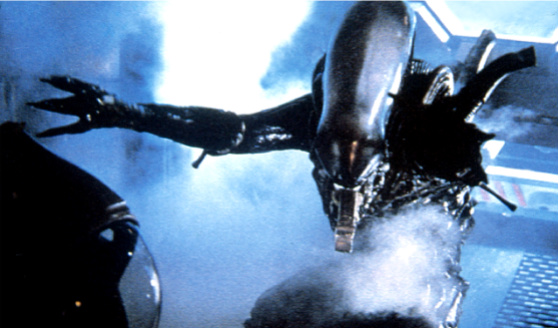
1. Alien Xenomorph (Alien films): The uber-space monster. Designed by H.R. Giger, this creature truly looked alien with its elongated skull, double mouth, exoskeletal structure and acidic blood. It’s a unique iconic look that few monsters have been able to match. Add to the mix, the fact that it can blend into its surroundings and it’s just plaine frightening.  Of course, what brought the movie houses down was the bloody debut of the serpentine infant alien that literally burst out of poor John Hurt’s chest.

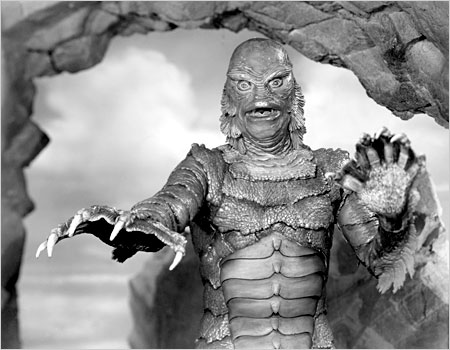
Honorable Mentions: The Cloverfield Monster (Cloverfield),  the alien Predator (the Predator films), Hulk (the Hulk films), the Mutant Bear (Prophecy), the Bugs (Starship Troopers), the Mutant Baby (It’s Alive), Rhedosaurus (The Beast From 20,000 Fathoms), and the Gill Man (Creature From The Black Lagoon).

José Soto

The Thing Continues To Chill Audiences

The cinemas may be flooded with prequels, sequels, remakes and reboots, but The Thing is a worthy companion to John Carpenter’s 1982 classic film of the same name. Both films follow the source material (John W. Campbells novella Who Goes There?) more closely than Howard Hawks’ film from the ’50s.

The storyline is fairly simple, American  paleontologist Kate Lloyd (Mary Elizabeth Winstead) joins a Norwegian research team in Antarctica when the Norwegians uncover a crashed alien craft frozen in the ice. They excavate the ship and bring back the icy remains of an extra-terrestrial that thaws out and displays the ability to genetically mimic any life form, including humans. Much like Carpenter’s film, this one plays a suspenseful and paranoid case of cat and mouse as the humans are picked off one by one by the Thing.

It was a wise move to place the movie in the Norwegian station since it helps make this film a good companion piece to Carpenter’s version. And equally wise to hire Dutch film director Matthijs van Heijningen, since portions of the film were filmed in Norwegian, and someone with equal Proto-Germanic language and cultural background would understand Norwegian characters, the movie cast and culture.  There are some good nuances with the Norwegians by having them converse among themselves in their native language since it helps make this film different while adding to the paranoia that pervades the humans.

Both versions deal with two reactions to our human situation; 1) the group paranoia of who is the enemy and 2) infectious diseases. The paraonid theme from the ’82 version reflects aspects of the Cold War of not knowing who is the spy. With the 2011 version, today’s identity theft problem is similar to what the Thing does. The difference is the Thing is a biological ID thief. Regarding diseases, back in 1982, AIDS was just emerging and most of the world was uninformed about the disease. Today we know AIDS spreads through bodily fluid contact which is how the Thing replicates and takes over humans in the 2011 film version.

But the real highlight was Winstead’s performance who has the same inner strength that Sigourney Weaver had in Alien. Much like Ripley, Lloyd at first doesn’t seem like a natural leader, but over the course of the film, her expertise helps the team to survive and more and more the leadership role is entrusted upon her. Her cleverness helps her in determining who is human or not just by observation and her quick theories of what the Thing is doing, proven right during the course of the movie.. Lloyd is a driving force which illustrates how this film is character driven.

Other standouts are the gorgeous cinematography which makes the scenes look like a National Geographic IMAX film and the music by Marco Beltrami. His score perfectly replicates the ’82 soundtrack. We also get to see the inside of the ship, we see a detailed autopsy and how on a cellular level the Thing replicates, and the effects were a fine blend of practical effects and CG.

This version also helps fill in the blanks and show how the aftermath that Carpenter’s characters discovered came to be. Be sure to stick around during the end credits to see how this film leads to the ’82 version.

Overall, this movie is on par with Carpenter’s classic thanks to Winstead’s character and her performance.

GEO as interviewed and written by Jose Soto