
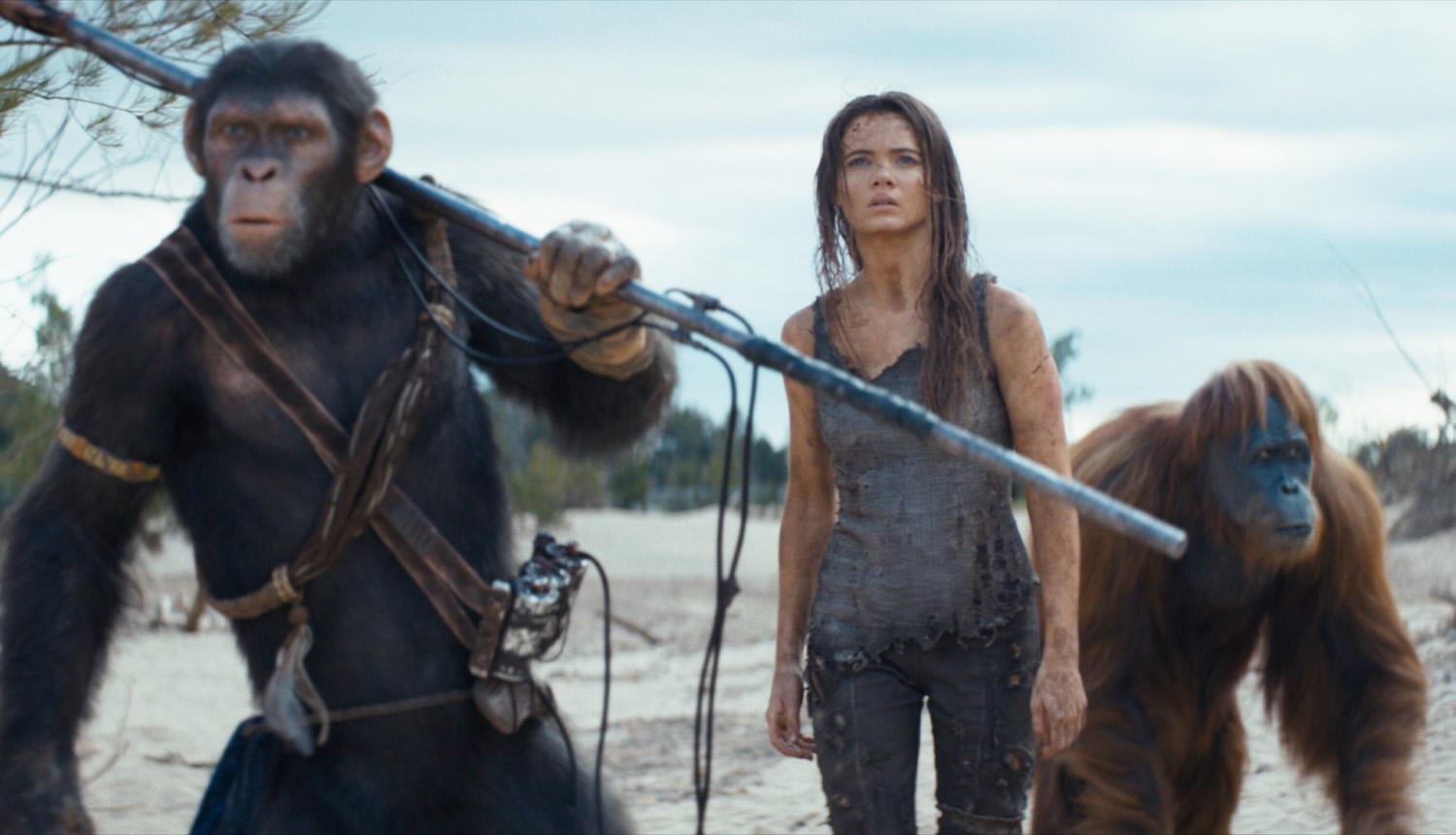
Kingdom of the Planet of the Apes is the latest entry of the long-running Planet of the Apes franchise. The film is both a continuation of the previous trilogy that came out in the last decade while being a new starting point for a new trilogy that expands the story of the Apes franchise. There will be spoilers for Kingdom of the Planet of the Apes.
For anyone who hasn’t seen any of these films, the world of Planet of the Apes is one where humans have been supplanted by intelligent apes capable of speech, while humanity has become animalistic. The previous trilogy, consisting of Rise of the Planet of the Apes, Dawn of the Planet of the Apes and War for the Planet of the Apes, served as the origin story for the franchise. The trilogy provided the background for how apes gained human-level intelligence, which came about from efforts to find a cure for Alzheimer’s Disease. The supposed cure, in the form of an artificial retrovirus, instead increased the intelligence of apes. But the retrovirus had the opposite effect on humans. First it spread like wildfire and killed millions of people and caused civilization to collapse. Then the virus mutated and caused the remaining humans to lose their intelligence and the ability to speak, and cemented the apes dominion on Earth.
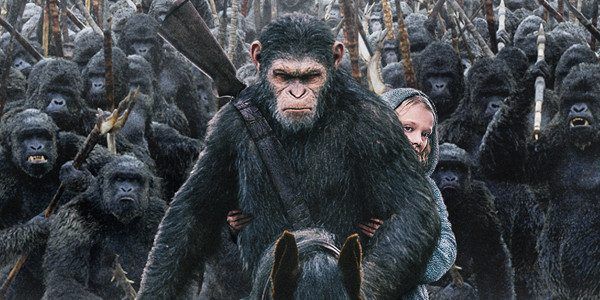
The main character in the trilogy was Caesar (in a brilliant motion-capture performance by Andy Serkis), who was the first hyper-intelligent ape and the leader of an Ape Rebellion against the humans who tormented his species. Eventually, Caesar tried to live a quiet life as the leader of his ape colony in the forests beyond human civilization, but conflict arose between the two species. By the end of the last Planet of the Apes film, Caesar was able to defeat the humans that enslaved his fellow apes and led them to an oasis to start a new colony, but he died from wounds inflicted during his battle with humans.
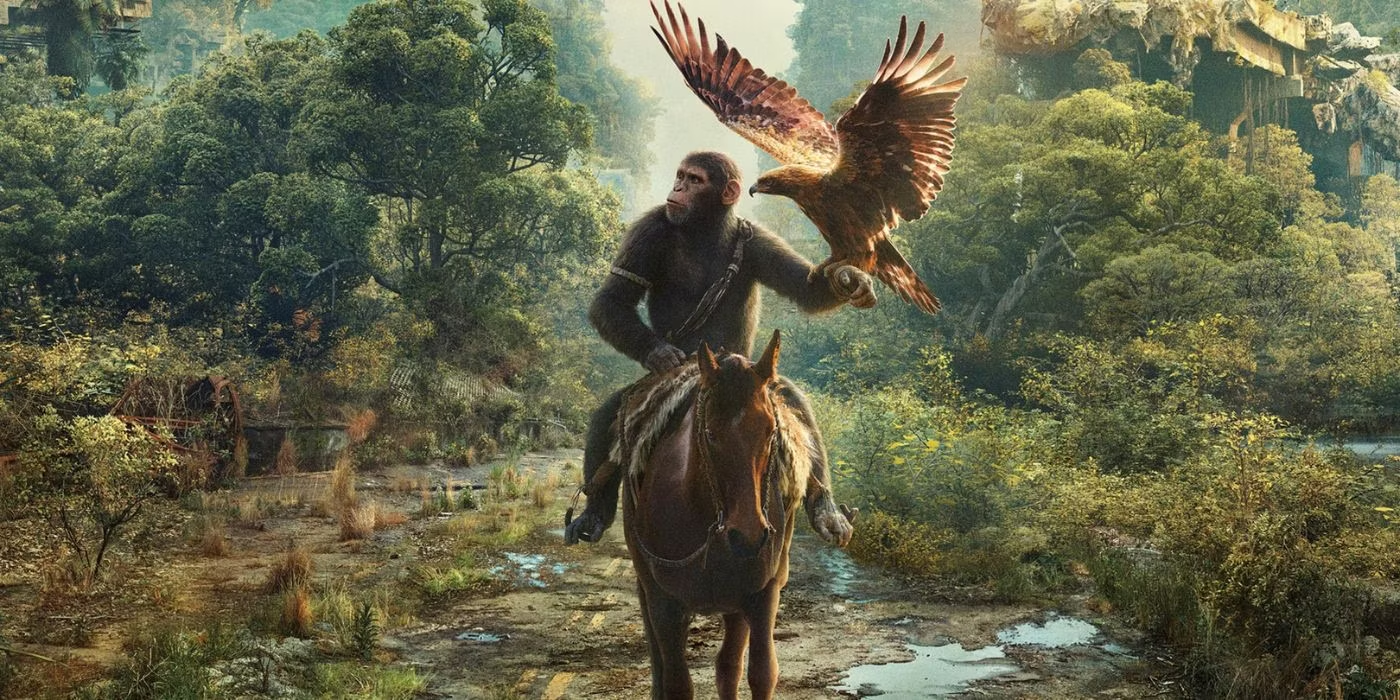
Kingdom of the Planet of the Apes takes place “many generations” after the death of Caesar and apes have evolved further and multiplied while transforming from a hunter-gatherer society into an agricultural one. Meanwhile, humanity has devolved into mute, animalistic savages, however, Noa (Owen Teague), the lead ape character, meets Mae (Freya Allan), a young human woman who is actually intelligent and able to speak. Eventually it is revealed she comes from a human outpost that is quarantined from the world and located near a satellite base. These humans are still intelligent and by the end of the film have begun efforts to communicate with other humans who have not succumbed to the virus in order to reestablish human civilization. Obviously, this will set up a future conflict between humans and apes if Mae’s settlement is able to jump start civilization.
One of the later elements that made the films in this franchise so compelling was the eternal question of humanity being able to co-exist with another society, which was an obvious, and sadly still an ongoing, allegory to our inability to co-exist with each other. This theme was vaguely hinted at in the second Apes film, Beneath the Planet of the Apes, but was the main focus in the films that followed starting with Escape From the Planet of the Apes. After the violent revolution seen in Conquest of the Planet of the Apes, Battle for the Planet of the Apes offered the hope that both species were able to co-exist peacefully, though that was debatable.
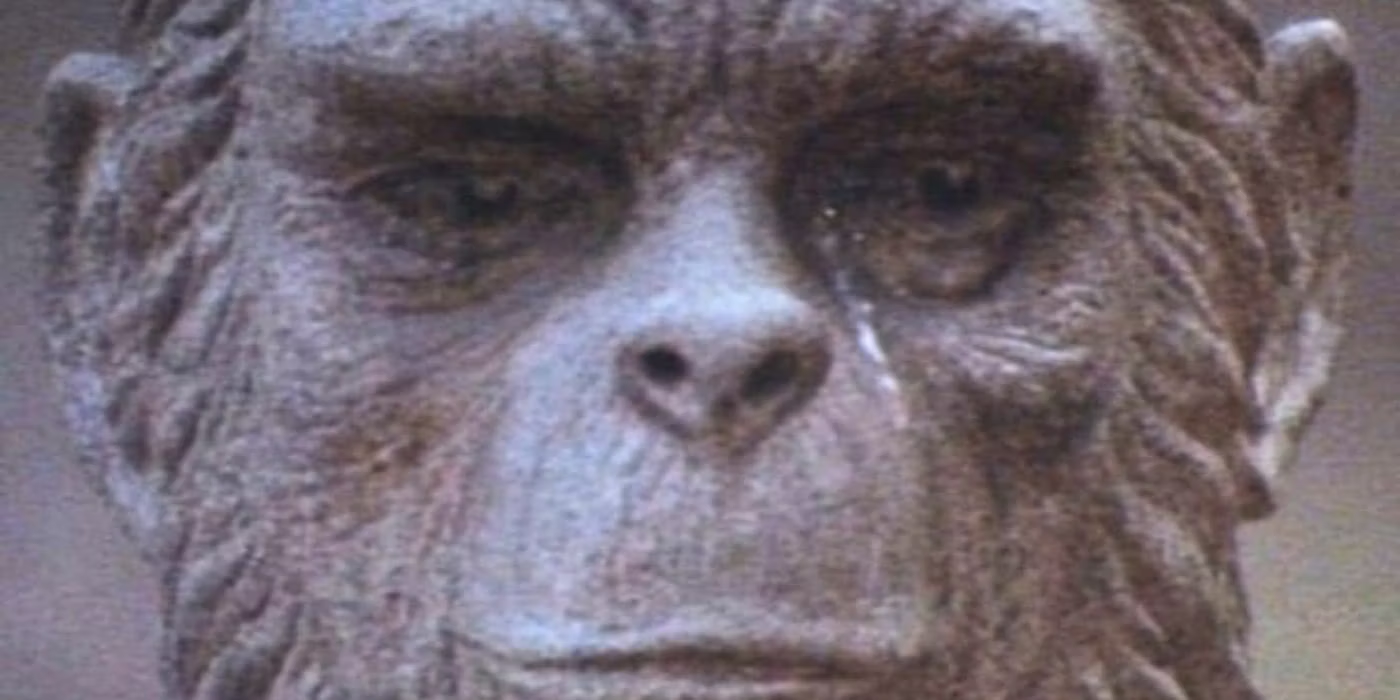
In the final moments of that film, which took place hundreds of years in the future, several ape and human children were attending a lecture by an ape teacher, who was narrating the events of the film. Although this ape spoke about the ability of both species living in peace, a young girl and an young ape were seen squabbling with each other, hinting at a future conflict between the two. After this, a statue of the main character in that film (also known as Caesar, this time played by Roddy McDowall) was seen crying. It was left to viewers to ponder if these were tears of joy because the two species at last lived peacefully or if the tears were of sorrow because of a coming conflict between humans and apes.
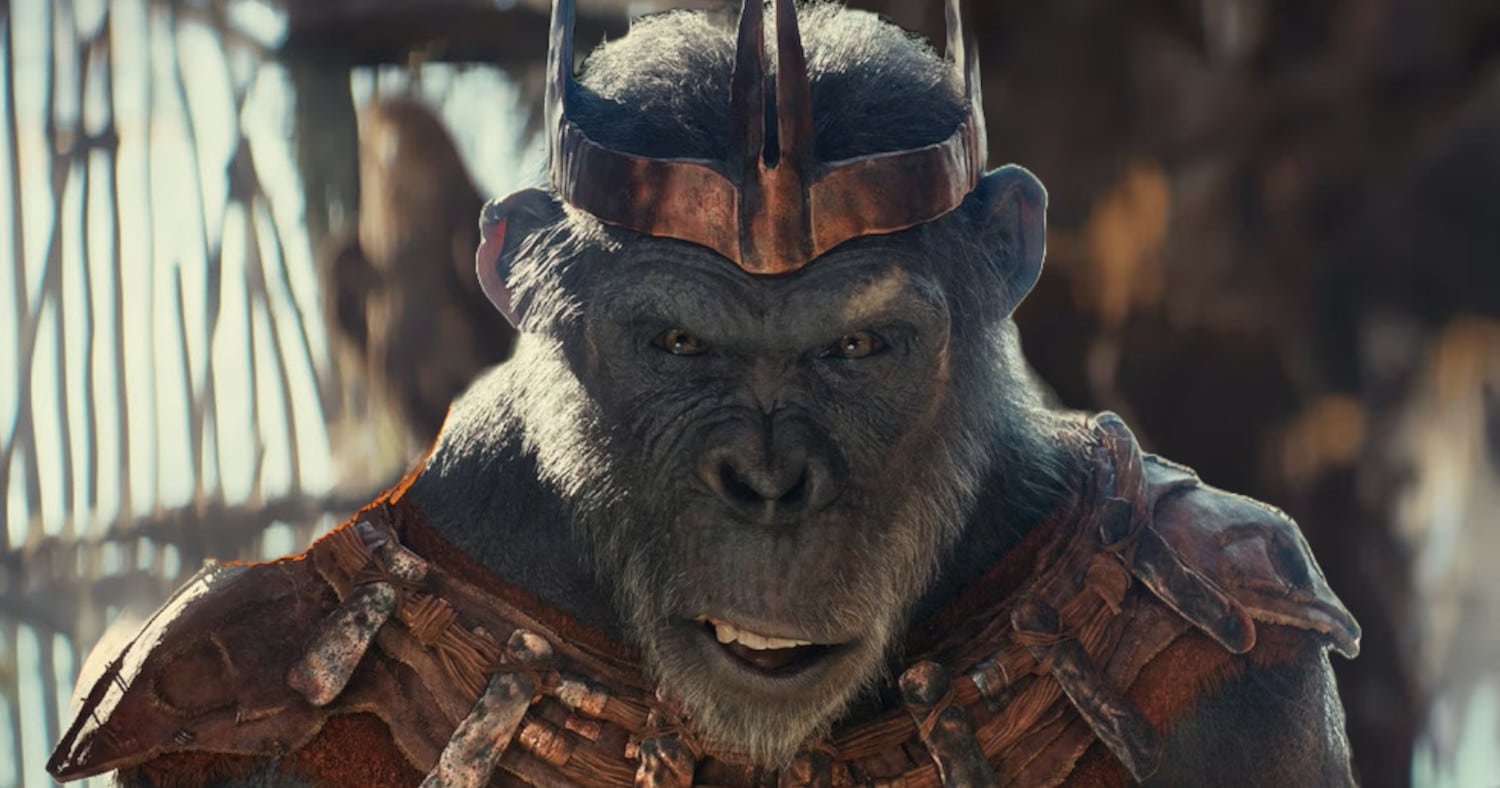
This idea of trying to live peacefully is touched upon in Kingdom of the Planet of the Apes as Noa questions Mae in the final scenes if it is possible to for the two species to share the planet. Mae answers that she does not know, but he doesn’t realize that as she is talking to him, she has a gun ready to shoot him, just in case. Of course, the very notion that she brings a gun with her while coming to Noa’s colony raises the question if she is trustworthy. Throughout the film, she gave little reason to trust her as she lied to Noa and his apes about her true motives from the moment she meets them.
Noa is rightfully suspicious of her and in turn, humanity, but he is willing to work with her during his conflict with Proximus Caesar (Kevin Durand), a despotic ape leader from another clan that enslaved his clan. Noa is also more focused on learning and passing knowledge to his people. He learns about Caesar and his peaceful ways as the ape has become a religious leader long after his death. It is implied that Noa will pass on the legend of Caesar to his clan while inspiring them to learn more about the world. This is best illustrated in the final moments when he takes his ape companion Soona (Lydia Peckham) to a decaying observatory and introduces her to the wonders of the universe via an old telescope.
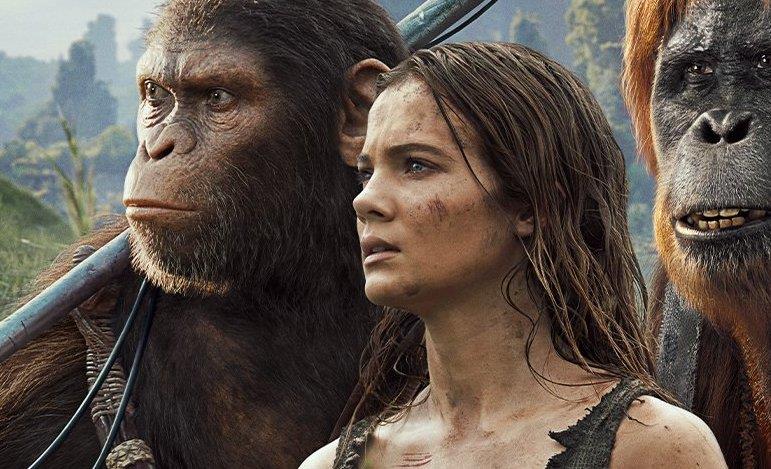
Mae for her part is shown as being worried about Noa and the evolving ape civilization that will prevent humanity from making a comeback. In one scene she silently watches Noa repair a cattle prod that was used by one of Proximus Caesar’s soldiers and is worried at his ability to repair a tool. During the film, she and Noa are captured by Proximus Caesar’s forces and is ordered by the ape tyrant to help him open an abandoned vault used by the human military long ago. She is adamant that apes should not have access to old human weapons and technology inside the vault and was willing to let innocent apes die to prevent their access.
During her mission to enter the vault, Mae killed a fellow human, a collaborator called Trevathan (William H. Macy), who threatened to expose her to the apes. Though it was understandable why she was distrustful of the apes and the collaborator, her actions made her untrustworthy and ignoble. On the other hand, her actions are meant to help resurrect human civilization and it is seen through Proximus Caesar that the apes are not much better than humans and full of humanity’s worst traits.
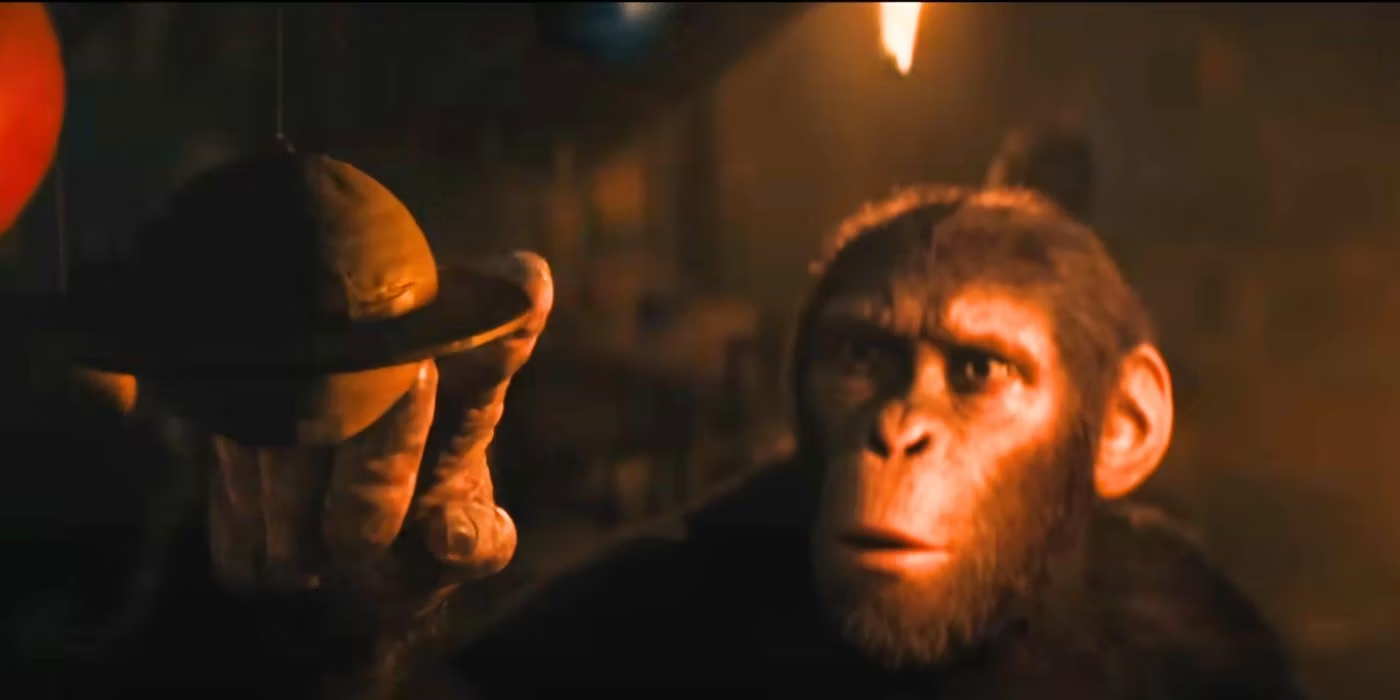
It will be interesting to see where the Apes franchise will go after Kingdom of the Planet of the Apes. It is clear that a new trilogy is been set up that will put ape and humanity into conflict once again. There is also a tantalizing hint that space travel will be involved, as Noa is seen being fascinated by space and images of astronauts. As wild as it sounds, having apes evolve to the point of venturing into space is a great idea. Who knows? Maybe space exploration could wind up being the means for both species to learn how to cooperate and live in peace if space travel is needed to help save the Earth.
It also hints at the possibility of the new Apes films linking back to the original films. Think about it. The very first film featured astronauts who wound up on Earth in the far future and Rise of the Planet of the Apes featured Easter eggs of a lost space mission, which could be these astronauts that could show up again at the end of the new trilogy. Anyway, no matter which direction future films go, the Apes franchise has demonstrated the uncanny ability to move into new and exciting directions as most recently seen with Kingdom of the Planet of the Apes.
 Starloggers