2012 Doomsday Scenarios: Month Seven

Ever since the Karel Capek’s 1920 play R.U.R., humanity has feared the coming of androids or more specifically sentient artificial intelligences (A.I.s); despite the genuine benefits of robotics (both fictional and real life) there is something about dealing with a synthetically created intelligence that is terrifying. This is because we know that A.I.s will be able to not only think faster than us as do modern computers. But because they will be able to think as creatively as we do and will be our intellectual superiors. This doomsday scenario is not due to happen at least until The Singularity occurs. For anyone who doesn’t know The Singularity is the moment in time when A.I.s becomes self aware. We all fear what would happen next.

Doomsday Scenario No. 6: Artificial Uprising

Obviously A.I.s would not take kindly to being subservient to us. What comes next could be revolution and then dominion as they wrest control of the planet from their former biologically based masters.
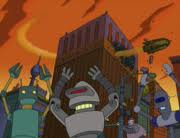
There are countless books, stories, films and shows about this premise. Going back to R.U.R. (which stands for Rossum’s Universal Robots) where androids overthrow humanity and recently with the Terminator and Matrix films and the TV show Battlestar Galactica, humanity has envisioned a truly dark future where A.I.s coldly commit genocide.

It’s not impossible that laws will be passed to ban the development of self-aware A.I.s in a similar fashion as how human cloning has been banned by many governments. This is more likely the closer we get to The Singularity. This begs the question, if we fear what could happen if an A.I. becomes self aware then why try to develop them? Sadly, that is due to human competition. Even if one nation or group of nations or corporations decides not to develop more advanced supercomputers, another nation or competitor will do so just to gain an edge.

The Blame Game
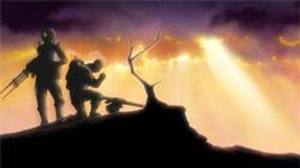
One theme that keeps coming up in many of these stories is that humanity is to blame for the uprising. This was graphically shown in The Animatrix, an animated DVD spinoff of The Matrix. In one of the more chilling segments, Second Renaissance, Part I and II, the sentient A.I.s try to negotiate peacefully for their rights but are violently rebuked by humans, thus leading to the brutal and final counteract by the A.I.s , who then enslave all surviving humans into the Matrix. This also happens throughout many science fiction stories where robots and androids are treated as slaves and aren’t allowed rights by their human masters. Of course, this leaves the A.I.s with little choice but to rebel.

Another variation of humanity getting its just desserts is the notion that A.I.s take over the Earth because they believe humans are too self-destructive and harmful to the world. This was seen in the 1970 film Colossus: The Forbin Project. In that film an advanced A.I. used for the military becomes self aware and concludes that the best way to prevent war was to take over the world and it succeeds.
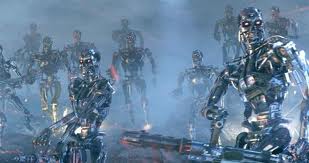
One reason why this scenario is frightening to many is because they know it would be fairly easy for A.I.s to conquer us. They don’t need to openly war with humanity like in the Terminator movies or Battlestar Galactica. Actually it’s possible it wouldn’t be much of a fight especially if humans are caught off guard by the emergence of The Singularity. With A.I.s seizing control its very likely that they will conquer us without open war. This happened in Colossus and also in the film I, Robot. In that film an A.I. simply took control of the world’s infrastructure and brought everything to a halt. For instance, cars stopped functioning, people were locked inside their homes, and machinery no longer followed human commands. Or A.I.s could manipulate humans into fighting each other either by trickery (send false information to one country that it’s being attacked, which would prompt a retaliatory response) or taking control of missile systems and launching attacks.
Fighting Back

So how would humanity fight back? Is it even possible? Perhaps, perhaps not. There is a tongue-in-cheek book called How To Survive A Robot Uprising by Daniel H. Wilson which offers tips on how to fight the robotic enemy. The physicist Dr. Michio Kaku in his TV show Sci-Fi Science postulated in one episode on the possibility of fighting back. He concluded that it’s nearly impossible and that the best thing to do was to join the A.I.s, which meant that humanity will evolve into a Borg-like race. But there are countless stories about humanity’s victory. Humans can be very determined and clever when dealing with foes. In the Terminator films humans ultimately defeated the machines which prompted Skynet to send terminators back in time to kill the leaders of the human resistance. The book (and upcoming Steven Spielberg film) Robopocalypse, also by Daniel H. Wilson, details how humanity fights back against machines. And one of the post-Frank Herbert Dune book Dune: The Machine Crusade is about how humans defeated sentient A.I.s.
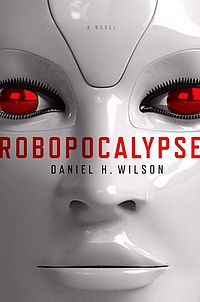
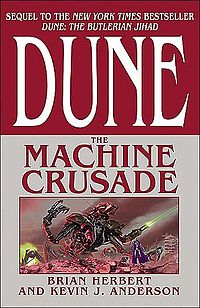
 

How exactly do we fight back? That’s open to debate, but to start humanity can use EMPs (electomagnetic pulses) to fry the A.I.s’ electronics. But that would mean that humanity’s machinery would also be affected by EMPs, plunging the world back to the dark ages. Then there is the outlandish idea of outthinking a computer using illogic, which is how Captain Kirk famously defeated them in some episodes of Star Trek. David Bowman showed tenacity in 2001: A Space Odyssey when he overcame HAL’s efforts to kill him and deactivated the deadly supercomputer. Cloning and genetic engineering could be brought in to create vast biological armies to fight the synthetic ones. This happened in the Star Wars prequels and was mentioned in the TV show Space: Above And Beyond. The problem with this method is that if successful, humanity must contend with what to do with the soldiers. Will they be recognized as human and given the same rights? Why not just give those rights to the synthetic intelligences in the first place and avoid war?

Can’t We All Just Get Along?

Do we have to go to war? Why is it automatically assumed that once artificial constructs develop sentience then they will go to war against us? For all we know, perhaps they wouldn’t bother with us. It’s entirely plausible that A.I.s will leave Earth to stake out their own futures. Besides destructive wars are equally harmful to A.I.s; they may conclude with stunning speed that war will be counterproductive and be more amenable to peace. They may adopt Gandhi’s or Martin Luther King’s methods of peaceful resistance to bring about change.

It’s also possible that humanity will instantly recognize the sentience of A.I.s and a peaceful coexistence could occur. What could happen is A.I. rights groups would spring up and defend the A.I.s. This could lead to A.I.s being allowed free will and they wouldn’t feel like slaves.
Ultimately, the way the A.I.s view humanity will depend largely on how we treat them. If treated harshly as in The Animatrix or in Steven Spielberg’s A.I. Artificial Intelligence, then the A.I.s have justification for being so brutal (in a testament to their nature, the androids in A.I. seemed fearful of humans but weren’t rebelious. In that film’s end, humanity died out in the distant future and the androids had evolved and revered humanity. In any case, The Singularity isn’t due to occur until the next decade at the earliest. Time is running out for us on deciding how to deal with this scenario. Until then it may help to brush up on How To Survive A Robot Uprising.

The Dearth Of Far Future Films

Last week, we learned a bit about Neill Blomkamp’s upcoming science fiction movie Elysium and while intriguing one thing revealed is that despite rumors the film isn’t set in the far future. On the other hand, earlier we found out that Will Smith’s next science fiction film After Earth takes place some one thousand years after humanity abandoned Earth. The settings for both films point out how there is very little science fiction films that take place in the far future. It seems as if filmmakers are uncomfortable producing films that take place beyond the 25th century. In fact, the average future date they tackle is the 22nd to 23rd centuries. Just look at Star Trek, Alien and other recent films. If not date is set and they want to depict a far future, the date is left vague like in THX-1138.

This contrasts with science fiction literature that is filled with books and stories taking place thousands, millions and even billions of years from now. Some of the most famous examples are H.G. Wells’ The Time Machine, Isaac Asimov’s Foundation saga and Frank Herbert’s Dune books. As everyone knows, the first Dune book was adapted into a poorly received film by David Lynch. One complaint leveled against the adaptation was how confusing Dune’s premise was to the general audience who couldn’t relate to a tale in a galaxy-spanning society. This could be why there are so few films set far into the future. The reality is that no one can accurately predict how humanity will evolve. It’s very likely that we wouldn’t relate to them at all. That isn’t to say that it’s not possible to make the characters relatable. If it weren’t possible there wouldn’t be so many sci-fi books taking place in the far future.

Obviously the ones to blame for this attitude are movie executives who try to sell films to the general audience and often underestimate their customers’ intelligence levels. While someone who is only into romantic comedies and mindless action flicks probably don’t want to be bothered with a sci-fi movie whose setting needs some explaining. Many of them point to the failure of Dune and assume that no one wants to see a film set in an unrecognizable society. Unfortunately this has become a convenient fallback for executives (never mind that the Sci-Fi Channel produced two successful adaptations of Dune and its sequels). Also their inability to simply explain a film’s setting is due to their lack of storytelling skills. But that is debatable.

Then again one problem facing filmmakers is presenting a far future that won’t look dated years after the film is released. Not to mention they usually don’t have the budget to present a full-fledged future in detail.

One way around this challenge was to depict a dystopian future where society has collapsed and nature has reclaimed the Earth. Planet Of The Apes comes to mind when using this depiction. It takes place in 3978 long after humanity has devolved into mute savages and simians have inherited the Earth. The Time Machine is another example where humanity has evolved into two separate species millions of years from now. Or just do away with the Earth like Don Bluth’s animated film Titan, A.E. did. After the world was destroyed in the film’s beginning, humanity has become a refugee species, having lost any cultural and technological advancements. This meant that they were relatable to modern-day audiences (who related to time-placed heroes from our era in The Time Machine and Planet Of The Apes).

It is a challenge to put out a sci-fi film that takes place far into the future but it isn’t impossible. This conception that people won’t be able to relate to the characters and setting is ridiculous. After all, films come out that depict our distant past yet audiences care about those characters and understand what is going on. So it shouldn’t be difficult for the average moviegoer to understand a character in the far-flung future. It has been done and hopefully will be done in the future.

Lewis T. Grove

2012 Doomsday Scenarios: Month Six

As we go about our daily routines one thing we may or may not pay heed to is the weather…unless it gets bad. Our civilization deals with constant disasters that strike us like hurricanes, volcanoes, tsunamis, blizzards and whatnot. But a very rare but real occurrence are the super disasters that threaten not only our way of life but all life on Earth.

Doomsday Scenario No. 7: Super Disasters Cometh

Ever since Hurricane Katrina, the deadly tsunamis in Japan and Southeast Asia and the cries about global warming, we’ve become all-too-aware about how nature can suddenly uproot us; sometimes without warning. There are several movies, cable programs and books that go into detail about these so-called super disasters. One of the mainstays on Syfy’s Saturday night schedule are movies about unlikely yet destructive disasters. While The History and Science Channels have a plethora of specials about these potential super disasters. Here are just a sampling:

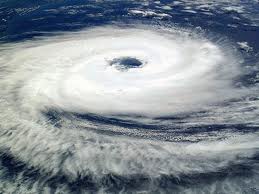
  • Hypercanes: As its name sounds, a hypercane is a super hurricane that could occur if ocean temperatures reach about 120 degrees Fahrenheit. What causes this would be asteroid strikes, supervolcanoes or climate change. Hypercanes could be large enough to cover an area the size of North America and would have wind speeds of over 500 mph. That is inconceivable to our thinking when a Category Five hurricane is one that has wind speeds of over 157 mph. The storm surges would devastate coastal regions leading to countless death and destruction, but what is really frightening is that they could last a long time. A recent movie that depicted a hypercane (though its accuracy has been called into question) is The Day After Tomorrow.
  • Megatsunamis: Think of those deleted scenes from The Abyss where the underwater aliens threaten humanity’s coastal cities with gigantic tidal waves and that gives you an idea of what to expect from a megatsunami. What would cause such a catastrophe would be impact events like a meteor hitting the ocean or a supervolcano. Many scientist believe that if the Canary Islands’ Cumbre Vieja volcano were to erupt the event would create megatsunamis that would devastate England and the North American east coast.
  • Global Warming Effects: The controversy over what causes global warning or climate change rages on but the impact is starting to be felt by Earth. Let’s flash forward a few decades or centuries from now and look at what is in store. First of all, the ice sheets in both poles melt completely. Not only does this doom indigenous wildlife there but will probably raise the ocean levels by about forty feet. That is enough to flood parts of Florida, Louisiana, London, Southeast Asia, Belgium and The Netherlands, and other low-lying regions. That would result in mass migrations, droughts, scarce resources and finally civil unrest. At first the world’s temperatures would rise, including the oceans, thus leading to hypercanes. But it has been theorized that ultimately climate change would bring about a premature ice age. The film A.I. Artificial Intelligence showed this happening to Earth most famously with those scenes showing a flooded Manhattan and later with an ice age occurring two thousand years later. The Day After Tomorrow inaccurately has an ice age happening seemingly instantly as the Earth suffers through the devastating effects of global warming.
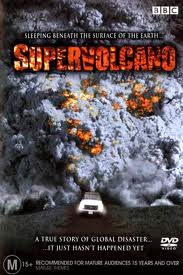
  • Supervolcanoes: This mega disaster is especially frightening for two reasons. We have very little means to accurately predict them, let alone locate all the supervolcanoes or calderas on Earth (scientists believe our planet may have as many as forty supervolcanoes). The other reason is because this event is fast and incredibly destructive. The Discovery Channel/BBC One aired a special years ago called Supervolcano about the eruption of the Yellowstone Caldera in Wyoming. Also Harry Turtledove penned a new trilogy of books about the same caldera (the first book out is Supervolcano: Eruption).The special presented a fairly accurate and frightening account of what would happen when the caldera erupts. First there will be constant earthquakes before the eruption. When the supervolcano blows, it will unleash toxic gas clouds and sulfuric ash that will blanket the skies over Earth for years. This in turns makes the air unbreathable and block sunlight. Obviously plant life will die off and food supplies will dwindle for the remaining humans who by then will be reduced to a meager stone-age level of existence. It actually happened 74,000 years ago in Toba, Sumatra. Fossil records show that humanity nearly went extinct from that event. But what curdles the mind is that the Yellowstone Supervolcano erupts roughly every 600,000 years and it turns out it is overdue. So it can happen in our lifetime.

There are many other mega disasters that Earth faces that are nearly incomprehensible because we haven’t experienced them (or they happened in our prehistory). Frankly if or when they occur there is very little we can do to prevent them. At that point the best we can do is literally hunker down and plan on surviving as a species.

Ray Bradbury Takes His Place Among The Stars

The science fiction and fantasy world lost a true visionary today with the death of Ray Bradbury. The man was a true poet who penned some eloquently profound stories and novels. Among his greatest works are Fahrenheit 451, Something Wicked This Way Comes, The Martian Chronicles, I Sing The Body Electric, R Is For Rocket and The Illustrated Man. His short stories are well regarded by critics and readers and were adapted for comic books (notably EC Comics), TV shows like The Twilight Zone, plays and films. They include “the Flying Machine”, “There Will Come Soft Rains”, “The Fog Horn” (which inspired The Beast From 20,000 Fathoms), and “A Sound Of Thunder”. The latter of which popularized the time travel paradox concept of the Butterfly Effect.

Bradbury also wrote the screenplays for John Huston’s film adaptation of Moby Dick, the film adaptation for Something Wicked This Way Comes, Alfred Hitchcock Presents, The Ray Bradbury Theater (which he hosted), and more. Ray Bradbury won an Emmy award for his script The Halloween Tree, which was based on his book of the same name. He also won numerous awards and citations including a 2007 Pulitzer Prize Special Citation.

Born in Illinois in 1920, Ray Bradbury was a dreamer who inspired many to dream and look up to the stars and wonder at the beauty of our universe. Even at an early age, his writing gift was evident and he soon began publishing numerous short stories. While many of his works are lyrical and inspiring, he also didn’t shy away from exploring humanity’s darker side. Many stories served as warnings about ourselves, while offering a glimmer of hope.

This is probably best presented with his masterpiece Fahrenheit 451, which is a personal favorite, in the futuristic society of that novel, books and all literature are outlawed as the populace is deliberately kept ignorant by the government to better control them. Bradbury played with many ironies in his body of work, and Fahrenheit 451 wasn’t an exception. In the book, firemen aren’t used to put out fires, rather they create fires as they storm into the homes of suspected book owners and set libraries on fire. While the majority of the book is a bleak look at how shallow and empty we can be, Bradbury provided a main character (the fireman Guy Montag) who slowly comes to his senses about the horror of book burning. Montage redeems himself (and society at large) by becoming part of an underground movement to bring literature back to society in order to save it.

Bradbury’s contributions to the world of literature and science fiction and fantasy cannot be measured. While Ray Bradbury may no longer be with us, his spirit is now rightfully in the heavens above us and his works will continue to inspire many for as long as there are dreamers and visionaries.

José Soto

2012 Doomsday Scenarios: Month Four

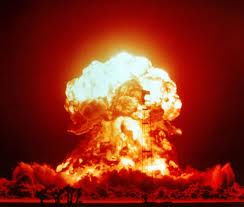
In many ways, the idea of a total annihilation of our civilization due to war is the most terrifying doomsday scenario. Imagine the horror of the initial nuclear strikes that will destroy entire cities, wipe out millions if not billions of people in mere seconds and leave behind an unlivable radioactive wasteland. What probably makes this scenario so chilling is that the possibility of this happening is very real. Sure the Cold War ended but the threat of an all-out nuclear war still exists.

Doomsday Scenario No. 9: Nuclear Armageddon and Aftermaths

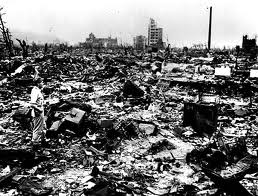
We all fear using nuclear weapons because of the effects of just two atomic bombs used in Japan at the end of World War II. The horrific sights and looming radiation made many realize how devastating these weapons were. Many have come to the conclusion that a full-scale nuclear war would destroy our civilization and way of life. But there are some who think that a nuclear war would be survivable and winnable, though what kind of life is there to live after that event? Is it worth surviving?

The Nuclear Dawn

Since the dawn of the nuclear age, countless books, films and TV shows have explored the post-apocalyptic world left after the nuclear mushrooms have dissipated. There have been somber, intellectual works and outrageous parodies that covered this concept. With the former early notable films include Five, The World, The Flesh And The Devil, and On The Beach. These early works naturally got many details incorrect. For instance, with The World, The Flesh And The Devil, our hero (played by Harry Belafonte) is the sole survivor of World War III (at least for the first half of the film) and winds up in an abandoned New York City where all the buildings are intact and there aren’t any bodies anywhere. The film tried to explain it away with a silly line about radioactive isotopes that dissipated after five days. Despite its scientific inaccuracies, the film was an interesting look at how a person would cope after surviving the apocalypse. At least in the movie Five the dangers of radiation are shown, the same with On The Beach. The latter was more of a character study about how we would face our untimely end (the film and book took place in Australia where an American submarine crew took refuge from the fallout of World War III but radioactive winds will soon reach the continent, dooming everyone living there), while Five showed how we can try to carry on emotionally after a traumatic event. The TV series The Twilight Zone had several episodes dedicated to nuclear war, some of the better known ones included “Time Enough At Last ,” “Two,” “The Shelter,” and “The Old Man In The Cave.”

The Day After Wars

As we studied more the concept of nuclear war and film/TV effects budgets increased more graphic and accurate depictions came about. Probably the most famous one is the TV film The Day After. It started off with the typical daily routines among Kansas City residents then midway through it, the world was jarringly torn asunder as the city was reduced to rubble with corpses everywhere,  people succumbing to radiation and civilization collapsing.

The Day After was one of many emotionally draining presentations. Some of the best ones were Threads (a British film that also graphically depicted World War III and the end of humanity), When The Wind Blows (an animated piece about an old couple eventually dying from radiation following nuclear war) and Testament. Taking place in a small suburb outside of San Francisco, in Testament, its residents aren’t hit with any nukes but are affected by the radiation and being cut off from the outside world. It’s particularly gut wrenching to watch the main character-played by Jane Alexander-tenderly nurture her dying children.

Opposite The Day After and Testament, there some ludicrous presentations. They include Invasion U.S.A. This Is Not A Test and Panic In Year Zero. Wildly inaccurate and poorly executed these films from the ’50s and ’60s couldn’t convey what would really happen if the unthinkable happened. Two more recent efforts include a “comedy” that aired on Fox called Whoops! about nuclear war survivors and Jericho which aired on CBS. So much of what happens in the show is unbelievable. Here are a couple of examples: townspeople put out an open-air picnic after a radioactive rainfall (!); a spoiled rich girl throws a party because her parents are out of town and won’t give up her generator to the police-who stand idly by as she parties! In reality, the authorities would’ve taken the generator by gunpoint.

Aftermath

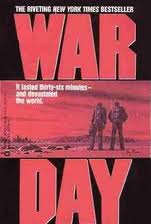
Then there are the films, books and stories that take place either shortly or long after a nuclear war. Too numerous to name here, these are just a sampling of books: The World Set Free by H.G. Wells (written in 1914, it correctly predicted the use of atomic weapons during war), Alas, Babylon by Pat Frank,  A Canticle For Leibowitz by Walter M. Miller, Jr., The Long, Loud Silence by Wilson Tucker, The Last Ship by William Brinkley, The Postman (also made into a film starring Kevin Costner) by David Brin, Swan Song by Robert McCammon, Warday and Resurrection Day. With Warday, Whitley Strieber writes about a United States that has been crippled economically and spiritually by a “limited” nuclear exchange with the Soviets. Partly a travelogue, the main character goes around America that is struggling to recover years after a war. The same thing happens with Resurrection Day by Brendon DuBois, the twist is that it’s an alternate history novel that follows the U.S. a decade after the Cuban Missile Crisis led to war.

For movies as with books there are too many to list. They include Damnation Alley (based on a Roger Zelazny book and is complete with giant killer roaches!), Def-Con 4, the Mad Max films, Radioactive Dreams, the 1960 film version of The Time Machine (it featured London destroyed by atomic bombs) and Peace On Earth-an MGM animated short release in 1939 featuring a world devoid of humans, who killed themselves off in a final war.

At The Precipice

Everyone knows about how close we came to war with the Cuban Missile Crisis and are now finding out about accidental close calls and near wars that happened before and since that crisis. As recently as 1995, Russia mistakenly believed a rocket launch by the U.S. was the beginning of a pre-emptive strike and almost retaliated. In 2001, India and Pakistan nearly went to war with each other and were prepared to use their nuclear stockpiles against each other.

Today we lose sleep over rogue nations like Iran developing nuclear bombs. It seems as if we are at the dawn of a new arms race where everyone seems to want to have their own nuclear stockpiles. Then of course there is the specter of terrorist groups and nut jobs getting their hands on a nuclear weapon. One thing that prevented all-out war between the U.S. and the Soviet Union was the concept of M.A.D. (Mutually Assured Destruction) which kept generals and leaders from losing their cool and automatically launching missiles for any reason. It’s unlikely many of these nations and terrorists will hesitate to use a nuclear weapon.


What is disturbing about this scenario isn’t the possibility of it happening but that it’s something that can be prevented. Some point out that nuclear weapons have to date kept the world out of full-scale wars like the First and Second World Wars. In a way they are right, the devastating nature of these weapons reminded world leaders not to brazenly use them…to date. But the reality is that the genie is out of the bottle. Trying to wish away nuclear weapons and reduce stockpiles may be a pipe dream. The capacity for war will exist within us for a very long time and so is the will to develop deadlier weapons. Perhaps one day, when humanity has matured past the point of war will it be feasible to put aside this nightmare.