Zombies Impossible

securing-yard

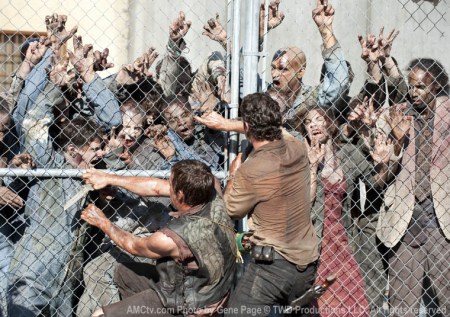
Ever since George Romero popularized flesh-eating zombies in his masterpiece Night Of The Living Dead, the creatures’ popularity have grown. Undoubtedly, zombies are the most popular monsters today, beating out the ubiquitous vampires.

The thought of a deceased loved one, reanimating into a decaying ghoul that only wants to consume you is a terrifying idea. It cuts down to our primal fears of being eaten alive by predators. Zombies have also come to symbolizes the supposed coming apocalyptic breakdown of civilization. As dreadful as all that sounds, we have to ask ourselves how likely is it that the dead will rise up and eat us?

From a scientific standpoint, there isn’t any way that will happen. Let’s think about the concept and go into the logistics.

When a person dies, all their bodily functions cease to function. No blood is being pumped, the brain doesn’t send any signals via nerves to tell the body what to do and so on. Now when zombies are reanimated in these films and other media, a point is made that the zombies are immune to bodily harm. Shoot them, stab them,more brains they keep on coming. Remember that scene in Day Of The Dead when that loony scientist was reporting that the organs in a zombie weren’t working, yet the creatures were animated and hungry. Along the way in these stories, it’s stated that something in the brain is keeping the dead body going, which is why you have to shoot or bludgeon the undead in the head. This was seen in The Walking Dead episode “TS-19” where CDC scientist Dr. Edwin Jenner reported this fact to the show’s main characters.
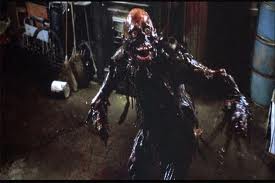
On the surface it makes sense. Something, a virus, radiation, chemicals, nanobots, and or something else have taken over a dead person’s brain and are sending signals to the body to move and consume flesh. Cut off or destroy the brain and the problem is solved.

The problem is that taking over the brain isn’t enough. The mind needs a system to send out messages, hence the nervous system. A zombie’s brain has to be able to send signals throughout the body, via the spinal cord. Once a message is received, the body still needs energy and the means to move. That is where muscles and blood come in. The heart is the organ that pumps blood throughout the body and the blood transports nutrients and oxygen to mobilize the muscles enabling movement. So a zombie needs a functioning circulatory and nervous system. Therefore, humans should be able to shoot zombies in the heart and elsewhere to kill them.
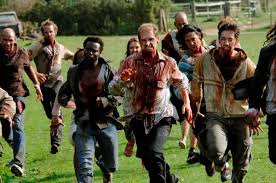
28 weeks laterA more realistic look at zombies are the creatures seen in films like I Am Legend and 28 Days Later. Deadly viruses are to blame for people being transformed into deadly killers, yet they never actually die, but instead mutate. And they can be killed through normal means. That would explain why the infected are able to run after their victims, unlike the lumbering undead in Night Of The Living Dead. In fact, in 28 Weeks Later (the sequel to 28 Days Later) humanity just waited for the infected humans in Great Britain to starve to death before attempting to resettle the decimated country.

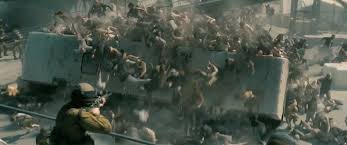
But one thing that doesn’t ring true in those films is how fast the virus mutates a person. Anyone who was infected in 28 Days Later would transform in seconds. This was also seen to varying degree with the walkers in The Walking Dead, the film version of World War Z and other zombie stories. Viruses can’t work that fast. It takes time for the invading viruses to replicate, travel throughout the body and infect the brain. Depending on where a victim was bitten, that person would have a few hours before transforming into a monster.

bicycle-woman[1]Now let’s look at their diets. Why would a zombie eat? To get energy that is needed by the body. This suggests that a zombie would need a working digestive system to break down and process the meat. We go back to the zombie’s body needing circulating blood to help in the process. Yet in these stories, people point out that the zombies aren’t processing the consumed flesh. If that is so, where does the flesh go? If they’re not processed the meat would just collect in the stomach until that organ would burst. We never see any zombies with bloated bellies, do we?
world war z

Of course, the conclusion is that zombies are something that belong strictly in the fantasy/horror realm. George Romero’s films and other works like Dark Horse Comics’ Zombie World speculate or flat out state that the dead are reanimating due to supernatural means. In other words,  magic spells, curses, demonic possessions, pick your poison. Based on how our reality works, zombies can’t exist except in the fervent imaginations of creators and fans. So anyone watching the latest episode of The Walking Dead or playing Resident Evil can relax…for now.

Lewis T. Grove

Pacific Rim Rocks!

pc rim posterDirector Guilermo Del Toro hits it out of the park again with his latest, monumental film Pacific Rim. Many will probably say that this giant monster or Kaiju extravaganza isn’t anything more than a Godzilla/Transformers mash up. Pacific Rim is more than that, which is why it’s so spectacular.

Pacific Rim takes place in the near future after an interdimensional breach on the Pacific Ocean floor unleashes gigantic creatures that destroy coastal regions. Humanity fights back by building gargantuan robots called Jaegers that are operated by two pilots. After a string of victories against the Kaijus, however, the colossal creatures adapt and begin defeating the Jaegers. This was vividly shown during an early battle where a Kaiju is killed at great cost to a Jaeger’s pilots.

PACIFIC RIMWhen the film opens, humanity is on the verge of shutting down the Jaeger program, because they’re seen as unsuccessful. One former pilot, Raleigh Becket (Charlie Hunnman) is approached by his old boss Stacker Pentecost (Idris Elba) to come back to the program. There are only four remaining Jaegers left, and Pentecost has a plan to use them to deliver a nuke into the interdimensional breach and sealing it.

Becket is assigned to pilot the Gipsy Danger, his old Jaeger that was badly damaged in a battle years ago that took the life of his brother and co-pilot. Pentecost’s assistant Mako Mori (Rinko Kikuchi) wants to be Becket’s co-pilot but utilizing a Jaeger isn’t easy. The mammoth robots are so complex that two pilots need to operate them using a neural link that ensures a synchronized operation.  In other words, the pilots have to be compatible. Typically, Becket and Mako butt heads as both are recovering from painful memories. Meanwhile, Pentecost’s team learns that not only are the Kaiju attacks increasing, but there’s a reason behind their appearances, making it imperative that they seal the breach.

PACIFIC RIM

For anyone who loves or used to love those old Japanese Kaiju films that featured Godzilla, Pacific Rim is an ode to those classics. Even if you no longer watch those films, this one will reignite the passion one felt as a kid at seeing giant, misshapen monsters devastating a city. Only this time, big-budget special effects and top-notch direction enhance the experience. Guilermo Del Toro knows what works with the Kaiju films and what doesn’t. Using that knowledge he skillfully crafted this epic monster movie.

???????????It may be difficult, however, for non-Kaiju fans to appreciate the effort. At first glance, Pacific Rim may seem like a giant monster movie with robots that is made for kids. But it’s deeper than that, unlike those old films, you care about the characters. You’re entertained by them when the monsters aren’t on screen. There are also many quirky supporting characters that sometimes provide comic relief or add something important to the plot. The most memorable of them include Ron Perlman as a slick black market dealer and two nerdy and eccentric scientists played by Charlie Day and Burn Gorman.

Another notable factor with Pacific Rim, is that we get to see what a world with giant monsters might be like. We are flooded with imagery and background details showing how things will be different. We see the use of thick emergency shelters, the presence of a black market for monster parts, and hints at how the economy has changed for the worse. These elements aren’t dwelled upon, but they are there for repeat viewing.

The highlight, of course, are the amazing battles between monsters and machines. One important difference between this film and the old Kaiju films is the special effects. PACIFIC RIMThey’re practically flawless and the action scenes are well-executed and clear. Pacific Rim doesn’t have the shaking camera movements seen in those dumb Transformers movies that don’t let you know what is going on. Del Toro proves that he is a master of the camera in the way he stages these shots. The result is a thrilling viewing experience.

We’ve been teased by Hollywood of the capability of putting out a big-scale, giant monster movie. That was seen with Cloverfield and to a lesser extent 1998’s Godzilla. Pacific Rim is what the latter film should’ve been and so much more.

José Soto

The Must-Read Book For The Summer: Max Brook’s World War Z


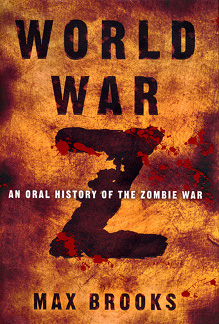
world war z coverTrends come in cycles. Recently the popular culture has seen the return of an old and familiar staple, the zombie. The Hollywood ghouls started out in the spooky black and white classics of the 30s and 40s, but they were branded into the baby boomer consciousness via George Romero’s 1968 classic Night of the Living Dead. To be fair, they’ve never been away much since, thanks to Living Dead‘s various sequels, semi-sequels, and remakes. But in 2002 British film wunderkind Danny Boyle gave the genre a shot of adrenalin with 28 Days Later, about a deadly virus ravaging London and turning survivors into hyperkinetic, psychotic killers. For zombie fans, the die was cast.

In 2003 writer Max Brooks – son of Mel Brooks and Anne Bancroft – wrote The Zombie Survival Guide (TZSG), a tongue-in-cheek “how-to” on surviving a zombie onslaught as society breaks down. TZSG was a New York Times best –seller thanks to its dark humor and occasional light tone. The book’s characteristics, however, did not mask the fact that underneath the surface it contained some very useful survival information, and it’s easy to see that Brooks did his research. His work must have fuelled a thirst somewhere, because a month later Image Comics began publishing Robert Kirkman’s The Walking Dead (now a hit TV series on the AMC cable network), describing the adventures of survivors of a zombie apocalypse.  The undead were officially back in style.

Not to be outdone, Brooks took zombies one step further and in 2006 came out with World War Z (WWZ), describing the entire history of a massive, deadly zombie onslaught – a war, basically between humans and the undead (“Z” for zombie, if you haven’t yet figured that out). The zombies are the same as those in TZSG, making the book a follow-up of sorts.  According to Brooks, zombies are humans re-animated by an incurable disease, spread by a zombie bite or having open pores exposed to zombie tissue. Taking a page from Romero’s model, they are slow, brainless creatures completely devoid of intelligence, whose sole instinct is to eat live flesh. They are incapable of tiring, cannot drown, and can only be killed by a blow to the head.

Other than that, WWZ is very different in style and tone than its slim predecessor. Patterned in structure after Studs Terkel’s classic oral history of WW2, The Good War, WWZ is not one story per se like Kirkman’s comic but rather a series of individual accounts telling the story from the initial sudden outbreak to mankind’s victory and the sad, weary aftermath.  The book’s narrator (in whose voice Brooks writes), a member of the (fictional) United Nations Post War Committee, is commissioned to interview survivors from mankind’s war against zombies.  Like a twisted travelogue, Brooks shuttles around the world, as survivors running the gamut from military, clergy, health services, government officials, security, and ultimately the average citizen describe their experience and the ghastly horrors they witnessed.

In a chilling opener, the story begins quickly but methodically. In a remote, rural province in China, a young boy goes diving for sunken booty with his father. His father is pulled down by something unknown and the boy escapes but is nipped on the heel.  The poor infected lad becomes “patient zero”, infecting others and kickstarting the zombie pandemic. Once the infection goes beyond the village, it acts as an out-of-whack Rube Goldberg contraption, setting in motion a chain of events that will change the world.  Infected Chinese refugees begin streaming across the border into Central Asia. Others fly out to Europe, bringing the infection to the continent. The Chinese government feverishly tries to halt the spread and invents a military crisis involving Taiwan to mask their armed build up and activities.  Only after hitting the poor South African ghetto townships does the world begin to take notice, calling it the “African Rabies”.  Israel is one of the first to respond, imposing a national quarantine, granting entry only to uninfected Jews and Palestinians, and calling out the Israel Defense Forces for border security.

Through the illegal organ trade, the infection reaches Brazil and once in Mundus Novus it begins to wreak havoc.  Zombies rip through an unprepared United States, as corruption, government incompetence, and overconfidence result in some heavy bungling and widespread deaths. Millions all over the world begin fleeing their homes for safety, as the “Great Panic” begins. At a major, decisive battle in Yonkers, New York, American soldiers fight a massive and frightening wave of undead as if they were fighting living soldiers. Using inappropriate techniques against an undead army – such as attempting to “demoralize them” – they fail miserably and the American forces are brutally defeated on live TV. Other countries encounter similar disastrous results and world civilization as we know it begins to crumble. Continue reading

Deadloggers Of The Walking Dead

 cast 3

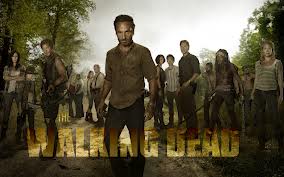
Some of the most popular clicks on Starloggers have been for the reviews of the hit TV show The Walking Dead. Many of us here love the show and think it’s one of the best if not the best TV show on air right now. Although it has primarily a horror theme, it is borderline sci-fi with the revelation at the end of The Walking Dead’s second season that the cause of the zombie (or rather walkers) outbreak was because of a virus that is infecting every living person on the planet.

cast[1]After some discussion, it was decided to launch a new blog called Deadloggers, which will be dedicated to The Walking Dead TV show. Each post will take the same detailed look at each episode from The Walking Dead as seen here on Starloggers. Evan Rothfeld, who wrote all the previous reviews/commentaries of each episode, will continue to do the same over at Deadloggers. Each review will have a detailed synopsis and commentary of each episode aired to date. We’re starting off now with all-new reviews of the first season of The Walking Dead, readers will see how Rick Grimes and company (including the fleash-eating walkers) were first introduced. Afterwards, the plan is to transfer over the second and third season reviews that appeared on Starloggers. The reviews here will be condensed and abridged, so in order to read the complete posts readers will have to visit Deadloggers. Then reviews of the remainder of season three will be posted on Deadloggers and so on. And who knows? Maybe in the future we may go beyond the show.

We hope anyone who enjoyed reading the reviews will visit the new blog and check it out. If anyone has any comments make sure to drop us a line.

Humanity Vs. Vampires: Our Advantages, Their Weaknesses

In many forms of media, vampires have been feared by humans and for good reasons. But one frightening element about them is their physical superiority to mere humans. Vampires in most stories possess superhuman strength, speed and reflexes. They’re also semi-telepathic and can fly, not to mention are nearly immortal. Recent tales have vampires living in complex secret societies and only tolerate humans who they consider to be glorified cattle.

So if it came down to it, how would humanity fare if vampires decided to take over? Well it wouldn’t be an automatic victory for vampires.

Think about it, sure vampires have all these fantastic powers but they have a severe weakness­­ ­— they’re vulnerable to sunlight. At best, as in the original Dracula novel, vampires while able to survive in the daytime are very weak. At worst, see an episode of True Blood or Being Human were vampires literally burst into flame when exposed to sunlight. If they were to actually exist that could be why they haven’t come out and conquered us. If there were an open war between humans and vampires, humans only need to wait until dawn to open coffins containing the vampires and expose them to direct sunlight. One thing that sunlight contains is ultraviolet radiation. Perhaps that radiation can be weaponized for night battles.

They have other weaknesses as well. Traditionally, they’re sensitive to garlic, holy water and religious symbols like crosses. Modern vampire tales like those written by Anne Rice have it that those so-called weapons are useless and have no effect on vampires. In Stephen King’s Salem’s Lot, it’s stated that for a cross to work, the human bearing it must have religious faith. However, vampires in modern tales are still vulnerable to wooden stakes and sometimes silver (as seen in True Blood where the metal is used to incapacitate the night creatures).

Aside from sunlight and wooden stakes, a good beheading is a guaranteed way to kill vampires. Just ask the Winchester Brothers in Supernatural. In that TV show, beheadings are the only way to kill vampires, which early in the show’s run were considered an endangered species.

Movies like Blade and The Lost Boys feature heroes who come up with unique and clever adaptations of vampire weaknesses. For instance, the young heroes in The Lost Boys filled up ordinary water guns with holy water. Let’s not get into how formidable Blade was with his weapons. He was a bonafide one-man army against the undead with all the stabbing weapons and guns. In True Blood and the books the show is based on (known as The Southern Vampire Mysteries by Charlaine Harris) vampires openly exist alongside humans, so police and militia groups routinely use wooden bullets against vampires along with silver. In one of the recent episodes when the Vampire Authority began to run amok, a human general threatened them. He revealed that humanity’s armies had already devised weapons to be used in the event of a war with the undead. Viewers got a taste of what a war would look like in second season episodes of True Blood where a radical, armed religious group threatened to wipe out vampires.

So if a state of war were to occur, humanity though physically outmatched has many aces up its collective sleeves. It’s been implied in many modern stories that humans far outnumber vampires which is one reason why they haven’t tried to conquer the planet. In the case of war, the huge numbers of humans will be a decided advantage and don’t forget that time and time again, we have shown an ability to adapt and refine battle tactics.

Probably the only way that vampires can counter humanity is in the form of a fast spreading virus. There are many page-turning books about a world overrun by vampires. The most famous one is Richard Mathesen’s I Am Legend, which was adapted three times into film. In I Am Legend, a pandemic is responsible for turning Earth’s population into vampire-like creatures. Other recent books that explore this theme of a virus transforming people into vampires are Justin Cronin’s The Passage and The Strain by Guillermo Del Toro and Chuck Hogan.

The recent film Daybreakers is also about a world where a virus transforms humans into vampires. The outbreak was so severe that in the space of a few years, vampires had overrun human civilization, reducing the few humans left into cattle.

But unless a virus  quickly devastates humanity in the same way as shown in I Am Legend, don’t be so sure to count out humanity if war broke out against vampires. Sure one on one, a human probably cannot beat a vampire but it’s being demonstrated in these tales that a vampire can lose.

Waldermann Rivera