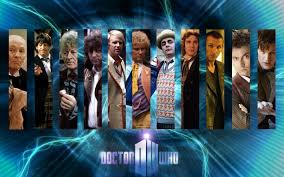
Doctor Who Celebrates Its Fiftieth Anniversary

doctor who

Doctor Who fans are still aglow over the recent fiftieth anniversary special “The Day Of The Doctor”, and for good reason!  It was inventive, frenetic and most of all it was  downright cool in so many ways. More importantly, “The Day Of The Doctor” was a loving tribute to the fifty-year-old program

Who’s Who?

For anyone who hasn’t watched, Doctor Who is about the adventures of a time-traveling alien called the Doctor, who can go anywhere in time and space. As a Time Lord, he often winds up in some misadventure while defending Earth and is accompanied by a long line of (mostly) human Companions. When the show first aired in the BBC back in 1963, it was more pedestrian than the madcap pace exuberated by hartnellthe modern show. The Doctor was played by William Hartnell, a distinguished older actor who was more cerebral  and sedate than his successors. Doctor Who was always plagued by low budgets and production values, which didn’t help its stature of being a children’s show. Still, it had an unmistakable charm and its youthful audiences loved the show. This happened after the show began steering away from historical dramas and introduced goofy aliens that were played by actors in bargain-basement costumes.

This status stayed with the show for many years and over many incarnations of the Doctor. You see, once Hartnell left the program in 1966, he was ingeniously recast. The Doctor was an alien, so it was established that he could regenerate into another person at the time of his death. Each Doctor that followed him was more and more outrageous in demeanor and attire, probably culminating in Colin Baker’s eye-hurting, multi-colored waist coat and his flamboyantly overbearing behavior.  But this concept allowed each actor to add his own touch to the character, making the Doctor a rather complex person for this kind of show. It was probably why Doctor Who began to catch on past the kids.

tom baker

The first significant introduction to American audiences of Doctor Who was the Tom Baker era from 1974 to 1981. His Doctor was distinguished by an overlong, multicolored scarf, and a huge afro. While he was quite daffy, Baker’s Doctor exhibited a cunning, intellectual side that was masked by his eccentric behavior. Still, the show was bogged down with horrible special effects and production values. While the show won many fans, there were just as many who dismissed Doctor Who as kiddie fare.

Eventually, Doctor Who was cancelled in 1989 and the property laid dormant until 1996 when Fox aired a TV movie pilot that attempted to jumpstart the franchise. The film was actually good, but controversial with many longtime fans, who bemoaned the semi-reboot. For instance, the Doctor revealed he was half-human and shockingly enough he had a romantic moment with his Companion. Egad! Sure, it sounds silly but fans can be recalcitrant whenever changes are made. The movie didn’t lead to a series and so the attempt at restarting the franchise was stillborn.

Who’s Back
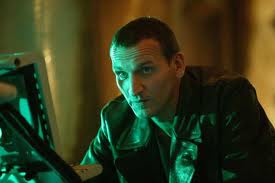
nine docBut like any good intellectual property, Doctor Who refused to die. Finally in 2005, a brand new series was launched that rejuvenated the stale franchise. Now Doctor Who had updated effects, the characters were dynamic and relatable and the stories were more adult. The ramifications and intricacies of time travel were explored in episodes like “Father’s Day”, “Blink”, and “The Name Of The Doctor”.  Others had outlandish plots best explained by their episode titles–”The Stolen Earth”, “Dinosaurs On A Spaceship” and “Let’s Kill Hitler”. Some others where actually heartfelt like “The Doctor’s Wife” where the Doctor’s spaceship attained a corporeal, sentient form . To its credit, the show still retained its sense of whimsy and charm. Episodes featured many unique images like the Doctor soaring through the air in a carriage pulled by a flying great white shark (!), or him and his Companion riding a motorcycle up a glass tower. For every lighthearted episode, there were those that were quite chilling, adventurous, wondrous, and more importantly, thought provoking.

A very important change made to the modern Doctor Who is that the Doctor is the last of his kind. His race, from the planet Gallifrey, along with their mortal enemies, the Daleks, had died off fighting in a Time War. The Doctor, as played by Christopher Eccleston, was more morose and subdued. It was even reflected in his dark attire. He was clearly suffering from survivor’s guilt and was wracked by what he did in the Time War (it was revealed that he destroyed both races). However, by the end of his run, Eccleston’s Doctor (the Ninth Doctor) seemed to be recovering thanks to the help of his Companions Rose Tyler (Billie Piper) and Captain Jack Harkness (John Barrowman).

Edgier, More Emotional Doctors

This change into a more optimistic demeanor was fully expressed with the next Doctor brilliantly portrayed by David Tennant. The Tenth Doctor was exploding with youthful energy and charm. He often rambled on at a mile per second and had an impish way about him. One couldn’t help but be delighted by his antics. Yet, the Tenth Doctor once in a while unmasked a haunted and frightful demeanor that was unsettling to watch. This was underlined by Tennant’s ability to convey someone who was much older than he appeared.

hi res bike

His successor Matt Smith also had this uncanny ability. But, being that he was the youngest person to portray the Doctor, that ancient quality shown in his eyes and mannerisms added to the dichotomy of the Doctor. Now that Peter Capaldi will be the new Doctor come the next Christmas special (“The Time Of The Doctor”), some of his conflicting aspect will be toned down since Capaldi is an older actor.

But what does that mean for Clara Oswald (Jenna Coleman)? She will seem more like a daughter next to Capaldi. It’s doubtful there will be any romantic tension a la Rose Tyler, who started falling for the Tenth Doctor once he came into the picture. Perhaps Clara will soon leave the show. However, River Song (Alex Kingston) seems more compatible with Capaldi’s Doctor since the actress is closer in age to him.
Continue reading

The Hunger Games & The Movie On Fire

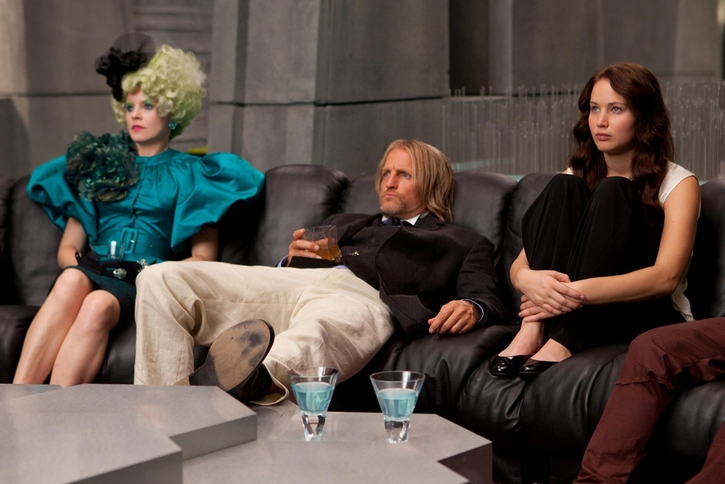
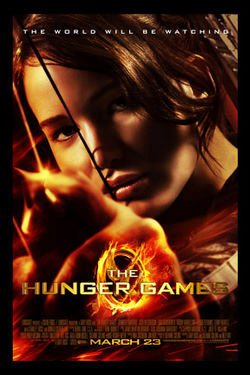
HungerGamesPoster “Up, up, up. It’s going to be a big, big, BIG day!” This was how I started the morning of March 22, 2012; almost expecting to wake up to a knock on the door by the manically upbeat Effie Trinket herself. Instead it was by my fellow fans getting ready for the midnight premiere of The Hunger Games. For months we had been eagerly awaiting the movie release based on the popular and controversial young adult novel of the same name by Suzanne Collins. We couldn’t wait to finally see District 12, the gritty Hob, the dreaded arena, the wickedly fashionable Capitol, and just how much violence would make it into a PG-13 rating. As a Panemaniac myself, I was excited to see if the book-to-screen adaptation would burn like an inferno, or fizzle out into ashes.

I was drawn into the futuristic dystopian world that Collins had created in her book, where reality television has taken a twisted new edge to entertain its audience with a blood sport. In The Hunger Games, Panem is a nation in what used to be known as North America. It consists of twelve districts and ruled over by a totalitarian government from the Capitol, located in the Rocky Mountains. As a punishment for a long-past, failed uprising, once a year each district must hold a lottery to chose one boy and girl between the ages of 12 to 18 years old. These “tributes” are forced to compete in a nationally televised event called “The Hunger Games.” Like gladiator games enjoyed in ancient Rome, the tributes not only have to battle one another, but any lethal obstacle thrown at them by the Gamemakers. Twenty-four contestants enter the arena, but only one can survive to be the winner.

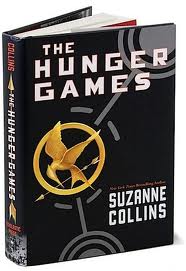
We follow the journey of Katniss Everdeen, a sixteen-year-old girl from District 12, a coal-mining town in the poorest part of Panem. Due to the tragic death of her father she is forced to break the Capitol’s law and hunt for game in order to save her family from starvation. In this world, the Capitol keeps such strong food regulation on the districts that many people are literally starving to death.hunger games book Katniss uses her wits and her hunting skills with her father’s bow and arrows to provide food for her mother and younger sister, Primrose. When her sister’s name is drawn for the 74th Hunger Games, Katniss volunteers as the female tribute, saving her sister, but condemning herself to death. Along with fellow tribute, Peeta Mellark, and their unstable mentor Haymitch Abornathy, they try to find a way to survive against all odds, but at a terrible cost.

I was intrigued by the author’s view of how easily a society could break down. Panem is a society that has become so desensitized by excess and ignorance that they celebrate the slaughter of innocent children as if it were the Super Bowl. Meanwhile, the districts’ citizens live without the comfort of having so much as a steady meal. I was also disturbed by the haunting idea of teenagers being taken from their families and forced to kill other children, or be killed themselves. Collins drew me into this world with her complex characters, descriptions of food and fashion, and her ultimate tale of love and just how far one is willing to sacrifice for freedom.

?????????????In anticipation for the movie, many of us showed up to the theater dressed as our favorite characters. It was the complex range of characters that really made me fall in love with this story. Right away, I was thrilled with the casting choices. Jennifer Lawrence was perfect as the tough and clever Katniss. Josh Hutcherson made us pine for the puppy dog-eyed Peeta Mellark. Amandla Stenberg as Rue, made us ache at the mere sight of her angelic face. And Lenny Kravitz stole the show as fashion genius Cinna simply by being himself. Sadly, there were a few characters that had been toned-down to keep things more suitable for the audience. Although Woody Harrelson was a convincing Haymitch, he was much more subdued than his tormented, alcoholic book version. Elizabeth Banks as Effie Trinket was not nearly as over the top as her wardrobe. Even worse, their most memorable quotes had been altered or dropped completely, leaving out major developments in their characters.

???????????????

Certain adaptations by director Gary Ross were actually better than the print version. Instead of telling the story through Katniss’ inner monologue, we got to see events from multiple points of view. The charming Stanley Tucci made the Hunger Game’s emcee, Caesar Flickerman, a very minor part in the book, unforgettable. And while Seneca Crane had been little more than a name to us, Wes Bentley and his dapper Capitol-stylized beard could not have enough screen time.

The downside was the too-fast-paced speed of the film. Scenes rushed past before we could emotionally deal with them. I had hoped to see more details of certain things fans would recognize in the novel. The blood bath in the arena was not nearly as violent as what we had imagined. The deaths, while agonizing to watch were not as painful as the shaky camera work. Mostly it just ended up causing headaches. I was disappointed that Ross did not express how the people of the districts were truly desperate for food. It is difficult to get an American audience to think of what it’s like to be really hungry. And finally, the romance, or lack thereof, between Peeta and Katniss was never developed. We left the film not knowing if it just was all for the Games or not.

I was pleased with this film. It was not perfect and there were things that could have been improved, but it was an exciting ride. I’m looking forward to the story continuing in The Hunger Games: Catching Fire.

Jennifer Drucker

The Avengers Assemble to Celebrate Fifty Years Of Teaming Up


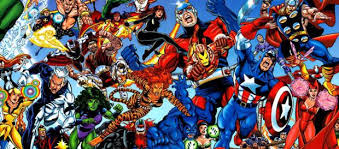
perez avengers

“And there came a day, a day unlike any other, when Earth’s mightiest heroes and heroines found themselves united against a common threat. On that day, the Avengers were bornto fight the foes no single super hero could withstand! Through the years, their roster has prospered, changing many times, their glory has never been denied! Heed the call, thenfor now, the Avengers Assemble!”– Monthly prologue inserted in every issue of The Avengers

Most fans know the story behind Marvel Comics’ famous group of superheroes, the Avengers. In the early ’60s Marvel’s rival DC Comics had a huge hit with their own superhero team the Justice League of America (JLA). In a desire to compete with JLA’s strong sales, Marvel publisher Martin Goodman directed editor Stan Lee to put out their own brand of superhero comics like The Fantastic Four, The Amazing Spider-Man, The Incredible Hulk and The X-Men. Thus, the creation of what general readers know as The Marvel Comic Book Universe was in progress. The popular storylines readers love about Marvel hadn’t been written yet, but the Marvel characters were just created and began their journey of adventures while inhabiting a shared Marvel universe. As successful as these comic books were, the company didn’t have an equivalent to the JLA. In other words, a comic book that featured their most popular heroes teaming up against a huge threat.

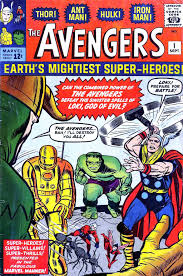
avengers issue 1To remedy this, Stan worked with his long-time collaborator, co-plotter and penciller Jack Kirby to create the Avengers. When Marvel published the first issue of The Avengers Marvel found its equivalent to JLA. Right before the Avengers were created, Marvel had popular heroes like the Hulk, Thor and Iron Man and so it was feasible to do a team-up book since these core members would make a good fit as a team. The comic book was a huge hit with readers because of a formula it followed. The main characters, like the Fantastic Four, didn’t see eye-to-eye with each other. In fact, they fought each other, starting with the very first issue when the Hulk was attacked by the other founding members (it was all part of a ruse engineered by Thor’s wicked step brother Loki). But in the end, the heroes would put aside their differences to battle a force that each of them couldn’t handle alone. What’s more is that these heroes had character flaws, as all heroes from the original Silver Age roster of the Marvel Universe. This contrasted dramatically from the members of the JLA- who were viewed by readers as perfect personalities with no character flaws. Plus, it didn’t hurt that fans loved the famous battle cry “Avengers Assemble!” made by the team.

Enter Captain America

Still, as successful as the book was, Lee and Goodman knew something was missing. There wasn’t anyone who had the ability of keeping the team together; there was no strong leader. They needed someone who had a long-established history to be part of the team. Enter Captain America; co-created in the 1940’s by writer Joe Simon and artist Jack Kirby. Cap’s greatest run at that point, was in the 40’s, when he was popular as a patriotic superhero. But after WWII, sales dwindled for his comic books and he only appeared in comic books occasionally during the 1950s. His return to the Marvel Universe in issue 4 of The Avengers is not just a pivotal moment in Avengers history but in comic book history as well. This was because he is a pop icon who symbolized what was best about America and his heroics dated back to World War II.

His induction into the team changed the tone of The Avengers, too. The stories had more depth and introduced a fish-out-of-water element. What also became apparent is that Captain America was a natural leader and he helped usher in the next important change to the title.

Changing Lineup

Somewhat of a hallmark today for The Avengers is the title’s ever-changing lineup. Lee realized that it was difficult to have so many popular characters in The Avengers while they had their own adventures in their own titles. It was hard to keep up with the continuity and in the end might dilute their popularity. So it was decided to remove the popular characters except for Captain America. The question was who would replace the superstars? In The Avengers #16, photo3Captain America needed to bring in new recruits after the core members left the team. They ended up being Quicksilver, Scarlet Witch and Hawkeye. These choices were out of the ordinary because at that time, they were more known for being villains. Adding to that dilemma was that Hawkeye’s abrasive attitude served as a perfect foil to true-blue, all-American Captain America. Previously, he would give out orders and no one would question him, but now Hawkeye would do so, which added conflict. This element was a big hit with readers and made the book even more successful and reinforced the winning formula: likeable heroes who bicker, but in the end use teamwork to defeat a common foe. Continue reading

The Must-Read Book For The Summer: Max Brook’s World War Z


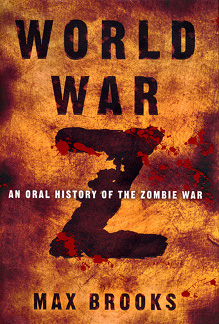
world war z coverTrends come in cycles. Recently the popular culture has seen the return of an old and familiar staple, the zombie. The Hollywood ghouls started out in the spooky black and white classics of the 30s and 40s, but they were branded into the baby boomer consciousness via George Romero’s 1968 classic Night of the Living Dead. To be fair, they’ve never been away much since, thanks to Living Dead‘s various sequels, semi-sequels, and remakes. But in 2002 British film wunderkind Danny Boyle gave the genre a shot of adrenalin with 28 Days Later, about a deadly virus ravaging London and turning survivors into hyperkinetic, psychotic killers. For zombie fans, the die was cast.

In 2003 writer Max Brooks – son of Mel Brooks and Anne Bancroft – wrote The Zombie Survival Guide (TZSG), a tongue-in-cheek “how-to” on surviving a zombie onslaught as society breaks down. TZSG was a New York Times best –seller thanks to its dark humor and occasional light tone. The book’s characteristics, however, did not mask the fact that underneath the surface it contained some very useful survival information, and it’s easy to see that Brooks did his research. His work must have fuelled a thirst somewhere, because a month later Image Comics began publishing Robert Kirkman’s The Walking Dead (now a hit TV series on the AMC cable network), describing the adventures of survivors of a zombie apocalypse.  The undead were officially back in style.

Not to be outdone, Brooks took zombies one step further and in 2006 came out with World War Z (WWZ), describing the entire history of a massive, deadly zombie onslaught – a war, basically between humans and the undead (“Z” for zombie, if you haven’t yet figured that out). The zombies are the same as those in TZSG, making the book a follow-up of sorts.  According to Brooks, zombies are humans re-animated by an incurable disease, spread by a zombie bite or having open pores exposed to zombie tissue. Taking a page from Romero’s model, they are slow, brainless creatures completely devoid of intelligence, whose sole instinct is to eat live flesh. They are incapable of tiring, cannot drown, and can only be killed by a blow to the head.

Other than that, WWZ is very different in style and tone than its slim predecessor. Patterned in structure after Studs Terkel’s classic oral history of WW2, The Good War, WWZ is not one story per se like Kirkman’s comic but rather a series of individual accounts telling the story from the initial sudden outbreak to mankind’s victory and the sad, weary aftermath.  The book’s narrator (in whose voice Brooks writes), a member of the (fictional) United Nations Post War Committee, is commissioned to interview survivors from mankind’s war against zombies.  Like a twisted travelogue, Brooks shuttles around the world, as survivors running the gamut from military, clergy, health services, government officials, security, and ultimately the average citizen describe their experience and the ghastly horrors they witnessed.

In a chilling opener, the story begins quickly but methodically. In a remote, rural province in China, a young boy goes diving for sunken booty with his father. His father is pulled down by something unknown and the boy escapes but is nipped on the heel.  The poor infected lad becomes “patient zero”, infecting others and kickstarting the zombie pandemic. Once the infection goes beyond the village, it acts as an out-of-whack Rube Goldberg contraption, setting in motion a chain of events that will change the world.  Infected Chinese refugees begin streaming across the border into Central Asia. Others fly out to Europe, bringing the infection to the continent. The Chinese government feverishly tries to halt the spread and invents a military crisis involving Taiwan to mask their armed build up and activities.  Only after hitting the poor South African ghetto townships does the world begin to take notice, calling it the “African Rabies”.  Israel is one of the first to respond, imposing a national quarantine, granting entry only to uninfected Jews and Palestinians, and calling out the Israel Defense Forces for border security.

Through the illegal organ trade, the infection reaches Brazil and once in Mundus Novus it begins to wreak havoc.  Zombies rip through an unprepared United States, as corruption, government incompetence, and overconfidence result in some heavy bungling and widespread deaths. Millions all over the world begin fleeing their homes for safety, as the “Great Panic” begins. At a major, decisive battle in Yonkers, New York, American soldiers fight a massive and frightening wave of undead as if they were fighting living soldiers. Using inappropriate techniques against an undead army – such as attempting to “demoralize them” – they fail miserably and the American forces are brutally defeated on live TV. Other countries encounter similar disastrous results and world civilization as we know it begins to crumble. Continue reading

Which Are Worse, Superman III & IV Or The Schumacher Batman Movies?


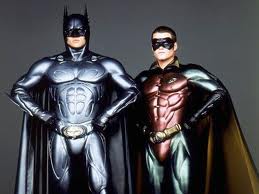
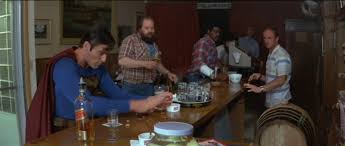
drunk supes and clark batman forever

The title says it all. While many comic book fans are salivating over the upcoming Man Of Steel movie, many of them want to forget not just Superman Returns but those horrendously awful Superman sequels from the ’80s, Superman III and Superman IV: The Quest For Peace.

On the flip side of that notion there are the Batman movies. Sure Christopher Nolan singlehandedly reinvented and salvaged the Bat franchise with his own take of Batman, but the sting of Joel Schumacher’s version of Batman in the ’90s is still felt.

Altogether these flicks nearly derailed each franchise and forced years-long moratoriums where no new Superman or Batman movies were available. With the Superman train wrecks it took nearly twenty years until a new Superman movie came out. But Superman Returns was a huge letdown and brought upon another drought of Superman flicks until this year. Batman recovered much quicker, his sabbatical from the movies only lasted seven years and his comeback flick Batman Begins set fandom on fire, culminating with The Dark Knight.

Still the nagging question remains, which of those films are worse? Let’s take a look, and start with Superman.

drunk supes

Super Duds

Before Superman III, Superman was riding high in popularity. Superman II was a huge success in the movies with its action-packed story about Kryptonian supervillains coming to Earth and Superman having to confront them. The end of the movie promised a Superman III, which excited many people. Unfortunately, the second sequel was doomed from the start. See, Richard Donner, who deserves credit for his masterful work on Superman and parts of Superman II had no input in the third Superman movie. Executive producers Alexander and Ilya Salkind had a feud with Donner and even fired him during production of Superman II. They turned to their buddy Richard Lester to complete that movie.

Now that they were running the show completely without Donner, they proceeded to ruin Superman by turning Superman III a comedy. It wouldn’t be as bad as it sounded if the movie was funny. Quite the opposite, it was moronic and embarrassing to watch. How bad was it? I put it on a few weeks ago when it was on cable to watch with my seven-year-old nephew. After a few minutes (right around that stupid scene where the traffic light figurines fight with each other), he told me to change the channel because “Superman III is dumb!”

supes gus gormanWhat is hard to believe is that there are actually defenders of this film who hail its dumb comedic bits, including Richard Pryor’s casting! Talk about misfires! Superman III heralded the downfall of Pryor’s reputation in the movies. Once the guy was seen as a comedic genius and had several hit movies under his belt. Then the poor comedian made a comment in a talk show about how he loved Superman II. Fate turned out to be cruel because the filmmakers behind the Superman films got wind of this comment and decided to put him in Superman III. It was a ballsy move, but it didn’t work. Pryor was known for his racy humor, which had to be toned down for the kid-friendly Superman film and instead he became a bumbling, unfunny buffoon in the movie. His character wasn’t much of a villain, just a misguided dupe forced to help an evil tycoon (Robert Vaughn), and of course, he helps Superman in the end. Ho hum.

Superman (and actor Christopher Reeve) took a break and didn’t appear again until the abysmal Superman IV: The Quest For Peace. By this time, the Salkinds washed their hands of the Man of Steel and sold him off to the schlocky film studio Cannon Films, famous for the zero-quality Chuck Norris and Charles Bronson action flicks.

The fourth film, the new filmmakers promised, was supposed to be bigger and better. Instead, the budget for it was severely slashed leaving an extremely cheesy mess. But the worst part was the script where Reeve supposedly had input on. Lord almighty. Superman gets rid of all the nuclear weapons without thinking of the consequences. But the movie doesn’t even cover that or have any serious discussions superman 4about that idea. The only thing that happens is that Lex Luthor (Gene Hackman) schemes with some generals and creates a sort of Superman clone called Nuclear Man (Mark Pillow). The two superhumans fight and talk in space(!) and Superman pushes the moon to create a solar eclipse to defeat him. It was strictly for kids. Alright I’m stopping. Let’s just say this wasn’t one of Superman’s better films and as much as people like to riff on director Bryan Singer for Superman Returns, at least that movie didn’t have gross scientific inaccuracies.

Continue reading