The Dearth Of Far Future Films

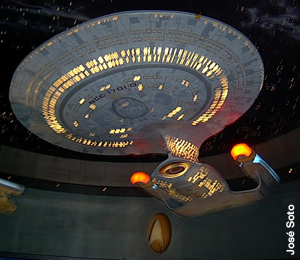
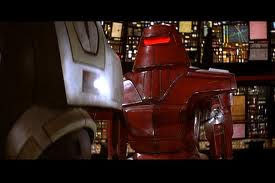
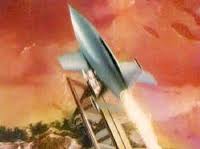
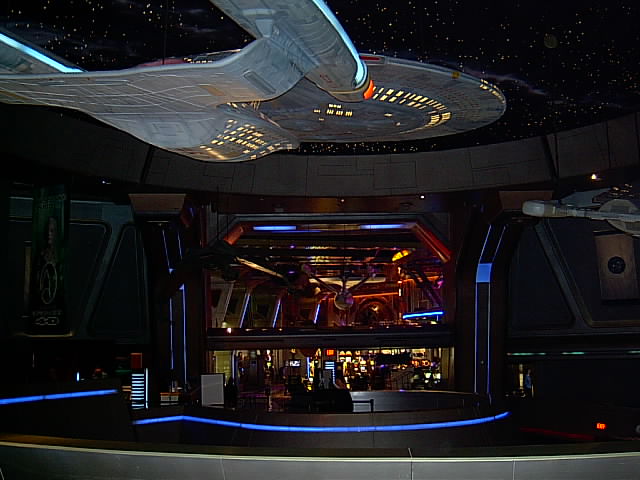
Last week, we learned a bit about Neill Blomkamp’s upcoming science fiction movie Elysium and while intriguing one thing revealed is that despite rumors the film isn’t set in the far future. On the other hand, earlier we found out that Will Smith’s next science fiction film After Earth takes place some one thousand years after humanity abandoned Earth. The settings for both films point out how there is very little science fiction films that take place in the far future. It seems as if filmmakers are uncomfortable producing films that take place beyond the 25th century. In fact, the average future date they tackle is the 22nd to 23rd centuries. Just look at Star Trek, Alien and other recent films. If not date is set and they want to depict a far future, the date is left vague like in THX-1138.

This contrasts with science fiction literature that is filled with books and stories taking place thousands, millions and even billions of years from now. Some of the most famous examples are H.G. Wells’ The Time Machine, Isaac Asimov’s Foundation saga and Frank Herbert’s Dune books. As everyone knows, the first Dune book was adapted into a poorly received film by David Lynch. One complaint leveled against the adaptation was how confusing Dune’s premise was to the general audience who couldn’t relate to a tale in a galaxy-spanning society. This could be why there are so few films set far into the future. The reality is that no one can accurately predict how humanity will evolve. It’s very likely that we wouldn’t relate to them at all. That isn’t to say that it’s not possible to make the characters relatable. If it weren’t possible there wouldn’t be so many sci-fi books taking place in the far future.

Obviously the ones to blame for this attitude are movie executives who try to sell films to the general audience and often underestimate their customers’ intelligence levels. While someone who is only into romantic comedies and mindless action flicks probably don’t want to be bothered with a sci-fi movie whose setting needs some explaining. Many of them point to the failure of Dune and assume that no one wants to see a film set in an unrecognizable society. Unfortunately this has become a convenient fallback for executives (never mind that the Sci-Fi Channel produced two successful adaptations of Dune and its sequels). Also their inability to simply explain a film’s setting is due to their lack of storytelling skills. But that is debatable.

Then again one problem facing filmmakers is presenting a far future that won’t look dated years after the film is released. Not to mention they usually don’t have the budget to present a full-fledged future in detail.

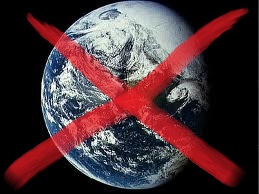
One way around this challenge was to depict a dystopian future where society has collapsed and nature has reclaimed the Earth. Planet Of The Apes comes to mind when using this depiction. It takes place in 3978 long after humanity has devolved into mute savages and simians have inherited the Earth. The Time Machine is another example where humanity has evolved into two separate species millions of years from now. Or just do away with the Earth like Don Bluth’s animated film Titan, A.E. did. After the world was destroyed in the film’s beginning, humanity has become a refugee species, having lost any cultural and technological advancements. This meant that they were relatable to modern-day audiences (who related to time-placed heroes from our era in The Time Machine and Planet Of The Apes).

It is a challenge to put out a sci-fi film that takes place far into the future but it isn’t impossible. This conception that people won’t be able to relate to the characters and setting is ridiculous. After all, films come out that depict our distant past yet audiences care about those characters and understand what is going on. So it shouldn’t be difficult for the average moviegoer to understand a character in the far-flung future. It has been done and hopefully will be done in the future.

Lewis T. Grove

The Amazing Spider-Man Reboot

It can be argued that The Amazing Spider-Man is the Spider-Man film for fans of the web-slinging hero. Frankly, it surpasses Sam Raimi’s trilogy in terms of special effects and that is not overly relying on CGI. The practical effects and stunt work really make Spider-Man come alive in a way that hasn’t been done before. The 3D is visually spectacular even the night shots. Pardon the pun but some shots of Spidey are truly amazing and look as if they were taken out of a comic book panel. Forget about alterations to his costume, the filmmakers captured the essence of Spider-Man.

But enough about the effects and look. The rest of The Amazing Spider-Man is a solid and welcome addition to Marvel’s superhero film roster. While director Marc Webb may not be as gimmicky and flashy as Sam Raimi was, he has an eye for character. He lets the quiet moments speak for themselves and knows how to show just enough of a character moment before moving on. The relationship that Peter Parker (Andrew Garfield) has with Gwen Stacy (Emma Stone) is the soul of the movie without going overboard.

Webb wisely uses this constraint in showing us other aspects of Parker. This results in the film not being as cornball or overly sentimental as Raimi’s Spider-Man films sometimes felt. Don’t worry, there aren’t any dance numbers! Garfield does an excellent job portraying him and his masked alter ego. He makes viewers and fans forget about Tobey Maguire with his constant moping and sad eyes. This Parker while burdened with responsibility is very proactive and as Spider-Man he cracks jokes, and behaves just like he does in the comic books. While this film has the hero constantly unmasked it actually works and one doesn’t mind.

As for the rest of the cast, they turn in fine performances with top honors going to Stone and Denis Leary (as her father police captain George Stacy). The captain’s obsession with trying to arrest Spider-Man is an engaging subplot that was never explored in depth before on film and deftly adds to Spider-Man’s headaches. BTW, Stan Lee has one of his very best and funniest cameos in the film that puts him in the same shot with his greatest creation.

The main villain in The Amazing Spider-Man as everyone knows is the Lizard a.k.a. Dr. Curt Connors (Rhys Ifans) a one-armed scientist with ties to his dead parents. The film links his creation to Spider-Man’s and it’s a complaint that goes back to many of these films (such as Batman) but it’s handled fairly well. Compared to the comic book version, Connors isn’t as sympathetic which is a detriment to the film. The Lizard may not be as great a villain as Doctor Octopus but he is still an imposing, formidable  character who puts Spider-Man through hell. Standing nearly eight feet tall with regenerative powers and a cunning mind he seems more like a smart Hulk mixed with Wolverine and a velociraptor from Jurassic Park. That’s a deadly combination.

The film does have faults: we didn’t need to see another origin sequence, which could’ve been handled with flashbacks; some plot developments are dropped too cleanly; the score by James Horner isn’t particularly memorable. But there are so many things that the filmmakers get right with this film because like Sam Raimi, they understand Spider-Man and it shows. So how does it compare to the previous films? Well it’s much, much better than Spider-Man 3 and arguably on par with the first Spider-Man. Despite Spider-Man 2’s flaws it was Raimi at his energetic best and a better film than The Amazing Spider-Man, but Spider-Man 2 set a high bar that is hard to top. It’s too bad Sony chose to release The Amazing Spider-Man so soon after Raimi’s trilogy ended. This is bringing about some unfair comparisons by fans of those films. But go in with an open mind and be prepared to be amazed.

José Soto

2012 Doomsday Scenarios: Month Six

As we go about our daily routines one thing we may or may not pay heed to is the weather…unless it gets bad. Our civilization deals with constant disasters that strike us like hurricanes, volcanoes, tsunamis, blizzards and whatnot. But a very rare but real occurrence are the super disasters that threaten not only our way of life but all life on Earth.

Doomsday Scenario No. 7: Super Disasters Cometh

Ever since Hurricane Katrina, the deadly tsunamis in Japan and Southeast Asia and the cries about global warming, we’ve become all-too-aware about how nature can suddenly uproot us; sometimes without warning. There are several movies, cable programs and books that go into detail about these so-called super disasters. One of the mainstays on Syfy’s Saturday night schedule are movies about unlikely yet destructive disasters. While The History and Science Channels have a plethora of specials about these potential super disasters. Here are just a sampling:

  • Hypercanes: As its name sounds, a hypercane is a super hurricane that could occur if ocean temperatures reach about 120 degrees Fahrenheit. What causes this would be asteroid strikes, supervolcanoes or climate change. Hypercanes could be large enough to cover an area the size of North America and would have wind speeds of over 500 mph. That is inconceivable to our thinking when a Category Five hurricane is one that has wind speeds of over 157 mph. The storm surges would devastate coastal regions leading to countless death and destruction, but what is really frightening is that they could last a long time. A recent movie that depicted a hypercane (though its accuracy has been called into question) is The Day After Tomorrow.
  • Megatsunamis: Think of those deleted scenes from The Abyss where the underwater aliens threaten humanity’s coastal cities with gigantic tidal waves and that gives you an idea of what to expect from a megatsunami. What would cause such a catastrophe would be impact events like a meteor hitting the ocean or a supervolcano. Many scientist believe that if the Canary Islands’ Cumbre Vieja volcano were to erupt the event would create megatsunamis that would devastate England and the North American east coast.
  • Global Warming Effects: The controversy over what causes global warning or climate change rages on but the impact is starting to be felt by Earth. Let’s flash forward a few decades or centuries from now and look at what is in store. First of all, the ice sheets in both poles melt completely. Not only does this doom indigenous wildlife there but will probably raise the ocean levels by about forty feet. That is enough to flood parts of Florida, Louisiana, London, Southeast Asia, Belgium and The Netherlands, and other low-lying regions. That would result in mass migrations, droughts, scarce resources and finally civil unrest. At first the world’s temperatures would rise, including the oceans, thus leading to hypercanes. But it has been theorized that ultimately climate change would bring about a premature ice age. The film A.I. Artificial Intelligence showed this happening to Earth most famously with those scenes showing a flooded Manhattan and later with an ice age occurring two thousand years later. The Day After Tomorrow inaccurately has an ice age happening seemingly instantly as the Earth suffers through the devastating effects of global warming.
  • Supervolcanoes: This mega disaster is especially frightening for two reasons. We have very little means to accurately predict them, let alone locate all the supervolcanoes or calderas on Earth (scientists believe our planet may have as many as forty supervolcanoes). The other reason is because this event is fast and incredibly destructive. The Discovery Channel/BBC One aired a special years ago called Supervolcano about the eruption of the Yellowstone Caldera in Wyoming. Also Harry Turtledove penned a new trilogy of books about the same caldera (the first book out is Supervolcano: Eruption).The special presented a fairly accurate and frightening account of what would happen when the caldera erupts. First there will be constant earthquakes before the eruption. When the supervolcano blows, it will unleash toxic gas clouds and sulfuric ash that will blanket the skies over Earth for years. This in turns makes the air unbreathable and block sunlight. Obviously plant life will die off and food supplies will dwindle for the remaining humans who by then will be reduced to a meager stone-age level of existence. It actually happened 74,000 years ago in Toba, Sumatra. Fossil records show that humanity nearly went extinct from that event. But what curdles the mind is that the Yellowstone Supervolcano erupts roughly every 600,000 years and it turns out it is overdue. So it can happen in our lifetime.

There are many other mega disasters that Earth faces that are nearly incomprehensible because we haven’t experienced them (or they happened in our prehistory). Frankly if or when they occur there is very little we can do to prevent them. At that point the best we can do is literally hunker down and plan on surviving as a species.

Is The Bubble Expanding On Superhero Films?

Last year, there was a lot of speculation about the lasting power of superhero films. Many believed that they were on the way out due the way they underperformed in the box office in 2011.

There were three films in 2011 based on Marvel Comics characters (Thor, X-Men: First Class and Captain America: The First Avenger) while DC Comics’ Green Lantern was also released as a film. While the Marvel films did respectably in the box office they weren’t supersized hits like The Dark Knight or the first Iron Man movie. Still they were well-received by fans and critics and did well enough to warrant sequels.

Green Lantern however, was a different story. As everyone knows, the film was a huge disappointment to many fans and didn’t make a lot of money. According to Box Office Mojo, the big-budgeted Green Lantern only earned $116 million with a worldwide total of $222 million domestically.

Many factors went into account for the disappointing box office sales in 2011. Some blamed the lack of popularity of some characters. The general public may know who Batman is, but brining up Green Lantern would raise eyebrows. With X-Men: First Class, many said that it may have made more money if it featured more well-known mutant characters and if the franchise didn’t have the stigma of recent inferior entries. Others pointed to a general burnout for such films and inferior 3D conversions (which thanks to bad word-of-mouth would dampen sales). Unless the film was phenomenal many would rather wait for DVD.

With that, while this year’s crop of films had fairly positive buzz late last year, there were concerns when 2012 began as to how good this year’s superhero films would turn out. Nerves weren’t helped by the failure of Ghost Rider: Spirit Of Vengeance but the superhero genre showed earlier this year that it had some life left with the success of Chronicle. There seemed to be cautious hope that The Avengers, The Amazing Spider-Man and The Dark Knight Rises would do well. The heavy-hitting properties starring the companies’ flagship heroes were to affirm the popularity of superhero films.

Of course, the release of The Avengers changed everyone’s perceptions about superhero films. It featured characters that were seeded years earlier, so that lesser-known heroes like Hawkeye were paired up with superstars like Iron Man. But more importantly the film was well made and able to generate a super-frenzied buzz before its release. To date The Avengers has made $598 million domestically and nearly a staggering $1.5 billion worldwide according to Box Office Mojo.

Seemingly overnight, upcoming superhero films are now highly anticipated regardless of past hesitations. For example, while many fans decried Bane’s voice in early trailers for The Dark Knight Rises, adjustments were made to alleviate those concerns, even though the jury is still out on Catwoman. The final Christopher Nolan Batman film will undoubtedly do well. It may not perform as well as The Avengers but count on it being one of the year’s biggest hits.

The Amazing Spider-Man is also poised to do well. There are many detractors about the validity of a reboot so soon after Sam Raimi’s trilogy but many are impressed by what’s being shown on clips and trailers and it has a major marketing push behind it (plus this year being Spidey’s 50th anniversary can’t hurt). The film will probably finish behind The Avengers and The Dark Knight Rises in terms of sales. Another factor that could help the new Spider-Man film is that it is coming in a bit of a lull between the other two superhero films. Currently, other films are topping the charts but don’t seem to have the staying power that The Avengers had and The Dark Knight Rises will probably dominate the box office for the remainder of the summer.

If one or both of the upcoming superhero films reaches blockbuster status expect the floodgates to open even further for future superhero films. Apparently stunned by the spectacular success of The Avengers, DC Entertainment announced that a Justice League film is in development. Anticipation seems to be growing over next year’s slate of superhero epics–Iron Man 3, The Man Of Steel, Thor 2 and The Wolverine. Furthermore, Marvel has announced that there will be follow ups to The Amazing Spider-Man and X-Men: First Class (with new stars like Michael Fassbender and Jennifer Lawrence reprising their roles) in 2014, as well as a new Captain America film, and another unannounced Marvel film. There are plans to bring back to the silver screen Daredevil and the Fantastic Four as well as big-screen debuts for Black Panther, Ant-Man, Wonder Woman, Lobo, and the Flash. Even Kick-Ass which only did respectably in theaters is getting a sequel.

At this point, it’s too early to say where all this will go, but two things are certain: 1) we’re in the Golden Age of Superhero Films and 2) despite some failures they are now a well-established movie genre that will stay for some time to come.

José Soto

Polarizing Views On Prometheus

EDITOR’S NOTE: Ridley Scott’s film Prometheus brought out significant debate among our writers who fell into two differing camps. Presented are two separate viewpoints on the film, both pro and con. Warning: Spoilers ahead.

PRO: This is an excellent movie!

According to the folks behind the film, it’s supposedly “not-an-Alien-prequel” set in Ridley Scott’s Alien universe. The story revolves around the Weyland Corporation crew of the spaceship Prometheus searching for life on a far away planet. Not just any life, but searching for ones who may have created the human race.

Noomi Rapace and Charlize Theron both did a great job in Prometheus portraying scientist Elizabeth Shaw and Weyland administrator Meredith Vickers respectively. Also, I should mention the acting of Guy Pearce (as Peter Weyland ) and Michael (X-Men: First Class’ Magneto) in another great role as the android David. Good casting all around.

The first Alien movie creeped me out for years. Jim Cameron’s Aliens was more action and suspense. Prometheus is more about discovery, revelations of the origin or mankind, alien biohazards and questioning religious faith in the disturbing world of the Alien universe. Fans of the original film were begging for Scott to return to the Alien Universe. After a few false starts, he finally was able to get the greenlight to direct Prometheus.

It should be noted that 1979’s Alien was a co-creation of a core team of brilliant filmmakers. Directed by Ridley Scott; alien designs by H.R. Giger; interior spaceship designs by Ron Cobb; spacesuits by comic book artist Moebius; produced by Walter Hill and David Giler and written by Dan’O Bannon and Ron Schusset. But no one individual could have produced the first movie on their own. There was no singular vision from one of them. It was a dynamically active collaboration between all of them during the production of the movie. It’s like they all have shared creative custody to the dreaded Alien creation.

After plenty of sequels which were not directed by Scott, it was nice to see many of Alien’s original founding fathers return—with plenty of ideas– Scott, producer Walter Hill, Giger and his designs. Many unexplored concepts that those original Alien founding fathers had are readily extrapolated in this movie.

The settings of the first Alien movie are there, like the space jockey’s horseshoe-shaped ship; the Weyland Corporation; a seemingly psychotic android; a relief sculpture inside the horseshoe spaceship, seen in darkness when a character points the flashlight on the wall that looks like Giger’s alien; human victims unwillingly hosting alien parasites (plenty of those). Also, all the ancillary Giger grey, bony biomechanical structures of the alien ship and tech are very well recreated. It’s got plenty of elements from the Alien universe.

The bio menaces in the movie are built up to show it’s not-the-face-hugger, not Giger’s alien, not-the-eggs, so there’s a whole new set of bio menaces in Prometheus. Believe it or not (can’t help it), Scott’s movie appears to take it in a new direction. Set-in-the-Alien-universe-but-seemingly-not-Alien this new movie proves that Scott is a sly guy. The final seconds of the movie reveal how this movie ties into Alien. Not to spoil it too much, but during the final seconds, the audience in my theatre expressed their approval by uttering, “wowwww”, “nice”, Oh, ok!”

The production design & CGI are truly well done, kudos to the crew. I’m ordering the book Art of Prometheus and the Cinefex issue with the article on the movie.

Thumbs up. Go see Prometheus in theatres. There’s nothing like being spooked by these master storytellers who helped create the Alien franchise. And finally, don’t believe the “not-an-Alien-prequel” marketing campaign. It’s a great addition to the franchise and stay to the end.

GEO

Con: While I do agree with GEO on many of Prometheus’ technical merits (production design, effects, acting), I had many problems with the film.

The first half of the movie was fine, good buildup and all. It begins with humanoid Engineers seeding a planet with their DNA, then Earth scientists in 2089 discover ancient clues leading to the Engineers’ planet. The film jumps ahead a few years later to a spaceship called Prometheus arriving at an Engineer planet with a scientific crew. At this point, I give the filmmakers credit for trying to do more than just a prequel to Alien and the approach was different. Instead of a grungy, beat-up and cramped spaceship like the Nostromo, we get a spacious, state-of-the-art explorer craft with eye-popping holographics (one of the best reasons to see Prometheus in 3D).

028_dp_260_0184_right.1260.jpg

But in the second half of the film, after the crew awaken things that should be left alone, then the film just fell apart thanks to the sloppy writing that left plot holes larger than those organic looking entryways into the Engineers’ ships.

Characters do dumb, illogical things, plot points are brought up, dropped without warning then taken up again; seriously how rushed were writers Damon Lindelof and Jon Spaihts? No one in production or in the editing room brought up these glaring mistakes?

Let’s go over some of them. During an expedition into the Engineers’ deserted pyramid, two scientist freak out and decide to leave the main expedition, but get stranded inside the structure when a storm approaches. So what do they do? They camp out in a chamber that holds countless vases with mysterious goo and after seeing a hammerhead slug-like creature they act like it’s a puppy, approach it and get attacked! Weren’t they scared by the entire place? Where did their scientific training go? Why not back away instead of leaving yourself open to attack? All of this could have been taken care of if the creature attacked them by surprise.

Later, the Prometheus crew goes back to look for them, finds only one body, make a comment about needing to find the other scientist and the matter is dropped for the next plot development. Of course, the other scientist shows up later and attacks the crew when a few thrills were needed.

Then there’s Elizabeth Shaw’s unexpected pregnancy. That entire plot development was chilling and worked well until after she has the alien fetus removed surgically. Shaw gets up and runs around afterwards after having major surgery! Any woman will tell you who had a cesarean, that running and even walking are impossible. That surgery slices open abdominal muscles that are needed for just walking. The film could’ve thrown in some line about advanced healing therapy in the form of an injection (as was shown later when a paraplegic Weyland was able to walk), something real quick could’ve been shown. But no, this glaring plot hole eluded the production team.

Another problem stemming from this sequence is that nothing is done about the alien fetus by the rest of the crew! No one really pays much mind to Shaw, despite the fact that by this point she’s running around all bloodied and that earlier she was treated as someone who was contagious! The list just goes on, but the point is that these glaring plot holes just took me out of the film.

Ordinarily, minor quibbles can be glossed over and forgotten but when a film just piles one shoddy mistake after another then that’s a problem. I can forgive the fact that the film never answers why the Engineers are so hostile to humans and so on. Those are valid questions set up for a sequel. But when characters lose all common sense and behave irrationally or plot developments don’t make sense, well then it’s time to admit that the film is flawed. Prometheus has many things to admire about it, but sadly too many detractions as well.

José Soto