Falling Skies premiered last summer and while it was executive produced by Steven Spielberg it didn’t receive half the fanfare and hoopla that Spielberg’s other TV offering Terra Nova did. But Falling Skies did one thing that the other sci-fi show couldn’t, it survived. This week, TNT premiered the second season of Falling Skies and it picked up where it last left viewers.
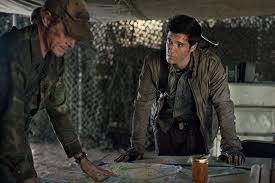
At the end of the first season, the show’s protagonist, a history teacher turned freedom fighter, Tom Mason (Noah Wyle) allowed himself to be taken captive by the alien invaders that have conquered the world. The second season premiere episode of Falling Skies (actually two episodes “Worlds Apart” and “Shall We Gather At The River”) takes place three months later in Boston and the Massachusetts countryside. Mason’s group led by the hard-bitten but sympathetic Captain Weaver (Will Patton) are engaging in harassing attacks against the alien skitters (vaguely resembling giant arachnids) and the robotics mechs. During one ambush, Mason’s two sons Hal (Drew Roy) and Ben (Connor Jessup), who was previously enslaved by the aliens, discover a wounded Mason in the melee.
Flashbacks reveal what happened to Tom Mason in the missing time. On board the aliens’ ship Mason is told that his group will be given sanctuary if they stop fighting. He refuses the offerand attacks the aliens’ bipedal overlord. Next thing he knows, he is released along with other military prisoners who are then executed; strangely he is able to escape. Eventually he reunites with the group but he no longer trusts himself. Convinced he has been turned into some kind of sleeper agent, Mason has himself restrained after a parasitic lifeform is found in his eye. The scenes where the group’s doctor, Anne Glass (Moon Bloodgood) removes the wiggling, worm-like creature were truly cringe inducing.
By the time, Tom Mason has reunited with his friends, it’s obvious that this rag-tag group is very desperate and depleted. Over a hundred people have been killed since Mason’s capture and they are low on supplies. These two episodes do a great job of showing how beaten down these fighters are and yet they keep on fighting. At this point, their primary objective isn’t to overthrow the aliens. They are simply outmatched. Rather their only goal is survival. The production design is excellent, everyone looks believably grungy and their equipment looks worn and well used. And the second season has ramped up the action and the tension. As one of the few genuine science fiction shows on the air right now, Falling Skies is a well-produced effort and it seems as if the show has found its legs and will hopefully continue to grow. Unlike other genre shows, it’s fairly easy to jump into Falling Skies and watch the interesting story unfold.
The science fiction and fantasy world lost a true visionary today with the death of Ray Bradbury. The man was a true poet who penned some eloquently profound stories and novels. Among his greatest works are Fahrenheit 451, Something Wicked This Way Comes, The Martian Chronicles, I Sing The Body Electric, R Is For Rocket and The Illustrated Man. His short stories are well regarded by critics and readers and were adapted for comic books (notably EC Comics), TV shows like The Twilight Zone, plays and films. They include “the Flying Machine”, “There Will Come Soft Rains”, “The Fog Horn” (which inspired The Beast From 20,000 Fathoms), and “A Sound Of Thunder”. The latter of which popularized the time travel paradox concept of the Butterfly Effect.
Bradbury also wrote the screenplays for John Huston’s film adaptation of Moby Dick, the film adaptation for Something Wicked This Way Comes,Alfred Hitchcock Presents, The Ray Bradbury Theater (which he hosted), and more. Ray Bradbury won an Emmy award for his script The Halloween Tree, which was based on his book of the same name. He also won numerous awards and citations including a 2007 Pulitzer Prize Special Citation.
Born in Illinois in 1920, Ray Bradbury was a dreamer who inspired many to dream and look up to the stars and wonder at the beauty of our universe. Even at an early age, his writing gift was evident and he soon began publishing numerous short stories. While many of his works are lyrical and inspiring, he also didn’t shy away from exploring humanity’s darker side. Many stories served as warnings about ourselves, while offering a glimmer of hope.
This is probably best presented with his masterpiece Fahrenheit 451, which is a personal favorite, in the futuristic society of that novel, books and all literature are outlawed as the populace is deliberately kept ignorant by the government to better control them. Bradbury played with many ironies in his body of work, and Fahrenheit 451 wasn’t an exception. In the book, firemen aren’t used to put out fires, rather they create fires as they storm into the homes of suspected book owners and set libraries on fire. While the majority of the book is a bleak look at how shallow and empty we can be, Bradbury provided a main character (the fireman Guy Montag) who slowly comes to his senses about the horror of book burning. Montage redeems himself (and society at large) by becoming part of an underground movement to bring literature back to society in order to save it.
Bradbury’s contributions to the world of literature and science fiction and fantasy cannot be measured. While Ray Bradbury may no longer be with us, his spirit is now rightfully in the heavens above us and his works will continue to inspire many for as long as there are dreamers and visionaries.
Sure we celebrate the exploits of our favorite superheroes on screen and print, but many comic book fans know about the dark side of having super powers. Whether they’re extremely powerful villains out to destroy the world or well-intentioned heroes who lose control over their powers, super-powered individuals are a world threat, at least in fiction.
Doomsday Scenario No. 8: Man and Superman
Of course, the real world isn’t threatened by superhumans. That doesn’t mean that it cannot happen sometime in our future. With advancements in bioengineering it is feasible to create super-powered humans, but that is a long way off. What is more plausible in the near future are new technologies to create battle suits like Iron Man’s. But that is another subject.
Who Watches Them?So what would happen if superhumans were to emerge? If artificially created for military use ala Captain America, this would set off a new kind of arms race as nations try to acquire their own super-powered operatives to keep up with rivals. Never mind trying to get nukes, having superhumans would give any country a definite edge. This theme has been explored somewhat in comic books and Captain America was a response to the creation of his enemy the Red Skull. In an obscure Epic mini-series called The One, the United States and the Soviet Union unleash superhumans against each other after nuclear weapons are made obsolete by an advanced entity. Also, who will keep them in check? Will the heroes in turn rule us as seen with the Squadron Supreme mini-series? It really becomes a case of “who watches the Watchmen?” as shown by DC Comics’ Kingdom Come and Watchmen or Marvel Comics’ Civil War. But even if the superhumans can be controlled what is their place in society? Can they fit in? It’s doubtful, since humanity tends to hate and fear what is different. Sadly, it is very easy to imagine a scenario where superhumans become ostracized; this will inevitably lead to conflicts between the superhumans and normal humans. The X-Men and its numerous spin-offs are perfect examples of this concept as the comic book mutants endured bigotry and hatred from humans. This hatred motivates villainous mutants like Magneto and frankly can anyone blame them for wanting to strike out against humanity? This ambiguity is what makes the X-Men comics so well-renowned. Is it possible to live harmoniously with superhumans? Well, humans have never been known to be the sharing type. It’s theorized that humanity drove Neanderthals to extinction from competition and humanity used its advantages to dominate the world. In that case, superhumans will have an edge over ordinary people and conquer or destroy us. Many supervillains try to do just that in comic books and movies.
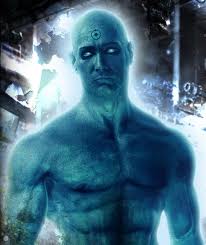
With Great Power… Another worrying aspect are superhumans with incredible God-like powers. One of the Watchmenheroes, Dr. Manhattan was the only person in that world that possessed super powers and had the ability to destroy it. Lucky for them, he wasn’t interested in doing that and had complete control over his ability. Unfortunately, the same couldn’t be said for Solar.
Art by Barry Windsor Smith
He was a superhero that appeared in Valiant and Dark Horse Comics (having made his debut in Gold Key Comics) and had the power to manipulate energy much like Dr. Manhattan. During the course of his story it was revealed that he accidently destroyed his universe and wound up recreating it. The inability to control power was also shown in the classic X-Men storyline the “Dark Phoenix Saga” where mutant telepath Jean Grey is unable to reign in her growing powers and ultimately kills herself before she wound up destroying the Earth (this was also to atone for her destruction of an alien sun which destroyed an alien society). The endowment of such power on one person is very terrifying. The bottom line is that powers do bring great responsibility but staying in control is very difficult. In these instances, power does corrupt. This was seen earlier this year in the film Chronicle where a lonely teenager develops telekinetic powers and becomes dangerous despite his sympathetic background. Even Star Trek very early in its history explored the aftermath of developing super powers with its second pilot “Where No Man Has Gone Before” and of course, the famous episode “Space Seed” that introduced the genetic superhuman Khan. Then there is the Star Trek: The Next Generation episode “Hide And Q” where Commander Riker is gifted with Q’s vast powers and learns some harsh lessons. Seriously, if such people were to come into existence there isn’t any way to counteract them. Humanity and the world will be doomed or at the least changed radically. Thankfully, this isn’t going to happen to us soon. But these comic book tales and movies and TV shows should serve as a reminder to us about the ramifications of having super powers.
As the traditional TV network season dies down, many shows will conclude their seasons with memorable finales. Many sci-fi, fantasy and horror shows have had some of the most-talked about finales that included thrilling cliffhangers, WTF revelations and dramatic game-changing developments. WARNING: Major Spoiler Alerts Ahead.
10.“Lucifer Rising” Supernatural (Season Four); Sam and Dean Winchester are betrayed by their allies who want to bring about the coming apocalypse by unleashing Lucifer upon the Earth.
9. “How To Stop An Exploding Man”Heroes (Season One); the show fell apart after its terrific first season but many episodes from that season are still great including the season finale that featured several super-powered heroes confronting the power-stealing villain Sylar.
8. “Zero Hour”Star Trek: Enterprise (Season Three); the conclusion of the season-long Xindi arc finds Captain Archer and the Enterprise crew on a last-ditch, desperate gamble to prevent the alien Xindi from destroying Earth. Aside from all the action and ship battles, the episode had a surprise ending which unexpectedly stranded our heroes on an alternate Earth during World War II.
7.“Over There, Part 2”Fringe (Season Two); Olivia Dunham and Walter Bishop continue their mission in the parallel Earth to retrieve Peter Bishop. Viewers are treated to a fascinating look at another Earth with doppelgangers, advanced tech, quarantine zones and many alternate cultural Easter eggs, plus a nefarious plot to destroy our universe. The cliffhanger was pretty nifty too with Olivia trapped in the parallel universe while her sinister double takes her place.
6.“Die Me, Dichotomy”Farscape (Season Two); the show’s main character, lost-in-space astronaut John Crichton, had a neural chip implanted in his brain by his enemy Scorpius in order to access Crichton’s hidden knowledge about wormholes. Throughout the episode, Crichton battles himself as the chip asserts control of his mind and makes him attack his friends and results in the death of his would-be lover Aeryn Sun. After a doctor finally removes the chip, Scorpius appears, takes the chip and leaves behind a helpless, broken Crichton on the operating table so he can live with the agony of what happened.
5.“Chrysalis” Babylon 5 (Season One); this season finale would prove to be the swan song for the show’s main character Jeffrey Sinclair (replaced off-screen in season two by John Sheridan) as ominous events unfold. Sinclair’s station security chief unsuccessfully attempts to stop a conspiracy to assassinate the Earth Alliance president. His efforts leave him shot and in critical condition. Meanwhile, the mysterious aliens called the Shadows emerge and attack an outpost of one of the major races, thus setting the stage for a deadly galactic war. Towards the end, Sinclair’s ally D’Lenn undergoes a physical transformation to fulfill a prophecy as Sinclair laments elsewhere that “nothing’s the same anymore.”
4.“Lay Down Your Burdens, Part II”Battlestar Galactica (Season Two); fleetwide presidential elections are held pitting President Roslyn against the enigmatic Baltar. An issue of the election and the series itself is whether or not the fugitive humans should abandon their quest to find Earth and settle down in a discovered habitable world. The episode jumps ahead more than a year later and shows how miserable the humans are living in their makeshift shanty towns. Things get much worse when their enemies, the robotic Cylons, arrive on the planet and the humans’ new leader Baltar surrenders the colony to the Cylons.
3.“Through The Looking Glass” LOST (Season Three); the final minutes are a true game changer for LOST. The castaways are trying to find their way off the mysterious island as flashbacks show a despondent Jack Shephard back in L.A. at the end of his road. For a while it was the standard format for the series, feature flashbacks on certain characters while advancing the present-day plotline. However, aside from the foretold death of a popular character, LOST stunned fans with the revelation that the episode’s flashback was actually a flash forward and that Jack was desperate to return to the island.
2.“Call To Arms”Star Trek: Deep Space Nine (Season Five); the peaceful Federation goes to war with the Dominion in this exciting season-ender. This development is a first for the Star Trek shows, which often preached peace above all. Viewers were treated to an effects-laden spectacular as hordes of Dominion ships attacked the Deep Space Nine space station. The episode ended with so many outstanding closers, each of which would’ve sufficed as any show’s final moments. For example, the episode could’ve just ended with Captain Sisko’s speech to his Bajoran colleagues that he will return, or with Dominion lackey Gul Dukat being “welcomed” to the station, or with Dukat’s discovery of Sisko’s baseball indicating that Sisko and company are coming back. The episode then topped itself with a final breathtaking scene of Sisko’s Defiant warship joining a vast Starfleet/Klingon armada ready to do battle.
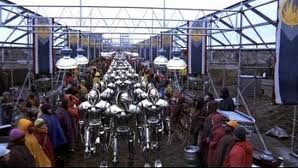
1.“The Best Of Both Worlds, Part 1”Star Trek: The Next Generation (Season Three); this was the first and best cliffhanger shown on Star Trek: The Next Generation. The cybernetic and invulnerable Borg race begin an invasion into Federation territory with the goal of reaching Earth. Despite their best efforts, the Enterprise and its crew are nearly powerless to stop the Borg, which leads to a crisis of confidence faced by Captain Picard. Meanwhile, First Officer Riker has to contend with an overly ambitious officer/Borg specialist who is out for his job. The tension runs way overboard as Picard is kidnapped by the Borg but the true jaw-dropping moment comes when the Enterprise crew attempt a rescue. They find that Picard has been horribly transformed into a Borg, who then coldly orders the Enterprise crew to surrender. Equally as chilling was Riker’s three-word response, which ends the episode…to be continued.
While the fate of two universes was in the balance in the final fourth season episode of Fringe, until very recently so was the show itself. Many Fringe fans breathed a relieved sigh when the show was given a final reprieve by Fox for a fifth and final season because now the show can properly finish its complex storyline. Yet by looking at the final episode “Brave New World, Part 2” one could tell that the show’s producers meant for this episode to also serve as a series finale if needed. Fortunately that wasn’t the case, but TPTB have to be careful not to fall into the trap that Babylon 5 did. In that show, the proper storyline came to a conclusion at the end of its fourth season only to be given a new season but felt tacked on and aimless.
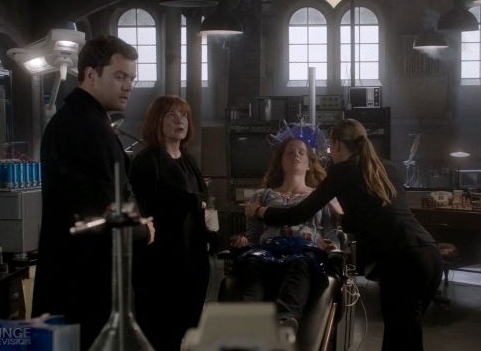
As for the episode itself, it was one of the best of the series. Tightly plotted, suspenseful, and it featured all the elements of a classic Fringe episode. Meaning time-traveling Observers, reanimated corpses, weird and gross pseudo science, end-of-the-world theatrics and FBI agent Olivia Dunham (Anna Torv) doing a turn as one of the X-Men by emulating Jean Grey and Wolverine’s mutant tricks. This episode explained many of Fringe’s mysteries such as why was Olivia dosed with the fictional drug cortexiphan (which gave her psionic powers); what did the wounded Observer called September mean in previous episodes when he cryptically stated that Olivia Dunham had to die and most importantly what was the goal of the ultimate baddie.
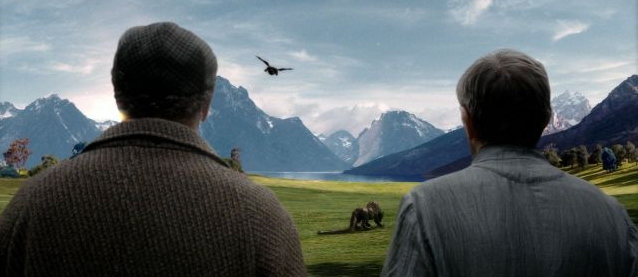
The head villain was revealed in the penultimate episode of the fourth season to be Walter Bishop’s (John Noble) old partner William Bell (Leonard Nimoy) and he wanted to recreate the universe to his own design. William Bell had created a modern-day Noah’s Ark with new creatures and meant to use Olivia Dunham’s powers to fuel the collision between our universe and the parallel one that had been seen many times on Fringe. Naturally, it’s up to Olivia and her lover/partner Peter Bishop (Joshua Jackson) to stop this mad scheme.
What was surprising and oddly reasonable was his motive. Bell was dying of cancer and came to hate the unfairness of life. He reasoned that if we were created in God’s image then it was only natural that we try to be like God-hence all the scientific experiments and aberrations throughout the series. But what was surprising was that Walter Bishop came up with the scheme to destroy and remake the universe. Actually, Bishop concocted this back before the show when he was an evil mad scientist. This revelation also explains why the current Bishop is more benign and doesn’t have his full mental capacities.
There is a feeling of conclusion in the final minutes of the episode (Walter even finally calls his assistant by her proper name!), the Fringe Division of the U.S. government receives full funding and resources and Olivia and Peter are ready to live happily ever after. But luckily for us fans, a final nugget and indication of what is to come arrives in the form of the Observer, who delivers a warning. This is probably alluding to the future timeline seen in the recent episode “Letters Of Transit” where the Observers take over the world.
Thankfully, there are now a few more episodes left to answer this mystery and the other remaining ones. Thirteen episodes to be exact.

 Flashbacks reveal what happened to Tom Mason in the missing time. On board the aliens’ ship Mason is told that his group will be given sanctuary if they stop fighting. He refuses the offerand attacks the aliens’ bipedal overlord. Next thing he knows, he is released along with other military prisoners who are then executed; strangely he is able to escape. Eventually he reunites with the group but he no longer trusts himself. Convinced he has been turned into some kind of sleeper agent, Mason has himself restrained after a parasitic lifeform is found in his eye. The scenes where the group’s doctor, Anne Glass (Moon Bloodgood) removes the wiggling, worm-like creature were truly cringe inducing.
 are low on supplies. These two episodes do a great job of showing how beaten down these fighters are and yet they keep on fighting. At this point, their primary objective isn’t to overthrow the aliens. They are simply outmatched. Rather their only goal is survival. The production design is excellent, everyone looks believably grungy and their equipment looks worn and well used. And the second season has ramped up the action and the tension. As one of the few genuine science fiction shows on the air right now, Falling Skies is a well-produced effort and it seems as if the show has found its legs and will hopefully continue to grow. Unlike other genre shows, it’s fairly easy to jump into Falling Skies and watch the interesting story unfold.









 Starloggers