A Disappointing Secret Invasion

The six-part Secret Invasion TV series on Disney + streamed its final episode last night and unfortunately it was as mid as the rest of the series. To go into why it was so mediocre and par for the course with the recent TV shows set in the Marvel Cinematic Universe (MCU) there will be major spoilers from this point on.

Secret Invasion had a lot to admire, notably Samuel L. Jackson as former S.H.I.E.L.D. director Nick Fury, Olivia Colman as British secret agent Sonya Falsworth, and some terrific dialouge. There was one riveting moment where Fury explained, using his childhood memories in the segragated south, why humanity would never accept alien beings living on Earth. But the overall feeling of the series feels underwhelming and done on the cheap, which is surprising given that it supposedly had a large budget.

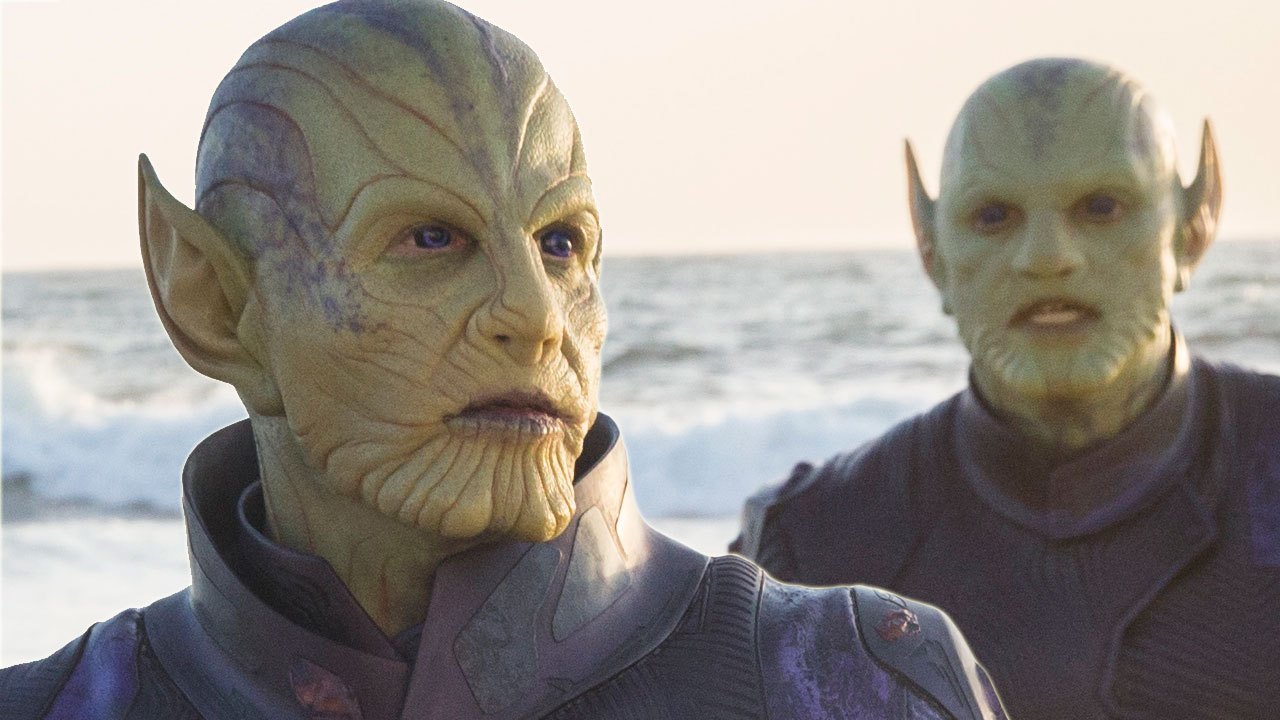
Like every comic-book adaptation, Secret Invasion was very loosely based on the Marvel Comics mini-series of the same name in that it only adapted the basic premise that alien shape shifters called Skrulls infiltrated Earth’s human populace. Unlike the comic books there weren’t any Skrulls impersonating superheroes except for Col. James “Rhodey” Rhodes aka War Machine (Don Cheadle). There aren’t any epic battles between superheroes and their alien counterparts, and there is a lack of paranoia about who was a Skrull like in the comic books where readers were shocked that several superheroes were impersonated by Skrulls for years.

Yes, there was Rhodey, but that was it, and by the way he acted at the start of the series it was fairly obvious that he was a Skrull. There were a few other revelations but they lacked any dramatic punch because most of these people never appeared before in the MCU. The TV series was just begging for appearances from many established characters, yet that never happened. Sure, it was unrealistic to expect Chris Hemsworth or Paul Rudd to show up, but the MCU has so many distinctive minor characters that could have appeared to play into the paranoia by revelations that they were Skrulls. What is it, they ran out of money to pay these actors? Did the showrunners seriously expected viewers to be shocked when it was revealed that the prime minister of the United Kingdom was a Skrull? Big deal! This faux prime minister did not even do anything!

The storyline followed Nick Fury as he learned that a million Skrulls are living as refugees on Earth disguised as humans. One of them, Gravik (KIngsley Ben-Adir) was a former spy who worked with Fury and is now a terrorist intent on turning Earth into a new homeworld for his race. To do this, Gravik planned to start World War III by using his clandestine Skrull army to instigate a conflict between the United States and Russia. With limited resources, except the help of his Skrull friend Talos (Ben Mendelsohn). Fury has to muster all his connections and skills to stop Gravik and his followers.

What could have been an intense and paranoid political thriller came off as underwhelming aside from a few bright moments throughout the show. Many elements of the storyline do not make sense. For instance, Skrulls were immune to radiation, which is why Gravik wanted to start a third world war. He reasoned that when humanity was wiped out by the fallout radiation the remaining Skrulls would inherit the Earth. But did he stop to consider that Skrulls would be just as vulnerable to the shockwaves and firestorms from the nuclear explosions? What about the biosphere of Earth, could the Skrulls survive on a poisoned planet with no food available and destroyed infrastructures?

Then there were the attempts to assasinate the president of the United States (Dermot Mulroney). There was a sequence in the fifth episode where the president’s motorcade in England was attacked by Gravik’s forces. It was exciting, but it was nagging to see how lightly protected the motorcade was or how it was put into a vulnerable position in the first place. Some lines of dialogue that the Secret Service was severely compromised would have helped here. The poor lines of defense are even more noticeable in scenes were the president was in a British hospital with very few people around him. He should have had an army surrounding him after the motorcade attack and most likely the Secret Service would have whisked him off to Air Force One. Instead we are expected to believe that Fury was able to slink into the hospital without any serious opposition.

There were these cheap dramatic moments of Fury facing off with the Rhodey Skrull. Every time the Skrull would get the upper hand because he was disguised as Rhodey. So why didn’t Fury do what Falsworth did in other scenes when dealing with Skrulls and just shoot him? She showed that injuring a Skrull would have revealed that their blood was a different color and boom, the fake Rhodey would have been exposed.

Continue reading
Captain Marvel Is A Solid MCU Entry

Captain Marvel is here at last, satisfying our desire for new content from the Marvel Cinematic Universe (MCU), being that it’s been several months since we had anything from the famed MCU. At the same time, the latest offering from the Marvel Cinematic Universe sets us up for next month’s Avengers: Endgame.

As many know, Captain Marvel, based on the Marvel Comics character, has been mired in controversy lately thanks to Internet trolls and people with their own agendas. It’s a shame really, because all this noise is distracting from the film itself. It’s bad enough that so much is expected from an MCU film these days that unless the film is an absolute epic, it is bound to disappoint. With all this going on it may be difficult to judge Captain Marvel on its own merit.

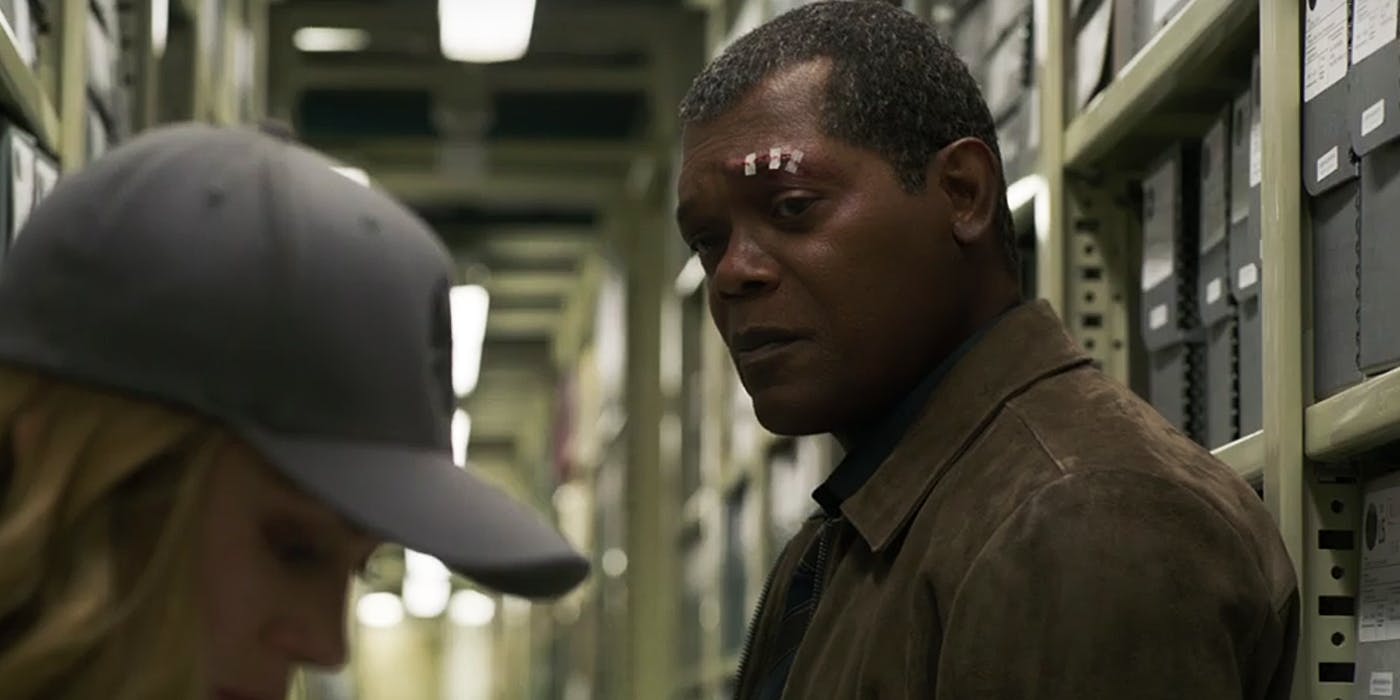
Looking at the film objectively, it does have its faults but it’s not a disaster at all. In fact, on the whole, Captain Marvel is a solid entry to the MCU and has so much to enjoy. Part sci-fi space adventure, part fish-out-of-water story, part mystery and part buddy cop yarn, the film bridges the cosmic part of the MCU with the Earth-based part. It introduces us to Vers (Brie Larson), who lives on the Kree homeplanet Hala and is part of the Starforce, dedicated to peacekeeping throughout the Kree Empire. She and her squad routinely hunt the Kree’s mortal enemies, the shape-shifting Skrulls. Early in the film, Vers crash lands on Earth in 1995 and meets S.H.I.E.L.D. agent Nick Fury (Samuel L. Jackson sporting some amazing deaging CG). The two team up to find out why the Skrulls are infiltrating Earth until she is recovered by Starforce. Along the way, she has flashbacks that reveal she is actually Carol Danvers, a human test pilot and this revelation has her questioning her allegiance to the Kree.

Captain Marvel is an enjoyable film with some interesting twists and character moments. Some plot developments can be seen light years away but they’re well executed and the film is highlighted by the cast who are quite good, especially Jackson, who portrays a less jaded version of Nick Fury, and Ben Mendelsohn as Talos, the main Skrull in the film. Talos is an unexpectedly complex character and Mendelsohn’s acting is exceptionally good here as he is able to emote so effortlessly through the heavy Skrull makeup.

As for Brie Larson, her performance is rather stoic and comes off as a largely unemotional hero and not very interesting despite her personal dilemma. Larson is OK as Danvers/Captain Marvel. but one has to wonder if anyone else could have done the role better. This could be a problem because she is supposed to be a major player from here on out. But there is room for growth and Larson is a talented actor. She does have some good banter and chemistry with Jackson, but Jackson is the more charismatic of the two. Larson’s performance is just part of the problem the film has. It’s slickly made and has many fun moments, but the direction is bland at times and some pivotal scenes are poorly lit, which detracts from their impact. Marvel Studios has a penchant for hiring largely inexperienced, but talented directors and this usually works. In this situation, perhaps the film studio should have gone with someone other than Ann Boden and Ryan Fleck. The two don’t seem to have distinctive voices like James Gunn or Taika Waititi.

The film is not bad by all means, its merits easily outweigh its problems. It’s quite awesome with dazzling special effects, a great ’90s soundtrack,and hits most of its marks. Plus, the mystery behind Danvers’ identity and what happened to her are done well. Despite what some trolls are proclaiming it doesn’t have some kind of feminist agenda. It’s a straight up superhero adventure. Also, Captain Marvel is an important entry of the MCU because it explains how many aspects of the Marvel Cinematic Universe came to being. Plus, its post-credits scene is vital to Avengers: Endgame. On the whole, Captain Marvel is a respectable, flashy high-middle tier entry of the MCU that adds new wrinkles to the ever-growing film universe.

The Aftermath Of Captain America: The Winter Soldier

?????????????????????????????????????????????????????????????????????????????????????????????????????????????????????????????????????????????????????????????????????????????????????

First off, if anyone reading this hasn’t seen Captain America: The Winter Soldier or the most recent episodes of Agents Of S.H.I.E.L.D. then stop reading this because MAJOR SPOILERS will be discussed. Last warning, if anyone doesn’t want to be spoiled then go and watch that excellent movie or watch the TV show online somewhere and come back here when done.

Enemies Within

The events in Captain America: The Winter Soldier, without exaggeration, completely changed the Marvel Cinematic Universe. What happened in that movie probably has more far-reaching consequences than the alien Chitauri attack on New York City seen in The Avengers.

S.H.I.E.L.D., the elite spy agency of the Marvel Universe, no longer exists by the film’s end thanks to Captain America/Steve Rogers (Chris Evans) and his partners. It turned out that the ultra spy organization was infiltrated long ago by Hydra, the Nazi off-shoot organization led by the Red Skull (Hugo Weaving) in Captain America: The First Avenger. That revelation halfway into the film was a big WTF moment in Captain America: The Winter Soldier, especially with the disclosure that Hydra was responsible for orchestrating many chaotic and destructive events in our history since the end of World War II. This was something that is disturbing to learn given our violent history and is the stuff conspiracy fans thrive on. But in hindsight, Hydra’s malevolent influence was there in the open for everyone to see.

fury and starkThink about it, ever since S.H.I.E.L.D. was introduced in Iron Man, there was something a bit too Big Brotherish about S.H.I.E.L.D. They seemed to know too much, had too much access as seen when Nick Fury (Samuel L. Jackson), the agency’s director, turned up uninvited in Tony Stark’s (Robert Downey, Jr.) place in the post-credit scene in that film. The man was for all intents and purposes a trespasser but everyone was too busy wetting their pants when Fury mentioned the Avengers Initiative. Then they came off as a bit nefarious with the way they coldly confiscated scientific equipment and data from Jane Foster (Natalie Portman) and her group in Thor. Their blasé attitude throughout the movie didn’t alleviate this feeling, it was as if they were untouchable and they were. In the climax of The Avengers, the World Security Council ordered a nuclear strike on New York City to stop the alien Chitauri invasion. Nick Fury refused to carry out the order, but the Council overruled Fury and had S.H.I.E.L.D. pilots carry out the order nonetheless. Being that the head of the Council, Alexander Pierce (Robert Redford), was revealed to be part of Hydra, this decision makes sense since he would be fine with sacrificing the city.

????????????????????????????????????????????????????????????????????????????????????????????????????????????????????????????????????????????????????????????????????????????????????????????????

As with real-life spy agencies, it would be par for the course for S.H.I.E.L.D. to be philosophically gray and murky when it came to getting their hands dirty when carrying out missions. To them the ends do justify the means; that is just the unshakable mindset of spies. Nick Fury at the beginning of Captain America: The Winter Soldier was fine with this concept. He even scolded Rogers and told him to just accept the questionable philosophy of Project: Insight and get with the program. For that initiative, S.H.I.E.L.D. constructed three state-of-the-art helicarriers that would preemptively take out human targets before they could commit any acts of terror or criminal activity. Helping the project was a computer program that analyzed and predicted the behavior and actions of prospective targets. Later in the film, Pierce ordered the helicarriers to eliminate all potential threats, which numbered in the millions and included Bruce Banner, Tony Stark, the Avengers and Stephen Strange. While those name drops are cool Easter eggs for fans they point out the fact that Pierce and Hydra’s extreme plan would’ve eliminated any resistance to their plan to instigate world order.

At one point in the film, Fury wanted to preserve S.H.I.E.L.D., but Captain America was adamant about taking down the entire structure. Unlike Fury, he saw that the organization was corrupted and unsalvageable. Even without Hydra’s influence S.H.I.E.L.D. was too omnipresent and powerful. The agency was a perfect example of power corrupts. Thus, it had to be disbanded. This decision would immediately impact the lives of many S.H.I.E.L.D. agents around the world. Continue reading