2012 Doomsday Scenarios: Month Five

Sure we celebrate the exploits of our favorite superheroes on screen and print, but many comic book fans know about the dark side of having super powers. Whether they’re extremely powerful villains out to destroy the world or well-intentioned heroes who lose control over their powers, super-powered individuals are a world threat, at least in fiction.

Doomsday Scenario No. 8: Man and Superman

Of course, the real world isn’t threatened by superhumans. That doesn’t mean that it cannot happen sometime in our future. With advancements in bioengineering it is feasible to create super-powered humans, but that is a long way off. What is more plausible in the near future are new technologies to create battle suits like Iron Man’s. But that is another subject.

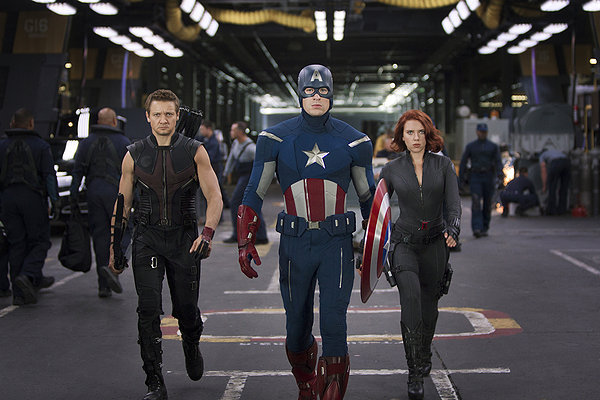
Who Watches Them? So what would happen if superhumans were to emerge? If artificially created for military use ala Captain America, this would set off a new kind of arms race as nations try to acquire their own super-powered operatives to keep up with rivals. Never mind trying to get nukes, having superhumans would give any country a definite edge. This theme has been explored somewhat in comic books and Captain America was a response to the creation of his enemy the Red Skull. In an obscure Epic mini-series called The One, the United States and the Soviet Union unleash superhumans against each other after nuclear weapons are made obsolete by an advanced entity. Also, who will keep them in check? Will the heroes in turn rule us as seen with the Squadron Supreme mini-series? It really becomes a case of “who watches the Watchmen?” as shown by DC Comics’ Kingdom Come and Watchmen or Marvel Comics’ Civil War. But even if the superhumans can be controlled what is their place in society? Can they fit in? It’s doubtful, since humanity tends to hate and fear what is different. Sadly, it is very easy to imagine a scenario where superhumans become ostracized; this will inevitably lead to conflicts between the superhumans and normal humans. The X-Men and its numerous spin-offs are perfect examples of this concept as the comic book mutants endured bigotry and hatred from humans. This hatred motivates villainous mutants like Magneto and frankly can anyone blame them for wanting to strike out against humanity? This ambiguity is what makes the X-Men comics so well-renowned. Is it possible to live harmoniously with superhumans? Well, humans have never been known to be the sharing type. It’s theorized that humanity drove Neanderthals to extinction from competition and humanity used its advantages to dominate the world. In that case, superhumans will have an edge over ordinary people and conquer or destroy us. Many supervillains try to do just that in comic books and movies.
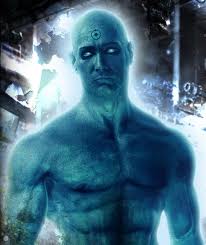
With Great Power… Another worrying aspect are superhumans with incredible God-like powers. One of the Watchmenheroes, Dr. Manhattan was the only person in that world that possessed super powers and had the ability to destroy it. Lucky for them, he wasn’t interested in doing that and had complete control over his ability. Unfortunately, the same couldn’t be said for Solar.

Art by Barry Windsor Smith

He was a superhero that appeared in Valiant and Dark Horse Comics (having made his debut in Gold Key Comics) and had the power to manipulate energy much like Dr. Manhattan. During the course of his story it was revealed that he accidently destroyed his universe and wound up recreating it. The inability to control power was also shown in the classic X-Men storyline the “Dark Phoenix Saga” where mutant telepath Jean Grey is unable to reign in her growing powers and ultimately kills herself before she wound up destroying the Earth (this was also to atone for her destruction of an alien sun which destroyed an alien society). The endowment of such power on one person is very terrifying. The bottom line is that powers do bring great responsibility but staying in control is very difficult. In these instances, power does corrupt. This was seen earlier this year in the film Chronicle where a lonely teenager develops telekinetic powers and becomes dangerous despite his sympathetic background. Even Star Trek very early in its history explored the aftermath of developing super powers with its second pilot “Where No Man Has Gone Before” and of course, the famous episode “Space Seed” that introduced the genetic superhuman Khan. Then there is the Star Trek: The Next Generation episode “Hide And Q” where Commander Riker is gifted with Q’s vast powers and learns some harsh lessons. Seriously, if such people were to come into existence there isn’t any way to counteract them. Humanity and the world will be doomed or at the least changed radically. Thankfully, this isn’t going to happen to us soon. But these comic book tales and movies and TV shows should serve as a reminder to us about the ramifications of having super powers.

A Valiant Summer

Fondly remembered for their innovative comic books in the ’90s, Valiant returned to the comic book scene earlier this month with the release of X-O Manowar #1. The comic book about a Visogoth warrior who acquires an alien battlesuit and winds up in modern times quickly sold out its print run of 45,000 copies. The company has announced that there will be a second printing of X-O Manowar #1 for sale on June 20 featuring a new wraparound variant cover by Arturo Lozzi. But the comic book company isn’t resting on its laurels with X-O Manowar.

On June 6, Valiant will release a reboot of Harbinger (about people with psionic powers) followed by Bloodshot on July 11 and finally Archer & Armstrong (a semi-comical buddy book about a naive master assassin and an immortal being) on August 8. The company plans on concentrating their comeback with these four core titles but will eventually bring back its other heroes.

Fans may want to note that there are plans by Sony for a movie about Bloodshot. Given the runaway success of The Avengers and other recent superhero movies, it’s very likely that the movie’s development will be fast tracked. It helps that Bloodshot’s concept is compelling. In the original comic book released back in the ’90s, Bloodshot was originally a mobster called Angelo Mortalli who was in a sense reborn by having his mortally wounded body injected with nanites that gave him superpowers. These nanites, while giving him advanced healing, reflexes, and strength, have erased his memories, thus forcing him to re-discover himself.

In the reboot written by Duane Swierczynski and drawn by Manuel Garcia and Arturo Lozzi, Angelo’s origins are more nebulous as he and readers aren’t even sure of his real name. And the comic book has more of a military angle with Bloodshot partaking in dangerous, suicidal missions. The creators promise that the new Bloodshot will be action packed while evoking compelling military/spy mystery plots.

Bolstered by the success of X-O Manowar, Valiant hopes to complete its comeback with other titles. According to Valiant CEO Jason Kothari, “Valiant has never underestimated the resonance that its characters have with comic fans around the world. X-O Manowar #1 has already taken a lot of people by surprise, and with Harbinger #1, and Bloodshot #1 just around the corner, this is truly going to be a summer of Valiant.”

Lewis T. Grove

DC, It’s Time For A Justice League Film

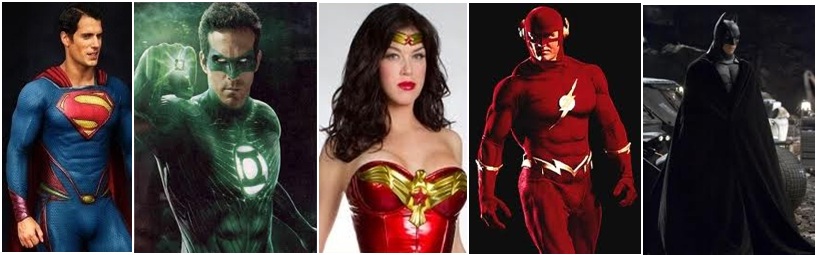
OK DC, Marvel has thrown down the gauntlet. Look at the result: The Avengers film looks to be one of this summer’s biggest blockbusters-maybe the biggest one. The buzz and hysteria surrounding this film is phenomenal. Toys based on the film are selling well and other merchandise is getting hard to find. Marvel Studios took a gamble and were patient. They carefully nurtured the film properties, which increased awareness for their characters. For The Avengers, Marvel Studios managed to corral the actors originating the super hero roles (with the exception of Edward Norton who didn’t reprise Bruce Banner/The Hulk) and bagged a director (Joss Whedon) who is an unabashed fan. Well it paid off in a super way-an opening weekend draw of over $200 million isn’t anything to sneeze at. So now the question remains: when will DC and Warner Brothers get their act together and put out a Justice League film? We’re not talking about some animated or motion capture film but an actual live-action film featuring Batman, Superman, Green Lantern, Wonder Woman, The Flash and DC Comics’ other great heroes.

Honestly how difficult is it to pull off? Marvel managed to do it, and DC’s characters has had more film and TV exposure so it would be easy to generate enthusiasm for such a film. And Marvel’s efforts are quite considerable if one takes into account how their properties have been scattered among many Hollywood studios. Warner Bros. has owned DC for some time so the logistics of gathering all their characters into one film should not be difficult. Of course, the ideal would be to bring aboard the most recent actors who’ve played the super heroes like Christian Bale or Ryan Reynolds, but it’s not really necessary as seen with Mark Ruffalo taking over the Bruce Banner/Hulk role in The Avengers and Superman and Batman have been recast throughout the years.

It isn’t as if The Avengers sprung up out of nowhere. The first inkling about a film starring Marvel Comics’ heroes came about at the end of the first Iron Man film in 2008 and later that year with The Incredible Hulk. In those films and others since then put out by Marvel Studios there have been many Easter eggs for fans that showed a shared universe. Captain America’s shield was in the background during a scene from Iron Man, the spy organization S.H.I.E.L.D. turned up, Hawkeye and Black Widow made cameos (Hawkeye in Thor and Black Widow in Iron Man 2) and even the Infinity Gauntlet was shown briefly in Thor. The point of all this was that for four years, Warner Bros./DC and everyone in the world knew Marvel Studios was building up to an Avengers film. Yet DC and Warner Bros. didn’t do anything to match that concept. Their releases didn’t give any indication of a shared universe (the last time this idea was explored were vague railroad PA announcements for a train headed to Gotham City in Superman Returns). It was so simple and would’ve excited fans.

That’s not to say that they haven’t tried to bring the Justice League to life. Putting aside the incredibly awful 1990s TV show pilot and a simplified version of the team appearing informally in Smallville, Warner Bros. was close to producing a Justice League film in 2008. A script was commissioned, George Miller was hired to direct it and he was casting roles, in other words, Justice League was in actual preproduction. But the Writers Guild strike of that year gave Warner Bros. a chance to pause and ultimately kill the project.

Reportedly, the studio wanted to emulate Marvel’s pattern of releasing solo super hero films that would culminate in a Justice League movie. But as of this writing, there is very little evidence that they are working toward such a film.

One worrying factor about building up to a Justice League film is the recent track record of DC movies. Aside from the recent Batman films, Superman Returns, Green Lantern, Constantine, Jonah Hex and Watchmen have been box office disappointments. The Dark Knight Rises is a guaranteed hit but this can’t be stated for next year’s Man Of Steel. Superman has proven to be a difficult character to translate to the big screen unless the right director is chosen and The Man Of Steel’s director, Zack Snyder has had a spotty record at the box office. So if the new Superman film doesn’t deliver it could mean another long drought before Superman returns to the silver screen and could delay a Justice League film.

Christopher Nolan, the director behind the successful Batman reboot, was rumored to be in line for directing a Justice League movie but there isn’t anything concrete stated about that notion. What is troubling for some fans is that Christopher Nolan as said in interviews that he wishes to keep the worlds of the individual heroes separate from each other. So, as with The Dark Knight, there probably won’t be any acknowledgement of Metropolis or Central City in The Dark Knight Rises. Ditto for Man Of Steel, which he is producing.

This mentality is shared by DC Entertainment as well. Diane Nelson, DC Entertainment President, said to IGN back in 2010, “We do have a very different attitude about how you build a content slate. And it isn’t necessarily about connecting those properties together to build a single thing. We think we’ve got great stories and characters that will lend themselves to great standalone experiences.”

Perhaps after looking at how much money The Avengers is making and the film’s popularity, DC and Warner Bros. may change their mind.

Lewis T. Grove

2012 Doomsday Scenarios: Month Four

In many ways, the idea of a total annihilation of our civilization due to war is the most terrifying doomsday scenario. Imagine the horror of the initial nuclear strikes that will destroy entire cities, wipe out millions if not billions of people in mere seconds and leave behind an unlivable radioactive wasteland. What probably makes this scenario so chilling is that the possibility of this happening is very real. Sure the Cold War ended but the threat of an all-out nuclear war still exists.

Doomsday Scenario No. 9: Nuclear Armageddon and Aftermaths

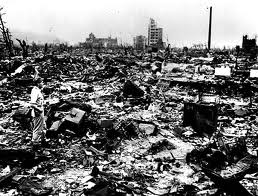
We all fear using nuclear weapons because of the effects of just two atomic bombs used in Japan at the end of World War II. The horrific sights and looming radiation made many realize how devastating these weapons were. Many have come to the conclusion that a full-scale nuclear war would destroy our civilization and way of life. But there are some who think that a nuclear war would be survivable and winnable, though what kind of life is there to live after that event? Is it worth surviving?

The Nuclear Dawn

Since the dawn of the nuclear age, countless books, films and TV shows have explored the post-apocalyptic world left after the nuclear mushrooms have dissipated. There have been somber, intellectual works and outrageous parodies that covered this concept. With the former early notable films include Five, The World, The Flesh And The Devil, and On The Beach. These early works naturally got many details incorrect. For instance, with The World, The Flesh And The Devil, our hero (played by Harry Belafonte) is the sole survivor of World War III (at least for the first half of the film) and winds up in an abandoned New York City where all the buildings are intact and there aren’t any bodies anywhere. The film tried to explain it away with a silly line about radioactive isotopes that dissipated after five days. Despite its scientific inaccuracies, the film was an interesting look at how a person would cope after surviving the apocalypse. At least in the movie Five the dangers of radiation are shown, the same with On The Beach. The latter was more of a character study about how we would face our untimely end (the film and book took place in Australia where an American submarine crew took refuge from the fallout of World War III but radioactive winds will soon reach the continent, dooming everyone living there), while Five showed how we can try to carry on emotionally after a traumatic event. The TV series The Twilight Zone had several episodes dedicated to nuclear war, some of the better known ones included “Time Enough At Last ,” “Two,” “The Shelter,” and “The Old Man In The Cave.”

The Day After Wars

As we studied more the concept of nuclear war and film/TV effects budgets increased more graphic and accurate depictions came about. Probably the most famous one is the TV film The Day After. It started off with the typical daily routines among Kansas City residents then midway through it, the world was jarringly torn asunder as the city was reduced to rubble with corpses everywhere,  people succumbing to radiation and civilization collapsing.

The Day After was one of many emotionally draining presentations. Some of the best ones were Threads (a British film that also graphically depicted World War III and the end of humanity), When The Wind Blows (an animated piece about an old couple eventually dying from radiation following nuclear war) and Testament. Taking place in a small suburb outside of San Francisco, in Testament, its residents aren’t hit with any nukes but are affected by the radiation and being cut off from the outside world. It’s particularly gut wrenching to watch the main character-played by Jane Alexander-tenderly nurture her dying children.

Opposite The Day After and Testament, there some ludicrous presentations. They include Invasion U.S.A. This Is Not A Test and Panic In Year Zero. Wildly inaccurate and poorly executed these films from the ’50s and ’60s couldn’t convey what would really happen if the unthinkable happened. Two more recent efforts include a “comedy” that aired on Fox called Whoops! about nuclear war survivors and Jericho which aired on CBS. So much of what happens in the show is unbelievable. Here are a couple of examples: townspeople put out an open-air picnic after a radioactive rainfall (!); a spoiled rich girl throws a party because her parents are out of town and won’t give up her generator to the police-who stand idly by as she parties! In reality, the authorities would’ve taken the generator by gunpoint.

Aftermath

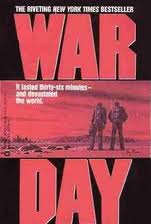
Then there are the films, books and stories that take place either shortly or long after a nuclear war. Too numerous to name here, these are just a sampling of books: The World Set Free by H.G. Wells (written in 1914, it correctly predicted the use of atomic weapons during war), Alas, Babylon by Pat Frank,  A Canticle For Leibowitz by Walter M. Miller, Jr., The Long, Loud Silence by Wilson Tucker, The Last Ship by William Brinkley, The Postman (also made into a film starring Kevin Costner) by David Brin, Swan Song by Robert McCammon, Warday and Resurrection Day. With Warday, Whitley Strieber writes about a United States that has been crippled economically and spiritually by a “limited” nuclear exchange with the Soviets. Partly a travelogue, the main character goes around America that is struggling to recover years after a war. The same thing happens with Resurrection Day by Brendon DuBois, the twist is that it’s an alternate history novel that follows the U.S. a decade after the Cuban Missile Crisis led to war.

For movies as with books there are too many to list. They include Damnation Alley (based on a Roger Zelazny book and is complete with giant killer roaches!), Def-Con 4, the Mad Max films, Radioactive Dreams, the 1960 film version of The Time Machine (it featured London destroyed by atomic bombs) and Peace On Earth-an MGM animated short release in 1939 featuring a world devoid of humans, who killed themselves off in a final war.

At The Precipice

Everyone knows about how close we came to war with the Cuban Missile Crisis and are now finding out about accidental close calls and near wars that happened before and since that crisis. As recently as 1995, Russia mistakenly believed a rocket launch by the U.S. was the beginning of a pre-emptive strike and almost retaliated. In 2001, India and Pakistan nearly went to war with each other and were prepared to use their nuclear stockpiles against each other.

Today we lose sleep over rogue nations like Iran developing nuclear bombs. It seems as if we are at the dawn of a new arms race where everyone seems to want to have their own nuclear stockpiles. Then of course there is the specter of terrorist groups and nut jobs getting their hands on a nuclear weapon. One thing that prevented all-out war between the U.S. and the Soviet Union was the concept of M.A.D. (Mutually Assured Destruction) which kept generals and leaders from losing their cool and automatically launching missiles for any reason. It’s unlikely many of these nations and terrorists will hesitate to use a nuclear weapon.


What is disturbing about this scenario isn’t the possibility of it happening but that it’s something that can be prevented. Some point out that nuclear weapons have to date kept the world out of full-scale wars like the First and Second World Wars. In a way they are right, the devastating nature of these weapons reminded world leaders not to brazenly use them…to date. But the reality is that the genie is out of the bottle. Trying to wish away nuclear weapons and reduce stockpiles may be a pipe dream. The capacity for war will exist within us for a very long time and so is the will to develop deadlier weapons. Perhaps one day, when humanity has matured past the point of war will it be feasible to put aside this nightmare.

Sports’ Violent Future


While The Hunger Games is captivating audiences and readers with its storyline about teenagers forced to partake in a deadly competition, the concept of futuristic blood sports isn’t anything new.

There are a few other films and books that dealt with a sport where the prize for winning was life itself. One of the more famous examples is The Running Man. Written by Richard Bachman (actually Stephen King using a pseudonym) and later adapted into a film starring Arnold Schwarzenegger, the game took place in a dystopian U.S. and is a show broadcast in the Games Network. The game contestant is forced to evade hunters. The longer the player stays alive the more money is earned. There was another well-known deadly game book also written by Bachman called The Long Walk, where teenage boys participate in a national marathon. The contest begins with one hundred contestants who have to walk nonstop. Anyone who stops or stumbles is killed by nearby soldiers. The winner, who is actually the last boy still walking, not only wins life but any prize he desires.

Two films from the ’70s that featured violent competitive sports were Death Race 2000 and Rollerball. In Death Race 2000 the U.S. has been replaced by the United Provinces (sound familiar?) and brutal gladiatorial games are used to mollify the masses. One of the most popular games is the Annual Transcontinental Road Race, a.k.a. the Death Race. A twist to the road race is that points are earned by killing pedestrians. The idea of deadly car races has been utilized in many video games. Some examples include Roadwar 2000 and Carmageddon.

Rollerball takes place in a future world overtly controlled by corporations and war is banned. In its place the competition of Rollerball is used. Part roller derby, part football, it’s a vicious combat sport where players bash opposing teams with spiked gloves as they try to gain possession of a metallic ball and score points. While both films are cult classics they were drearily remade not too long ago. Fortunately those remakes have been all but forgotten while the originals’ legacies endures.

Part of Rollerball’s popularity is the violent, close-quarter nature of the sport, which correlates with the popularity of football. A couple of sci-fi books have extrapolated on football’s evolution. In Killerball by Gary K. Wolf, football has turned into a vicious combat sport using martial arts and weapons. Meanwhile, football is still enjoyed hundreds of years from now in The Rookie (Part of the Galactic Football League book series) by Scott Sigler and is played by aliens and humans.

But football isn’t the final word on violent sports. Just look at hockey, rugby, boxing and other combative games. In a little-known film that deserves more attention called The Blood Of Heroes one of the only forms of entertainment in a post-apocalyptic wasteland is a sport known as The Game. In it armored teams try to score points at goalposts with a dog skull. One of the objectives by individual players is to get recognized for their skills and be rewarded with a luxurious lifestyle.

In our future there may be a movement to use surrogates in combat sports for safety reasons. The most recent example seen of this in the movies was Real Steel, where huge robots are used in boxing matches. It should be noted that the popular film was a remake of a Twilight Zone episode written by Richard Matheson, based on his short story. A more obscure example is the film Robot Jox. In this scenario, humans from opposing countries get into gigantic robots and battle each other. What is interesting to note with these films is that even though humans have been removed from the equation, the games still have spirit and heart, which makes them endearing to watch.

Before The Hunger Games came along there was another book and film dealing with teenagers forced to fight each other. That property is Battle Royale, a controversial Japanese book and film where teenage contestants are placed on a remote island and wear explosive neck collars that will detonate if they try to escape. Like The Hunger Games, the contests are to the death and monitored by the government.

While outwardly we as readers or viewers may be repulsed by some of these extrapolations, one has to admit they cater to our morbid curious nature.  This goes back to ancient history with the lethal gladiator games. These works point out that their violent games serve a greater good in keeping order and maintaining the peace. And with the popularity of today’s violent sports-that seem to be growing increasingly violent, maybe some of these future sports aren’t as implausible as we care to admit.

José Soto