Sports’ Violent Future


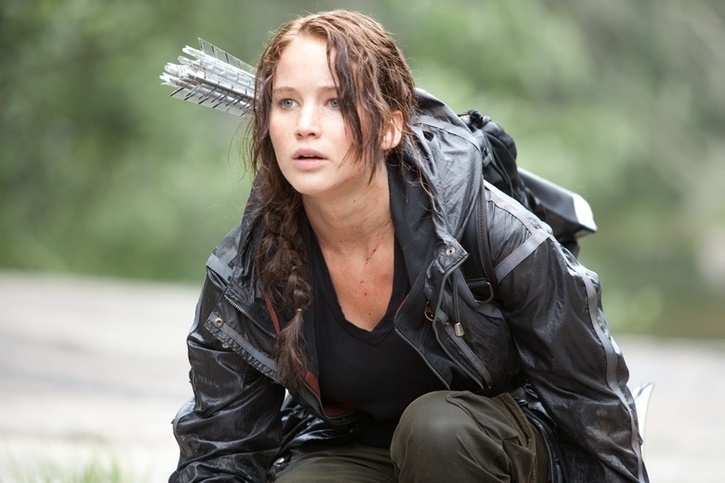
While The Hunger Games is captivating audiences and readers with its storyline about teenagers forced to partake in a deadly competition, the concept of futuristic blood sports isn’t anything new.

There are a few other films and books that dealt with a sport where the prize for winning was life itself. One of the more famous examples is The Running Man. Written by Richard Bachman (actually Stephen King using a pseudonym) and later adapted into a film starring Arnold Schwarzenegger, the game took place in a dystopian U.S. and is a show broadcast in the Games Network. The game contestant is forced to evade hunters. The longer the player stays alive the more money is earned. There was another well-known deadly game book also written by Bachman called The Long Walk, where teenage boys participate in a national marathon. The contest begins with one hundred contestants who have to walk nonstop. Anyone who stops or stumbles is killed by nearby soldiers. The winner, who is actually the last boy still walking, not only wins life but any prize he desires.

Two films from the ’70s that featured violent competitive sports were Death Race 2000 and Rollerball. In Death Race 2000 the U.S. has been replaced by the United Provinces (sound familiar?) and brutal gladiatorial games are used to mollify the masses. One of the most popular games is the Annual Transcontinental Road Race, a.k.a. the Death Race. A twist to the road race is that points are earned by killing pedestrians. The idea of deadly car races has been utilized in many video games. Some examples include Roadwar 2000 and Carmageddon.

Rollerball takes place in a future world overtly controlled by corporations and war is banned. In its place the competition of Rollerball is used. Part roller derby, part football, it’s a vicious combat sport where players bash opposing teams with spiked gloves as they try to gain possession of a metallic ball and score points. While both films are cult classics they were drearily remade not too long ago. Fortunately those remakes have been all but forgotten while the originals’ legacies endures.

Part of Rollerball’s popularity is the violent, close-quarter nature of the sport, which correlates with the popularity of football. A couple of sci-fi books have extrapolated on football’s evolution. In Killerball by Gary K. Wolf, football has turned into a vicious combat sport using martial arts and weapons. Meanwhile, football is still enjoyed hundreds of years from now in The Rookie (Part of the Galactic Football League book series) by Scott Sigler and is played by aliens and humans.

But football isn’t the final word on violent sports. Just look at hockey, rugby, boxing and other combative games. In a little-known film that deserves more attention called The Blood Of Heroes one of the only forms of entertainment in a post-apocalyptic wasteland is a sport known as The Game. In it armored teams try to score points at goalposts with a dog skull. One of the objectives by individual players is to get recognized for their skills and be rewarded with a luxurious lifestyle.

In our future there may be a movement to use surrogates in combat sports for safety reasons. The most recent example seen of this in the movies was Real Steel, where huge robots are used in boxing matches. It should be noted that the popular film was a remake of a Twilight Zone episode written by Richard Matheson, based on his short story. A more obscure example is the film Robot Jox. In this scenario, humans from opposing countries get into gigantic robots and battle each other. What is interesting to note with these films is that even though humans have been removed from the equation, the games still have spirit and heart, which makes them endearing to watch.

Before The Hunger Games came along there was another book and film dealing with teenagers forced to fight each other. That property is Battle Royale, a controversial Japanese book and film where teenage contestants are placed on a remote island and wear explosive neck collars that will detonate if they try to escape. Like The Hunger Games, the contests are to the death and monitored by the government.

While outwardly we as readers or viewers may be repulsed by some of these extrapolations, one has to admit they cater to our morbid curious nature.  This goes back to ancient history with the lethal gladiator games. These works point out that their violent games serve a greater good in keeping order and maintaining the peace. And with the popularity of today’s violent sports-that seem to be growing increasingly violent, maybe some of these future sports aren’t as implausible as we care to admit.

José Soto

The Dark Tower Returns

It’s been eight years since the final installment of The Dark Tower was released. For those who haven’t read them, Stephen King’s seven-book epic of The Dark Tower told a fantasy-science fiction saga with horror elements of a mythical gunslinger named Roland Deschain in the far future and his interdimensional quest to save reality from falling into chaos. Since the last book fans have been clamoring for more visits to the world of Roland and his ka-tet (or band of apprentice gunslingers). Based on the way the final book The Dark Tower ended it seemed as if the final word was written. But the ending, without giving anything away, had a cyclical nature. Fans pondered if there were more books or stories coming. In fact, King said back in 2009 regarding the series that “It’s not really done yet. Those seven books are really sections of one uber-long novel.” Well, now there is a brand new Dark Tower book to devour. The Wind Through The Keyhole has finally arrived and devotees can add this volume to King’s masterworks.

Many of the beloved characters from the saga are featured in this volume like Eddie and Susannah Dean, Jake Chambers, Oy the billy-bumbler and of course, Roland Deschain the last gunslinger. According to promos and samples released, The Wind Through The Keyhole takes place between the fourth and fifth volume of The Dark Tower saga. What is interesting is that while the book is promoted as a Dark Tower novel, it almost seems as if this novel can stand on its own while still taking place in the that universe.

When it begins, Roland and his ka-tet are on their way from the Emerald City (where the fourth book ended) to Calla Bryn Sturgis (where the fifth book takes place) but have to take refuge from a storm. While in their shelter, Roland recounts a tale to his friends that took place when he was much younger. In that story, young Roland is sent on a mission to investigate a killer shape shifter and meets a young boy. Hoping to calm him, Roland tells him a bedtime story-a story within a story. So in many ways, The Wind Through The Keyhole is like Wizard And Glass where that book went into Roland’s early days as well while using modern Roland and his ka-tet as a framing device. While the novel may not add anything to the overall story of The Dark Tower it promises to provide a fascinating look at Roland’s world.

Regardless of the book’s narrative, its release is a cause of celebration for many readers. Probably the biggest question they have is will there be more lost tales? Stephen King teased many with the idea that the entire saga hasn’t been revealed yet. Then again, he could’ve been alluding to the comic books released by Marvel that dwelled on his younger days. At this point there isn’t any way to know for certain if we’ve heard the last of Roland Deschain. Hopefully we haven’t.

Lewis T. Grove

2012 Doomsday Scenarios: Month Three

This premise may sound silly, and what doesn’t help are the ludicrous scientific explanations given in many films and shows. It’s probably why it’s not something that comes to mind when dealing with doomsday. But it’s now spring so let’s think about nature.  At one time, particularly during the 1950s and 1970s the concept of humanity’s comeuppance via nature wasn’t considered far-fetched by many. Usually the film would have protagonists encountering freaks of nature that threaten humanity if allowed to run rampant. Sometimes the creatures practically destroyed major cities. Tokyo and New York were preferred targets. Often, the culprits behind the mutations were byproducts of pollution or radiation. Godzilla comes to mind, actually he’s a prime example of…(drum roll please, add in an ominous voice)

Doomsday Scenario No. 10: When Nature Strikes Back

Sounds like the title for a Syfy Saturday night movie, doesn’t it? No surprise since the channel is now infamous for airing schlocky grade z sci-fi/horror films about mutated animals. There isn’t any need to list any of them here, just tune in to the channel say every third or so Saturday night to find one.

The heyday for nature striking back took place in two different eras; the 1950s when everyone lived in fear of nuclear weapons (we still do but for different reasons and it isn’t nature we fear but madmen determined to get WMDs) and the 1970s when pollution was the pc catchphrase for the decade.

Atomic Giants

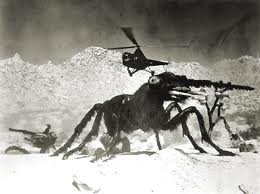
In the 1950s people worried about the long-lasting effects of nuclear radiation. Many films reflected this fear with stories about nuclear bombs unleashing gigantic monsters that were either prehistoric or animals that were mutated into mammoth proportions. Filmmakers ran the gamut with the kinds of ordinary animals that were deadly when grown larger. Probably the best film dealing with giant animals was Them! It was about ants gigantically mutated by atomic tests that emerge out of New Mexico and wind up in the sewers of Los Angeles. Other films include The Deadly Mantis, Tarantula, and The Giant Behemoth. Quickly these films gained poor reputations as inferior filmmakers churned out low-grade movies to capitalize on the craze. These kinds of films tapered off years later but do pop up from time to time. Only the cause for the gigantism isn’t because of radiation but pollution or other reasons. They usually ranged from the ridiculous Night Of The Lepus  (which was about giant killer rabbits…seriously) and Empire Of The Ants to somber and violent films like Prophecy  (featuring a giant mutated bear) and Mimic (mutated, man-eating hybrid insects) to more tongue-in-check efforts like Eight-Legged Freaks.

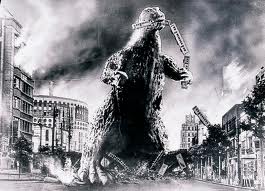
As shown with Godzilla, King Of The Monsters, atomic bombs woke up prehistoric behemoths slumbering for millions of years. But Godzilla wasn’t the first such creature unleashed to threaten humankind. The original nuclear dinosaur was the fictional rhedosaurus from The Beast From 20,000 Fathoms. But it was Godzilla that jumpstarted the giant monster craze from Japan that brought forth kaiju films that starred popular monsters like Gamera, Mothra, Rhodan and so on. They are still popular even though Toho, the company that produces the Godzilla films, stopped making them. There are plans to make another American version of Godzilla, but let’s hope they get it right the next time.

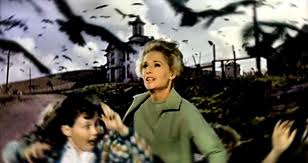
Things quieted down in the 1960s as fears about atomic mutants gave way to civil strife and cultural angst. Still, there are a couple of films in the time period that addressed the theme of nature fighting back. The best one was Alfred Hitchcock’s classic The Birds. For no explanation ordinary birds start attacking people en masse. Many of the scenes were quite chilling and show how helpless people can be against nature. It’s too bad the film studio didn’t let Hitchcock keep his original ending where flocks of birds have taken over San Francisco and presumably the world.

Another film is the original Planet Of The Apes. It doesn’t have an overt man vs. nature theme but it’s there and runs throughout the other films in the series including the recent Rise Of The Planet Of The Apes. Simians in the latter film were experimented on and they escaped to wreck vengeance on their human foes. Throughout the series, it’s stated that civilization falls when apes gain the upper hand against humans.

Pollutant Spawns

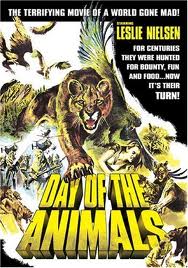
In the 1970s the big fear was man-made pollution and its effect on the environment. Godzilla even got into the act with Godzilla Vs. The Smog Monster where he faced off against a giant mutated slug that oozed deadly pollution. The premise in these nature-run-amok films is that humanity was being punished and the sentence was extinction. Of course, it rarely got that far but many of the offerings were interesting. Take this obscure film The Day Of The Animals. In this one, the ozone layer is depleted and increased ultraviolet radiation somehow brings upon animals, living in an altitude above 5,000 a rabies-like illness that makes them violent. Or how about this nugget of a film, Frogs, where animals sharing an island with a cantankerous landowner have had it with the constant pollution and take out the guests at the landowner’s birthday celebration. It was goofy yet creepy at times. Other films from this era include Squirm (killer worms), Kingdom Of The Spiders (William Shatner vs. you guessed it killer spiders), Ben (about swarming rats and yes Michael Jackson sang the title song), and Phase IV. The latter is about ants that evolve a hive mind and begin a successful dominion of the Earth.

These types of films aren’t as numerous as before probably because it is hard to pick out genuinely good films from so many awful ones that get more attention. Look at 2008’s The Happening which is about killer plants that cause people to kill themselves. It was so bad that the film’s star  Mark Wahlberg later publicly ragged about it. But they’re still being made because while most people realize that radiation and pollution won’t create monsters overnight there is still the fear that we are upsetting nature’s delicate balance and one day we will truly pay the price.

Real Or Fake 3D Films

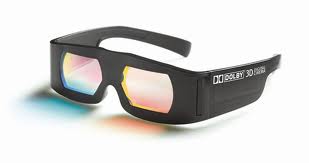
Once considered a novelty gimmick back from the ’50s 3D films look to be a mainstay in modern-day cinema. Specifically, f/x-laden genre spectaculars. It’s gotten to the point that a big-budget sci-fi or fantasy film without the 3D treatment seems to stand out or seem lacking. A prime example of that is the upcoming The Dark Knight Rises.

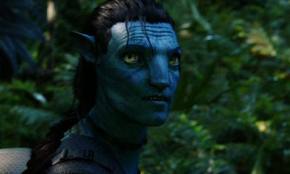
As anyone knows, this all started with the phenomenal success of James Cameron’s Avatar. There had been 3D film releases before Avatar but none of them were as hugely successful as Cameron’s sci-fi epic. Naturally, the film studios attributed Avatar’s success to the revolutionary 3D process that James Cameron utilized and set out to recreate that film’s success at the box office. This is why it seems as if every major genre or animated film is released these days in 3D.

All would be terrific if the 3D used was actually good on a consistent basis.

More and more often, audiences are complaining about the inferior 3D used in many films. Unlike Avatar, which was filmed using 3D cameras, most films released in 3D are post-converted. Usually it seems as if this process was slapped on at the last second and it shows. There are many rants that the films looked dark during some scenes, and actually seemed two dimensional at other times. These complaints were leveled at Clash Of The Titans, Green Lantern and Marvel Studios’ recent super hero films.

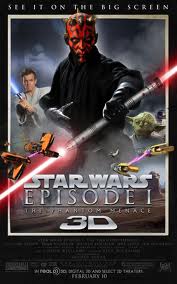
Film studios are in danger of killing any enthusiasm for a 3D film. What makes things worse is that the studios won’t reveal in their ads if the films were truly filmed in 3D or not. Add to that the higher ticket prices and it won’t be long before the bloom is off the rose so to speak. There are signs that this is happening already. Take the ticket sales of the newly released John Carter; despite the promotion that the sci-fi epic was in 3D (it was post-converted according to reports) it wasn’t a big hit. Or better yet, look at how Star Wars Episode I: The Phantom Menace did when re-released last month in 3D. It wasn’t a flop and did respectably but it wasn’t a mega hit. Of course, being that Star Wars Episode I was filmed over a decade ago, one couldn’t expect it not to be post-converted, and in that film’s defense the conversion was actually pretty decent. While some images appeared to be two-dimensional, some scenes looked good and at least there weren’t any scenes that looked dark.

The true 3D process using special cameras is costly, but in the long run, it would benefit studios since they can claim their films are true 3D films rather than something hastily done to earn a quick buck.

The good news is that while many upcoming films are using the post-conversion process, there are more and more films that do use actual 3D. While some of those films may not be appealing to some (feature-length animated films and horror films) they do point to the notion that 3D is becoming more mainstream. Perhaps a day will come when it becomes more economical for studios to produce true 3D films on a regular basis or at least improve the post-conversion process. (This improvement would benefit older films needing conversions like future Star Wars re-releases.)

This website reports which recent and upcoming films are true 3D films and which ones aren’t. The following is a partial list of upcoming films using both types of 3D.

Post-Converted: The Avengers, The Cabin In The Woods, Gravity, Men In Black III, Wrath Of The Titans

Actual 3D: Abraham Lincoln: Vampire Hunter, The Amazing Spider-Man, Brave, The Hobbit, Ice Age: Continental Drift, Madagascar 3: Europe’s Most Wanted, Prometheus, Resident Evil: Retribution

José Soto

Rising Dread & Other Complications On The Walking Dead

episode-9-walker-gene-page[1]

In the previous episode of The Walking Dead, “Nebraska”, Lori Grimes (Sarah Wayne Callies) set off to find and bring home her husband Rick but hit a walker on the way and crashed into a tree. The pre-credits scene of episode nine, “Triggerfinger”, shows Lori on the deserted road after dark , lying unconscious in the overturned car. A walker approaches, spotting the trapped and helpless woman and moves in for the kill. As the snarling creature smashes his way in, Lori awakes, and in a desperate fight, kills him.

episode-9-by-gene-page[1]

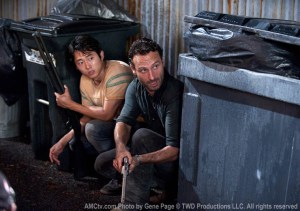
Back at the bar, Hershel (Scott Wilson), Rick Grimes (Andrew Lincoln), and Glenn (Steven Yeun) calm down and take a deep breath over the previous episode’s killing of Dave (Michael Raymond-James) and Tony (Aaron Munoz), two working-class strays who made not-so-subtle-threats about seeking shelter in Hershel’s farm. They confiscate the dead men’s weapons, but noises outside reveal some other men pulling up to the bar. From their conversation, we learn that they are part of Dave’s and Tony’s renegade group and are looking for their (unbeknownst to them) dead buddies. Their shadows in the glass show they are armed. glenn-rickThe trio dims the lights, and hide – guns ready – but the men prowl the perimeter and decide to check the bar. Calling in through the window, they ask about their friends with a frightened urgency; it seems that the town is rapidly filling with walkers. A deadly cat and mouse game begins, as the men try to find and (presumably) kill the trio…

Evan Rothfeld

Please click on the link to Deadloggers to continue reading about Episode Nine