2012 Doomsday Scenarios: Month Two

We’re in the middle of the cold and flu season but the next big pandemic is just around the corner. In fact, many doctors and scientists say we’re overdue for one.

Doomsday Scenario No. 11: The Killers Within
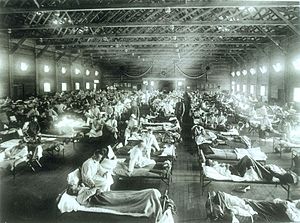
The idea of a pandemic is terrifying and in recent years we’ve dodged the bullet with the onset of AIDS, Ebola, SARS and recently with the H1N1 virus. The last really major pandemic that humanity faced was the Spanish Flu that occurred during World War I in 1918 and killed roughly 50 to 100 million people worldwide. The disease was so widespread and lethal to soldiers that many feel that the disease helped end the war. It is still considered to be the worst modern pandemic to strike humanity. The other horrible pandemic that threatened humanity further back in history was the Black Plague that wiped out a third of Europe’s population in the middle ages. But history is littered with waves of pandemics from assorted diseases like smallpox, typhus and many flu variants. Due to medical advances, we as a whole have been lulled into complacency until very recently. But recent events show that we are still vulnerable. Many fear that soon our antibiotics and other medicines will fail and we’ll be vulnerable to mass death just as our ancestors were.

Add to this fear is the specter of biological terrorism. This threat is all too real as seen with the anthrax terror attacks in 2001. It’s very feasible that some nut can obtain a rare flu strain or a manufactured disease and find a way to spread it to the populace.

Quarantines and Breakdowns

It’s all too easy for our society to fall apart in the wake of a deadly pandemic if a cure or treatment isn’t quickly found. With modern transportation, diseases can spread rapidly and before the medical community is fully mobilized, the contagion could have manifested everywhere.

Social norms will be frayed as the disease spreads. People will demand quarantines and closed borders but that won’t do anything to stop the disease. Nevertheless, fear and distrust will worsen with the new migrations of those wanting to avoid contracting the disease. Unfortunately, many of these refugees will be carriers themselves. Additionally governments will try to futilely treat victims and provide adequate health services. It’s easy to imagine hospitals and care centers guarded by mobilized soldiers, who would also enforce curfews and quarantines. But eventually public services will shut down as the death toll climbs. With fewer and fewer guards, cops and soldiers to enforce the law, anarchy follows and thugs will gain control. Once the disease has run its course, there won’t be much of anything left. Humanity will be forced to rebuild.

Fictional Examples Of The Aftermaths
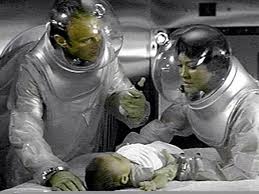
Such fears have been the basis of many science fiction films, books and shows that postulate on the impact of a true pandemic today and the aftermath. The basic storyline usually goes like this: a disease wipes out 99% of the human (and sometimes animal) population. A handful of survivors then struggle to rebuild civilization. Other times, the story is about the valiant efforts to contain an exotic disease before it spreads.

Some popular books that deal with this include Stephen King’s epic The Stand,  Michael Crichton’s The Andromeda Strain, Richard Matheson’s I Am Legend, Max Brooks’ World War Z , George R. Stewart’s Earth Abides, and most recently with Clemens P. Suter’s Two Journeys.
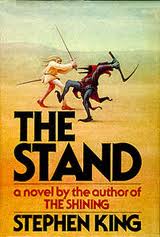
There are many films that deal with this subject. For example there are three adaptations of I Am Legend (the first being The Last Man On Earth and most recently the 2007 Will Smith version), which is about a plague that turns most of humanity into vampire-like creatures. In 28 Days Later (and its sequel) a man-made virus is accidently released that turns its victims in the U.K. into savage, zombie-like killers. Then there is George Romero’s film The Crazies about a bio-weapon that induces homicidal madness. The Andromeda Strain, about a scientific team trying to eradicate a supposedly extra-terrestrial disease, was made into a film released in 1971 and a recent mini-series. A similar approach was utilized with the 1995 film Outbreak but the disease was less exotic in origin but just as deadly. The Stand was made into a well-received mini-series in 1994 and there are efforts to have a remake done. Twelve Monkeys shows us a future where a disease has decimated the world and the protagonist time travels back to modern times to discover how the disease started. The most recent film about pandemics was Steven Soderbergh’s Contagion, which covers in dismaying detail how our society unravels with the onset of a killer virus.
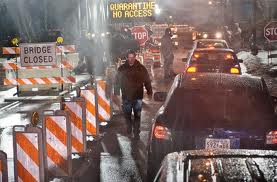
With television there are few examples of a modern pandemic wiping out humanity. Two that come to mind are Jeremiah, which is based on a Belgian comic book, and starred Luke Perry as the title character. In Jeremiah, a plague has killed off most adults in the world and it picks up a generation later when the surviving children have now reached adulthood. The other one is BBC’s Survivors, a remake of a series produced in the 1970s, and the premise was about the usual plague survivors finding a way to work together and rebuild society. UPN’s The Burning Zone wasn’t about a post-apocalyptic world but rather about a team of bio-agents who dealt with deadly, unusual diseases including some engineered by a mysterious group who considered humanity to be vermin that needed to be eradicated by diseases.

Like many doomsday scenarios there isn’t any way to anticipate the onset of the catastrophe.  A pandemic could arrive tomorrow or in a few years, but it will happen. So it pays to be alert and safe though and to wash your hands often.
Sci-Fi Oscar Bias

On Sunday the Academy Awards will be presented and I really don’t care which film wins for best picture because I haven’t seen any of the nominated films. I’ll eventually watch some of the nominees on cable though. But looking at the list, I realize that as usual there isn’t a science fiction film nominated for best picture. Well, The Three Of Life features scenes of the Earth being set afire from our sun going supernova billions of years from now, but that film doesn’t dwell on those described moments. Then there’s Hugo, which has some arguably slight sci-fi elements, namely the dramatization of Georges Melies and his silent film Voyage To The Moon, but Hugo is more of a fantasy film and an ode to early filmmaking.

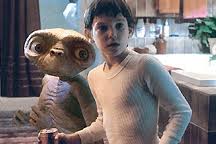
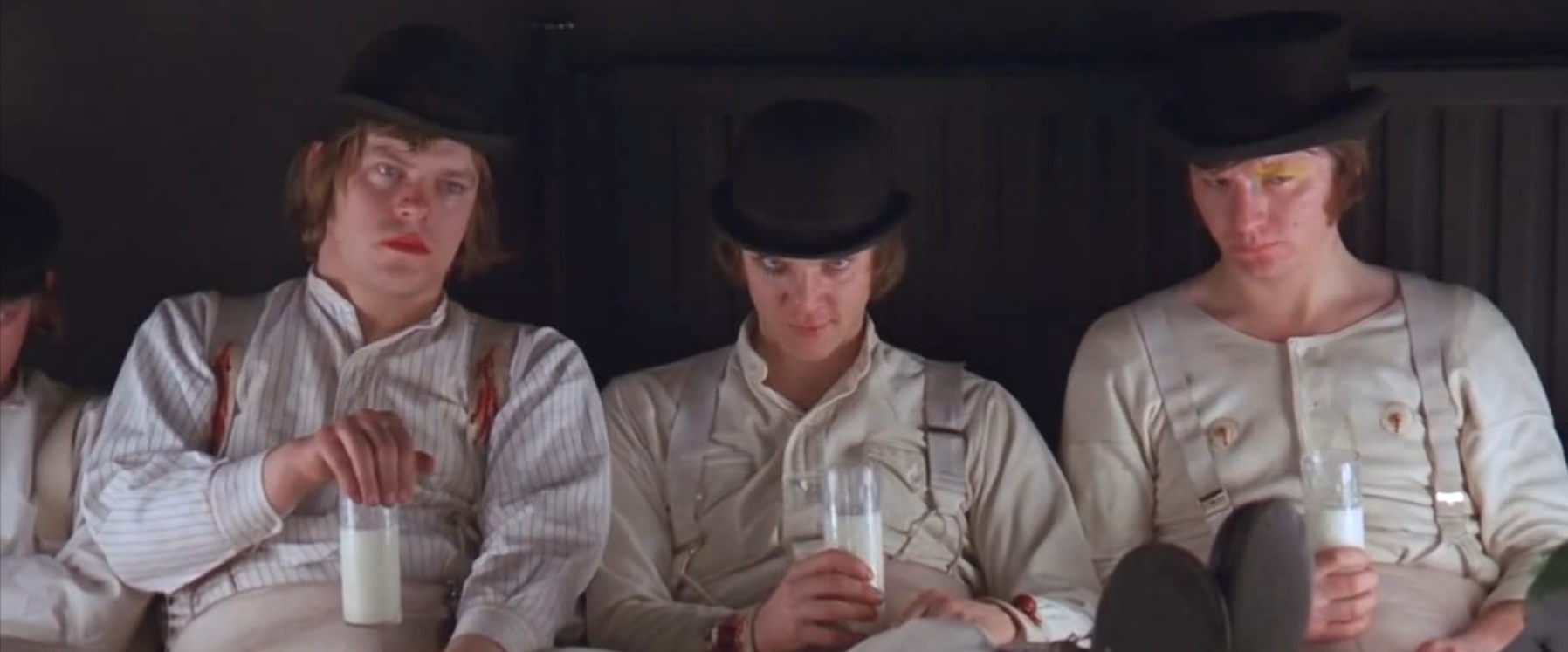
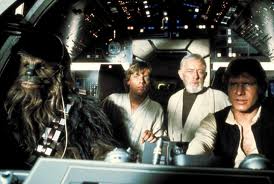
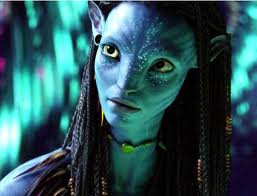
Some research reveals that in the entire history of the Oscars only six science fiction films have been nominated for best film. They are A Clockwork Orange, the original Star Wars, E.T. The Extraterrestrial, Avatar, District 9, and Inception. (On a side note, Inglourious Basterds is considered by some to be science fiction only because its ending establishes the film to be about alternate history.) Sure sci-fi films dominate the technical categories such as special effects and sound, but that’s about it when it comes to recognition from the Oscars.

Films like Blade Runner and 2001: A Space Odyssey have made the top 100 list from the prestigious American Film Institute’s AFI’s 100 Years…100 Movies, yet weren’t nominated for best film in the year they were released. Many other sci-fi films have stood the test of time, while some best picture nominees and winners have been forgotten by today’s audiences. For instance, we continue to talk about The Empire Strikes Back and Back To The Future, yet the movies that won for best picture in the years these sci-fi classics came out are largely ignored (1980’s Ordinary People-IMO, for the record, Raging Bull should’ve won that year; and 1985’s Out Of Africa-not even sure what that movie was about). How about the sci-fi films that were nominated? Does anyone actually believe that Annie Hall is a better film than Star Wars? Sure maybe a bunch of elitist snobs do but despite what George Lucas has done with the saga, the original film has stood the test of time and is a popular as ever. In the case of Avatar, there were stories of many Academy members having an axe to grind with James Cameron and had a rapid disdain for Avatar because of all the computer animation. For my money District 9 was a better film than either Avatar or the winning film, The Hurt Locker. With E.T., it was a better film than Gandhi, but by the time the awards came out there was an obvious backlash against Steven Spielberg’s film.  You can thank the marketing departments that plastered E.T.’s mug on everything at that time. Plus Gandhi was considered more respectable, mainstream and IMPORTANT.

It’s vital to realize that the Oscars are really just popularity/political contests and marketing campaigns among Hollywood insiders who award the statues to sentimental favorites and buddies. The Academy Awards are awash with tales of snubs and cronyism and outright dumb selections which goes beyond sci-fi films. Take the pick of Crash in 2005 over the more popular and more controversial Brokeback Mountain. Or the trite comedy Shakespeare In Love over Spielberg’s classic Saving Private Ryan. That oversight was primarily due to a massive marketing campaign by the former’s executive producers.

Oddly this bias doesn’t extend to fantasy movies because those types of films have received best picture nominations since the 1930s (1937’s Lost Horizon and 1939’s The Wizard Of Oz were the first fantasy films nominated for best picture) right up to this year. One even grabbed the Oscar for best picture nine years ago; that was The Lord Of The Rings: The Return Of The King, which many fans felt was the weakest in Peter Jackson’s trilogy. It should be noted that the bias against animated films is even worse, but that’s another story.

The hostility against sci-fi films by the Oscars is clearly evident and will continue for the foreseeable future.  It’s a shame really, since so many past sci-fi films are considered classics not just by fans but by mainstream viewers and critics. This prejudice may have begun with science fiction’s B-movie origins. But as anyone can tell you, sci-fi films have become more sophisticated and true pieces of cinematic art. Shockingly if you go to online sci-fi forums there are many members who put down sci-fi films and don’t consider them worthy of being nominated. So the bias even permeates among many so-called fans who just can’t see these films past their settings. The bottom line is that the Academy has to get over this bias and join the rest of the crowd. Until then we can only root for an occasional acting nomination or the reliable special effects category. Either that or wait for the Saturn or Scream Awards.

José Soto

Hey Hasbro, Make These Star Wars Toys!


Here’s GEO’s Cool Pick of the Week. Vintage World War II-era Star Wars toys! I came across this website while searching online for  Adam Hughes’ art (BTW I just found out that some of my fellow Starloggers’ articles are popping up on the first page of a Google search, way to go!) and these toys just captivated me.

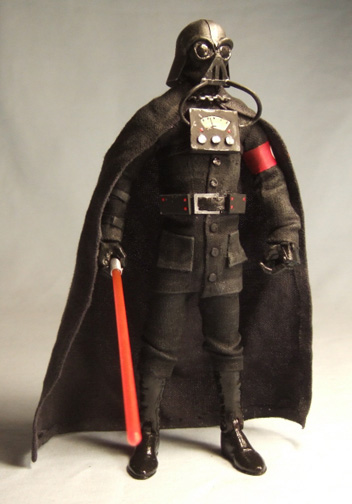
I am really intrigued by this concept created by a toy enthusiast known only as Sillof. These toys are mockups from other toys that are remade into our favorite Star Wars characters as World War II/1930s-era figures. They’re really cool and a retcon of George Lucas’ saga. See much of Star Wars was inspired by the old pulp movie serials like Flash Gordon that played during the 1930s. But naturally, he updated the look of the characters to be more appealing to today’s audiences and it worked.

With these toys, any fan can see the influences much more easily and it is a truly imaginative concept. What if Star Wars had been a movie serial from that era?

My favorite character in this line is Han Solo with his bomber jacket because this toy figure keeps the essence of Han Solo and easily transplants him into the era. I thought the Darth Vader re-imagining was perfect with his stylized gas mask and his chest piece is just awesome. As for Chewbacca, while he looks more human it does illustrate how the wookie would’ve been executed by Hollywood in those days. Chewbacca reminded me of the Wolf Man makeup as worn by Lon Chaney, Jr.

The website links to Sillof’s website where other creative figures are showcased such as Star Wars re-imagined as a western and a medieval fantasy. They’re worth a look and made this fan, who’s a bit burned out on the regular Star Wars toy line , take notice. They’re not on sale but Hasbro and Lucasfilm should seriously consider commissioning a line like this, at least on a trial basis. I’ll bet they would be very popular.

GEO

Football? Bah! Give Me Some Rollerball!

I didn’t catch the Super Bowl last night. It’s not because I didn’t like the teams playing, but because I don’t enjoy football. I won’t go into how boring the sport is with the constant timeouts, overinflated egos, etc. But there is a sport I would rather watch if it existed. Which one? Why rollerball of course!

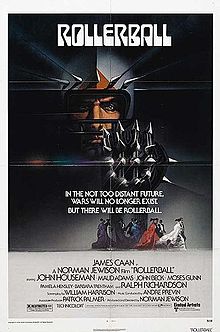
The film Rollerball was released in 1975 and was based on the short story “Roller Ball Murder.” It takes place in 2018 in a liberal’s worst nightmare: a world ruled overtly by faceless corporations. One such organization, the Energy Corp. backs the popular Houston team in the sport of rollerball. It’s a lot like roller derby. Teams in two opposing teams skate around a closed arena (th0ugh some ride around in motorcycles) and are clad with spiked gloves, body armor and helmets. The object of the game is to get possession of a steel ball and score points by slamming it into a cone in the arena. Along the way, the players use violent means to gain possession of the ball and score or to prevent the other team from scoring.

In this future, there isn’t any other sport but rollerball is wildly popular. It’s also supposed to be a sport that emphasizes the work of a team, while diminishing the efforts of the individual. There’s the film’s conflict. Jonathan E (James Cann) is emerging as a popular sports figure but the corporations disapprove of this since they don’t want an individual hero. See, they want to keep the average person down and make him or her feel powerless. That’s because the mantra of “one person making a difference” no longer applies in the new world. Most of the film concerns itself with Jonathan E being persuaded to retire from the sport and his reaction to the effort.

But enough about that, my favorite parts were with the game itself. That thing is wickedly violent, and that’s even before the corporations eliminate penalties halfway through Rollerball! See, they want the game to turn so violent to make Jonathan E want to step down, and things get very desperate for the evil corporate bosses in Rollerball’s last act. At that point, the final game is a no-holds-bar brouhaha with lots of explosions, blood and maimings. But like a true hero, Jonathan E just sucks it in and gets just as violent as the other players, coming off as some kind of futuristic gladiator. What kind of violence is in this film? Lots of bashing across the face and skull with the spiked gloves, players get dragged around the arena, players smashing into each other; it’s easy to see why this sport would placate the masses and their bloodlust.

Now ask yourself, would you see anything like that in football today? Thought so. Supposedly football is popular because of the violence. Please, if you want that go to a boxing match or a good hockey game. The players in those sports wear less body protection. And it’s the closest we’ll ever get to rollerball.

Waldermann Rivera

2012 Doomsday Scenarios: Month One

Okay it’s 2012 now, supposedly our final year according to the Mayan calendar. Earth was put on notice last week with that big solar flare that could’ve disrupted our satellites (but thankfully didn’t). With all the hoopla about the end of the world, one has to wonder if this is our swan song, how will it end? Here at Starloggers, we’re going to examine the possible doomsday scenarios each month as a sort of countdown.

Doomsday Scenario No. 12: The Aliens Are Coming, The Aliens Are Coming

Whether the E.T.s are friendly, cuddly visitors or blood thirsty, destructive invaders, it can’t be denied that once they do arrive life as we know it is over. So even if the first contact is benevolent our isolation in the universe is gone and with it the way we see ourselves. This scenario would bring about an end of our world. These are the possible scenarios:

  • Friendly, curious neighbors come by to say hello: Think of E.T. or Starman or the alien greys from Close Encounters Of The Third Kind. They mean well, they’re just explorers but their arrival is nonetheless disruptive. A variation of this scenario is explored in Carl Sagan’s book Contact (and film based on his work), where just the radio signals from another star changes our society.
  • We’re invited: Continuing to look at Contact, the aliens willingly or unwittingly give humanity the technology to travel to their world. This theme is also seen with the film Stargate and its TV shows, the John Carter books and Adam Strange in comic books.
  • The Enforcers: The gist of this scenario goes like this, aliens make first contact with humans. But we’re given a stern warning to clean up our act and play nice otherwise either  A) we can’t join their club or B) they’ll wipe us off the map. Option A was presented in Allen Steele’s Coyote universe books and option B was best shown with the classic The Day The Earth Stood Still.
  • Caught up in an interplanetary conflict: This is the plot for those Transformers films. We’re standing by innocently in our little blue world obsessed with nonsense like taxes, the presidential election and Snookie until BAM! A bunch of aliens from two different sides arrive and duke it out, using our planet as a battlefield. This also happened in the book The Last World War and the Aliens Vs. Predators films.
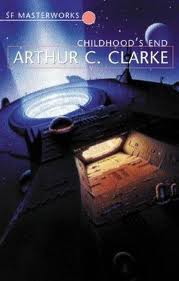
  • Aliens with a mysterious agenda: Most recently seen with the V series but a terrific example is Arthur C. Clarke’s novel Childhood’s End. What happens is that aliens arrive in mammoth motherships over major cities. They claim to be peaceful and want to help humanity but have another agenda they’re keeping from us. With V (the original show, the remake was pretty vague–could be why the show failed) the aliens wanted our water and us for food. In Childhood’s End the mysterious Overlords arrived to shepherd in our next evolutionary stage and move our descendants into the cosmos. Another example is that show from the late ’90s Gene Roddenberry’s Earth: Final Conflict, where the mysterious Taelons arrive on Earth bringing an era of peace but have secret motives for coming to our world.
  • This Petri dish Earth or we taste like chicken: The first V show and mini-series fit this bill. And if the UFO fanatics are to be believed, alien greys come to our planet to create human/alien hybrids and to conduct painful, invasive experiments on humans. On the big screen, this was best shown with the underrated film A Fire In The Sky.
  • INVASION: The tried and true plotline of alien contact. Aliens arrive in huge ships and proceed to stomp us into smithereens until the heroes in the third act find a way to beat them. Examples in film, shows and books are numerous and include War Of The Worlds, Independence Day, Battle: Los Angeles, Footfall, the Worldwar books, etc. A variation of the invasion scenario is the clandestine invasion where the aliens slowly infiltrate us until it’s too late. Check out the shows Threshold,  The X-Files, The Invaders, and First Wave (this invasion scenario is probably prevalent on TV for budgetary reasons) as examples. On film the most famous example is Invasion Of The Body Snatchers.

That’s one look at how 2012 could the end of the world as we know it (apologies to R.E.M.). One month down, eleven more to go; be prepared.

Special thanks to GEO for his contribution