Summer Of 1982 Revisited


It’s strange to say but even back in the spring of 1982 many genre fans knew that summer would be special when it came to movies. Unlike previous summers, it seemed as if many film releases were catered to genre fans and that was a correct assumption.

Conventional wisdom has it that the summer season begins with the Memorial Day weekend. While that’s true for many aspects of summer, for the past few years it seemed as if the summer movie season didn’t begin with that holiday but on the first weekend of May. That reputation began with the release of several movies based on Marvel superheroes, which by the way, coincides with Free Comic Book Day. But even back in 1982, the summer movie season began in mid-May with the release of Conan The Barbarian, Arnold Schwarzenegger’s first big hit.

While previous summer movie seasons boasted huge genre hits like The Empire Strikes Back and Alien, often there weren’t many genre films released in that time period. 1982 was the first year that the summer schedule was full of films that would appeal to fans of sci-fi, fantasy and horror. Since 1982, many summers featured a plethora of genre films; some were big hits, others didn’t do well and that continues to this day (case in point, the runaway success of The Avengers and the dismal box office performances of Battleship and Dark Shadows).
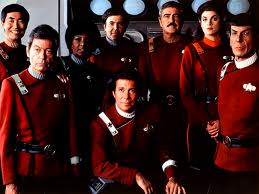
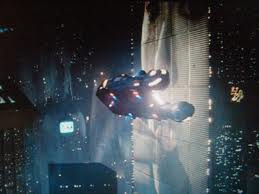
What makes the summer of 1982 so memorable for fans is that not only was it the first time there were many films to choose from but that so many of them are classics. For instance, Star Trek II: The Wrath Of Khan is considered to be the best Star Trek film to this day, then there’s Blade Runner, Ridley Scott’s masterpiece about a human hunting down rogue replicants in a decaying, future Los Angeles. Or there are the two opposing alien visitation films that are as different from each other as night and day, and are both classics, Steven Spielberg’s E.T. The Extra-Terrestrial and director John Carpenter’s remake of The Thing. The sad thing about these two films is the general audience’s reaction to them. While E.T. won universal acclaim and became the biggest box office hit until the mid-90s, The Thing was scorned by critics and audiences. In fact, it made its debut near the bottom of that week’s top ten and disappeared from theaters quickly. It’s unfortunate that people back then weren’t open to a dark and horrifying movie about an alien invader because of the happy feelings they were getting from a stranded, friendly alien and his buddy human boy.

Blade Runner suffered a similar fate, while its opening was better than The Thing’s, many viewers and critics didn’t take to Scott’s moody, future noir tale. With Harrison Ford as the lead, fresh off his breakthrough hit Raiders Of The Lost Ark, many expected a similar rousing adventure film. But both Blade Runner and The Thing had happy endings as many discovered the films on cable and home video, elevating their statures from cult hits to genuine masterpieces (Blade Runner actually made AFI’s list of 100 Years…100 Films, along with E.T.).
Of course, there were a few stinkers and some films that were generally good, but didn’t leave a lasting impression. The most infamous stinker is Megaforce, a poor man’s G.I. Joe directed by Hal Needham (who helmed those awful Burt Reynolds car chase films) and it is laughably bad. Then there’s this terrible Scott Baio comedy called Zapped about a student who gets psychic powers and the less said about it the better. Meanwhile, some underrated genre films worth looking out for are Clint Eastwood’s Firefox (about a fighter pilot who steals an advanced, thought-operated Soviet plane), and Don Bluth’s first animated film The Secret Of NIMH (astonishing, Disneyesque animation highlighted this tale about a wood mouse and rats with advanced intelligence).

While the rest of that year featured some great films like The Dark Crystal, the summer of 1982 will always be fondly remembered and the milestone to compare with other summer movie seasons. The following are some of the more noteworthy films that were released that summer and thrilled fans thirty years ago. If you haven’t seen any of them, check them out.

Conan The Barbarian, Poltergeist, Star Trek II: The Wrath Of Khan, E.T. The Extra-Terrestrial, The Thing, Blade Runner, Tron, The Road Warrior

José Soto

For Dakota
Hey Hasbro, Make These Star Wars Toys!


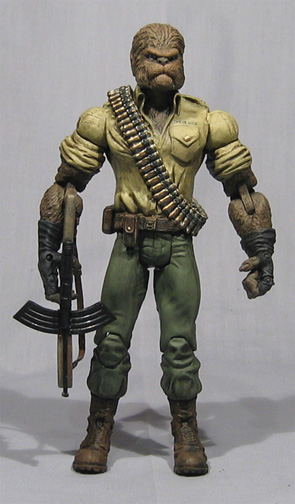
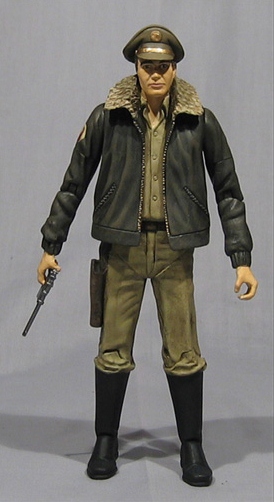
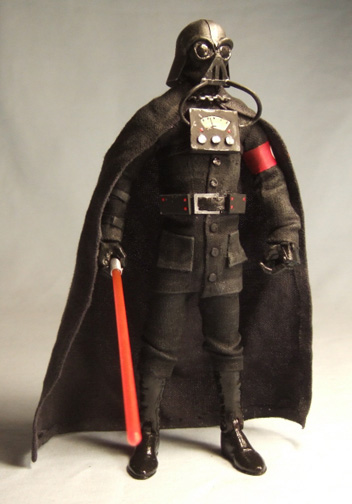
Here’s GEO’s Cool Pick of the Week. Vintage World War II-era Star Wars toys! I came across this website while searching online for  Adam Hughes’ art (BTW I just found out that some of my fellow Starloggers’ articles are popping up on the first page of a Google search, way to go!) and these toys just captivated me.

I am really intrigued by this concept created by a toy enthusiast known only as Sillof. These toys are mockups from other toys that are remade into our favorite Star Wars characters as World War II/1930s-era figures. They’re really cool and a retcon of George Lucas’ saga. See much of Star Wars was inspired by the old pulp movie serials like Flash Gordon that played during the 1930s. But naturally, he updated the look of the characters to be more appealing to today’s audiences and it worked.

With these toys, any fan can see the influences much more easily and it is a truly imaginative concept. What if Star Wars had been a movie serial from that era?

My favorite character in this line is Han Solo with his bomber jacket because this toy figure keeps the essence of Han Solo and easily transplants him into the era. I thought the Darth Vader re-imagining was perfect with his stylized gas mask and his chest piece is just awesome. As for Chewbacca, while he looks more human it does illustrate how the wookie would’ve been executed by Hollywood in those days. Chewbacca reminded me of the Wolf Man makeup as worn by Lon Chaney, Jr.

The website links to Sillof’s website where other creative figures are showcased such as Star Wars re-imagined as a western and a medieval fantasy. They’re worth a look and made this fan, who’s a bit burned out on the regular Star Wars toy line , take notice. They’re not on sale but Hasbro and Lucasfilm should seriously consider commissioning a line like this, at least on a trial basis. I’ll bet they would be very popular.

GEO

New Doctor Who Companions Scenarios

The Doctor and the Ponds

Showrunner Steven Moffat announced on December 15 that the Ponds, Amy and Rory, will be leaving Doctor Who, well I can’t help wondering, what’s next? This is sad news but at the same time, you can appreciate that change means creativity so goodbye is inevitable.  It’s a bittersweet time.  We will miss the camaraderie and hope for occasional visits, but shaking things up a bit might be fun, too.

 So I am sure that everyone has their own theories about who should be the new companion, but here are three possibilities that I’ve come up with and I am sure that just as the universe is infinite so are the possible companions for the Doctor.  My imagination led me here.  It will be interesting to see if there are any similarities between Steven Moffat’s companions and a simple fan.  Who would you pick for the esteemed Doctor?

 Scenario OneStrange Puppy Love:  A middle-aged women from New York City and her pre-teenage daughter travel with the Doctor along with their Pomeranian.  However, the women thinks she is dreaming and that the Doctor is actually the Pomeranian transformed into a man, who’s name happens to be Doctor Sandy. Coincidentally, he is sometimes called the Doctor.

Foxy Lady as Doctor Sandy. Photo by Olivia McLernon

She become flirty with him and laughs at herself because she thinks she is only dreaming this and that she is flirting with her dog.  The daughter knows the truth but needs the doctor to show her and her mother around time and space because her mom is a historian and is trying to write a book.   With her daughter’s help the mom is getting over her writer’s block and has all kinds of interesting historical tidbits that never would have occurred to her before and comes in handy in the Doctor’s adventures through time. 

Some of these tidbits could include her helping the underground railroad during the Civil War. There she helps the Civil War Judge’s wife, Mrs. Piatt by giving her the idea to use a lawn jockey holding an American flag to signal her husband’s absence. Or aiding Sacagawea as she guided Lewis and Clark. At the same time, she is floored by Sacagawea’s hardships and begins to appreciate her own life and time. Then she could wind up in the early 1960s and meets Rachel Carson while she writes Silent Spring. The mom encourages her and helps her see her legacy as she will soon die of breast cancer.

Continuing the time journeys in the 1960s and ’70s she becomes part of the inspiration for songs like “Space Oddity” and” Go Ask Alice” much to the chagrin of the Doctor.

 Scenario TwoThe Red Widow:  Every companion that the Doctor travelled with always was light and pretty much excited to be travelling, except for Donna in the beginning.  What if the Doctor gets roped into a support group that doesn’t really do much to support each other and have been stuck in a rut for a couple of decades? To shake things up a bit, these people come from Australia (or anywhere else but Europe).

Some members of the group are upset over a lack of interest, drive and desire, except for one fellow, let’s call him Mack.  He is the extreme opposite.  He’s a knife-wielding Crocodile Dundee type who has been down in the dumps about the environmental protection acts of every species in Australia that has forced him to become a semi-vegetarian, as he cannot hunt as often as he likes.  

In the course of time traveling with the Doctor, he happens upon a hybrid version of the red spider-like Racnoss (the Red Spider Empress that tried to turn Donna into spider food for her brood and killed her no-good fiancé in “The Runaway Bride”).  This chelicerata/humanoid is the result of a human-Racnoss union, that didn’t end so well for the human.  However, this new species aren’t quite as lethal and can pass for normal humans (except for their abdomens).  However, when they mate, the urge to kill their mate is still strong but this varies. 

The Racnoss

Some have been able to resist this primal urge, but it is difficult to tell who can control the urge and who can’t.  The safest course would be to avoid them, but it is difficult to tell if they are hybrids, unless they are undressed because their abdomen is the only difference.  All this uncertainty and violence has made Mack come alive again. He is thrilled to be part of a hunt again, even if he is the prey.  He has become buddies with the few male spiders left who chose not to mate for fear of death.  They run an underground railroad for males who wish to escape the Chelicerae (fang-like claws) of entrapment and ultimately death.  The Doctor ultimately leaves him on Chelicarae

 Scenario ThreeCool Hand Luca:  A young girl, Luca, gets into trouble one night by throwing rocks at some cars’ windows in the Brooklyn hood.  She is about to be arrested when the Doctor intervenes knowing that if she does get arrested, her life is over at this point and he because that she is the female equivalent of the story, Cool Hand Luke.  Like Luke, if she goes to jail, she will become influential to her jail mates, but she will create resentment from the prison guards who will ultimately cause her early demise. 

He tries to give her some hope for her future and show her that she could contribute to the wonders of the universe.  Along the way, he discovers that she does actually have some amazing talents.  She can talk to the TARDIS and can maintain and fix it better than he can.  Her tough exterior and manner can often distract enemies while he searches for their weaknesses and the TARDIS can see that underneath all that hard armor Luca has a soft side, not unlike the TARDIS itself.

Gwen McLernon

George Lucas & His Retirement

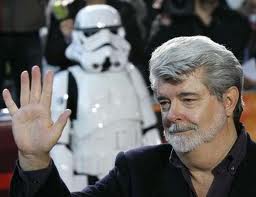
It’s been all over the news lately that with the release of Lucasfilm’s Red Tails George Lucas plans on retiring from blockbuster, i.e. popular films. Lucas cites the hard time he had trying to get Red Tails financed by studios (before he wound up paying for most of the film himself) and hints at the bitter reaction from many fans over his Star Wars prequels. In a New York Times Magazine interview he states, “I’m retiring, I’m moving away from the business, from the company, from all this kind of stuff.”

But looking at this and other interviews, one can spot a loophole or two. He does not rule out a fifth Indiana Jones film, although the older Harrison Ford gets and the longer it takes for Lucas to approve a script the less likely that becomes. Then there is the Star Wars live-action series that he is still trying to get off the ground. That looks more likely since advancements in special effects will soon make it financially feasible for Lucas to produce film-quality episodes of his galaxy-spanning saga.

Actually, his so-called retirement isn’t exactly news. Back when Star Wars Episode III: Revenge of the Sith was released, Lucas said then that he wanted to move away from blockbuster films. And even further back when Return of the Jedi came out, he claimed back then he wanted to focus on small, experimental projects. For many fans still bitter about Jar Jar Binks and Indy surviving a nuke blast in a fridge that’s great news. Don’t let the door hit you on the way out George, they may be thinking. But to others this is sad news and cements the fact that there won’t be any future Star Wars films.

Then again, look at his earliest efforts, THX-1138 and American Graffiti. Many forget today that both films were quirky, experimental pieces of filmmaking but are rightfully considered classics today. That’s especially true with THX-1138 since even today the film is seen as an avant-garde film. Whereas American Graffit is seen as a more conventional film it actually helped introduce the storytelling narrative of the main characters going off on their individual tangents without a set plot. That is because this technique has been copied so many times since. So Lucas probably just wants to go back to his roots and make quieter, low-budget films. That’s fine, since he did a superb job in directing them and at this point in his career, being that he is set financially, he can now afford to do whatever he wants.

Oh by the way, don’t forget that along with THX-1138 his other early genre effort was a little-known film at that time about some kid running around in spaceships with aliens. Yes that was Star Wars, but it was considered to be a huge risk for 20th Century Fox and experimental. So don’t write George Lucas off just yet.

Lewis T. Grove

The Term “SCI-FI”

When I was a kid, growing up in the Amazon in South America, I was far away from Hollywood, USA , where great superhero and space adventures were chronicled in film and other media. I must say that as much as I missed the developed comforts that the U.S. can offer, I liked the weather and the people down there. The only thing that made me stand out in general conversation topics was that instead of talking the usual futbol , or politica , I tried to start the conversation with superheroes and space heroes. The usual reaction I got from the locals after tolerating my monologue for an hour is “mucha fantasia!” or “too much fantasy!” The mindset there is reality-oriented. I’m sure they love reality TV.

One of the movie magazines I brought with me to South America had articles with the termSci-Fi . As a little kid, it’s amazing how a little term boggled my elementary school attempts for pronunciation. “Skee-Fee?” “Sky-Fy?” Boy, lots of gray brain matter at work there. A helpful parenthesis in the article related the term sci-fi to science fiction. Oh! That’s what it was! Duh! I’m a true genius!

I began collecting more sci-fi magazines, books and comic books. Before long I had a sizable collection and was amassing a fair knowledge of sci-fi and superhero stories. I even had a few issues of Famous Monsters of Filmland. Back to that later.

Years afterward, and back in the good ol’ USA , I was working for a publishing company in New York City. One of their publications was a general science fiction magazine. Their science fiction editor always had a fit when we said “sci-fi.” We used to listened to his tantrums. The same one from last Tuesday LOL. A mental list of anger-management classes crossed my mind during his rants. He argued that it was incorrect to say “sci-fi” (surrounded by piles and piles of magazines paperbacks, statuettes and toys of that favorite genre of his — the sci-fi genre, thank you very much.) He said that was a term coined by Forrest Ackerman, but it’s not a real term. (Try telling that to the ‘not-a-real-term’ Channel; that was before it started to drift away from its roots and changed its name to Syfy). As much as we liked this fellow, he just needed to lighten up a bit! All joking aside, I have much respect for this editor friend of mine, and I wish him well.

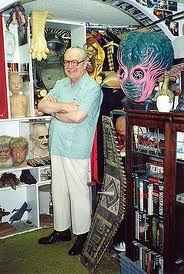
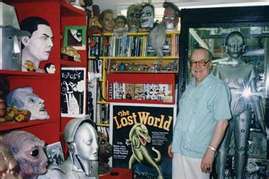
Almost ten years later, I had moved to Los Angeles. I found out that Forrest Ackerman (who first coined the term sci-fi) , publisher of the cult favorite Famous Monsters of Filmland magazine, was living here in L.A. I spoke to him by phone and he invited me to his Museum of Sci-Fi in Hollywood. He was in his late 80’s, but he was gracious to give me a tour of his museum for me.

We spoke about some of my genre-related projects.  I told him they were my own attempt at capturing the essence of sci-fi, which for me was a way to telling stories related to current events and the social commentary of our time, fueled by wild imagination. It’s too much fantasy indeed, but I like it!

After giving me a tour of his best collections (my favorite was the Metroplis robot Maria) we sat down to listen to his great career. He actually told me how he came up with the term  sci-fi. “In 1954” he explained, “that word was first heard in this world. I was riding around in my car with the radio on and some mention was made of ‘hi-fi.’ Since ‘science fiction’ had been on the tip of my tongue since Hugo Gernsback introduced it in 1929 (in his science fiction mag Science Wonder Stories), I looked in the rearview mirror, stuck out my tongue and there, tattooed on the end of it was . . . SCI-FI!”

What a great anecdote to cap off a pleasant visit; he was such a nice guy. Sadly, Forrest Ackerman passed away in December 2008, but I feel honored to have met him and we should all thank him for coming up with that wonderful term. So that’s how my sci-fi term comes full circle. Hope you enjoyed it. Too much fantasy, man!

GEO

Visit GEO’s website: www.coroflot.com/geodesigns/portfolio