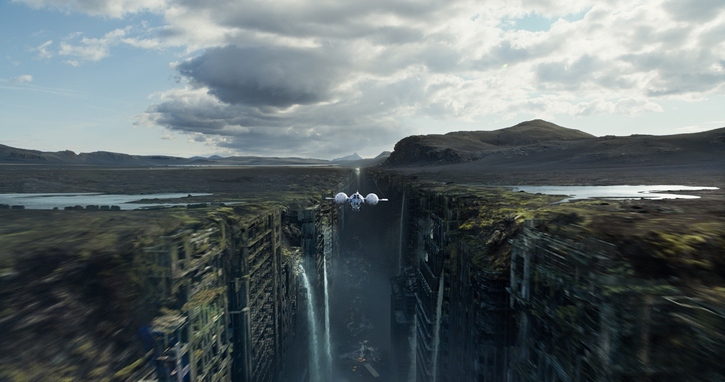
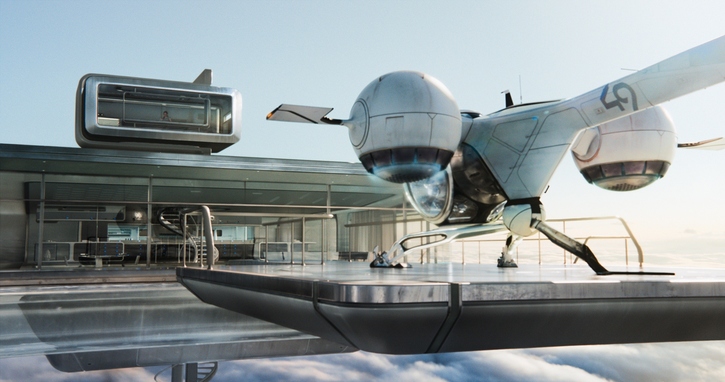
Bioshock: Infinite is the latest first-person shooter game in the famed series that now has the action set in the city of Columbia, which is quite literally a floating city in the clouds a la Bespin from The Empire Strikes Back. This game continues the Bioshock tradition of a thought provoking plot where you as Pinkerton agent Booker Dewitt, in the year 1912, takes on a demagogic figure known as Compton and his would-be utopia. Columbia’s society is patterned on extreme nationalism and racial prejudice circa early 20th century America. The game also features interesting sci-fi concepts of alternate dimensions and time travel and the consequences of such activities. This is accomplished via the other main character in Bioshock: Infinite Elizabeth, a girl Dewitt is sent to rescue, who you travel with and protect during the majority of the game. She is capable of creating rifts in space time that can be used by your character to travel to slightly altered realities or get useful items to fight Compton’s forces. The combat in the game is also similar to other Bioshock games where you can use superhuman powers via drinks called vitals that allow you to do various things like shoot fire from your hands or create tornados.
From the first moment you arrive at a lighthouse and are whisked away to the city of Columbia, you know you are in a Bioshock game with the same sense of wonder that the first game had when you arrived at the underwater city of Rapture. In comparing Bioshock: Infinite with the other Bioshocks, I think it is somewhat better than the second gameBioshock 2, but does not quite reach the level of the original. This is due to the fact that the game play in the first one was deeper with such options as improving your weaponry and hacking vending machines and security cameras using a neat puzzle game to get an advantage over your foes. In Bioshock: infinite, activities like picking locks to gain access to new areas are done by Elizabeth and you just watch her do her work.
Another slight difference is in the tone of the games. The first two Bioshocks take place in a city that has fallen apart and is abandoned except for demented people known as splicers, which gives the games an almost survival/horror feel to them. Columbia, on the other hand, is populated with many people and is full of life–at least, at first. This is not necessarily a bad thing since it means that Bioshock: Infinite is not a retread, but it’s something to take note of.
Overall, Bioshock: Infinite is another excellent piece of interactive entertainment that I think compares with any sci-fi/horror movie in terms of storytelling, fun, and having something to say.
Dr. Gillian Taylor: “Don’t tell me. You’re from outer space.”
Admiral James T. Kirk: “No I’m from Iowa, I only work in outer space.”
Dinner conversation during a date at an Italian restaurant in San Francisco, circa 1980s
“Well, a double dumbass on you!”
Admiral James T. Kirk to a taxi driver on the streets of San Francisco, same time period
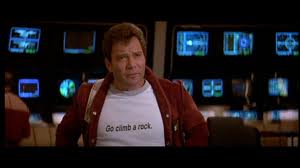
Usually when the fourth film in a franchise comes around the franchise itself starts to show signs of fatigue. Thankfully that wasn’t the case with Star Trek IV: The Voyage Home. Unbelievably, the fourth Star Trek film reaffirmed the Star Trek franchise after its moribund predecessor. A lot of the credit goes to writers Nicholas Meyer, Harve Bennett (who was also the producer), Peter Krikes and Steve Meerson, and primarily, director Leonard Nimoy, who co-stars in the film as Spock. Nimoy found his footing with his second directorial gig and it shows in a big way.
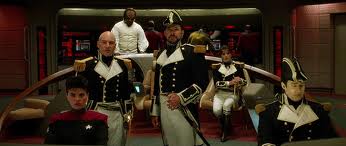
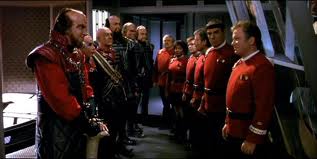
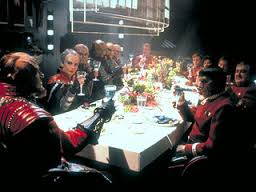
Star Trek IV: The Voyage Home begins with a dedication to the lost crew of the space shuttle Challenger, which was appropriate and sincere being that the tragedy happened earlier in the year that the film premiered. After the credits, the story begins with a Reliant-class starship encountering a humongous, shiny, black cylindrical alien probe that drains the starship of its power. Before anyone can say V’Ger, the story jumps back to Earth at the council chambers of the United Federation of Planets where audiences are brought up to date with what happened in the previous film. A Klingon ambassador (John Schuck) wants Admiral James T. Kirk’s (William Shatner) head for killing a Klingon crew and stealing their bird-of-prey ship and accuses the Federation of wanting to wage war on the Klingons with the failed Genesis terraforming process.
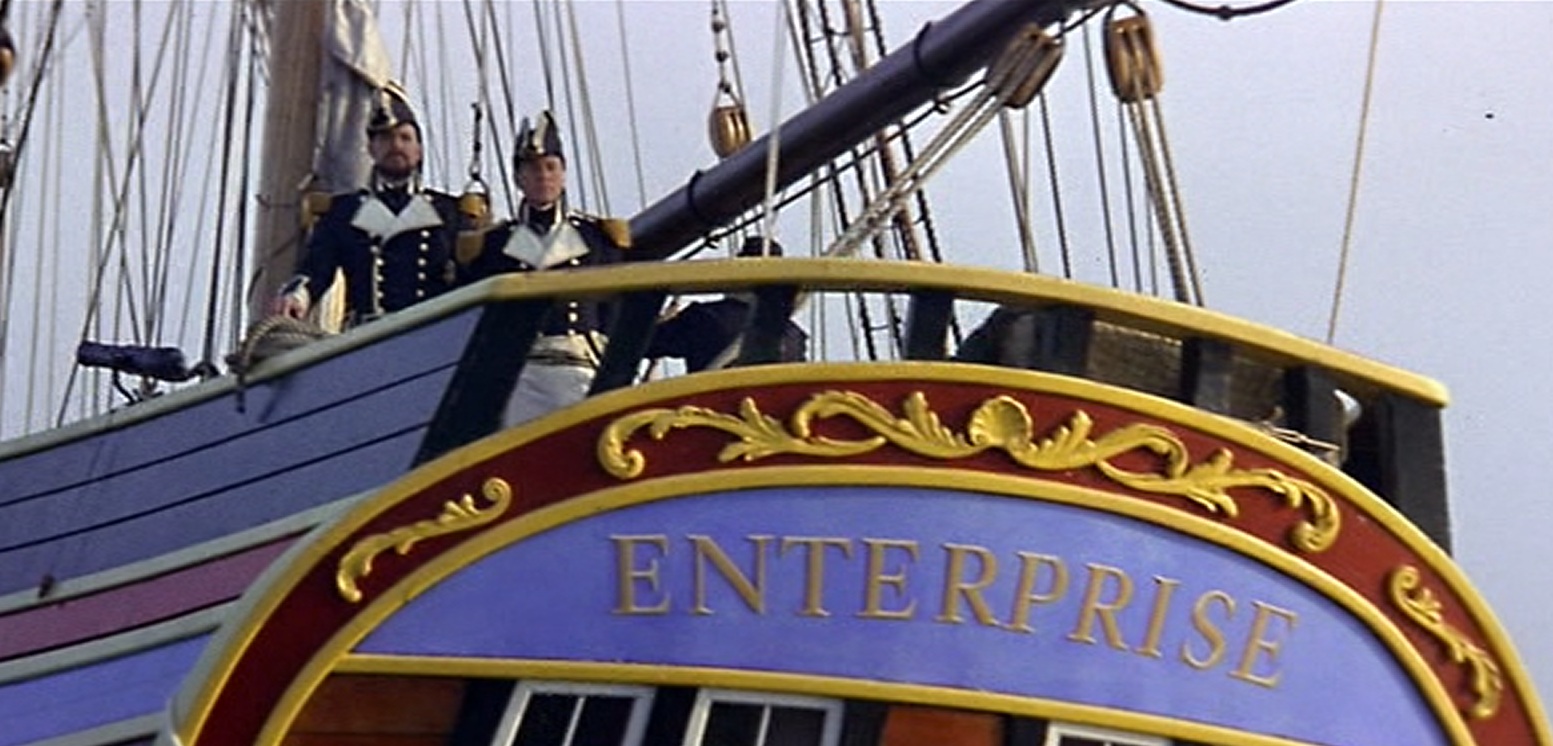
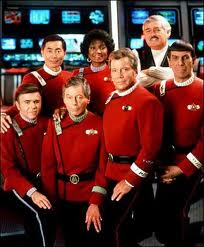
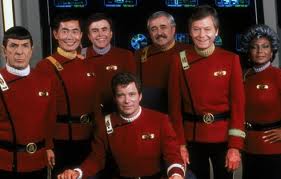
Kirk has violated nine Starfleet regulations, such as disobeying orders and stealing the starship Enterprise . He is on exile with his former crewmembers on the planet Vulcan. They include Dr. Leonard McCoy (DeForest Kelley), Chief Engineer Montgomery “Scottie” Scott (James Doohan), and Commanders Hikaru Sulu (George Takei), Pavel Chekov (Walter Koenig), and Uhura (Nichelle Nichols). After being on Vulcan for three months, they choose to return to Earth and face trial. Spock, who they risked their lives and careers for in Star Trek III: The Search For Spock, is recuperating from his resurrection and regaining his mental acuity. He is still confused about the nature of feelings, but elects to accompany his friends back to Earth.
Meanwhile, the alien probe approaches Earth and creates havoc as it drains away the energy of anything that it approaches. Starfleet is effectively crippled and Earth defenseless. The probe also emits a series of ear-piercing inhuman screeches and wails that no one can decipher. The probe arrives in Earth orbit and begins transmitting into the oceans. This creates a severe superstorm that covers the planet and the endangers all life.
Kirk and his crew leave Vulcan with the stolen Klingon ship (rechristened the Bounty) and on their way to Earth pick up a distress call from the Federation President (Robert Ellenstein), who is on Earth, warning away visitors because of the probe. Spock is able to decipher the probe’s transmissions and we learn that it is trying to contact humpback whales. Unfortunately, the species is extinct in the 23rd century, which forces Kirk to take the Bounty and time travel to Earth’s past and find whales to bring back to their time period.
After Kirk informs Starfleet Command of his intentions, the Bounty makes a slingshot maneuver around Earth’s sun. It’s a time travel procedure first done in the classic original episode “The Naked Time” but more ethereal with dream-like sequences showing morphing busts of the crew and whales. After that sequence the ship winds up in the latter half of the 20th century. After picking up whale songs transmitting from the San Francisco area, the ship lands cloaked in Golden Gate Park in the middle of the night. Scotty informs Kirk that in addition to refitting the ship’s interior to accommodate a whale tank, the ship’s dilithium crystals that power the warp core drive are drained and need recharging or else they’re stranded. With that, the now-Bounty crew disembark their ship and head off into the wild frontier of the 20th century.
Warning: The review/rant below contains major spoilers about the Governor in The Walking Dead: Rise Of The Governor novel.
I just finished reading or rather wasted my time with the horror book The Walking Dead: Rise Of The Governor written by the creator of The Walking Dead comic book Robert Kirkman and Jay Bonansinga.
It was worse than Michael Crichton’s Sphere!
The thing that gets me about the book is that I was really enjoying this; I’m a recent convert to The Walking Dead phenomenon thanks to the excellent TV show on AMC. I think that the character of the Governor (played on the show by David Morrisey) is one of the best villains I’ve ever seen. As soon as I could I went to the local comic book shop and picked up the graphic novels. I saw the book The Walking Dead: Rise Of The Governor and decided to buy the book too.
The book focuses on Philip Blake, his daughter Penny, his brother Brian, and Philip’s friend Nick. As you probably know Philip Blake becomes the Governor and his daughter becomes a zombie or as they say on the show and comic book a walker or biter.
It starts off showing the group when the walker outbreak began and their struggles to find safe shelter. There are a few times where you think Penny will get bitten by a walker but it never happens. Instead, Kirkman wrote a nice twist, she gets killed by crazy living people then turns into a walker.
The Walking Dead: Rise Of The Governor had the characters facing many hardships, building up to Penny’s death that makes Philip become angry and crazy and logically becoming the Governor. You really see that as he captures two of the attackers that killed Penny, locks them up and tortures them every day. His brother Brian was a wimp throughout the book and Nick was often the voice of reason.
Spoiler time: Philip gets really crazy and kills a woman to feed to walker Penny. Nick tells Brian he can’t stand it anymore and a fight between Philip and Nick happens. Around this time, they wind up staying in the town of Woodbury, the same place that the Governor rules as seen in the comics and show. When they first arrive at the town, the place is controlled by Major Gene Gavin, a lunatic National Guardsman who calls himself the Major and abuses the residents. Continue reading →
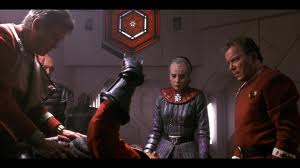
After the rousing Star Trek II: The Wrath Of Khan, its sequel Star Trek III: The Search For Spock feels like a bit of a letdown. It’s an entertaining film but it could’ve been a lot better and the cast and crew give it a good try. It can be difficult to state exactly what is wrong with film. It’s not dull like Star Trek: The Motion Picture and moves along at a brisk pace. More than the other two films, this one feels more like an episode of the original series thanks in part to director Leonard Nimoy’s obvious familiarity with the characters and situation. But a careful examination would have to conclude that the script needed another pass before filming began. The film feels disjointed at times and seems to be in a rush to go from one plot point to another; in the meantime some unanswered questions pop up about plot developments.
The film begins not long after Star Trek II: The Wrath Of Khan, the Enterprise is heading back to Earth after Khan (Ricardo Montalban) and Spock’s (Leonard Nimoy) death. Commanding officer Admiral James T. Kirk (William Shatner) is visibly depressed over the loss of his friend. Most of the young cadets onboard the ship during the last film have been transferred elsewhere. Saavik (now portrayed by Robin Curtis because Kristie Alley and the producers couldn’t agree on a salary) has been assigned to a science vessel called Grissom orbiting the new Genesis Planet (after Khan detonated the stolen Genesis Device, it created the planet). Assisting her with researching Genesis is Kirk’s son, Dr. David Marcus (Merritt Butrick), developer of the rapid terraforming process that created the planet. Even though his mother, Dr. Carol Marcus (Bibi Besch), was a major character in the previous film, her absence in this film is never explained at all. In reality, writer and producer Harve Bennett needed to make budget cuts and felt her character wasn’t essential to the story. That was the first clue that the script was off.
Meanwhile, Dr. Leonard McCoy (DeForest Kelley) is behaving strangely, actually he begins acting like Spock and even sounds like him. But there isn’t any effort to get him any help.
The Enterprise arrives at a huge Spacedock orbiting Earth and sees the next generation of starships, the Excelsior, whose commandeered by an arrogant Captain Stiles (James Sikking). He would’ve been a good foil for Kirk but that is never explored. Throughout the film, members of Starfleet show an obvious disregard and disrespect toward Kirk and his crewmates that is a bit baffling and undercuts their supposedly legendary status. Perhaps they weren’t that highly thought of in their time.
Kirk and his crew learn from the commander of Starfleet, Admiral Morrow (Robert Hooks) that the Enterprise will be decommissioned because of its age. They are also ordered not to discuss the matter of Genesis, since it has become a political hot potato.
Spock’s father, Sarek (Mark Lenard) visits Kirk at his apartment and demands to know why he left his son’s body on Genesis and didn’t bring back his katra or his spiritual essence to Vulcan. According to Vulcan belief, when a Vulcan is dying, he or she mind melds with a close associate so that the katra can be transferred into that person. Both the katra and body are needed to give a proper burial and that if the katra remains with the associate it will mean that person’s death. The entire matter isn’t properly explained but that is the script for you. After looking at the Enterprise’s video logs, Kirk discovers that right before he died, Spock quickly performed a mind meld with McCoy. This explains the doctor’s odd behavior since he has Spock’s katra.
Kirk decides to risk everything to retrieve Spock’s body and soul because of his friendship. However, Admiral Morrow forbids Kirk from returning to the Genesis Planet and won’t budge. Kirk gets annoyed and resolves to go anyway as he tells the Enterprise helmsman Sulu (George Takei), “The word is no. I am therefore going anyway.”
He frees an imprisoned McCoy slated to be turned over to a “Federation funny farm” because he tried to hire a ship to go to Genesis and his behavior has people convinced he’s insane. Kirk also steals Enterprise out of the Spacedock with the help of his crewmates Sulu, Scotty (James Doohan), Chekov (Walter Koenig) and Uhura (Nichelle Nichols). Apparently the only other ship in Spacedock that can pursue the Enterprise is the Excelsior, which is stopped dead in its track thanks to some sabotaging from Scotty. It seems odd that in such a space faring society, Kirk is unable to procure a private ship to go to Genesis. Stealing a badly damaged starship while fun to watch, fails to quell the question of why do it? The Enterprise needs repairs and will make an easy target. It would’ve made more sense if they quietly took another ship and snuck away.
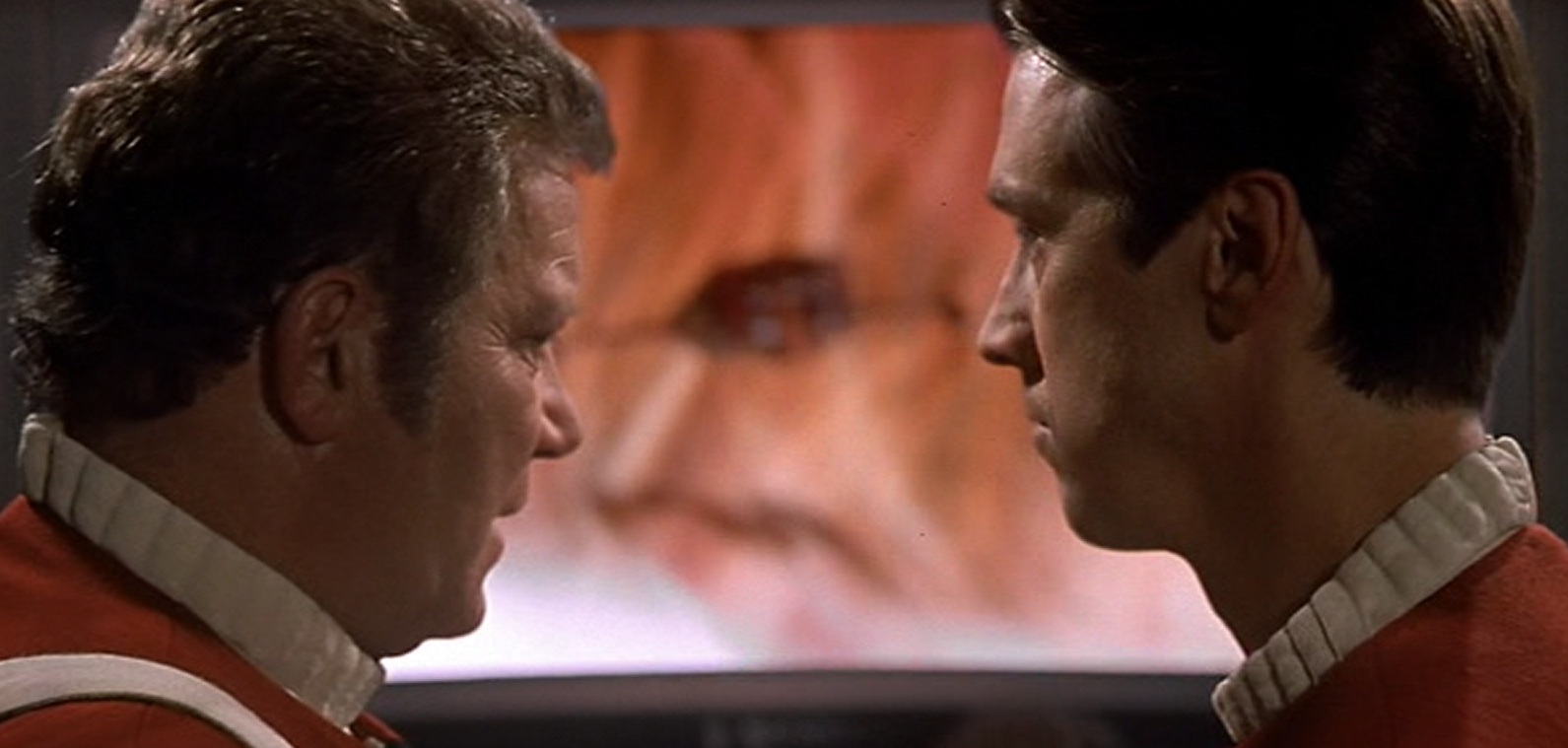
An exchange between Spock and James T. Kirk onboard the Enterprise
Star Trek II: The Wrath Of Khan was a radical departure from its predecessor Star Trek: The Motion Picture, which is what Paramount Pictures wanted. Even though Star Trek: The Motion Picture made money it was perceived as a failure. Many people complained that it was dull and pretentious. In other words, they wanted action! And that is what director Nicholas Meyer delivered with Star Trek II: The Wrath Of Khan, only he added a human element that elevated the film to classic status.
This film is the most personal Star Trek film out of the many that have come out. Its main characters go through some intense and heartfelt emotional journeys and are changed forever. Admiral James T. Kirk (William Shatner in his best performance as Kirk) faces the prospect of middle age and looking back at his life. His best friend Captain Spock (Leonard Nimoy) faces his mortality with a sense of bravery and nobility that touched audiences’ heart in a way that would have been more lasting if his fate had been final. On the other side of the coin, the main villain Khan Noonien Singh (Ricardo Montalban) is wracked with bitterness and hate over his lot in life and in the end this anger consumes him.
In the original Star Trek episode “Space Seed” Khan was part of a group genetically enhanced despots from Earth’s violent past found hibernating by Kirk and his crew. After briefly capturing the Enterprise, Kirk defeats him and exiles him and the other superhumans to an uninhabited planet.
In between that episode and the film, the planet. Ceti Alpha V, underwent an environmental disaster that made it practically unlivable. Think of Tatooine on its worst day with blistering sandstorms. Most of Khan’s people didn’t survive, including his wife. Now, Khan is a seething cauldron of fury out to annihilate the one he blames for his predicament: James T. Kirk.
Even though the film is a sequel to “Space Seed” it skillfully brings viewers up to speed with only a few lines of exposition regarding Khan, who is portrayed magnificently by Montalban. The actor originated the role of Khan in “Space Seed” and made a solid impression in that episode but by the time that the first Star Trek sequel came around, Montalban was more known for his role in the show Fantasy Island. His performance as Khan demonstrated the true nature of his acting prowess thanks to his bringing to the role a sense of regal eloquence, animalistic charisma, and maligned fury.
The film opens with the Enterprise, commanded by a young Vulcan named Saavik (Kristie Alley in her first role), being attacked by Klingon ships and losing the battle with main characters like Spock being killed. But it was a simulation at Starfleet Academy. Some time has passed between Star Trek: The Motion Picture and this film. One noticeable difference is that the Starfleet uniforms are now bright red jackets with black pants giving its personnel a more militaristic look. The filmmakers wanted to convey a sense of naval conditions with this film since they saw it as a retake of Horatio Hornblower. In fact, the feel of Star Trek II: The Wrath Of Khan feels more grounded, less lofty than in the first film. Sets look more cramped and a bit more lived in although not as severe as with Star Warsor Alien. A good eye will spot a No Smoking sign on the set, which alarmed some fans who hoped that the awful habit would’ve been gone by the 23rd century.
The actual Enterprise is now training vessel commanded by Spock for young cadets and officers, including Spock’s protogé Saavik. Kirk is no longer commanding a starship and feels like a relic, in spite of the fact that it’s his birthday. Gifts from Spock and Dr. Leonard McCoy (DeForest Kelley) do little to cheer him up, prompting McCoy to urge him to do something with himself and stop living in the past.
Around this time, the starship Reliant approach the barren Ceti Alpha V, which is to be used as a testbed for the Genesis science experiment. Kirk’s former lover Dr. Carol Marcus (Bibi Besch) and her son David (Merritt Butrick) have developed the Genesis Device, which can initiate rapid terraforming on inhospitable worlds for colonization. The Reliant’s captain Clark Terrel (Paul Winfield) and first officer, the former Enterprise navigator Pavel Chekov (Walter Koenig) beam down to the planet investigate life signs only to find Khan and his people marooned there. After capturing the two men, Khan and his genetic superhumans gain control of the ship and set out on a mission of vengeance.
Kirk joins Spock onboard the Enterprise with his original crewmates to assist with a training cruise for Starfleet cadets. They receive a call from Dr. Marcus wanting to know why Kirk is taking the Genesis Device. What she and Kirk don’t realize is that Khan is trying to lure Kirk by manipulating a brainwashed Chekov into stating that Admiral Kirk wants the Device. Kirk takes the bait and orders the Enterprise to head out to Marcus’ science station Regula I, which orbits an asteroid the station is named after, and investigate. In a preemptive move, Spock relinquishes command of the Enterprise to his friend because as he famously said, “Commanding a starship is your first, best destiny; anything else is a waste of material.”