An American Doctor Who

The first time the Eleventh Doctor wore a cowboy hat in the Doctor Who episode “The Impossible Astronaut”, an idea began percolating in many heads. That is what if the character were to be remade as being distinctly American? In other words, do a version of Doctor Who that predominantly takes place in the U.S. instead of London with an American cast–or at least actors playing Americans.

Many classic American TV shows were actually based on British ones like All In The Family and The Office, and Syfy is now airing an American version of the U.K. genre hit Being Human. So would an American Doctor Who work? Of course, the idea sounds blasphemous to many die-hard Who fans but it could be pulled off, and more importantly, would demonstrate the show’s universal concept and appeal.

An American Doctor

With that stated, what would an American Doctor Who be like? The concept would be basically the same; it would be about a slightly daffy humanoid alien who traverses time and space with Earthling Companions. It could have the same plot lines and background. The Doctor would still be near-immortal, lonely and slightly odd, only this time he would have an American accent. Plus he would also  have relationship issues with his female Companions. Yes, there would be episodes that take place in England and the rest of Europe but in the same ratio as current Doctor Who episodes take place across the pond. It really doesn’t matter where the show takes place since the Doctor travels anywhere in the universe.

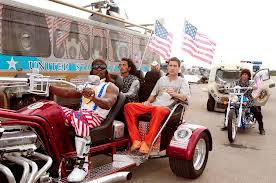
Police boxes are very British so the Americanized TARDIS can’t be based on that. How about a vehicle? And try something outrageous like an RV. It would fit in with the eccentric nature of the Doctor and be a tip of the hat to the Back To The Future films. Needless to say, the RV would be bigger on the inside…

Bigger on the inside…

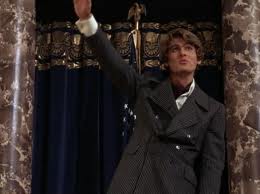
As for the Doctor himself, well this Americanized Time Lord would have the basic personality traits of the Doctors seen in the BBC version. But he would have an American twist. He would be adorned with clothing from various eras in U.S. history. Just look at the current Doctor in the episodes “The Impossible Astronaut” and “A Town Called Mercy” where the Doctor sports a cowboy hat. The American Doctor could wear a cowboy outfit throughout a season or two. Then when he would regenerate he could take on the personality of a surfer dude and run around with tropical shirts and a Panama hat. Throw in some cargo shorts for good measure. Have him take on the aspects of a biker with a heavy leather jacket. It would work, look at how cool the Ninth Doctor looked with his leather jacket and jeans during his brief run on the show. Or adorn the Doctor in a mishmash of styles that would be part hippie, part cowboy, part yuppie and part something else.

The would-be Doctor and his Companion.

There wouldn’t be a shortage of actors who could play the Time Lord. If Doctor Who made the transition into a full-length film then it’s easy to imagine Robin Williams, Jim Carrey, or Johnny Depp playing him. But for the small screen, the producers could offer the role to someone who can do drama and comedy. The show isn’t a straight comedy but the current show does have a humorous bent. For that reason, they can hire French Stewart to play the Doctor. Bryan Cranston is another good choice if they want to have the character seem a bit older, which would be more in spirit with the first few Doctors. Besides, having Cranston traveling in an RV would be nice nod to his show Breaking Bad. One advantage for producers with the Doctor being a metamorphic alien is that if an actor wants to leave the show, it would be simple storywise to replace him. Although it is easy to imagine that an actor would stay with the role much longer than in the U.K.

The Doctor and his buddy Companion drive off to new adventures.

Please visit the Starloggers website to continue reading.

José Soto

Why The Resident Evil Movies Are Popular

With the release of the fifth Resident Evil movie Resident Evil: Retribution coming up soon, the question has been asked, why are these movies popular enough to warrant so many sequels? Here are some ideas I have.

The Resident Evil movies are based on the phenomenal video game series of the same name that has players fighting all types of zombies created from a bioengineered virus. They are really the only big budget adaptations of video games out there that have been successful. Most of the other video game movies that have been released have been low budget and not well received. Examples include super Mario Bros., Bloodrayne, Doom and Double Dragon. The only other franchise I can think of that had some success was Tomb Raider with Angelina Jolie. But that franchise only lasted two movies since the second one was not as successful or well received as the previous movie.

Director Paul W.S. Anderson, who directed the first Resident Evil movie and the fourth and fifth one, is another reason for the movie franchise’s success. While not a great director Anderson is at least competent in what he does, making good action movies. I think his other movies have been well done like Event Horizon and the first Alien Vs. Predator. They are certainly better than those Michael Bay movies that are basically loud, mindless and difficult to follow in terms of action (the Transformers movies come to mind).  Having his wife Milla Jovovich starring as Alice in these films doesn’t hurt either. Plus, while he didn’t direct the second and third movies, he has written and produced all five of them, which kept him involved with the series.

Another point is that the movies loosely follow the games and have branched off to have their own storylines. So what happens next is a surprise to long-time players of the games.  Lastly, the Resident Evil movies continue to be made probably because the video games themselves are still very popular. This fall, Resident Evil 6 will be released for the PS3 and Xbox 360. And the previous games in the series have all been huge sellers. Capcom, the company that makes the games, has also released CG animated movies and continues to do so. In short, Resident Evil continues to be relevant, which keeps the movies highly anticipated with fans of the horror/sci-fi franchise.

C.S. Link

Spider-Man’s Greatest Moments, Part I

Marvel is celebrating the 50th birthday of their flagship superhero Spider-Man. He’s come a long way since appearing on the last issue of a failing science fiction comic book, but the minute he was introduced in Amazing Fantasy # 15, he became a sensation. Helping to usher in the so-called Marvel Age of Comics, Spider-Man was and is still Marvel’s most popular and iconic superhero. Over the years, our favorite Wall-Crawler has seen his highs and lows when it came to his storylines. There are too many to go through here, so let’s just highlight some aspects of them.

Insurmountable Odds

A hallmark of Spider-Man stories are those where he faces incredibly tough situations or foes. What makes them so special is that Spidey isn’t the most powerful superhero, he can’t shoot beams out of his hands, he can’t even fly. This makes him more relatable to us and is one of the reasons why he is so popular. He’s had to go up against villains that clearly outranked him in power and how he perseveres against them gave us some of the most exciting and hand-wringing stories. Who can forget that two-issue battle against the Juggernaut (The Amazing Spider-Man # 229-230)? Spidey fought this desperate battle against someone who could take on the Hulk. The Wall-Crawler tried everything but couldn’t make a dent against Juggernaut. Still, he wouldn’t give up, and somehow he stopped the Juggernaut by luring him into a bed of wet cement. Then there was his battle with the former Galactus herald Firelord (The Amazing Spider-Man # 269-270), where he shocked the late-arriving Avengers with his sheer will power as he managed to knock out Firelord.

But the best story that showed how determined Spider-Man can be was in the classic comic book The Amazing Spider-Man # 33. In the previous issue, he fought against Doctor Octopus at an underwater base and was left partially buried under tons of rubble and debris with water flooding. Meanwhile, inches away lay a canister containing a cure for his Aunt May’s latest ailment. He spent most of the issue struggling to free himself but failing. He berated himself, resigned to failure. But he couldn’t accept defeat not with his aunt’s life on the line. Spider-Man motivated himself and carefully maneuvered his body to free himself just in time. It was the most dramatic moment seen in a Spider-Man story and copied by others.

Marvelous Team-Ups

Ever since the very first issue of The Amazing Spider-Man, our favorite Web-Head was shown to be an integral part of the Marvel Universe. In the first issue, Spider-Man tried to join the Fantastic Four and ever since, he has butted heads and teamed up with Marvel’s rich roster of superheroes. Some were interesting in that he had unusual pair ups (Howard the Duck, Frankenstein’s Monster, the John Belushi-era Saturday Night Live cast and even Superman in the classic cross-company story Superman Vs. The Amazing Spider-Man) or Spidey was way out of his element (Spider-Man Vs. Wolverine one-shot and Marvel Team-Up # 41-46 where Spidey time travels from the past and into the future).

The most natural friendship he’s had has been with Johnny Storm, the Human Torch. The two heroes tended to behave like college roommates and ranked on each other. Some of their best meetings included the Christmas-themed Marvel Team-Up # 1, Spider-Man/Human Torch #1-5,and most recently with FF # 17. The latter was a hilarious tribute to mismatched buddy comedies like The Odd Couple and Two And A Half Men, where Parker and Storm briefly live together with the expected disastrous results.

But Spidey’s best team-up stories were in J.M. DeMatteis’ run in Marvel Team-Up #111,112, 114-125, 126-133. In those comics, DeMatteis showcased his writing chops with fun, thoughtful, amusing and sometimes poignant yarns that were able to touch a reader’s  soul (Marvel Team-Up #119, 120, 127). The best part is that these issues can be found relatively cheap in comic bins. Continue reading

Remake The Black Hole!

Ever since I spotted that poster from The Black Hole in Tron: Legacy, I can’t stop thinking about that old Disney film.

The Black Hole was one of the earliest films I remember seeing as a kid back in 1979. The movie borrows plot lines from several classic works like Moby Dick and 20,000 Leagues Under The Sea. But the core story is rather simple and effective. The crew of an exploratory spaceship encounter a long-lost spaceship near a black hole in space, but it turns out it’s not abandoned. The commander of the huge derelict craft is obsessed with entering the black hole and finding out its secrets. As these tales go, the commander is insane and won’t let anyone get in his way not even the crew of the would-be rescue ship.

With all these pointless and gratuitous remakes being made (I’m looking at you Total Recall and soon Robocop), The Black Hole is one film that needs a remake or some kind of sequel at least.

Sure it’s got head-scratching flaws and scientifically it doesn’t make sense. For instance, why is it when the ship starts to get closer to the black hole, characters are able to survive outside the space ship without space suits, breathe air and even talk to each other? This is really confounding when earlier in the film, when the same characters are in a huge greenhouse, the structure is compromised, leading to air escaping and freezing temperatures. The robots they were fighting had visible signs of frost, yet the humans get along fine in the melee.

Then there is the ending sequence. It needed to be more spelled out. Is the black hole a gateway to heaven and hell? Then what happens at the very end? I guess it’s supposed to be one of those philosophical endings that can be debated but it throws off the tone of the film which was part mystery, part shoot-em-up.

The Black Hole is not the greatest movie ever made but it still fires up my imagination to this day. The special effects were great, it was even nominated for a special effects Oscar.  I really enjoyed the laser battles with the mad scientist’s robots and the film’s rousing score during those battles. It was an obvious swipe of John Williams but most sci-fi films in that era copied the composer. I also liked the characters, even the cute heroic robots. BTW, the head villainous robot, Maximillian, was pretty damn cool especially when he diced his claws into Anthony Perkins’ character. Too bad no blood was shown! Despite my misgivings about the ending, I liked that the filmmakers decided to be ambitious even if it was frustrating to watch.

A remake would have the same plot line: spaceship crew finds a lost spaceship with a nutty scientist bent on exploring a black hole; lives be damned, the gaining of knowledge is more important! But a remade Black Hole would be much more scientifically accurate. In this day and age it would have to be. The elements are right there for any enterprising filmmaker to improve upon the original. Combine that with some spectacular special effects and production design and we could wind up with a remake that surpasses the original.

Waldermann Rivera

2012 Doomsday Scenarios: Month Eight

Ever since humans looked up to space and its vastness, it was easy to imagine possible dangers coming from above. And they had good reason because Earth has dealt with cosmic threats ever since its creation. Whether by meteors, gamma ray bursts or wandering black holes, the possibility of our destruction coming from outer space is unfortunately a very likely scenario.

Doomsday Scenario No. 5: Cosmic Threats

We as people cower and fret over major disasters that come our way. But trying to imagine how we would face certain extinction from astronomical events is difficult. That is because in our recorded history we haven’t dealt with that kind of phenomenon. What is really frightening is that if we found out tomorrow that any one of these threats were to happen, there is very little that can be done to cope with it. Here are some of them:

Comets and Meteors: This scenario is probably the best known cosmic threat. Every school kid knows that about the theory that a comet or meteor struck Earth and wiped out the dinosaurs 65 million years ago. Earth is constantly threatened by these celestial objects. In fact, meteors enter our atmosphere all the time. Luckily most are tiny and harmless and make great light shows. But all it takes is that one large rock or ice ball to wreck havoc. It happened most recently in Tunguska, Russia in 1908. Though no remains of the meteor or comet have ever been found, the destroyed forest stands as a stark reminder of how powerful the collisions can be.  Some notable sci-fi books about such impacts are Lucifer’s Hammer by Larry Niven and Jerry Pournelle, The Hammer Of God by Arthur C. Clarke and Moonfall by Jack McDevitt, which is a variant of the theme in that a comet destroys Earth’s moon and the lunar debris is what threatens our planet. For films, there is Deep Impact, Meteor and the much-maligned Michael Bay epic Armageddon. Even though there are efforts underway to catalog all the asteroids and comets in our vicinity and have an early warning system, a rogue rock or iceball can slip by our sensors. Oddly enough, thanks to our technology, this is one disaster that can in theory be prevented. Most now know that lobbing nukes at them won’t work, but if there is enough warning then it’s possible to use rockets or satellites to nudge the orbits of the threatening meteors and comets.

Cosmic Collisions: Some scientists believe that our moon was created from another planetary body colliding with Earth. This happened way before life emerged on Earth but if it were to happen today, it would be devastating. Life will not be able to recover. Our only hope as a species would be to do as the characters did in the book and film When Worlds Collide, build a spaceship to escape and settle elsewhere. In When Worlds Collide, the survivors were lucky that they found a habitable world to colonize. For us, our best bet is to head to Mars and try to terraform the planet.  Of course in these situations a lot depends on how much time and capability we have. In the film Melancholia there wasn’t anything that could be done to save humanity and the Earth when it collided with a rogue planet. One thing to note is that a near collision is enough to disrupt life on Earth by causing the world’s orbit to shift and radically altering our ecosystem.

Gamma Ray Bursts: This is caused by the death of a nearby star when the energy is released from the star’s poles. According to scientists this happens in our galaxy every day. If Earth were to be bombarded by these bursts the ozone layer would be depleted and all life would be subjected to lethal exposure to radiation. Thankfully the bursts are too far away to threaten us.  Scientists believe that any supernova occurring about 8,000 light years or closer to us would be a concern. Actually some scientists theorized that gamma ray bursts are responsible for the periodic mass extinctions in our planet’s prehistory. In the book Starfire by Charles Sheffield, our planet is threatened by the radiation unleashed when our closest solar neighbor Alpha Centauri undergoes a supernova. Of course, if our own star were to undergo a supernova, life on Earth would be wiped out. However, our sun still has a few billion years left before it decays. That is unless the sun undergoes that transformation by artificial means. but that would take technology way beyond what we have today.

Solar Storms: Our sun often ejects solar flares or radiation. Back before we became technologically advanced this phenomenon had little effect on us. We would (and still) get brilliant light shows a.k.a auroras in the skies. But today, the electromagnetic pulses (EMP) from a solar flare would fry our computers and machines’ circuits and render them useless. It’s unlikely our civilization would be able to rebuild circuitry and transformers fast enough to stave off a technological collapse. Knocking on wood, this hasn’t happened yet. The most powerful solar storm in the past 500 years happened in 1859 (a.k.a the Carrington Event) and resulted in auroras appearing as far south as the Caribbean. Our technology was in its infancy then and the only machinery affected were the telegraph systems in North America and Europe. Solar storms also pose a grave risk to manned spaceflight in that astronauts would be bombarded by lethal radiation during a solar storm. In the novel Aftermath by Charles Scheffield (which is the prequel to Starfire) Earth undergoes a severe EMP when Alpha Centauri undergoes a supernova. The electronics worldwide are fried and society has to cope with the sudden loss of power and prevent a return to the Dark Ages.

Traveling Black Holes: It’s not likely to happen in our lifetime or even centuries from now, but it is a danger to regard. Scientists believe that our galaxy if filled with wandering black holes, many of them are supermassive black holes; in fact, they occupy the galaxy’s center. Their immense gravity fields would literally rip apart a solar system. If one were to pass by our solar system, its effect would be felt years before it actually arrived. Just on Earth, the orbit would be shifted and massive. By the time the black hole would siphon off our world atom by atom, all life would be long gone. In science fiction, there are many stories about creating artificial black holes and the consequences. This was shown in the last Star Trek film where the villain Nero created a black hole on the planet Vulcan and destroyed it. Later in the film, Nero tries to create a black hole on Earth to destroy it as well. So far, our world is safe from black holes and these other phenomenon. But they should serve as a drive for us to become a true space-faring civilization. This is the best way to guarantee that we would survive far into the future.