Tom Hanks Delivers The Emotional Core In The Post-Apocalyptic Film Finch

Finch, originally titled BIOS, is a post-apocalytpic film that was supposed to be released last year and is finally able on Apple TV+. The film is about a dying man (the title character Finch played byTom Hanks) in a barren world, who builds a robot to care for his dog after he dies.

Several years earlier in Finch, the Earth was devastated by a solar flare that shredded the ozone layer and blanketed the world with deadly ultraviolet radiation that killed most life. Finch Weinberg is a lonely robotics engineer in an abandoned and dust-covered St. Louis. He ventures out into the world with his UV suit just to scrounch for food and supplies for himself and his dog Goodyear (played by Seamus the dog). His only other companion is a small robot called Duey that has limited capabilities. Finch has a terminal illness (it’s not made clear in the film but it could be radiation poisoning or cancer) and wants Goodyear protected, so he builds an anthropomorphic robot that he names Jeff (Caleb Landry Jones).
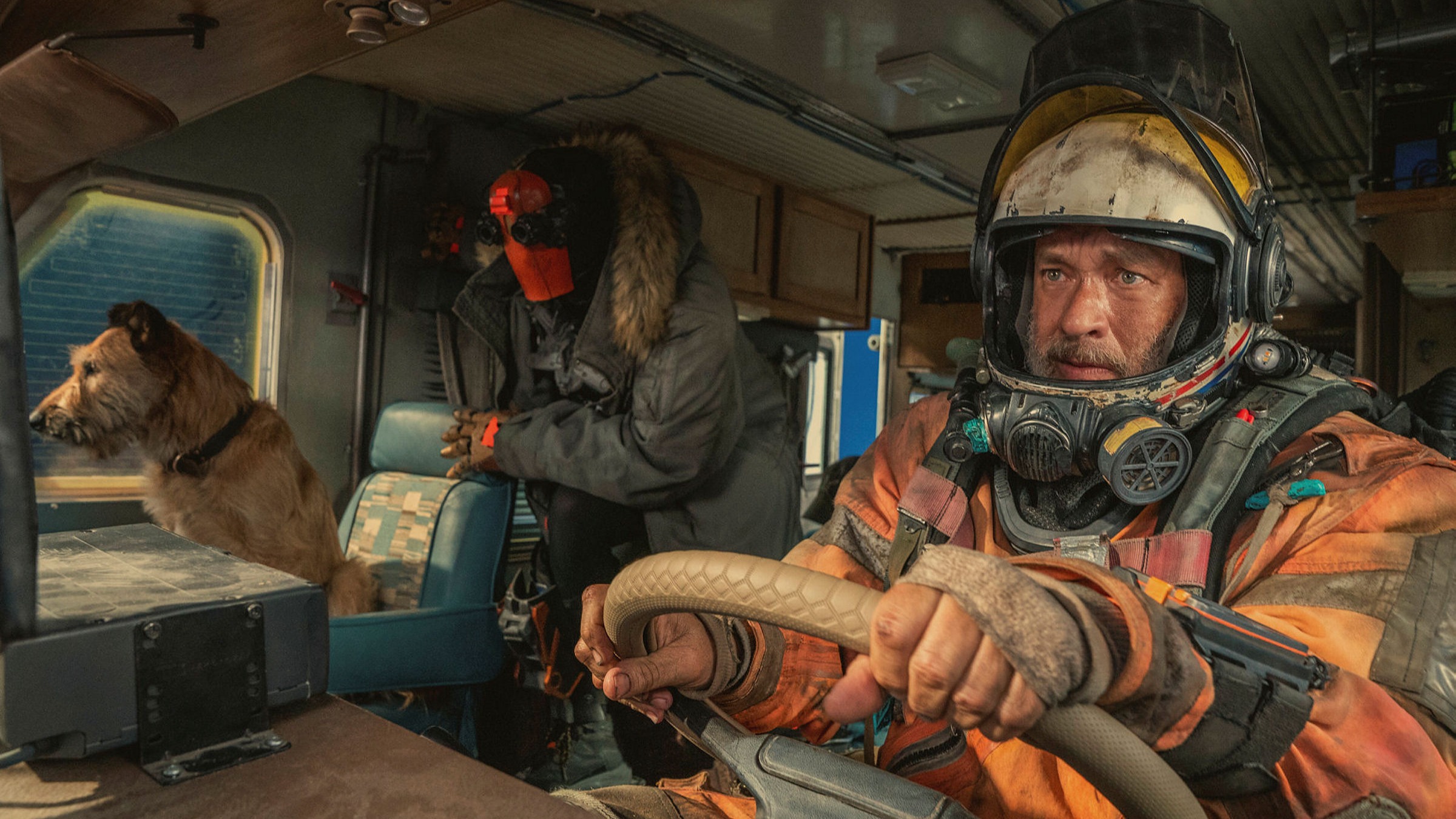
Finch is not able to fully program Jeff because a devastating storm is approaching St. Louis that will last for weeks. The scientist already planned to move to the west coast of North America and so decides to head out early in his recreational vehicle with Goodyear and his two robots, even though Finch is not fully programmed. This means that as they set out on their road trip, Finch has to teach Jeff how to care for his dog and survive after he is gone. During their trip, the two grow a friendly bond as Jeff learns about humanity and experiencing life, while Finch has to trust that the robot will carry out his task. This is difficult for Finch because during his ordeal as a survivor he lost faith in others.

Directed by Miguel Sapochnik and written by Craig Luck and Ivor Powell, Finch is heartwarming film, though it does not have a deep plot. It has many aspects of post-apocalyptic and survival films like WALL-E and even Hanks’ own Cast Away. Still, the film knows just how to tug at the viewer’s heart and there are many moments in the film that require a box of tissues. One instance is the moment when Finch recalls how he came to adopt Goodyear, which led him to find a measure of atonement, culminating in the creation of Jeff.. The film has many beautiful and reflective moments of experiencing the simple joys in life that are buttressed by gorgeous cinematography by Jo Willems.

The dog Goodyear is not some kind of super smart animal with quirky personality traits that is seen in many dog-centric films and it’s clear to see how much Finch is attached to the animal. Be that as it may, being that the driving force is that Jeff must learn to care for Goodyear, the dog is not the main character. Those are Finch and Jeff. The robot is not fully developed emotionally and has an inquisitive nature that is humorous but never annoying, At the same time, this defect is a liability that could endanger his biological companions. However, Jeff has noble intentions and takes initiatives throughout the film that earns his creator’s trust and allows him to grow into the caretaker he was meant to be. The role was well performed and captured as the robot seems realistic thanks to his clumsy nature and a clunky look, which is how a cobbled-together robot would appear.

Of course, the main draw of the film is Tom Hanks, who proves once again why he is such a beloved acting icon. His heartfelt performance is the emotional core of the film. It is so easy to relate to Finch as Hanks injects a noble and gentle everyman demeanor. One cannot help but feel for him and his dog whenever he starts coughing blood or just see them playing a simple game of catch. Throughout the film Hanks delivers a quiet and thoughtful performance that helps keep the film grounded and endearing.

Some will argue that Finch may be emotionally manipulative and simplistic and that is a valid point. Given the film’s premise it can be easy to predict how the film will end up. However, in the end it works as it is easy to get emotionally invested in the characters and wonder what will come next for them. Just as important, despite its pathos, Finch never feels sentimental or cloy.

It is a bit of a shame Finch can only be seen on Apple TV+ since not many people have that streaming app. The film deserves to be seen in wider venues such as full theatrical releases and the powers that be should have waited a bit longer to do so. Hopefully, Finch may find an audience later on in additional venues because it is one of the better genre films for the year.

José Soto
A Look Back At Spider-Man 2

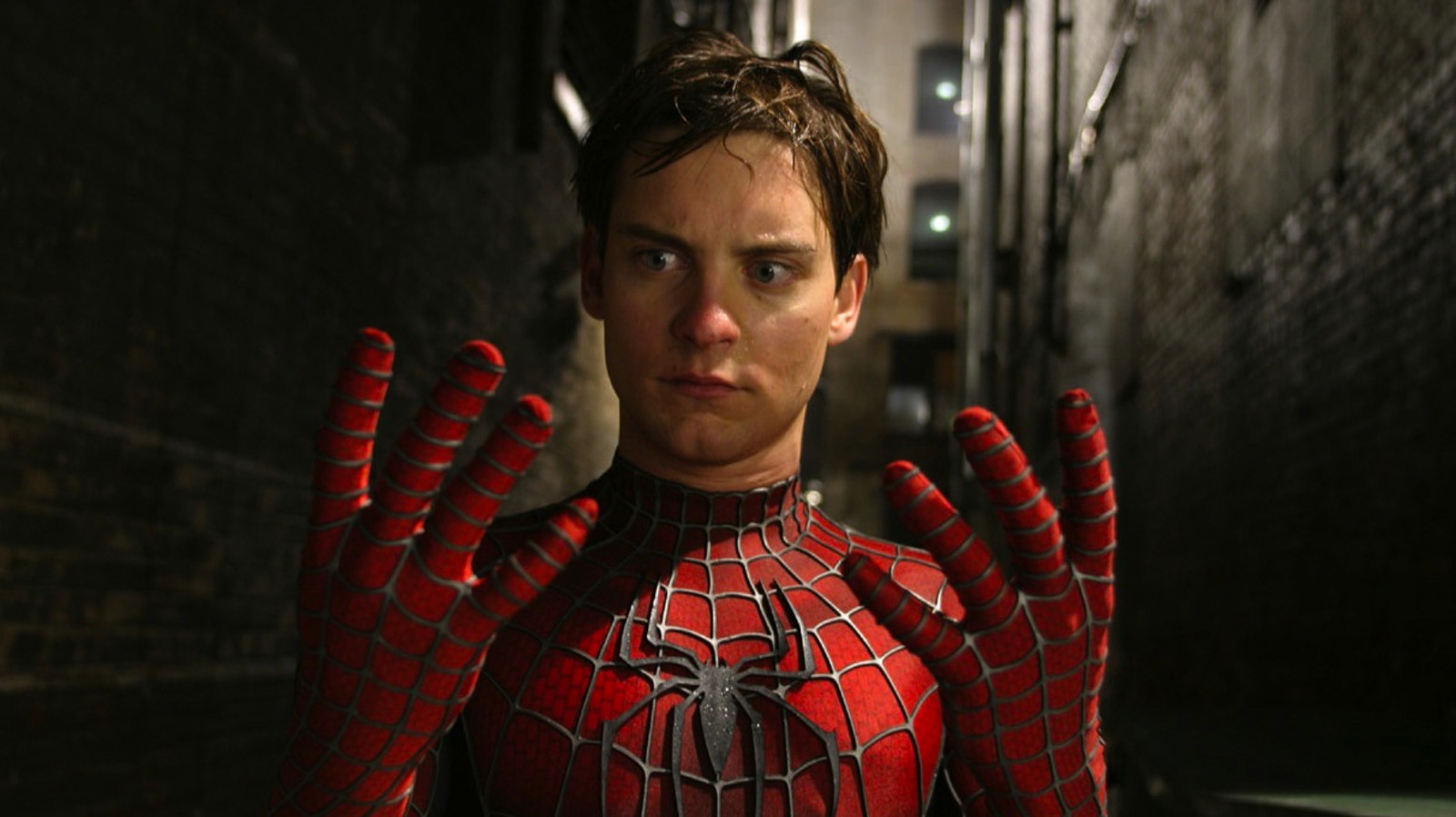
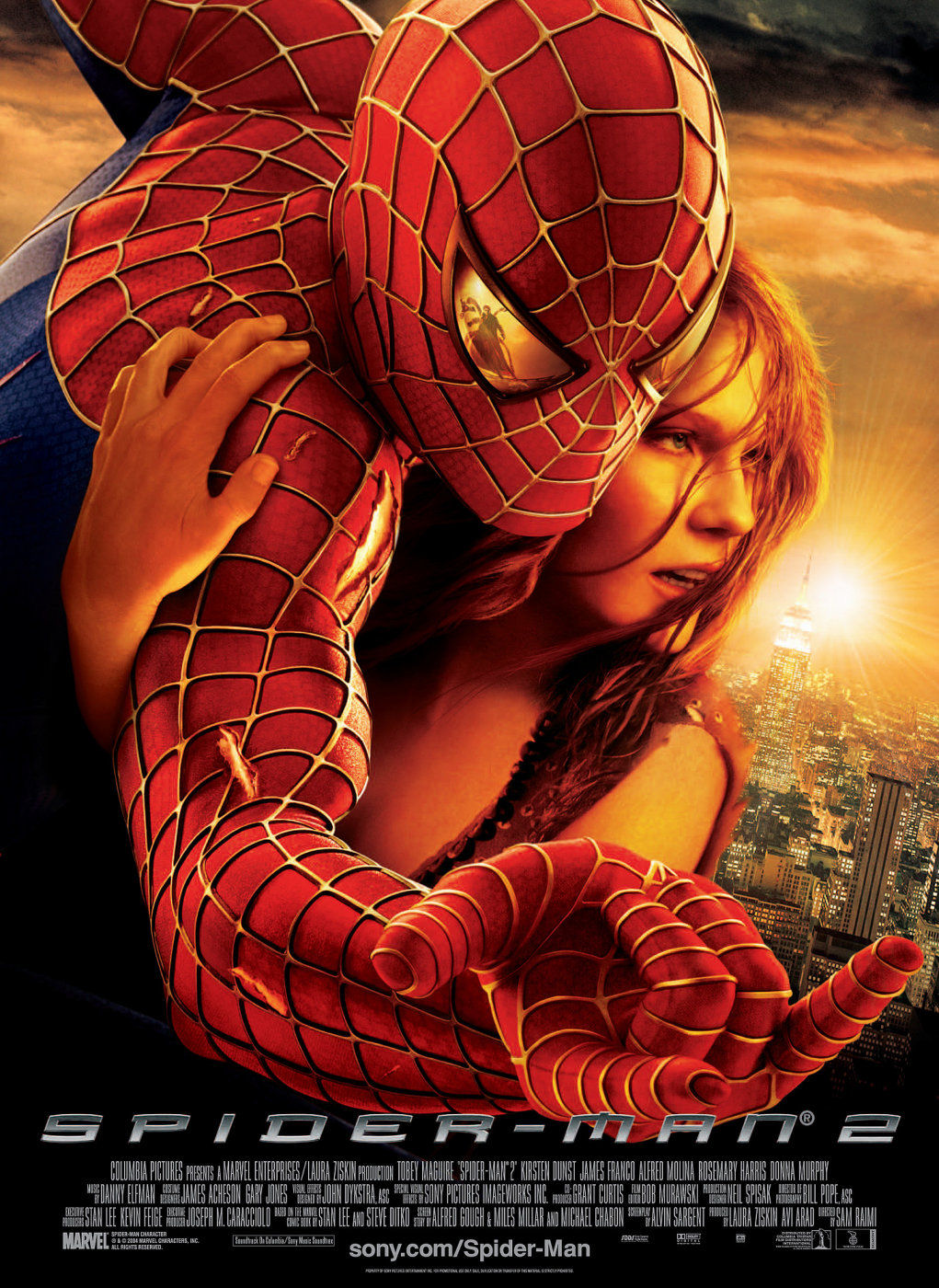
As the countdown continues for Spider-Man: No Way Home and we wait anxiously for the second trailer to drop (which will supposedly feature the return of Tobey Maguire as Spider-Man), it is time to take a look back at Sam Raimi’s Spider-Man 2. The second Spider-Man film is well loved for many reasons but one of the standouts was its villain Doctor Octopus (Alfred Molina), who will return in Spider-Man: No Way Home,

When Spider-Man 2 begins, we see that Peter Parker (Maguire) is still a lovable loser who is struggling desperately to balance his civilian life with his superhero antics as Spider-Man. Being the costumed adventurer is clearly interfering with his private life to the point that it gets him fired from a delivery person job, threatens his academic career in college and even late for his own birthday party. Peter is constantly broke and unhappy over how his responsibilities keep him from getting romantically involved with his friend Mary Jane Watson (Kirsten Dunst). She is now a successful model and Broadway actress and has feelings for Peter but his inability to admit their mutual feelings for one another keeps her away. Eventually she gets engaged even though she still loves Peter, which crushes him.

The dilemma of leading a double life eventually gets to Peter. He begins to lose his powers for pscyhosomatic reasons and he decides to give up his Spider-Man identity. While this decision brings him momentary happiness, the love of his life is still engaged to someone else, he is still struggling to make ends meet, crime and other mishaps in New York City continue, and a new supervillain soon enters his life.

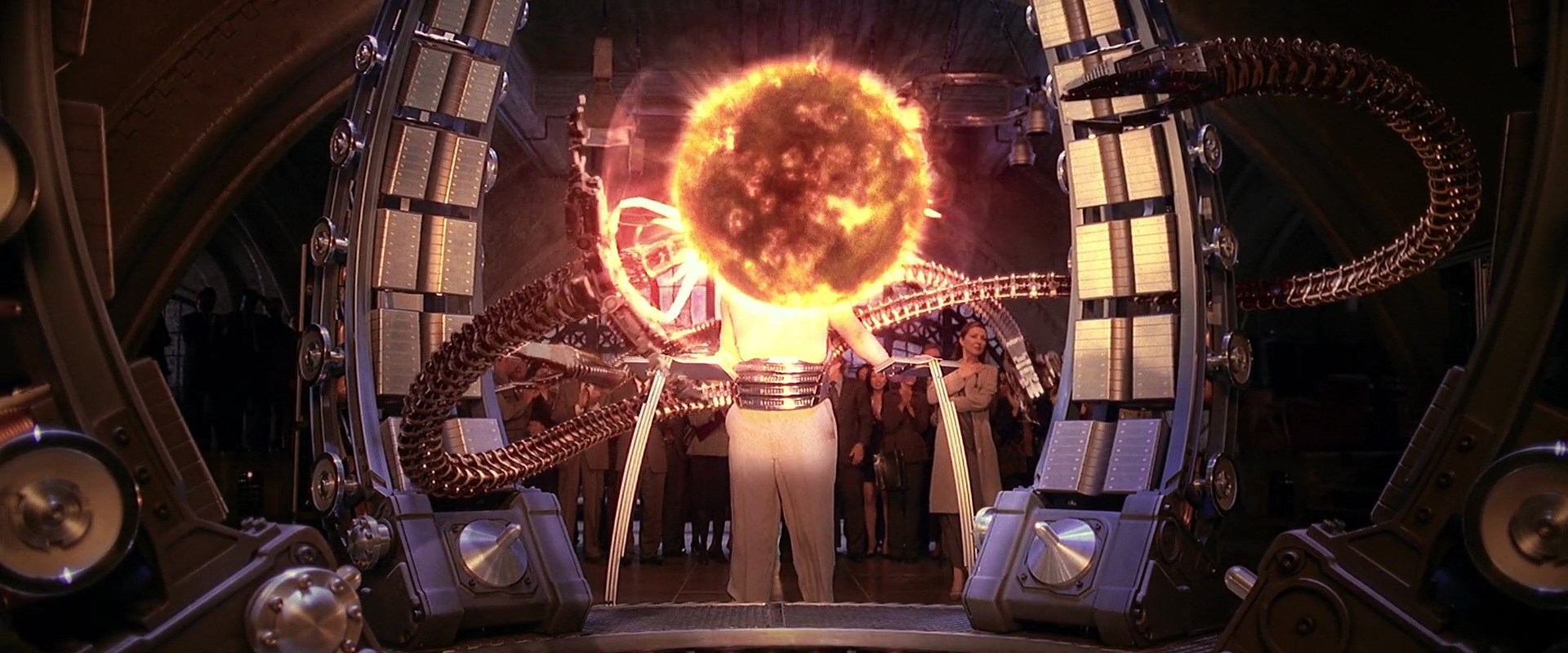
Dr. Otto Octavius (Molina) is a brilliant nuclear scientist working for Oscorp, the company that Peter Parker’s best friend, Harry Osborn (James Franco), runs. Harry took over the company after his father, who was secretly the villainous Green Goblin in the first Spider-Man film, was killed in battle with Spider-Man. Dr. Octavius is working on a way to create fusion to supply a cheap energy source. During a live demonstration attended by Peter, Harry and Octavius’ wife Rosalie (Donna Murphy), the scientist unveils these robotic arms that he invented to help him handle hazardous materials in his fusion reactor project. He cybernetically attaches the arms to his spinal column to control them mentally. Dr. Octavius informs his audience that the arms have a form of artificial intelligence to help him but he maintains control with an inhibitor chip implanted on the arms.

Not long after the scientist begins his fusion demonstration, the experiment gets out of control because of an energy spike. The fusion reactor threatens everyone but Peter switches to his Spider-Man identity and shuts down the reactor. However, before he does this Rosalie is killed and Dr. Octavius is caught in an explosion that permamently fuses the arms to his spine and destroys the inhibitor chip. Later in a hospital, the AI took control of his robotic arms killed the doctors who attempted to remove them from Dr. Octravius. After he escaped from the hospital, it is clear that the AI took control of the scientist and goad him to rebuild the fusion reactor regardless of the danger. This leads “Doctor Octopus”, as the press dubbed him, to go on a criminal spree to get the funds and materials to complete his work, and in direct conflict with Spider-Man.

Continue reading

Denis Villenueve’s Majestic Dune

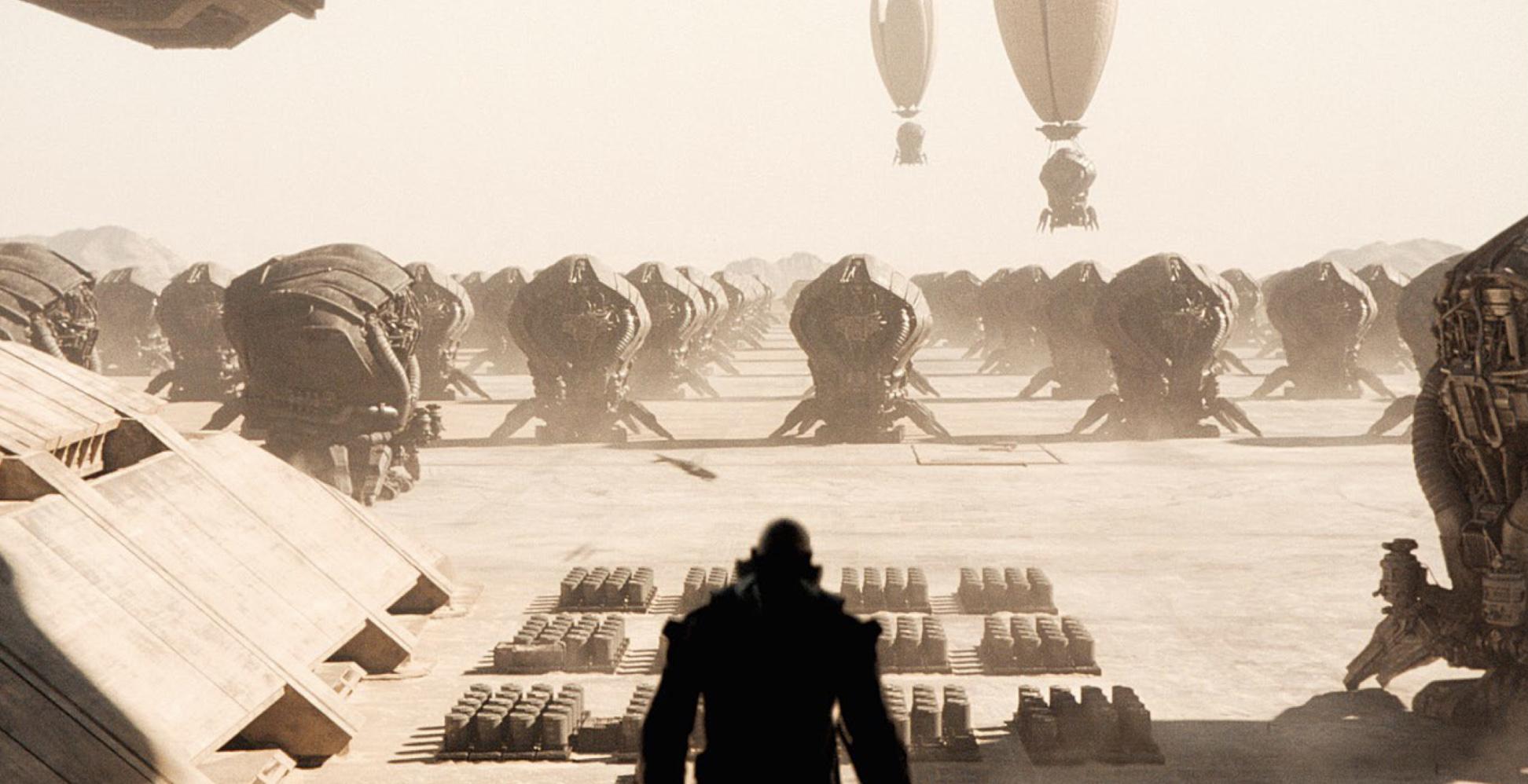
Dune is a classic science fiction novel written by Frank Herbert in 1965 that tells the story of a young man in the far future who leads a desert planet people to freedom. It’s a very complicated tale that has a deep back story that has been difficult to translate to film due to its complexity. The first film adaptation directed by David Lynch in 1984 was met with a mixed reception. It was a lavish production that looked and felt like Dune, but also took liberties with the story and was edited and cut out much of Herbert’s vision. The Sci-Fi Channel released a mini-series in 2000 that was more faithful to the book and was longer than Lynch’s film, but was made on a limited TV budget that was sometimes evident with painted backgrounds and weird costumes. 

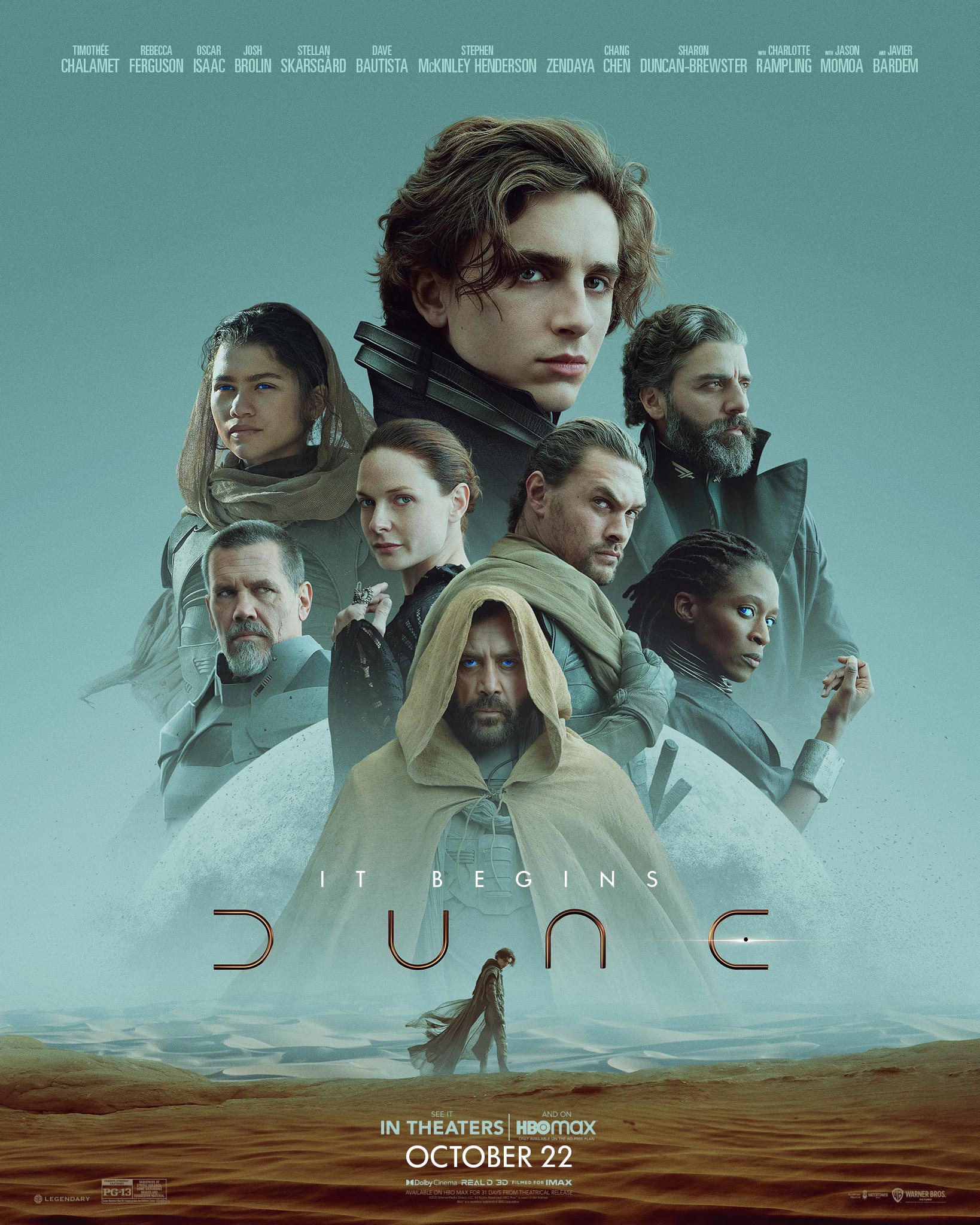
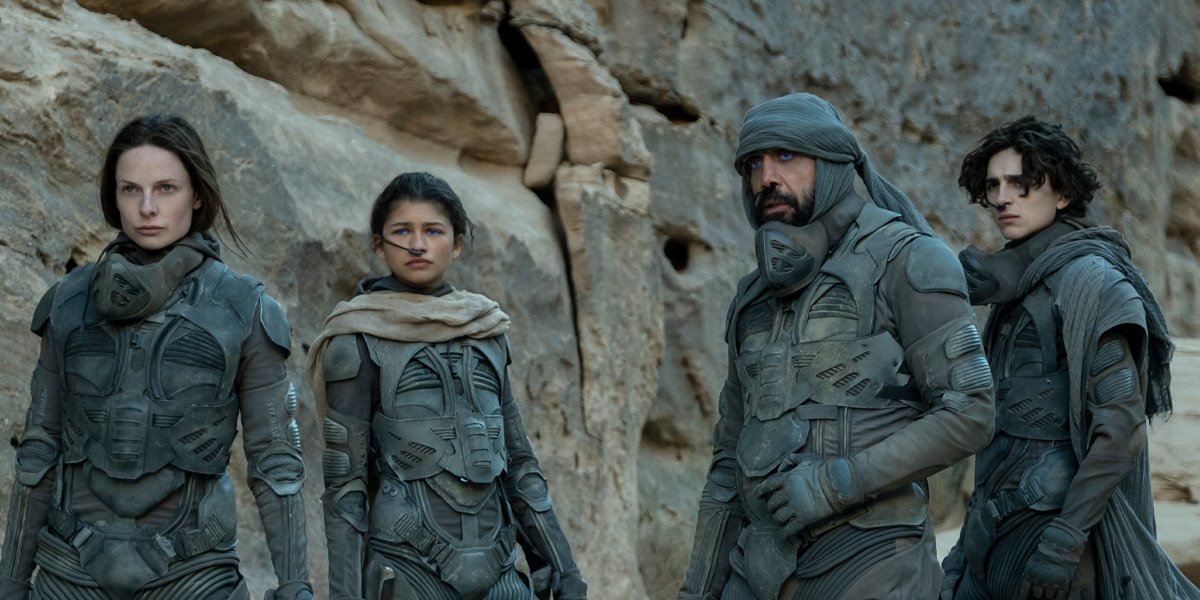
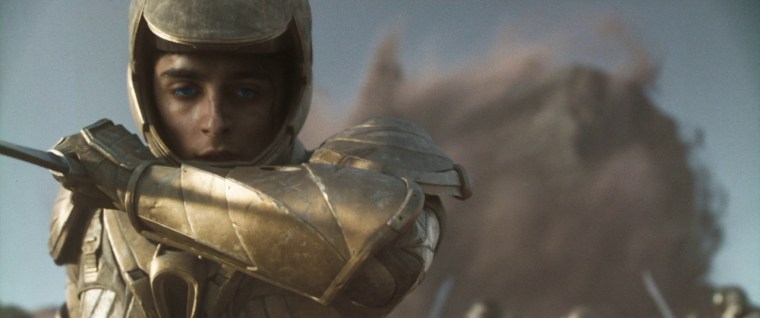
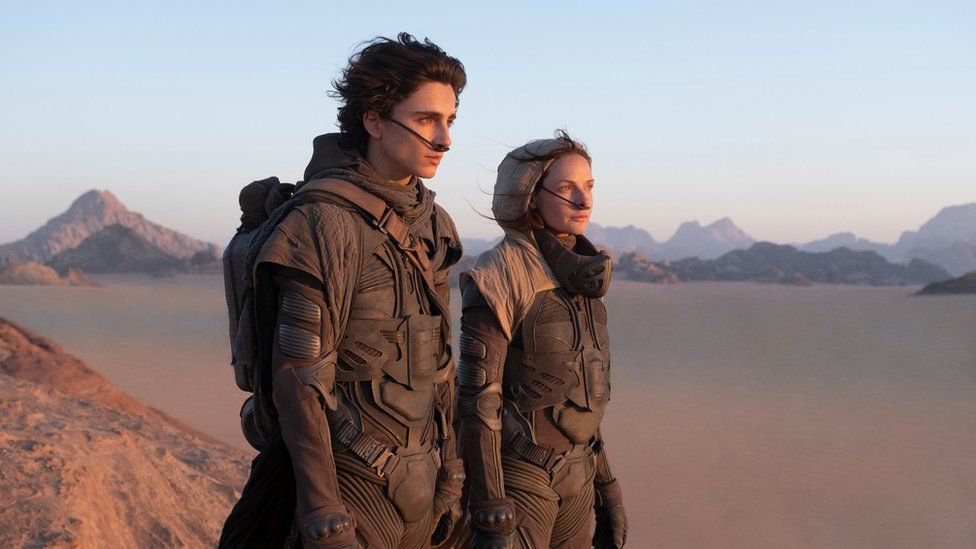
Denis Villenueve’s Dune is the latest adaption of this epic tale that takes place in the far future. Humanity has spread to the whole galaxy and is ruled by the Padisha Emperor, and that empire is controlled by an addictive substance known as spice that extends life, enables interstellar space travel, and allows some to see into the future. This precious resource is only found on one planet, Arrakis, also know as Dune, which is populated by a nomadic group of people known as the Fremen. They have a prophecy that a man from off world will lead them to glory and freedom. This man is young Paul Atreides (Timothée Chalamet), the son of Duke Leto Atreides (Oscar Isaac), who is gifted control of the planet by the emperor. This gift, however is a double edged sword, with plots against the Atreides hatched by the emperor and House Atreides’ sworn enemies, House Harkonnen. These machinations force Paul to embrace not just his future but the the destiny of the galaxy.

Villenueve’s take on the material is excellent and shows a great respect for the essence of the story. The movie has the best elements of previous adaptions, with the right look and feel of the 1984 film, along with the faithfulness of the mini-series. The new movie takes it time in telling the story which is the right way, since it is a deep and complex story of prescience, politics, and ecology to name a few things that make Dune a book that is still enjoyed and admired decades after its publication.  Paul’s frequent visions of his future with the Fremen and his future lover Chani (Zendaya) are shown in an interesting and mysterious way, and the appearance and mannerisms of the different factions of the Dune universe are also a highlight. From Mentats making calculations with their human computer minds to the emperor’s Sardarkaur troops speaking in a weird, guttural language, this feels like a different time and place, as it should since it takes place over 10,000 years into the future.

Paul’s journey from son of a Duke to the head of his family is done in a convincing way, with good performances from a great cast. Timothée Chalamet shows the conflicted nature of Paul, who can see his future and is reluctant to make it happen, yet feels obligated to continue his father’s work. Oscar Isaac, as his father Duke Leto, also does well as the heroic leader of House Atreides, who knows that the gift of Arrakis to his family is a trap, yet also feels the pull of duty to go forward in taking control of the spice while warning his son of what is to come. Paul’s mother, Lady Jessica is well portrayed by Rebecca Ferguson, who shows the agony of a mother giving her son over to a possible death at the hands of the Bene Gesserit Sisterhood, a group that has plans on genetically breeding a super human who can transcend time and space and see Paul as that potential being. The well-rounded cast includes other such names as Jason Momoa, Zendaya, Javier Bardem and Stellan Skarsgard as the Baron Harkonnen. All of which provide excellent interpretations of these iconic characters.

One issue I had with the movie, is that because of the strong focus on Paul Atreides and his mother, there are some characters that do not show up at all, such as Princess Irulan, Feyd Rathua Harkonnen, and Emperor Shaddam IV. These are important characters to the story, but due to the obvious time constraints in a two-and-a-half hour movie and the needs of a very complicated story, this is a consequence. Speaking of which, the title of the movie at the beginning says “Dune, Part 1”. Villenueve chose to make the movie based on the first half of the book. I think this was the only choice, since trying to cram the whole book into one film will lead to issues that can happen in film adaptations of books, where much of the plot can be lost or rushed. I would have liked to have seen perhaps a three-hour version, so that these missing characters could show up, and that the villainous Harkonnens could have more of the limelight. Having said that, it is still better to have a Dune film that lets the story unfold, which this one does. I have heard complaints about the ending of the movie, that it is supposedly abrupt, but I didn’t see it that way. It feels like a good ending point for that part of the journey, where Paul and Jessica embark on a new phase of their lives with the Fremen, and the Harkonnens still lurking as a major threat. Early indications are that the film is doing well and hopefully this will lead to the expected part 2 that will finish the tale of Paul Atreides’ rise to power, and the establishment of the legendary Dune universe.

C.S. Link

“The Most Profound Experience I Can Imagine” William Shatner Goes Where Few Have Gone Before

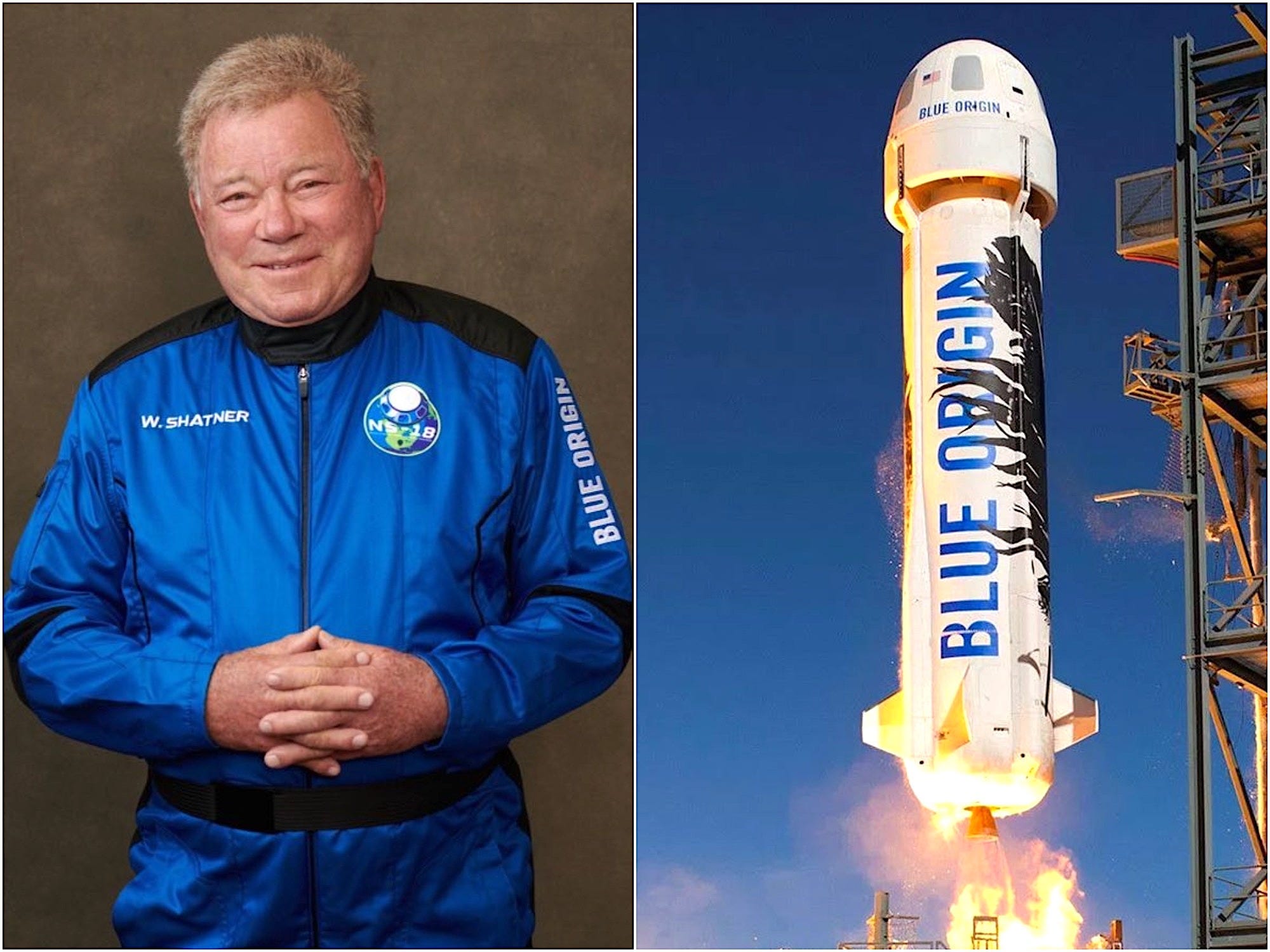
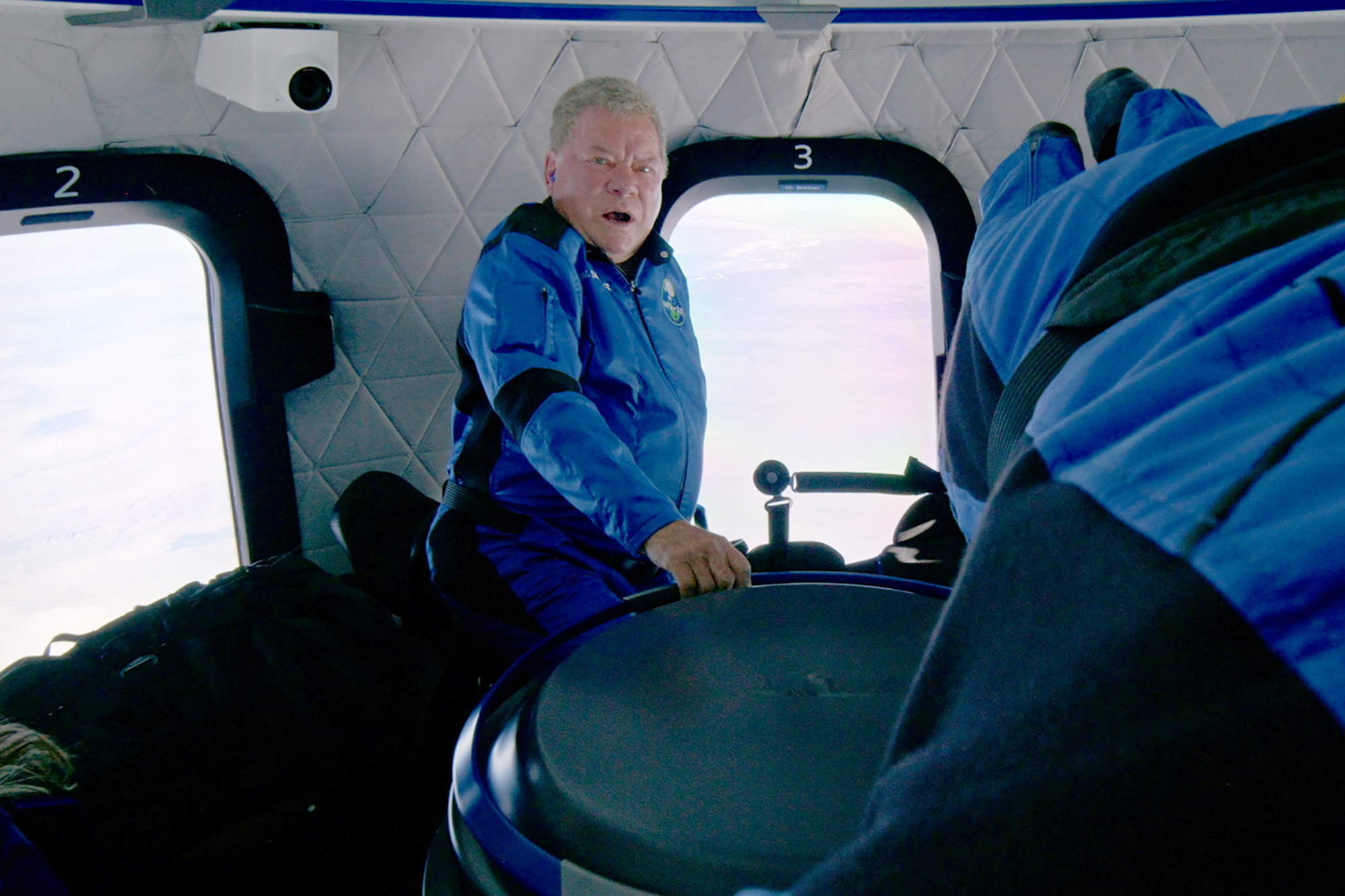
On October 13, 2021, history was made as sci-fi melded with science fact when actor William Shatner became the oldest person to ever go into space onboard Blue Origin’s New Shepard suborbital launch vehicle.

At 90 years young, Shatner is, of course, best known for portraying Captain James T. Kirk, in the original Star Trek and the first seven Star Trek films. The resusable suborbital system was conceived by Amazon CEO Jeff Bezos as a means of commencing space tourism. Bezos invited Shatner to become an astronaut/passenger for the New Shepard’s second crewed voyage, which included three other astronauts/passengers.

Obviously Star Trek and sci-fi fans were excited by the news as finally William Shatner would be able to in a sense emulate the sci-fi legend, who voyaged through space as he commanded the starship Enterprise. Needless to say, what Shatner accomplished paled to Kirk’s feats. After all, the actor simply took a suborbital flight while Kirk traversed the galaxy as if it was nothing. Yet Kirk appreciated the situation he was in, to explore and witness what few or none have before. Now, Shatner, too, was able to have as what he said was “the most profound experience I can imagine.”

Originally the flight was to take place on October 12, but was delayed due to weather. During pre-takeoff, it was clear that William Shatner was nervous about his flight and made no secret about his ambivalence. Still, he went through with the flight and was taken aback by the experience.

The New Shepard launched from Blue Origin’s launch site in West Texas at 10:49 a.m. in a short suborbital trajectory that was similar to astronaut Alan Shepard’s first suborbital flight in 1961. The capsule that Shatner and the other three astronauts were in only remained in suborbit for about 11 minutes before it descended back to Earth. Still, that so-brief voyage left a grand impression upon Shatner and his companions.

Once he landed and was greeted by Bezos, William Shatner gave a moving and visceral description of his journey and how it deeply moved him. “I hope I can never recover from this. I hope that I can maintain what I feel now. I don’t want to lose it.” Shatner confessed as he recounted his short voyage 65 miles above the planet.

Some will argue that the event was a publicity stunt for the very rich and that the cost of the flight could have been better used down at Earth. But these trips illustrate the potential of space toursim and open it up to everyday people who are not scientists or engineers. William Shatner’s journey to where few have gone before was truly inspiring and an excellent way to boost space tourism. He pointed out that observing Earth from afar made him appreciate how fragile and beautiful our world is and how it should be cherished. He also added that everyone should experience to see Earth in a new way. Many other space voyagers described a similar feeling and how it made them protective of our planet. Perhaps if more people experienced what the very few have then it could inspire them to take measures to protect Earth.

Eventually, space tourism will become more affordable and attainable for many people to the point that it can become as routine as taking a flight on an airplane. Shatner’s experience and the way he eloquently described it are excellent ways to promote space tourism and inspire countless others.

So, what next? Will Patrick Stewart be invited for a future flight or antoher Star Trek actor? How about Mark Hamill, Sigourney Weaver, or any other prominent sci-fi actor? How about prominent sci-fi visionaries, such as George Lucas or James Cameron? It’s easy to imagine Cameron staying in orbit to film his next sci-fi blockbuster. They could, as Shatner demonstrated, be the best ambassadors to motivate others and who knows? Space tourism could soon become commonplace. Anyway, no matter what, it was a blast to see a small measure of science fiction becoming reality as we can now envision what it is like for Captain Kirk to be in space as the actor who helped create the character took that next step into the final frontier.

José Soto

60 Years Of The Marvelous Fantastic Four

“A brilliant scientist—his best friend—the woman he loves—and her fiery-tempered kid brother! Together, they braved the unknown terrors of outer space, and were changed by cosmic rays into something more than merely human! MR. FANTASTIC! THE THING! THE INVISIBLE GIRL! THE HUMAN TORCH! Now they are the FANTASTIC FOUR—and the world will never be the same again!” Introduction to the Fantastic Four comic books during the 1970s,

Not much can be said about the Fantastic Four that hasn’t been said before. It’s widely regarded as one of Marvel Comics’ greatest teams and to this day, it deserves the title of the World’s Greatest Comic Magazine- as it was advertised proudly on the covers of the comic books. They were called “the First Family of Marvel”, and during the silver and bronze age the creative teams, which began with co-creators Jack Kirby and Stan Lee, spun tale after tale involving the main four characters with their supporting cast as they figured out how to solve their problems or win the battle against the bad guys.

As we celebrate the 60th anniversary the FF, their story has proven to be as timeless as it is popular. First, we got Dr. Reed Richards, who becomes the stretchable Mr. fantastic, we have Sue storm who marries Reed and she becomes the Invisible Girl (and later rightly renames herself the Invisible Woman), then we have her younger brother Johnny, a hot rod-riding hothead, who loves fast cars and is always dating pretty girls, and then we have the family’s trusted friend Ben Grimm, who becomes the ever lovin’ blue-eyed Thing.

Why these characters work together is because the creation is structured around a family dynamic. A family who is close and loyal, yet bicker and banter, but at the end of the day come together as a team to win the day.

Why the setting works is that this is no ordinary family. Each one has been imbued with super powers based on cosmic ray irradiation when they rocketed to space on a test flight. Reed can stretch his body, Sue becomes invisible, Johnny bursts into flames and fly, and Ben became a rocky layered bulk of a humanoid. In terms of personality, Reed is the level-headed leader, Sue with her invisible powers also has a force projection where she could solidify the air around her making her a telekinetic, and effectively the most powerful member of the team. Johnny usually flies when he is fully engulfed in flames and can project flame blasts from his hands. And the Thing is so strong he could almost beat the Hulk, if not hold his own against the green goliath.

Also, the creators skillfully mixed the situation of the mundane and juxtaposed it with the cosmic. While Johnny and Ben were bickering over a meal, there might be something going on in the universe, a catastrophic threat of some kind or a massive universal event so they had to suspend their meal and arguments until later.

Continue reading