Captain America: The Winter Soldier, The MCU’s Greatest Solo Superhero Film

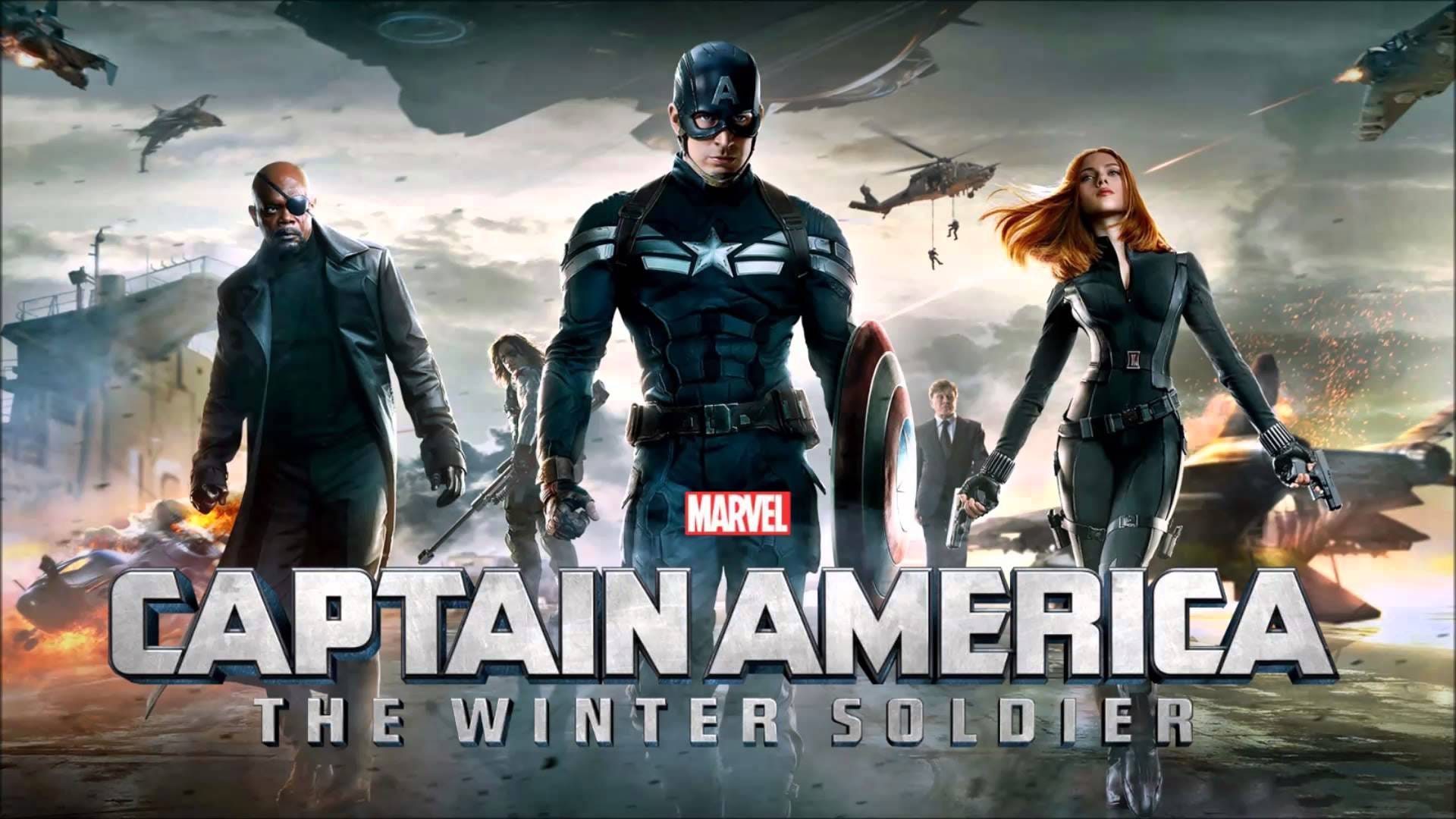
As Captain America: The Winter Soldier celebrates its 10th anniversary this month, it’s time to take a quick examination of why the Captain America film is considered one of the best films of the Marvel Cinematic Universe (MCU).

Very few MCU fans expected much from the sequel to Captain America: The First Avenger, especially given that Joe and Anthony Russo, the directors of Captain America: The Winter Soldier were relative unknowns whose biggest accomplishments to date were directing episodes of Community. Yet, the film blew away audiences, critics and fans with its non-stop action, intriguing script and well-developed characters. It turned out to be one of the most important films in the MCU as it forever changed it.

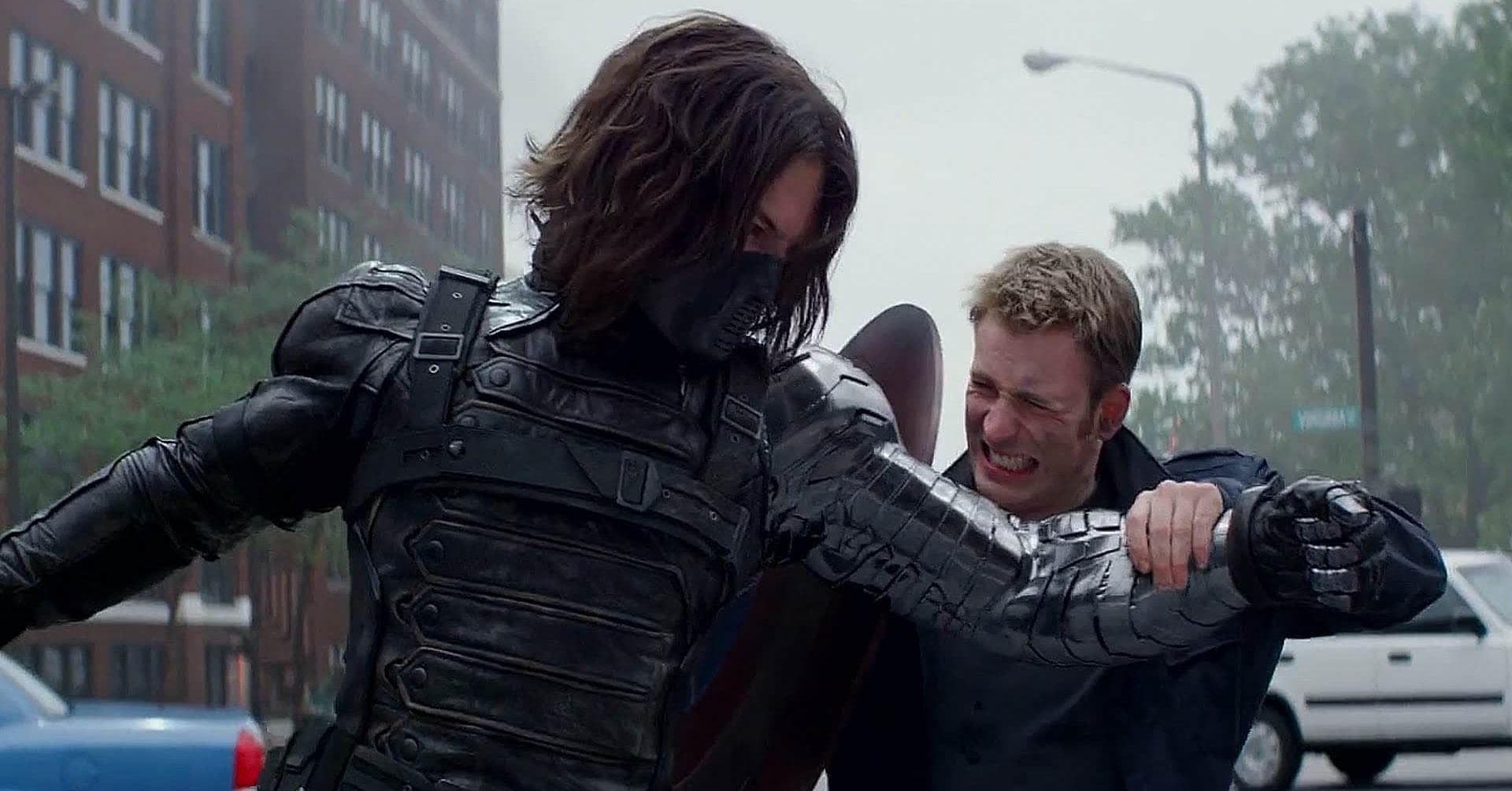
Captain America: The Winter Soldier centers around Captain America/Steve Rogers (Chris Evans) uncovering a huge conspiracy in S.H.I.E.L.D. the spy organization he works for while grappling with a deadly ghost from his past. The first Captain America film dealt with Steve’s adventures as a superhero during World War II and ended with him being frozen in ice then revived during modern times. Ordinarily, a sequel film would have focused on fish-out-of-water tropes as Steve struggled to adapt to a whole new world. While this does happen in Captain America: The Winter Soldier, the film to its credit doesn’t concentrate on this concept. Instead it forces Steve to adhere to his honorable values as the world around him exhibits dubious morality. He clashes with his superiors who think nothing of spying on civilians and eroding their privacy with a clandestine project. He soon learns that S.H.I.E.L.D. has been compromised by the evil Hydra organization which plans to use the project to unleash a preemptive attack on its enemies throughout the world, including members of the superhero team, the Avengers. For his troubles, Steve is branded a traitor and chased by the mysterious Winter Soldier (Sebastian Stan), a deadly assassin who turns out to be his best friend Bucky from his World War II days.
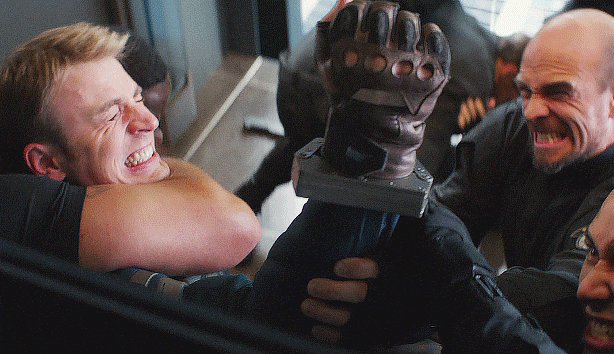
All these plot elements successfully evoked a paranoid spy/political thriller that was highlighted with high-octane action scenes that demonstrated how vicious and lethal the Winter Soldier was. These battles were among the best action scenes ever seen in any film and has not been replicated in other MCU films. There was a genuine sense of danger and fear as Steve and his allies fought the Winter Soldier and the compromised S.H.I.E.L.D. agents. One scene in particular, which took place in an elevator, proved what a badass Captain America was. He was surrounded in a cramp space by several men who tried to arrest him and he singlehandedly fought and defeated them despite the odds.

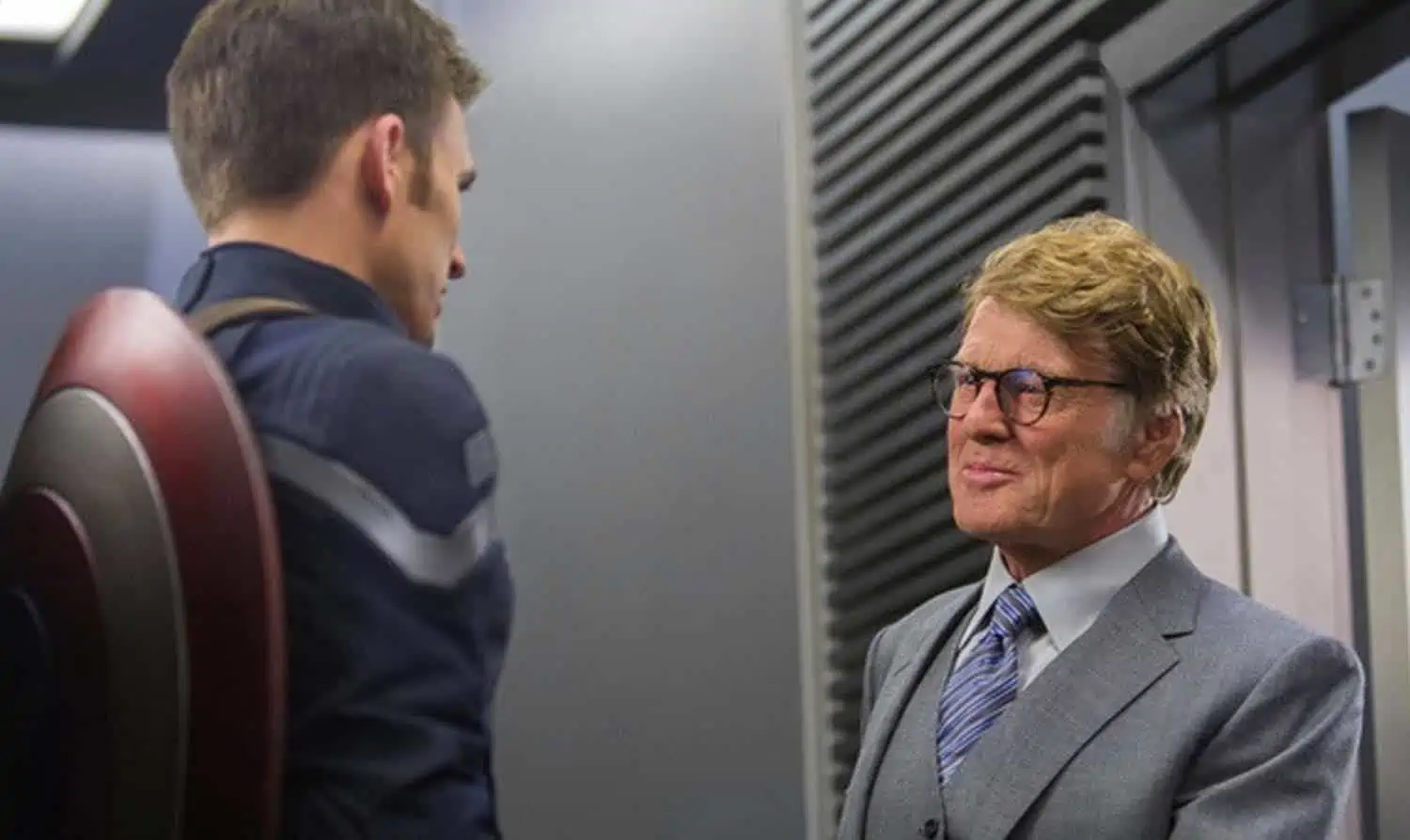
But getting back to the political angle, the film always kept you guessing as to who could be trusted, or what was actually happening in a way that was not confusing and kept audiences engaged. It helped that the film featured Robert Redford as Alexander Pierce, a government official who was actually a Hydra agent. Redford’s acting prowess elevated the film and he was a great callback to the ’70s spy thrillers such as his own Three Days of the Condor.
More importantly, Captain America: The Winter Soldier was at its core a film about a man struggling with his past and his place in the world. In this situation, Steve tries to make sense of the new world he is forced to live in where it seems as if his values are out of step. But they are what is needed to fight a great evil that has corrupted the world and his best friend. What makes confronting Bucky so much worse for Steve is not only Bucky the lethal Winter Soldier, but due to brainwashing by Hydra over the decades, Bucky has lost his decent personality and no longer remembers his past or his friendship with Steve. The Winter Soldier is the only remaining link Steve has with his past and he has to find the strength to bring his friend back. His plight was very emotional and the sacrifice he made at the end to get through to Bucky was very powerful. The final battle between the two as Steve struggled to connect with Bucky was much more riveting than the wild, effects-laden action scenes involving Steve’s other friends fighting Hydra.
Captain America: The Winter Soldier propelled the narrative of the MCU from that point as it no longer had S.H.I.E.L.D. as the support organization for the Avengers and the world. This in turn would later have severe consequences during future Avengers films and immediately impacted the TV show, Agents of S.H.I.E.L.D. Even though that show is now ignored these days, back in 2014, it was clearly part of the MCU and the events of Captain America: The Winter Soldier directly affected the TV show as one of the main characters was revealed to be a Hydra agent, and the other characters underwent crises of faith. The film also led to Captain America becoming a man without a country and on the run as seen in the next Captain America film, Captain America: Civil War when his morality led to a devastating conflict with some of his fellow Avengers to the point that the team broke up and left Earth unprotected.

Thanks to Captain America: The Winter Soldier, the MCU began to be seen as something more than typical superhero films. This was reinforced later in the summer of 2014 with the release of the space epic Guardians of the Galaxy. Together, the films proved that the superhero film genre was very diverse in terms of storytelling and being able to surprise everyone with its potential. That is because not only is Captain America: The Winter Soldier the best superhero solo film of the MCU but one of the greatest films of all time.

José Soto

Captains America And The Falcon And The Winter Soldier

The Falcon and the Winter Soldier, the second Disney+ TV series based on the Marvel Cinematic Universe (MCU) just finished streaming its inaugural season. On the whole, The Falcon and the Winter Soldier is another winner for Disney+ despite its flaws. As fans speculate, discuss and laud the series, it is pretty clear that it sets a new direction for the MCU. Spoilers will follow below for anyone who has not watched the show in its entirety.

The series takes place several months after the events of Avengers: Endgame. Steve Rogers, the original Captain America, is now “gone” (it is never clearly stated if he died) and his two best friends Sam Wilson/The Falcon (Anthony Mackie) and James “Bucky” Barnes/The Winter Soldier (Sebastian Stan) were left to pick up the pieces after Steve’s absence.

In the end of the last Avengers film, Steve Rogers passed on his nearly mystical shield to Sam Wilson to carry on the legacy of Captain America. However, when the series starts, Sam is very uncomfortable with that mantle and donates his shield to the U.S. government as he carries on juggling his private life with his contract superhero work for the government. At the same time, Bucky is grappling with guilt from his previous life as the Winter Soldier, where he carried out brutal assassinations.

While the two men try to go about their lives, events occur that force them to get involved together. These include a terrorist group called the Flag Smashers led by a young woman named Karli Morgenthau (Erin Kellyman). In the time between the last two Avengers films, half the world population was erased from existence until they were restored. The Flag Smashers believe the world would be better if there were no borders or nations, which apparently happened in between the films. To help their cause, Karli and her comrades have taken the same super soldier serum that gave Steve Rogers his enhanced strength and agility. They also steal more of the serum to create an army.

The U.S. government commissions a new Captain America, who is John Walker (Wyatt Russell), a military vet suffering from post traumatic stress disorder and he has a major chip on his shoulder. Naturally, he clashes with Sam and Bucky as the two track down the Flag Smashers.

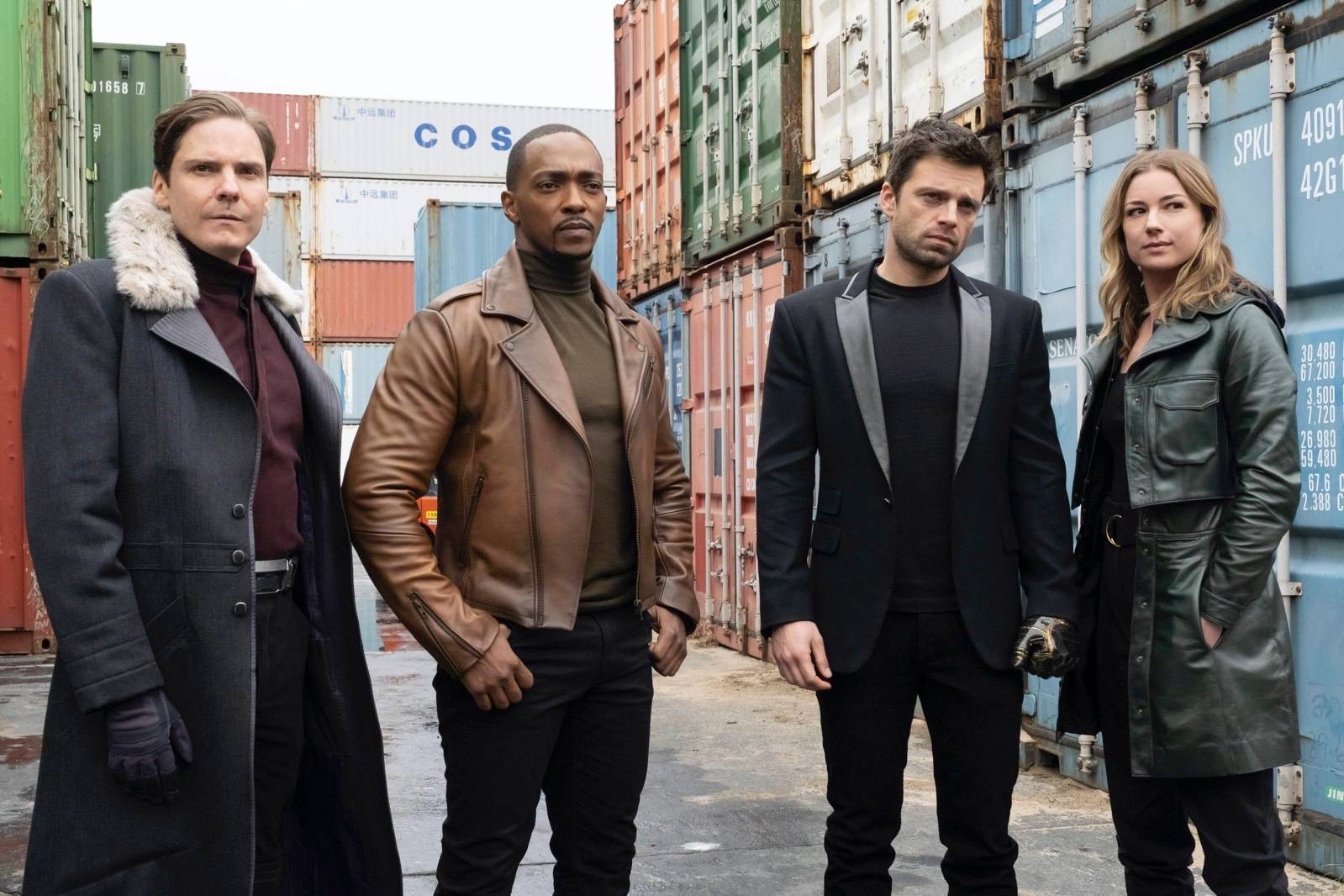
Their hunt for the terrorists lead them throughout the world and encountering allies and foes including the Machiavellion Baron Zemo (Daniel Brühl), former S.H.I.E.L.D. agent Sharon Carter (Emily VanCamp) and the mercenary Batroc (real-life mixed martial artist Georges St-Pierre). Zemo truly stood out as a character in the series with his cold charisma and calculating nature. His cause (a hatred and distrust of superhumans) was clearly defined and understandable from his point of view. For a villain who was dismissed by many fans in Captain America: Civil War, Zemo was elevated to become an A-list villains who had his own humorous memes, especially with his dancing at a night club. Here is an hour-long edit put out by Marvel Studios of Zemo dancing for your enjoyment!

Continue reading

The Downfall Of Captain America

Before we get started, this post will contain huge spoilers for the most recent episode of The Falcon and the Winter Soldier, titled “The Whole World is Watching”.

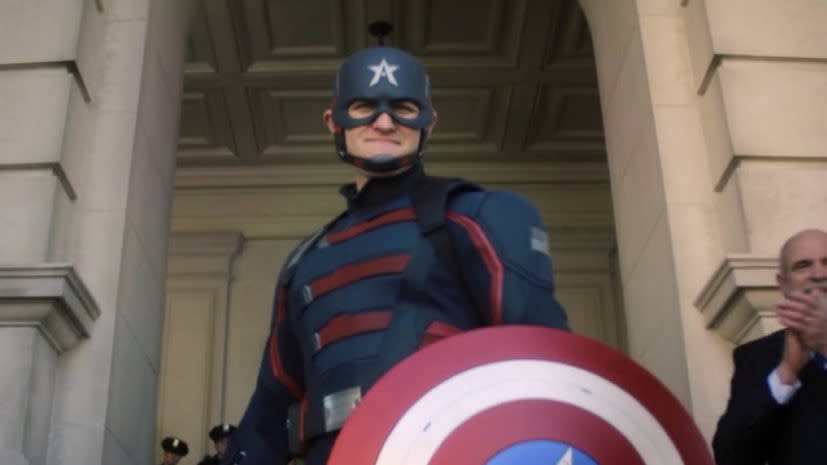
Anyone watching the latest Disney+ TV show about the Marvel Cinematic Universe (MCU) knows that the United States government introduced a new Captain America to replace Steve Rogers (last seen as a feeble old man in Avengers: Endgame). This new soldier, John Walker (played by Wyatt Russell), was instantly disliked by the characters in The Falcon and the Winter Soldier and viewers alike. The common complaint about John Walker as Captain America was that he not only did not look the part, but he looked so goofy with his ill-fitting helmet and undeserved swagger during his introduction. The memes and dismissals were quite brutal and over the top. Frankly, the poor soldier never had a chance.

To the show’s credit, John Walker was given a back story and he is not an evil person. In the interview he gave during his introduction during the show’s second episode “The Star Spangled Man”, he came off as a person who realized he had large shoes to fill and was trying his hardest. But that was impossible to do. After all, how can you top, let alone, compare to the legendary Steve Rogers? Still, he seemed respectful of the legacy and the honor given to him, plus he had the combat experience as a soldier to be a suitable replacement. But Sam Wilson/the Falcon (Anthony Mackie) and James “Bucky” Barnes/the Winter Soldier (Sebastian Stan) were outraged that Walker had the audacity to pick up the shield and mantle of Captain America. They and the audience felt he was not worthy. Howver, this outrage could be seen as guilt from Sam after he relinquished the shield to the government instead of replacing his friend as the new Captain America. With Bucky, he is furious because Sam gave up the shield easily and probably because he was not given the shield instead. Now, some pretender has the shield and the status of Captain America.

John Walker tried to work with Sam and Bucky, in fact, he and his partner and best friend, Lemar Hoskins/Battlestar (Clé Bennett), rescued the Falcon and the Winter Soldier later in the episode when they fought against a terrorist group called the Flag Smashers. But the duo didn’t want anything to do with the new Captain America and needlessly made him an antagonist.

Throughout the series, the new Captain America felt pressure to measure up. You could see this with subtle visual cues and the way he was treated by others, except Hoskins. What made things worse for Walker was that although he is a skilled soldier, he is not as skilled in fighting as the original Captain America. He began to feel inadequate and not up to the task. However, it was difficult to empathise with him because he displayed an arrogant swagger to the outside world. Also, he was reckless and impatient as his actions in the fourth episode escalated tense situations such as when Sam tried to negotiate with the Flag Smashers’ leader Karli Morgenthau (Erin Kellyman).

The ultimate humiliation came during the same episode where he was defeated in combat by the elite Wakandan soldiers, the Dora Milaje. He felt especially chastised when he commented that they did not even have super powers yet they defeated him handily.

This led to his conflict later in “The Whole World is Watching” when he came upon a vial of the Super Soldier serum that created the first Captain America and was given to members of the Flag Smashers. To his credit, Walker did not inject the serum, though he took the vial without telling anyone. He sought advice from Hoskins about the ethics of taking the serum and Hoskins opined that he himself would take it if given the chance.

In the last act of the episode as Walker, Hoskins, Sam and Bucky faced off against the Flag Smashers, it soon became clear that Walker had taken the Super Soldier serum thanks to his feats of increased strength. However, he was not as skilled or as polished as Steve Rogers, what was worse was that he lacked control. This lack of control would be exhibited in the shocking final moments of the episode.

During the final fight, Battlestar saved Captain America from being stabbed by Karli, but she accidently killed him in another example of someone who was inexperienced with having the Super Soldier serum. Enraged, Walker chased down the closest Flag Smasher he could find and brutally killed him by bludgeoning the terrrorist with his shield out in public. The last haunting image that closed the episode had a shaken and defiant Captain America standing tall with a bloody shield in front of shocked civilians, for the whole world to see.

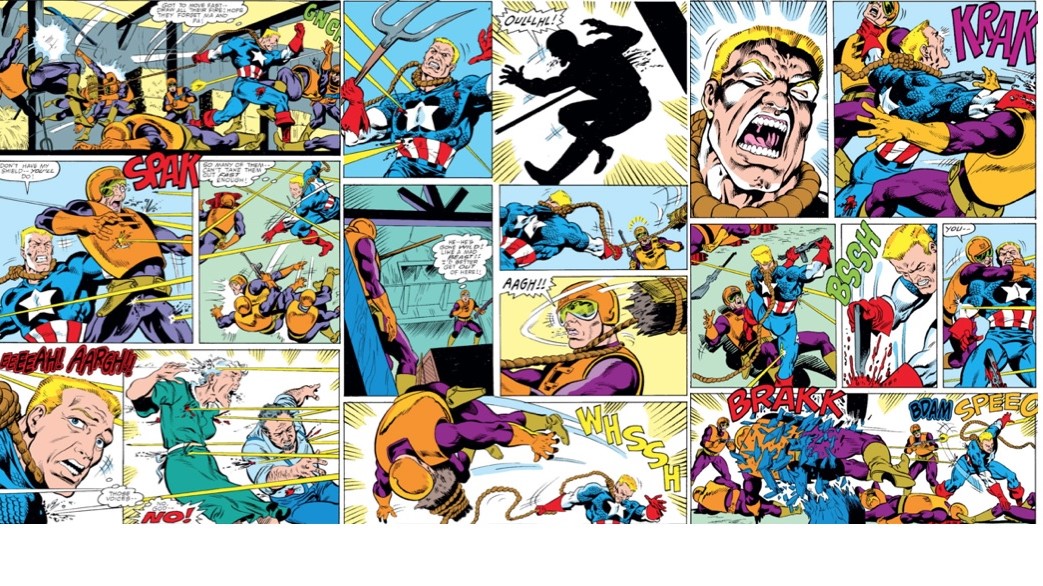
This development echoed similar moments in the pages of the Captain America comic book during a famous arc called Captain America: The Captain, written by Mark Gruenwald, which ran from issues #332 through 350. In the arc, Steve Rogers abandoned the Captain America identity and John Walker took over but proved to be unhinged. This was best shown in issue #345 (“Surrender”) where after his parents were murdered by a group of domestic terrorist, an enraged Walker savagely killed the terrorists, then tried to talking to his deceased parents as if he saved them.

Seeing a similar moment in the live-action MCU is more shocking just for the visuals and its impact. This last image could be seen as a metaphor for how far the U.S. has fallen in the eyes of the world; something that is an uncomfortable reminder of fairly recent events not just in the MCU but in real life. The moment clearly proves that John Walker is not worthy to be Captain America, who should be held to a higher ideal, a greater standard. The original Captain America represented the best of humankind thanks to his nobility and compassion. These traits were why he was chosen to receive the serum back in World War II. It is doubtful that whoever chose Walker had this in mind.

Then again, it is hard to see him as this evil man. Even as he smashed his shield down repeatedly over his victim, one can’t help feeling grief over how he and the ideal of Captain America have fallen. Circumstances beyond his control, such as facing opponents who outmatched him or how he was repeatedly disrespected, influenced him to make these fateful decisions. If things had happened differently, if Bucky and Sam had given him a chance for example, then maybe his brutal actions could have been avoided.

No matter how The Falcon and the Winter Soldier concludes, or who ends up wielding the shield and the Captain America title, John Walker is an intriguing character who deserves to be showcased in future MCU productions, perhaps as the U.S.Agent to mirror the comic books.