
From Flashpoint To A New Universe

All I read about DC Comics, these days, is what the New DC is…

DC’s Flashpoint the newest “event” series, is meant to last only six months. It will end at the end of August. This takes place in the screwed-up evil DC heroes universe, where Barry Allen, aka The Flash, is the only one who remembers the good ol’ wholesome DC universe.

This September, all of DC’s comics will relauch as #1, and this will be the new permanent DC. The comic book company says it’s not an “event,” not a prequel, a sequel or an alternate universe. For the current and next generation of DC readers, the DC universe starts here, in September.

Justice League #1 Cover by Jim Lee and Scott Williams

By the way, pick up the new DC’s Justice League, on sale Wednesday, August 31, by Geoff Johns and Jim Lee, who are the chief creative officers for DC Entertainment. The new DC will center around the first issue of Justice League#1 so this will start it all.

I could be wrong, but my guess is that in August, the Flash from Flashpoint, in his efforts to right what was wrong and go back to the old DC universe, never truly succeeds. Kinda like Old Spock from the 2009 Star Trek film. or maybe the readers get to see Flash make it back home, but that old DC universe is closed for readers. No more old universe. The end of Flashpoint I imagine will be the destruction of the Flashpoint Universe (which was truly dark, evil and edgy- darker than Marvel) and from September on, a new DC Universe will appear, and although it’s not as dark as Flashpoint, it seems to be way cooler than the old DC. I know DC wants to match the coolness of Marvel. DC will never portray the original DC Universe as the main universe again. It’s timeline and continuity, they believe, served its 70-year purpose.

And that’s the objective- by every one of these books relauching at #1, DC has the means to start fresh with modern sensibilities.

DC’s Crisis on Infinite Earths in 1986 did much of that, but back then, only Superman and Wonder Woman had a few of their books that relaunched at #1. And what they did then was consolidated dozens of Earths into just one. The 2011 DC Universe, is designed for readers who know nothing about DC, and is also designed for familiar readers. The reaction I sense from old fans is somewhat positive, maybe 70/30 split. But the majority of the old school readers who actively buy comics are approaching or are middle age. the new DC needs to maintain popularity with a fan base for young readers. With TV, movies, web, Youtube, videogames, and other adventure-based presentaions, comics have an uphill battle. And when guys discover girls, comics sustain a bigger loss LOL! In WWII, a single issue of Superman sold five million copies a month! A single monthly issue. These days Superman may sell only 30,000 copies, on a lucky month. And the majority of the readers today are aging fanboys.

BTW, all 52 new DC monthly titles will be available as a download or you can go to the stores and buy the paper comic. Digital download comics are undoubtedly the wave of the future. Every Wednesday, the latest DC comic will be available online and at the local comic shops. That’s a big step. According to DC editor Paul Levitz, digital download comics sell five times more than paper comics- that’s one reason why I believe this could work.

This new DC will work only if it attracts new readers, elementary school, middle and high school kids, who can click their iPhones to download the latest issue of Superman.  And these up and comers will need to want comics more than kids have in the last 30 years who had a ho-hum reaction to comic books up to now. This current generation (sometimes called millenials or Generation 9/11) has been raised on videogames, DVDs, the web, pop music and other entertainement that compete for the user’s attention against comics.
The majority of faithful comic book readers, historically fell into three groups–WWII-era young adults (young GIs stationed in Europe and the Pacific collected comics), baby boomers (who picked up their hobby from their parents) and those from Generation X. Any generation after that were less inclined to buy or collect comics. DC seems to be putting all their cards on the table for one huge gamble. If this doesn’t take off then this “relaunch” will be just another “event.”

Although it’s an uphill battle- these are the positives: it’s designed to be a new universe for new readers to jump in igital download for iPad, iPhone and Droid phones. There’s no need to walk into a store to get new DC comics every Wednesday. Of course this spells trouble for bricks and mortars businesses who will have to be innovative to survive.

My guess is that it will be more successfull than the overall 2010 sales for DC comics, at least, because 1) in 2010 only a select few DC comics were digital downloads and what DC saw is that digital downlad comics made five time more money than paper comics, and 2) from now on, all monthly DC comics are high resolution digital downloads (for the same price as paper comics).

So at the very least, the key to DC’s (and the comic industry overall)  survival is digital download sales, and the high likeleyhood that DC will make more profit than than in any given year in the last 20 or so years.

Geo
Is The Bubble Bursting On Superhero Films?

It seemed not too long ago that any kind of film dealing with superheroes made oodles of money and if the profits weren’t as astronomic as say The Dark Knight or Spider-Man then they were at least respectable.

But lately this hasn’t been the case which has been seen so far with this summer’s slate of box office superheroic offerings.  Three comic book-based films have been released Thor, X-Men: First Class (XFC) and Green Lantern. Their box office take has been interpreted by industry experts and insiders from either being merely respectable to disappointing.

Thor’s opening weekend take was $65 million and to date its total domestic earnings are just under $180 million and considering that the film has dropped out of the top ten and the upcoming slew of films one has to wonder if it will reach over $200 million. While certainly nothing to sneeze at (especially if its foreign earnings are accounted, bringing its totals to over $400 million to date) Thor has earned less than the original Iron Man.

As for XFC, the feeling is that while its highly regarded with great reviews, its domestic box office earnings after nearly a month in release is only in the $120 million dollar range. It opened on June 3 with $55 million which was the weakest among the X-Men films including X-Men Origins: Wolverine.

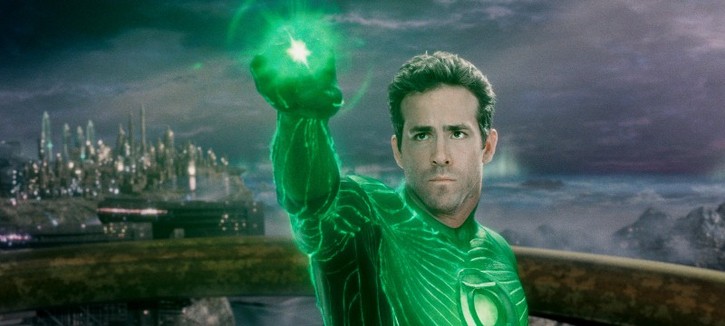
But perhaps the biggest and most surprising disappointing earner has to be Green Lantern.  With a budget in the $150-$200 million range and a dearth of publicity and the anticipation that it would be one of Warner Bros.’ tent pole films this summer, the film earned $53 million in its opening weekend.  Add to that its overseas take has been notably underwhelming (earning in its first week less than $20 million). With upcoming potential box office champs like Cars 2, the third Transformers  flick and the final Harry Potter it’s hard to see how it can remain competitive.

The same concern about the upcoming competition must be applied to the final summer superhero film to come Captain America: The First Avenger. By releasing it on July 22, Paramount, its studio, probably hopes to avoid the competition. But given that by late July the box office starts to simmer down and that it misses an obvious patriotic July 4 weekend release it does suggest a certain lack of confidence in its money-making potential and its ability to compete with the heavyweights. Maybe if Bin Laden had been killed around now that might helped build up enthusiasm among movie goers to Captain America.

Now there are plenty of explanations to go around for the underwhelming numbers. The most obvious one is that there are too many similar films competing at the same time which goes to the old supply and demand rule. That is something that studios have to seriously consider when planning release dates. Maybe if this summer’s films had been spaced further apart the results would’ve been different. This is something that must be frustrating for Marvel Studios since its Thor had to directly compete with XFC, which was released by Fox meaning that the Marvel’s characters had to face off against each other in theaters.

Another is that these films are based on second-tier comic book characters. However, the fact that although they’re  based on relatively unknown characters (outside of the comic book fan world)  and still made that much money is nothing to sneeze at. Just look at the fact that films released last year based on obscure characters (Kick-Ass, Scott Pilgrim Vs. The World, and Jonah Hex) either underperformed or were box office disasters and that was despite the fever pitch Internet chatter that the first two film properties generated.

In the past decade not every film based on a comic book hero has been a Dark Knight-type box office champion. The Punisher films are considered to be disappointments. Ghost Rider didn’t exactly set the world on fire. Both Hulk films merely did OK and he is a more recognizable character than say Green Lantern. Daredevil’s box office earnings barely made over $100 million. And Superman Returns, despite a massive marketing push by Warner Bros., just cracked the $200 million mark. But it’s usually a safe bet that a film based on a popular hero is a healthy return for the investment. Examples of that are the recent Batman films, and the Spider-Man and X-Men trilogies.

The other explanation for the so so box office is of course the quality of the films. Many of the above mentioned films weren’t well regarded by fans and critics alike. In the case of Kick Ass, despite favorable reviews, almost no one has heard of the character so it was difficult to generate the buzz that someone more well known would guarantee. With XFC, its earnings may unfortunately be due to ill timing and franchise burnout. The previous mutant offerings (X-Men: The Last Stand and the Wolverine film) have been derided by fans and critics and soured many to the X-Men franchise. While XFC is a step to rectify past blunders it may be too early to have an X-Men film out. Perhaps Fox should’ve let the franchise rest a while to build up demand (one problem with letting franchises based on Marvel Comic characters rest is that Disney now owns the comic book company and many studios that have certain Marvel properties must make films or else lose the rights to Disney. They will only let them go if they no longer deem them profitable) . Maybe the film lacked, aside from Magneto and Professor X, recognizable and popular characters like Wolverine and Storm.  Still what this summer’s superhero flicks have earned despite their handicaps is impressive in some ways and can’t be considered outright flops. So it really just serves as a caution for studios and a reminder that there are only so many comic book fans that can support a market for superhero films.

But next year will be the critical test to see if the bubble has burst. Why? Because the heavyweights are coming back. A new Batman film, reboots for Spider-Man and Superman and perhaps the biggest test, The  Avengers film featuring Iron Man, Hulk, Thor and Captain America. If these films have disappointing sales then it can truly said that the bubble has burst.

J.L. Soto