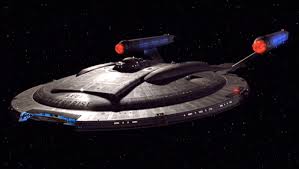
Top 50 Star Trek Episodes, Part 1: Episodes 31-50

trek crew

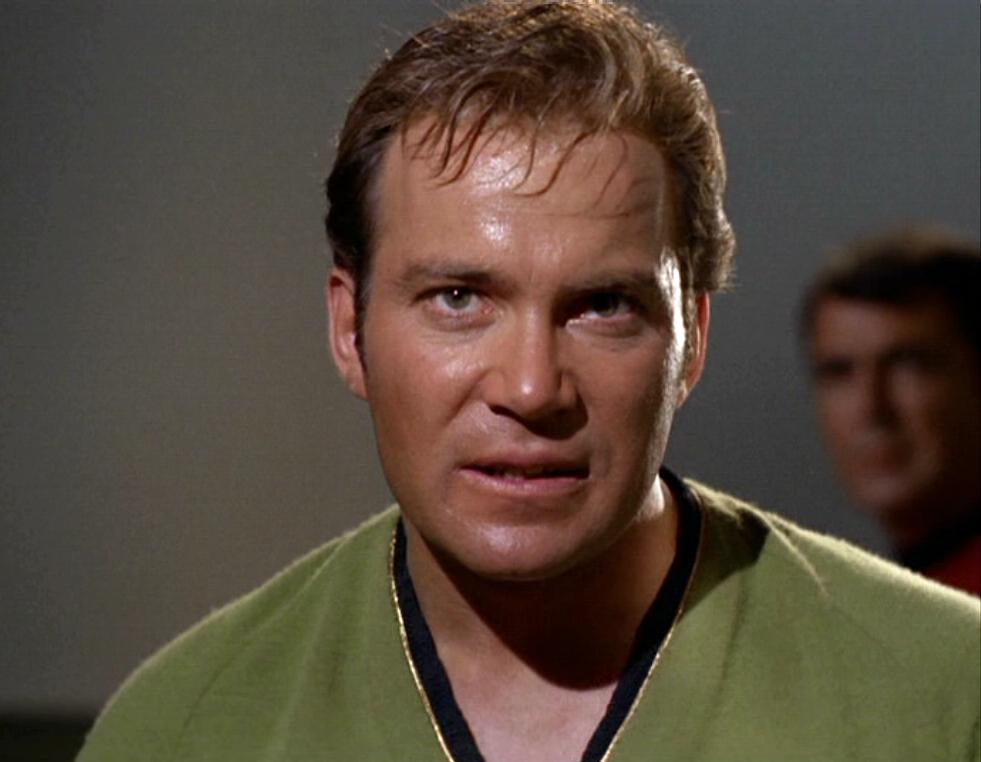
Star Trek, the landmark science fiction TV series will celebrate its 50th anniversary six months from now. It is hard to believe that 50 years after its debut, people are still fascinated with the adventures of Captain James T. Kirk (William Shatner), Mr. Spock (Leonard Nimoy), Dr. Leonard McCoy (DeForest Kelley), and the rest of the Enterprise crew. As some of you might have noticed, there has been an increased number of posts lately focused on Star Trek and its spinoffs and this will continue throughout the year. To commemorate the awesome occasion of Star Trek’s 50th anniversary, along with more articles devoted to Star Trek, we’re going to countdown the top fifty episodes from the original series in separate posts. Let us commence…

50.  “A Taste of Armageddon” At a planet at war with another world, a  landing party led by Captain Kirk is sentenced to death because a computer determines them to be casualties in a battle simulation.

taste of armageddon

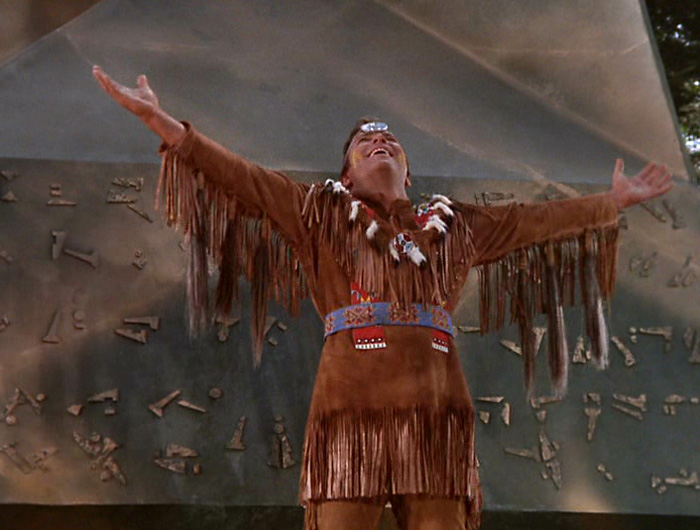
49. “The Paradise Syndrome” On a planet settled by Native Americans, a weary Kirk loses his memory and becomes a member of a local tribe who see him as a savior.

paradise syndrome

48. “Whom Gods Destroy” Kirk and Spock are trapped in an insane asylum by a former Starfleet captain (Steve Ihnat) with delusions of grandeur. This episode featured Yvonne Craig as a voluptuous, green Orion patient.

whom gods destroy

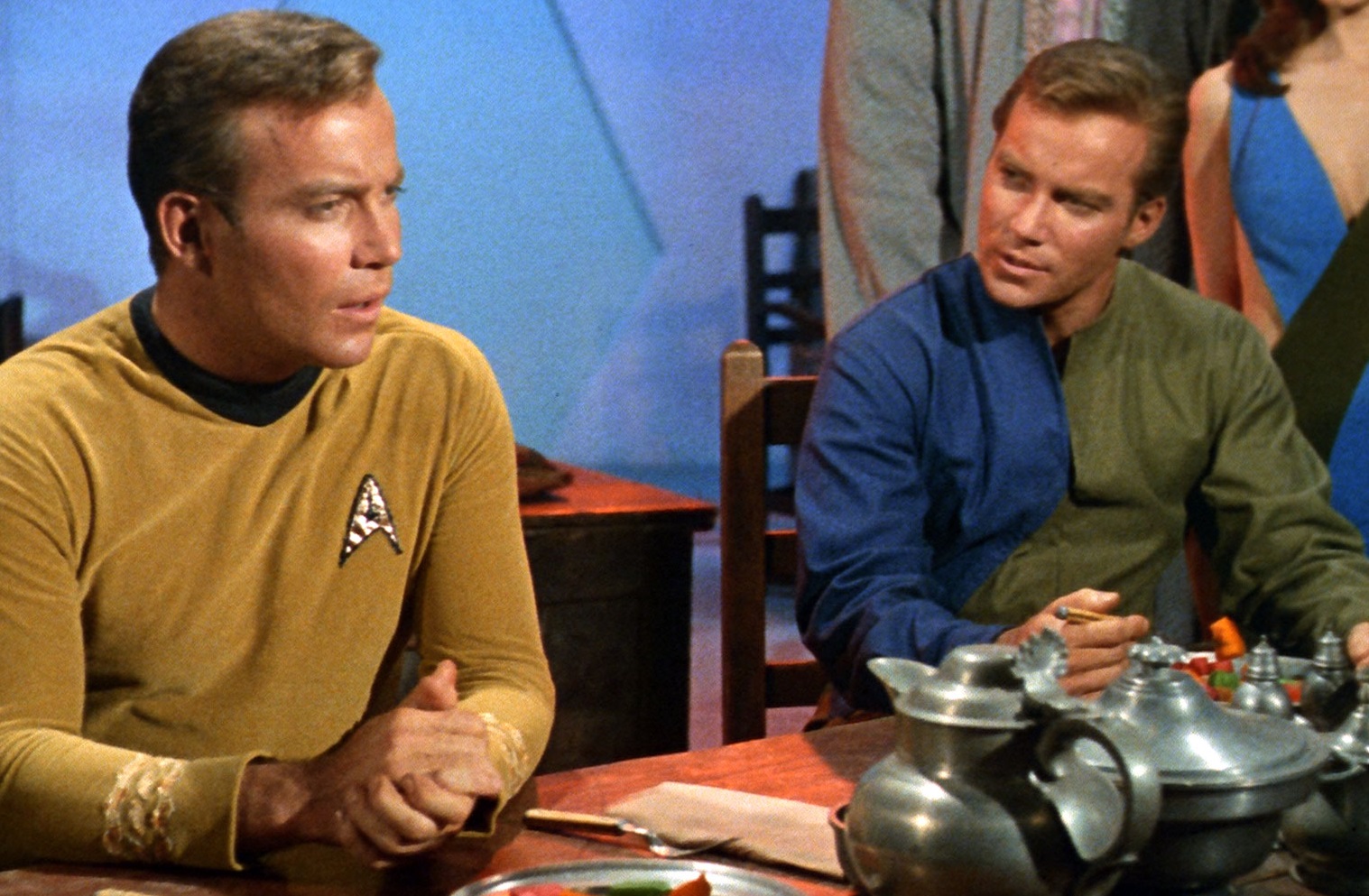
47. “What Are Little Girls Made of?” Kirk and Christine Chapel (Majel Barrett) travel to a planet to search for her fiancé (Michael Strong), a famous archeologist who went missing. Instead, they discover a plot to replace key Federation personnel with androids, including Kirk.

what are little

46. “The Changeling” The Enterprise encounters a long-lost Earth probe that was enhanced alien AIs and mistakenly thinks Kirk is its creator. The Enterprise captain then struggles to control the increasingly hostile and deadly probe.

changling

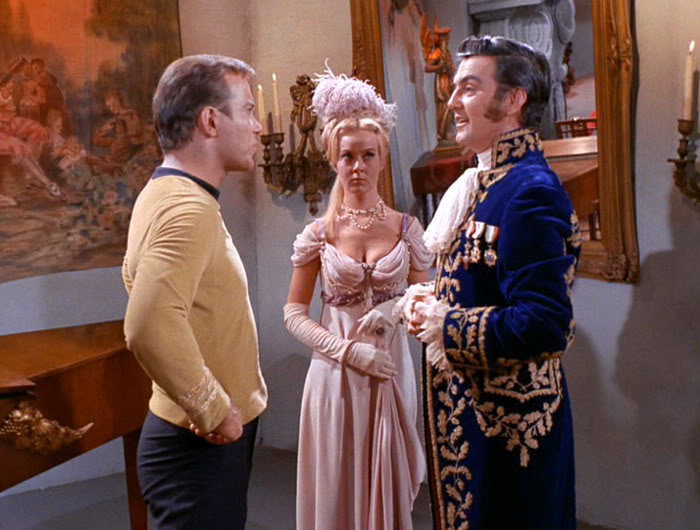
45. “The Squire of Gothos” Kirk and the Enterprise crew contend with Trelane, a powerful but immature being (William Campbell) who delights in torturing the crew with his vast powers. Trelane was clearly an early influence for Q who appeared in the Star Trek spinoffs.

squire

44. “The Galileo Seven” Spock, McCoy and others in a shuttlecraft crash land on a deadly planet with vicious giants and have to fight for survival. Meanwhile, Spock’s command abilities are questioned by the survivors who decry his cold Vulcan logic.

galileo seven

43. “The Immunity Sysndrome” The Enterprise is ordered to destroy a giant one-celled organism that is invading our galaxy. The episode was heightened with some memorable interplays between Spock and McCoy and colorful special effects.

immunity syndrome

42. “The Gamesters of Triskelion” Kirk, Uhura, and Ensign Chekov (Walter Koenig) are kidnapped by wagering aliens who force them to fight in deadly fighting games against other competitors. An action-packed entry, with obvious stuntman stand-ins for Shatner.

gamesters

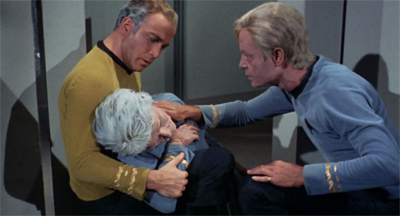
41. “The Deadly Years” Kirk, Spock and other members of a landing party experience rapid aging and become very old. The result is that their ability to perform their duties are questioned, highlighted by a hearing where an aged Kirk argues that he still has value.

deadly years

Continue reading

Star Trek’s Best Romances

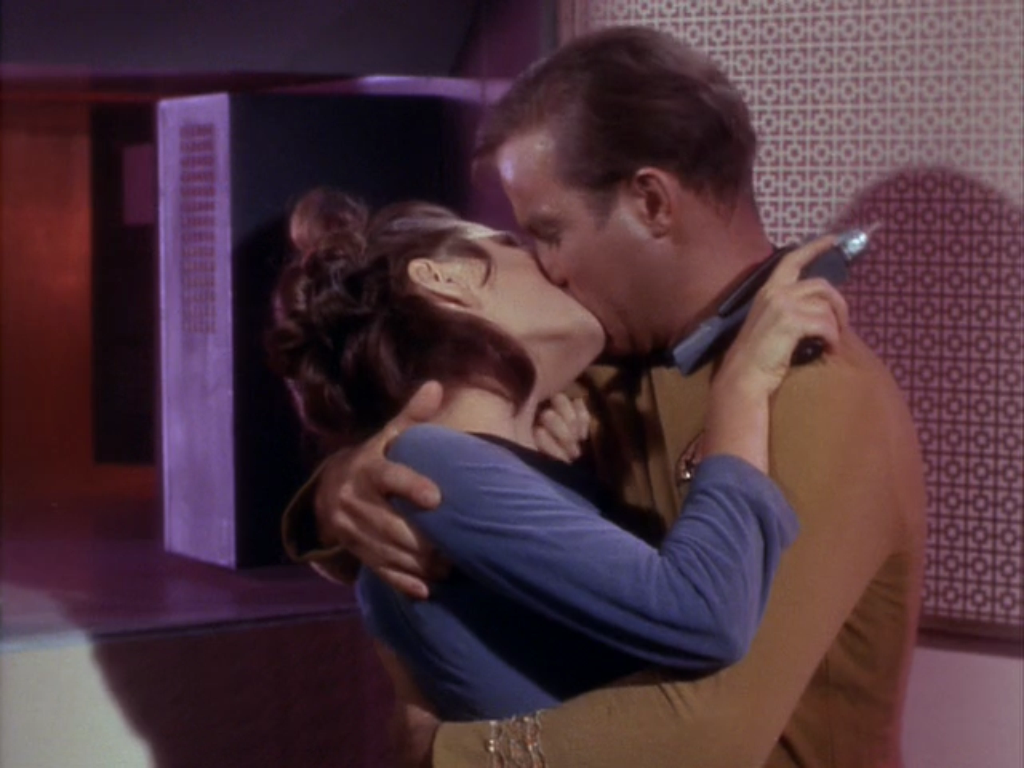
kirk gets his groove 

In between the fisticuffs, space battles and technobabble, Star Trek is noted for its dalliances in romances. Captain James T. Kirk is nearly infamous for his numerous romantic relationships which earned him a well-deserved reputation as an intergalactic ladies man. While the original Star Trek series and its characters had many star-crossed romantic interludes, so too, did the Star Trek spinoffs, which had their fair share of romances. In honor of Valentine’s Day and Star Trek’s 50th anniversary, let’s look at some of the most memorable romantic moments from Star Trek.

Will They or Won’t They?

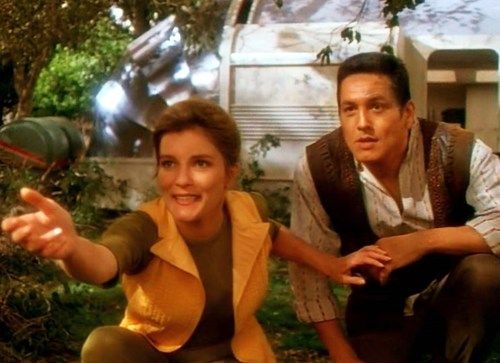
A common romantic motif in Star janeway chakotay resolutionsTrek is that of romantic tension between would-be lovers. They’re attracted to each so why can’t they go the extra step? In Star Trek: Voyager, Captain Kathryn Janeway and Chakotay’s shared a hidden romantic tension was stronger in the early episodes and led to many fan-fiction stories about them going a step further. The closest the two ever came close to consuming their feelings was in “Resolutions” where they were self-exiled on a planet and over time their professional restraint began to wither. But before they could go further, the two were rescued and the show never re-visited this subplot.

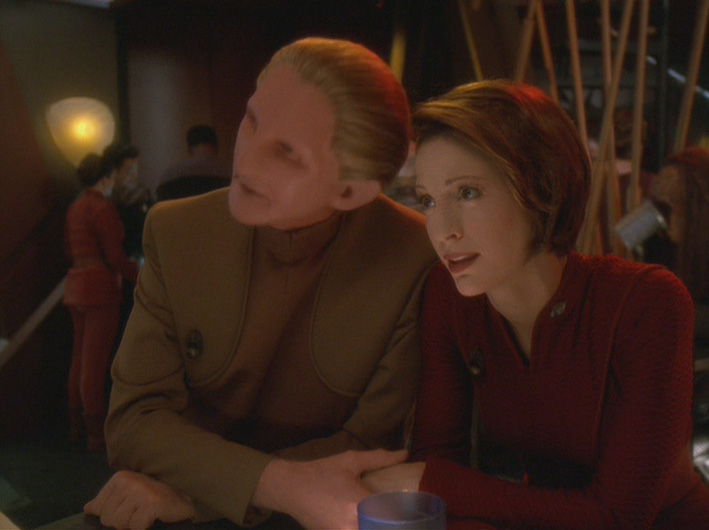
odo and kira 3This also happened in Star Trek: Deep Space Nine between Odo and Kira Nerys. At first, it was a case of unrequited love where Odo was madly in love with her, but Kira was involved with Bareil, a Bajoran clergyman. Odo’s plight was quite poignant thanks to some strong acting by Rene Auberjonois. The situation changed in later seasons when the two finally became a couple (“His Way”)…only to regretfully separate in the series finale “What You Leave Behind”.

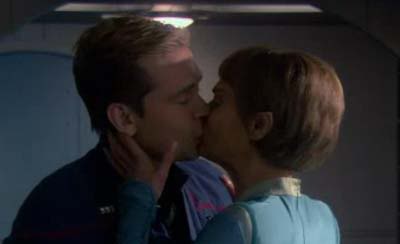
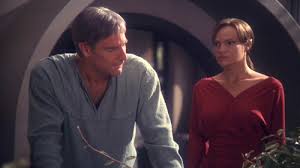
Star Trek: Enterprise also featured a long-trip and tpol 2simmering relationship, this one between the Vulcan T’Pol and the Enterprise’s engineer “Trip” Tucker. That romance started off in the typical fashion: two disparate souls clashing with each other in a way reminiscent of the old Spock and McCoy arguments. Except this time, the two participants were growing closer, first as respectful colleagues then friends and finally lovers in the episode “Harbinger”. It was a refreshingly mature relationship that was based on mutual respect and curiosity about each other’s feelings and cultures.

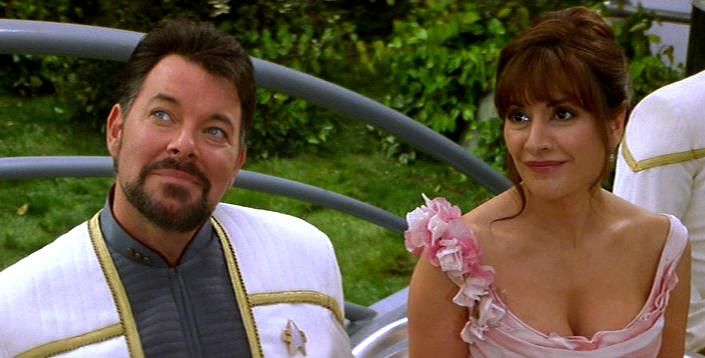
married riker

Arguably the most popular couple falling into this category had to be Will Riker and Deanna Troi. At the start of Star Trek: The Next Generation, it was established that the two were former lovers. Their relationship ended because of Riker’s ambition (never mind that he turned down many promotions during the series and most films). But there were lingering feeling between the two that were never quite re-ignited. That didn’t occur until the movie Star Trek: Insurrection where they rekindled their romance thanks to the effects of being on an alien planet. Thankfully it wasn’t a brief fling because at the start of the next film Star Trek: Nemesis the two had married each other.

Star-Crossed Marriages

The later Star Trek shows featured married couples who were part of the cast and this allowed for the showcasing of marital issues. But in a nice twist, rather than go into dark territories and have the couples separate or commit adultery, many episodes showed how strong a marital bond was and celebrated the married couples’ romance.

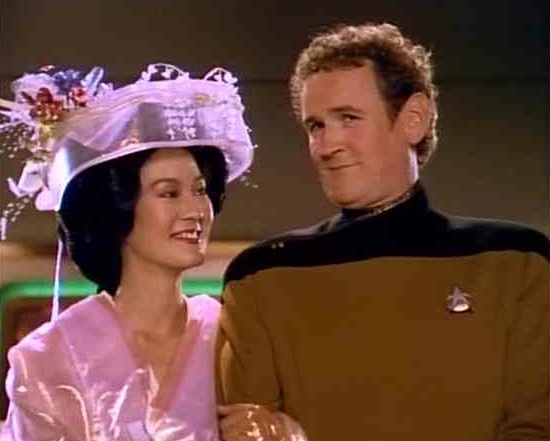
miles and keikoOne of the earliest married Starfleet couples we saw was in Star Trek: The Next Generation when in the episode “Data’s Day” we found out that Miles O’Brien was getting married. This development fleshed out his character and made him even more of an everyman to fans. He and his wife Kieko were featured in many episodes of Star Trek: The Next Generation before becoming regular cast members of the spinoff Star Trek: Deep Space Nine.

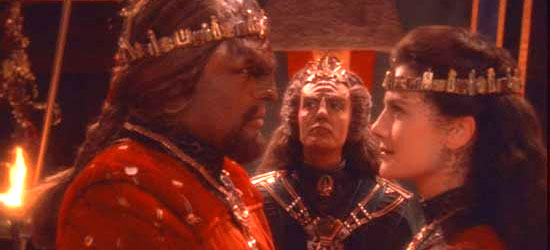
worf and jadzia

In the Star Trek: Deep Space Nine episodes featuring O’Brien we often saw the joys and pitfalls of married life through his and Keiko’s eyes, though the “Fascination” episode took time to explore how the two rekindled the passion for each other. In later seasons, when Worf became part of the crew, he realized his love for Jadzia Dax (“Looking for par’Mach in All the Wrong Places”) after being spurned by a Klingon woman who only had eyes for Quark. Eventually the couple married (“You Are Cordially Invited”) and Worf’s devotion for Jadzia was so strong that in the episode “Change of Heart” he abandoned an important covert mission in order to save his wife’s life.

tom kisses bellana

Another notable relationship that led to marriage was that of Tom Paris and B’Elanna Torres in Star Trek: Voyager. In the early seasons of that program, the two were strictly colleagues, however in the third season episode “Blood Fever” B’Elanna was afflicted with pon farr and soon she and Tom started a long-lasting relationship that culminated in marriage (“Drive”) during Star Trek: Voyager’s final season.

Continue reading

Star Trek Reference Books & Manuals

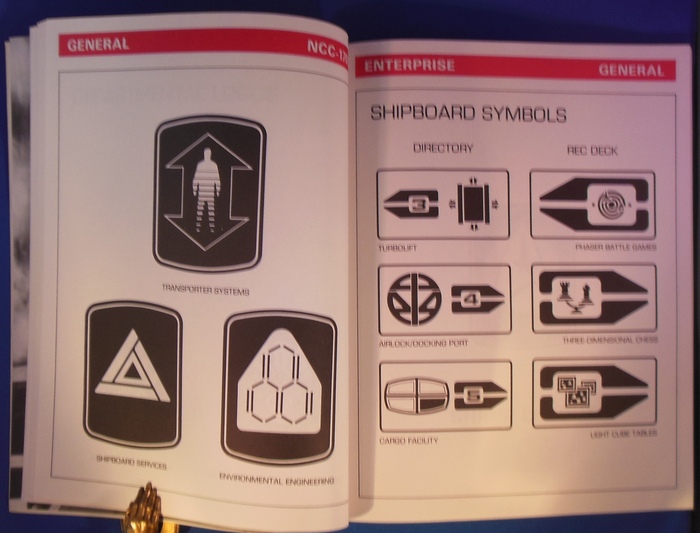
encyclopedia enterprise workshop manual

What stands out among Star Trek merchandising are the informative and fascinating reference books that the long-running franchise has spawned. Full of nifty, intricate and intimate details about the Star Trek universe, these Star Trek reference books and manuals are true literary treasures.

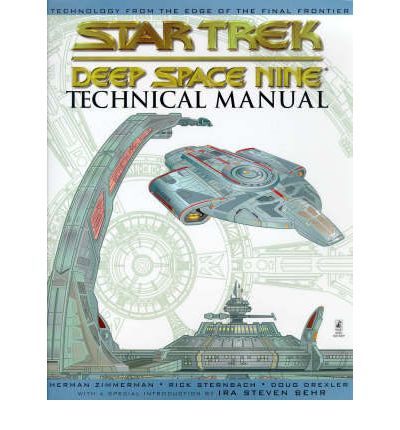
While it’s true that many sci-fi TV shows and ds9 tech manual 2films have inspired fiction and making-of books and comics about them, these Star Trek reference books  and manuals were among the earliest tie-ins of their kind to come out, and were unique at the time. Now the book market is flooded with all sorts of tie-in reference books like Star Wars: The Visual Dictionary and so forth. These books were possible due to the imagination sparked by Star Trek that led many to ponder and speculate on the minutiae of the Star Trek universe. How fast did the Enterprise travel? Where was Captain Picard born? What is Romulan ale? The answers to these questions helped fill in the gaps for fans hungering for more knowledge about the fictional Star Trek universe.

scotts guide samplePerhaps the best early examples of such books were Star Trek: Star Fleet Technical Manual and Mr. Scott’s Guide to the Enterprise. Much of the information would be decanonized and wound up contradicting what appeared on screen. For example, in The Worlds of the Federation the Klingon home planet was called Kling instead of Qo’noS as later established onscreen. That didn’t matter to hardcore fans who reveled in explaining away contradictions as the books helped give the impression that the wondrous Star Trek technology and universe actually existed.

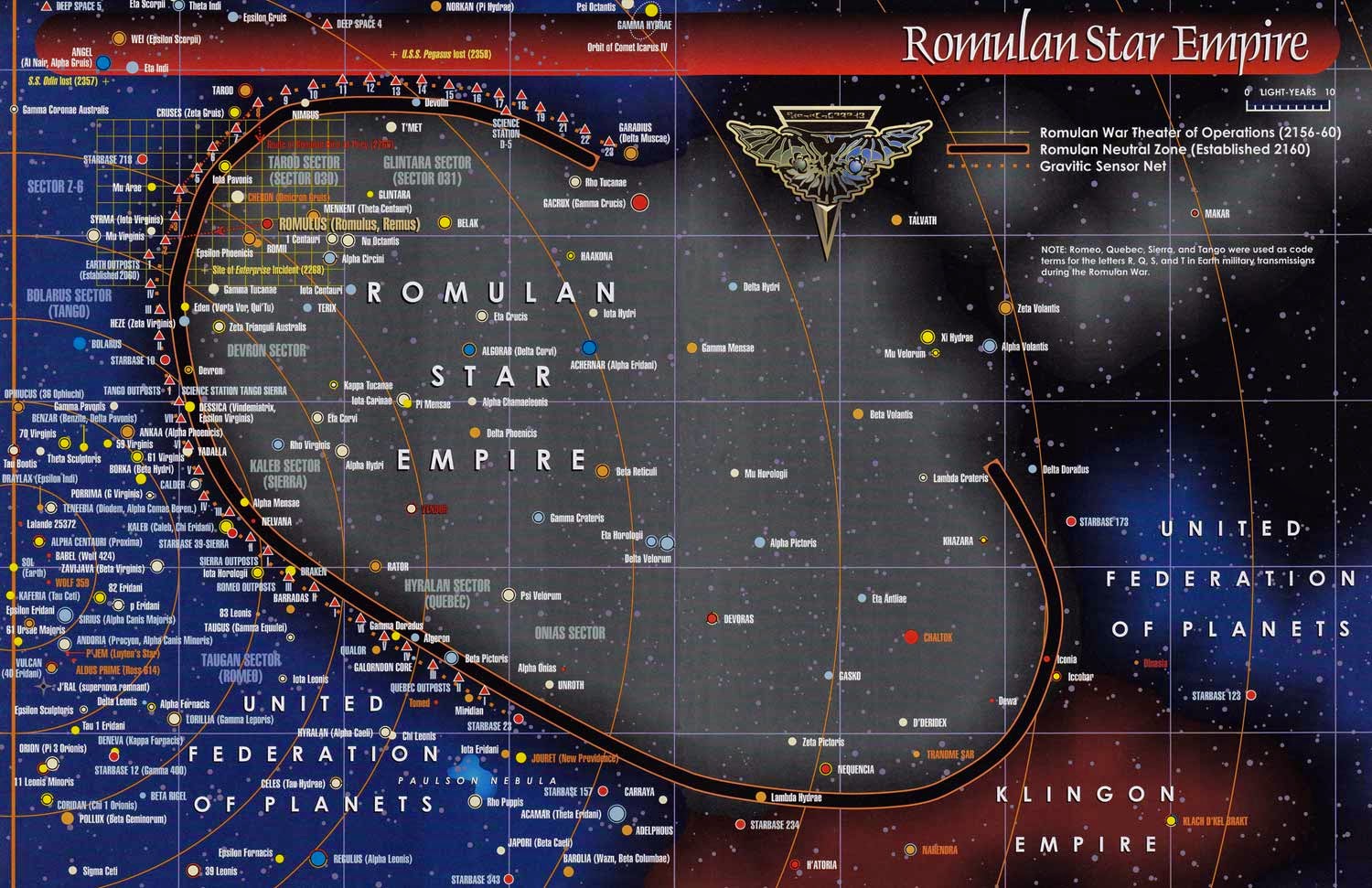
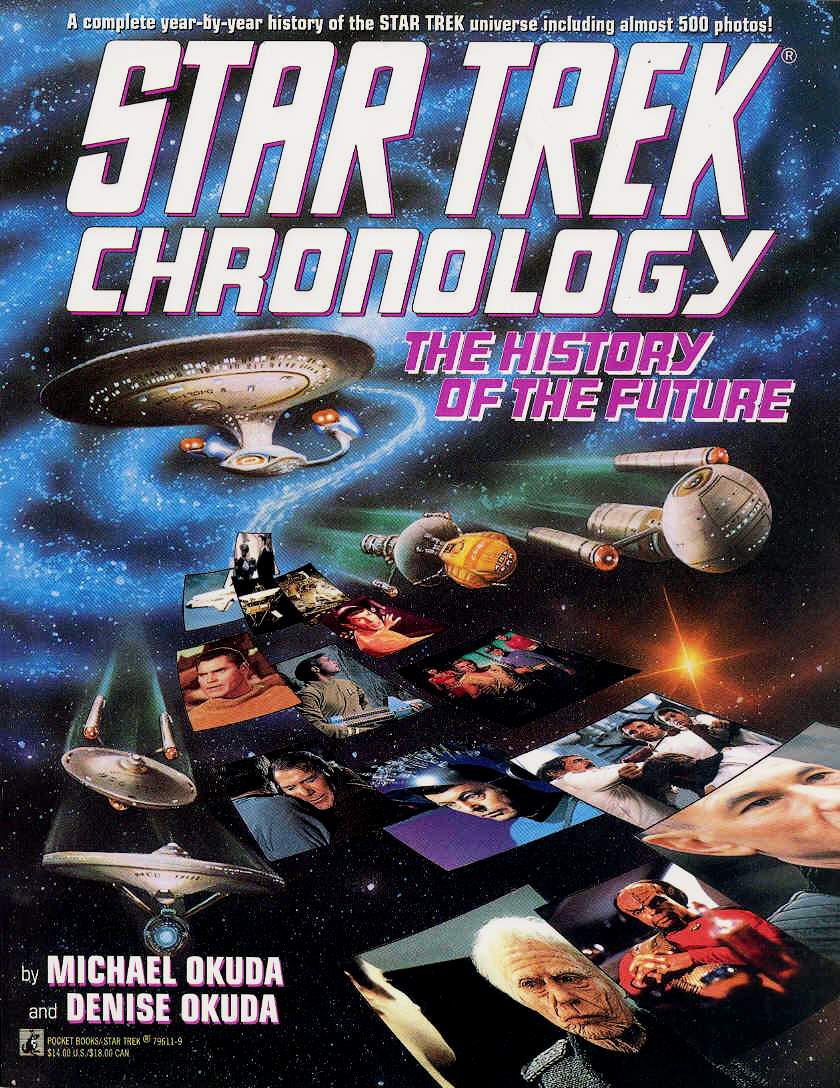
More recent forays into these fictional reference books have branched off into atlases, dictionaries, travel guides and even a Klingon version of Hamlet. The best of these books include encyclopedia pagesStar Trek: Star Charts: The Complete Atlas of Star Trek, Star Trek  Chronology: The History of the Future and The Star Trek Encyclopedia: A Reference Guide to the Future. These three books warrant repeat reading and are bursting with the tiniest details and information about Star Trek, not to mention beautiful artwork and charts. For instance in Star Charts, it traces the course of the U.S.S. Voyager on its journey back to the Alpha Quadrant. In the Star Trek Chronology we can trace the timeline of James T. Kirk from his birth (in Iowa, not some starship!) to the moment of his death. While The Star Trek Encyclopedia lists all the ships in their classes, detailed descriptions of three-dimensional chess, episode listings and provides detailed bios on many Star Trek characters.

romulan map

Of course, these books came out some time ago and much of it is outdated. However, they have enough material to keep anyone busy and seriously, Pocket Books should look into producing revised hardcopy chronologyversions of these books. This was actually done for both the Chronology and the Encyclopedia back in the late ’90s, so the precedent exists.

Thankfully being that this year is the 50th anniversary of the original Star Trek more books are coming our way. One of the most interesting of the lot is Hidden Universe Travel Guides: Star Trek: Vulcan by Dayton Ward. As long as Star Trek continues to inspire the imaginations of both writers and fans, there will always be more captivating reference books that can be poured over for hours at a time.

The following are the ten best Star Trek reference books and manuals released to date:

10. Star Trek: The Starfleet Survival Guide by David Mack

9. The Worlds of the Federation by Shane Johnson

8. Star Trek: Star Fleet Technical Manual by Franz Joseph

7.  Mr. Scott’s Guide to the Enterprise by Shane Johnson

6. TIE: Star Trek: The Next Generation Technical Manual by Rick Sternbach/Star Trek: Deep Space Nine Technical Manual by Herman Zimmerman

5. U.S.S. Enterprise Owner’s Workshop Manual by Ben Robinson and Marcus Riley

4. Star Trek: The Visual Dictionary by Paul Ruditis

3. Star Trek: Star Charts: The Complete Atlas of Star Trek by Geoffrey Mandel

2. The Star Trek Chronology: The History of the Future by Michael Okuda and Denise Okuda

1. The Star Trek Encyclopedia: A Reference Guide to the Future by Michael Okuda and Denise Okuda

Lewis T. Grove

Assorted Star Trek Highlights

original enterprise

As we celebrate the 49th anniversary of Star Trek (God, that makes me feel old!), some quick thoughts came to me regarding the beloved show and the franchise it spawned. Star Trek and its many incarnations had many highs and lows, but what stuck with me throughout the decades were the highlights and some general observations about Trek.

Captain

James T. Kirk, played perfectly by William Shatner, is the best Star Trek captain. Period. Nothing more to say.

classic kirk

Villains

Star Trek has many memorable villains that faced off against Kirk, Picard and others. The biggest and baddest of them all still remains as Khan, the first version played by Ricardo Montalban. While Benedict Cumberpatch did a menacing job reimaging Khan in Star Trek Into Darkness, Montalban’s Khan was just insane. The other great Trek villains are the Borg Queen (Alice Krige) from Star Trek: First Contact, General Chang from Star Trek VI: The Undiscovered Country (Christopher Plummer had great chemistry with Shatner), Shinzon from Star Trek: Nemesis, Nero from Star Trek, Kurge (Christopher Lloyd) from Star Trek III: The Search for Spock, Q (John DeLancie) from Star Trek: The Next Generation, the Romulan Tomalak (Andreas Katsulas) of Star Trek: The Next Generation, Ron Perlman’s Nosferatu-like Viceroy in Star Trek: Nemesis, Gul Madred (David Warner) in Star Trek: The Next Generation and Gul Dukat (Marc Alaimo) in Star Trek: Deep Space Nine. In general, I enjoyed the Klingons, Romulans and Borg. Finally, I have to give a shout out to the black oil spill creature that killed Tasha Yar. It proved that oil spills will be the death of us!

khan II

Ships

Star Trek is well known for its many distinctive space ship designs. Of course, one of the best has to be the original Enterprise from Star Trek. It’s simple, classic and culturally important. With that I will state that I loooooove the Enterprise from Star Trek: The Motion Picture! As for the Enterprise seen in the Star Trek reboot, I admit that I like it, but don’t love it like I did with the earlier movie versions of the Enterprise. I also thought the space station designs in the reboot didn’t work (but I loved the ones used in the early films, the same goes for the early space dock used in the first two Star Trek films).
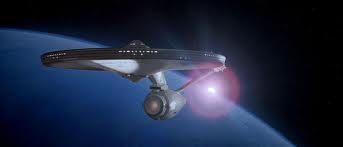
enterprise refit

Other great ships for me were the Enterprise D from Star Trek: The Next Generation with its amazing concept of having the saucer separating from the ship. Meanwhile, I also liked the Enterprise E first seen in Star Trek: First Contact because it had this neat, sleek look.

Starfleet also had other great designed ships. Let’s start with the shuttlecraft Galileo. It was a classic, and I’ll have to say that the updated shuttle designs seen in Star Trek: The Next Generation were nice. Two other great ships were the Defiant from Star Trek: Deep Space Nine (it’s one great, tough, little ship!) and the Reliant from Star Trek II: The Wrath of Khan. It’s got the most innovative design and was actually a happy accident. Director Nicholas Meyer saw the blueprints for it upside down and approved it. This allowed for the designs of differently shaped Federation starships.

reliant

The alien ships used in Trek were also wonderful, take the Klingon Bird-of-Prey ships that were seen in most films and TV shows. It just showed what a great design it was. I also liked the Romulan warbirds from the Trek spinoffs and the Ferengi ships, too. Other ships that deserve mentioning should be the alien probes V’Ger and the whale probe. With V’Ger I didn’t know the full shape of it until I saw the director’s cut. I think it was OK, but the closeups of it are more spectacular than its outside silhouette shape. What I liked about the whale probe from Star Trek IV: The Voyage Home was that it kind of mimicked the elongated shapes of the whales.
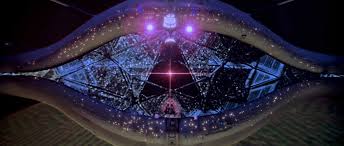
vger

I should point out that the Borg cube first seen in Star Trek: First Contact is Trek’s answer to the spherical Death Star. Maybe the next sci-fi franchise should have the enemy ship look like a cone! Star Trek: Deep Space Nine, Star Trek: Voyager and Star Trek: Enterprise had many more ship designs, but they weren’t very memorable to me except for the Bajoran solar sail ship.

Costumes

A common thread in these musings of mine is how great the original Star Trek was and how it got so many things correct. Any so-called improvements made by the movies and spinoffs, while mostly good, just can’t compare to Classic Trek. A good example of this is the costuming of the original show. They used simple multi-colored costumes that made it easy to denote rank and division. The design and colors were so great and the 2009 movie reboot kept the same pattern, but improved on the fabrics and patterns used.

Star trek reboot

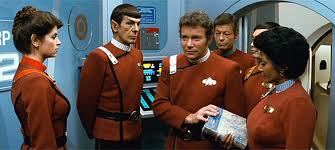
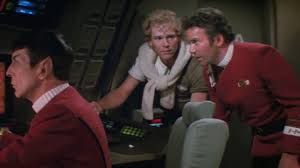
A close second would be the classic red uniforms that were used for most of the original cast movies starting with Star Trek II: The Wrath of Khan. They had a naval design that was just perfect for the movie’s tone.

khan cast

The spinoff Star Trek TV shows also had some nice costumes, especially the ones used in Star Trek: The Next Generation that followed the spirit of the original series in having different colors denoting rank and division.

As for costumes that didn’t work, that dishonor goes to the bland outfits used in Star Trek: The Motion Picture. They looked like grey pajamas! But the fancy white and grey uniform worn by Admiral Kirk and Spock’s black Vulcan tunic were great.

Music

The original theme by Alexander old trek castCourage has a resonating hailing overture that builds to a sense of adventure thanks to the use of a singer and bongo drums. I just love listening to it. Composer Michael Giaccino built on that mood with his take of the original Star Trek theme in J.J. Abrams’ reboot. His version of the original theme is magnificent.

The second best Star Trek theme for me is actually a tie between Jerry Goldsmith’s majestic score for Star Trek: The Motion Picture and James Horner’s adventurous work in Star Trek II: The Wrath of Khan. Goldsmith’s fanfare is a hail to adventure and the rest of the soundtrack made the movie better than it was. Horner’s work meanwhile had the right tone for the movie which evoked naval ships and battles.

Star Trek VI: The Undiscovered Country had a score that I liked a lot. It was dark, intriguing, yet had fanfares that were sentimental farewells for the original cast. The signature send off at the film’s end was fantastic. Other noteworthy scores are the ones for Star Trek: First Contact, Star Trek: Voyager, while the one for Star Trek: Deep Space Nine grew on me.

Background Design and Cinematography

wrath of khan bridgeFor me, Star Trek II: The Wrath of Khan had the best look on the whole because of its slightly darker lighting. It’s funny to think that the sets used in that film were the same ones from Star Trek: The Motion Picture. It’s amazing what lighting can do! On that note, I’ll say that I hated the bridge lighting used in Star Trek V: The Final Frontier, but loved the improved lighting in Star Trek VI: The Undiscovered Country thanks to Hiro Narita, who also worked on The Hunt for Red October.


Star Trek: The Next Generation had the best computer interfaces, it still looks futuristic and I love the look of the graphics. Meanwhile the look of the Trek reboot sports a fresh interpretation. It’s like walking into an Apple store with mirrors that produce lens flares! I didn’t mind the look, but I know purists object to it.


Walter L. Stevenson

Top Ten Star Trek: Enterprise Episodes

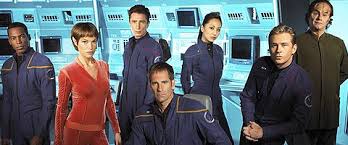
cast

It’s been ten years since the final two first-run episodes of Star Trek: Enterprise aired. The prequel to the Star Trek phenomena was derided by many for its bland and derivative nature. But a careful and objective look reveals that Star Trek: Enterprise had many terrific episodes, especially its later episodes. These are the best episodes of the fifth and (to date) final Star Trek TV show.

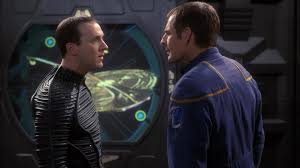
leaving drydock10. “Broken Bow” The pilot episode of the series (which at the time was simply called Enterprise) introduces the crew of the Earth starship Enterprise, including Captain Jonathan Archer (Scott Bakula), as they embark on an impromptu mission to establish relations with the infamous Klingon Empire.

9. “Affliction”/”Divergence” This two-part fourth-season episode answers the nagging question that has perplexed Star Trek fans ever since the late ’70s –why do the Klingons from the original series look different from modern incarnations of the warrior race? The answer was quite inventive.
xindi attack8. “The Expanse” The second-season finale introduces a radical shift in the show’s direction and has echoes of the then-recent 9/11 attack. A surprise assault on Earth by an alien race called the Xindi leads to the Enterprise being re-assigned to undertake a military mission to Xindi territory to prevent another more devastating attack that is coming within a year.

7. “Zero Hour” The Xindi super weapon archer vs xindicommandeered by an ill-tempered Xindi faction finally arrives at Earth in this thrilling third-season finale. The only hope to prevent Earth’s destruction is a desperate Archer and his crew, along with Xindi allies. The final moments were tense beyond belief and featured slam-bam space battles and the episode’s cliffhanger was way out of left field.

6. “The Forgotten” The personal ramifications and loss from the Xindi attack on Earth are seen through the eyes of Chief Engineer Charles Tucker (Connor Trinneer) whose sister was lost in the attack. Trinneer’s acting was quite memorable in the moments when his character broke down over his intense grief. Other standout acting came from T’Pol (Jolene Blalock) and Degra (Randy Oglesby), an Oppenheimer-like Xindi who has a change of heart about his race’s destructive plans for Earth.

5. “Twilight” An accident leaves Archer with the inability to form new memories. As time passes, the Xindi destroy Earth and humanity is scattered. As years pass by, Doctor Phlox (John Billingsley) discovers that curing Archer’s condition is the key to undoing the past. But will Archer be cured before the Xindi eradicate the last vestiges of humanity?

old archer

From the shocking cold opener where a visibly older Archer witnesses Earth’s destruction to its final, nerve-wracking scenes, “Twilight” excelled in presenting us with a dismal future where the Xindi succeed and put humanity on the brink of extinction.

4. “United” This episode was actually the middle part of a three-episode arc where Romulans try to instigate war between Earth, Vulcan, Andorians, and other planets. As a prototype Romulan ship with the capability to alter its outer appearance attacks different alien ships, the Enterprise crew and alien allies try to discern what is actually happening before war breaks out.

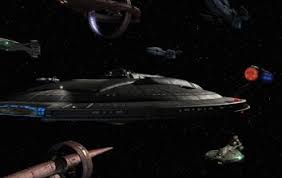
The alliance formed from the effort was one of Star Trek: Enterprise’s best moments and this episode used its all shipsprequel status to its best advantage. The highlight of “United” was a lingering shot featuring an armada of Earth, Vulcan, Andorian and Tellarite spaceships after confronting the Romulan menace. Thus, the seeding of the eventual United Federation of Planets has begun.

azati prime3. “Azati Prime” Archer and the Enterprise finally reach the Xindi super weapon in the aliens’ territory and prepare to destroy it, but Archer is suddenly whisked into the far future by the enigmatic time traveler Daniels (Matt Winston). As this goes on, the Xindi discover the Enterprise and launch a devastating assault that ends in a nail-biting cliffhanger.

What made this episode stand out is the revelation that what Archer does has a pivotal impact in Star Trek’s distant future. Plus, a hint of a future Enterprise is shown for good measure.

2. “Demons”/”Terra Prime” As Earth and its allies begin its first steps to forming the basis for what will become the revered Federation, those plans are threatened with the emergence of a xenophobic human terrorist group that wants to keep Earth and humanity isolated.

tera primeEven though “These are the Voyages” was the official final episode of Star Trek: Enterprise, this penultimate two-part story is a much more valid conclusion to the series. That is because it points the way towards Star Trek’s optimistic future and illustrates quite nicely how the characters help pave the way for what lies ahead with Star Trek.

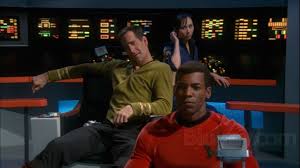
1. “In a Mirror Darkly, Parts I & II” Starting with a cold opener where humanity’s first contact with Vulcan takes a more savage turn, and then showcasing a dark, militaristic opening credits in a mirror darklyfans were in for a treat as the cast chewed lines and reveled in playing evil versions of their characters. Amidst the histrionics, questions about the original Star Trek episode “The Tholian Web” were answered and we learned the origins of the brutal Terran Empire seen in other Star Trek shows. “In a Mirror Darkly” was a true treat for fans with its numerous shenanigans and shout outs to the Star Trek mythos.

Strange as it seems, the best episode of Star Trek: Enterprise doesn’t even feature the main cast. Rather this two-part story is solely about the Mirror, Mirror parallel universe versions of the Enterprise crew. It was easy to tell the cast had a great time portraying twisted, malevolent versions of their normal characters and that added to the joy of seeing “In a Mirror Darkly”.

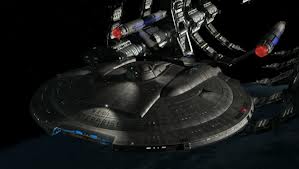
enterprise

This fourth-season episode best shows the strengths of Star Trek: Enterprise when it fully realized its potential by being an actual prequel rather than recycling old storylines from other Star Trek shows. Sadly, the improvements the show underwent came too late since it was cancelled at the end of its fourth season. As lamentable as that was, at least Star Trek: Enterprise has a distinctive honor that other Star Trek shows lack: it ended on a creative high note.

Honorable Mentions: “The Andorian Incident”, “Awakening”, “The Council”, “Countdown”, “Dead Stop”, “Harbinger”, “Kir’Shara”, “Minefield”, “Observer Effect”, “Regeneration”, “Silent Enemy”, “Similitude”, and “Storm Front, Parts I & II,

José Soto