Dr. Gillian Taylor: “Don’t tell me. You’re from outer space.”
Admiral James T. Kirk: “No I’m from Iowa, I only work in outer space.”
Dinner conversation during a date at an Italian restaurant in San Francisco, circa 1980s
“Well, a double dumbass on you!”
Admiral James T. Kirk to a taxi driver on the streets of San Francisco, same time period
Usually when the fourth film in a franchise comes around the franchise itself starts to show signs of fatigue. Thankfully that wasn’t the case with Star Trek IV: The Voyage Home. Unbelievably, the fourth Star Trek film reaffirmed the Star Trek franchise after its moribund predecessor. A lot of the credit goes to writers Nicholas Meyer, Harve Bennett (who was also the producer), Peter Krikes and Steve Meerson, and primarily, director Leonard Nimoy, who co-stars in the film as Spock. Nimoy found his footing with his second directorial gig and it shows in a big way.
Star Trek IV: The Voyage Home begins with a dedication to the lost crew of the space shuttle Challenger, which was appropriate and sincere being that the tragedy happened earlier in the year that the film premiered. After the credits, the story begins with a Reliant-class starship encountering a humongous, shiny, black cylindrical alien probe that drains the starship of its power. Before anyone can say V’Ger, the story jumps back to Earth at the council chambers of the United Federation of Planets where audiences are brought up to date with what happened in the previous film. A Klingon ambassador (John Schuck) wants Admiral James T. Kirk’s (William Shatner) head for killing a Klingon crew and stealing their bird-of-prey ship and accuses the Federation of wanting to wage war on the Klingons with the failed Genesis terraforming process.
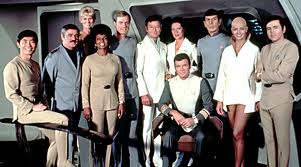
Kirk has violated nine Starfleet regulations, such as disobeying orders and stealing the starship Enterprise . He is on exile with his former crewmembers on the planet Vulcan. They include Dr. Leonard McCoy (DeForest Kelley), Chief Engineer Montgomery “Scottie” Scott (James Doohan), and Commanders Hikaru Sulu (George Takei), Pavel Chekov (Walter Koenig), and Uhura (Nichelle Nichols). After being on Vulcan for three months, they choose to return to Earth and face trial. Spock, who they risked their lives and careers for in Star Trek III: The Search For Spock, is recuperating from his resurrection and regaining his mental acuity. He is still confused about the nature of feelings, but elects to accompany his friends back to Earth.
Meanwhile, the alien probe approaches Earth and creates havoc as it drains away the energy of anything that it approaches. Starfleet is effectively crippled and Earth defenseless. The probe also emits a series of ear-piercing inhuman screeches and wails that no one can decipher. The probe arrives in Earth orbit and begins transmitting into the oceans. This creates a severe superstorm that covers the planet and the endangers all life.
Kirk and his crew leave Vulcan with the stolen Klingon ship (rechristened the Bounty) and on their way to Earth pick up a distress call from the Federation President (Robert Ellenstein), who is on Earth, warning away visitors because of the probe. Spock is able to decipher the probe’s transmissions and we learn that it is trying to contact humpback whales. Unfortunately, the species is extinct in the 23rd century, which forces Kirk to take the Bounty and time travel to Earth’s past and find whales to bring back to their time period.
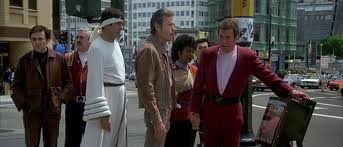
After Kirk informs Starfleet Command of his intentions, the Bounty makes a slingshot maneuver around Earth’s sun. It’s a time travel procedure first done in the classic original episode “The Naked Time” but more ethereal with dream-like sequences showing morphing busts of the crew and whales. After that sequence the ship winds up in the latter half of the 20th century. After picking up whale songs transmitting from the San Francisco area, the ship lands cloaked in Golden Gate Park in the middle of the night. Scotty informs Kirk that in addition to refitting the ship’s interior to accommodate a whale tank, the ship’s dilithium crystals that power the warp core drive are drained and need recharging or else they’re stranded. With that, the now-Bounty crew disembark their ship and head off into the wild frontier of the 20th century.
An exchange between Spock and James T. Kirk onboard the Enterprise
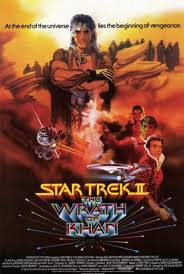
Star Trek II: The Wrath Of Khan was a radical departure from its predecessor Star Trek: The Motion Picture, which is what Paramount Pictures wanted. Even though Star Trek: The Motion Picture made money it was perceived as a failure. Many people complained that it was dull and pretentious. In other words, they wanted action! And that is what director Nicholas Meyer delivered with Star Trek II: The Wrath Of Khan, only he added a human element that elevated the film to classic status.
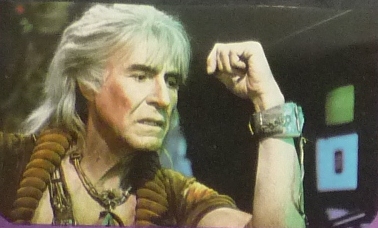
This film is the most personal Star Trek film out of the many that have come out. Its main characters go through some intense and heartfelt emotional journeys and are changed forever. Admiral James T. Kirk (William Shatner in his best performance as Kirk) faces the prospect of middle age and looking back at his life. His best friend Captain Spock (Leonard Nimoy) faces his mortality with a sense of bravery and nobility that touched audiences’ heart in a way that would have been more lasting if his fate had been final. On the other side of the coin, the main villain Khan Noonien Singh (Ricardo Montalban) is wracked with bitterness and hate over his lot in life and in the end this anger consumes him.
In the original Star Trek episode “Space Seed” Khan was part of a group genetically enhanced despots from Earth’s violent past found hibernating by Kirk and his crew. After briefly capturing the Enterprise, Kirk defeats him and exiles him and the other superhumans to an uninhabited planet.
In between that episode and the film, the planet. Ceti Alpha V, underwent an environmental disaster that made it practically unlivable. Think of Tatooine on its worst day with blistering sandstorms. Most of Khan’s people didn’t survive, including his wife. Now, Khan is a seething cauldron of fury out to annihilate the one he blames for his predicament: James T. Kirk.
Even though the film is a sequel to “Space Seed” it skillfully brings viewers up to speed with only a few lines of exposition regarding Khan, who is portrayed magnificently by Montalban. The actor originated the role of Khan in “Space Seed” and made a solid impression in that episode but by the time that the first Star Trek sequel came around, Montalban was more known for his role in the show Fantasy Island. His performance as Khan demonstrated the true nature of his acting prowess thanks to his bringing to the role a sense of regal eloquence, animalistic charisma, and maligned fury.
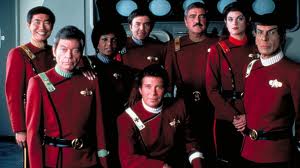
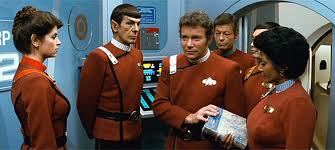
The film opens with the Enterprise, commanded by a young Vulcan named Saavik (Kristie Alley in her first role), being attacked by Klingon ships and losing the battle with main characters like Spock being killed. But it was a simulation at Starfleet Academy. Some time has passed between Star Trek: The Motion Picture and this film. One noticeable difference is that the Starfleet uniforms are now bright red jackets with black pants giving its personnel a more militaristic look. The filmmakers wanted to convey a sense of naval conditions with this film since they saw it as a retake of Horatio Hornblower. In fact, the feel of Star Trek II: The Wrath Of Khan feels more grounded, less lofty than in the first film. Sets look more cramped and a bit more lived in although not as severe as with Star Warsor Alien. A good eye will spot a No Smoking sign on the set, which alarmed some fans who hoped that the awful habit would’ve been gone by the 23rd century.
The actual Enterprise is now training vessel commanded by Spock for young cadets and officers, including Spock’s protogé Saavik. Kirk is no longer commanding a starship and feels like a relic, in spite of the fact that it’s his birthday. Gifts from Spock and Dr. Leonard McCoy (DeForest Kelley) do little to cheer him up, prompting McCoy to urge him to do something with himself and stop living in the past.
Around this time, the starship Reliant approach the barren Ceti Alpha V, which is to be used as a testbed for the Genesis science experiment. Kirk’s former lover Dr. Carol Marcus (Bibi Besch) and her son David (Merritt Butrick) have developed the Genesis Device, which can initiate rapid terraforming on inhospitable worlds for colonization. The Reliant’s captain Clark Terrel (Paul Winfield) and first officer, the former Enterprise navigator Pavel Chekov (Walter Koenig) beam down to the planet investigate life signs only to find Khan and his people marooned there. After capturing the two men, Khan and his genetic superhumans gain control of the ship and set out on a mission of vengeance.
Kirk joins Spock onboard the Enterprise with his original crewmates to assist with a training cruise for Starfleet cadets. They receive a call from Dr. Marcus wanting to know why Kirk is taking the Genesis Device. What she and Kirk don’t realize is that Khan is trying to lure Kirk by manipulating a brainwashed Chekov into stating that Admiral Kirk wants the Device. Kirk takes the bait and orders the Enterprise to head out to Marcus’ science station Regula I, which orbits an asteroid the station is named after, and investigate. In a preemptive move, Spock relinquishes command of the Enterprise to his friend because as he famously said, “Commanding a starship is your first, best destiny; anything else is a waste of material.”
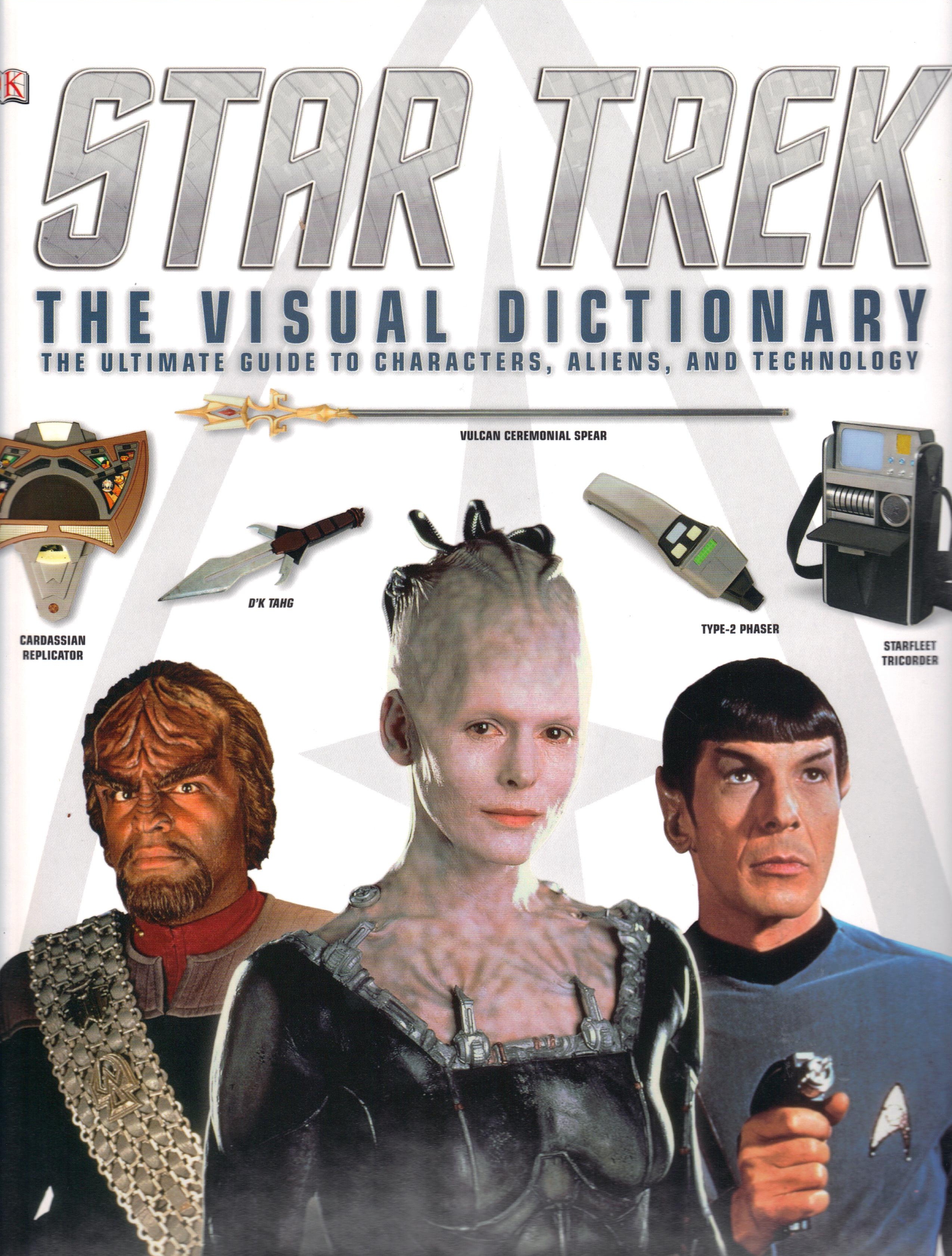
Most of the other big sci-fi, fantasy and comic book franchises has had those Visual Dictionary large-format books put out by DK Publishing. One major sci-fi franchise noticeably left out was Star Trek and that universe is a perfect fit for these informative books with their large, visually pleasing pictures and lay outs. Finally, one has been made for Star Trek and it’s just been released.
It was worth the wait.
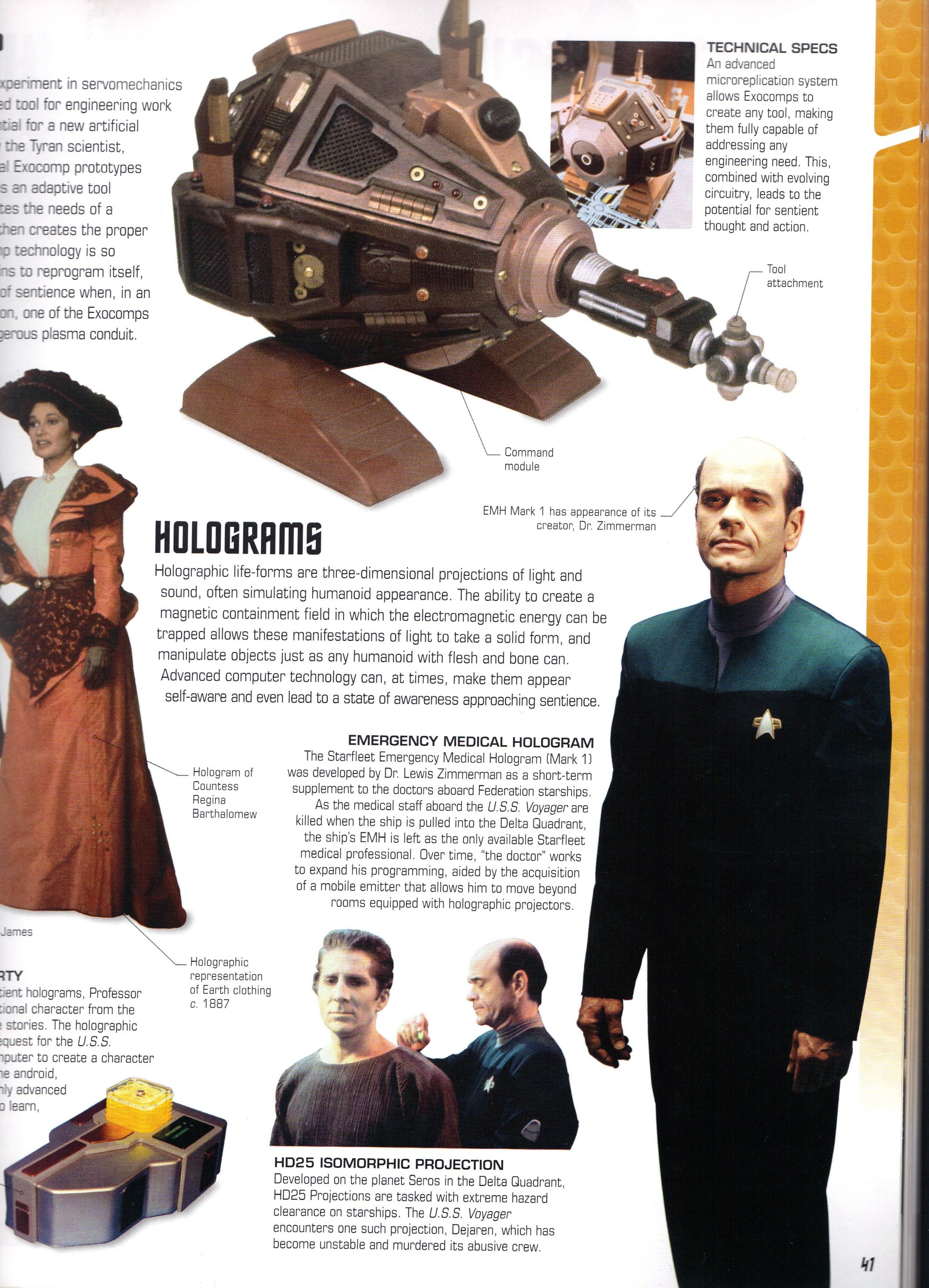
Star Trek: The Visual Dictionary by Paul Ruditis is a beautifully designed and laid out book full of rich pictures and information about the Star Trek universe. It is lay out and format is similar to the other Visual Dictionary books of other franchises and covers all the Star Trek shows in their universe’s chronological order. So it starts with humanity discovering warp drive, continues through Star Trek: Enterprise and finishes with Star Trek: Voyager.
Basically, the major races, characters and some events are presented and all the shows are given equal space. Alien races included are popular ones like Vulcans and Klingons to more obscure ones like the Vidiians. So there is some meat for fans of any particular show.
The only complaint that can be made about Star Trek: The Visual Dictionary is that it’s a bit short. It couldn’t be a mammoth reference guide like TheStar Trek Encyclopedia, but some characters and aliens were unfortunately left out. DK Publishing could’ve done what they did with the Star Wars: The Visual Dictionary books and published more than one volume. Hopefully this will prove to be a test to see if there is a market to put out more volumes. There is plenty of material left to cover. It wouldn’t surprise anyone if one were to be made for the new Star Trek reboot films.
In any event, it certainly is a treat for Star Trek fans and at an affordable price ($20) Star Trek: The Visual Dictionary makes a terrific addition to a fan’s library collection.
Admiral James T. Kirk replying to a request for a course heading
With the new Star Trek film coming out in a couple of months (Star Trek Into Darkness), it’s time to take a look back at the many Star Trek films that preceded it. Let’s start off with the one that launched Star Trek’s cinematic voyage, Star Trek: The Motion Picture.
This film isn’t regarded as a top tier Star Trek film and for good reason. It’s slow moving, yet seems rushed and for good reason. Director Robert Wise recounted how far behind schedule they were that the effects work was only completed just before the film made its debut, translation: Wise didn’t have time to properly edit the film. On the other hand, it does have undeniable merits.
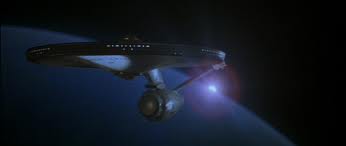
Out of all eleven Star Trek films (twelve counting Star Trek Into Darkness), Star Trek: The Motion Picture is the most majestic and oddly the most Trek like. Meaning that this film captures the core concept of Star Trek creator Gene Roddenberry’s optimistic view of humanity’s future. That is largely because Roddenberry produced the film and it’s the only one where he was directly involved. After its perceived failure,Roddenberry was relegated to a “consultant” role in the other Star Trek films until his death. In this film, we get a few glimpses of Earth and see that it’s a bright, pastoral paradise where people either wear New Agey type of clothing or bland Starfleet uniforms. The conflicts in the film are largely internal believe it or not. Sure, there’s the threat of this V’Ger entity that wants to annihilate life on Earth, but the problems that capture viewers’ attention are those with Admiral James T. Kirk (William Shatner), Spock (Leonard Nimoy) and Commander Will Decker (Stephen Collins). Anyone expecting a mustache-twirling villain will have to look elsewhere.
In between the original Star Trek show and Star Trek: The Motion Picture, Kirk was promoted to a desk-bound position as an admiral and he’s bored. He’s in charge of refitting his old ship the Enterprise, which was supposed to be commanded by Decker, but Kirk uses the V’Ger threat as a excuse to take command of the Enterprise, which naturally angers Decker. Now with Spock, he’s retired from Starfleet and off in his home planet Vulcan undergoing this ritual to purge all emotions from within him, but he finds himself unable to go through with the process. He feels a calling, which so happens to coincide with the coming of V’Ger.
The film opens with V’Ger, seen as an immense multi-colored energy cloud in space that dematerializes three Klingon battle cruisers. It should be pointed out that this film is responsible for introducing the modern take of Klingons, now adorned with thick armor and sporting their distinctive sagittal crests on their foreheads. While the film properly shows how badass the Klingons were with their guttural speech, armor and a tribal music soundtrack, they are quickly taken out by V’Ger. It effectively illustrates the entity’s power and deadliness. And of course, it’s heading towards Earth.
Equally convenient to the plot is how the Enterprise, although not finished with its refitting, is the only starship that can intercept V’Ger. How many ships does Starfleet have? But hey, what’s a Star Trek film without the Enterprise and its crew being the only thing standing between life and death?
Despite’s Chief Engineer Scott’s (James Doohan) usual protests that the ship isn’t ready, Kirk orders that the Enterprise be launched to confront V’Ger. Afterwards, the engineer entreats Kirk to an exhaustive external inspection of the Enterprise while in drydock. It’s at this point, that the film first rears its indulgent tone. Continue reading →
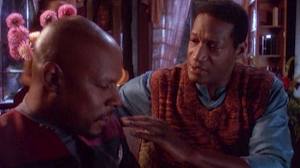
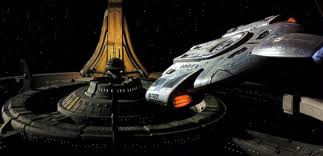
This past January marked the twentieth anniversary of perhaps the most underrated Star Trek show Star Trek: Deep Space Nine. It differed from the other Trek shows in that it took place on a space station (the titular Deep Space Nine or DS9) near a wormhole and the characters often had to deal with the political and social ramifications of galactic events and alien first contact. In so many ways, Star Trek: Deep Space Nine is arguably the best Trek show and certainly the best spinoff of the original Star Trek. Many episodes were exciting, thought provoking and best exemplified the spirit of Star Trek. Being that it’s the show’s 20th anniversary, here’s a top 20 list of their very best episodes.
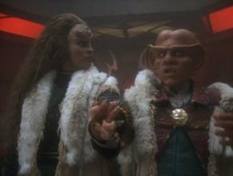
20. “The House Of Quark” A white lie about killing a Klingon warrior to boost business leads resident DS9 bar owner Quark (Armin Shimmerman) to unwillingly marrying the Klingon’s headstrong widow (Mary Kay Adams). Later Quark must fight another Klingon for her honor in this humorous social clash of Klingons and Ferengi cultures.
19. “Homefront/Paradise Lost” This two-part episode is an eerie predictor of the besieged, mistrustful mentality that hit the U.S. after 9/11. A Changeling terrorist attack on Earth leads to worldwide paranoia that Changelings are everywhere and infiltrating the Federation. Ultimately this brings about an attempted coup by rogue Starfleet officers.
18. “What You Leave Behind” The final episode of Star Trek: Deep Space Nine brings the show to a proper conclusion as the Dominion War finishes in an epic throwdown involving an armed uprising on the Cardassian home planet, the major space powers in a pyrotechnic space battle and Captain Benjamin Sisko (Avery Brooks) has a final confrontation with his arch nemesis Dukat (Marc Alaimo) and ultimately discovers his destiny.
17. “The Jem’Hadar” What a way to introduce an enemy race! Sisko, his son Jake (Cirroc Lofton), Quark and his nephew Nog (Aron Eisenberg) are captured while camping on a planet in the Gamma Quadrant by the Dominion’s belligerent military force, the Jem’Hadar. Ruthless, deadly and formidable, the reptilian-like soldiers proved their extreme fanaticism by destroying a Galaxy-class starship fairly easily.
16. “Past Tense, Part I and II” Sisko, Dr. Julian Bashir (Alexander Siddig) and Jadzia Dax (Terry Farrell) are accidently transported to San Francisco in the 2020s and become involved in a calamitous social movement called the Bell Riots. When the leader of the movement is killed, Sisko must assume his identity in order to preserve the timeline, while trying to keep himself and hostages safe.
15. “Favor The Bold” The first few episodes of DS9’s sixth season had the Federation on the defensive in the Dominion War with the Dominion occupying the station. Tired of defeat, Sisko devises a bold battle plan to take back DS9 and gathers his forces. Meanwhile tensions boil over in DS9 as First Officer Kira Nerys (Nana Visitor) confronts the Changeling Security Chief Odo (René Auberjonois) over his divided loyalties.
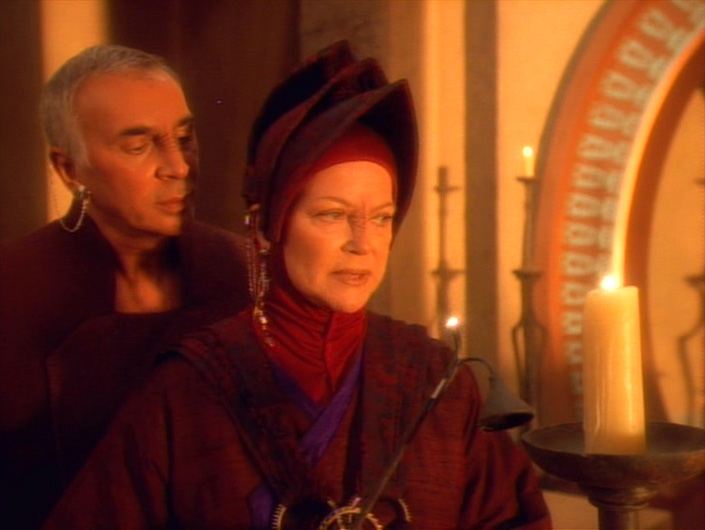
14. The Circle Trilogy (“The Homecoming”, “The Circle”, “The Siege”) Bajoran politics start off the second season with Star Trek’s first three parter. A legendary Bajoran freedom fighter (Richard Beymer) is found in a Cardassian prison by Kira, who frees him. This causes a chain of events that culminates in a plot by an anti-Federation, reactionary political group to overthrow the Bajoran government. Guest stars Frank Langella and Louise Fletcher played exceptional villains.
13. ” The Quickening” Dr. Bashir learns a lesson in the limits of his medical skills when he and Dax struggle to help a planetary population infected by the Dominion with a deadly and incurable disease. An allegory to the AIDS epidemic, the scenes of Bashir’s tireless efforts to ease the suffering and cure people were powerful and touching.
12. “Crossover” Kira and Bashir return to the infamous Mirror Universe last seen in the original Star Trek episode “Mirror, Mirror”. This time humanity has been conquered by the Klingons and Cardassians and the duo get to see a radically different DS9 with once familiar characters like Quark and Garak (Andrew J. Robinson) now complete strangers. Plus, it gave the actors plenty of opportunities to chew the scenery with their over-the-top performances of their doppelgangers.
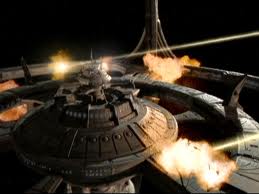
11. “The Way Of The Warrior” Worf (Michael Dorn) from Star Trek: The Next Generation joins the station crew in this fourth-season opener that sees the impact that the shape-shifting Founders have had with their infiltration of the Alpha Quadrant. The Klingons and the Federation break ties with each other and become adversaries. The climatic space battles between the station and a Klingon fleet and the intense fighting inside DS9 were an adrenaline rush of excitement!
10. “In The Pale Moonlight” One of the most controversial episodes of Star Trek: Deep Space Nine has Ben Sisko desperate over the state of the war against the Dominion, committing very questionable and treasonous actions to influence the Romulans to join the war on the Federation’s side. These nebulous actions by a Star Trek lead hero best illustrate the murkiness of DS9’s main characters.
9. “In The Cards” This very funny episode showcases Jake and Nog as they go through many headaches and make complicated deals just to obtain a rare Willie Mays baseball card for Jake’s father. Highlights include the mad Dr. Giger (Brian Markinson) and his alleged immortality machine. Meanwhile on an ominous note, on the eve of war, negotiations fail between the Federation and the Dominion.
8. Emissary” The pilot episode introduces the cast of characters and the Cardassian-built space station orbiting the ravaged planet of Bajor. Intrigue and self-discovery abound as the intricacies of Bajoran society and the characters’ quirks are revealed, especially Sisko’s tortured soul. Still mourning over his dead wife and on the verge of leaving Starfleet, Sisko faces a moment of truth after discovering a nearby stable wormhole and the non-corporeal aliens inhabiting it.
7. “In Purgatory’s Shadow”/”By Inferno’s Light” Major changes happen in this two parter when the Cardassians, led by Dukat, unexpectedly join the Dominion. One of the show’s biggest shocks came when it was revealed that one of the major characters was actually a Changeling during several previous episodes and out to decimate the Alpha Quadrant powers.
6. “Far Beyond The Stars” Sisko finds himself in an alternate reality where he is a struggling science fiction writer in 1950s New York and must contend with racism as he tries to get his story published about a space station commandeered by a black officer. It was unforgettable and refreshing to see the show’s actors, many without makeup, portraying distinctly different characters, some good and some bad. Brooks deserves many kudos for captivating performance as Ben Sisko and writer Benny Russell.
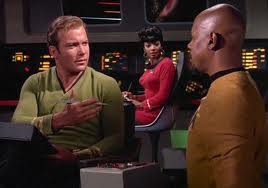
5. “Trials And Tribble-ations” In this tribute to the original Star Trek, the crew of the Defiant (the Starfleet ship posted to DS9) time travel back to Captain Kirk’s (William Shatner) era and wind up part of the classic Star Trek episode “The Trouble With The Tribbles”. The scenes where the DS9 characters interact with the original Enterprise crewmembers are still jaw-dropping and fun to watch. Some highlights include seeing the original Enterprise, Worf’s abrupt non-explanation about the classic era’s Klingons and when Sisko got to meet Kirk, one of his heroes.
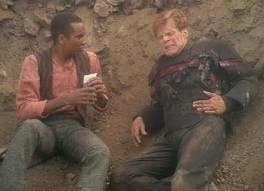
4. “…Nor The Battle To The Strong” Jake and Dr. Bashir are stranded on a Federation outpost under attack by Klingons. This episode focuses on Jake (one of the few by DS9 to do so) and his impressions of war as he is recruited to be a medic and meets several characters who react differently to battle situations. He sees up close how filthy and demoralizing war is and is strongly shaken by its brutality and its senseless nature. This episode was one of the grittiest ever shown on Star Trek and the realistic elements such as the Starfleet officer who wounds himself and Jake’s scared reactions added much to the story.
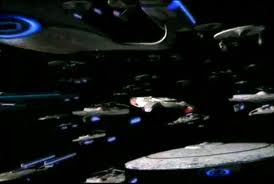
3. “Call To Arms” The fifth season of Star Trek: Deep Space Nine closes with this exciting episode that is about the eve of war between the Federation/Klingons and the Dominion. Tensions boil over and negotiations break down leading to open warfare between the two powers. The episode’s writers skillfully set up many cliffhangers for the coming season and had astonishing multiple endings that could’ve each ended the season effectively. Still, that final shot that has the Defiant joining a massive Starfleet/Klingon armada makes one cheer.
2. “Sacrifice Of Angels” This epic conclusion to the storyline about the Dominion occupation of DS9 rivals any big-screen sci-fi spectacular with its amazing special effects. Outnumbered and outgunned on board the Defiant, Sisko leads an armada of Starfleet ships against combined Dominion and Cardassian battle ships. It’s a race against time to break through the formidable fleet to reach DS9 before the mined wormhole can be opened to send through Dominion reinforcements. Meanwhile, Kira, Quark, Jake and other Federation loyalists on the station try to stay one step ahead of Dominion forces as they try to sabotage the enemy. After seeing the good guys losing ground in the episodes leading up to “Sacrifice Of Angels” it was a cathartic to see them finally confronting the enemy.
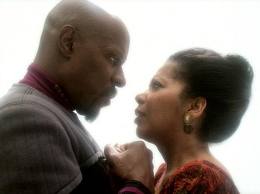
1. “The Visitor” One of the best time travel stories shown on any Star Trek series is ultimately about the bond between a father and his son. Sisko and Jake are on board the Defiant when a freak accident apparently disintegrates the captain. During his mourning Jake discovers that his father is actually alive but trapped in a timeless limbo. Life and time goes on while Sisko never ages and helplessly watches as Jake grows older, marries and then gives up his marriage and writing career to help him. The performances by Avery Brooks and Tony Todd (who plays Jake as an adult) will touch a soft spot in any viewer’s heart. The ending of “The Visitor” will be sure to leave a lump in one’s throat. More importantly, the episode illustrates how feelings and relationship trump any obstacle. These themes are why Star Trek: Deep Space Nine stood apart from the other Star Trek shows.
Other memorable episodes that just missed the list include in no order: “Explorers”, “The Siege of AR-558”, “Waltz”, “A Time To Stand”, “For The Uniform”, “The Magnificent Ferengi”, “Our Man Bashir”, “Inquisition”, “The Die Is Cast” and “Duet”.

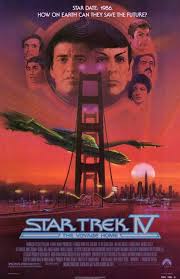 Usually when the fourth film in a franchise comes around the franchise itself starts to show signs of fatigue. Thankfully that wasn’t the case with Star Trek IV: The Voyage Home. Unbelievably, the fourth Star Trek film reaffirmed the Star Trek franchise after its moribund predecessor. A lot of the credit goes to writers Nicholas Meyer, Harve Bennett (who was also the producer), Peter Krikes and Steve Meerson, and primarily, director Leonard Nimoy, who co-stars in the film as Spock. Nimoy found his footing with his second directorial gig and it shows in a big way.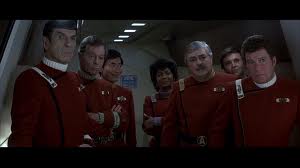
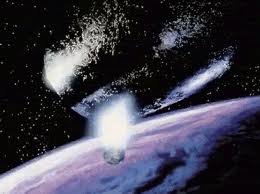 Meanwhile, the alien probe approaches Earth and creates havoc as it drains away the energy of anything that it approaches. Starfleet is effectively crippled and Earth defenseless. The probe also emits a series of ear-piercing inhuman screeches and wails that no one can decipher. The probe arrives in Earth orbit and begins transmitting into the oceans. This creates a severe superstorm that covers the planet and the endangers all life.
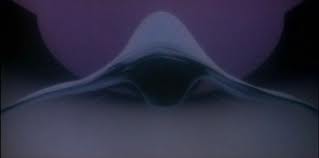 slingshot maneuver around Earth’s sun. It’s a time travel procedure first done in the classic original episode “The Naked Time” but more ethereal with dream-like sequences showing morphing busts of the crew and whales. After that sequence the ship winds up in the latter half of the 20th century. After picking up whale songs transmitting from the San Francisco area, the ship lands cloaked in Golden Gate Park in the middle of the night. Scotty informs Kirk that in addition to refitting the ship’s interior to accommodate a whale tank, the ship’s dilithium crystals that power the warp core drive are drained and need recharging or else they’re stranded. With that, the now-Bounty crew disembark their ship and head off into the wild frontier of the 20th century.