Jaws: Still Terrified Of The Water 50 Years Later

One of the things this summer movie season will be remembered for is for being the 50th anniversary of the first blockbuster summer movie, Jaws. It’s not an exaggeration to say this movie changed the film industry forever.

The 50th anniversary of Jaws was this past June, but the film is having special screenings in theaters this Labor Day weekend to celebrate the event. If you’re lucky, your local theater will have the film in 3D or some other upscale format like IMAX. What is surprising is that the upscale of the film actually holds up and the genius of the filmmakers, including its director, is the reason why with the way the scenes were filmed.
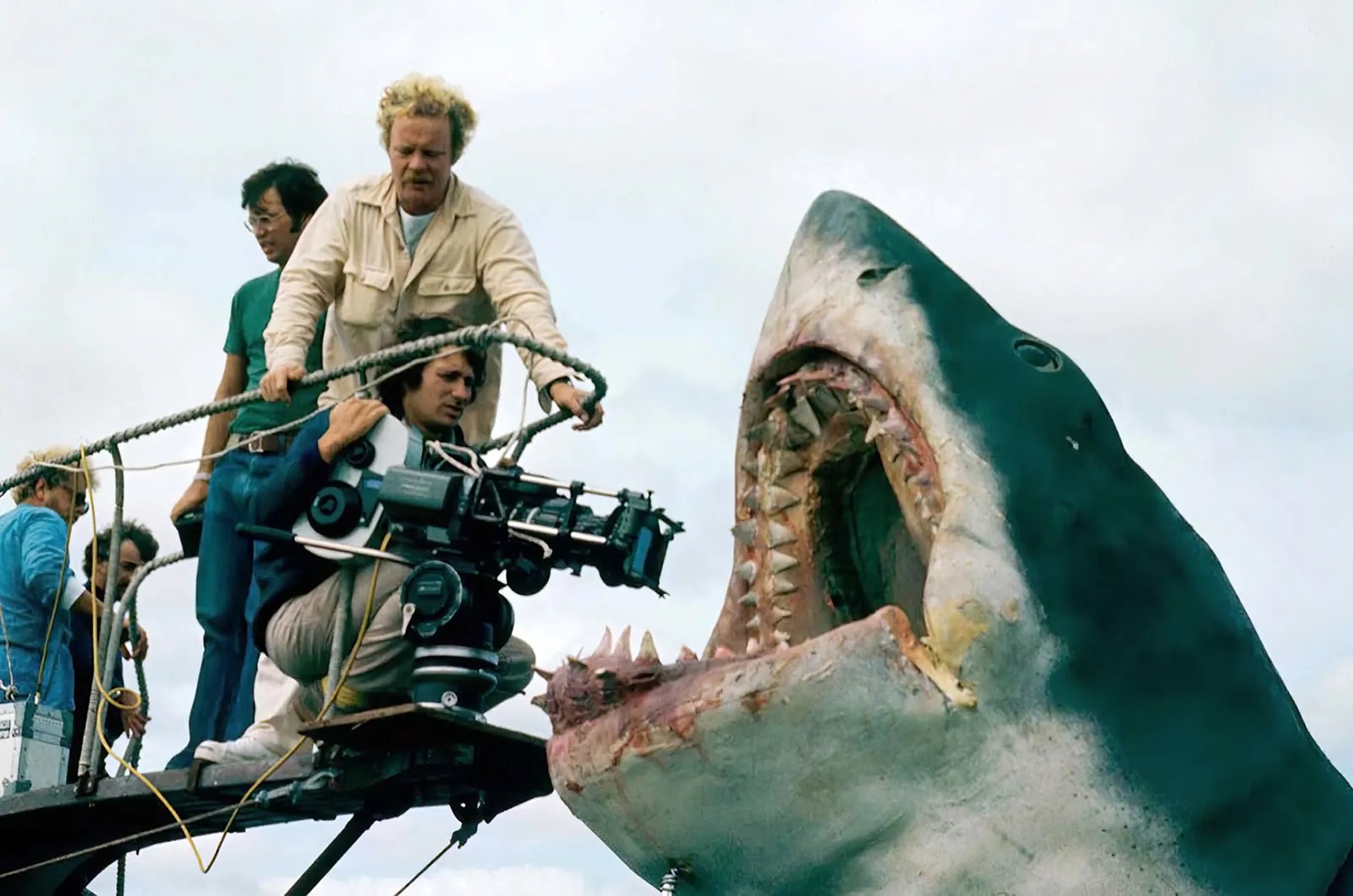
Everyone knows Jaws was one of master director Steven Spielberg’s earliest works and is still considered one of his finest films. Thanks to his brilliant directing skills, Jaws was elevated from a standard thriller into a masterpiece of adventure and horror. Plus, it made many viewers afraid or at least wary about going into the water during beach visits.

Jaws excelled at creating a sense of dread and unease with the way the ominous ocean was filmed as it hid the terror of the great white shark that feasted on the hapless citizens of Amity. This uneasiness with the mysterious ocean hit us right at the start of the film when a drunk young woman foolishly went for an evening swim; something you must never do, sharks and other water predators are at their most active at this time. She was attacked by an unknown, unseen force that turned out to be an unusually large great white shark that would go on to terrorize the town of Amity. The scene where she was attacked was punctuated with unsettling dark imagery, John Williams’ iconic score and the fact we never saw the shark. Not revealing the shark until later exploited our fear of the unknown, and increased our anticipation of finally seeing it when the film’s heroes, Amity Police Chief Martin Brody (Roy Scheider), marine biologist Matt Hooper (Richard Dreyfuss), and the salty shark hunter Quint (Robert Shaw), confronted the great white terror.
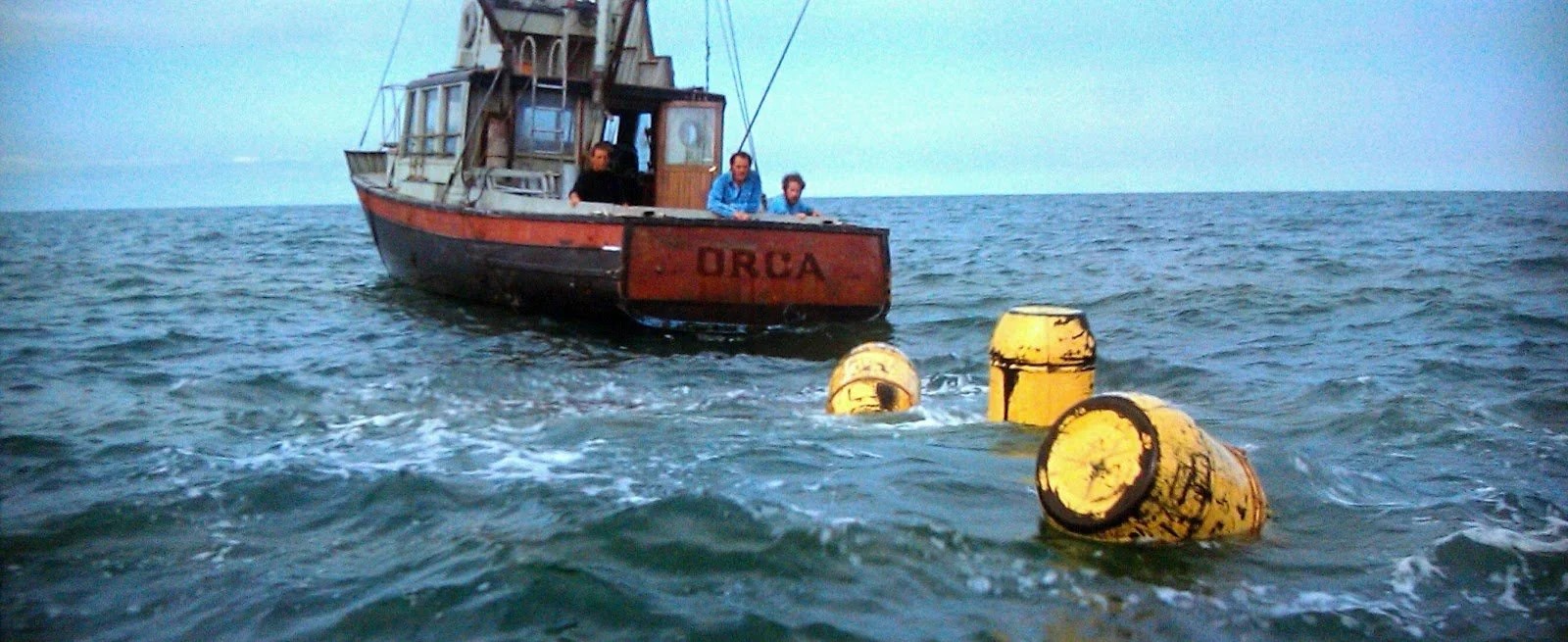
An important reason why Jaws worked so well was that Steven Spielberg was forced to keep the shark offscreen for most of the film. That was because the mechanical shark built for the film rarely worked and Spielberg had to work around this by implying the shark’s presence. You would hear the haunting bars of John Williams’ Jaws theme to announce the shark’s presence, just offscreen. You would see quick shots of the shark’s fin or a blurry image of the shark just underneath the surface or later in the film when the shark was speared with lines attached to barrels. These were supposed to keep the shark close to the surface as the film’s heroes hunted it. However, it wasn’t too long before the film’s heroes realized the barrels not only were not effective, but whenever the barrels bopped up to the surface, their presence signaled the approach of the invisible enemy and added to the scenes’ tension and suspense.

Spielberg’s challenge with creating suspense and keeping the shark hidden until the pivotal final act helped forge his directing skills early in his career. Of course, he had a miserable experience directing the film and avoided directing films set in the open ocean afterwards. In fact, he was so bothered by his experience that it was only recently that he was able to bring himself to watch the film. He admitted to liking the film. Who knows what he could do with the film if he made it today?

What is incredible about Jaws and one reason why it is held in such high esteem today was that after a few inferior sequels, there have not been any attempts to remake or reboot it. Yes, there are other skilled directors that could film a theoretical Jaws remake today, but they would have to compete with the mystique of the original film. How could a remake distinguish itself and improve upon perfection?
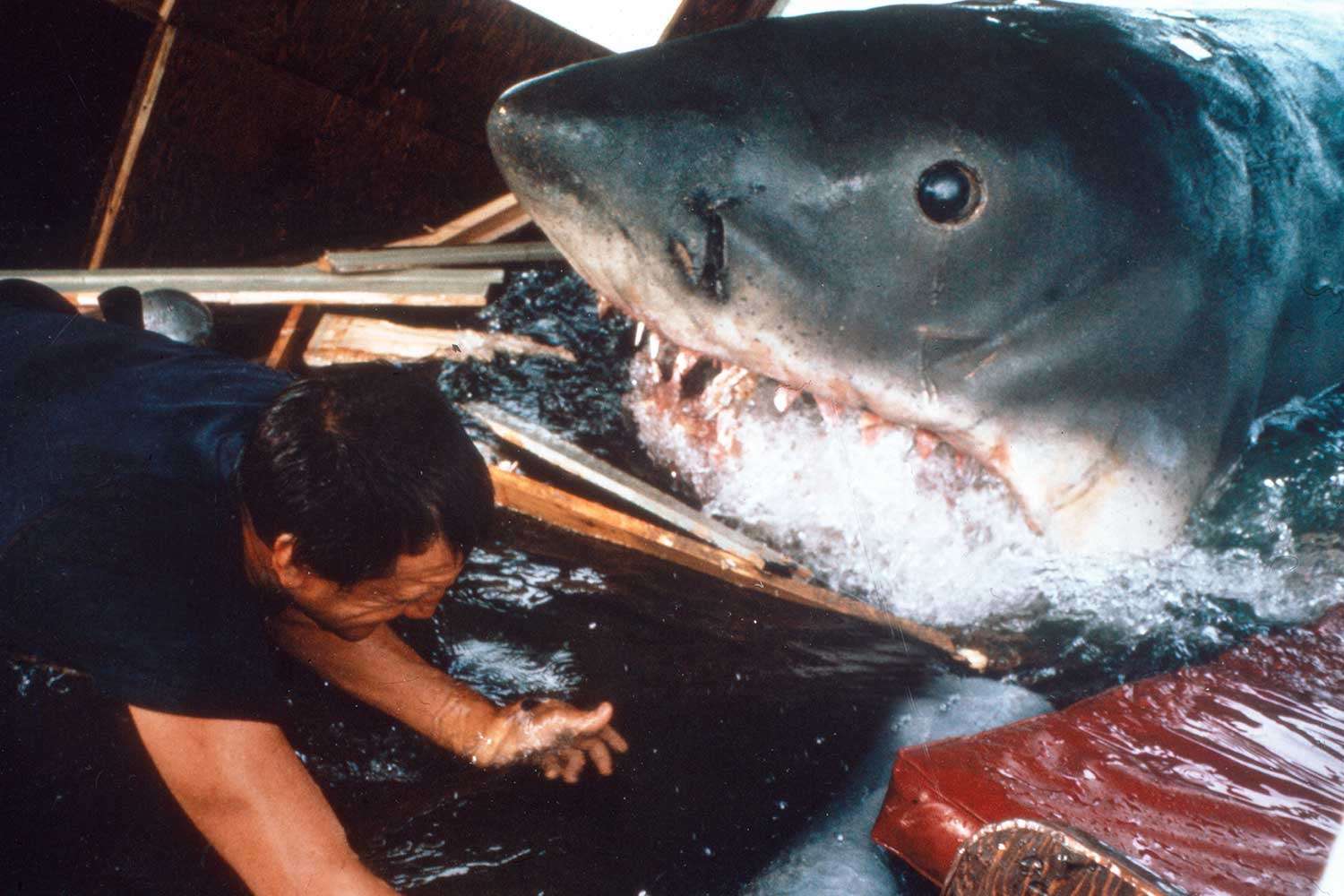
As mentioned above, a major reason why the 1975 film still terrifies us today is because it exploited our collective fear of the unseen. Most directors today would be too tempted to have a CG shark popping out of the water every five minutes. Sure, today’s special effects could easily have the shark out in the open in nearly every scene, but it would not work. We’ve seen this with films like The Meg, the Sharknado films, and Deep Blue Sea, though the latter film has its merits. So, while it is tempting to pine for a Jaws remake it is best for now to leave that idea alone and enjoy the original classic…even though it will leave you too afraid to go into the water 50 years after its release.
The Indiana Jones Films Ranked

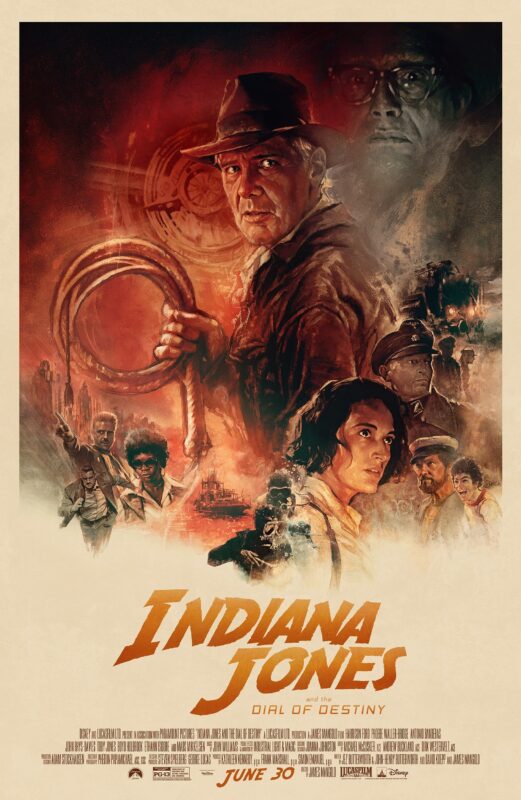
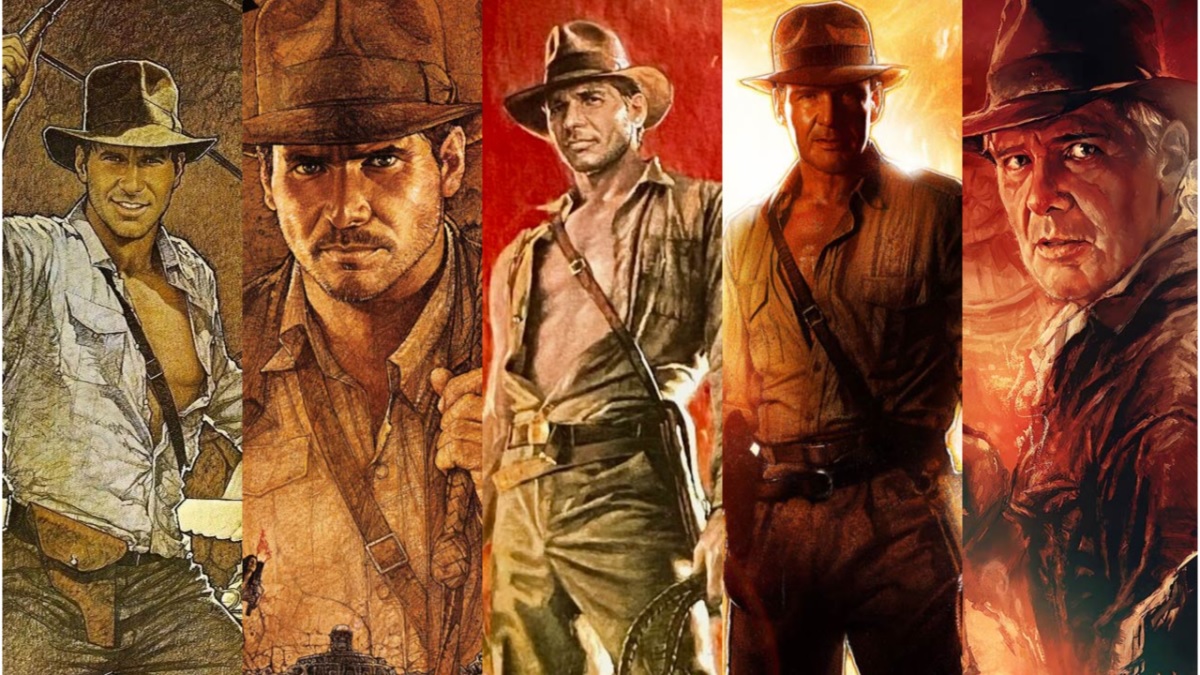
Now that Indiana Jones and the Dial of Destiny has been released, the Indiana Jones film franchise is complete and we can rank all five films.

The quality of these films are generally high, some of which are genuine masterpieces. Even the films that rank at the bottom are entertaining with their own merits, but have their flaws, of course.

Here are the Indiana Jones films ranked from least to best. Be aware of spoilers ahead and feel free to drop a comment about your own preferences!

5. Indiana Jones and the Kingdom of the Crystal Skull

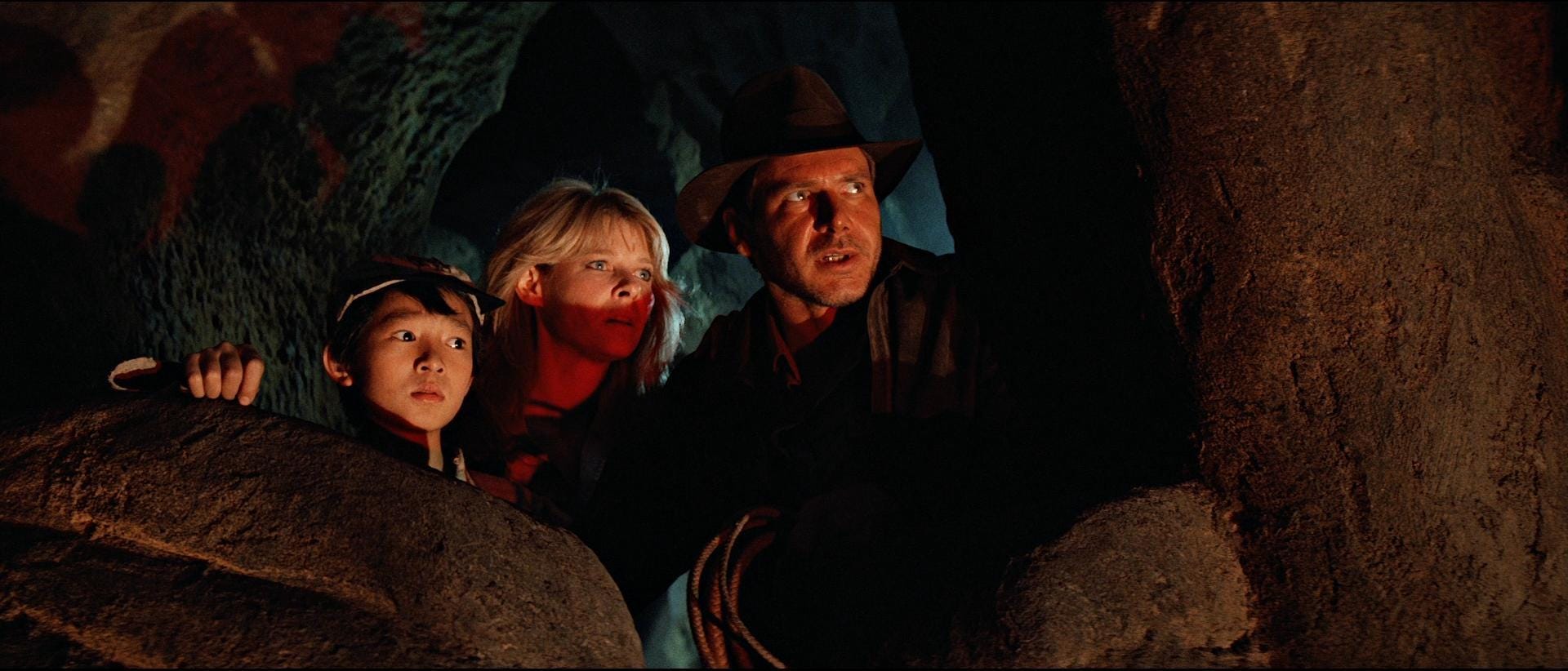
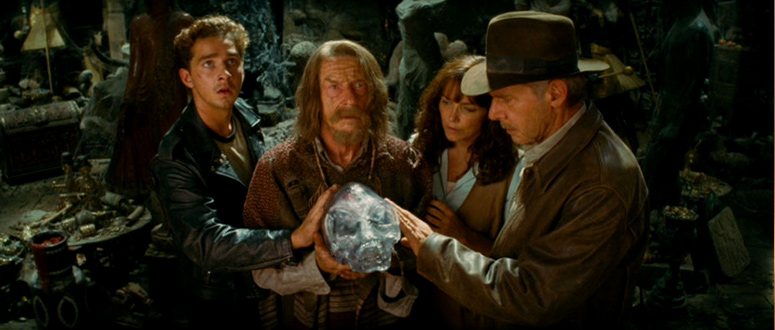
It had been nearly twenty years since Indiana Jones and the Last Crusade came out in theaters when the fourth film premiered. This was the best they could come up with? This was the film that gave us the infamous phrase nuke the fridge because Indy survived a nuclear explosion by hiding in a refrigerator. Our favorite archaeologist deals with the 1950s as he searches for the lost city of Ankakor in South America.  Among the 1950s tropes Indy grapples with include the red scare, bug-eyed aliens, and a greaser who turned out to be his son.

It was great seeing Harrison Ford reprising his role as Indiana Jones and how the adventurer functioned in a different decade. Some of the images from director Steven Spielberg were jaw dropping such as Indiana witnessing an atomic mushroom cloud or a great motorcycle chase on a college campus. But more often than not it felt like many of the filmmakers were phoning it in and taking the easy route. The film is riddled with obvious and needless CG images and stunts, and most of it looked fake. There was little sense of danger in many scenes.

Despite the fact that the script had been worked on forever, it still needed work as the motivations of characters did not make sense. The camaraderie between Indiana and his son was undeveloped and paled when compared to that of Indy and his father in the previous film.

4. Indiana Jones and the Temple of Doom

As the franchise’s only prequel the second Indiana Jones film turned out to be the darkest in the franchise due to personal issues regarding divorces that creators Spielberg and George Lucas were going through at the time. The result was that the film feels mean spirited at times and dated with its misogyny and questionable depictions of other cultures.

It lacked the epic scale of Raiders of the Lost Ark and the filmmakers reveled too much in trying to gross out audiences and with trying too hard to be different from the first film. At times, Indiana Jones and the Temple of Doom felt more like a romantic comedy instead of an adventure film. Also, the MacGuffin Indy hunted for was far less impressive when compared to the Holy Grail or the Ark of the Covenant. What exactly do the Sankara Stones do except glow? The characters were annoying and unlikeable especially Willie Scott. She was supposed to be a sharp contrast to the tough-as-nails Marion Ravenwood from the previous film. But by trying to make Willie the opposite of Marion, the filmmakers turned her into a stereotypical screaming damsel in distress who lacked any substance.

Despite its faults, Indiana Jones and the Temple of Doom has some of the franchise’s greatest action scenes that still hold up to today and are iconic. Ford was great as always, as was the production design and score by John Williams.

3. Indiana Jones and the Dial of Destiny

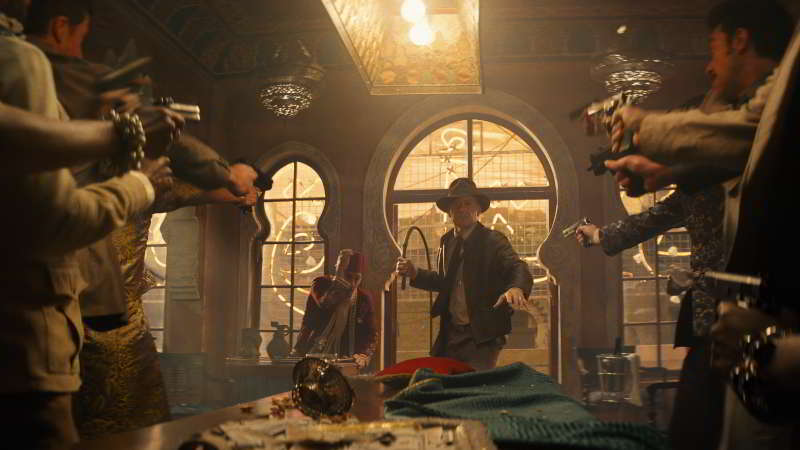
The fifth and final Indiana Jones film has had a mixed reaction from fans. It will take some time to see how it holds up, but for now this is the rank it has earned. There was a lot of trepidation over the film since Spielberg did not direct it and many questioned how an old Ford could believably play a swashbuckling treasure hunter. But the film is an enjoyable send off to the franchise.

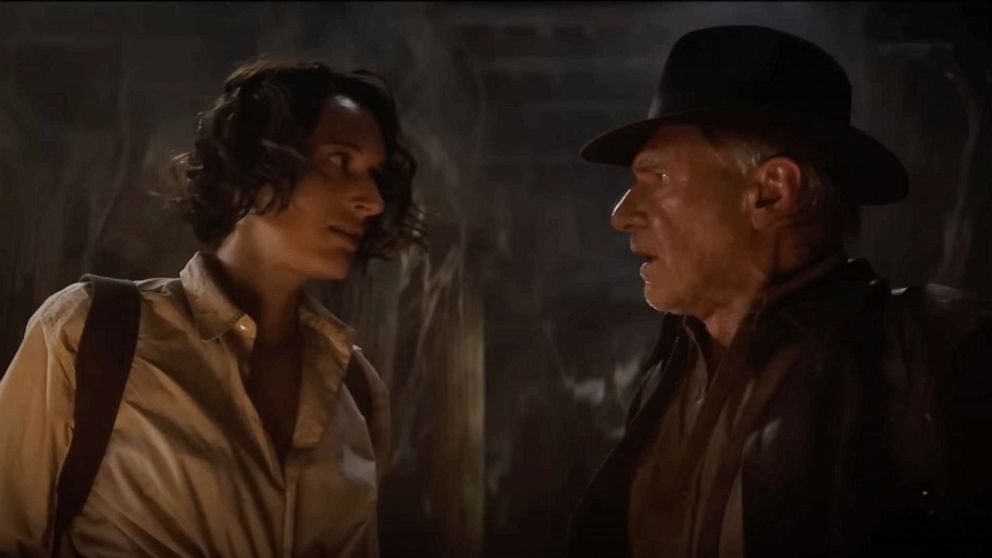
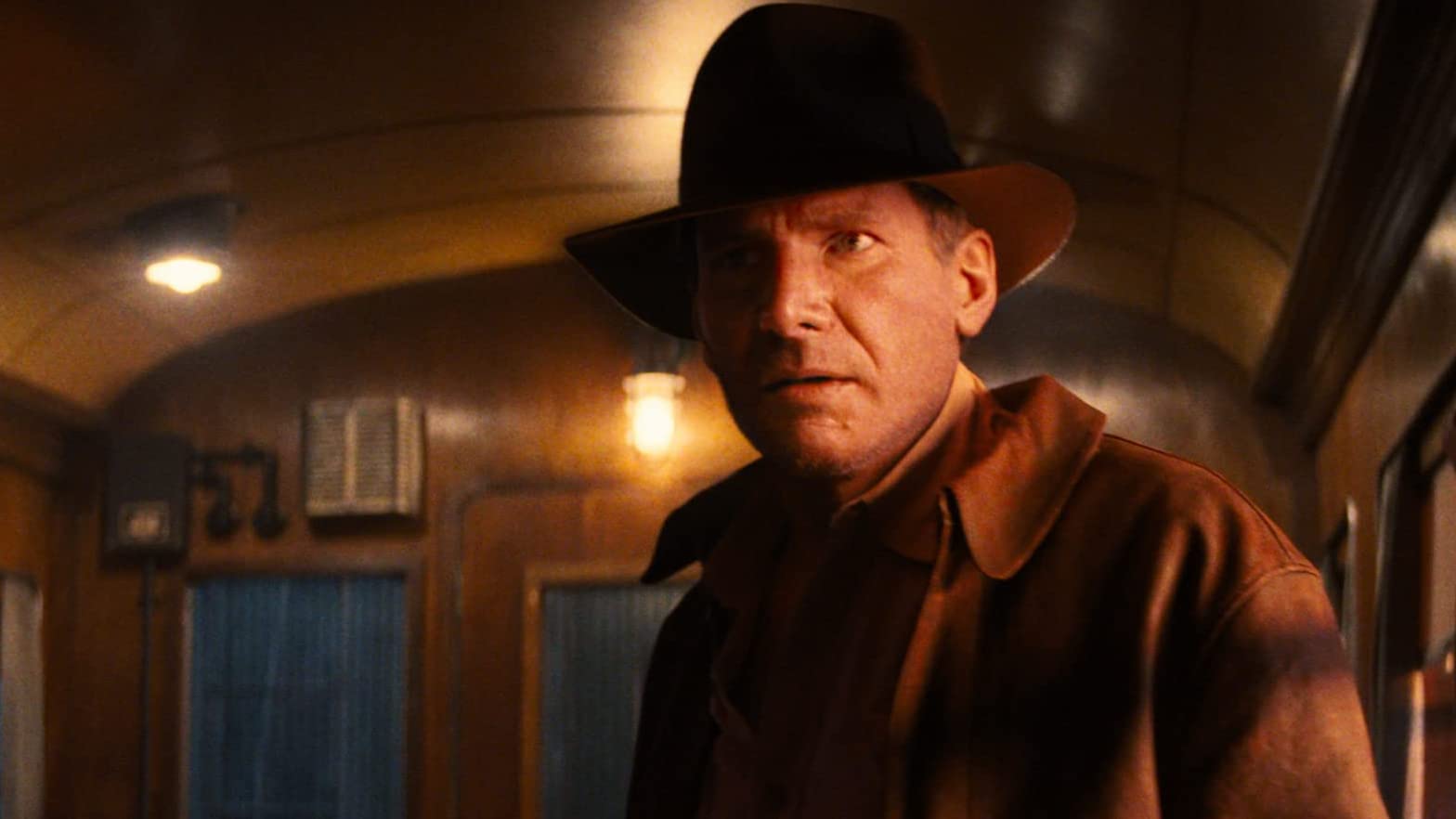
Even though Indiana Jones and the Dial of Destiny lacks a lot of Spielberg’s visual flair, director James Mangold does a fine job with this look at Indiana Jones as a senior citizen in the late 1960s. Embittered over the death of his son which destroyed his marriage and facing retirement, Indiana carries out one final treasure hunt with his goddaughter, which involves time traveling to ancient Syracuse and meeting Archimedes.  Harrison Ford Is Too Old for This Shit – Rolling Stone

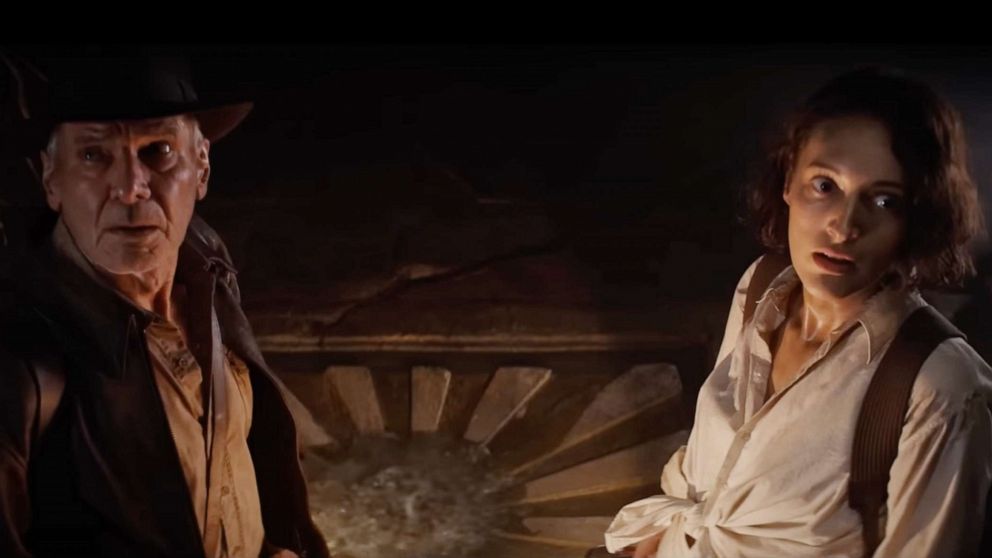
There are some issues with the plot mechanics and its credibility (something that the other films suffer from, such as characters using life rafts to jump from an airplane and other feats that would have killed them). But Ford has some good chemistry with Phoebe Waller-Bridge, who plays his goddaughter and the film has some exciting moments, especially during a flashback scene set in World War II and an intense tuk-tuk chase sequence. Anyone hesitant about the film because of Spielberg’s absence should put doubts aside and see Indiana Jones in his last great cinematic adventure.

2. Indiana Jones and the Last Crusade

After the mixed reaction to Indiana Jones and the Temple of Doom, Spielberg and Lucas went back to basics and delivered a rousing adventure that is nearly as great as the first film. It is also the funniest film in the franchise.

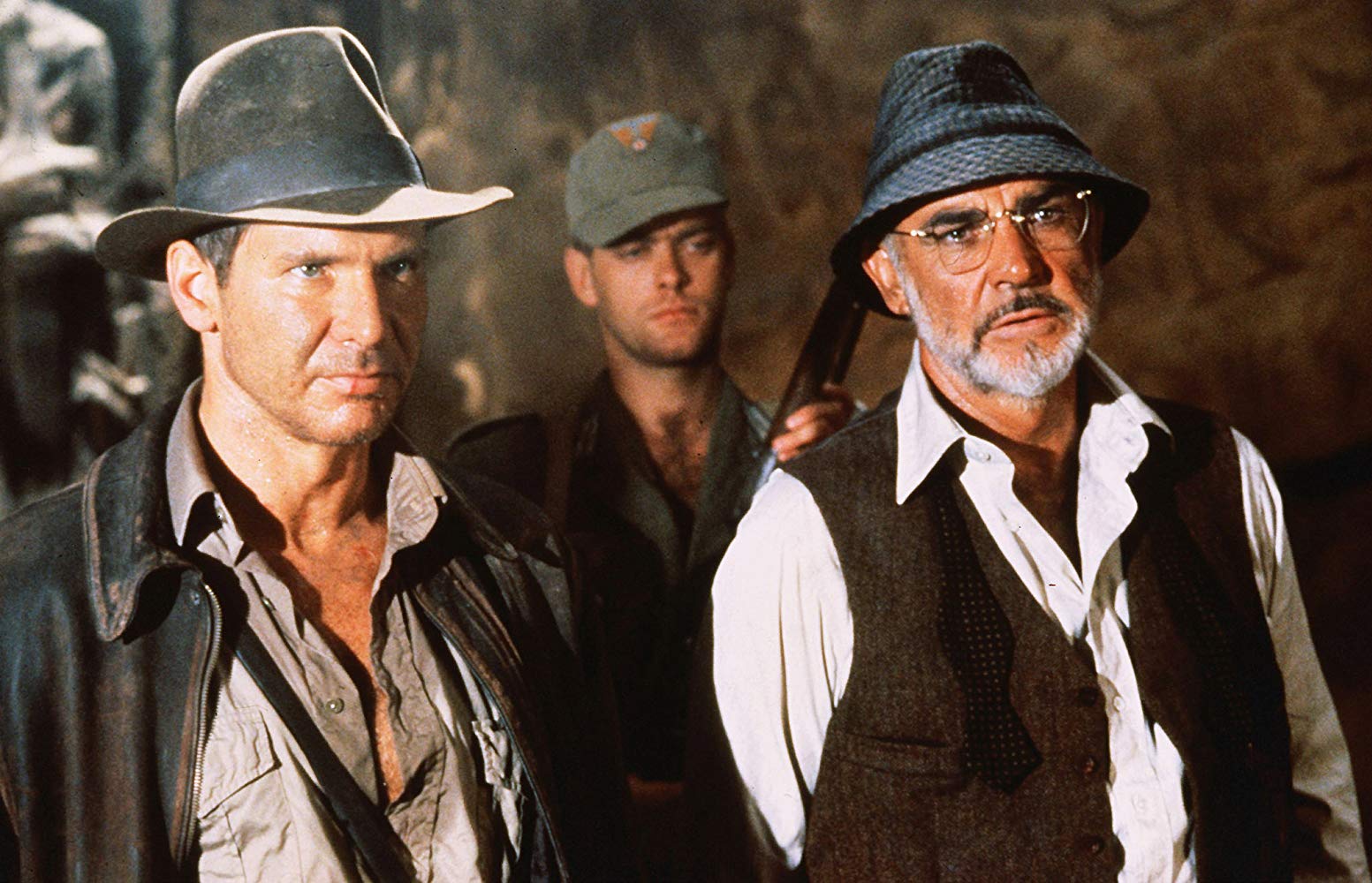
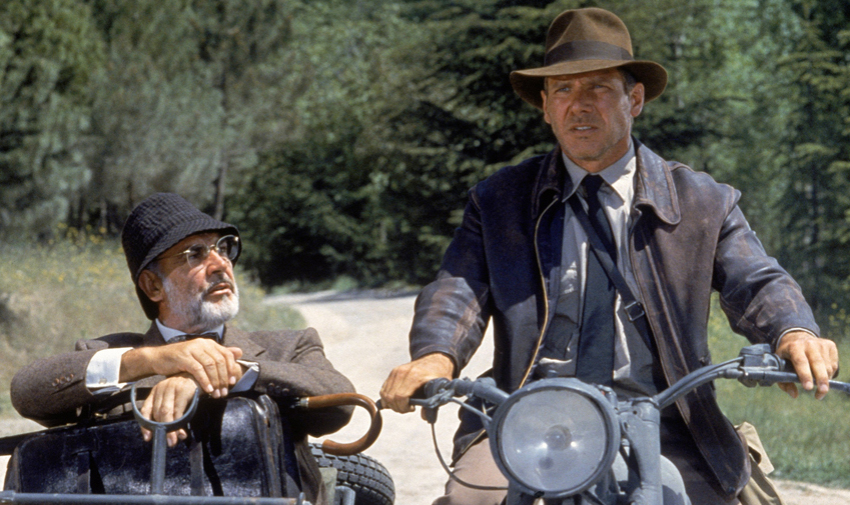
The film opens with a rousing flashback to 1912 which features River Phoenix as a teenaged Indy. After we find out why he fears snakes and how he got his famous fedora hat, the film jumps forward to 1938. Indiana travels to a pre-World War II Europe to find his missing father, who he has not spoken to in some time. Sean Connery was magnificent as Indiana’s father and the two actors share some of the best moments in the franchise thanks to their incredible chemistry.

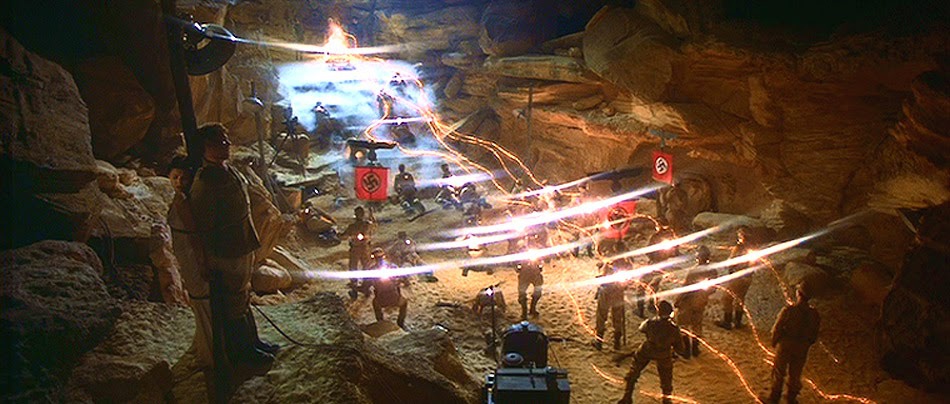
Indiana Jones and the Last Crusade follows some of the same beats as Raiders of the Lost Ark, such as Nazis, intense chases, epic scenery and spine-tingling explorations of ancient sites. Thanks to Spielberg’s skills, a great script and inspired acting, the third film is definitely classic cinema. Oh, be sure to watch the film to the end as it features one of the most beautiful ending scenes ever filmed as Indiana Jones and his companions ride off into the sunset.

1. Raiders of the Lost Ark

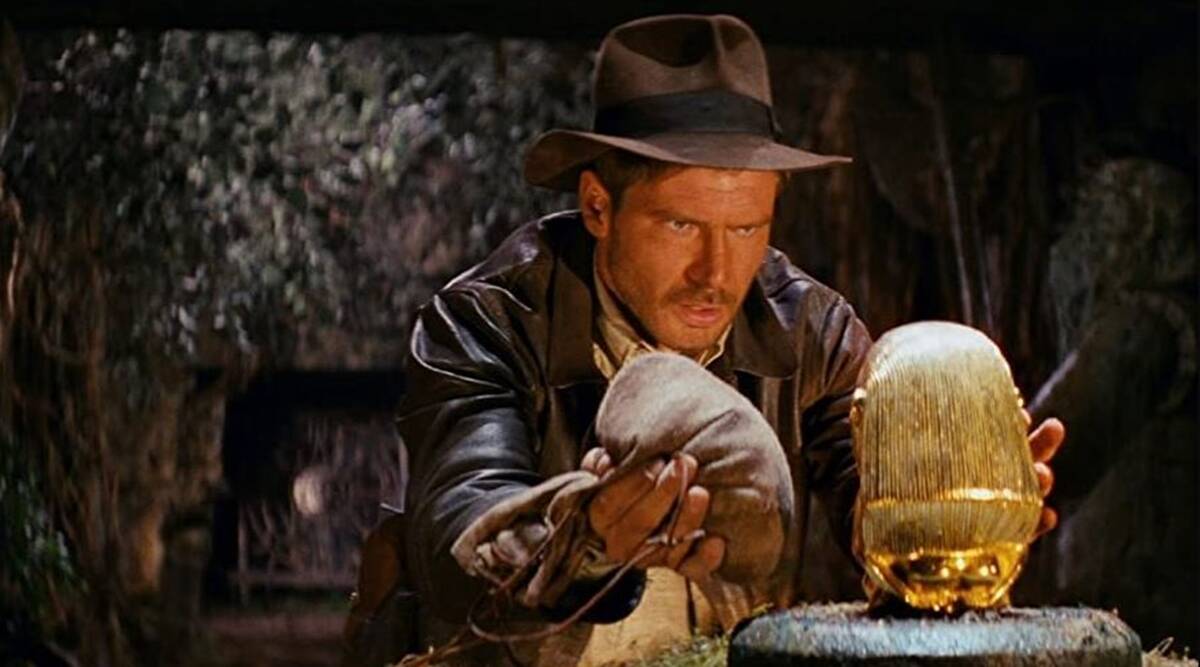
Also known as Indiana Jones and the Raiders of the Lost Ark, this is the first and still greatest Indiana Jones film. When thinking about the recent Martin Scorsese “This is Cinema” meme, Raiders of the Lost Ark certainly applies to that phrase!

Set in 1936, Raiders of the Lost Ark introduces us to Indiana Jones, a two-fisted, globe-trotting archaeologist who hunts ancient treasures. Inspired by the movie serials of the 1930s and 1940s, Raider of the Lost Ark elevated that kind of cinema into the greatest action-adventure film of all time. This was due to the groundbreaking collaboration between George Lucas and Steven Spielberg who wanted to do his version of James Bond. Here’s a bit of trivia, Lucas initially called the hero Indiana Smith and we’re glad the name was changed to Jones since it flows much better!

Spielberg was at his best when directing this monumental film. It featured many of his trademark visual touches like his God light on characters and inventive composition of shadows and silhouettes to showcase characters. Of course, none of this would mean much without a great script, which is what the film thankfully had from Lawrence Kasdan. Each shot was nearly perfect as the level of excitement and mystery increased with each passing second. Raiders of the Lost Ark is true cinematic treasure that has endured through the years and set a standard with adventure films that is difficult to match. That is why it is the best of the Indiana Jones films.

NOTEWORTHY MENTION

Young Indiana Jones and the Mystery of the Blues

During the 1990s, ABC aired The Young Indiana Jones Chronicles, which were historical dramas about Indy when he was a child and a young adult. The episodes had opening and closing segments that starred George Hall as an old Indiana Jones in his 90s telling tales of his youth. In one episode, “Young Indiana Jones and the Mystery of the Blues”, Harrison Ford reprised the role as a bearded Indiana in 1950 who told a story about himself in Chicago in 1920. This episode has been recut into a television film with the same title, but honestly the best part of the episode involved the two segments with Ford.

José Soto

Indiana Jones And The Dial Of Destiny Is A Fine Finale For The Legendary Hero

Harrison Ford returns one final time in his famous role as the swashbuckling archaeologist Henry “Indiana” Jones, Jr. in Indiana Jones and the Dial of Destiny. The fifth film in the Indiana Jones franchise has been in development hell for several years and it seemed that it wouldn’t ever be made.

Many fans were skeptical that the fifth installment would be able to compare to the previous four films directed by Steven Spielberg. Adding to the doubts were Ford’s age (he turns 81 this month) and the mixed reactions to the fourth film, Indiana Jones and the Kingdom of the Crystal Skull. So, the question most of us have is does the film deliver? For the most part, yes it does.

 Indiana Jones and the Dial of Destiny opens with an extended flashback sequence in 1944 where Indiana or Indy is battling Nazis in Europe during the waning days of World War II. Unlike the previous films, there aren’t any title cards that establish the time and place, which was disappointing.

Anyway, Indy and his friend Basil Shaw (Toby Jones) are after a macguffin called the Lance of Longinus, which the Nazis possess. A German astrophysicist named Jürgen Voller (Mads Mikkelson) that is working for the Nazis deduces that the artifact is a fake and tells his superiors about half of another artifact that he possesses. It’s called the Antikythera or the Dial of Destiny and it could help Germany win the war. Before long, Jones and Shaw clash with Voller and the Nazis and are able to acquire the Dial from Voller.

The film flashes forward to 1969 in New York City. Jones is now an old, embittered man who emulates Clint Eastwood’s character in Gran Torino. He is about to retire as an archaeology professor in Hunter College and cannot be bothered to join in the citywide celebrations over the Apollo 11 moon landings. He runs into Shaw’s daughter Helena (Phoebe Waller-Bridge), who is a treasure hunter and archaeology student and wants to acquire the Dial of Destiny, which is in the college’s storeroom. Also interested in the Dial is Voller himself and his henchmen. After the war, Voller fled to the United States and helped NASA with their efforts to get to the moon. Voller is able to steal the Dial and sets out to find the other half, which is somewhere in Europe.

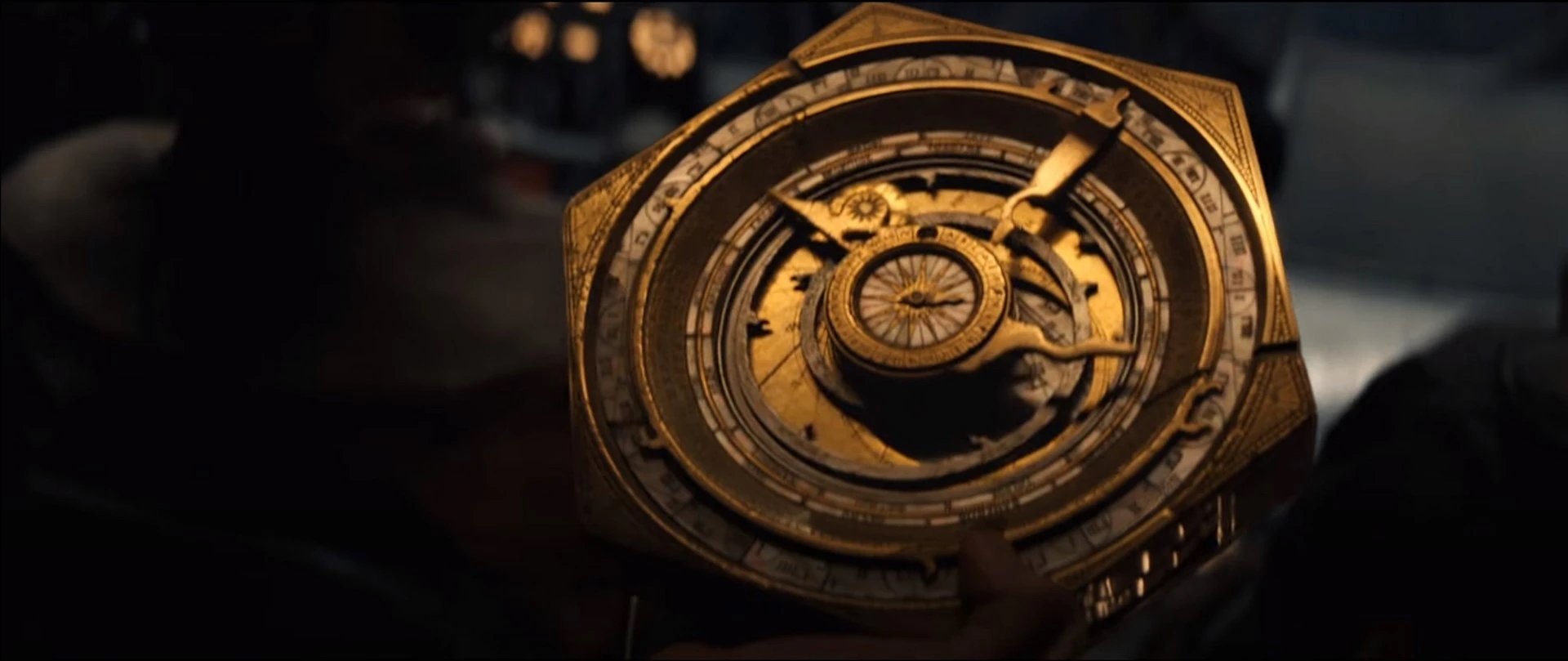
It turns out that the device was built by the ancient Greek mathematician Archimedes, and allows a person to track fissures or cracks in time, which would let that person travel to different time periods. Obviously, Voller wants to use the re-assembled device go back to Nazi Germany and win the war. The film turns into an extended series of exciting chases as Indy and Helena try to find the other half of the Dial as well and stay one step ahead of Voller and his goons.

Even though Indiana Jones and the Dial of Destiny was not directed by Steven Spielberg, the film is still a fun adventure while trying to evoke the spirit of the older films in the franchise. While director James Mangold cannot compare to the great Spielberg, he does an admirable job with this film.

In a way, Indiana Jones and the Dial of Destiny echoes some themes from Mangold’s Logan, in that that film also dealt with an aging hero past his prime who is forced to go on one last adventure. Don’t worry Indiana Jones and the Dial of Destiny is not bleak like Logan, but the themes about aging are well explored. Indy’s age and his lot in life in the late ‘60s may alarm some fans but this honest look at the aging hero in the twilight of his life is a novel theme that had not been explored before in the franchise. On the other hand, his physical feats and invulnerability given his ages does stretch credibility.  

The film is similar to Indiana Jones and the Kingdom of the Crystal Skull in that the macguffin is more sci-fi based, but unlike the fourth film it doesn’t have sci-fi tropes involving aliens and flying saucers. The Dial’s usage was quite astonishing and fit in well with Jones’ world view. It’s too bad there cannot be another film that would make up a trilogy where Indiana Jones sought sci-fi based macguffins instead of the religious ones he hunted in the first three films. Oh well.

 A huge reason why Indiana Jones and the Dial of Destiny works is due to Ford himself. He pours himself wholeheartedly into the role since he knows it is the last time he will play the plucky archaeologist. At this point, Ford is an acting legend that should be treasured and most of us are grateful he was able to don his fedora and leather jacket one last time. The other actors are also excellent in the film including Waller-Bridge and Mikkelson.

The production perfectly captured the look of the different time periods. The special effects, especially the de-aging done for Ford when he played the character in the 1940s was excellent aside from a few quick hiccups. But Mangold was able to keep the action and story moving along to keep us from focusing on the occasional effects flaw.

The only other gripe about Indiana Jones and the Dial of Destiny is that it is a bit long. It tries to capture the feel of the Spielberg films and while it quite can’t do it, the effort was commendable. As mentioned above, the story usually keeps moving and we’re engaged during the ride. However, it does not have silly moments like nuked fridges and is also not afraid to have more grounded and emotional moments for Indy. But don’t worry, once the action starts, Indiana Jones finds his old groove, which is always a delight to watch.

José Soto

The Legacy Of E.T. The Extra-Terrestrial

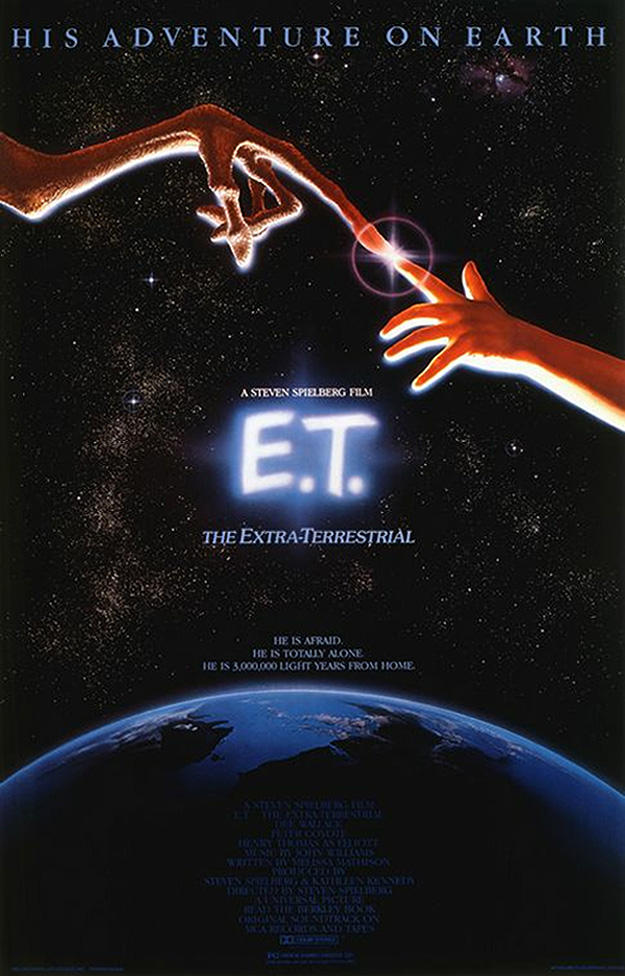
Forty years ago this month, E.T. the Extra-Terrestrial was released in theaters and captured the collective hearts and minds of moviegoers everywhere in 1982. To say it was a cultural phenomenon is certainly an understatement, yet it can be hard to believe for those who were too young to remember or were alive at that time. That is because unlike other culturally relevant properties from that time period like Star Wars, Star Trek, Alien, etc. E.T. The Extra-Terrestrial did not have the staying power in our collective minds.

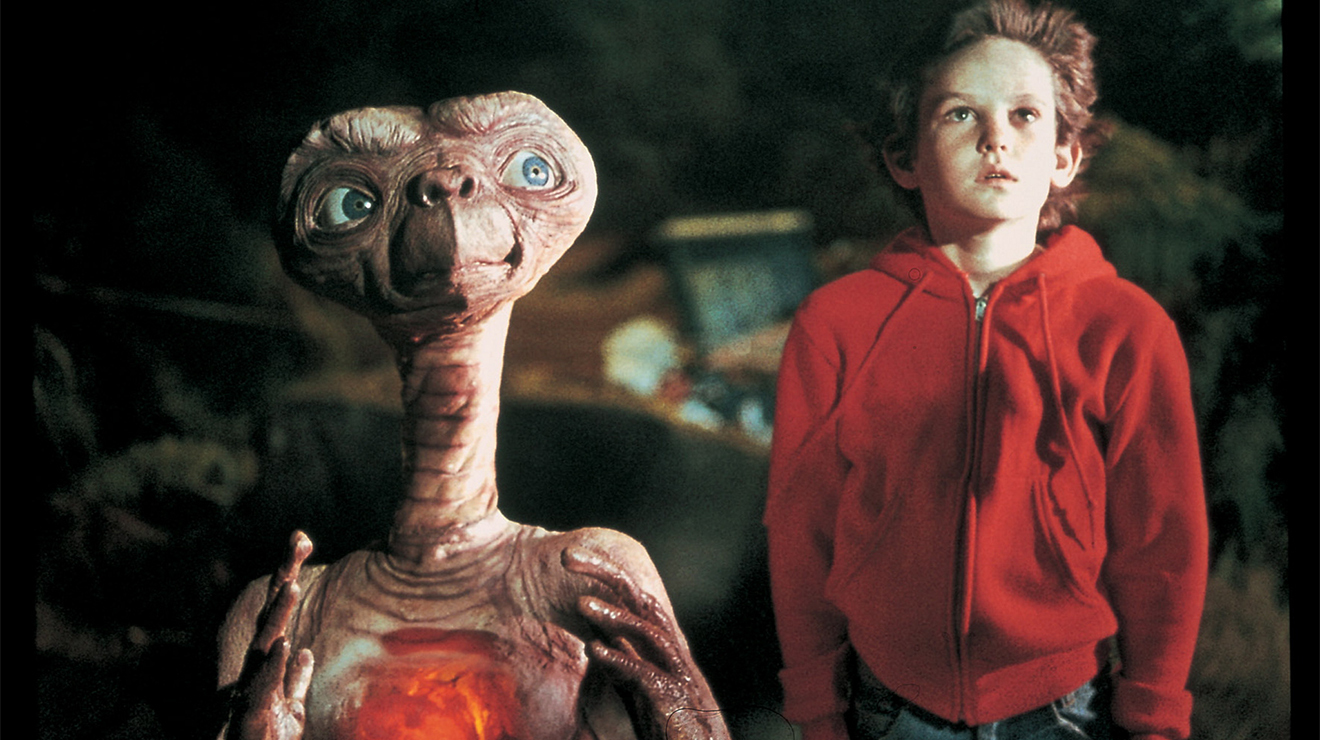
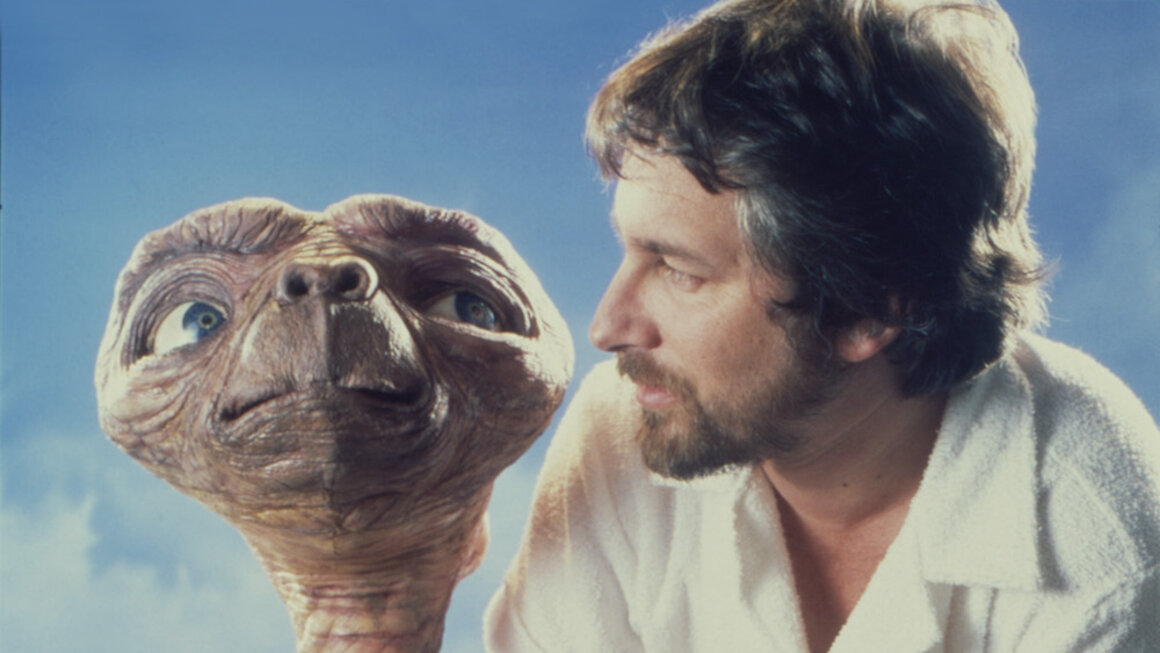
Regardless, the sci-fi film by legendary director Steven Spielberg is a bonafide classic that knows just how to hit a viewer in the feels. Spielberg was in top form (and remains so to this day) and received a well-deserved status as a master storyteller with his tale of a stranded alien being in the forests of California who befriends a lonely boy, Elliott (Henry Thomas). As Elliott introduces the being he calls E.T. to his suburban lifestyle and pop culture, he does what he can to keep E.T. hidden from the outside world while E.T. tries to contact others of his kind to rescue him. The film boasted many classic Spielbergian tropes and themes, such as a reverance for middle-class childhood while exploring family trauma, examing a magical sense of wonder about the world through the use of lighting, pop cultural references, and of course, those famously long natural takes that define a Steven Spielberg film.

E.T. the Extra-Terrestrial is a fairly simple tale about an unlikely interstellar friendship or as a sci-fi version of a boy and his dog tearjerker, but the film excels in emotion and Spielberg pulled out all of his skills to wrench our heartstrings. He was aided by an exemplary filmmaking team which included special effects guru Carlo Rambaldi, a deeply emotional script by Melissa Mathison, genuine acting by the cast, breathtakingly beautiful cinematrography by Allen Daviau, and John Williams brilliant score. The master composer won a well-deserved Oscar for the film as the film won several technical Oscars. Unfortunately, E.T. the Extra-Terrestrial failed to win the major Academy Awards like Best Picture or Director because by the time the awards ceremony came around, the allure of the film had worn off and the Academy instead bestowed the major awards to more standard fare like Gandhi. Go figure.

Perhaps if E.T. the Extra-Terrestrial had won the major awards it may have been more remembered these days. Another reason could be because the film was overhyped by media and in-your-face marketing and merchandising during that time and it finally burned out its good will after some time. It may be hard to imagine today but think of the constant merchandising of Star Wars, the Marvel and DC films, and Jurassic Park and picture that for one film that dominated the box office for 16 weeks straight. This is something that would be nearly impossible to pull off today in our fractured society. Many films released that summer in 1982 fared poorly because E.T. the Extra-Terrestrial sucked out all of the air from the competition. What is ironic is that many of those films are better remembered today and are considered classics in their own right. These include Blade Runner, Star Trek II: The Wrath of Khan, Tron, and The Thing.

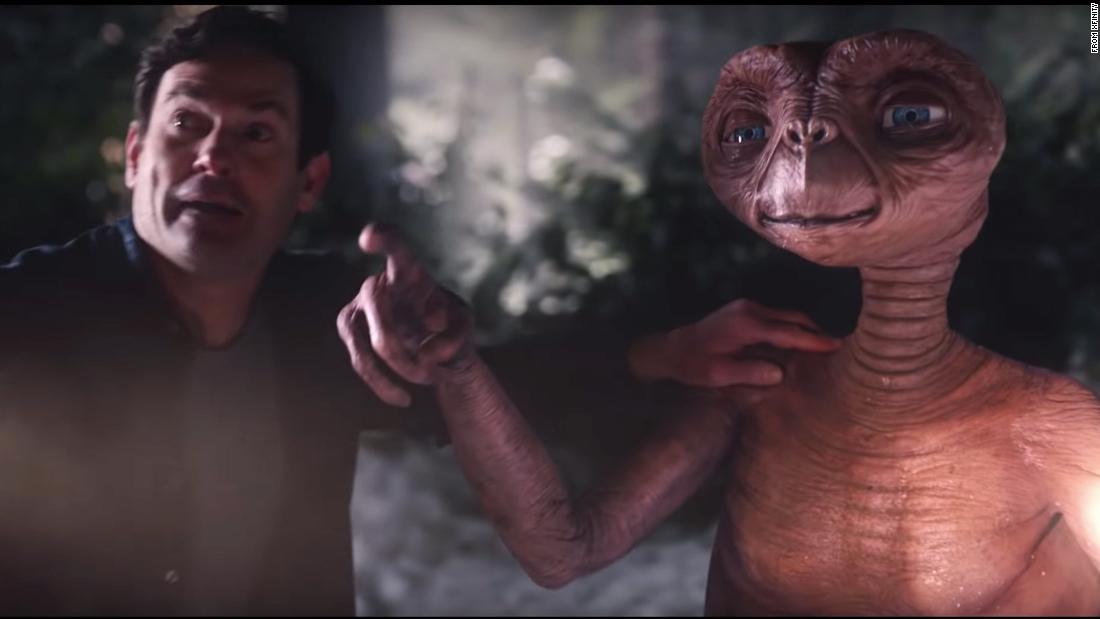
Yet, another factor that probably impeded E.T. the Extra-Terrestrial’s legacy is that no sequel film or reboot was ever made to keep the film in the public consciousness. The closest instances it received for follow ups were a sequel novel by William Kotzwinkle called E.T.: The Book of the Green Planet, a well-received 2019 Xfinity commercial featuring a now-adult Henry Thomas, who is reunited with E.T., and then introduces the alien to his family, and a theme-park ride at Universal Studios Florida, Japan and Hollywood (the Hollywood and Japan versions closed down years ago).

As to why Spielberg did not adapt this novel or went ahead with a film sequel, the answer is that E.T. the Extra-Terrestrial holds a special place in his heart and he did not want to dilute it with follow ups. However, he did consider it. He and Mathison wrote a treatment in 1982 called E.T. II: Nocturnal Fears, which would have had Elliott and his friends kidnapped by evil aliens and E.T. rescuing him. But as we all know, Spielberg abandoned the idea and moved on to other projects. The last time E.T. was actually seen in theaters was when he and members of his race appeared in a gag cameo during Star Wars Episode I: The Phantom Menace.

Even though the film is not in the forefront of the public these days, it is still fondly remembered and still commands attention as seen with the positive word of mouth from the 2019 commercial and successful re-releases in theaters and home media. During its 20th anniversary the film was re-released and Spielberg altered the film with improved special effects, deleted footage and digitally altering a scene where federal agents who originally brandished guns and threatened E.T., Elliott and his friends, now had walkie-talkies instead. Spielberg has changed his mind about the alterations and encourages that only the original film be viewed.

With so many properties commanding our attention these days, it is so easy to overlook E.T. the Extra-Terrestrial, which would be foolish. The film is a cinematic wonder that should be required viewing for film buffs, genre fans and families. Simply put, E.T. the Extra-Terrestrial is a perfect showcase for the artistry and magic of Steven Spielberg.

The Blue Ending Of A.I. Artificial Intelligence

One of the most debated moments in the underrated Steven Spielberg classic, A.I. Artificial Intelligence, was with its ending. When the film first premiered twenty years ago, many viewers came away thinking that Spielberg gave the film a happy ending. But that could not be further from the truth. In fact, A.I. Artificial Intelligence turned out to be Spielberg’s first genre film to take on a more mature and downbeat tone, which reflected many of his non-genre films. Spollers ahead.

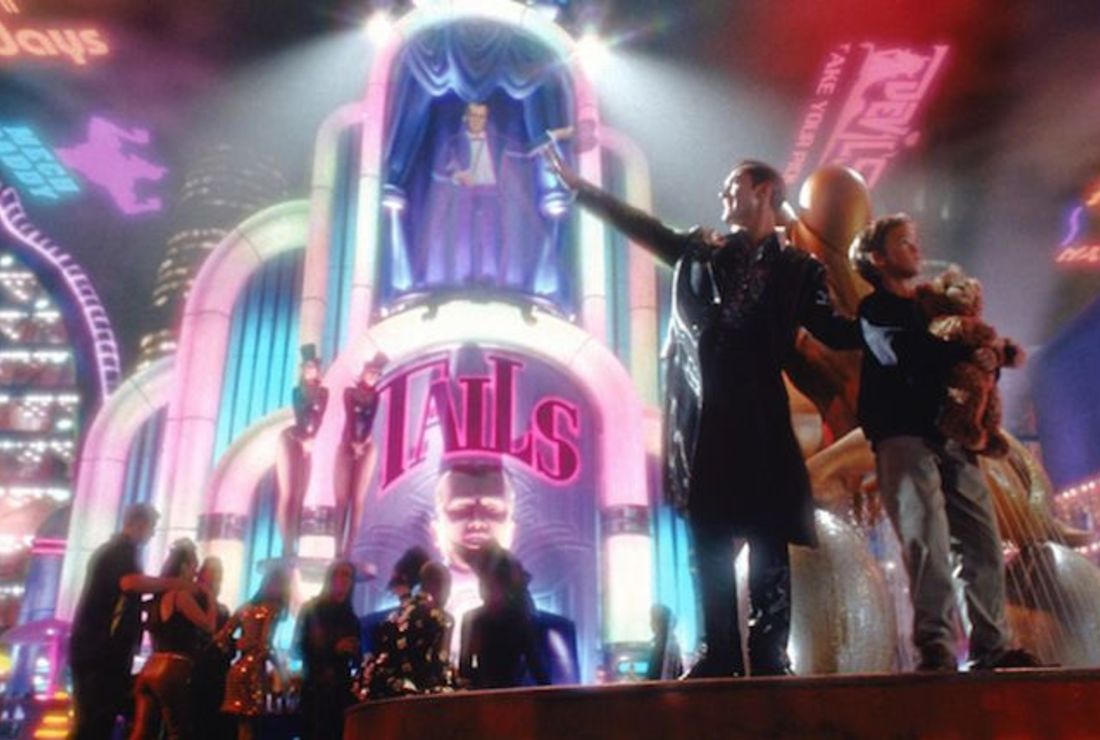
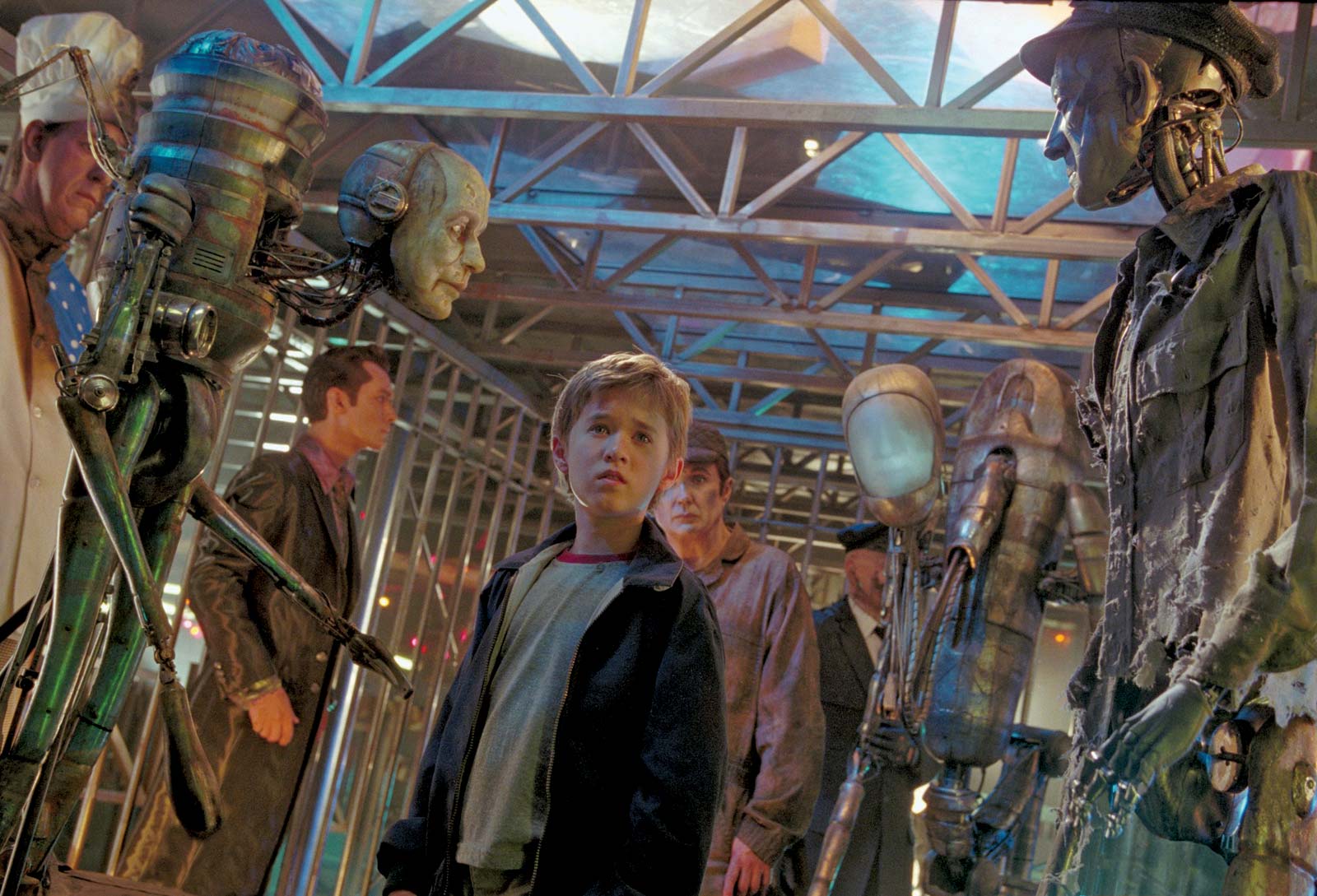
A.I. Artificial Intelligence starred Haley Joel Osment as David, an android or a Mecha built to be a surrogate son for a couple (Frances O’Connor and Sam Robards), whose son, Martin (Jake Thomas) was in a coma. David’s programming was altered so that he could experience emotions and be imprinted onto his “mother” Monica. This created problems when Martin recovered and sibling conflicts led to David being abandoned by his mother.

For the rest of the film, David embarked on a frightening and fantastical quest to find a mystical Blue Fairy, who he hoped would turn him into a real boy so he could be loved and accepted by his mother. David became obssessed with the Blue Fairy thanks to his mother reading him Pinnochio earlier in the film. He met many Mechas in his journey, including the male prostitute Mecha, Gigolo Joe (Jude Law), who helped David with his quest. Eventually, he made his way to a partially submerged Manhattan (climate change and rising sea levels have claimed many coastal cities in the future setting of the film) where he became trapped underwater in a vehicle. It is revealed that he is in Coney Island, which was completely underwater, and he discovered a statue of a Blue Fairy. Trapped in the vehicle, but with the statue in clear sight, David begged her non-stop to be turned into a boy, and that is the first ending of A.I. Artificial Intelligence.

The film’s coda took place two thousand years later. The Earth was turned into a frozen wasteland and humankind is long extinct. Their only legacies being crumbling infrastructures and Mechas who have evolved into alien-like beings. David was found frozen and revived by the future Mechas. After they downloaded his memory files, they granted his wish of reuniting with his mother by cloning her. The catch was that the clone can only live for one day, yet she is able to provide the unconditional love and acceptance that the original Monica never could. Once she died at the end of the day, a content David allowed himself to sleep and go to the place “where dreams are born.”

This is a very ambigous ending, although on the surface it can be interpreted as a happy ending. After all, although David’s wish of becoming a real boy is unfullfilled, he attained his ultimate goal of being loved by his mother, the reason for wanting to be real. But it came at a cost. The clone of his mother died, and it is implied that he died, too, in a manner of speaking. Once he achieved his desire, his reason for existing was gone because the clone could not be revived and the cloning process cannot be repeated. So, it’s possible that he shut down his system in a type of suicide. Or maybe he took one step closer to becoming real. At one point in the film, he met his creator (William Hurt), who told David his ability to feel love and go beyond his programming by believing in abstract and mystical concepts proved that he has evolved. Then again, this could just be faulty or corrupted programming that left poor David in a loop.

It can be difficult to watch A.I. Artificial Intelligence because of the emotional torture David underwent in the film and his ultimate fate: left alone in a frozen world; his only companion being a semi-sentient super toy called Teddy. Without his mother, why would he want to continue existing? An irony here is that his Teddy also seemed imprinted onto David, but he largely ignored the toy If David did indeed die, then Teddy is the one to pity since by the end of the film, he is the last survivor, or did he shut himself down, as well?

At the second end of the film, David is given a false copy of a mother who was not able to love or accept him and while he was happy, this was just a one-time fantasy. He was never able to attain any of his dreams and was incapable of realizing this. In fact, David had an unhealthy obssession with his desire, which indicated an inability to move past his imprinting. In the end, David was unable to grow and move on past his parent.

While the ending may seem like a bittersweet wish fullfillment, and many argue it was typical for Steven Spielberg film, the conclusion up being a hollow victory for David. It is also sad to see that David was not able to realize or accept his circumstances and that he probably shut himself down instead of moving on. The ambigous ending of A.I. Artificial Intelligence is certainly open for discussion, but its downbeat and blue tone is undeniable and a testament to Steven Spielberg’s growth as a filmmaker.

José Soto