2012 Doomsday Scenarios: Month Two

We’re in the middle of the cold and flu season but the next big pandemic is just around the corner. In fact, many doctors and scientists say we’re overdue for one.

Doomsday Scenario No. 11: The Killers Within
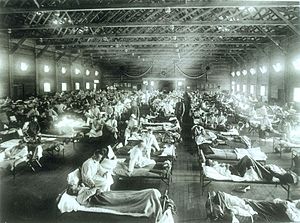
The idea of a pandemic is terrifying and in recent years we’ve dodged the bullet with the onset of AIDS, Ebola, SARS and recently with the H1N1 virus. The last really major pandemic that humanity faced was the Spanish Flu that occurred during World War I in 1918 and killed roughly 50 to 100 million people worldwide. The disease was so widespread and lethal to soldiers that many feel that the disease helped end the war. It is still considered to be the worst modern pandemic to strike humanity. The other horrible pandemic that threatened humanity further back in history was the Black Plague that wiped out a third of Europe’s population in the middle ages. But history is littered with waves of pandemics from assorted diseases like smallpox, typhus and many flu variants. Due to medical advances, we as a whole have been lulled into complacency until very recently. But recent events show that we are still vulnerable. Many fear that soon our antibiotics and other medicines will fail and we’ll be vulnerable to mass death just as our ancestors were.

Add to this fear is the specter of biological terrorism. This threat is all too real as seen with the anthrax terror attacks in 2001. It’s very feasible that some nut can obtain a rare flu strain or a manufactured disease and find a way to spread it to the populace.

Quarantines and Breakdowns

It’s all too easy for our society to fall apart in the wake of a deadly pandemic if a cure or treatment isn’t quickly found. With modern transportation, diseases can spread rapidly and before the medical community is fully mobilized, the contagion could have manifested everywhere.

Social norms will be frayed as the disease spreads. People will demand quarantines and closed borders but that won’t do anything to stop the disease. Nevertheless, fear and distrust will worsen with the new migrations of those wanting to avoid contracting the disease. Unfortunately, many of these refugees will be carriers themselves. Additionally governments will try to futilely treat victims and provide adequate health services. It’s easy to imagine hospitals and care centers guarded by mobilized soldiers, who would also enforce curfews and quarantines. But eventually public services will shut down as the death toll climbs. With fewer and fewer guards, cops and soldiers to enforce the law, anarchy follows and thugs will gain control. Once the disease has run its course, there won’t be much of anything left. Humanity will be forced to rebuild.

Fictional Examples Of The Aftermaths
Such fears have been the basis of many science fiction films, books and shows that postulate on the impact of a true pandemic today and the aftermath. The basic storyline usually goes like this: a disease wipes out 99% of the human (and sometimes animal) population. A handful of survivors then struggle to rebuild civilization. Other times, the story is about the valiant efforts to contain an exotic disease before it spreads.

Some popular books that deal with this include Stephen King’s epic The Stand,  Michael Crichton’s The Andromeda Strain, Richard Matheson’s I Am Legend, Max Brooks’ World War Z , George R. Stewart’s Earth Abides, and most recently with Clemens P. Suter’s Two Journeys.
There are many films that deal with this subject. For example there are three adaptations of I Am Legend (the first being The Last Man On Earth and most recently the 2007 Will Smith version), which is about a plague that turns most of humanity into vampire-like creatures. In 28 Days Later (and its sequel) a man-made virus is accidently released that turns its victims in the U.K. into savage, zombie-like killers. Then there is George Romero’s film The Crazies about a bio-weapon that induces homicidal madness. The Andromeda Strain, about a scientific team trying to eradicate a supposedly extra-terrestrial disease, was made into a film released in 1971 and a recent mini-series. A similar approach was utilized with the 1995 film Outbreak but the disease was less exotic in origin but just as deadly. The Stand was made into a well-received mini-series in 1994 and there are efforts to have a remake done. Twelve Monkeys shows us a future where a disease has decimated the world and the protagonist time travels back to modern times to discover how the disease started. The most recent film about pandemics was Steven Soderbergh’s Contagion, which covers in dismaying detail how our society unravels with the onset of a killer virus.
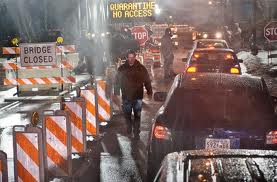
With television there are few examples of a modern pandemic wiping out humanity. Two that come to mind are Jeremiah, which is based on a Belgian comic book, and starred Luke Perry as the title character. In Jeremiah, a plague has killed off most adults in the world and it picks up a generation later when the surviving children have now reached adulthood. The other one is BBC’s Survivors, a remake of a series produced in the 1970s, and the premise was about the usual plague survivors finding a way to work together and rebuild society. UPN’s The Burning Zone wasn’t about a post-apocalyptic world but rather about a team of bio-agents who dealt with deadly, unusual diseases including some engineered by a mysterious group who considered humanity to be vermin that needed to be eradicated by diseases.

Like many doomsday scenarios there isn’t any way to anticipate the onset of the catastrophe.  A pandemic could arrive tomorrow or in a few years, but it will happen. So it pays to be alert and safe though and to wash your hands often.
2012 Doomsday Scenarios: Month One

Okay it’s 2012 now, supposedly our final year according to the Mayan calendar. Earth was put on notice last week with that big solar flare that could’ve disrupted our satellites (but thankfully didn’t). With all the hoopla about the end of the world, one has to wonder if this is our swan song, how will it end? Here at Starloggers, we’re going to examine the possible doomsday scenarios each month as a sort of countdown.

Doomsday Scenario No. 12: The Aliens Are Coming, The Aliens Are Coming

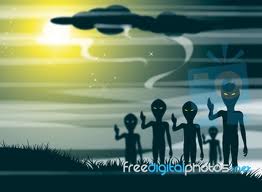
Whether the E.T.s are friendly, cuddly visitors or blood thirsty, destructive invaders, it can’t be denied that once they do arrive life as we know it is over. So even if the first contact is benevolent our isolation in the universe is gone and with it the way we see ourselves. This scenario would bring about an end of our world. These are the possible scenarios:

  • Friendly, curious neighbors come by to say hello: Think of E.T. or Starman or the alien greys from Close Encounters Of The Third Kind. They mean well, they’re just explorers but their arrival is nonetheless disruptive. A variation of this scenario is explored in Carl Sagan’s book Contact (and film based on his work), where just the radio signals from another star changes our society.
  • We’re invited: Continuing to look at Contact, the aliens willingly or unwittingly give humanity the technology to travel to their world. This theme is also seen with the film Stargate and its TV shows, the John Carter books and Adam Strange in comic books.
  • The Enforcers: The gist of this scenario goes like this, aliens make first contact with humans. But we’re given a stern warning to clean up our act and play nice otherwise either  A) we can’t join their club or B) they’ll wipe us off the map. Option A was presented in Allen Steele’s Coyote universe books and option B was best shown with the classic The Day The Earth Stood Still.
  • Caught up in an interplanetary conflict: This is the plot for those Transformers films. We’re standing by innocently in our little blue world obsessed with nonsense like taxes, the presidential election and Snookie until BAM! A bunch of aliens from two different sides arrive and duke it out, using our planet as a battlefield. This also happened in the book The Last World War and the Aliens Vs. Predators films.
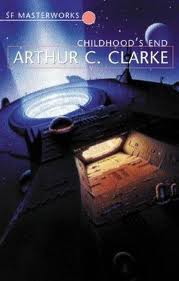
  • Aliens with a mysterious agenda: Most recently seen with the V series but a terrific example is Arthur C. Clarke’s novel Childhood’s End. What happens is that aliens arrive in mammoth motherships over major cities. They claim to be peaceful and want to help humanity but have another agenda they’re keeping from us. With V (the original show, the remake was pretty vague–could be why the show failed) the aliens wanted our water and us for food. In Childhood’s End the mysterious Overlords arrived to shepherd in our next evolutionary stage and move our descendants into the cosmos. Another example is that show from the late ’90s Gene Roddenberry’s Earth: Final Conflict, where the mysterious Taelons arrive on Earth bringing an era of peace but have secret motives for coming to our world.
  • This Petri dish Earth or we taste like chicken: The first V show and mini-series fit this bill. And if the UFO fanatics are to be believed, alien greys come to our planet to create human/alien hybrids and to conduct painful, invasive experiments on humans. On the big screen, this was best shown with the underrated film A Fire In The Sky.
  • INVASION: The tried and true plotline of alien contact. Aliens arrive in huge ships and proceed to stomp us into smithereens until the heroes in the third act find a way to beat them. Examples in film, shows and books are numerous and include War Of The Worlds, Independence Day, Battle: Los Angeles, Footfall, the Worldwar books, etc. A variation of the invasion scenario is the clandestine invasion where the aliens slowly infiltrate us until it’s too late. Check out the shows Threshold,  The X-Files, The Invaders, and First Wave (this invasion scenario is probably prevalent on TV for budgetary reasons) as examples. On film the most famous example is Invasion Of The Body Snatchers.

That’s one look at how 2012 could the end of the world as we know it (apologies to R.E.M.). One month down, eleven more to go; be prepared.

Special thanks to GEO for his contribution

Digital Comics Rising

It’s pretty obvious that the world of digital comics is expanding at a phenomenal rate. As tablets and smartphones become more commonplace it won’t be too long before the number of readers of digital comics could eclipse that of regular paper comics.

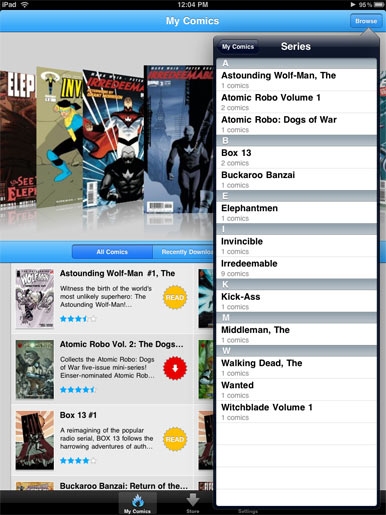
Companies like DC and Marvel sell digital downloads and even offer free downloads to sample their comics. And it’s very easy to download comics. Just download an app with Comixology, iVerse Media’s Comics + or even from comic book companies themselves. In fact, Marvel, DC, IDW, Dark Horse and others also offer free apps.

After downloading the apps, just sign up for a free account. Readers are taken to the sites’ main menu where they can buy comic books. There are literally thousands of titles to choose from, no more running around to different comic book stores to find that elusive issue that is sold out everywhere. A simple search button will yield instant results. At this point the sites don’t have complete collections but the library is growing so it won’t be inconceivable to have a complete collection of Fantastic Four digitally.

Once they’re downloaded, the comics go into the cloud so they can’t be lost even if you’re device is damaged. Anyone can go into a friend’s laptop or desktop and view their own comics. While comics can be read on traditional computers, reading them on mobile devices is the way to go becausenow the digital comics are as portable as regular paper comics. What’s more is that images can be enlarged to better appreciate the art and a simple swiping of fingers allows page turning to be easier than regular comics. Plus readers don’t have to worry about being careful with reading mint comics and the online comics don’t have any ads to skip over.

Before buying comics, readers are given a preview of a couple of pages to sample the comic. This can be a disadvantage to regular paper comics where a reader can conceivably skim through the entire issue before deciding to buy the comic. But many times, companies offer several-page previews or even an entire first issue which gives one a better idea of what they’re going to buy.

These free downloads are an excellent way to preview comics or characters. DC jumped at this opportunity by offering downloads of popular characters and calling them for example Flash 101, which offers origins and first appearances of characters, complete with cover galleries. It’s a great introduction for new readers and DC should use this concept more with their lesser known characters.  One can only wonder why Marvel isn’t doing this.

DC certainly has the edge when it comes to digital comics. It seems as if they wholeheartedly embraced the concept especially when they launched The New 52 earlier this year when they relaunched their titles on paper and digital on the same day. These digital comics revived DC’s sales, in fact, for September 2011 they were the only company to have reported a sales increase of 1000% that is simply incredible.

However, not all is perfect with digital comics. To really compete, digital comics must offer more for the same price. For example a paper comic is $2.99 or $3.99 and that is supposedly due to production and print costs. Then why are online comics the same price? Sure if one is patient, individual issues usually drop in price weeks later, but why should the costs be the same on the first day of issue? If companies are to charge the same price then incentives should be offered. This could include creator commentaries, scripts, galleries and sketches. The comics should have a toggle button pencil inks and even one to remove the word balloons so readers can really appreciate the artwork.

Companies need to take advantage of the interactive features that are possible with online comics. One thing that can be done is to include live, real-time reader comments and updates. This means that a reader can finish a book then be able to comment on the issue which will show up immediately in that book’s commentary section.

While currently downloaded comics offer suggested links to similar titles, the comics should offer a link to a superhero homepage, that is that homepage would explain who is the character, show maps and galleries and databases on characters and story arcs. In DC’s case, offer a link to their 101 introductions or include it with the initial download of a particular comic. Annuals should be annotated with sound f/x which could be an incentive to buy them.

Perhaps the Justice League annual, the deluxe edition, can have voice actors, CG effects, sound effects, original music composed and conducted for the annual; the penci/inlk/color/word ballon toggle, interviews with the editor, writer, artists, dropdown reader commentary (the letters page), link to the Hall of Justice where you can get a converged version of the 101s, like Superman 101 will present not only comics, but TV shows, animation, gaming, trailers, and movie versions. Also polls asking for opinions of a particular issue, character, or villain, etc.
 
Also, DC Universe online should converge with the New 52. And of course, any new mass media creation should be cross compatible with other media, meant to tie unto an integrated universe. 
 
They could have started with the Green Lantern movie and linked him with the future formation of the Justice League. DCUO could have merged the Ryan Reynolds GL into the game. That’s the big picture examples of how digital comics can further evolve.
 
Check out this video from the annual big idea conference TED, which stands for Technology, Enternatinent, Developers:


Here they show what an ebook can do. DC & Marvel really should exploit the best that tech has to offer to show that a superhero story can envelope a convergence of media.

There is still room to grow with digital comics. Perhaps some of these suggestions could be utilized to fully realize digital comics’ potential. In the end this could be what saves comics.

José Soto and GEO

Top Ten Butterfly Effects

One theme that runs through many time travel stories is that of the Butterfly Effect. Most famously demonstrated in Ray Bradbury’s short story “A Sound of Thunder” where time travelers go back to prehistoric times on a dinosaur safari and inadvertently change the future by carelessly killing a butterfly in the past. The most recent example of the Butterfly Effect is in Stephen King’s newest literary release 11/22/63; in that book the assassination of John F. Kennedy is prevented resulting in a radically altered timeline.

This list will cover some of the best Butterfly Effects presented on several media that I’ve seen or read (sorry haven’t read Lest Darkness Fall or The Time Ships yet), and are based on Effects directly due to time travel and the amount of time spent exploring those altered worlds.

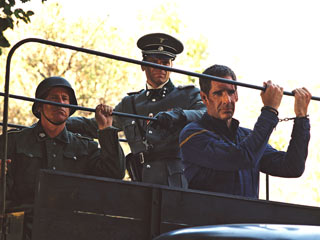
10. “Storm Front, Part I & II” from Star Trek: Enterprise; the fourth season opener concluded the maligned and confusing temporal cold war storyline. Captain Archer and the Enterprise crew are trapped on Earth during World War II in a timeline altered by aliens. This resulted in the Nazis being more technologically advanced and occupying parts of the U.S.

9. “Turn Left” from Doctor Who; the episode examines what would have happened if Companion Donna Noble never met the Doctor. It’s a grim timeline that features the deaths of the Tenth Doctor, Martha Jones, Sarah Jane Smith, Torchwood and Britain under martial law.

8. “Year Of Hell, Part I & II” from Star Trek: Voyager; the crew of the lost starship Voyager stumble upon an obsessed alien intent on using time as a weapon in his region of space then as a means to restore his wife after utilizing the weapon erases her from history. The Voyager crew literally go through hell as they try to track down the alien and restore the timeline. It was so well done many fans grumbled when things went back to normal!

7. Flashpoint; The DC Comics mini-series and its spin-offs has the Flash preventing his mother’s death while time traveling, which forever alters the DC Universe. First the Flash is trapped in a nightmarish, violent version of the DC Universe with many altered heroes and villains then the storyline concludes with the creation of the New 52 titles running today with updated versions of the DC heroes.

6. “The Hanged Man” from Journeyman; it’s a short-lived series from 2007 that in a similar vein to Quantum Leap had the hero (reporter Dan Vasser-played by Kevin McKidd) uncontrollably time traveling and changing history. In this episode, Dan leaves behind a digital camera in 1984 that is reverse engineered. When he returns, not only is technology more advanced but his young son is erased and instead has a daughter, leaving him with a deep moral dilemma.

5.” Profile In Silver” from The Twilight Zone of the 1980s; the late Lane Smith portrays a history professor who goes back in time to study the assassination of his ancestor, John F. Kennedy, and winds up saving him. This of course begins a cataclysmic chain of events due to time trying to compensate for the alteration. In other words World War III is about to erupt. In true Twilight Zone fashion, the ending is a real twist.

4. The Guns Of The South; Harry Turtledove’s masterpiece is about what happens when Confederate soldiers are armed with AK-47s by time-traveling racist white South Africans. Obviously this turns the tide of the Civil War in the Confederate’s favor and readers learn that Lincoln loses re-election, Robert E. Lee becomes president of the C.S.A., the U.S. gets into a war with Britain and the Confederacy becomes a technologically advanced nation.

3. The Age of Apocalypse Storyline from the X-Men books; Professor X of the X-Men is accidently killed in the past by his son. This chain reaction leads to the villainous mutant Apocalypse conquering America and committing genocide on non-mutants. For months the crossover X-books featured alternate versions of mutants such as a heroic Magneto leading the X-Men, Wolverine with a missing hand and teams with different members some of whom are villains in the regular books like Sabretooth.

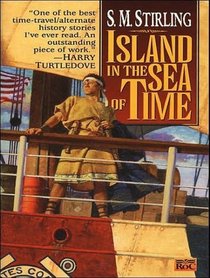
2. The Nantucket Trilogy comprised of S.M. Stirling’s books Island In The Sea Of Time, Against The Tide Of Years and On The Oceans Of Eternity; the storyline has the island of Nantucket, its modern-day inhabitants and a Coast Guard ship sent back in time to the Bronze Age. Their necessary interactions with the people in that time period lead to early introductions to gunpowder, primitive air travel and increased global trade and contact. Naturally trouble starts when renegades leave Nantucket and begin to carve out their own kingdoms leading to armed conflict.

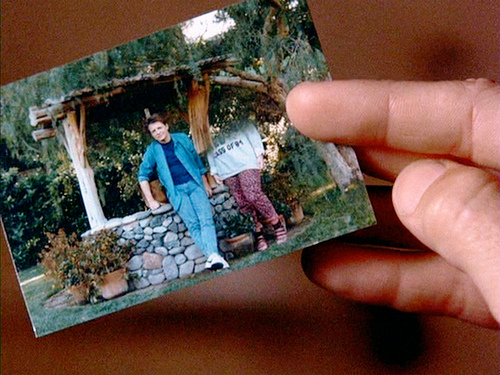
1. The Back To The Future Trilogy; Robert Zemeckis’ three films about a time-traveling teenager and his buddy scientist is actually a fantastic examination of the Butterfly Effect. In the first film, Marty McFly travels from the 1980s in a DeLorean to the 1950s and prevents his parents from falling in love. The obvious effect is that he and his siblings are being erased so he has to restore the timeline (audiences are helped by the rapid fire explanations of Doc Brown about the nuances of time travel). He succeeds for the most part. While his parents do wind up together they are changed due to their future son’s influence and this results in Marty’s family being better off when he returns to the ’80s.

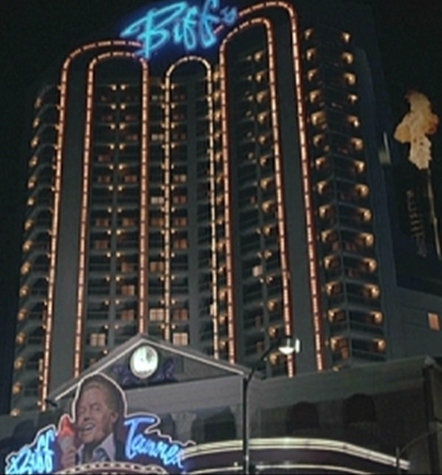
In the second film, a trip to 2015 results in a more dire Butterfly Effect. The trilogy’s villain Biff Tannen steals the DeLorean and travels to the ’50s to make his younger self rich. When Marty McFly and his friend Doc Brown return to the ’80s, their hometown has been transformed into a nightmarish vision. Seedy casinos and chemical plants are everywhere,

crime is rampant and even Richard Nixon is still president while the Vietnam War rages on. Marty’s family life is radically changed as his father is dead and his mother is married to Tannen. In the third film, the Butterfly Effect is reflected in the duo’s adventures in the 1880s; chiefly with their confrontation with Tannen’s murderous ancestor which could lead to their premature deaths. The Effect is last touched upon in the end when we see a landmark renamed and Marty McFly altering an event in the ’80s that has an unknown yet hopeful alteration to his future.

José Soto

Alternate History In Film and TV

Time travel films and TV shows are popular and well known to audiences. However one will find a lack of films and shows about alternate history and universes. Based on this inequality viewers  would think that alternate history is some minor niche sub-genre in science fiction. But sci-fi fans who actually read books and stories know that’s not the case. Just scroll through the Amazon or Barnes and Noble sites and one can find a multitude of books and story collections concerning alternate history. Many are very popular with readers such as the many multi-book series by Harry Turtledove (ex. the Worldwar books, the Great War trilogy, etc.), S.M. Stirling’s works and so on. Even comic books have notable alternate history works. These include Captain Confederacy, Storming Paradise, Marvel Comics’ What If? one shots, DC’s Elseworlds comic and most famously Alan Moore’s Watchmen. Then why so little films and TV shows?

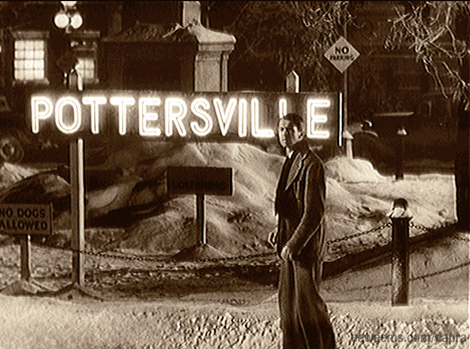
The genre has been so poorly represented that one can easily count the amount of films and shows about this subject. Some of the best examples aren’t obvious alternate history but are well known. In fact, one film is considered one of the best films ever made. Which one? It’s A Wonderful Life. Many say it’s a fantasy but it’s also about alternate history. George Bailey wishes he was never born and is then shown a world where he never existed, one that is nightmarish. Viewers only see the butterfly effect on George’s hometown Bedford Falls (renamed Pottersville) but one can’t assume there weren’t other butterfly effects. Notably when his guardian angel points out to George Bailey that he never saved his brother and thus George’s brother never saved his fellow soldiers in World War II. Who knows what effect that would’ve done to the timestream? Also evil Mr. Potter became more powerful and corrupt without George Bailey to keep him check. There’s no telling what kind of influence Potter would’ve had in the darker world shown in It’s A Wonderful Life.

Other examples of alternate universes usually show a world that has been altered by time travel (and perhaps giving the impression that the genre is tied to time travel, which it isn’t). A good example of that is Back To The Future, Part II where Biff Tannen steals the time-traveling DeLorean and alters his past making him a rich and influential figure in history. Aside from the changes to his and Marty McFly’s hometown, viewers with good eyes will see that the world had been altered. Look at a newspaper that Doc Brown shows to Marty McFly. The altered timeline in Back To The Future, Part II takes place in 1985 and a feature article in that paper is one that shows that Richard Nixon is still president of the United States and that the country is still involved in the Vietnam War.

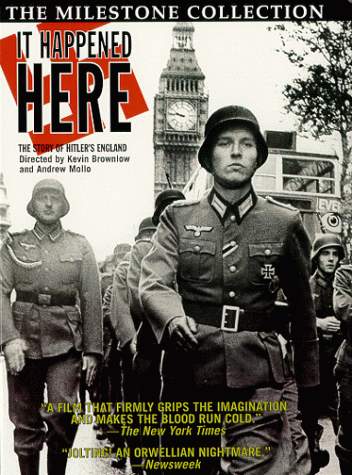
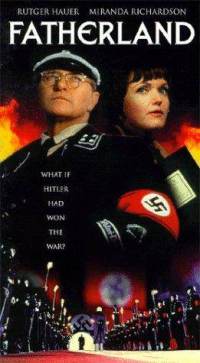
There have been other films that are more clearly about alternate history. Unfortunately many of them aren’t any good, and came and went in theaters without much notice. This could be why studios don’t greenlight more films in this genre. Such films include Jet Li’s action piece The One (which shows several alternate worlds including one with a President Gore), Southland Tales, C.S.A.: The Confederate States Of America, the 1995 version of Richard III (which takes place in a 1930s fascist Britain and stars Ian McKellan), Never Let Me Go, HBO’s adaptation of Fatherland (with the oft-used premise of Nazis winning World War II), It Happened Here, and White Man’s Burden (which has a world where racial roles are reversed between whites and blacks). Add to that list Zack Snyder’s Watchmen adaptation where frankly the best part of the film was the opening credits which showed how history was altered when superheroes came into existence in the 1940s and 1960s. A more recent film that has to be labeled alternate history is Inglourious Basterds. It’s more of a World War II action picture but the ending, without giving away spoilers, demonstrates that the film is about alternate history. Another recent example is District 9 wherein an alien craft becomes stranded in South Africa in the 1980s although it takes place in modern times.

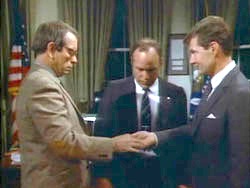
Regarding the TV medium, the best examples of alternate history are Fringe (which has a major storyline about crossing over into a world where the World Trade Center is still intact, technology is about ten years advanced of ours, and where Bono isn’t a famous singer), an awful ’80s show called Otherworld about a family trapped in a parallel world and Sliders, of course. Despite its wildly varying quality, Sliders best exemplified the exploration of alternate worlds. Oftentimes, the creators went wild in presenting worlds that had living dinosaurs, an America ruled by Communists and other powers and different world threats. Sadly this also meant that Sliders had some truly dumb episodes that ripped off the plotlines of several sci-fi stories. Regardless, Sliders is probably the best TV example of alternate universes. Believe it or not The West Wing can also be considered to be about an alternate universe since it clearly shows that recent history has had a few fictional presidents (without a mention of the Bushes and Clinton) and events. Spike TV recently aired a half-hour program called Alternate History that examined what if the Nazis conquered America. It was blasted by fans of the genre for glossing over many repurcusions and it’s unknown at this time if more episodes will follow. Other genre shows like Star Trek and Doctor Who have had episodes dealing with alternate universes as well.

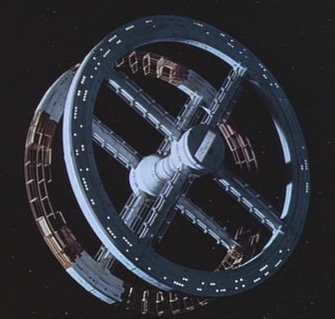
Some shows and films (and books too) are now considered alternate history because at the time they came out predictions were made that never came to be. They clearly point out that they took place in a certain time period and events happened that would radically change our history up to now. Look at Alien Nation (both the film and series). The storyline claims that the alien Newcomers came to Earth sometime in the late ’80s or early ’90s. Then there’s Strange Days (which takes place in late 1999 and has a world with advanced VR tech) and Red Dawn, where the U.S. is invaded by Soviet forces. One has to lump in 2001: A Space Odyssey and its sequel 2010 since we don’t have A.I.s or regular lunar transports (with Pan Am still in existence!) to bustling space stations. Some films will soon become alternate history presentations as dates stated in the films come to pass. That includes Blade Runner (L.A. has about eight years to keep from looking like that hellhole shown in that classic film) and Back To The Future, Part II. We’re about four years away from the film’s look at 2015 and there still aren’t any hoverboards, cool flying cars and self-lacing sneakers. There’s still time for the Cubs to win the World Series by then. 😀 With TV shows, the mini-series Amerika and The Day After have to be thrown into this lot (thankfully neither events depicted in them have come to pass).


Aside from poor reception by viewers one reason why there alternate history doesn’t have more of a presence in film and TV could be that they require extensive exposition to explain themselves. Look at Southland Tales; in that film several minutes in the beginning was used up to show that the U.S. diverged from our history when terrorists detonated two nukes in Texas. It was clumsily presented and frankly one didn’t care about how this impacted the dull characters.

Another reason for the lack of such films and shows is that alternate history can be complex, showcasing a broad range of characters affected by altered events. Aside from expensive production values, to really get audiences involved the productions  need to have well-developed characters like in many books. This logic of caring only about characters could be why some films are only about the altered lives of the characters such as It’s A Wonderful Life, Sliding Doors and The Family Man. It would help if people took more interest in history to better appreciate this genre. That is because alternate history offers us a way to reflect on how things might’ve been different and to enjoy what we have or strive for something that we don’t have yet.

José Soto