Ever since the announcement of new standalone Star Wars films there has been much speculation as to what characters will see their own movie. Aside from which characters these films would cover, there have been musings as to when these Star Wars standalone films take place. In between the trilogies? After Return Of The Jedi?
Yoda will have one made, and hopefully it will focus on his younger days hundreds of years before the two trilogies, perhaps similar to the Knights Of The Old Republic series of comic books and games. Seeing him in his youthful prime, perhaps like Luke Skywalker was in A New Hope and The Empire Strikes Back should be a treat and fun to watch. Imagine him not being so wise or powerful, it would be a new way of presenting Yoda before he became a Jedi Master.
It was announced that Han Solo will also be getting his own Star Wars standalone movie. It will probably focus on his younger days and maybe show how he got his ship the Millennium Falcon from Lando Calrissian. Perhaps the movie will show how he met up with Chewbacca, as well as his early run ins with Jabba the Hutt and the Empire. This sounds like an interesting film and could be based on the series of novels that focused on this time period. Those include A.C. Crispin’s Han Solo trilogy (The Paradise Snare, The Hutt Gambit and Rebel Dawn) and the first Han Solo books written in the late ’70s/early ’80s by Brian Daley (Han Solo At Stars’ End, Han Solo’s Revenge and Han Solo And The Lost Legacy).
Boba Fett will also be starring in a Star Wars standalone film, for all we know Joe Johnston will get his wish and be picked as the director. I think it should take place after Return Of the Jedi and show how he survived falling into the sarlaac pit. This would alleviate many upset fans that were unhappy to see their favorite bounty hunter so carelessly killed off. One possibility is it could flashback to his early days after Attack Of The Clones and show how he became such a feared bounty hunter.
I am hoping that Darth Maul gets his own film as well and it could show he became such a ferocious fighter and sith lord. Maybe the story of the novel Shadow Hunter where he takes down the Black Sun crime syndicate could be used. His early interactions with Darth Sidious would be interesting to see.
The droids R2-D2 and C3PO could have their own film as well, as there is a precedence with the Droids animated series. Seeing how they managed to survive from Revenge Of The Sith to A New Hope could have them going across the galaxy and interacting with all sorts of characters from this era could be neat.
Finally, another no brainer is a Star Wars standalone film for fan favorite Jar Jar Binks–just kidding! 🙂
When we were kids, the future was presented to us by magazines like Popular Science and the long-gone Omni and pulp magazines was one that had us using jet packs to go to work, beaming to a planet, and using family VTOL rec vehicles. Other notions included colonies on Mars, cities in the sky and tricorders as seen on Star Trek. These developments back then were forecast for today, but as we all know that future missed its mark and was ultimately proven to be unattainable as of 2013. Except for the tricorder, which is a lot like smartphones. The new comic book limited series by IDW The High Ways takes place in the late 21st century and the future it represents seems like an attainable one.
Written and drawn by John Byrne, The High Ways has a future that seems as if its midway between our world and that of Star Trek. Space travel is much more common than it is now. Humanity has begun to travel regularly within our solar system, but faster-than-light travel is still a distant dream.
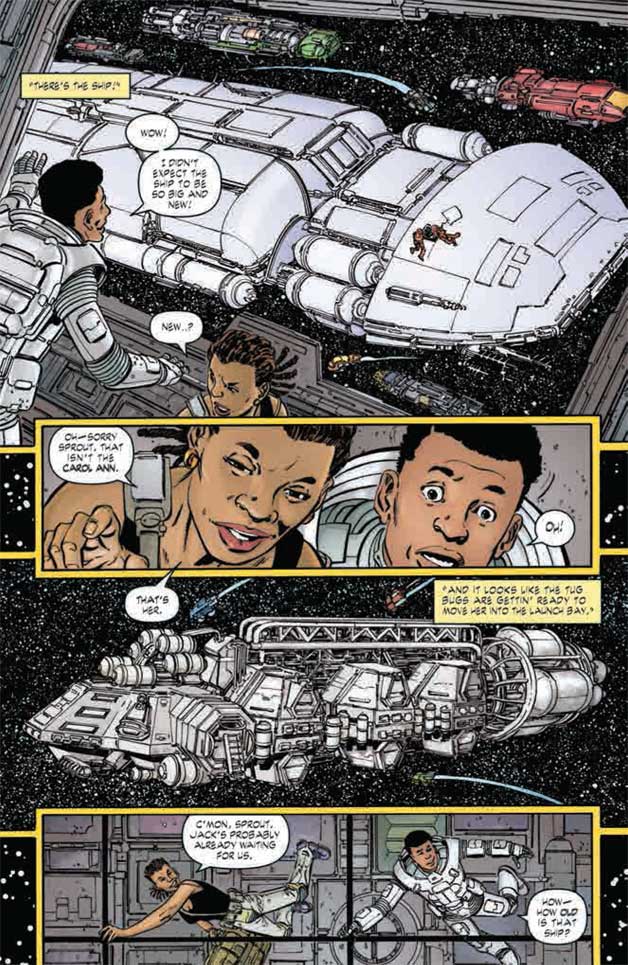
The limited series features Eddie Wallace, your typical young rookie navigator who is out seeking adventure in space. He can’t wait to go out into space and we first meet him in this vast space station inspired by the spoke-like wonder seen in 2001: A Space Odyssey. Naturally, what he expects and what he encounters are two very different things. Byrne’s skill as a detailed artist are put to good use in this comic book. There is hardware everywhere and it’s not aesthetically appealing like in Star Trek. In The High Ways, things have a lived-in look as seen in Star Wars and Alien, but not as advanced. Workers have to virtually live within their spacesuits. There isn’t any artificial gravity in the Wallace’s assigned freighter, the Carol Ann. The ship isn’t sleek at all, if anything, the Carol Ann is downright bulky and cobbled-together looking, even the Serenity on Firefly looks more appealing. From looking at Wallace’s expression when he first sees the ship that even he isn’t impressed.
At the station, Wallace meets his partner, Marilyn Jones, an attractive though slightly older and more experienced worker. She takes a liking to him in the way a big sister is fond of her little brother who is just out experiencing the world for the first time. The other main character is the Jack Cagney, the captain of the Carol Ann, who is short and craggy, looking much like movie legend James Cagney. According to Jones the captain only loved two things in his life and one of them is his ship and is only willing to take two people along with him on the Carol Ann on an assignment to Mars.
As they set out on the Carol Ann, their assignment is changed and they are diverted to a station orbiting Europa, Jupiter’s moon. There is where the mystery begins. For starters, the personnel at the station didn’t seem to know that the Carol Ann was assigned to the station. After meeting a normal, motley crew at that station, Wallace notices something isn’t quite right. The station crew seems oblivious to this ominous feeling that is plaguing Wallace. What is revealed in the final panel is downright creepy and actually gave me the creeps. I can’t wait to read what happens next.
The High Ways had very endearing characters and is a fun read at the same time it gives us readers a believable and attainable future setting; I recommend it to everyone who loves science fiction. Byrne is in his element with this story and he’s at his best when he writes and draws science fiction tales.
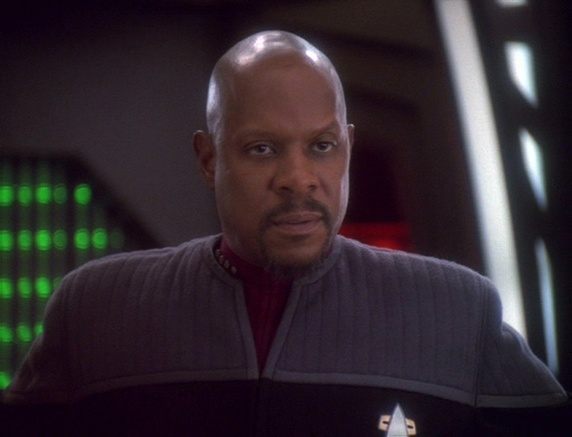
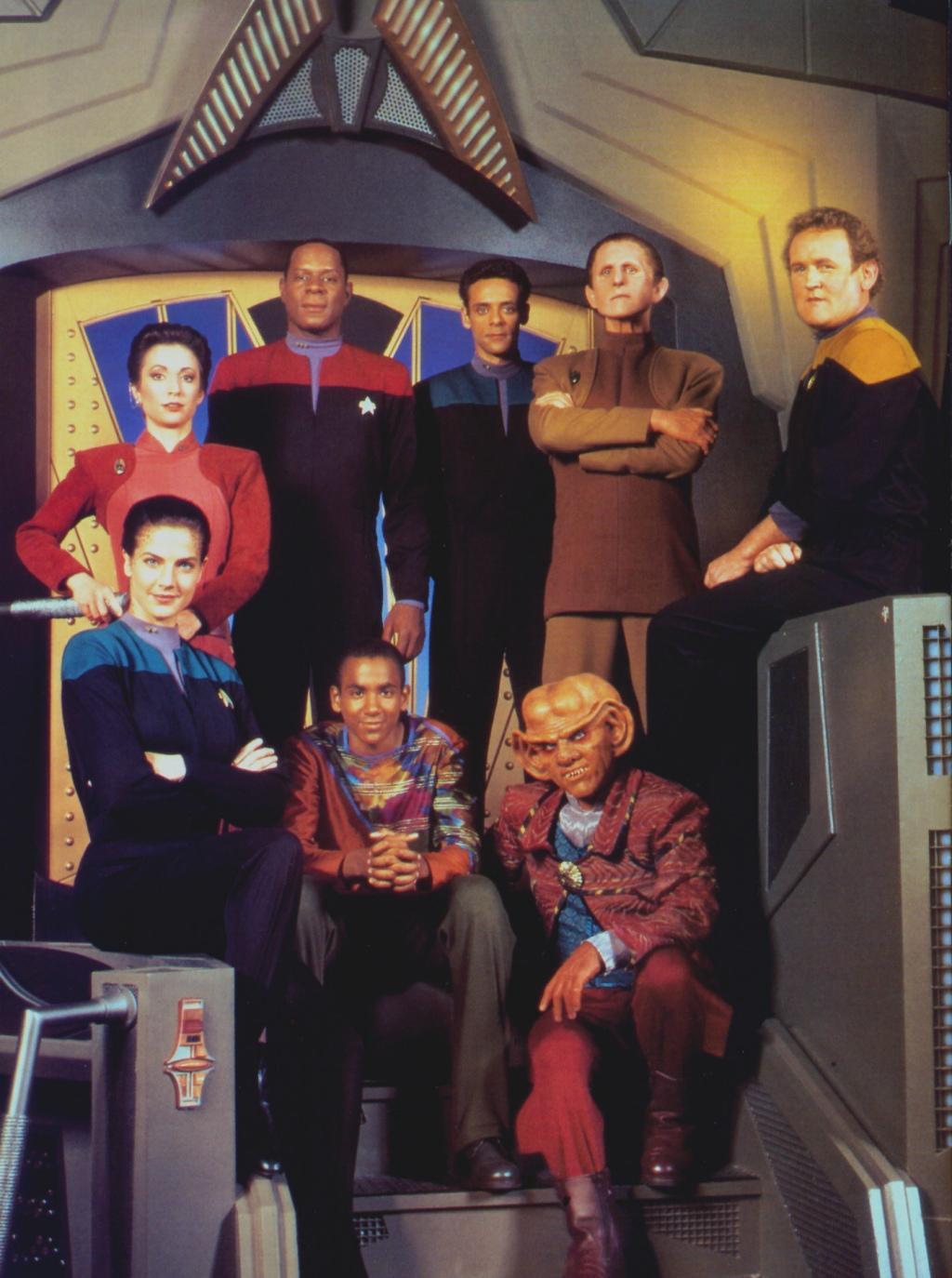
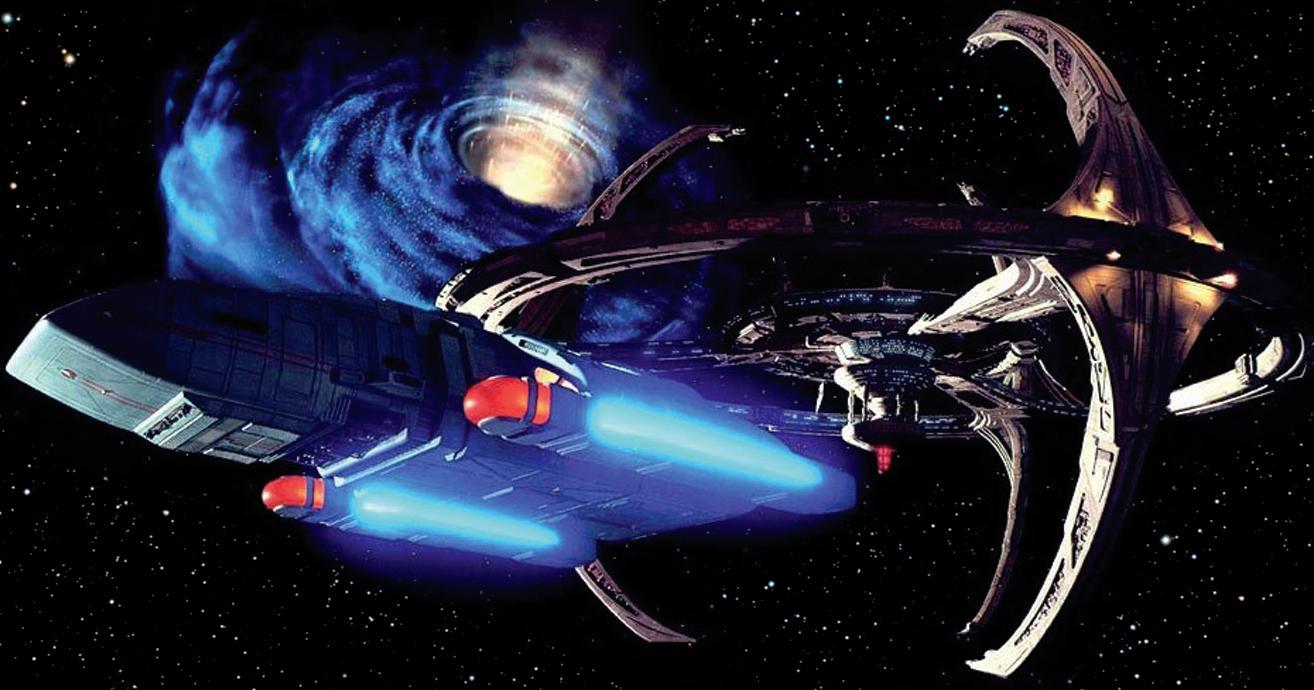
Continuing our look at one of the best Star Trek shows Star Trek: Deep Space Nine (DS9), there are more reasons why the show stood out from the other Trek spinoffs. To start let’s look at the main character Benjamin Sisko (Avery Brooks).
The Sisko
While seeming distant from his officers, Sisko was a very passionate man with an affinity for cooking. He was one of the most dimensional Trek captains ever shown and portrayed. At the start of the series, Sisko was a very troubled man and for good reason. His suffering was one of the best plot lines in the series pilot “Emissary”. A flashback prologue showed that while posted on a ship that tried to fight an invading Borg cube during the Star Trek: Next Generation episode “The Best Of Both Worlds, Part II” (the scene was from the Battle of Wolf 359, which took place offscreen in that episode), Sisko’s wife died in the futile battle. On an escape pod with his injured son, he watched helplessly as his ship exploded with his wife’s body still on it.
Angry, bitter and directionless, Sisko was assigned years later to command the Cardasssian-built space station Deep Space Nine orbiting the ravaged planet Bajor. His duty was to help Bajor get ready for admission into the Federation via rebuilding efforts. But still consumed by his wife’s death, Sisko considered leaving Starfleet before discovering a stable wormhole near Bajor and DS9.
What followed were a series of brilliantly shot scenes that represented the spirit of Star Trek in terms of meeting new life and mutual learning. Inside the wormhole, he encountered the “Prophets”, non-corporeal aliens who took the forms of people he knew–including his dead wife, in surreal, dream-like sequences. Every time a different person would speak, the scene would abruptly jumped to another time and location. For example, if a “Prophet” in the form of his first officer Kira Nerys (Nana Visitor) at the station had a question, then she would be answered by a “Prophet” in the form of Locutus (Patrick Stewart) during the Battle of Wolf 359. They didn’t understand the linear nature of time and Sisko had to find a way to explain the concept. Sisko tried to use baseball to explain not just the cause-and-effect nature of time but the nature of human existence. After his explanation, the aliens pointed out to “The Sisko” (as they later called him) that if time was linear why was his mind occupied with his wife’s death? The station commander quietly realized that he was trapped by his past because of his grief and needed to move on.
The Bajorans looked upon Sisko as a religious figure because of his discovery and this made him uncomfortable. However, he took his role seriously of defending the Bajorans and helping them to rebuild their civilization after the Cardassian occupation.
His greatest tests came after the malevolent Dominion arrived from the other side of the wormhole. He wound up becoming a brilliant war-time leader in what turned out to be a critical post and thwarted the Dominion’s plans to conquer the Federation. During this crisis, he had to find time to be a single father to his son Jake (Cirroc Lofton), act responsibly as a religious figure and maintain relations with the mysterious “Prophets” and other aliens. By the series end (“What You Leave Behind”) Sisko has a final confrontation with his enemies and discovers his ultimate fate with the “Prophets”.
Secondary Lineup
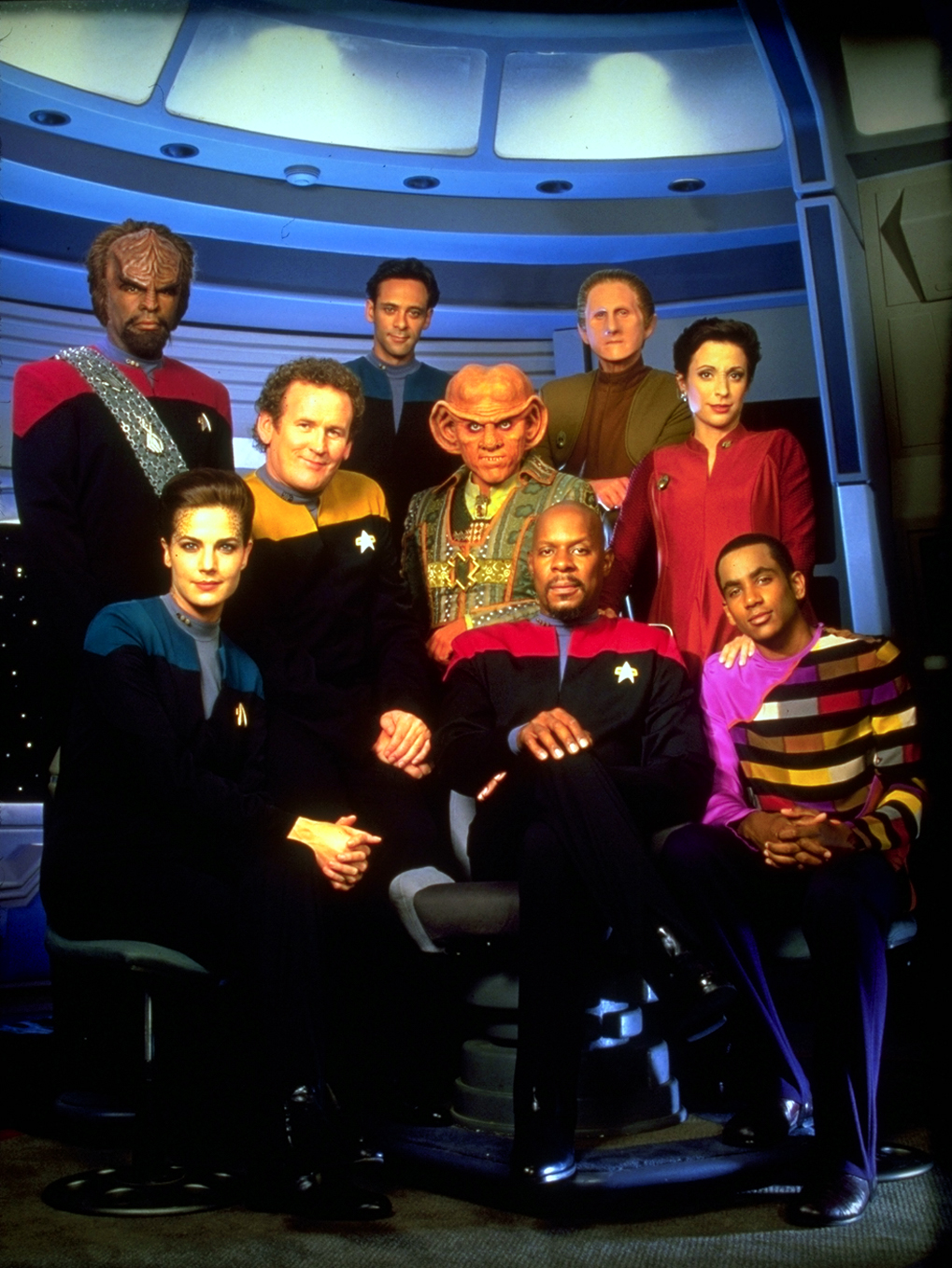
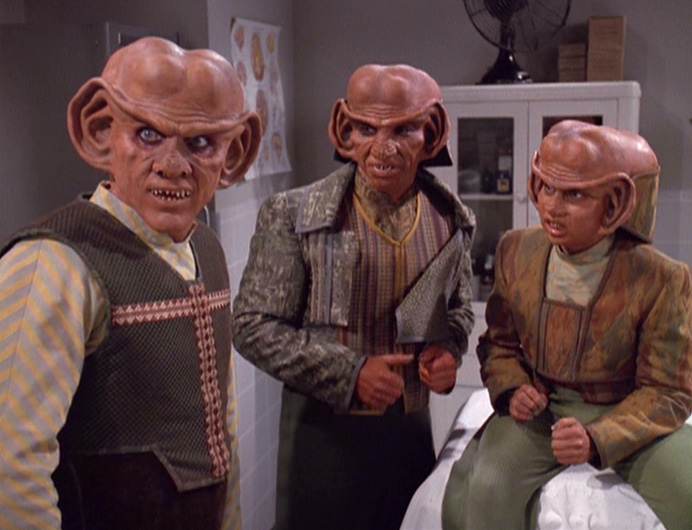
The show had a rich roster of characters who were well written and acted. They helped drive the show and made viewers care about what was going on. One advantage DS9 had over its Trek cousins were the secondary characters. Most of them were as well developed as the main ones and could’ve conceivably carried on as replacements for the main characters, they were that good. There was Nog (Aron Eisenberg), Quark’s (Armin Shimmerman) nephew. At first he was written to be a comedic foil and companion to Jake, but over time, the diminutive Ferengi expressed a desire to better his lot in life and joined Starfleet, becoming the first Ferengi to do so. Nog quickly proved himself and became known for his competence and bravery. Another Ferengi of note was Nog’s father Rom (Max Grodenchik), a seemingly dim-witted and good-natured soul who worked as Quark’s hapless assistant. While he was usually comedic relief, over time, he too wanted to better himself but was only lacking confidence. Eventually he joined the station’s engineering crew, married the very attractive Bajoran waitress Leeta (Chase Masterson), worked as a Federation spy and even wound up becoming the Grand Nagus –the leader of the Ferengi and began to bring about progressive reforms.
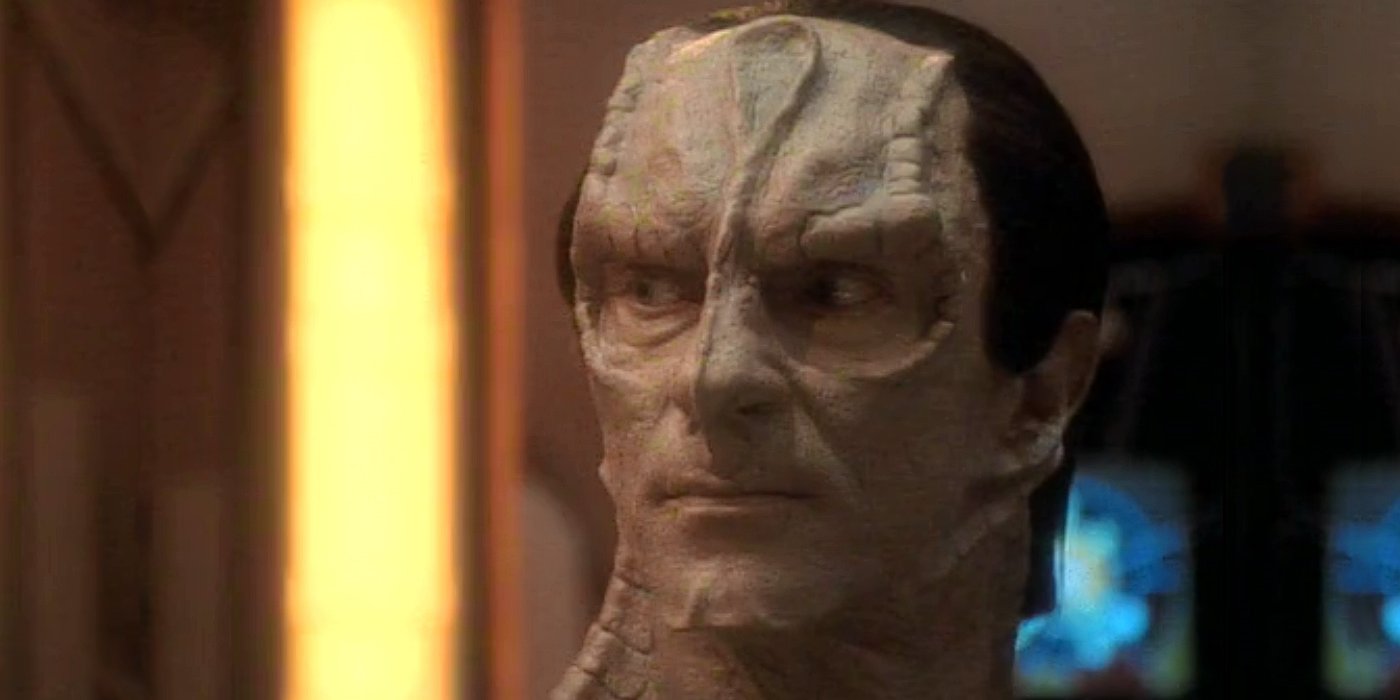
DS9 had complex and fascinating alien races like the Ferengi, the Bajorans and even the Klingons. But one of the most multifaceted aliens were the Cardasssians. First up was Garak (Andrew J. Robinson), an enigmatic exile who was introduced early in the show’s run. Demonstrating a fascination towards Dr. Bashir (Alexander Siddig), Garak reveled in being a mysterious source of help and information. Over time, it was revealed that he once worked for Cardassian intelligence but fell out of favor. As a former spy, Garak was quite deadly, he even carried out Sisko’s dirty work in the episode “In The Pale Moonlight” but by the show’s end became a liberator and helped to defeat the Dominion occupiers of his home planet. The other prominent Cardassian was Dukat (Marc Alaimo), the show’s arch nemesis. Originally the commanding officer of DS9 when it was in Cardassian hands, Dukat was a brutal dictator who took joy in terrorizing Bajorans. Dukat appeared several times as a menacing figure but apparently turned over a new leaf when the Klingons went to war with the Cardassians in the fourth season. He became a guerilla fighter and seemed regretful about his past, but the humiliation his people suffered under the Klingons was too much for him. Making a Faustian bargain, Dukat allied himself with the Dominion and allowed them to take control of the Cardassian Union (“By Inferno’s Light”). In the end all he wanted (as he ranted in the episode “Waltz”) was to be adored and respected by those he considered inferior to him. That included the Bajorans and Ben Sisko. Continue reading →
This month marks the twentieth anniversary of perhaps the most underrated Star Trek show Star Trek: Deep Space Nine. It differed from the other Trek shows in that it took place on a space station (the titular Deep Space Nine–DS9) near a wormhole and the characters often had to deal with the political and social ramifications of galactic events and encounters. In so many ways, Star Trek: Deep Space Nine is arguably the best Trek show and certainly the best spinoff of the original Star Trek. A reason why the original is considered the best has to do with nostalgia and its iconic nature. Star Trek: Deep Space Nine or DS9 isn’t as fondly remembered as Star Trek or Star Trek: The Next Generation but it should be highly regarded.
Some early critics of the show complained that the stories were rather dark, bleak and depressing. This was because the show’s first two seasons dealt with rebuilding a shattered civilization. DS9 orbited an ancient world called Bajor and it had been occupied by the enemy Cardassians (who built the station using Bajoran slave labor), who were like the Nazis. The Bajorans were a rough analogy to the Jews after World War II and Israel at its beginning. The Bajorans were on the verge of a civil war and desperate. While their plight made for some terrific episodes (“In The Hands Of The Prophets” and The Circle trilogy), it probably turned off casual viewers who wanted to see the standard starship zipping around the galaxy and having the crew solving some kind of tech-based problem.
Spiritual Leanings
Being that the deeply religious Bajorans were a focal point in the early episodes, the show touched on religious matters. In fact, it was one of its core concepts. In the pilot episode “Emissary” the show’s main character, Commander Benjamin Sisko (Avery Brooks) was assigned to the station and later discovered a nearby stable wormhole that was created by enigmatic non-corporeal aliens. While this was a major scientific and socio-political game changer for the Federation and helped put Bajor on the map, this event had religious ramifications. It turned out there was a prophecy in Bajoran religion that a non-Bajoran savior called the Emissary would discover the wormhole and the “Prophets” that the Bajorans worship. Therefore, Sisko became a major religious figure among Bajorans who they believed would eventually bring them salvation. This was a role that Sisko and Starfleet was very uneasy with chiefly because of their secular nature and the whole Prime Directive thing of non-interference.
Timing Is Everything
A reason for why the show wasn’t a runaway hit may have to do with the timing of when it premiered. During that time, Star Trek: The Next Generation was at its peak in popularity and some fans probably wanted DS9 to be more of the same. Sure it didn’t make sense to go to the trouble of creating a new show just to regurgitate the same ship traveling premise but some just want the same formula repeated over and over. So DS9 in trying to be distinctive was probably too different, which is what Star Trek needed and still does. The show was murky in its morality, the main heroes often committed actions that were questionable. At the time, it was believed by the suits in Paramount Studios that people didn’t want Star Trek to be dark and ambivalent, which is one of the so-called reasons behind the creation of the next spinoff Star Trek: Voyager.
Now with all the publicity Star Trek: Voyager was receiving along with the continued popularity and coverage of Star Trek: The Next Generation, it was difficult for DS9 to get any attention. It became the redheaded stepchild of the franchise. While that was unfortunate, one good thing to come out of that was that it was largely left alone. As executive producer Rick Berman concentrated on Star Trek: Voyager and Star Trek: The Next Generation’s spinoff films, exemplary writers and producers like Ron Moore, Ira Steven Behr, Robert Hewitt Wolfe and René Echevarria were put in charge of Star Trek: Deep Space Nine and made the show its own. They took risks with the characters and situations and it paid off creatively. Continue reading →
According to The Wrap and other sources, J.J. Abrams is set to direct Star Wars: Episode VII. Despite earlier proclamations about his loyalty to the Star Trek films and ruled out a directing gig for Star Wars, it’s seems to have been a smoke screen to throw off people, especially snoopy journalists. The Wrap also claimed that Ben Affleck was strongly considered for the job. Maybe he’ll have a chance with Episode VIII.
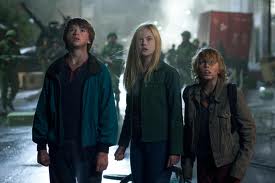
J.J. Abrams has the credentials for this directing job. He created the acclaimed series Lost and even in that show his fan-worship of Star Wars came about, especially during season five when Hurley was stuck on the island in the 1970s and tried to write an improved screenplay for The Empire Strikes Back. He also co-created the just concluded sci-fi show Fringe and has a good track record as a director. While his first big-screen job was on Mission Impossible III, he came to prominence when he directed the reboot of Star Trek and then Super 8. In fact, one of the complaints about Star Trek was that it felt more like a Star Wars film with the big-action scenes and spectacular special effects. If anything, that film proved that he was one to seriously consider for a new Star Wars film. Regardless, he should be credited for bringing the franchise back from the dead even if it came in a slick package. It still worked. Fans should also look at Super 8, which showed that the director could helm believable and sympathetic characters, something that the Star Wars films need at this point. In other words, Abrams can bring out fine performances from his actors.
Abrams has said in the past that Star Wars was his passion and it makes sense that someone like him should direct the start of the next trilogy. He can be seen by many as a solid choice to direct the next Star Wars film but he has his detractors. Already the forums are burning up with statements of lens flares polluting Star Wars: Episode VII. Some people have reacted with a shrug and a “whatever” to this news. Some feel that his films are largely superficial and fail to deliver satisfying conclusions. Those are the fans that J.J. Abrams has to win over. Still Disney could’ve done far worse. At least it won’t be Zack Snyder.
One more thing, this probably means that a new director will be needed for another Star Trek film. Most likely Star Trek Into Darkness could be J.J. Abrams’ last Trek film because he’ll be busy.

 Yoda will have one made, and hopefully it will focus on his younger days hundreds of years before the two trilogies, perhaps similar to the Knights Of The Old Republic series of comic books and games. Seeing him in his youthful prime, perhaps like Luke Skywalker was in A New Hope and The Empire Strikes Back should be a treat and fun to watch. Imagine him not being so wise or powerful, it would be a new way of presenting Yoda before he became a Jedi Master.
 A.C. Crispin’s Han Solo trilogy (The Paradise Snare, The Hutt Gambit and Rebel Dawn) and the first Han Solo books written in the late ’70s/early ’80s by Brian Daley (Han Solo At Stars’ End, Han Solo’s Revenge and Han Solo And The Lost Legacy).
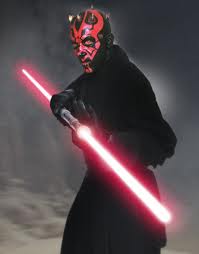 I am hoping that Darth Maul gets his own film as well and it could show he became such a ferocious fighter and sith lord. Maybe the story of the novel Shadow Hunter where he takes down the Black Sun crime syndicate could be used. His early interactions with Darth Sidious would be interesting to see.




 Starloggers