Sports’ Violent Future


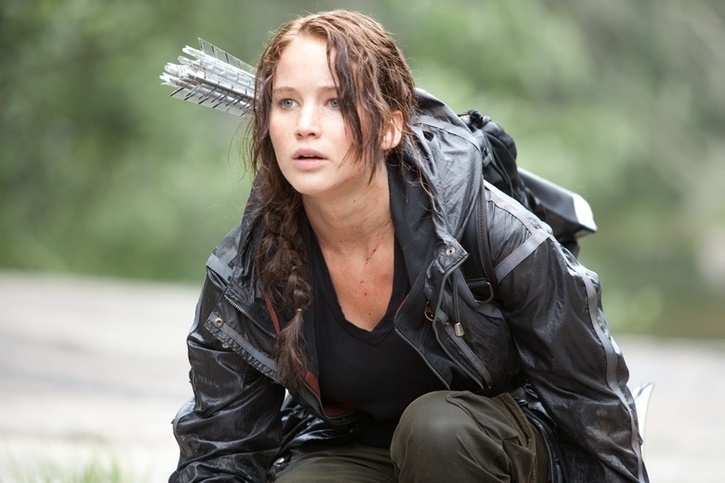
While The Hunger Games is captivating audiences and readers with its storyline about teenagers forced to partake in a deadly competition, the concept of futuristic blood sports isn’t anything new.

There are a few other films and books that dealt with a sport where the prize for winning was life itself. One of the more famous examples is The Running Man. Written by Richard Bachman (actually Stephen King using a pseudonym) and later adapted into a film starring Arnold Schwarzenegger, the game took place in a dystopian U.S. and is a show broadcast in the Games Network. The game contestant is forced to evade hunters. The longer the player stays alive the more money is earned. There was another well-known deadly game book also written by Bachman called The Long Walk, where teenage boys participate in a national marathon. The contest begins with one hundred contestants who have to walk nonstop. Anyone who stops or stumbles is killed by nearby soldiers. The winner, who is actually the last boy still walking, not only wins life but any prize he desires.

Two films from the ’70s that featured violent competitive sports were Death Race 2000 and Rollerball. In Death Race 2000 the U.S. has been replaced by the United Provinces (sound familiar?) and brutal gladiatorial games are used to mollify the masses. One of the most popular games is the Annual Transcontinental Road Race, a.k.a. the Death Race. A twist to the road race is that points are earned by killing pedestrians. The idea of deadly car races has been utilized in many video games. Some examples include Roadwar 2000 and Carmageddon.

Rollerball takes place in a future world overtly controlled by corporations and war is banned. In its place the competition of Rollerball is used. Part roller derby, part football, it’s a vicious combat sport where players bash opposing teams with spiked gloves as they try to gain possession of a metallic ball and score points. While both films are cult classics they were drearily remade not too long ago. Fortunately those remakes have been all but forgotten while the originals’ legacies endures.

Part of Rollerball’s popularity is the violent, close-quarter nature of the sport, which correlates with the popularity of football. A couple of sci-fi books have extrapolated on football’s evolution. In Killerball by Gary K. Wolf, football has turned into a vicious combat sport using martial arts and weapons. Meanwhile, football is still enjoyed hundreds of years from now in The Rookie (Part of the Galactic Football League book series) by Scott Sigler and is played by aliens and humans.

But football isn’t the final word on violent sports. Just look at hockey, rugby, boxing and other combative games. In a little-known film that deserves more attention called The Blood Of Heroes one of the only forms of entertainment in a post-apocalyptic wasteland is a sport known as The Game. In it armored teams try to score points at goalposts with a dog skull. One of the objectives by individual players is to get recognized for their skills and be rewarded with a luxurious lifestyle.

In our future there may be a movement to use surrogates in combat sports for safety reasons. The most recent example seen of this in the movies was Real Steel, where huge robots are used in boxing matches. It should be noted that the popular film was a remake of a Twilight Zone episode written by Richard Matheson, based on his short story. A more obscure example is the film Robot Jox. In this scenario, humans from opposing countries get into gigantic robots and battle each other. What is interesting to note with these films is that even though humans have been removed from the equation, the games still have spirit and heart, which makes them endearing to watch.

Before The Hunger Games came along there was another book and film dealing with teenagers forced to fight each other. That property is Battle Royale, a controversial Japanese book and film where teenage contestants are placed on a remote island and wear explosive neck collars that will detonate if they try to escape. Like The Hunger Games, the contests are to the death and monitored by the government.

While outwardly we as readers or viewers may be repulsed by some of these extrapolations, one has to admit they cater to our morbid curious nature.  This goes back to ancient history with the lethal gladiator games. These works point out that their violent games serve a greater good in keeping order and maintaining the peace. And with the popularity of today’s violent sports-that seem to be growing increasingly violent, maybe some of these future sports aren’t as implausible as we care to admit.

José Soto

The Dark Tower Returns

It’s been eight years since the final installment of The Dark Tower was released. For those who haven’t read them, Stephen King’s seven-book epic of The Dark Tower told a fantasy-science fiction saga with horror elements of a mythical gunslinger named Roland Deschain in the far future and his interdimensional quest to save reality from falling into chaos. Since the last book fans have been clamoring for more visits to the world of Roland and his ka-tet (or band of apprentice gunslingers). Based on the way the final book The Dark Tower ended it seemed as if the final word was written. But the ending, without giving anything away, had a cyclical nature. Fans pondered if there were more books or stories coming. In fact, King said back in 2009 regarding the series that “It’s not really done yet. Those seven books are really sections of one uber-long novel.” Well, now there is a brand new Dark Tower book to devour. The Wind Through The Keyhole has finally arrived and devotees can add this volume to King’s masterworks.

Many of the beloved characters from the saga are featured in this volume like Eddie and Susannah Dean, Jake Chambers, Oy the billy-bumbler and of course, Roland Deschain the last gunslinger. According to promos and samples released, The Wind Through The Keyhole takes place between the fourth and fifth volume of The Dark Tower saga. What is interesting is that while the book is promoted as a Dark Tower novel, it almost seems as if this novel can stand on its own while still taking place in the that universe.

When it begins, Roland and his ka-tet are on their way from the Emerald City (where the fourth book ended) to Calla Bryn Sturgis (where the fifth book takes place) but have to take refuge from a storm. While in their shelter, Roland recounts a tale to his friends that took place when he was much younger. In that story, young Roland is sent on a mission to investigate a killer shape shifter and meets a young boy. Hoping to calm him, Roland tells him a bedtime story-a story within a story. So in many ways, The Wind Through The Keyhole is like Wizard And Glass where that book went into Roland’s early days as well while using modern Roland and his ka-tet as a framing device. While the novel may not add anything to the overall story of The Dark Tower it promises to provide a fascinating look at Roland’s world.

Regardless of the book’s narrative, its release is a cause of celebration for many readers. Probably the biggest question they have is will there be more lost tales? Stephen King teased many with the idea that the entire saga hasn’t been revealed yet. Then again, he could’ve been alluding to the comic books released by Marvel that dwelled on his younger days. At this point there isn’t any way to know for certain if we’ve heard the last of Roland Deschain. Hopefully we haven’t.

Lewis T. Grove

The Feasibility Of Space Prisons

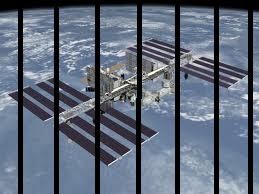
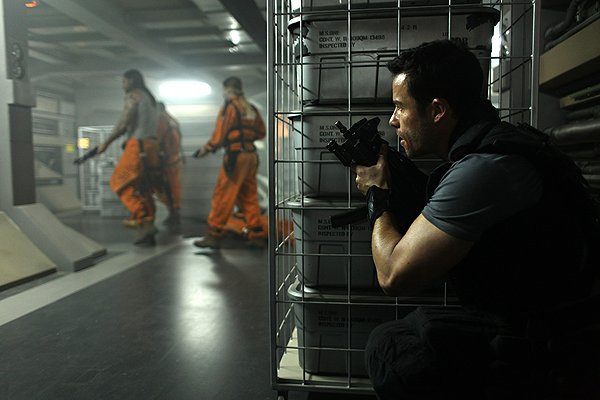
The premise in the movie Lockout has to do with the hero breaking into an orbital prison facility to rescue the president’s daughter. It sounds like a winner especially for movie executives out to make a quick buck; take an existing story plot about a high-security prison and shoehorn it into a science fiction world by having it take place in space or the future, etc. “It’s Escape From Alcatraz in space or Papillon in space!” they may cry out in excitement. Space prisons have popped up in science fiction books and movies and can be fun. However, the problem is that when examined the premise doesn’t make much sense.

The heart of the problem with a space prison is that of resources. Building and maintaining an orbital prison would be such a cost prohibitive drain of resources that it probably won’t happen. Imagine the public outcry when the costs of maintaining such a prison are revealed. Many today complain when they hear that inmates get “luxury” items like cable TV. People would argue that prisoners don’t deserve to have necessities like air, food and water. Never mind if a way is found to have those necessities replenish themselves on a station.  Our civilization has to be a lot more advanced than depicted in Lockout and other films like Fortress 2: Re-entry to provide these things, let alone effective and practical security measures. Another thing to consider is the safety of the planet. During Lockout, the prisoners take control of the station. At one point, there is the danger of the prison’s orbit decaying which poses the risk of re-entry. That’s tantamount to putting a prison complex within a nuclear power plant today. That is a recipe for disaster. It just wouldn’t be done.

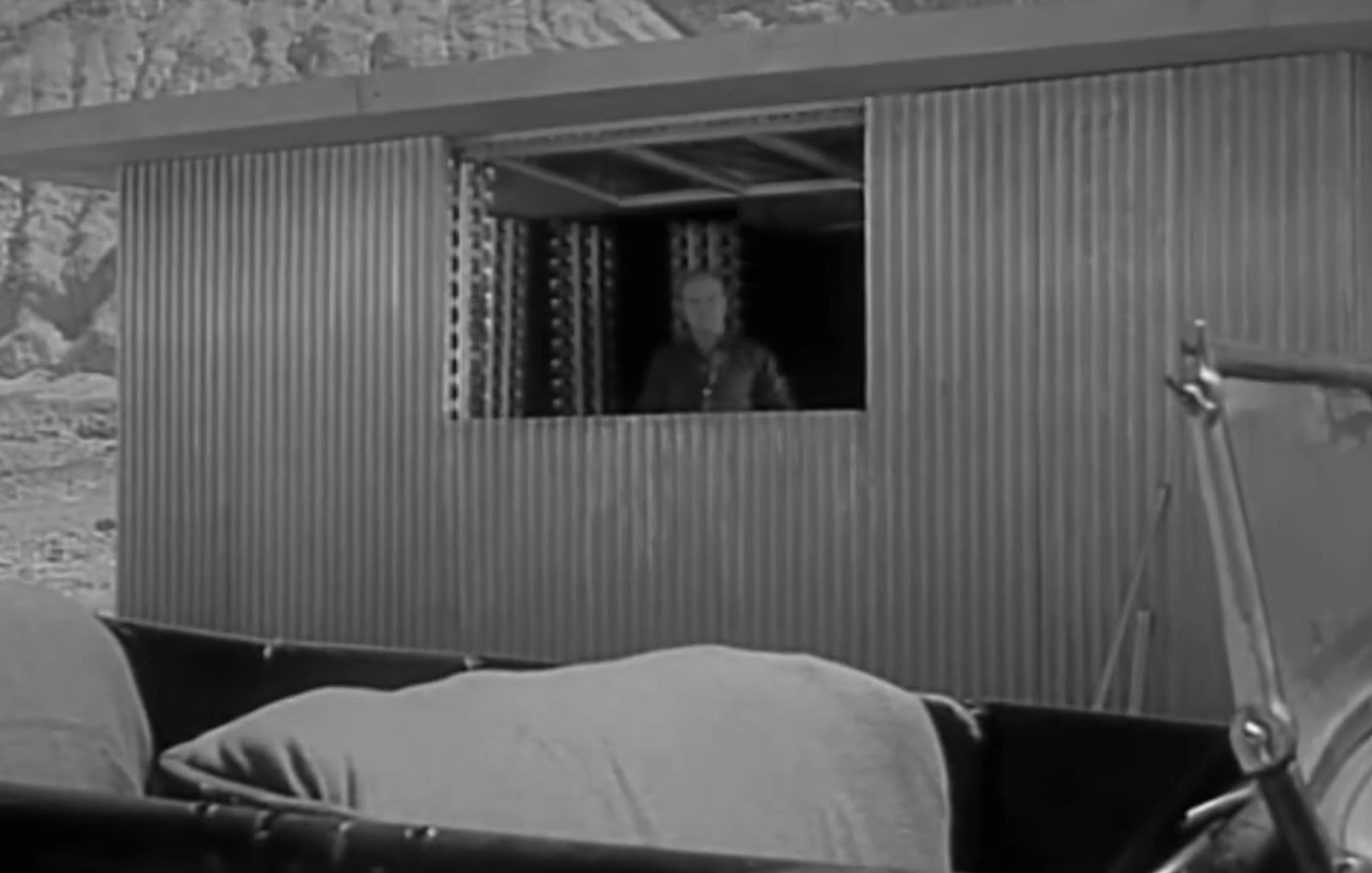
Now once a civilization becomes a true space-faring one, then a space prison is feasible. Take the prison facility seen in the Star Trek: Voyager episode “The Chute.” The alien society that kept the characters Tom Paris and Harry Kim captive routinely traveled between planets and most likely were able to easily produce the bare elements needed for survival in such a place. Another twist is the prison asteroid, one of which was presented in The Twilight Zone episode “The Lonely.” In that episode Jack Warden plays a prisoner held in solitary confinement and literally has the world to himself.  One caveat with the asteroid is that in the episode it looked like a desert with an atmosphere. This begs the question of using resources to construct such a place for one prisoner given that in the show, the space-faring tech wasn’t very advanced. Then there is the notion of using entire planets as a penal colony as shown in the series Earth 2. Once again, why waste an entire planet as a prison? This makes little sense since in that show Earth was dying and the characters were trying to set up a viable colony on the penal planet.

As for us, don’t expect to be reading about orbital prisons anytime this century. Probably when we have regular transport between the planets in our solar system with viable, self-sustaining colonies will this idea come to fruition. Cool-looking prison breaks and with nifty effects and explosions will remain in books and films. The bottom line is that it is way cheaper and easier to just keep prisoners down on Earth.

José Soto

New Essential Guide For A Star Wars Library

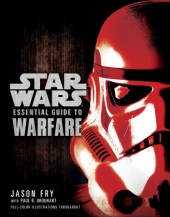
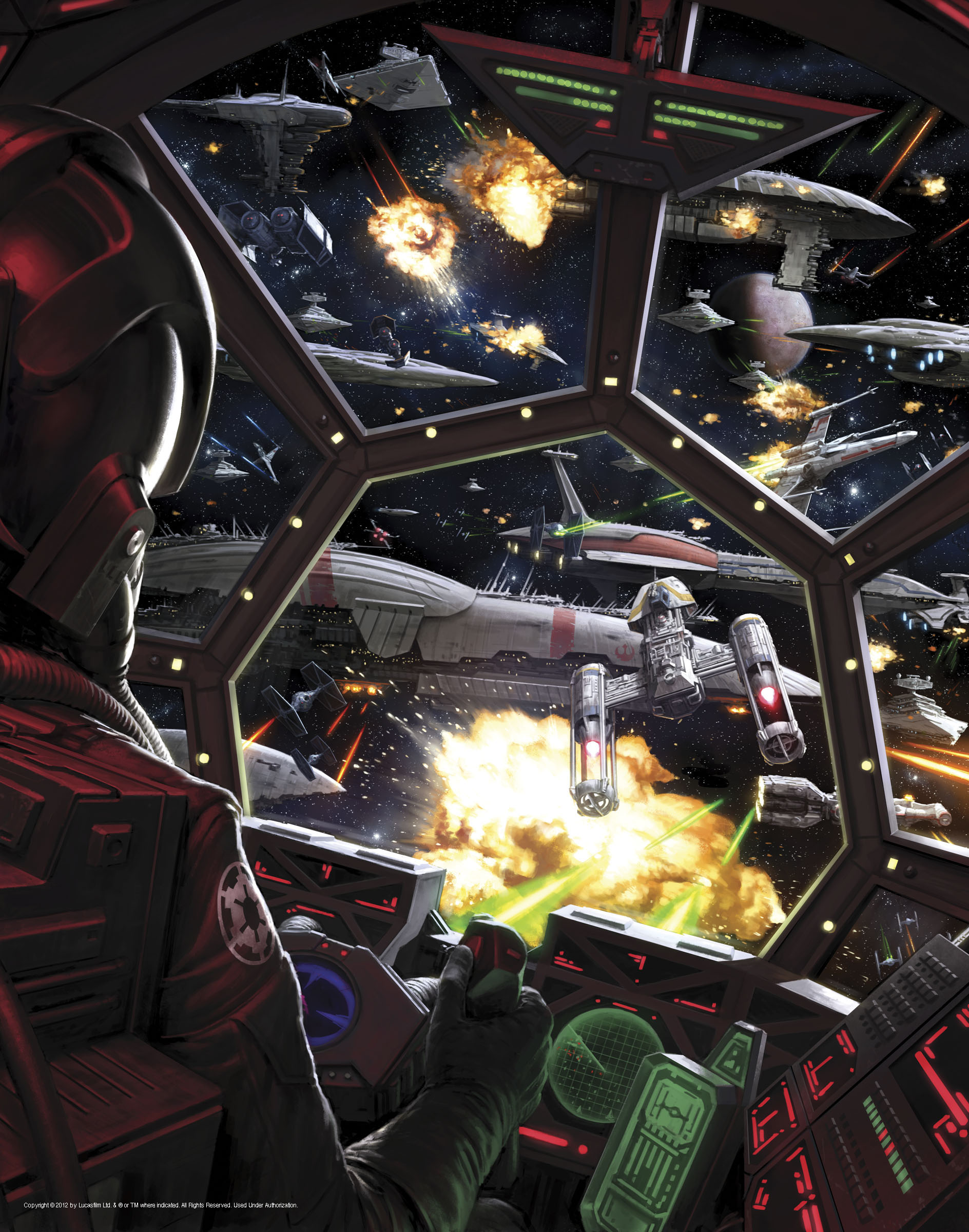
After some delay Del Rey finally released Star Wars: The Essential Guide To Warfare by Jason Fry this April. I went by my local book store today and saw the book. Browsing through it, I’ll have to say it was definitely worth the wait, IOW it looks good. As the title suggests, the book covers the conflicts in the Star Wars universe in chronological order starting with before the time of the Galactic Republic. The first conflict covered is with the Hutts fighting on a planet. For each conflict there are a few beautifully detailed drawings, along with a map of the galaxy showing where the conflict took place.

It also has profiles on the major characters that fought in the wars and details on the weapons used (i.e. blasters and lightsabers) and the ships used as well. Afterwards, the book goes on to describe a particular conflict and it seems to be told from the perspective of a historian or researcher living in the Star Wars universe.

Art by Darren Tan

A lot of space is devoted to the Clone Wars and the famous Galactic Civil War covered in the films. These parts of the book are in the middle while the first third covers the early years of the pre-Republic and the last third goes into the post-Return Of The Jedi period in other words the expanded universe. Characters and races seen in these sections include Admiral Thrawn and the Yuzhan Vong.

Star Wars: The Essential Guide To Warfare reminded me of the book The Illustrated Star Wars Universe that covers the different planets in the galaxy which is also from the viewpoint of someone living in that universe.

Art by Dave Seeley

Overall, it seems like a good history of the Star Wars universe with a good timeline and provides good reference material as well. My favorite topics were, of course, from the movies like the Battle of Endor or the Battle of Coruscant because I finally got to see the battle from the POV of a cockpit fighter. The art by several artists are well done and bring the storylines to life. One thing that was amusing was the depiction of the Ewoks, they look more like savages instead of teddy bears. Too bad George Lucas didn’t go with this idea when they were depicted on screen.

My only complaint about the book is that there aren’t as many drawings as I expected. There was a lot of text, which is fine, but I wish more space was devoted to big splashy artwork. But Jason Fry does a good job with the book and it would make a solid addition to the library of any true Star Wars fan.

C. S. Link

Season Two Of The Walking Dead Concludes, Part II

Vendettas & Confrontations

Episode Twelve: The pre-credits scene of episode twelve of The Walking Dead’s second season, “Better Angels,” opens at Dale’s funeral.  Killed by a walker at the end of the previous episode, the gory sequence jump cuts between the solemn burial – with Rick Grimes (Andrew Lincoln) eulogizing over the elderly victim – and the survivors engaging in what can only be described as a walker vendetta. Shuttling around the perimeter of Hershel’s farm in a pickup truck, they approach the shuffling undead, smashing and crushing their skulls. Rick explains, grimly, that Dale would have wanted them to pull together and take control of their lives. The survivors listen silently and reflect on the message…

Post-credits, the survivors take stock of their situation. The impending winter will soon dry up the swamp and nearby creek, eliminating the natural barrier against the walkers. The farm is left open and vulnerable, and Hershel (Scott Wilson) is allowing the group to move into his house for refuge. As Rick barks guard duty and lookout tower instructions, it’s evident that he elevated Daryl Dixon (Norman Reedus) to his second-in-command, leaving Shane Walsh (Jon Bernthal) somewhat grumbling and bitter. Rick’s son Carl (Chandler Riggs) reveals to a stunned Shane his guilty feelings over Dale’s death. Later, Rick’s wife Lori (Sarah Wayne Callies) bares her soul to Shane, sharing her appreciation for him, but it’s a sly ruse to keep Shane with the group.

dead-walker[1]Later, Shane sneaks into the barn where the prisoner Randall (Michael Zegen) is held. Feigning discontentment with the group, he tricks Randall into taking him to his renegade comrades. On their way, he murders the boy then smashes himself into a tree to fake assault injuries to the group. A search party goes out for Randall, with Rick and Shane in one pair and Glenn (Steven Yuen) and Daryl in the other. The latter two find Randall, now re-animated as a walker, but suspiciously he has no bites. Meanwhile, Shane leads Rick further away from the farm; Rick sees through his trick and confronts him…

Please click on the link to Deadloggers to continue reading about Episode Twelve


Gory Climax

The pre-credits sequence for “Besides the Dying Fire,” the thirteenth episode and exciting season finale of season two of The Walking Dead, opens with the lead-in to the previous episode’s finale. In an eerie glimpse of deserted Atlanta, inhabited only by walkers, a helicopter passes overhead. As one walker mindlessly follows, hundreds soon join, forming a terrifying mass herd. Incapable of tiring, they shuffle on, day and night, drifting out of the city and into the countryside until they end up at the gate to Hershel’s (Scott Wilson) farm. The rickety, weather-beaten wood is no match for their sheer mass and the groaning undead crash through. Hearing the gunshot (that killed the re-animated Shane) they plod on in that direction, confronting Rick Grimes (Andrew Lincoln) and his son Carl (Chandler Riggs)…

barn walkers

Post-credits, the survivors in the farm react uneasily to Daryl Dixon’s (Norman Reedus) news that their prisoner Randall (Michael Zegen) re-animated with no bites. Daryl slips out of the house into the darkness to look for Rick but stops upon seeing the approaching walkers. Outside, Rick thinks fast; ordering Carl to follow, they run to the barn, dodging walkers on the way. Once inside, Rick sets it on fire and flees up to the barn’s hayloft with Carl. In the thrilling, twelve-minute action sequence, the other survivors arm themselves and prepare for the fight, but things turn awry: Jimmy (James Allen McCune) drives up to the barn, saves Rick and Carl (who jump onto the RV’s roof and to the ground), but the RV is overrun by walkers; Patricia (Jane McNeill) is killed; Andrea (Laurie Holden) and T-Dog (IronE Singleton) barely escape; Carol (Melissa McBride) is cornered but rescued by Daryl on his chopper; T-Dog picks up Lori (Sarah Wayne Callies) and Beth (Emily Kinney); and Glenn (Steven Yeun) escapes with Maggie (Lauren Cohan).

trapped gene pageHershel intends to stay and protect his land, hopelessly firing away with his shotgun, but is finally convinced by Rick to abandon ship. In the ensuing chaos Andrea, armed with only a pistol, gets separated from the rest and escapes through the woods. Running for her life, she stays alive, picking off walkers until running out of ammo…

Please click on the link to Deadloggers to continue reading about Episode Thirteen

Evan Rothfeld