The Walking Dead March On, Part II

Episode Three: The pre-credits scene of episode three of the second season of The Walking Dead, “Save the Last One”, shows Shane (Jon Bernthal) running water for the shower and shaving his head with electric clippers. Looking at his reflection in the mirror, he seems disturbed and somewhat uneasy…

episode-3-shane-otis-hallway-gp[1]Post-credits, in a nightmarish sequence, Shane Walsh and Otis (Pruitt Taylor Vince) run for their lives from walkers in the school hallway. The walkers –looking Hammer-film ghoulish in the dark, slow-motion scene – chase them into the gymnasium. Rick Grimes’ (Andrew Lincoln) conversation with his wife Lori (Sarah Wayne Callies) – at their son Carl’s (Chandler Riggs) bedside – provides the narration. Telling of Shane’s icy prowess in getting any job done, he recounts the time Shane stole the high school principal’s car out of the teacher’s lot in the middle of a lesson…

Back in the RV, Carol (Melissa McBride) cries in her sleep, almost certainly over her missing daughter. Daryl Dixon (Norman Reedus), sleepless, goes on a night search for the girl. Andrea (Laurie Holden) agrees to join, and grabbing flashlights, they set off into the dark, silent woods. Daryl casually reveals his survival skills, telling Andrea of the time he was lost in the woods as a child, alone, for nine days before finding his way home. Their vain search yields only a bite victim who unsuccessfully tried to commit suicide by hanging himself from a tree, turning into a walker in the process. After reading his rhyming, darkly humorous suicide note, Daryl – although initially reluctant to waste arrows –kills the gurgling walker. Andrea reveals a morbid outlook, unsure of whether she wants to live or die…

Please click on the link to Deadloggers to continue reading about Episode Three

funeral

Episode Four: The pre-credits scene of episode four of season two of The Walking Dead, “Cherokee Rose”, shows the survivors re-grouping at the farm, as Hershel (Scott Wilson) tends to a recovering Carl Grimes (Chandler Riggs). Later, Otis (Pruitt Taylor Vince) is buried and eulogized in a solemn ceremony. Shane Walsh (Jon Bernthal) grows visibly uncomfortable as the unknowing Hershel waxes heroic, and has flashbacks to Otis’ final moments. Patricia (Jane McNeill), Otis’ surviving girlfriend, wants Shane to say a few words. Shane initially protests but stammers his way through a falsified version of the fatal event, designed to heroize the dead man’s actions…

Post-credits, the survivors study a map of the area to analyze where to search for the missing Sophia (Madison Lintz). Hershel advises Rick Grimes (Andrew Lincoln) and Shane that they are medically unfit to participate in the search, so Daryl (Norman Reedus) goes alone. Hershel states his directive that no one carries guns on his property, objecting to an “armed camp.” Despite reservations, Rick and Shane comply, although Hershel permits an armed lookout. Additionally, Hershel breaks the news to Rick that as soon as Carl has recovered fully, and Sophia is found, the survivors are to leave his property, stating that “we don’t normally take in strangers.”

episode-4-glenn-well-gp[1]

Dale (Jeffrey DeMunn) and a lucid, recovered T-Dog (IronE Singleton) find a grotesque, swollen, misshapen walker trapped at the bottom of one of five wells on Hershel’s property, sarcastically calling it a swimmer (as opposed to a walker). The survivors want to shoot it, but don’t want to contaminate the well water. Finally, in order to remove it, they resort to lowering in a nervous Glenn (Steven Yeun) as live bait to harness it to a rope and the pull it out. Unfortunately, the bearings holding the tied rope loosen, dropping Glen sharply downward almost within the monster’s grasp. The group succeeds in pulling the screaming, panicky Glenn out of the well. After another try, they pull the swimmer out, this time using a horse for an anchor. As the gurgling swimmer is halfway out, his soft, bloated, squishy body snaps in two. His top half quivers on the ground, spraying blood and intestines while his lower half falls back into the well. A disgusted T-Dog bludgeons the swimmer’s head…

Please click on the link to Deadloggers to continue reading about Episode Four

Evan Rothfeld
Immortals Cursed With The Dumbest Trailers

Gotta say this. Immortals the new movie coming out this weekend looks very stupid. For that the blame falls on those terrible trailers for the movie that have plague coming attractions.

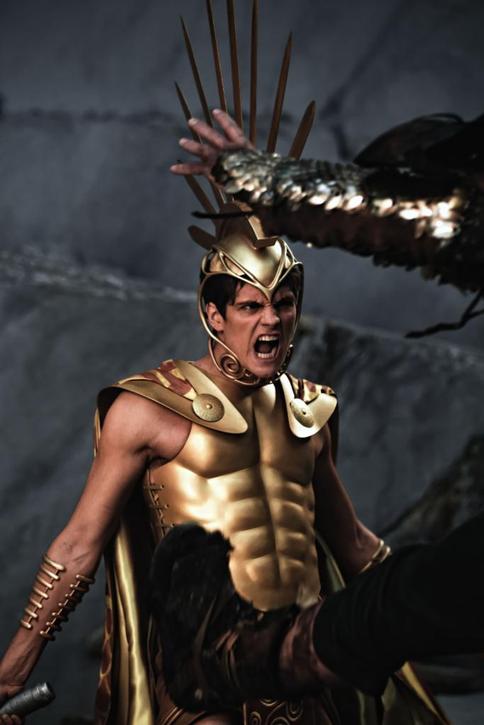
Seriously, look at how dumb the whole thing looks. Everything looks like a cross between a bad cologne commercial and a pretentious music video with non stop green screen shots. Toss into that some bad acting and scenes that make those old Steve Reeves sword and sandals outings  look like Spartacus. This isn’t to say that these kind of fantasy films are inferior. I loved last year’s remake of Clash of the Titans even though no one I know did. And while 300 was stupid it was at least entertaining. Actually the trailers make Immortals look like a cheap 300 knock-off and has actually made me appreciate Zack Snyder more as a filmmaker. See this kind of material is hard to pull off as Immortals shows me and Zack Snyder was able to sell 300 thanks to his skills.

What else is there to dislike about the Immortals trailer? The obvious CG effects, the overdone fight scenes that go into cliche slow motion and what is it with that opening shot that looks like a Renaissance painting? And the less said about those stupid gold outfits the better! Logically, this film will die a quick death in the box office, but being this is the modern world with sheeple that grovel over American Idol and Snookie this film will probably do well and we’ll have to suffer the inevitable sequels. If humanity redeems itself and avoids this turkey then the movie executives can blame the trailers. Just take a look if you want a quick laugh.

Waldermann Rivera

The Walking Dead March On, Part I

cast photo

The first season of AMC’s The Walking Dead, based on Robert Kirkman’s hit comic book gore fest of the same name, cleaned up in the ratings and kept fans biting their nails on the edge of their sofas.

Developed by veteran director Frank Darabont, together with Kirkman, the highly anticipated first season premiered on AMC to universal acclaim in October 2010, setting a record audience for a cable show premiere. Albeit way too short (a paltry six episodes, eliciting a collective groan from fans and critics alike) the not-for-the-squeamish show jumped right into the action. Initially sticking close to the comic, it developed characters, themes, and storylines made only for the TV version. episode-1-rick-3[1]The show follows Rick Grimes, a lion-hearted sheriff’s deputy from Georgia, as he got shot in the line of duty, then awakened from a coma in an abandoned hospital. He found his family and then led them and a small band of survivors to safety through the aftermath of a zombie apocalypse. The Walking Dead delivered the goods: coming in the wake of Lost, the show helped satisfy fans’ craving for a diverse group (old, young, pre-teen, black, Asian, blonde, redneck, etc.), each with his or her own backdrop story to tell, struggling their way out of a helpless situation. The survivors dealt with infighting, romance, the daily grind of scrounging for food and weapons, and most of all, well…zombies.

male-walker-760[1]Where Lost had the villainous “Others,” The Walking Dead upped the ante and put forth the most horrifyingly evil and dangerous cast of villains ever shown on TV: shuffling masses of brainless, gut-chomping, intestine-ripping “walkers” (called so for their habit of endlessly wandering and being incapable of physically tiring). With outstretched arms seeking live flesh, they are slow, nameless, and deadly. As it seems, a bite from a walker turns a victim into a walker himself.  Over the six episodes, aired back-to-back, the show raised the bar for gore-splattering special effects and makeup as we watched the walkers, in varying stages of decay, feast, or get killed from head-bursting gunshots and blood-spraying decapitations.

By the last episode in season one (“TS-19”), the survivors’ ranks were thinning out due to walkers and suicide. Trapped in Atlanta’s Centers for Diseases Control and Prevention (CDC) – where they arrived in a futile attempt to find a cure for the zombie plague – the group used a grenade to blast their way out of the fortress-like government center before it self-destructed. They fled Atlanta to begin a nervous, uncertain pilgrimage to Fort Benning in the hopes of finding a safe zone.

Thankfully, for season two, the top-notch main cast signed on to continue. Among them are native Englishman Andrew Lincoln (who should win an award just doing such a marvelously convincing American accent) as the take-charge Rick; Sarah Wayne Callies as his pretty wife Lori; Jon Bernthal as his best friend and co-deputy Shane Walsh (who had an affair with Lori before Rick turned up alive); Steven Yeun as Glenn, the delivery boy turned resourceful street rat; Laurie Holden as despairing Andrea; Jeffrey DeMunn as the elderly and life-experienced Dale; IronE Singleton as T-Dog, an amiable, stocky black guy;  Melissa McBride and Madison Lintz as gentle widow Carol and her pre-teen daughter Sophia, Norman Reedus as Daryl Dixon, a redneck alpha male archer and already a fan favorite; plus Chandler Riggs as Rick and Lori’s pre-teen son Carl.

Please click on the following links to Deadloggers to read more on Episodes One and Two of the second season of The Walking Dead

Evan Rothfeld

Alternate History In Film and TV

Time travel films and TV shows are popular and well known to audiences. However one will find a lack of films and shows about alternate history and universes. Based on this inequality viewers  would think that alternate history is some minor niche sub-genre in science fiction. But sci-fi fans who actually read books and stories know that’s not the case. Just scroll through the Amazon or Barnes and Noble sites and one can find a multitude of books and story collections concerning alternate history. Many are very popular with readers such as the many multi-book series by Harry Turtledove (ex. the Worldwar books, the Great War trilogy, etc.), S.M. Stirling’s works and so on. Even comic books have notable alternate history works. These include Captain Confederacy, Storming Paradise, Marvel Comics’ What If? one shots, DC’s Elseworlds comic and most famously Alan Moore’s Watchmen. Then why so little films and TV shows?

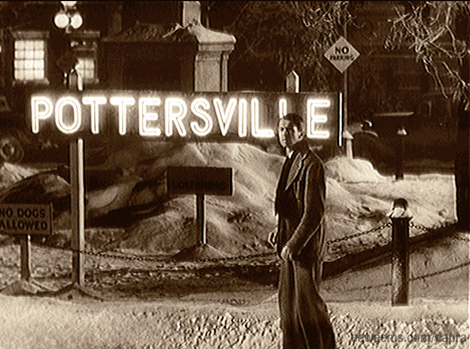
The genre has been so poorly represented that one can easily count the amount of films and shows about this subject. Some of the best examples aren’t obvious alternate history but are well known. In fact, one film is considered one of the best films ever made. Which one? It’s A Wonderful Life. Many say it’s a fantasy but it’s also about alternate history. George Bailey wishes he was never born and is then shown a world where he never existed, one that is nightmarish. Viewers only see the butterfly effect on George’s hometown Bedford Falls (renamed Pottersville) but one can’t assume there weren’t other butterfly effects. Notably when his guardian angel points out to George Bailey that he never saved his brother and thus George’s brother never saved his fellow soldiers in World War II. Who knows what effect that would’ve done to the timestream? Also evil Mr. Potter became more powerful and corrupt without George Bailey to keep him check. There’s no telling what kind of influence Potter would’ve had in the darker world shown in It’s A Wonderful Life.

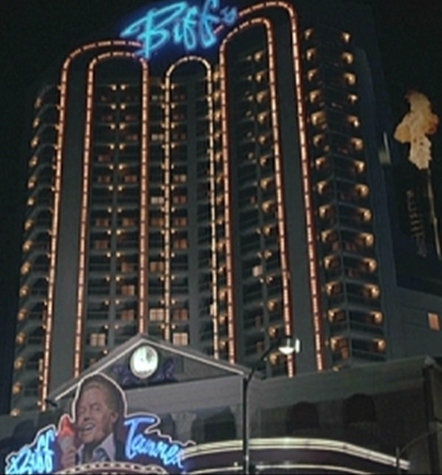
Other examples of alternate universes usually show a world that has been altered by time travel (and perhaps giving the impression that the genre is tied to time travel, which it isn’t). A good example of that is Back To The Future, Part II where Biff Tannen steals the time-traveling DeLorean and alters his past making him a rich and influential figure in history. Aside from the changes to his and Marty McFly’s hometown, viewers with good eyes will see that the world had been altered. Look at a newspaper that Doc Brown shows to Marty McFly. The altered timeline in Back To The Future, Part II takes place in 1985 and a feature article in that paper is one that shows that Richard Nixon is still president of the United States and that the country is still involved in the Vietnam War.

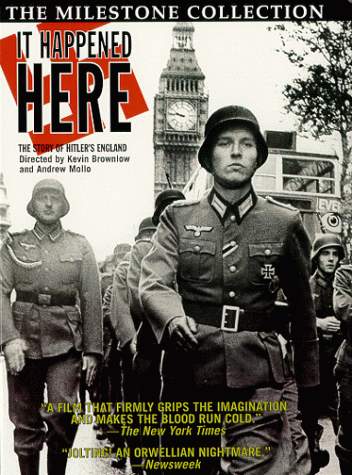
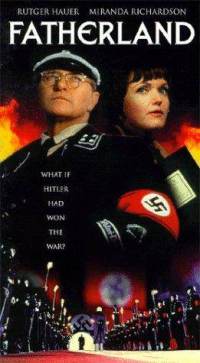
There have been other films that are more clearly about alternate history. Unfortunately many of them aren’t any good, and came and went in theaters without much notice. This could be why studios don’t greenlight more films in this genre. Such films include Jet Li’s action piece The One (which shows several alternate worlds including one with a President Gore), Southland Tales, C.S.A.: The Confederate States Of America, the 1995 version of Richard III (which takes place in a 1930s fascist Britain and stars Ian McKellan), Never Let Me Go, HBO’s adaptation of Fatherland (with the oft-used premise of Nazis winning World War II), It Happened Here, and White Man’s Burden (which has a world where racial roles are reversed between whites and blacks). Add to that list Zack Snyder’s Watchmen adaptation where frankly the best part of the film was the opening credits which showed how history was altered when superheroes came into existence in the 1940s and 1960s. A more recent film that has to be labeled alternate history is Inglourious Basterds. It’s more of a World War II action picture but the ending, without giving away spoilers, demonstrates that the film is about alternate history. Another recent example is District 9 wherein an alien craft becomes stranded in South Africa in the 1980s although it takes place in modern times.

Regarding the TV medium, the best examples of alternate history are Fringe (which has a major storyline about crossing over into a world where the World Trade Center is still intact, technology is about ten years advanced of ours, and where Bono isn’t a famous singer), an awful ’80s show called Otherworld about a family trapped in a parallel world and Sliders, of course. Despite its wildly varying quality, Sliders best exemplified the exploration of alternate worlds. Oftentimes, the creators went wild in presenting worlds that had living dinosaurs, an America ruled by Communists and other powers and different world threats. Sadly this also meant that Sliders had some truly dumb episodes that ripped off the plotlines of several sci-fi stories. Regardless, Sliders is probably the best TV example of alternate universes. Believe it or not The West Wing can also be considered to be about an alternate universe since it clearly shows that recent history has had a few fictional presidents (without a mention of the Bushes and Clinton) and events. Spike TV recently aired a half-hour program called Alternate History that examined what if the Nazis conquered America. It was blasted by fans of the genre for glossing over many repurcusions and it’s unknown at this time if more episodes will follow. Other genre shows like Star Trek and Doctor Who have had episodes dealing with alternate universes as well.

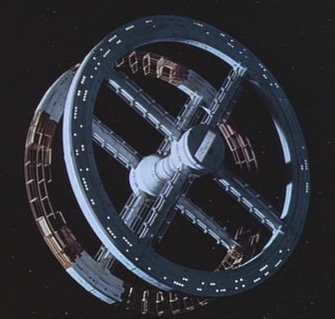
Some shows and films (and books too) are now considered alternate history because at the time they came out predictions were made that never came to be. They clearly point out that they took place in a certain time period and events happened that would radically change our history up to now. Look at Alien Nation (both the film and series). The storyline claims that the alien Newcomers came to Earth sometime in the late ’80s or early ’90s. Then there’s Strange Days (which takes place in late 1999 and has a world with advanced VR tech) and Red Dawn, where the U.S. is invaded by Soviet forces. One has to lump in 2001: A Space Odyssey and its sequel 2010 since we don’t have A.I.s or regular lunar transports (with Pan Am still in existence!) to bustling space stations. Some films will soon become alternate history presentations as dates stated in the films come to pass. That includes Blade Runner (L.A. has about eight years to keep from looking like that hellhole shown in that classic film) and Back To The Future, Part II. We’re about four years away from the film’s look at 2015 and there still aren’t any hoverboards, cool flying cars and self-lacing sneakers. There’s still time for the Cubs to win the World Series by then. 😀 With TV shows, the mini-series Amerika and The Day After have to be thrown into this lot (thankfully neither events depicted in them have come to pass).


Aside from poor reception by viewers one reason why there alternate history doesn’t have more of a presence in film and TV could be that they require extensive exposition to explain themselves. Look at Southland Tales; in that film several minutes in the beginning was used up to show that the U.S. diverged from our history when terrorists detonated two nukes in Texas. It was clumsily presented and frankly one didn’t care about how this impacted the dull characters.

Another reason for the lack of such films and shows is that alternate history can be complex, showcasing a broad range of characters affected by altered events. Aside from expensive production values, to really get audiences involved the productions  need to have well-developed characters like in many books. This logic of caring only about characters could be why some films are only about the altered lives of the characters such as It’s A Wonderful Life, Sliding Doors and The Family Man. It would help if people took more interest in history to better appreciate this genre. That is because alternate history offers us a way to reflect on how things might’ve been different and to enjoy what we have or strive for something that we don’t have yet.

José Soto

TRON Light Cycles For Sale

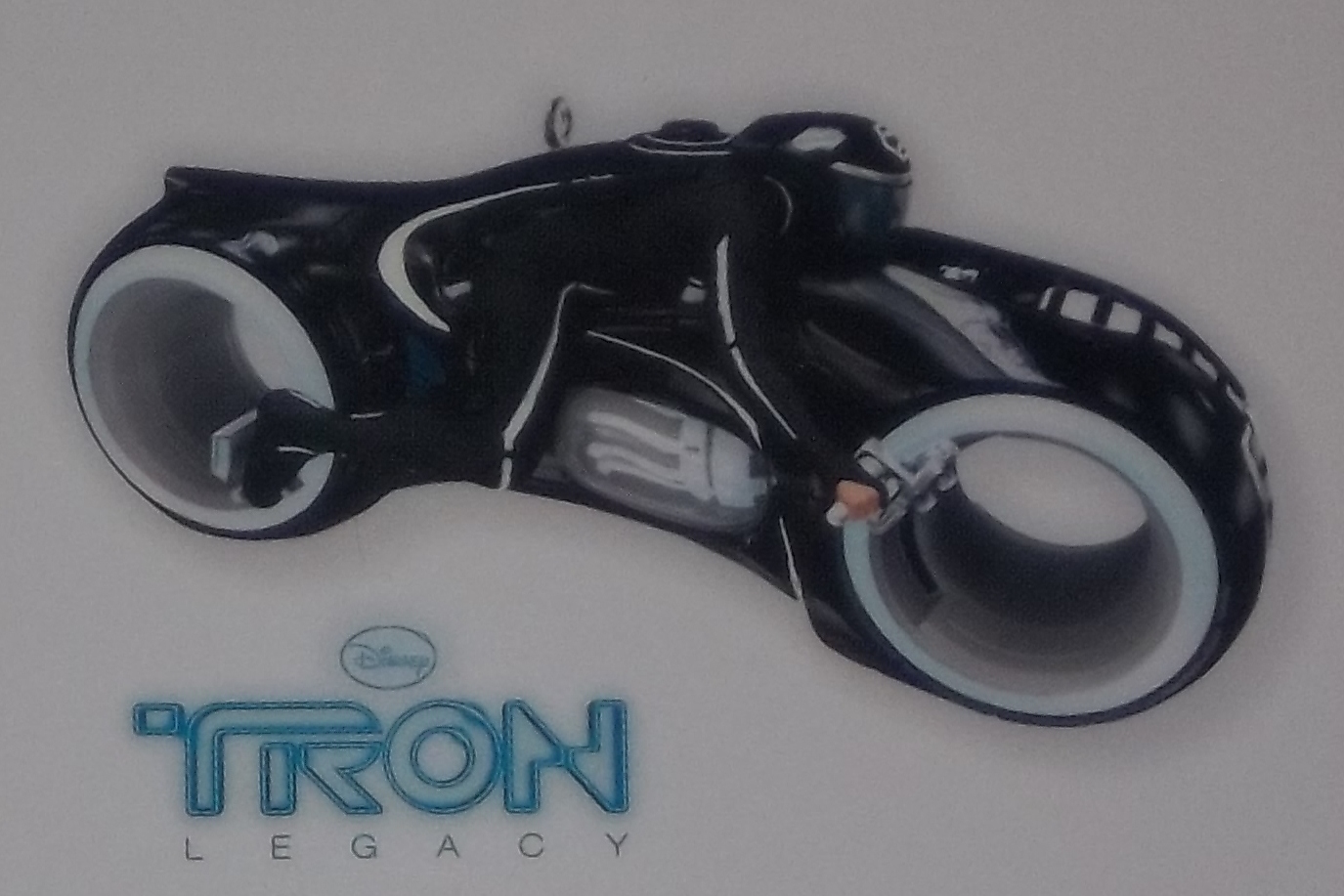
Start saving your bucks boys and girls. For a mere $55,000 you can be the proud owner of a detailed replica of the TRON light cycle! OK it’s not exactly like the ones featured in Tron: Legacy but it looks authentic and is all electric, powered by an ion lithium battery. That means you’ll get a quiet ride while brightly lit up like you just escaped the Grid from TRON and TRON: Legacy

Built by Parker Brothers Choppers, who specialize in custom mortorcyles, completed nearly a year of test drives with this light cycle and it’s now for sale. Being that it is street legal you can drive it around your local hot spots and impress everyone, not just the geeks that love the TRON films. One caveat is that it’s low slung, making the ride not too comfortable, but comfort needed to be sacrificed to get that authentic light cycle look. The cycles weigh about 474 pounds with a steel frame and fiberglass bodywork and according to Parker Brothers Choppers rides like any sport bike. That may be true but no other set of wheels looks as cool as this baby!

José Soto