Top Ten Star Trek Alien Races

trek aliens As we commence celebrating Star Trek’s 50th anniversary, it’s a good time to start looking at the best of Star Trek through the decades. To begin, let’s look at one of the hallmarks of what made Star Trek (TOS) and its spinoffs so popular: the many diverse alien races that appeared in the shows and films.

tholian10. Tholians: One of the most non-humanoid races ever featured in Star Trek. Crystalline and mysterious, the Tholians could only exist in high temperatures and were known for their punctuality and xenophobic nature. Often mentioned after they first appeared in the original series, the Tholians’ only other onscreen appearance happened decades later in Star Trek: Enterprise. Time for an encore! First Appearance: “The Tholian Web” Star Trek

andorian shran

9. Andorians: One of the founding members of the United Federation of Planets along with Vulcans and humans. These hostile, blue-skinned aliens with antenna weren’t fully explored until Star Trek: Enterprise (ENT) and episodes from that show that featured Andorians were some of ENT’s best. First Appearance: “Journey to Babel” Star Trek

changeling8. Changelings: These enigmatic shape-shifting aliens used their distrust and fear of “Solids” to rule the Gamma Quadrant and conquer any world that dared to defy them. Whether using their shock troops in the Dominion or by simply using their shape-shifting abilities to spread confusion and misdirection, the Changelings were a race to be reckoned with. “Emissary” Star Trek: Deep Space Nine

7. Cardassians: As former oppressors dukat and garekof the Bajorans, the militaristic Cardassians quickly made a lasting impression with their reptilian skin, bony necks and antagonistic but cultured manner. Harshness, nationalism and pride were their defining characteristics which led to many conflicts with other galactic powers.  Their alliance with the Dominion in Star Trek: Deep Space Nine (DS9) to regain glory would come back to haunt this proud race. First Appearance: “The Wounded” Star Trek: The Next Generation

Romulan commander

6. Romulans: Distant off-shoots of the Vulcans that never embraced a pacifistic, logical lifestyle, the Romulans while displaying a war-like, calculating demeanor were also seen to have a semblance of honor throughout the spinoffs and films. Plus, they get points for having that delectable Romulan ale. First Appearance: “Balance of Terror” Star Trek

ferengi

5. Ferengi: Donald Trump would fit in nicely with these aliens! With their hideous bat-like ears (they’re yuuuuuge!) and small stature, the Ferengi are a profit-driven alien race with a shallow. unethical nature. Still, they’re humorous and effective foils for Star Trek’s more dull, er, enlightened human society. First Appearance: “The Last Outpost” Star Trek: The Next Generation

kira

4. Bajorans: Conceived in Star Trek: The Next Generation (TNG) as fugitives and terrorists fighting to liberate their people, the Bajorans were given center stage in DS9. This show allowed a deep exploration of the race as we learned they have a deeply spiritual nature that resonated with viewers. First Appearance: “Ensign Ro” Star Trek: The Next Generation

borg

3. Borg: A cybernetic race made up of different alien species including humans, the Borg are one of the deadliest enemies faced by the Federation. Driven solely by achieving biological and technological perfection, the Borg are relentless and methodical as they assimilate any aliens they encounter including us. First Appearance: “Q Who?” Star Trek: The Next Generation

vulcan spock

2. Vulcans: Pointy eared, cold and logical, but hiding a deep respect for other lifeforms, the Vulcans are one of the most popular aliens in Star Trek lore and part of our popular culture. Best represented by the Enterprise’s first officer, Mr. Spock (Leonard Nimoy), the Vulcans are a founding member of the Federation and one of Earth’s staunchest allies. Forever mystified by our emotionally driven society, and slightly contemptuous of us, nevertheless, Vulcans are a fascinating race even if they are a bit dry. First Appearance: “The Cage” Star Trek

klingons

1. Klingons: Brutal, savage, war-hungry, but with a deep sense of honor, the Klingons are the best alien race showcased on Star Trek. First introduced as bitter enemies in TOS, kangthey were perfect stand-ins for our Cold War rivals. Eventually, the Klingons were given a makeup upgrade and became strong but contentious allies for the Federation as seen in TNG and other shows. The spinoffs and the later Star Trek films presented another, prideful side to the aggressive aliens with their sagittal crested foreheads. Like the Vulcans, Klingons are now part of our popular culture in so many ways. First Appearance: “Errand of Mercy” Star Trek


Lewis T. Grove


Superman Shafted Again In The Movies

mad superman

There were rumors percolating recently that Warner Bros. dictated that Batman be emphasized more in the upcoming movie superhero slugfest Batman v Superman: Dawn of Justice. Last week, the film’s director Zack Snyder confirmed that the film will focus more on Batman. On top of that indignity (for Superman), there are further rumors that a proper Man of Steel sequel focusing solely on Superman won’t happen. Instead, Warner Bros. was so wowed by Ben Affleck as the Caped Crusader in Batman v Superman: Dawn of Justice that now there will be three Batman films coming out.

Yeah, the Batman fans must be tickled pink about this development but what about Superman? Once again, the Man of Steel, the first superhero gets pushed to the curb in favor of Batman. Sure, Batman is DC Comics’ most popular superhero and the marketing department just love him, but the DC Extended Universe (DCEU) can’t just rely on him to carry the load for the film franchise. One of the reasons why their competitors Marvel Studios has done so well with their cinematic universe is because they doesn’t just rely on one superhero. Their biggest hit isn’t called Iron Man and the Avengers. No, that film, The Avengers, spread the attention around its many heroes. Marvel Studios hasn’t been shy about producing films on more obscure characters and their gambles paid off. Look at Guardians of the Galaxy and Ant-Man.

jokwe

In order for the DCEU to thrive, they need to diversify. They also have a rich comic book universe, it’s a shame that it’s largely ignored for Batman and his universe. Here’s another example, what went over so big in a recent DCEU trailer? The Joker and Harley Quinn in Suicide Squad. We barely are aware that it features Deadshot, Captain Boomerang and other DC supervillains. The trailer even had a Batman cameo. Probably DC/Warner concluded that since Green Lantern and Man of Steel didn’t do too well, then they should go back to what worked for them. It’s a shame really because the DC Universe is ripe for exploring on film. At least, the DC TV shows realize this with their hit shows Arrow and The Flash, and it’s more amazing that they can’t use Batman at all.

Will we ever get a true sequel to Man of Steel? Batman v Superman: Dawn of Justice was originally supposed to be that. Metallo was slated to be the main villain and the film was going to end with a chunk of kryptonite being sent to Wayne Manor. That Batcameo ballooned into having Batman be the co-lead and now supposedly the lead. Snyder’s excuse for this is that the film needed to explore Batman. What is there to explore? We know his origin already (which was shown yet again in the film’s trailer), why not just cut out all references to Superman and be done with it?

snyder bat

Right off the bat, DC and Warner Bros. seem to be panicking and going back to their old crutch of making all things about Batman. If this goes on expect to see Batman shoehorned into other upcoming DCEU films like Aquaman and Green Lantern Corps. He’s already has a guaranteed spot in Justice League. Sure, from a marketing standpoint it makes perfect sense to highlight your most popular characters but don’t be afraid to focus on other assets, if nurtured correctly, they too will be just as popular as Batman. That is the best way to compete against Marvel and it will delight fans to no end.

Waldermann Rivera

Assorted Star Trek Highlights

original enterprise

As we celebrate the 49th anniversary of Star Trek (God, that makes me feel old!), some quick thoughts came to me regarding the beloved show and the franchise it spawned. Star Trek and its many incarnations had many highs and lows, but what stuck with me throughout the decades were the highlights and some general observations about Trek.

Captain

James T. Kirk, played perfectly by William Shatner, is the best Star Trek captain. Period. Nothing more to say.

classic kirk

Villains

Star Trek has many memorable villains that faced off against Kirk, Picard and others. The biggest and baddest of them all still remains as Khan, the first version played by Ricardo Montalban. While Benedict Cumberpatch did a menacing job reimaging Khan in Star Trek Into Darkness, Montalban’s Khan was just insane. The other great Trek villains are the Borg Queen (Alice Krige) from Star Trek: First Contact, General Chang from Star Trek VI: The Undiscovered Country (Christopher Plummer had great chemistry with Shatner), Shinzon from Star Trek: Nemesis, Nero from Star Trek, Kurge (Christopher Lloyd) from Star Trek III: The Search for Spock, Q (John DeLancie) from Star Trek: The Next Generation, the Romulan Tomalak (Andreas Katsulas) of Star Trek: The Next Generation, Ron Perlman’s Nosferatu-like Viceroy in Star Trek: Nemesis, Gul Madred (David Warner) in Star Trek: The Next Generation and Gul Dukat (Marc Alaimo) in Star Trek: Deep Space Nine. In general, I enjoyed the Klingons, Romulans and Borg. Finally, I have to give a shout out to the black oil spill creature that killed Tasha Yar. It proved that oil spills will be the death of us!

khan II

Ships

Star Trek is well known for its many distinctive space ship designs. Of course, one of the best has to be the original Enterprise from Star Trek. It’s simple, classic and culturally important. With that I will state that I loooooove the Enterprise from Star Trek: The Motion Picture! As for the Enterprise seen in the Star Trek reboot, I admit that I like it, but don’t love it like I did with the earlier movie versions of the Enterprise. I also thought the space station designs in the reboot didn’t work (but I loved the ones used in the early films, the same goes for the early space dock used in the first two Star Trek films).

enterprise refit

Other great ships for me were the Enterprise D from Star Trek: The Next Generation with its amazing concept of having the saucer separating from the ship. Meanwhile, I also liked the Enterprise E first seen in Star Trek: First Contact because it had this neat, sleek look.

Starfleet also had other great designed ships. Let’s start with the shuttlecraft Galileo. It was a classic, and I’ll have to say that the updated shuttle designs seen in Star Trek: The Next Generation were nice. Two other great ships were the Defiant from Star Trek: Deep Space Nine (it’s one great, tough, little ship!) and the Reliant from Star Trek II: The Wrath of Khan. It’s got the most innovative design and was actually a happy accident. Director Nicholas Meyer saw the blueprints for it upside down and approved it. This allowed for the designs of differently shaped Federation starships.

reliant

The alien ships used in Trek were also wonderful, take the Klingon Bird-of-Prey ships that were seen in most films and TV shows. It just showed what a great design it was. I also liked the Romulan warbirds from the Trek spinoffs and the Ferengi ships, too. Other ships that deserve mentioning should be the alien probes V’Ger and the whale probe. With V’Ger I didn’t know the full shape of it until I saw the director’s cut. I think it was OK, but the closeups of it are more spectacular than its outside silhouette shape. What I liked about the whale probe from Star Trek IV: The Voyage Home was that it kind of mimicked the elongated shapes of the whales.

vger

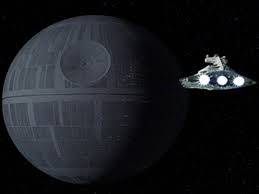
I should point out that the Borg cube first seen in Star Trek: First Contact is Trek’s answer to the spherical Death Star. Maybe the next sci-fi franchise should have the enemy ship look like a cone! Star Trek: Deep Space Nine, Star Trek: Voyager and Star Trek: Enterprise had many more ship designs, but they weren’t very memorable to me except for the Bajoran solar sail ship.

Costumes

A common thread in these musings of mine is how great the original Star Trek was and how it got so many things correct. Any so-called improvements made by the movies and spinoffs, while mostly good, just can’t compare to Classic Trek. A good example of this is the costuming of the original show. They used simple multi-colored costumes that made it easy to denote rank and division. The design and colors were so great and the 2009 movie reboot kept the same pattern, but improved on the fabrics and patterns used.

Star trek reboot

A close second would be the classic red uniforms that were used for most of the original cast movies starting with Star Trek II: The Wrath of Khan. They had a naval design that was just perfect for the movie’s tone.

khan cast

The spinoff Star Trek TV shows also had some nice costumes, especially the ones used in Star Trek: The Next Generation that followed the spirit of the original series in having different colors denoting rank and division.

As for costumes that didn’t work, that dishonor goes to the bland outfits used in Star Trek: The Motion Picture. They looked like grey pajamas! But the fancy white and grey uniform worn by Admiral Kirk and Spock’s black Vulcan tunic were great.

Music

The original theme by Alexander old trek castCourage has a resonating hailing overture that builds to a sense of adventure thanks to the use of a singer and bongo drums. I just love listening to it. Composer Michael Giaccino built on that mood with his take of the original Star Trek theme in J.J. Abrams’ reboot. His version of the original theme is magnificent.

The second best Star Trek theme for me is actually a tie between Jerry Goldsmith’s majestic score for Star Trek: The Motion Picture and James Horner’s adventurous work in Star Trek II: The Wrath of Khan. Goldsmith’s fanfare is a hail to adventure and the rest of the soundtrack made the movie better than it was. Horner’s work meanwhile had the right tone for the movie which evoked naval ships and battles.

Star Trek VI: The Undiscovered Country had a score that I liked a lot. It was dark, intriguing, yet had fanfares that were sentimental farewells for the original cast. The signature send off at the film’s end was fantastic. Other noteworthy scores are the ones for Star Trek: First Contact, Star Trek: Voyager, while the one for Star Trek: Deep Space Nine grew on me.

Background Design and Cinematography

wrath of khan bridgeFor me, Star Trek II: The Wrath of Khan had the best look on the whole because of its slightly darker lighting. It’s funny to think that the sets used in that film were the same ones from Star Trek: The Motion Picture. It’s amazing what lighting can do! On that note, I’ll say that I hated the bridge lighting used in Star Trek V: The Final Frontier, but loved the improved lighting in Star Trek VI: The Undiscovered Country thanks to Hiro Narita, who also worked on The Hunt for Red October.


Star Trek: The Next Generation had the best computer interfaces, it still looks futuristic and I love the look of the graphics. Meanwhile the look of the Trek reboot sports a fresh interpretation. It’s like walking into an Apple store with mirrors that produce lens flares! I didn’t mind the look, but I know purists object to it.


Walter L. Stevenson

Falling Skies Concludes

falling skies picture

After five seasons the TNT TV series Falling Skies has come to a conclusion. Executive produced by Steven Spielberg, Falling Skies told the saga of the Mason family and a ragtag group of human fighters resisting an alien occupation of Earth. It was a rocky road getting to its endgame with unexpected highs and lows.

Looking back at Falling Skies, it could be seen that it was trying to emulate the same post-apocalyptic feel of the more superior The Walking Dead, but it couldn’t achieve those lofty goals. Still, it was for the most part entertaining to watch.

The first three seasons were easily the best for Falling Skies since the show displayed a desperate, squalid atmosphere where the freedom fighters were always on the run and for the most part were just staying one step ahead of the alien Espheni and their minions. As the show progressed so too did the humans.

fs castLed by Tom Mason (Noah Wyle), his wife Anne (Moon Bloodgood) and Col. Dan Weaver (Will Patton), the human fighters got better at fighting the aliens and were able to set up a provincial government thanks to the help of alien allies called the Volm, represented by one of the coolest TV aliens, Cochise (Doug Jones). Despite its limited budget, Falling Skies was generally entertaining, well acted and had some impressive production values. The set design was extremely dark and disheveled, which sold the fact that the American countryside was decimated by the alien invaders. The show had its faults such as delving too much in Mason family drama that involved Hal’s three sons, and the stories and characters were uneven.

hal and cochise skitters attack truck

Regrettably, Falling Skies took a turn for the worst in its fourth season, which was just a symptom of its behind-the-scenes hurdles where the show went through many showrunners. How bad was it? Well, one of the worst sci-fi clichés was used: the alien/human hybrid who prematurely ages into a young adult and has superpowers. Then the show’s characters were split up; some were put into a ghetto where Tom Mason became a vigilante superhero (I’m not making this up), then one of his sons wound up in an alien youth camp where the children were being indoctrinated to welcome the alien conquerors. If the aliens had conquered Earth why go through all this trouble?

Luckily, Falling Skies improved somewhat in its final season. It became grittier and darker even though the writing and character motivations were all over the place. Take for example, breaking bad popethe character of John Pope (Colin Cunningham), who was first introduced as a villainous biker type then became an antihero. During the final season, Pope decided to go back to his murderous, evil ways and was after Tom Mason. At that point, Pope became like Jason Voorhees and was impossible to kill. He would show up in the last few shows in an extended cameo and be unceremoniously dispatched only to turn up alive in the next episode. This went all the way into the final episode, but at least his final scenes were actually effective thanks to Cunningham’s acting ability.

It was easy to tell that the showrunners wanted to wrap up the show in the last episodes, which is why things felt so rushed. But what was maddening, was the insistence of introducing and then ignoring new characters. Some were interesting, others were forgettable. Like with Pope, this trait went on into the final episode “Reborn” where a new biker type entered the picture (Jeff Fahey), who basically provided off-screen cannon fodder.

find your warriorThe final battle between the humans and the aliens showed its budgeted limitations with much of the action happening off-screen and with sound effects. But at least “Reborn” ended on a satisfactory note, even if it won’t go down as a great finale. Looking at its pluses and minuses, the final episode represented the entirety of Falling Skies. Some good ideas with uneven execution, but on the whole, the show was a decent diversion on TV for the summer.

Lewis T. Grove

Star Wars Movie Retrospective: Star Wars Episode III: Revenge Of The Sith

episode III poster

“You were the Chosen One! It was said that you would destroy the Sith, not join them! Bring balance to the Force, not leave it in darkness!” –Obi-Wan Kenobi

Sometimes the cliché is true; third time is the charm. After the poor reception of the first two Star Wars prequels, filmmaker George Lucas finally hit his directorial stride that he lost long ago with the final prequel Star Wars Episode III: Revenge of the Sith. The result of his efforts? The most underrated and darkest Star Wars film to date.

coruscant battle

Star Wars Episode III: Revenge of the Sith takes place during the last days of the Clone Wars. The opening scrawl literally opens with the word “War!” then explains that the galaxy-wide conflict between the Galactic Republic and the Separatist Alliance has been devastating to the Republic. The Separatists, led by the Sith Lord Count Dooku (Christopher Lee) and his second-in-command the cyborg General Grievous (Matthew Wood), have kidnapped Chancellor Palpatine (Ian McDiarmid), the leader of the Republic. As the Separatists leaders try to flee Coruscant, the capital planet of the Republic with their hostage, a massive and ultimately decisive battle breaks out between two opposing space armadas over Coruscant.

Amidst the cluttered, epic space battle, two Jedi Knights, Obi-Wan Kenobi (Ewan McGregor) and Anakin Skywalker anakin defeats dooku2(Hayden Christensen), take their small fighter ships and infiltrate Grievous’ battlecruiser where Palpatine is being held. The Jedi fight their way to the captive chancellor. They soon confront Dooku and engage in a lightsaber duel where Obi-Wan is knocked unconscious, but they younger Jedi is able to defeat the Sith Lord. At Palpatine’s urging, Anakin beheads a surprised Dooku after some hesitation.

As Anakin tries to escape with Palpatine and Obi-Wan in tow, by this time, the battlecruiser has taken on severe damage from the space battle and is losing orbit. General Grievous manages to escape in a shuttle, leaving Anakin to pilot the battlecruiser and crash land it on the citified planet.

anakin and padmeLater, amidst the celebration among Palpatine and other politicians over Dooku’s death and the war concluding, Anakin steals away to rendezvous with his wife Senator Padmé Amidala (Natalie Portman), whom he secretly married in defiance to Jedi rules that forbids romantic relationships. She reveals that she is pregnant, and although he is excited at first, that night he has dreams where she dies during childbirth, which unsettles him.

General Grievous arrives on the planet Utuapo, his base of operations, and confers via hologram with the Sith Lord Darth Sidious. The cloaked figure orders him to bring other Separatists leaders to the volcanic planet Mustafar and announces that soon he’ll have a younger, more powerful replacement for Dooku.

At the Jedi Temple on Coruscant, yoda anakinAnakin confides with Jedi Master Yoda (Frank Oz) about his premonitions. Yoda warns him about being obsessed with his visions and adds “The fear of loss is a path to the dark side.” The wizened Jedi tells Anakin that death is a part of life and those that die become one with the Force and that the living shouldn’t mourn them and to let go of his fears. Anakin is clearly unsatisfied with Yoda’s advice.

Later, Anakin meets with Palpatine, who appoints him to be his representative to the Jedi Council. This is against Jedi procedure since they make such appointments. The young Jedi is happy, thinking that he’ll become a Jedi Master, but is angered later by the Council. The other Jedi state that while they accept the appointment and he can sit in the Council, he won’t be made a Jedi Master. After the Council meeting concludes, Obi-Wan reveals to Anakin that the Council allowed the appointment because they want the young Jedi to report to them about Palpatine’s dealings. They no longer trust the chancellor who is amassing more executive powers and has stayed in office past his term. Anakin is disturbed by this but Obi-Wan reminds him that the Jedi are loyal to the Senate not its leaders and to not to let his friendship with Palpatine cloud his judgment.

anakin palpatineAt night, Anakin joins Palpatine at an opera and learns of Grievous’ location. The chancellor adds that he distrusts the Jedi and thinks that they want to overthrow him . Anakin admits his faith with the Jedi has been shaken lately. Then they engage in a philosophical discussion about the similarities between the Jedi and the Sith. Palpatine asserts to an intrigued Anakin that both sides crave power, but that the dark side of the Force is more powerful and gives one control over life and death.

Anakin later attends a Council meeting and reports that Grievous is on Utuapo and that Palpatine wants him to capture the cyborg leader. The Council members overrule him and assign Obi-Wan to go instead. Anakin is visibly displeased over their decision, but says nothing. Afterwards, he accompanies Obi-Wan to a space port where the two men reaffirm their friendship and separate on good terms.

obi wan and mount

Obi-Wan arrives on Utapau and confronts Grievous. The four-armed cyborg tries intimidating the Jedi with his prowess by wielding four lightsabers simultaneously. Obi-Wan coolly counters Grievous with his adept lightsaber skills. Then a newly arrived clone army attacks the droid army guarding Grievous and the Separatist base. Grievous tries escaping, but is pursued by the Jedi, who catches up to him and the fight ensues. It ends with Obi-Wan shooting the cyborg dead with an “uncivilized” blaster.

obi wan punks g

Anakin reports to Palpatine the news about Obi-Wan’s confrontation. In the conversation, Anakin admits his disillusionment with the Jedi and the chancellor starts manipulating him. He reveals that he is a practicioner of the dark side of the Force and that Anakin could learn so much more if he embraced the dark side. Horrified about the revelation, he leaves and informs Jedi Master Mace Windu (Samuel L. Jackson) about the chancellor’s true nature. Windu tells him to wait in the Council chambers while he and other Jedi leave to confront the Sith Lord.

four inept jediWindu and three other Jedi Knights arrive at Palpatine’s office and try to arrest him. But the chancellor is surprisingly fast and kills three of the Jedi with his lightsaber except for Windu. Anakin rushes over to the office in time to see the two men in battle. Windu disarms Palpatine, but the Sith Lord unleashes Force lightning from his fingers at Windu. The Jedi is able to deflect the lightning bolts, which splash back and disfigures Palpatine. palpatine defeats winduWindu realizes that the chancellor is too dangerous and must be killed. Anakin argues that Palpatine should be allowed to live and stand trial. Undeterred, Windu prepares a killing stroke but is stopped by Anakin who dismembers his hand. This gives Palpatine the opportunity to kill Windu with his Force lightning.

Anakin is dismayed at what he’s done. He realizes that he has no place with the Jedi now. Palpatine asks him to become his apprentice and the young man accepts as long he helps him save Padmé. The chancellor agrees and renames him Darth Vader. Palpatine tells him that all the Jedi are enemies of the Republic and must be killed. He orders him to kill the Jedi at the Temple and the remaining Separatist leaders on Mustafar.

As Anakin, now Darth Vader, leads a clone army into the Jedi Temple, Palpatine broadcasts a special command, Order 66, to every clone trooper spread out throughout the galaxy. The clones mercilessly and abruptly turn on their Jedi commanders and decimate the ancient order. The only ones who escape execution are Obi-Wan on Utapau and Yoda, who is on the Wookie planet Kashyyk leading a battle against droid troops. Yoda is able to flee the planet thanks to the help of loyal Wookies, including Chewbacca (Peter Mayhew).

vader marches

The Jedi Temple is in flames as Vader and the clones kill all the Jedi there, including young children, the sole witness to the atrocity is Senator Bail Organa (Jimmy Smits) who went to the Temple to see what was happening. Organa later sends Obi-Wan a holographic message warning about him the slaughter and to meet with survivors at certain coordinates. Meanwhile, Vader goes home and lies to Padmé that the Jedi tried to overthrow the Republic. Then he leaves her for his mission to go to Mustafar and end the war.

Obi-Wan and Yoda meet at Organa’s ship and end of republicplot to return to the Temple and intercept a broadcast for all surviving Jedi to return to Coruscant. Once they arrive, Obi-Wan is able to change the message into that of a warning. From security footage, they learn that Anakin has betrayed them. At the same time, Organa and Padmé attend a session in the senate where Palpatine denounces the Jedi and that in order to maintain order he has to reorganize the Republic into a Galactic Empire. After viewing the footage, the two Jedi decide to confront Palpatine and Vader. Yoda, the stronger of the two, will face Palpatine, while Obi-Wan will confront his former apprentice. From there, the two Jedi separate to confront their foes in battles that will literally decide the fate of the galaxy.

Continue reading