Spider-Man: Across the Spider-Verse Embarks On A Stunning, Visual Journey Throughout The Spider-Verse

When it was announced that the release date for Spider-Man: Across the Spider-Verse was delayed, there was reason for alarm. Originally the sequel to Spider-Man: Into the Spider-Verse was supposed to have come out last year, but its release was pushed to this year. Often such significant delays mean that the production of a film is troubled and the finished product winds up being a disappointment. Thankfully, that is not the case with Spider-Man: Across the Spider-Verse, which excels past Spider-Man: Into the Spider-Verse in so many ways in terms of story and visuals.

Spider-Man: Across the Spider-Verse opens with Gwen Stacy (Hailee Steinfeld) recounting her life as Spider-Woman (or Spider-Gwen) in her own universe and why she left it to explore other universes with different variants of Spider-Man and Spider-Woman. After the lengthy prologue, we meet again Miles Morales (Shameik Moore), the Spider-Man of Universe 1610. He has the typical Spider-Man struggles of juggling his civilian life as a teenager with that of fighting crime as Spider-Man.

On his way to meet his parents, Rio (Luna Lauren Velez) and Jefferson (Brian Tyree Henry), Spider-Man comes across a supervillain called the Spot (Jason Schwartzman), whose body is covered with removable spots that are portals throughout inter-dimensional space. For example, if Spider-Man punches him in the chest and there is a spot there, Spider-Man’s fist will go through the spot and emerge behind Spider-Man to end up hitting the superhero instead.

The Spot is obsessed with getting revenge on Spider-Man because he blames the superhero for his dilemma. It turns out he was one of the scientists present in the first film where Miles and other Spider-powered heroes destroyed a collider machine that allowed travel between universes. The Spot gained his powers after being caught in the explosion of the collider and we also find out that the scientist was partly responsible for Miles becoming Spider-Man.

After the Spot is defeated and humiliated by Spider-Man, he gains the ability to travel throughout the multiverse and seeks out other colliders in those universes to empower himself even more. This decision will not only endanger the multiverse but severely affect Miles’ personal life.

As the Spot explores other realities, Miles is visited by Spider-Gwen, who is now part of the inter-dimensional Spider-Society that guards the Web of Life and Destiny by seeking out dimensional anomalies throughout the multiverse. She was looking for the Spot, who has become an anomaly traveling throughout several universes. Miles soon joins her as she returns to Spider-Society headquarters on Earth 928 and meets numerous variants of Spider-Man and Spider-Woman, including their leader, Spider-Man 2099 (Oscar Isaac).

Spider-Man 2099 explains to Miles that all the universes are intertwined in a delicate metaphysical web with canon events, which are important moments in time for those universes. Disrupting those events will eventually unravel universes and this affects Miles in a crucial way after learning that in all of the Spider-Men and Spider-Women universes have canon events that involve the deaths of distinct police captains. Miles deduces that his father, who was just promoted to a captain, will soon die. He comes into direct conflict with the Spider-Society since he resolves to save his father at all costs, canon event be damned.

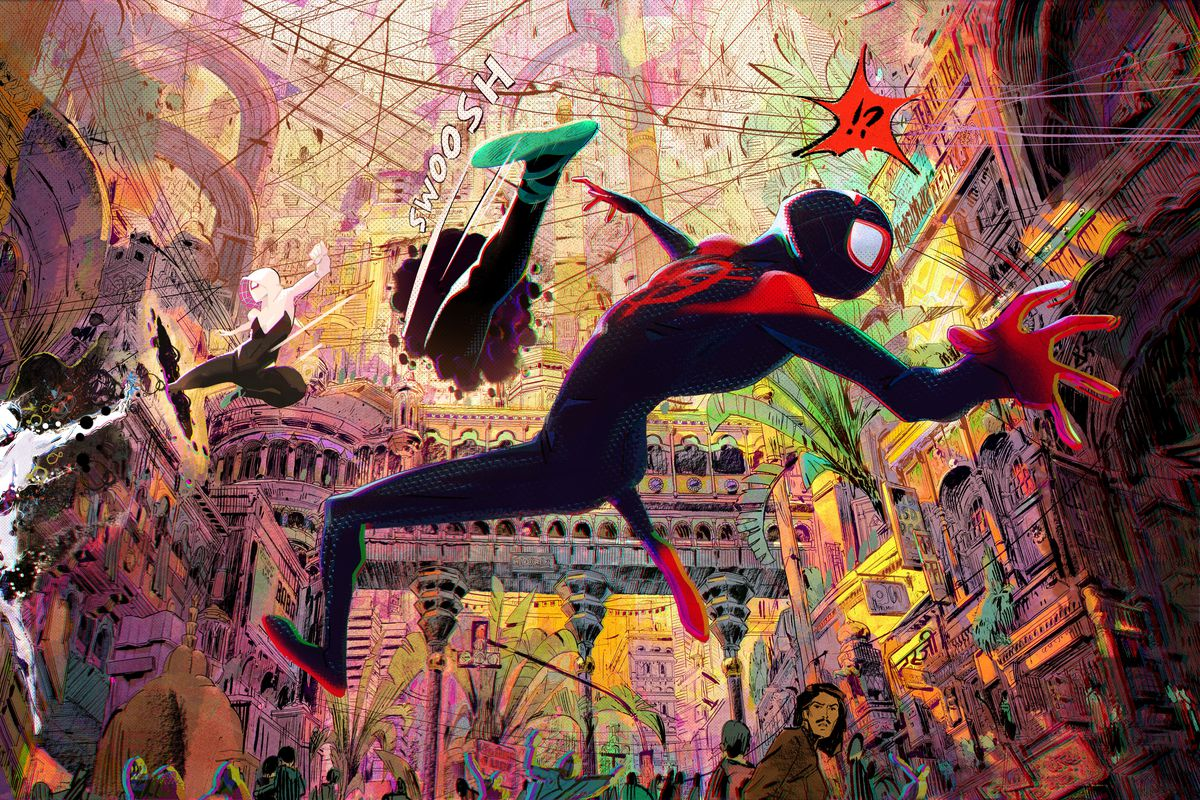
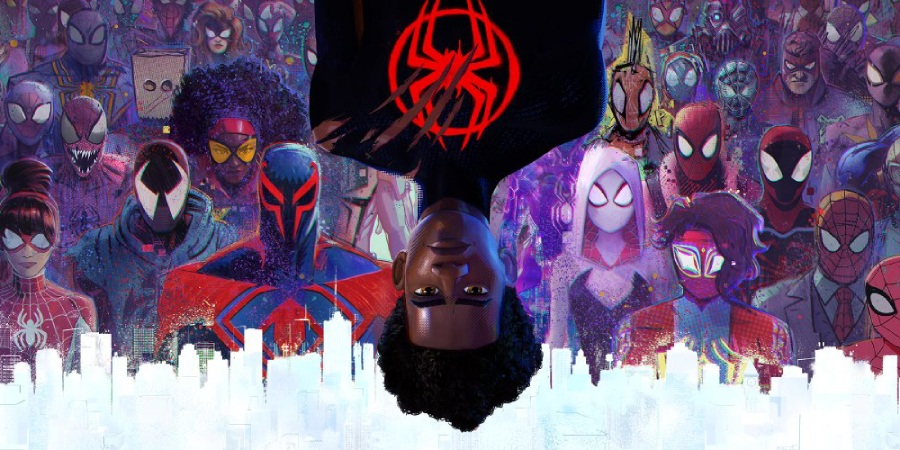
In this day and age of overhype from fans and critics it is easy to dismiss praise for many films. However, Spider-Man: Across the Spider-Verse lives up to the hype because it is truly one of the finest animated and superhero films ever produced. Like the first film, Spider-Man: Across the Spider-Verse is a visual feast that incorporates different animation styles and frame rates. The best examples of this are with how Spider-Gwen is represented with soft watercolor palettes, while Spider-Punk (Daniel Kaluuya) is animated with harsh punk rock art whose clothing is animated at a different frame rate than the character himself. In other examples, the heroes fight a Vulture (Jorma Taccone) from a Renaissance-styled universe looks like a Da Vinci sketch that has come to animated life with sepia colors; we also meet Ben Reilly/Scarlet Spider (Adam Sanberg), who is animated as a ‘90s-style character with overripe muscle lines and bright colors.

The visual canvas of the film is very busy with wild animation and numerous Easter eggs. Some scenes feature actual panels from classic Spider-Man comics and even images from live-action films. It will take numerous viewings of this film for anyone to fully spot all of them. Each scene is so painstakingly animated and colored, which leaves us with a film that is just dazzling to the eyes.

Of course, all of the visuals would be meaningless without compelling story and characters, and Spider-Man: Across the Spider-Verse also excels in this area. So much emotion is conveyed that is either subtle or outlandish. Just like the first film, this sequel is a coming-of-age yarn only with our hero having harder choices to make in his life as he grows into adulthood. Anyone is readily able to relate to Miles’ ethical dilemma of the needs of the many outweighing those of the few and we would probably make the same choice he made. What also helped with the film’s emotional stakes is that it took time to develop Miles’ relationship with his parents, which is full of angst and love. We understand their point of view as they struggle to relate to their son who is growing up to be a man.

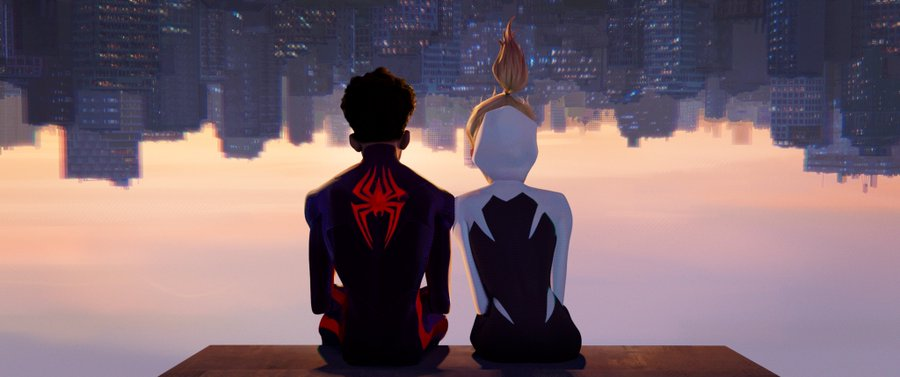
Another character who has her own emotional arc is Gwen, who feels alienated and alone in her world. Unable to connect to her father, she in a sense runs away, only in this case she runs away from her universe. The deepening friendship she has with Miles is a true emotional anchor in the film and feels so natural as these two alienated teens are able to connect to one another.

Peter B. Parker (Jake Johnson), who served as a mentor to Miles in Spider-Man: Into the Spider-Verse has a reduced role in this film, which is regrettable. Still, it was a delight seeing him again and what he was been up to. Hopefully, he will have a larger role in the second sequel coming next year.

As many have learned, Spider-Man: Across the Spider-Verse ends on a cliffhanger and it is an intense one. But fear not, Spider-Man: Beyond the Spider-Verse will come out in theaters in March 2024, which is less than a year away and we were able to handle the wait between these films. Given how Spider-Man: Across the Spider-Verse is much better than the original, which in itself was a classic, we can only hope that Spider-Man: Beyond the Spider-Verse will excel past this sequel or at least stick the landing.

 José Soto


Return Of The Jedi: A 40-Year Celebration

This month marks the 40th anniversary of Star Wars Episode VI: Return of the Jedi, the last of George Lucas’s original Star Wars trilogy, and some would say, the end of the classic Star Wars era. It’s seen by many as the least of the first three films, but it is still revered for its great action sequences, especially the climatic Battle of Endor, as well as for its final confrontation between our hero the young Jedi Luke Skywalker and the Rebel Alliance’s sinister nemesis, Darth Vader. Even now, 40 years later, the film is still celebrated and considered to be one of the better Star Wars films.

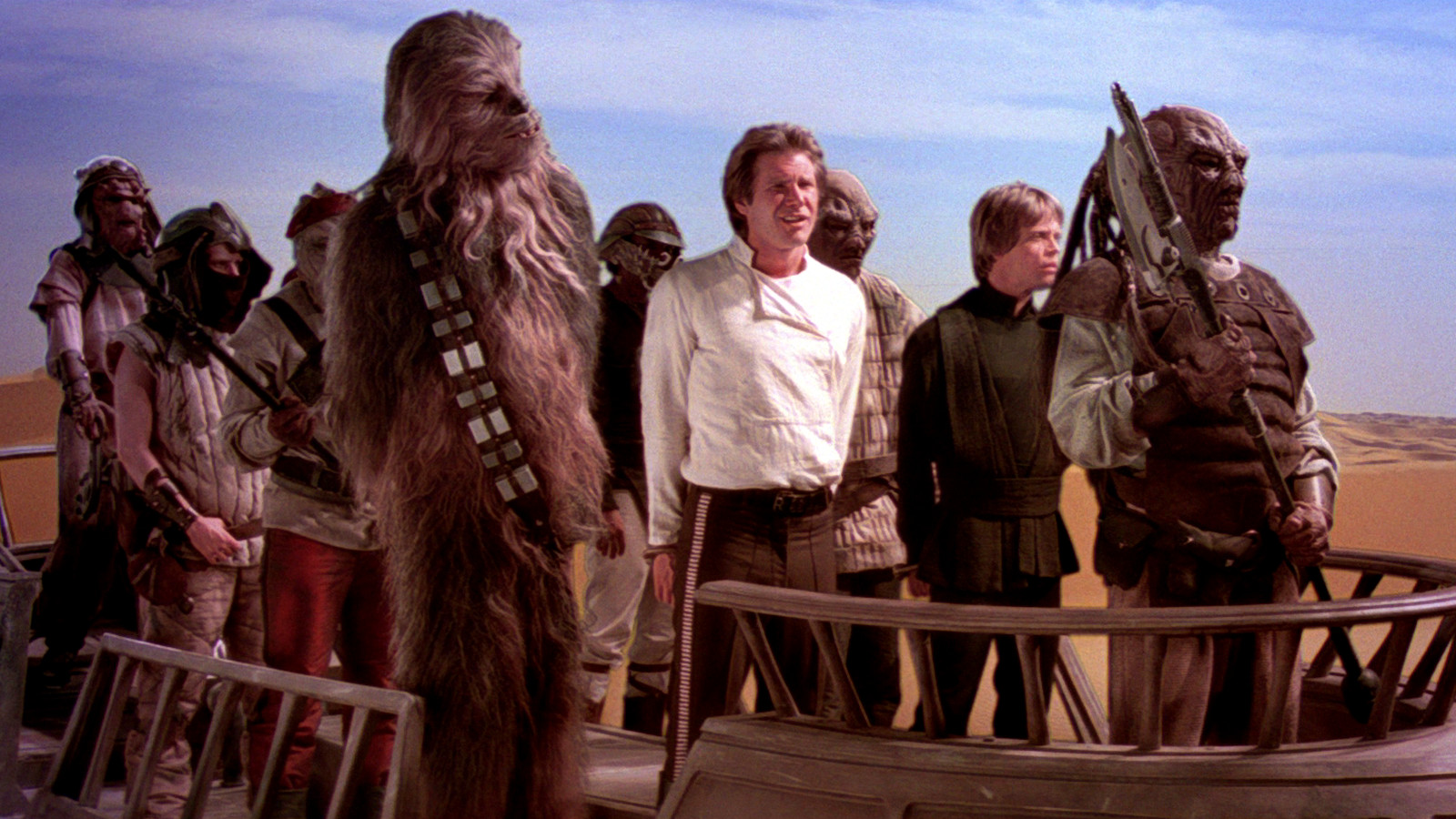
The story starts out with Luke returning to his home world of Tatooine, not seen since the first film, to rescue smuggler and friend Han Solo. The smuggler was captured by the bounty hunter Boba Fett in the cliffhanger ending to Star Wars Episode V: The Empire Strikes Back, and sent to Jabba the Hutt to pay for his debts to the vile gangster. Luke is aided by iconic Star Wars heroes, Princess Leia, Chewbacca and Lando Calrissian, as well as the lovable droid duo R2-D2 and C-3PO. Their rescue of Han and escape from Jabba’s palace is thrilling and sets a great and exciting tone for the movie.

Afterwards, Luke returns to the planet Dagobah for final training as a Jedi with Jedi Master Yoda, who soon dies of old age. The wise old mentor’s subsequent death after 900 years of life is sad to see. After encouraging words from the spirit of his other mentor Obi-Wan Kenobi, Luke returns to his friends in the Rebel fleet for the final assault on the Empire’s new Death Star weapon. 

Return of the Jedi introduces a new villain, who has captivated audiences ever since, the evil Emperor Palpatine, played to perfection by Ian McDiarmid. His terrible old visage and cackling laugh instantly made him a fan favorite. His plan along with Darth Vader to bring Luke to the dark side of the Force almost succeeds, as he goads Luke to kill Vader. But good wins out in the end as Vader is unable to allow Palpatine to kill his own son after Luke rejects the Emperor’s temptations, and he kills Palpatine while suffering fatal injuries of his own.

This is preceded by a fantastic lightsaber battle between Luke and Vader with a haunting soundtrack by film composer John Williams in the background. Luke’s unmasking of his father as he was dying is a famous moment in Star Wars history, as we finally get to see the man behind the terrifying mask, a scarred and sad man haunted by his actions. His message to Luke that he was right about Vader having good in him in the end is in some ways the culmination of both the original and prequel trilogies and brings Anakin Skywalker’s story to a sad but fulfilling end.

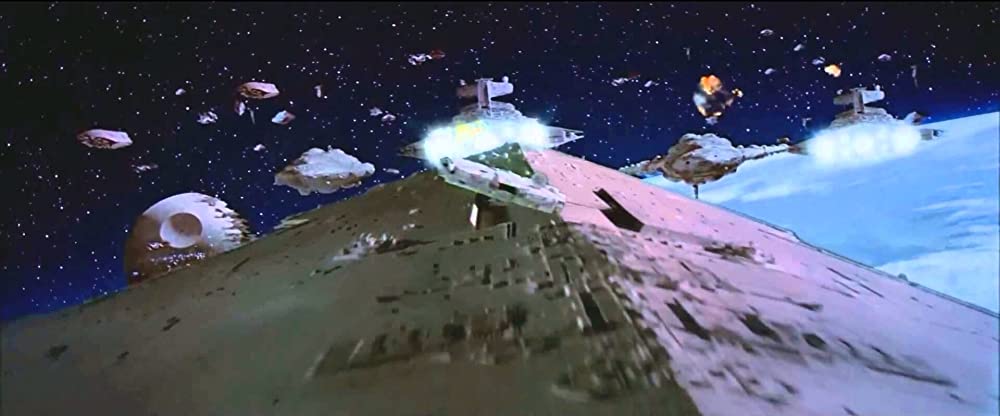
All of this happens at the same time as the Rebel fleet led by Lando and Admiral Ackbar, attacks the Death Star, but is ambushed by a waiting Imperial fleet. The subsequent space battle is still arguably the best space battle seen on film with swarms of star fighters hurtling through space among massive star destroyers, numerous Imperila TIE fighthers, and Rebel Mon Calamari cruisers.

Despite the odds, the Rebel ships are able to penetrate and destroy the Death Star thanks to the ground efforts of Han, Chewie and Leia. They infiltrate the forest moon of Endor, and aided by the native Ewoks, are able to annihilate the Empire’s shield generator protecting the Death Star. Seeing the diminutive Ewoks, who look like teddy bears defeat Imperial stormtroopers is somewhat silly, but the action is still exciting to watch, especially the speeder bike race through the woods, as well as Chewie stealing an AT-ST walker and using it on the Empire’s forces. 

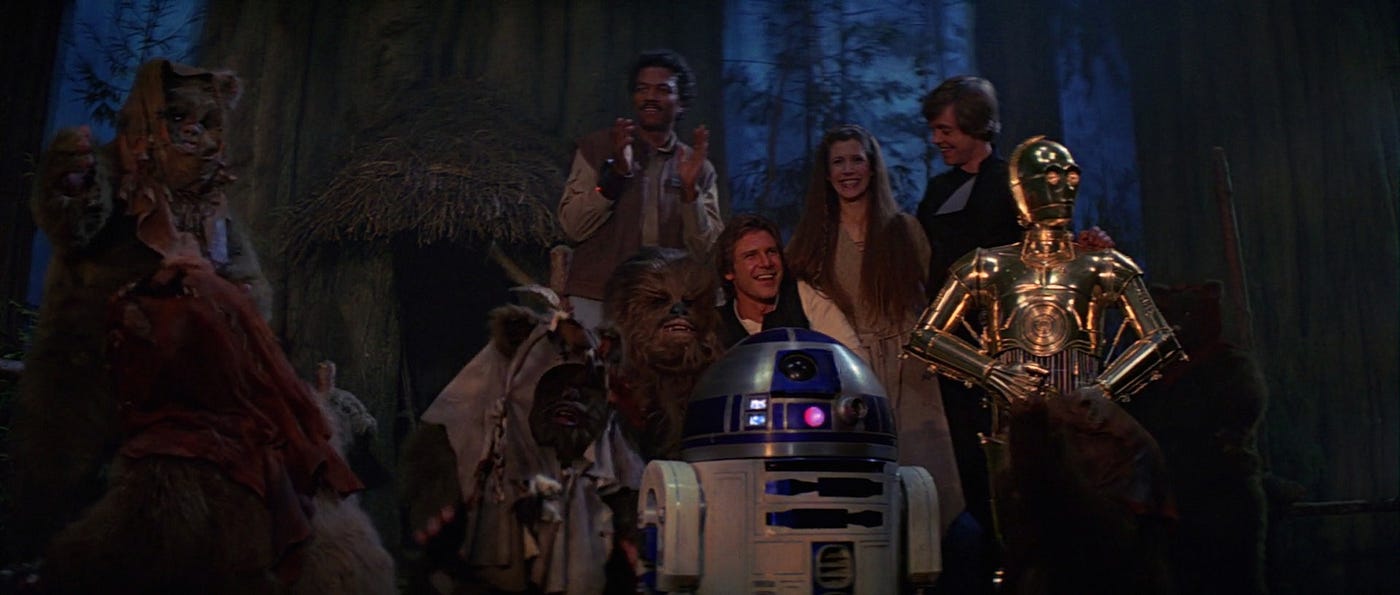
Star Wars Episode VI: Return of the Jedi ends with a triumphant celebration in the forest with the Rebel heroes and their new friends after Luke burns the remains of his father in a haunting scene. In the so-called “Special Edition” of the film that came out in the ’90s, extra scenes were added to the celebration which showed other parts of the galaxy celebrating the defeat of the Empire. This included the planets Coruscant and Naboo, which help tie in the prequel films to the original trilogy and being that the prequels had not come out yet, helped increase fans’ anticipation for the prequels. This enhanced the feeling of elation as we saw how wide the scope of the war was in the galaxy.

These closing scenes are also the last time we see the trio of Luke, Han and Leia in their prime, so to speak, and the last image of them all together with their friends having finally ended the Empire’s reign of terror. It is something fans will remember for all time given that we never saw the trio reunited in the sequel trilogy of films that came out in the last decade, although they made appearances in those films. The ending of Star Wars Episode VI: Return of the Jedi is basically a variant on “they lived happily ever after”, which is appropriate since George Lucas intended Star Wars to be a fairy tale, and the film definitely has that feeling to it. It doesn’t quite live up to the standard set by the first two films, which are basically masterpieces, but it’s still a very good film that is remembered four decades later for its iconic moments and is a great sendoff for some of cinema’s most revered characters.

C.S. Link

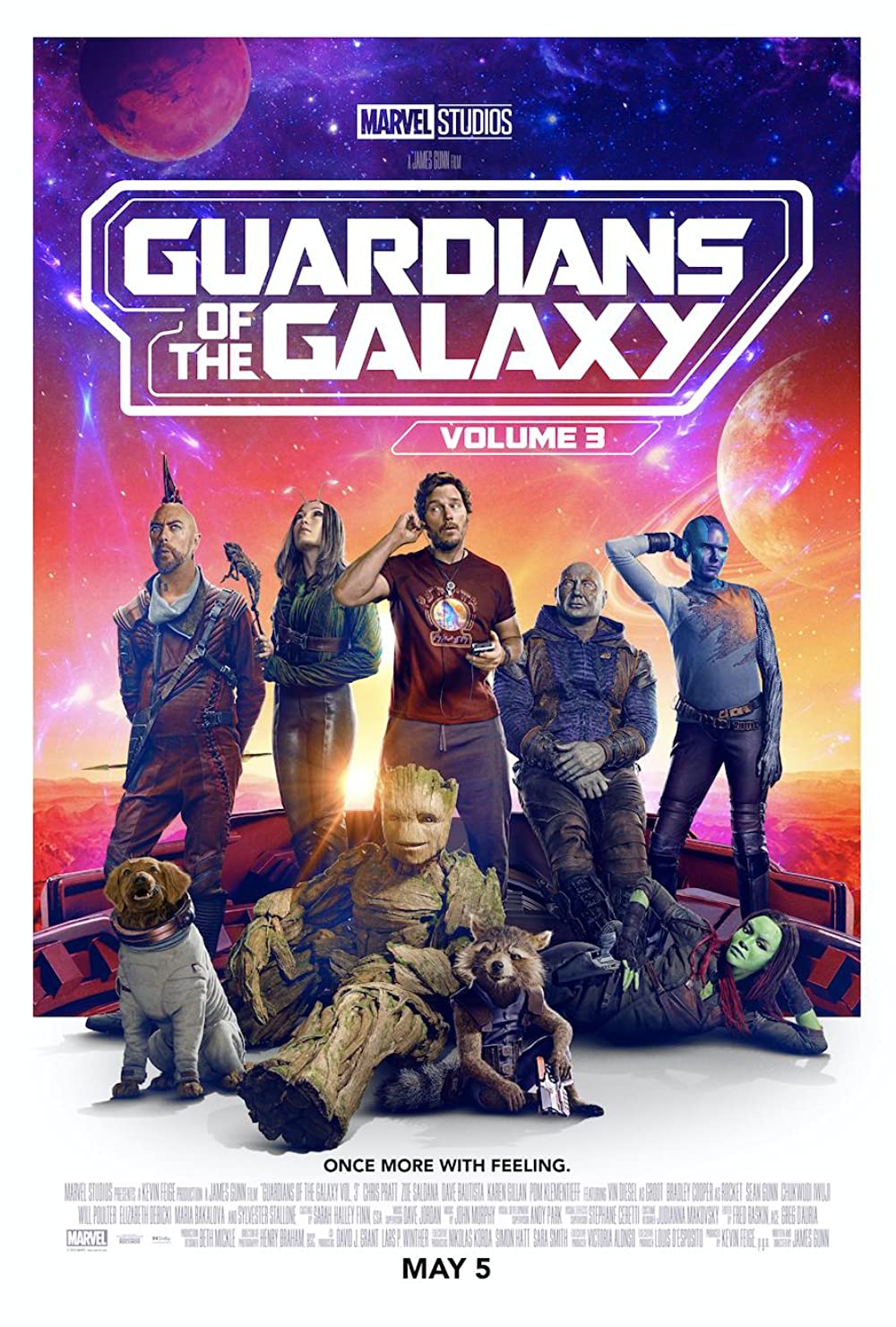
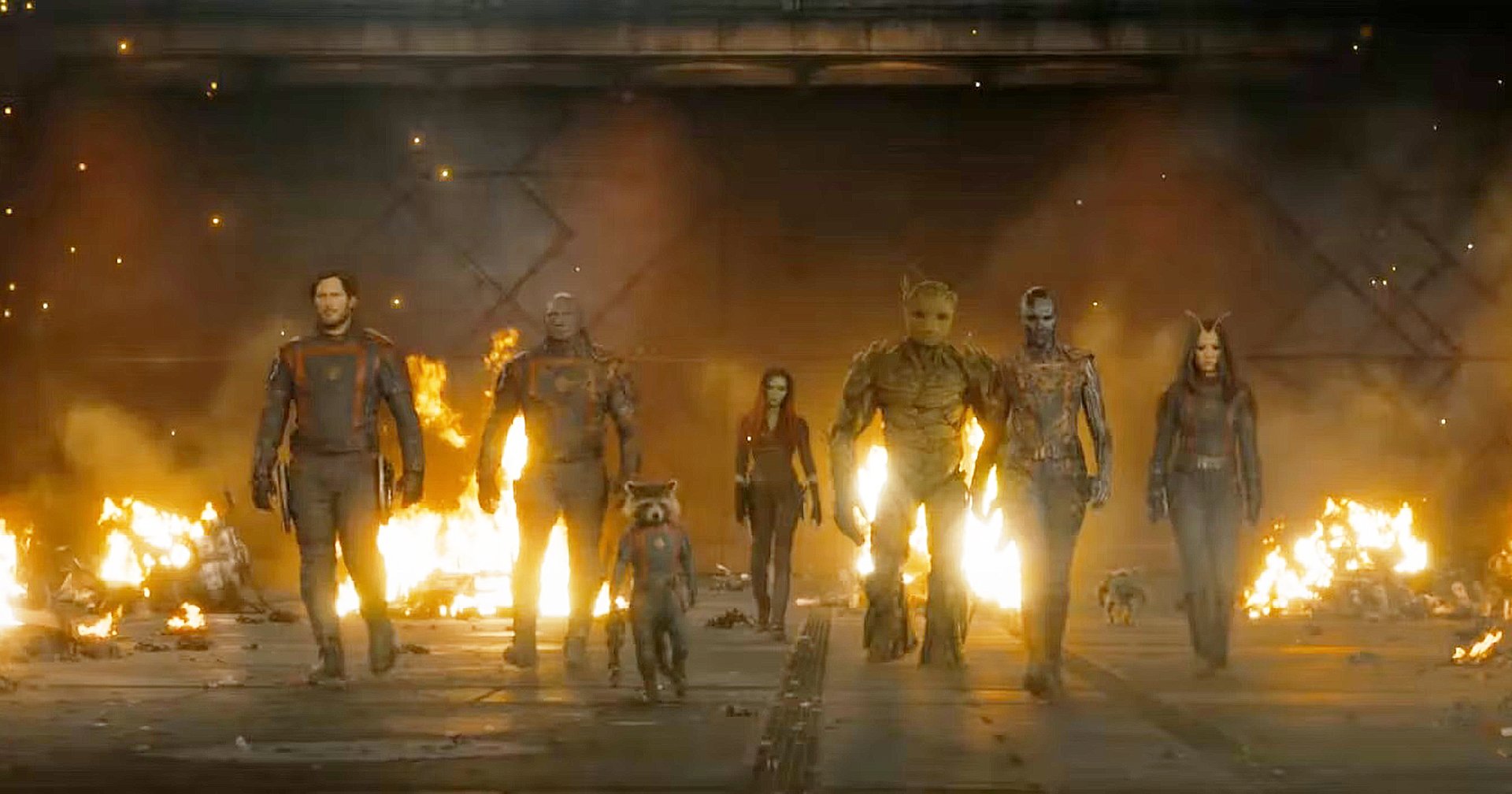
Guardians Of The Galaxy, Vol. 3 Perfectly Concludes A Classic Trilogy

Filmmaker James Gunn finishes his tenure at Marvel Studios and the Marvel Cinematic Universe (MCU) with Guardians of the Galaxy, Vol. 3, the finale of his classic trilogy about misfit cosmic heroes.

Gunn has been able to maintain the same level of heart, humor and action throughout all three Guardians of the Galaxy film with the third film, and in some ways he elevated it with his MCU swan song.

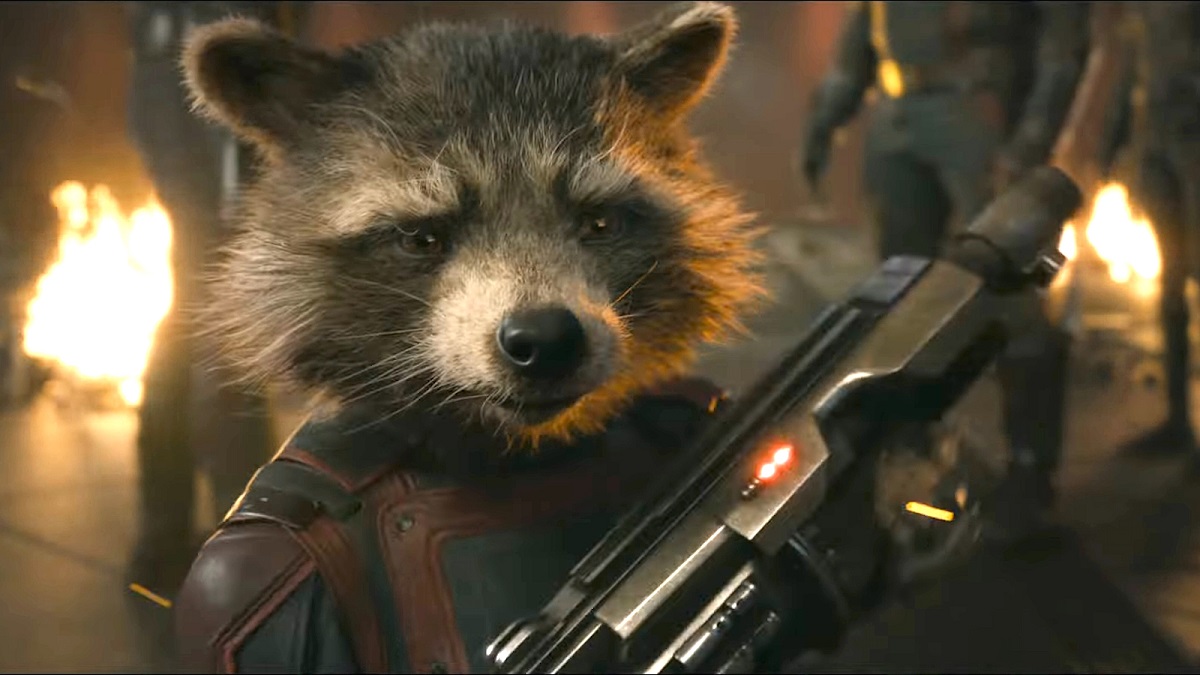
Taking place years after the first two films and the events of the last Avengers films, Guardians of the Galaxy, Vol. 3 brings back all the loony and loveable heroes. Now the owners of Knowhere, a cosmic mining station made up of a dead Celestial’s skull, the Guardians are more administrators than intergalactic heroes. The film begins with a flashback origin of Rocket (voiced by Bradley Cooper), a cybernetically and genetically enhanced raccoon with genius-level intellect. This tragic origin story peppers the film throughout and underscores the emotional and physical pain that Rocket endures in his life. The origin features some of the most gut-wrenching moments in the film and elevates Rocket into a true hero.

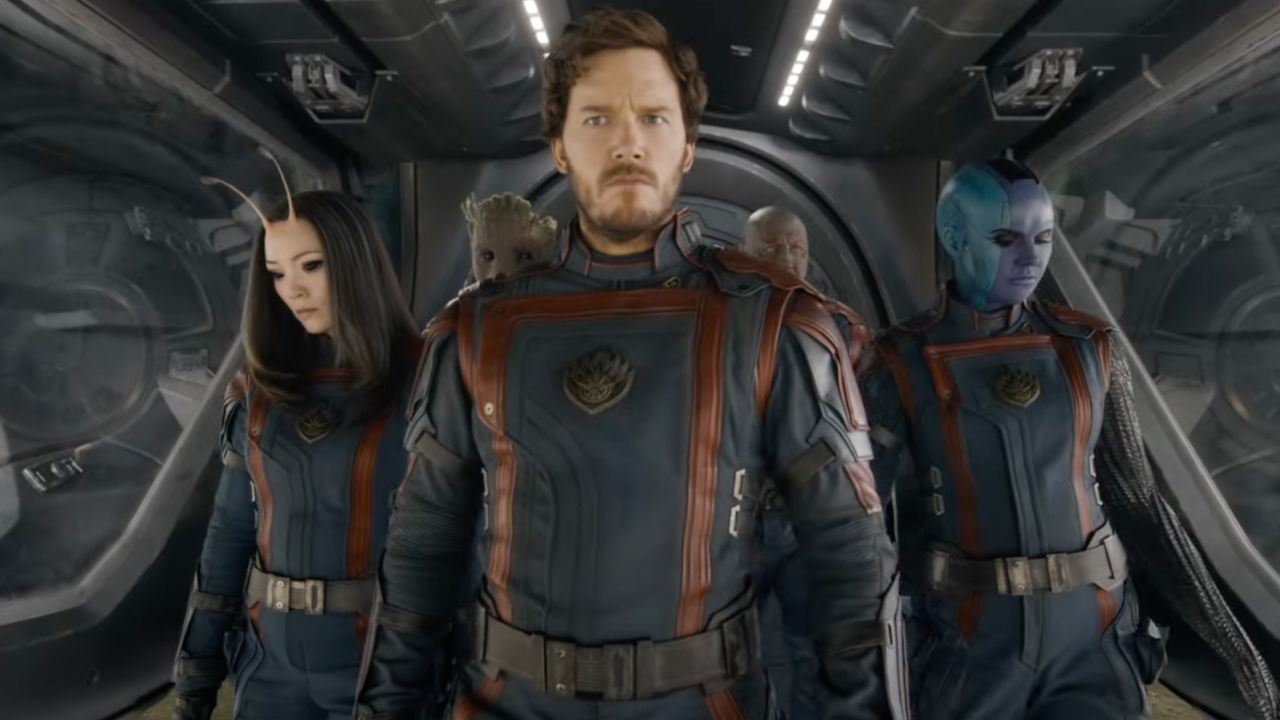
After the flashback we are taken to Knowhere where we meet again the other Guardians. Their leader Peter Quill (Chris Pratt) has become a drunk because he is unable to get over the loss of his girlfriend Gamora (Zoë Saldaña), who was killed during Avengers: Infinity War. Adding to his misery is that another version of Gamora from an alternate timeline exists, but she does not have any feelings for him. As his fellow Guardians try to console him, they are attacked by Adam Warlock (Will Poulter), a golden, artificially created super-powered person. Though he is defeated by the Guardians, he gravely injures Rocket before he leaves them. The rest of the film focuses on the efforts of Quill and the other Guardians to find a way to save their friend. The other Guardians include the powerful but dim-witted Drax (Dave Bautista), Rocket’s BFF, the tree-like Groot (voiced by Vin Diesel), the empath Mantis (Pom Klementieff), and the cyborg Nebula (Karen Gillan). During their intergalactic journey, they soon cross paths with the insane geneticist and Rocket’s creator, the High Evolutionary (Chukwudi Iwuji), who has been hunting Rocket for his own diabolical purposes.

While the film continues the same irreverent tone as the previous entries in the trilogy, it does stand on its own due to its more mature atmosphere. The characters have grown since we first saw them in 2014 and are looking for something more with their lives. This was a rather unexpected and logical thing to do with the characters, because while they have become a family unit, they have to evolve and continue in their own journeys. The core characters, especially Rocket and Peter Quill, each have their own unique arcs and level of development, whether they have to deal with their painful pasts or prove they are much more than what others think of them. Rocket and Quill’s arcs have powerful and engaging arcs that form the heart and soul of the film and elevate it above standard superhero films. These character moments were richly satisfying and came to appropriate conclusions.

Unlike the other films, there is an intense feeling of dread and melancholy that pervades the film as the Guardians face their potential doom at every corner. Without giving anything away, there were many moments where I thought that was it for certain characters. This shows how intensely we’ve become attached to these plucky and quirky heroes. James Gunn skillfully exploits our feelings with each peril he throws at them.  What helps underscore this mood is that Guardians of the Galaxy, Vol. 3 is not as goofy as the other films, although it has its fair share of laugh-out scenes. That is alright. This film avoided the missteps of Thor: Love and Thunder where that film got lost in its over-indulgence of silly humor to the detriment of some of its subject matter. Guardians of the Galaxy, Vol. 3 succeeded where the last Thor film did not in that it treated much of its subject matter seriously and avoided inappropriate silliness.

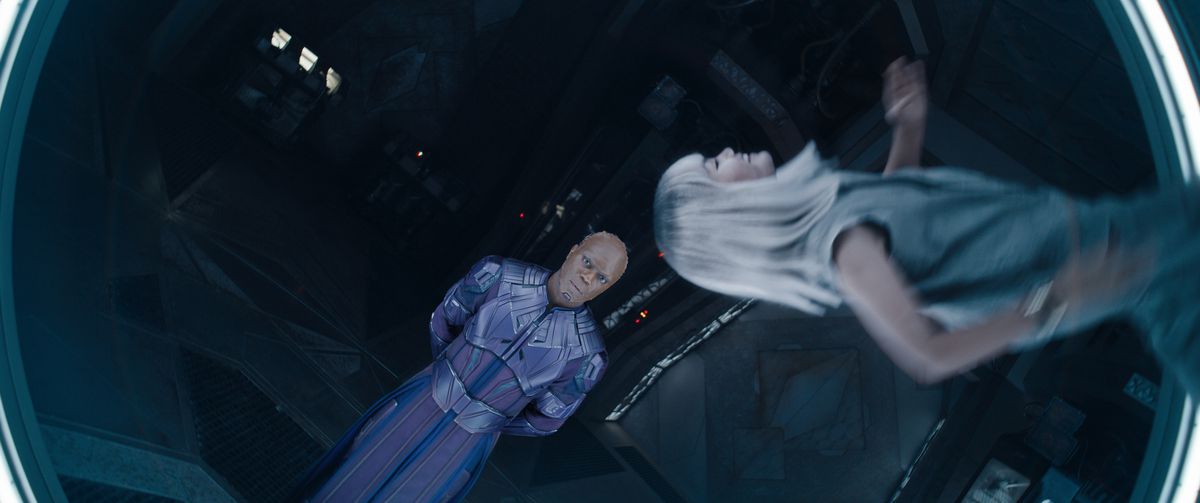
While the High Evolutionary is the best villain the Guardians have faced in their films, he could have used more nuance, although Iwuji does a fantastic job in his performance as a callous and dismissive scientist with a twisted heart. His cruel actions towards his test subjects, including Rocket during the flashbacks, are a vivid and emotional presentation of one of the film’s themes about animal cruelty and the morality of using animals for scientific research. What the High Evolutionary does to Rocket and others makes us openly hate him. To be honest some of the scenes featuring the High Evolutionary’s test subjects may be too intense for some viewers. So be warned.

The other actors in Guardians of the Galaxy, Vol. 3 put in some of their best performances. You could tell they are very invested in their characters and knowing this film will be their final time playing the characters, they elevate their craft beautifully. What helps, of course, is that unlike many sequels, the characters are allowed to grow and evolve. Thanks to their performances and how the characters were written, by the time the film comes to its end many viewers will be openly crying, while the rest will pretend they have something in their eyes.

There are a few minor nitpicks with the film that are not really worth mentioning. Maybe Adam Warlock could have used more screentime, but so could have other characters like Kraglin (Sean Gunn), but they do get their moments to contribute and shine, and even give a hint of what is to come.

How does Guardians of the Galaxy, Vol. 3 compare to the others in the trilogy? Well, it is much better than the second film and is about on level with the first one, though they are both distinctly different from one another. Given its level of greatness, it is easily one of the finest MCU films, and the best one in recent years, aside from Spider-Man: No Way Home and Avengers: Endgame.  Given the recent missteps in the MCU, it is a joyful relief that the cinematic universe can still deliver a film that emotionally involves us.  

José Soto

The SUPER Mario Movie We’ve Been Waiting For

(SPOILERS WILL BE FLAGGED AT THE BEGINNING OF THE PARAGRPAHS CONTAINING SPOILERS)

It is finally time that the Super Mario Bros. franchise gets an ACTUAL movie (don’t bring up the 1993 live-action one…), but is it any good? Critic scores on Rotten Tomatoes and Metacritic gave the movie a 55% and a 47%. Those are low very low scores compared to the audience scores, which are a high 98% and an 86%. Why are the critic scores so low? This will be discussed later in the article; anyway, The Super Mario Bros. Movie, in my opinion, is a fun and referenced-packed adventure that can be watched by all ages, but is especially more enjoyable for the biggest Mario fans. Of course, it isn’t perfect. As my main issues are with the general pacing which leads to lack of substance in some scenes, as well as other scenes being pushed down to compensate with the little time the movie has.

The Super Mario Bros. Movie begins with out two brothers, Mario and Luigi, living in Brooklyn, New York struggling to get their new plumbing business off the ground and running. Their family do not help them at all, giving them words of scolding rather than encouragement. After seeing on the news that Brooklyn is having a massive plumbing problem, they rush to the scene, desperate to get their names out there. They arrive and pull some shenanigans, which then ends with them underground in a pipe maze. They find our iconic green pipe and get pulled into this warp dimension; Luigi gets sent to the Dark lands, and Mario to the Mushroom Kingdom.

The voice acting in this movie was stellar and I definitely owe everyone on the VA team an apology for my past pessimism when they were announced, especially with Chris Pratt as Mario. He was definitely one of the best performances in this movie, followed by Charlie Day as Luigi, Jack Black as Bowser, and Anya Talor-Joy as Princess Peach. How could we talk Mario without his original voice actor, Charles Martinet? It was confirmed that he would be in this movie, but I really wish we got to hear more of him, honestly.

The animation in this movie was stellar and groundbreaking compared to what Illumination usually churns out. You could really tell they improved a lot and cared about making this movie the best they could produce. The animation truly compliments the brilliant settings designed for this movie. But there are some parts where you could really tell that this was an Illumination film, not that that’s a bad thing this time around.

(SPOILERS) I will now talk about the number of references that I noticed in The Super Mario Bros. Movie. Despite not being a big Mario fan, I was still able to pick out a LOT of fun refences sprinkled into this movie. My favorites being references to other Nintendo games, like Star Fox and Punch-Out, and the worldbuilding and designs in this film. The Mushroom Kingdom was amazing and masterfully crafted with Easter eggs of the past Mario games; the Mushroom Kingdom was definitely my favorite place in the whole movie. Then there were Easter eggs to Super Smash Bros., which keeps the tradition that the Sonic the Hedgehog movies started of referencing the classic games that inspired the films.

Continue reading

The Return Of James T. Kirk?

Sure, this title seems like your typical Aprl Fool’s Joke on Trekkers, but the possibility in official Star Trek canon was raised last week with the recent Star Trek: Picard episode, “The Bounty”. Spoiler warning for anyone who has not seen the episode.

During the episode Worf, Riker and Raffi raid the clandestine Daystrom Station. Unlike the noble, scientific think tanks named after Daystom shown and mentioned in other Star Treks, this orbital facility was the 25th century version of Area 51. The station stored many of Starfleet Intelligence’s top secret technology, weapons and alien contraband. The Daystrom Station was littered with many Star Trek Easter eggs and call backs, but the one that raised the most eyebrows among fans was the revelation that the station had the remains of Captain James T. Kirk.

The last time Kirk was seen onscreen, as played by William Shatner, was in the 1994 film Star Trek Generations. The late, great captain of the starship Enterprise met his end anticlimatically when he fell off a bridge while aiding Captain Jean-Luc Picard. To many fans this was an unsatisfying way to kill off the beloved Enterprise captain as they felt he warranted a more heroic death. Of course, this was not the last fans saw of James Kirk as he was portrayed by other actors, notably Chris Pine and Paul Wesley. But Shatner’s version of Kirk remains the definitive Kirk that is beloved by fans and many hoped that the actor would someday reprise the role. The closest we got to that was in Star Trek: Enterprise where there were plans for Shatner to reprise the Mirror Universe version of Kirk, and Shatner was slated to cameo in the Star Trek reboot film, but these plans never came to be.

Shatner himself expressed his dissatofaction with the way his character died on screen and went as far as to co-author a series of books with Garfield and Judith Reeves-Stevens where Kirk was resurrected. The first of these post-Star Trek Generations books was The Return and its plot revolved around Kirk being revived by Romulans using Borg technology to use him against the United Federation of Planets. Kirk with the aid of many Star Trek heroes overcame this plot and went on to live a full life in the 24th century. The books, called the Shatnerverse, are considered an alternate reality for obvious reasons, Still, they were popular with Kirk fans.

Getting back to Star Trek: Picard, which is official Star Trek canon, when Raffi passed by a containment unit in the Daystrom Station, a holographic display showed an image of a skeleton with the signage “James T. Kirk”. This image also had some biographical data and what was interesting was that the display revealed that Kirk was “critically injured” in the events of Star Trek: Generations. It does not say that he died in the film even though Picard was clearly seen standing over Kirk’s grave. So what gives?

Technology will be much more advanced in the far future, especially when it comes to medicine. For all we know a critical injury like falling off a bridge and being clinically dead as we know it today may not be the actual end of a person’s life. It can be possible to revive a person hours after death in the future and it’s possible this could be top-secret technology in the Federation that is reserved for very important people. Or perhaps Kirk remained dead but Starfleet Intelligence and its black-ops offshoot Section 31 may be trying to clone James T. Kirk for their own reasons. This is not far fetched since the Romulans cloned Picard in the film Star Trek Nemesis.

Most likely nothing will come of this, but this Easter egg is fertile ground for future screenwriters. It is also unlikely that Shatner, who is in his early nineties, will reprise his role one last time. However, this tantalizing Easter egg gives fans of the legendary James T. Kirk some hope that he can somehow return someday for one last, great adventure, at least in their imaginations. After all, legends never die.