Celebrating Farscape, Part Two

castThe beloved sci-fi TV series Farscape celebrates its 15th anniversary this year. It was a true space opera with epic and inventive storylines and colorful characters. Farscape starred Ben Browder as John Crichton, an astronaut from Earth that got sucked into a wormhole and was stranded on the other side of the universe. Crichton quickly made friends and foes as he first struggled to survive, then tried to find a way to get back home. One such person he met during his travels would become the most important person in his life.

A Star-Crossed Affair
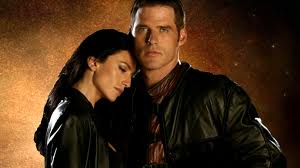
sunOut of all the exotic alien beings John  Crichton met in his spacefaring adventures, the one he connected with the most was Aeryn Sun (Claudia Black). In a clever bit of irony, the show’s creators had her antagonistic alien race, the Sebaceans, look exactly human. Coming from the harsh and militaristic Peackekeeper culture, Aeryn was disdainful toward Crichton, who she saw as weak. Actually she was hostile towards him because she blamed him for being stuck with the Moya crew, who were escaped convicts. She was part of the Peacekeeper force trying to re-capture Moya , a living ship, in the pilot episode, but her fighter ship was accidently pulled into Moya’s docking bay. Though she tried escaping, Aeryn was unable to return to her people because she was considered contaminated from her prolonged exposure to aliens, including Crichton. Eventually she became part of the crew and one of Moya’s fiercest defender. Crichton and her began to feel something for one another but tried to deny them. In the time-travel yarn “The Locket” the idea of them having a relationship was explored when old, future versions of themselves were shown to have been in love with each other.

sun crichton

However, things weren’t so clear cut with them. For many episodes there was a “will they or won’t they” aspect as they bickered with each other and had other relationships. In the second season finale “Die Me, Dichotomy” Crichton admitted his love for her when it seemed that she died. Spoiler: She did die but was resurrected by fellow crewmate Zhaan (Virginia Hey). Things took a strange twist in the third season when Crichton was duplicated by a mad alien scientist (“Eat Me”). During that time the crew of Moya was split up with one Crichton remaining onboard Moya, while the other took off with Aeryn onboard Talyn, Moya’s offspring spaceship. That Crichton and Aeryn fully developed their romance and he actually found a way to return home, but tragically died at the end of the two-part episode “Infinite Possibilities”.

Meanwhile, the Crichton on Moya was unaware of all this and was expecting a happy reunion with her when the two ships finally made their rendezvous (“Fractures”). Instead he found a heartbroken woman who was unable to reciprocate his feelings. As far as he was concerned they were back to square one. This constant back and forth would’ve been tiresome to watch in your standard TV show but this was Farscape; it was provocative and scintillating.

Always In His Mind

John Crichton had an additional emotional bond with another alien, but in the other extreme. He had a burning hatred towards the creepy Scorpius (Wayne Pygram), who first appeared in the episode scorpius and chick“Nerve” and quickly became the main villain in the series. Clad in a thick leather suit and tight-fitting cowl, Scorpius had a cadaverous appearance with his pasty white, scaly skin, bloodshot eyes and short, dark teeth. He was a cold and calculating person who spoke in an unexpectedly eloquent and sophisticated tone and who would stop at nothing to achieve his goals. Scorpius is one of the greatest sci-fi villains and that is due to several factors which include Pygram’s performance and the character’s back story.

As explained in the episode “Incubator” the alien is a hybrid resulting from when a humanoid Sebacean female (who make up the Peacekeepers) was raped by a reptilian Scarran. When his mother died at childbirth, Scorpius was raised harshly by his Scarran caretakers who looked down at him as a halfbreed to be tortured and experimented on. After reaching adulthood, Scorpius escaped and joined the Peacekeepers with the goal of defeating the Scarrans. It should be noted that the Peacekeepers and the Scarrans were bitter rivals constantly on the verge of war. This episode went a long hidden memoryway to explaining Scorpius’ motives and the revelations added more dimension to his character. The viewer understood why he was so ruthless and brutal and why he was so determined to get Crichton. When he is introduced in the two-part episode “Nerve”/ “The Hidden Memory”, he learns from torturing a captured Crichton that the astronaut has buried knowledge in his subconscious on how to create wormholes. Crichton unknowingly received this information by advanced aliens he met in the episode “A Human Reaction”. From then on, Scorpius became an alien version of Javert, who was obsessed with capturing his very own Jean Valjean.  Scorpius was desperate to gain Crichton’s buried knowledge in order to construct weapons and use the wormhole-based weaponry against the superior Scarrans.
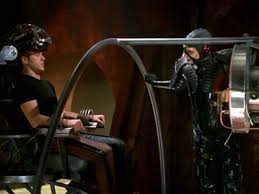
An interesting development was that before Crichton escaped Scorpius’ clutches in their first encounter, Scorpius implanted a sort of neural clone into Crichton’s mind. During times of great stress or danger, an imaginary version of Scorpius would appear to Crichton, usually as part of bizarre hallucinations. Sometimes this implant saved Crichton’s life, other times it kept him from killing Scorpius. The interactions between Crichton and “Harvey”, as he called the implant, were the highlights of many episodes. Their discussions unveiled many insights into Crichton’s character, sometimes they were humorous, other times they were poignant. Continue reading
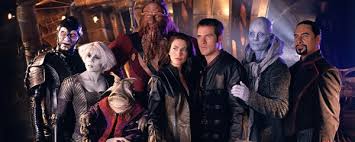
Celebrating Farscape, Part One

farscape 3Farscape, the sci-fi TV show from the late ’90s that aired on the Sci-Fi Channel, has received some attention lately and it’s quite warranted. It’s undeniably one of the very best sci-fi TV shows ever made. Created by Rockne S. O’Bannon and produced by Jim Henson Productions and Hallmark Entertainment, Farscape rivals such classics like Star Trek, Babylon 5 and Battlestar Galactica thanks to the way it presented truly alien characters and worlds and more importantly well-written scripts with complex, nuanced characters. Though it was cancelled in 2003, the show has come back to the limelight with its availability on Netflix, daily airings on the cable channel Pivot and with recent news that one of the show’s writers (Justin Monjo) is penning a screenplay for a Farscape film.

The show starred Ben Browder who played John Crichton, an American astronaut who was testing an experimental mini-space shuttle called Farscape One. While in space, his shuttle gets sucked into a wormhole and Crichton wound up on the other side of the universe. Once there, he inadvertently joined a band of moyaescaped alien prisoners on a prison ship they commandeered called Moya that is actually alive. This gets him into trouble with the prisoners’ pursuers, the Peacekeepers, a militaristic power, who ironically enough look human. Think of them as xenophobic, intergalactic Nazis. One of them, Aeryn Sun (Claudia Black) also wound up in cahoots with Crichton and the prisoners even though she’d just as soon throw them back in their cells. For most of the show’s run, Crichton and his eclectic group evaded the Peacekeepers and other foes, while he looked for a way to create a wormhole to return home. During his experiences he bonded with his reluctant alien allies, including Sun.

No Ordinary Space Hero

From the start, Farscape had an offbeat vibe to it and it started with the main character John Crichton. He easily could’ve been the typical stoic and rugged hero, but thanks to Browder’s acting chops and comedic skills, Crichton was much more than your standard space hero. He often referenced pop culture; specifically genre fare. At every opportunity he mentioned Star Wars, Star Trek, Looney Tunes and other genre classics. Actually an animated version of Star Trek’s Enterprise ship appeared in one episode as part of a hallucination he was experiencing!

It was all part of the way he dealt with the bizarreness that he experienced during his travels. Many of these references and his sometimes erratic behavior were downright hysterical and lessened the tension during many nail biting sequences. Rather than being the straight man, Crichton was the comedian who was able to see the absurdity of many situations he was stuck in.

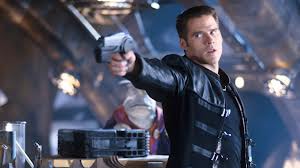
Yet, he was heroic and often the voice of reason amongst the crew of Moya. Despite his bravery Crichton sometimes made bad calls out of good intentions. More often than not he just charged into a situation and improvised on the fly. Certainly that got him and his friends into more trouble, but he accepted responsibility and tried to make amends. These faults made him more fallible and relatable. And when it came down to it, these characteristics made Crichton someone to root for whenever he made a humorous quip and fired away with his beloved pulse pistol affectionately called Winona.

chriton

But this didn’t mean that Crichton lacked a serious side. It was clear the humor he exhibited was to alleviate the stress he was undergoing. Crichton was obviously homesick at the start of the series and he knew returning to Earth was an impossibility, yet like a modern-day Quixote he continued looked for ways to do this. Later in the series, he realized that going home would lead to more problems and it conflicted with the life and deep relationships he established with his comrades. Often, he found himself making sacrifices for others and was rewarded with deep emotional bonds, both good and bad. Continue reading

Remake The Last Starfighter!

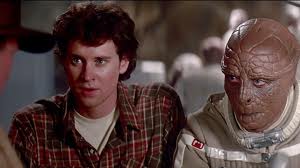
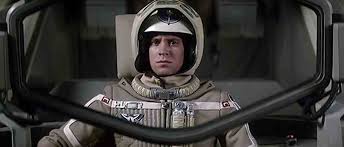
gunstarOne of the best underrated celluloid gems from the ’80s is The Last Starfighter. It starred Lance Guest as Alex Rogan, a bored teenager stuck in a trailer park who wants to leave home and who can blame him? Soon enough, Alex gets his shot…at  the stars. Literally.

One night, Alex plays this arcade video game called Starfighter in the trailer park and sets a new record in the game, much to the cheers of his middle-aged and elderly neighbors who have nothing better to do. Later that night, Alex is abducted by a fast-talking con man called Centauri (Robert Preston), who’s actually an alien. It turns out that the video game was a way for Centauri to uncover gifted recruits for the Star League on planet Rylos. Before Alex knows it, he’s caught up in an interstellar war and faces the choice of returning home or defending the Frontier against Xur and the Ko-Dan Armada–the plot line of the video game he played back home.

test

Ok, so The Last Starfighter is a Star Wars ripoff, but it’s a damn good one! Director Nick Castle infused the film with an innocent, sincere and naive charm that works. The film is a wish fulfillment of every sci-fi fan who wants to be whisked away on a grand space adventure. That idea is even expressed at the very end of the movie when Alex Rogan’s little brother Louis (Chris Hebert) eagerly begins playing the Starfighter video game so he too can be recruited.

The film isn’t perfect, it’s pretty simplistic, but it’s a fun watch. It had many nice performances, especially from alex and alienPreston and Dan O’Herlihy as Grig, Alex’s boisterous reptilian partner on their fighter ship. Alex was a very relatable character who grappled with wanderlust and self doubt. His arc was predictable but well done. The spaceship designs were unique and eye catching thanks to artist Rob Cobb, and the film had a rich and rousing score by Craig Safan. It was one of the best Star Wars-esque themes I’ve ever heard and fits the tone of the film.

There’s been talk of a sequel for some time now, but as these things go, it’s stuck in development hell. It would be fantastic if a sequel were to be made; this story is ripe for further examining. Did Alex return to Earth? Did his brother become a Starfighter? Whatever happened to that buffoonish villain Xur (Norman Snow)? But it’s been thirty years since that film came out, trying to launch a sequel and reunite the remaining cast members may be too difficult.

So it may be best to just remake The Last Starfighter. But in this celluloid market crowded with unnecessary remakes why reboot this one if it’s still fun to watch? Well, while the film has many merits, there’s room for improvement. A remake can be better written and less simplistic, although it shouldn’t try to be dark and gritty. A new take of The Last Starfighter needs to retain the pleasant charm of the original, which will be hard to duplicate. But the right director can pull it off. An important thing that can be improved would be the special effects, of alienscourse. At the time it came out, The Last Starfighter had then-revolutionary CGI effects that are horribly dated now. You and I can generate better effects with our desktops at home. Another thing that must be changed for a remake is the look of the Rylans and Emperor Xur. They look utterly ridiculous with white hair that wraps around their heads and bald tops. Another flaw with The Last Starfighter was that the major villain Xur wasn’t menacing at all. There was one scene where he appears as a hologram to taunt our heroes that had me laughing hysterically. He looked so dumb as a disembodied head! That’s surprising because the other aliens in the film are pretty well designed.

alex rogan

Other films with less faults than this one have been remade. The Last Starfighter is worth remaking  because it has a nifty story that is relatable to us fans that needs retelling.

Waldermann Rivera

Babylon 5: The Last, Best Hope

“It was the dawn of the third age of mankind”– Commander Jeffrey Sinclair, opening monologue during the first season opening credits of Babylon 5

b5 creewWhat made Babylon 5 so great was its epic scope. It had a long-running storyline with conflicted characters and bizarre aliens who weren’t just actors with bumps on their faces. Unlike many sci-fi TV shows before it, Babylon 5 genuinely set out to present a mature story with engaging characters and it succeeded. When conceiving the show, Starczynski wanted to do a grand, epic sci-fi show and was inspired by Dune, The Lord Of The Rings and the Lensmen and Foundation series. Also emulating TV shows like Hill Street Blues, he wanted Babylon 5 to be taken seriously without robots or kids running around. Instead complex storylines were the order of the day; events had consequences in later episodes. Characters, even the heroic ones, were deeply flawed and suffered from addiction, greed, insecurities and other foibles. The show didn’t present some kind of utopian future, yet it wasn’t a moody, post-apocalyptic saga. At the end, the show was about hope and striving for a better tomorrow, which was best seen in its fourth season finale “The Deconstruction Of Falling Stars” and its final episode “Sleeping In Light”.

Evolving Situations & Complex Characters

Babylon 5 takes place in the mid 23 century on Babylon 5, a space station. It served as neutral ground for various space powers to work out their differences peacefully and as a port-of-call. At first, the station functioned as a futuristic U.N. and in the opening credit’s narration in the early seasons it was called the “last peace hope for peace.” But by the third season, intergalactic war was raging and the station then changed into the “last best hope for victory.” As can be inferred by the change in narration, Babylon 5 was very dynamic. Events, political situations and people were always in flux. It wasn’t static like many TV shows and careful viewers had to keep up with what was happening in the show.

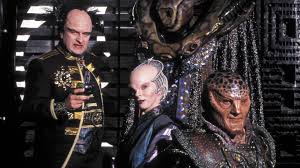
Follow this example. There were five super space powers that had representatives on board the station; the Minbari Federation, the Earth Alliance, the Narn Regime, the Vorlon Empire and the Centauri Republic. The latter one was once a major, imperial power in the known galaxy. The B5 representative was Londo Mollari (Peter Jurasik), who was characterized by his outlandish hair that b5 aliensstood up in the back like peacock feathers and his boisterous personality. He came off at first as a bickering buffoon, who liked to verbally spar with his rival G’Kar (Andreas Katsulas). Now G’Kar represented the Narn, which was once ruled by the Centauri. He liked to antagonize Londo about the supposed superiority of the Narn and the fact that the Centauri were a declining power. It was very clear that Londo wished for his people to become a great power again.

Early in the show’s run, he met a mysterious person, Morden (Ed Wasser) who offered him a Faustian deal to return the Centauri to greatness. Afterwards, the Narn and Centauri went to war and the Narn were being defeated by an unknown power aiding the Centauri. At first, Londo was ecstatic over the supposed Centauri victories, but over time he learned that his people were aligned with the evil Shadows, an ancient power that returned to the known galaxy to conquer everyone. Londo came to realize the true cost of his deal, which was his soul and his people’s subjugation. So during the course of the show, Londo underwent a wide personality shift. Once seen as comedic relief, Londo assumed an adversarial role until consumed by guilt, he earned a measure of redemption when he finally turned against the Shadows and helped G’Kar and his people.

That was just one story arc. There were many other intricate plot lines that involved not just the show’s leads but supporting characters as well. sinclairPeople would suddenly die or leave the station, even the main character. In its first season, the lead was Commander Jeffrey Sinclair (Michael  O’Hare), who was a calm, stoic leader, but was quietly suffering from his ordeals during a previous war. The show’s producers shocked fans after the first season when they announced that O’Hare wouldn’t be returning to the show. He was replaced by Bruce Boxleitner as Captain John Sheridan, a self-assured and brash commander who echoed James T. Kirk. It all may have been daunting for the average viewer who just tuned in for an episode or two, but in the end it was largely rewarding for a dedicated watcher. Continue reading

Superman’s Appeal After 75 Years

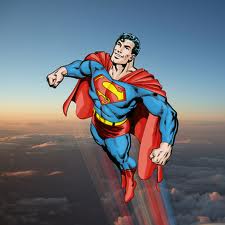
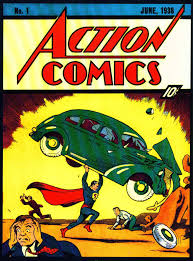
byrne supermanThis year we celebrated many important milestones like anniversaries for well-loved works like Iron Man, The Wizard Of Oz, Star Trek: Deep Space Nine, the Avengers and recently Doctor Who. But before the year ends, there is one very important anniversary that should be acknowledged because the introduction of this character heralded the rise of superheroes in popular culture. That person is Superman of course, who first graced the pages of Action Comics #1 75 years ago. As everyone knows, he’s one of the most recognizable fictional characters ever created and his popularity is only rivaled by Batman and Spider-Man when it comes to superheroes.

People may wonder why is Superman still popular after 75 years? There are other superheroes out there with flashier costumes and more intriguing backgrounds. He didn’t become a superhero because someone close to him was a crime victim. He is considered to be a big boy scout with upstanding morals and is actually one of the most overpowered superhumans around. On paper a character like that would be considered boring, and honestly, many of his stories were dull. But that was usually the fault of the writers or editors who didn’t know how to handle this iconic superhero. Despite these limitations Superman continues to capture the imaginations of many fans young and old. So what is it about him that makes him popular? Is it because he is the first of the modern-day mythological beings? Or is it something more?

It could be that Superman represents the American Success Story. Think about it, he is the ultimate immigrant action comics 1who arrived in our shores (via rocket ship instead of a boat or plane) and he excelled. Thanks to the powers he gained from being on Earth, Superman was able to make his life better and to contribute to society. Consider this, if he remained on Krypton, he would not have the powers of flight, super strength and so on. While he may have made some impact on Kryptonian society just for being the son of Jor-El, a noted scientist, it’s unlikely he would’ve stood out like he does here on Earth. Even in his secret identity as Clark Kent, he was able to rise to the top of his field as a journalist. He is the embodiment of the American experience, which is subtly appealing to many readers.

More than that, Superman is the prototype and  standard bearer not just for superheroes but for all of us. Thanks to his upbringing by kind and ethical parents, Clark Kent is imbued with a strong moral fiber. What helps is that his humble personality makes him relatable. This may be uncool with some people, especially those that like dark and conflicted heroes, but this is what makes him so attractive to many others. Parents can rest easy letting their children read about his exploits and not worry about gratuitous violence or dark plots. For someone who may be tired of reading about morally compromised so-called heroes, Superman can be a breath of fresh air. His adventures can be just enjoyed for what they are: rousing, fun-filled romps where he has to use his wits and skills to win the day. What helped Superman in those situations wasn’t his super strength but his moral fiber and knowing right from wrong.

super diesOne of his best modern adventures are the famous “Death Of Superman”, “Funeral For A Friend” and “Return Of Superman” storylines from the early ’90s, which started in Superman: The Man Of Steel #18 and concluded with Superman Vol. 2 #82. Superman faced his greatest physical threat in the form of the monstrous alien Doomsday and he was killed by the hulking creature. The shocking storyline, no exaggeration, gripped the nation and made headlines. Superman was supposed to be invulnerable, how could he die? How could DC Comics do this to their iconic hero? Readers, collectors, and the curious swamped comic book shops to get their hands on the pivotal Superman Vol .2 #75 (where he died) and its surrounding storylines. The Superman creative team at that time expertly produced this exciting saga and kept readers intrigued with clues to his resurrection. Along the way, these issues provided a nice boom to the comic book industry. Unfortunately, the market crashed  a few short years later thanks to speculators, poor stories and gimmick covers all comic book publishers, but that’s another story. All in all, this event proved that Superman still held appeal to comic book fans and mainstream society when he is given compellingly written and beautifully drawn stories.

????????????

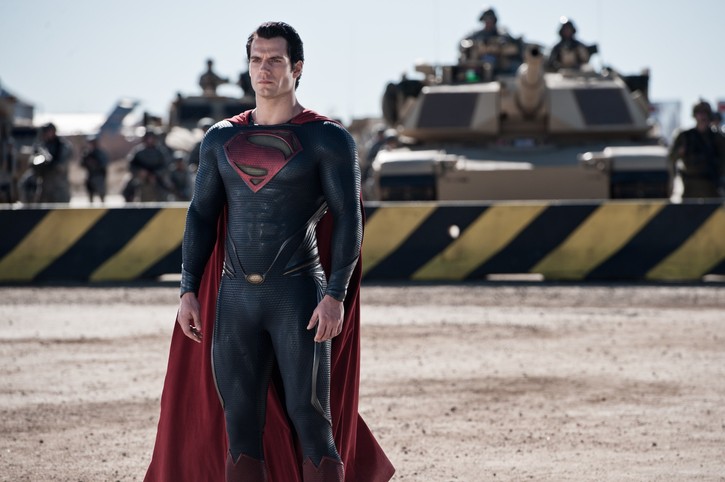
To this day, the Man of Tomorrow is still appealing. It can be seen from his successful crossover into other media like toys, video games, TV shows and of course movies. This was reaffirmed most recently by the smashing success of this summer’s film Man Of Steel, which rebooted and reinvigorated the Superman movie franchise. Now headlines are being generated for each new development on the upcoming sequel which looks to be a springboard for a Justice League film. Still, as successful as Man Of Steel was, the film had many detractors who decried the changes made to the character and his situation. But looking back on his long history, Superman has always been a dynamic, changing  character. Today’s version is very different from 1930s version.

People often think of John Byrne’s run in the Superman comics  in the ’80s when it comes to reboots. But the jim lee supermanMetropolis Marvel’s history shows that he has constantly been changed even during his early years. At first, Superman couldn’t fly, Lex Luthor and Kryptonite didn’t come along until much later and Superman used phone booths to change into his costume–a quaint notion with today’s fans! Even the way he looked back in the ’30s was different than the iconic look he’s had until The New 52 reboot came along and did away with his red trunks. All this proves is that the character’s enduring success is because of his ability to adapt to the times while at the same time, his character’s core remains the same. Detractors often wind up accepting these changes once they realize that the essence of the character is still there. That is why Superman will continuing winning over new fans and be a part of our culture for more than another 75 years.

Lewis T. Grove & José Soto

*NOTE: The above art was done by the following iconic artists: John Byrne, Joe Shuster, Dan Jurgens and Jim Lee.