Star Trek Movie Retrospective–Star Trek II: The Wrath Of Khan

Spock: “The needs of the many …”

Kirk: “…outweigh the needs of the few.”

Spock: “Or the one.”

An exchange between Spock and James T. Kirk onboard the Enterprise
khan posterStar Trek II: The Wrath Of Khan was a radical departure from its predecessor Star Trek: The Motion Picture, which is what Paramount Pictures wanted. Even though Star Trek: The Motion Picture made money it was perceived as a failure. Many people complained that it was dull and pretentious. In other words, they wanted action! And that is what director Nicholas Meyer delivered with Star Trek II: The Wrath Of Khan, only he added a human element that elevated the film to classic status.

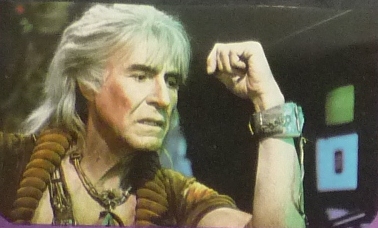
This film is the most personal Star Trek film out of the many that have come out. Its main characters go through some intense and heartfelt emotional journeys and are changed forever. Admiral James T. Kirk (William Shatner in his best performance as Kirk) faces the prospect of middle age and looking back at his life. His best friend Captain Spock (Leonard Nimoy) faces his mortality with a sense of bravery and nobility that touched audiences’ heart in a way that would have been more lasting if his fate had been final. On the other side of the coin, the main villain Khan Noonien Singh (Ricardo Montalban) is wracked with bitterness and hate over his lot in life and in the end this anger consumes him.
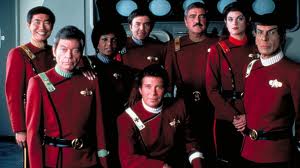
trek 2 crew

In the original Star Trek episode “Space Seed” Khan was part of a group genetically enhanced despots from Earth’s violent past found hibernating by Kirk and his crew. After briefly capturing the Enterprise, Kirk defeats him and exiles him and the other superhumans to an uninhabited planet.

In between that episode and the film, the planet. Ceti Alpha V, underwent an environmental disaster that made it practically unlivable. Think of Tatooine on its worst day with blistering sandstorms. Most of Khan’s people didn’t survive, including his wife. Now, Khan is a seething cauldron of fury out to annihilate the one he blames for his predicament: James T. Kirk.

Even though the film is a sequel to “Space Seed” it skillfully brings viewers up to speed with only a few lines of exposition regarding Khan, who is portrayed magnificently by Montalban. The actor originated the role of Khan in “Space Seed” and testmade a solid impression in that episode but by the time that the first Star Trek sequel came around, Montalban was more known for his role in the show Fantasy Island. His performance as Khan demonstrated the true nature of his acting prowess thanks to his bringing to the role a sense of regal eloquence, animalistic charisma, and maligned fury.
The film opens with the Enterprise, commanded by a young Vulcan  named Saavik (Kristie Alley in her first role), being attacked by Klingon ships and losing the battle with main characters like Spock being killed. But it was a simulation at Starfleet Academy. Some time has passed between Star Trek: The Motion Picture and this film. One noticeable difference is that the Starfleet uniforms are now bright red jackets with black pants giving its personnel a more militaristic look. The filmmakers wanted to convey a sense of naval conditions with this film since they saw it as a retake of Horatio Hornblower. In fact, the feel of Star Trek II: The Wrath Of Khan feels more grounded, less lofty than in the first film. Sets look more cramped and a bit more lived in although not as severe as with Star Warsor Alien. A good eye will spot a No Smoking sign on the set, which alarmed some fans who hoped that the awful habit would’ve been gone by the 23rd century.

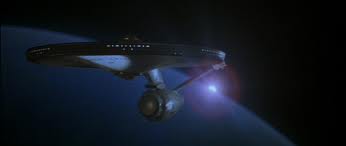
The actual Enterprise is now training vessel commanded by Spock for young cadets and officers, including Spock’s protogé Saavik. Kirk is no longer commanding a starship and feels like a relic, in spite of the fact that it’s his birthday. Gifts from Spock and Dr. Leonard McCoy (DeForest Kelley) do little to cheer him up, prompting McCoy to urge him to do something with himself and stop living in the past.

reliant

Around this time, the starship Reliant approach the barren Ceti Alpha V, which is to be used as a testbed for the Genesis science experiment. Kirk’s former lover Dr. Carol Marcus (Bibi Besch) and her son David (Merritt Butrick) have developed the Genesis Device, which can initiate rapid terraforming on inhospitable worlds for colonization. The Reliant’s captain Clark Terrel (Paul Winfield) and first officer, the former Enterprise navigator Pavel Chekov (Walter Koenig) beam down to the planet investigate life signs only to find Khan and his people marooned there. After capturing the two men, Khan and his genetic superhumans gain control of the ship and set out on a mission of vengeance.
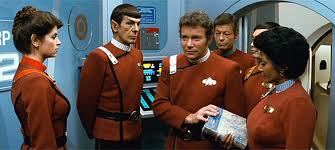
khan castKirk joins Spock onboard the Enterprise with his original crewmates to assist with a training cruise for Starfleet cadets. They receive a call from Dr. Marcus wanting to know why Kirk is taking the Genesis Device. What she and Kirk don’t realize is that Khan is trying to lure Kirk by manipulating a brainwashed Chekov into stating that Admiral Kirk wants the Device. Kirk takes the bait and orders the Enterprise to head out to Marcus’ science station Regula I, which orbits an asteroid the station is named after, and investigate. In a preemptive move, Spock relinquishes command of the Enterprise to his friend because as he famously said, “Commanding a starship is your first, best destiny; anything else is a waste of material.”
Continue reading

Star Trek Movie Retrospective–Star Trek: The Motion Picture

“Out there. Thataway.”

Admiral James T. Kirk replying to a request for a course heading

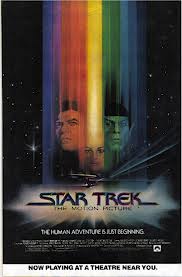
posterWith the new Star Trek film coming out in a couple of months (Star Trek Into Darkness), it’s time to take a look back at the many Star Trek films that preceded it. Let’s start off with the one that launched Star Trek’s cinematic voyage, Star Trek: The Motion Picture.

This film isn’t regarded as a top tier Star Trek film and for good reason. It’s slow moving, yet seems rushed and for good reason. Director Robert Wise recounted how far behind schedule they were that the effects work was only completed just before the film made its debut, translation: Wise didn’t have time to properly edit the film. On the other hand, it does have undeniable merits.

Out of all eleven Star Trek films (twelve counting Star Trek Into Darkness), Star Trek: The Motion Picture is the most majestic and oddly the most Trek like. Meaning that this film captures the core concept of Star Trek creator Gene Roddenberry’s optimistic view of humanity’s future. That is largely because Roddenberry produced the film and it’s the only one where he was directly involved. After its perceived failure, Roddenberry was relegated to a “consultant” role in the other Star Trek films until his death. In this film, we get a few glimpses of Earth and see that it’s a bright, pastoral paradise where people either wear New Agey type of clothing or bland Starfleet uniforms. The conflicts in the film are largely internal believe it or not. Sure, there’s the threat of this V’Ger entity that wants to annihilate life on Earth, but the problems that capture viewers’ attention are those with Admiral James T. Kirk (William Shatner), Spock (Leonard Nimoy) and Commander Will Decker (Stephen Collins). Anyone expecting a mustache-twirling villain will have to look elsewhere.

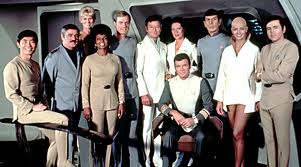
cast

In between the original Star Trek show and Star Trek: The Motion Picture, Kirk was promoted to a desk-bound position as an admiral and he’s bored. He’s in charge of refitting his old ship the Enterprise, which was supposed to be commanded by Decker, but Kirk uses the V’Ger threat as a excuse to take command of the Enterprise, which naturally angers Decker. Now with Spock, he’s retired from Starfleet and off in his home planet Vulcan undergoing this ritual to purge all emotions from within him, but he finds himself unable to go through with the process. He feels a calling, which so happens to coincide with the coming of V’Ger.

The film opens with V’Ger, seen as an immense multi-colored energy cloud in space that dematerializes three Klingon battle cruisers. It should be pointed out that this film is responsible for introducing the modern take of Klingons, now adorned with thick armor and sporting their distinctive sagittal crests on their foreheads. While the film properly shows how badass the Klingons were with their guttural speech, armor and a tribal music soundtrack, they are quickly taken out by V’Ger. It effectively illustrates the entity’s power and deadliness. And of course, it’s heading towards Earth.

enterprise 2

Equally convenient to the plot is how the Enterprise, although not finished with its refitting, is the only starship that can intercept V’Ger. How many ships does Starfleet have? But hey, what’s a Star Trek film without the Enterprise and its crew being the only thing standing between life and death?

Despite’s Chief Engineer Scott’s (James Doohan) usual protests that the ship isn’t ready, Kirk orders that the Enterprise be launched to confront V’Ger. Afterwards, the engineer entreats Kirk to an exhaustive external inspection of the Enterprise while in drydock. It’s at this point, that the film first rears its indulgent tone. Continue reading

Remake Logan’s Run!

logan's run

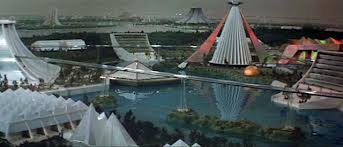
The 1976 movie Logan’s Run is based on a book by William F. Nolan and George Clayton Johnson. The film follows the journey of Logan 5 (Michael York), a “sandman” who is an enforcer in a futuristic, dystopian society that is obsessed with youth. It’s so obsessed that when a citizen turns thirty years old he or she undergo “renewal” but are actually euthanized. While many in this domed, underground society (actually a stand-in for a mall in Texas) accept their fate, some called runners choose to flee and keep living. Logan and other sandmen are tasked to track down these runners and killing them.

During an investigation, Logan learns of a place called Sanctuary, which offers a haven for runners. The computers who rule his society give Logan a mission to find Sanctuary. In order to infiltrate the runners, Logan’s life schedule is advanced to the age of thirty, subjecting him for renewal.

logan jessDuring his cover as a runner Logan falls in love with a dissident, Jessica 6 (Jenny Agutter) and learns the truth about Sanctuary and his way of life. In a typical story fashion, Logan genuinely questions his belief system and of course, turns against his society.

I’ll be the first to admit that Logan’s Run is kind of kitschy and dated. Those scenes in the mall um… future city have that funky ’70s feel but I loved the message which resonates with our society. I mean look around, see how we’re obsessed with looking young and beautiful. Facelifts, tummy tucks, nose jobs. There was even a scene in the movie where Logan visited a high tech plastic surgeon located in a mall who used lasers to rejuvenate customers. old manAnother theme is how society devalues old people. One of the best moments in Logan’s Run is when Logan and Jessica meet an old man (Peter Ustinov) in the ruins of Washington, D.C.. They are shocked to see someone so old, they actually wonder why his face is “cracked”! Yet the old man shows them that life goes on beyond thirty.

That is why Logan’s Run should be remade. Its subject matter is still relevant to our times and may teach some viewers a lesson or two. I haven’t read the book, but it’s supposed to be different than the movie. For instance, Logan is much younger in the book since the day of renewal is when one turns twenty one. But the basis of the story is solid. There is little that needs to be done with the story, just update the effects and film it anywhere except a mall!

ruins

It would be a fun idea to cast Michael York as the old man living in the ruins of D.C.–the production design showing the wrecked buildings and overgrown vegetation was excellent btw. There have been many attempts to remake the movie and they all failed. Bryan Singer, sandman gunTron: Legacy director John Kosinski and Drive director Nicolas Winding Refn were going to direct a remake at one time or another. With the latter director, Ryan Gosling was to star in the remake. Well all those plans fell apart, but it’s encouraging that quality filmmakers have shown interest in remaking Logan’s Run.  It seems to be a matter of timing. So hopefully it will be remade someday.

Annette DeForrester

A Look Back At Star Trek: Deep Space Nine, Part Two

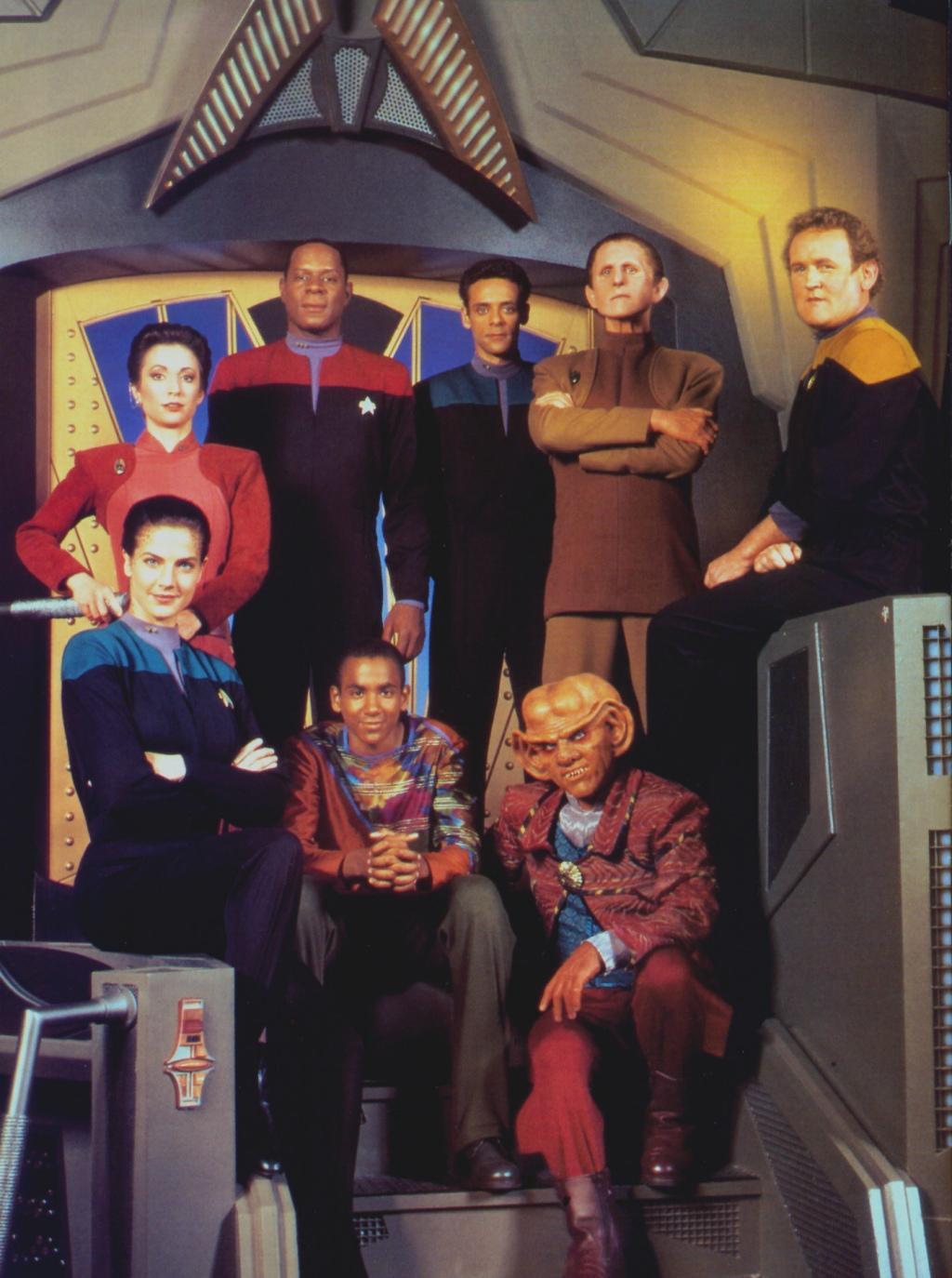
DS9 Cast

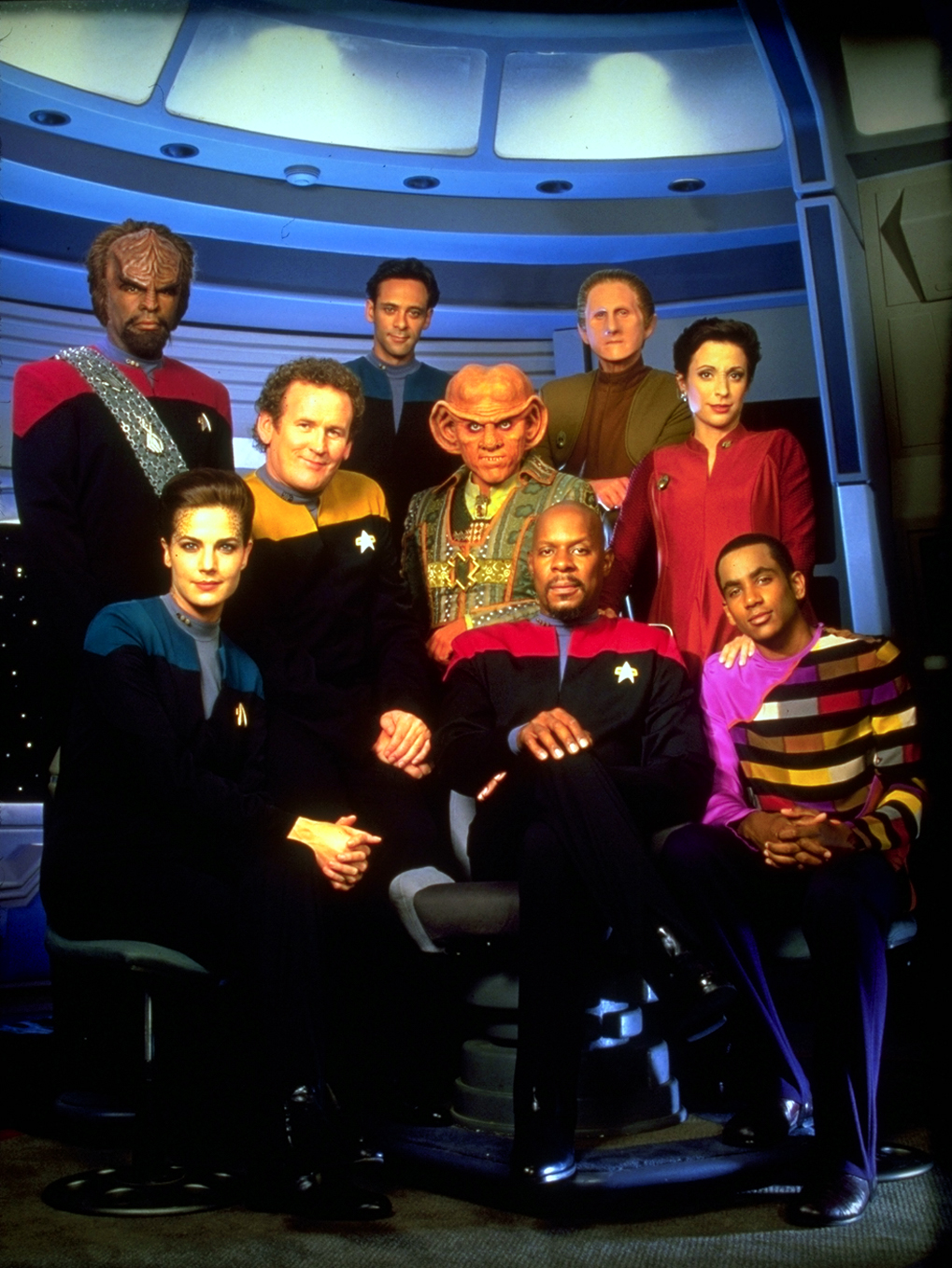
Continuing our look at one of the best Star Trek shows Star Trek: Deep Space Nine (DS9), there are more reasons why the show stood out from the other Trek spinoffs. To start let’s look at the main character Benjamin Sisko (Avery Brooks).

The Sisko

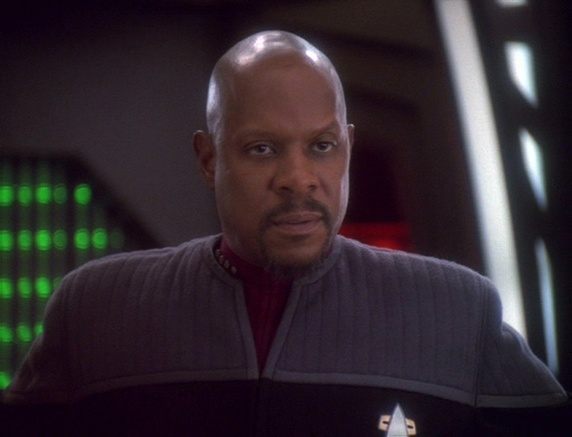
While seeming distant from his officers, Sisko was a very passionate man with an affinity for cooking. He was one of the most dimensional Trek captains ever shown and portrayed. At the start of the series, Sisko was a very troubled man and for good reason. His suffering was one of the best plot lines in the series pilot “Emissary”. A flashback prologue showed that while posted on a ship that tried to fight an invading Borg cube during the Star Trek: Next Generation episode “The Best Of Both Worlds, Part II” (the scene was from the Battle of Wolf 359, which took place offscreen in that episode), Sisko’s wife died in the futile battle. On an escape pod with his injured son, he watched helplessly as his ship exploded with his wife’s body still on it.

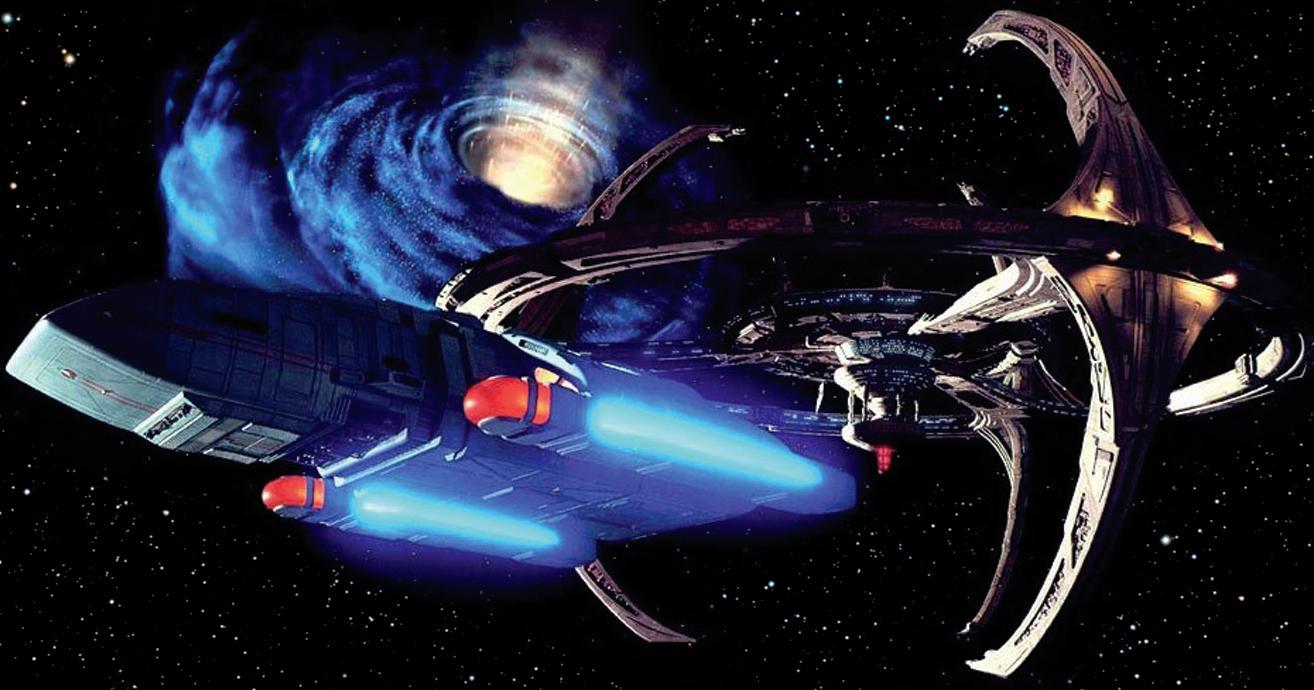
Angry, bitter and directionless, Sisko was assigned years later to command the Cardasssian-built space station Deep Space Nine orbiting the ravaged planet Bajor. His duty was to help Bajor get ready for admission into the Federation via rebuilding efforts. But still consumed by his wife’s death, Sisko considered leaving Starfleet before discovering a stable wormhole near Bajor and DS9.

What followed were a series of brilliantly shot scenes that represented the spirit of Star Trek in terms of meeting new life and mutual learning. Inside the wormhole, he encountered the “Prophets”, non-corporeal aliens who took the forms of people he knew–including his dead wife, in surreal, dream-like sequences. Every time a different person would speak, the scene would abruptly jumped to another time and location. For example, if a “Prophet” in the form of his first officer Kira Nerys (Nana Visitor) at the station had a question, then she would be answered by a “Prophet” in the form of Locutus (Patrick Stewart) during the Battle of Wolf 359. They didn’t understand the linear nature of time and Sisko had to find a way to explain the concept. Sisko tried to use baseball to explain not just the cause-and-effect nature of time but the nature of human existence. After his explanation, the aliens pointed out to “The Sisko” (as they later called him) that if time was linear why was his mind occupied with his wife’s death? The station commander quietly realized that he was trapped by his past because of his grief and needed to move on.

The Bajorans looked upon Sisko as a religious figure because of his discovery and this made him uncomfortable. However, he took his role seriously of defending the Bajorans and helping them to rebuild their civilization after the Cardassian occupation.

Ben Sisko

His greatest tests came after the malevolent Dominion arrived from the other side of the wormhole. He wound up becoming a brilliant war-time leader in what turned out to be a critical post and thwarted the Dominion’s plans to conquer the Federation. During this crisis, he had to find time to be a single father to his son Jake (Cirroc Lofton), act responsibly as a religious figure and maintain relations with the mysterious “Prophets” and other aliens. By the series end (“What You Leave Behind”) Sisko has a final confrontation with his enemies and discovers his ultimate fate with the “Prophets”.

Secondary Lineup

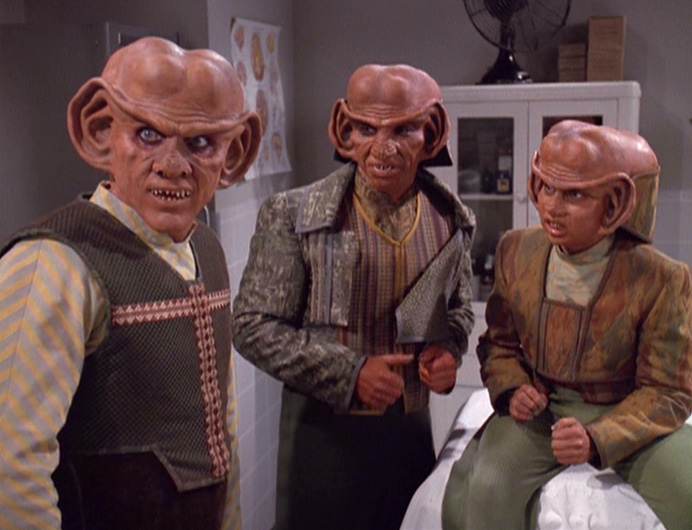
The show had a rich roster of characters who were well written and acted. They helped drive the show and made viewers care about what was going on. One advantage DS9 had over its Trek cousins were the secondary characters. Most of them were as well developed as the main ones and could’ve conceivably carried on as replacements for the main characters, they were that good. There was Nog (Aron Eisenberg), Quark’s (Armin Shimmerman) nephew. At first he was written to be a comedic foil and companion to Jake, but over time, the diminutive Ferengi expressed a desire to better his lot in life and joined Starfleet, becoming the first Ferengi to do so. Nog quickly proved himself and became known for his competence and bravery. Another Ferengi of note was Nog’s father Rom (Max Grodenchik), a seemingly dim-witted and good-natured soul who worked as Quark’s hapless assistant. While he was usually comedic relief, over time, he too wanted to better himself but was only lacking confidence. Eventually he joined the station’s engineering crew, married the very attractive Bajoran waitress Leeta (Chase Masterson), worked as a Federation spy and even wound up becoming the Grand Nagus –the leader of the Ferengi and began to bring about progressive reforms.

Quark, Rom and Nog

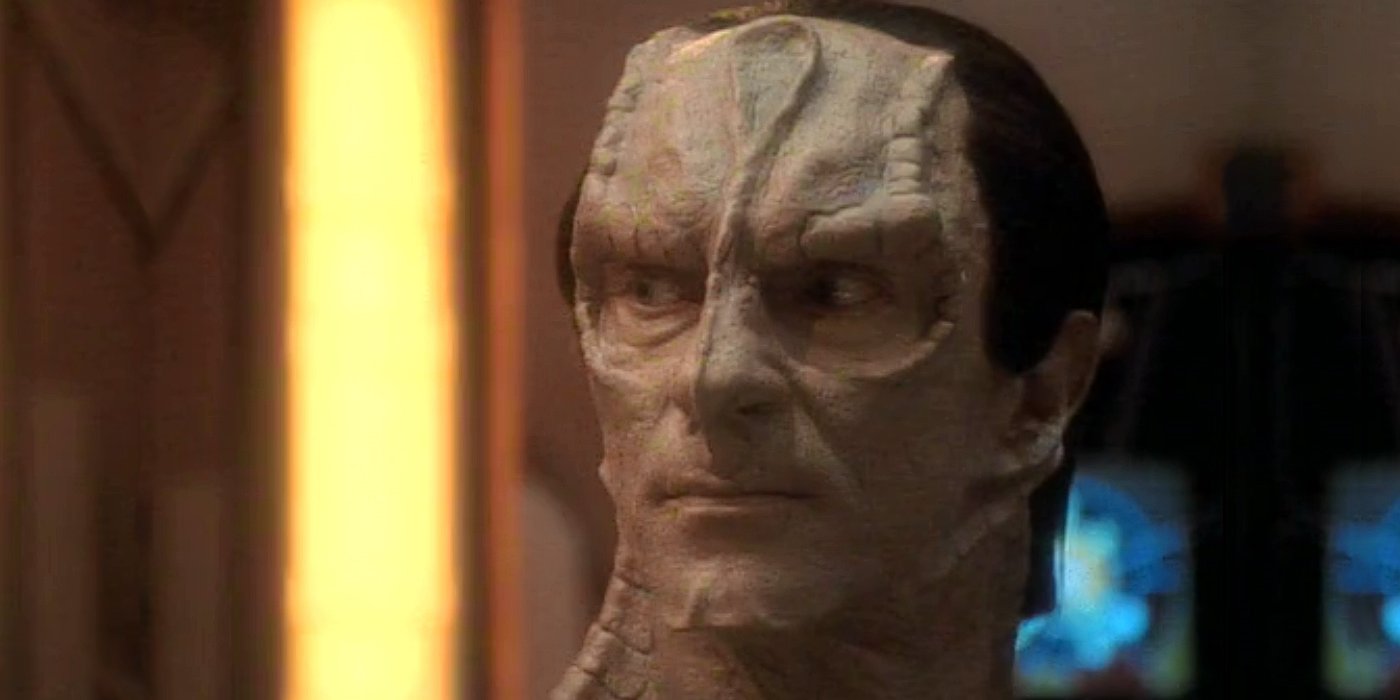
DS9 had complex and fascinating alien races like the Ferengi, the Bajorans and even the Klingons. But one of the most multifaceted aliens were the Cardasssians. First up was Garak (Andrew J. Robinson), an enigmatic exile who was introduced early in the show’s run. Demonstrating a fascination towards Dr. Bashir (Alexander Siddig), Garak reveled in being a mysterious source of help and information. Over time, it was revealed that he once worked for Cardassian intelligence dukatbut fell out of favor. As a former spy, Garak was quite deadly, he even carried out Sisko’s dirty work in the episode “In The Pale Moonlight” but by the show’s end became a liberator and helped to defeat the Dominion occupiers of his home planet. The other prominent Cardassian was Dukat (Marc Alaimo), the show’s arch nemesis. Originally the commanding officer of DS9 when it was in Cardassian hands, Dukat was a brutal dictator who took joy in terrorizing Bajorans. Dukat appeared several times as a menacing figure but apparently turned over a new leaf when the Klingons went to war with the Cardassians in the fourth season. He became a guerilla fighter and seemed regretful about his past, but the humiliation his people suffered under the Klingons was too much for him. Making a Faustian bargain, Dukat allied himself with the Dominion and allowed them to take control of the Cardassian Union (“By Inferno’s Light”). In the end all he wanted (as he ranted in the episode “Waltz”) was to be adored and respected by those he considered inferior to him. That included the Bajorans and Ben Sisko. Continue reading

A Look Back At Star Trek: Deep Space Nine, Part One

Star Trek DS9 crew

This month marks the twentieth anniversary of perhaps the most underrated Star Trek show Star Trek: Deep Space Nine. It differed from the other Trek shows in that it took place on a space station (the titular Deep Space Nine–DS9) near a wormhole and the characters often had to deal with the political and social ramifications of galactic events and encounters. In so many ways, Star Trek: Deep Space Nine is arguably the best Trek show and certainly the best spinoff of the original Star Trek. A reason why the original is considered the best has to do with nostalgia and its iconic nature. Star Trek: Deep Space Nine  or DS9 isn’t as fondly remembered as Star Trek or Star Trek: The Next Generation but it should be highly regarded.

Some early critics of the show complained that the stories were rather dark, bleak and depressing. This was because the show’s first two seasons dealt with rebuilding a shattered civilization. DS9 orbited an ancient world called Bajor and it had been occupied by the enemy Cardassians (who built the station using Bajoran slave labor), who were like the Nazis. The Bajorans were a rough analogy to the Jews after World War II and Israel at its beginning. The Bajorans were on the verge of a civil war and desperate. While their plight made for some terrific episodes (“In The Hands Of The Prophets” and The Circle trilogy), it probably turned off casual viewers who wanted to see the standard starship zipping around the galaxy and having the crew solving some kind of tech-based problem.

Spiritual Leanings

wormholeBeing that the deeply religious Bajorans were a focal point in the early episodes, the show touched on religious matters. In fact, it was one of its core concepts. In the pilot episode “Emissary” the show’s main character, Commander Benjamin Sisko (Avery Brooks) was assigned to the station and later discovered a nearby stable wormhole that was created by enigmatic non-corporeal aliens. While this was a major scientific and socio-political game changer for the Federation and helped put Bajor on the map, this event had religious ramifications. It turned out there was a prophecy in Bajoran religion that a non-Bajoran savior called the Emissary would discover the wormhole and the “Prophets” that the Bajorans worship. Therefore, Sisko became a major religious figure among Bajorans who they believed would eventually bring them salvation. This was a role that Sisko and Starfleet was very uneasy with chiefly because of their secular nature and the whole Prime Directive thing of non-interference.

Timing Is Everything

A reason for why the show wasn’t a runaway hit may have to do with the timing of when it premiered. During that time, Star Trek: The Next Generation was at its peak in popularity and some fans probably wanted DS9 to be more of the same.  Sure it didn’t make sense to go to the trouble of creating a new show just to regurgitate the same ship traveling premise but some just want the same formula repeated over and over. So DS9 in trying to be distinctive was probably too different, which is what Star Trek needed and still does. The show was murky in its morality, the main heroes often committed actions that were questionable. At the time, it was believed by the suits in Paramount Studios that people didn’t want Star Trek to be dark and ambivalent, which is one of the so-called reasons behind the creation of the next spinoff Star Trek: Voyager.

Star Trek DS9 wormhole

Now with all the publicity Star Trek: Voyager was receiving along with the continued popularity and coverage of Star Trek: The Next Generation, it was difficult for DS9 to get any attention. It became the redheaded stepchild of the franchise. While that was unfortunate, one good thing to come out of that was that it was largely left alone. As executive producer Rick Berman concentrated on Star Trek: Voyager and Star Trek: The Next Generation’s spinoff films, exemplary writers and producers like Ron Moore, Ira Steven Behr, Robert Hewitt Wolfe and René Echevarria were put in charge of Star Trek: Deep Space Nine and made the show its own. They took risks with the characters and situations and it paid off creatively. Continue reading