Why The Resident Evil Movies Are Popular

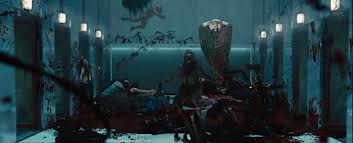
With the release of the fifth Resident Evil movie Resident Evil: Retribution coming up soon, the question has been asked, why are these movies popular enough to warrant so many sequels? Here are some ideas I have.

The Resident Evil movies are based on the phenomenal video game series of the same name that has players fighting all types of zombies created from a bioengineered virus. They are really the only big budget adaptations of video games out there that have been successful. Most of the other video game movies that have been released have been low budget and not well received. Examples include super Mario Bros., Bloodrayne, Doom and Double Dragon. The only other franchise I can think of that had some success was Tomb Raider with Angelina Jolie. But that franchise only lasted two movies since the second one was not as successful or well received as the previous movie.

Director Paul W.S. Anderson, who directed the first Resident Evil movie and the fourth and fifth one, is another reason for the movie franchise’s success. While not a great director Anderson is at least competent in what he does, making good action movies. I think his other movies have been well done like Event Horizon and the first Alien Vs. Predator. They are certainly better than those Michael Bay movies that are basically loud, mindless and difficult to follow in terms of action (the Transformers movies come to mind).  Having his wife Milla Jovovich starring as Alice in these films doesn’t hurt either. Plus, while he didn’t direct the second and third movies, he has written and produced all five of them, which kept him involved with the series.

Another point is that the movies loosely follow the games and have branched off to have their own storylines. So what happens next is a surprise to long-time players of the games.  Lastly, the Resident Evil movies continue to be made probably because the video games themselves are still very popular. This fall, Resident Evil 6 will be released for the PS3 and Xbox 360. And the previous games in the series have all been huge sellers. Capcom, the company that makes the games, has also released CG animated movies and continues to do so. In short, Resident Evil continues to be relevant, which keeps the movies highly anticipated with fans of the horror/sci-fi franchise.

C.S. Link

Remake The Black Hole!

Ever since I spotted that poster from The Black Hole in Tron: Legacy, I can’t stop thinking about that old Disney film.

The Black Hole was one of the earliest films I remember seeing as a kid back in 1979. The movie borrows plot lines from several classic works like Moby Dick and 20,000 Leagues Under The Sea. But the core story is rather simple and effective. The crew of an exploratory spaceship encounter a long-lost spaceship near a black hole in space, but it turns out it’s not abandoned. The commander of the huge derelict craft is obsessed with entering the black hole and finding out its secrets. As these tales go, the commander is insane and won’t let anyone get in his way not even the crew of the would-be rescue ship.

With all these pointless and gratuitous remakes being made (I’m looking at you Total Recall and soon Robocop), The Black Hole is one film that needs a remake or some kind of sequel at least.

Sure it’s got head-scratching flaws and scientifically it doesn’t make sense. For instance, why is it when the ship starts to get closer to the black hole, characters are able to survive outside the space ship without space suits, breathe air and even talk to each other? This is really confounding when earlier in the film, when the same characters are in a huge greenhouse, the structure is compromised, leading to air escaping and freezing temperatures. The robots they were fighting had visible signs of frost, yet the humans get along fine in the melee.

Then there is the ending sequence. It needed to be more spelled out. Is the black hole a gateway to heaven and hell? Then what happens at the very end? I guess it’s supposed to be one of those philosophical endings that can be debated but it throws off the tone of the film which was part mystery, part shoot-em-up.

The Black Hole is not the greatest movie ever made but it still fires up my imagination to this day. The special effects were great, it was even nominated for a special effects Oscar.  I really enjoyed the laser battles with the mad scientist’s robots and the film’s rousing score during those battles. It was an obvious swipe of John Williams but most sci-fi films in that era copied the composer. I also liked the characters, even the cute heroic robots. BTW, the head villainous robot, Maximillian, was pretty damn cool especially when he diced his claws into Anthony Perkins’ character. Too bad no blood was shown! Despite my misgivings about the ending, I liked that the filmmakers decided to be ambitious even if it was frustrating to watch.

A remake would have the same plot line: spaceship crew finds a lost spaceship with a nutty scientist bent on exploring a black hole; lives be damned, the gaining of knowledge is more important! But a remade Black Hole would be much more scientifically accurate. In this day and age it would have to be. The elements are right there for any enterprising filmmaker to improve upon the original. Combine that with some spectacular special effects and production design and we could wind up with a remake that surpasses the original.

Waldermann Rivera

2012 Doomsday Scenarios: Month Eight

Ever since humans looked up to space and its vastness, it was easy to imagine possible dangers coming from above. And they had good reason because Earth has dealt with cosmic threats ever since its creation. Whether by meteors, gamma ray bursts or wandering black holes, the possibility of our destruction coming from outer space is unfortunately a very likely scenario.

Doomsday Scenario No. 5: Cosmic Threats

We as people cower and fret over major disasters that come our way. But trying to imagine how we would face certain extinction from astronomical events is difficult. That is because in our recorded history we haven’t dealt with that kind of phenomenon. What is really frightening is that if we found out tomorrow that any one of these threats were to happen, there is very little that can be done to cope with it. Here are some of them:

Comets and Meteors: This scenario is probably the best known cosmic threat. Every school kid knows that about the theory that a comet or meteor struck Earth and wiped out the dinosaurs 65 million years ago. Earth is constantly threatened by these celestial objects. In fact, meteors enter our atmosphere all the time. Luckily most are tiny and harmless and make great light shows. But all it takes is that one large rock or ice ball to wreck havoc. It happened most recently in Tunguska, Russia in 1908. Though no remains of the meteor or comet have ever been found, the destroyed forest stands as a stark reminder of how powerful the collisions can be.  Some notable sci-fi books about such impacts are Lucifer’s Hammer by Larry Niven and Jerry Pournelle, The Hammer Of God by Arthur C. Clarke and Moonfall by Jack McDevitt, which is a variant of the theme in that a comet destroys Earth’s moon and the lunar debris is what threatens our planet. For films, there is Deep Impact, Meteor and the much-maligned Michael Bay epic Armageddon. Even though there are efforts underway to catalog all the asteroids and comets in our vicinity and have an early warning system, a rogue rock or iceball can slip by our sensors. Oddly enough, thanks to our technology, this is one disaster that can in theory be prevented. Most now know that lobbing nukes at them won’t work, but if there is enough warning then it’s possible to use rockets or satellites to nudge the orbits of the threatening meteors and comets.

Cosmic Collisions: Some scientists believe that our moon was created from another planetary body colliding with Earth. This happened way before life emerged on Earth but if it were to happen today, it would be devastating. Life will not be able to recover. Our only hope as a species would be to do as the characters did in the book and film When Worlds Collide, build a spaceship to escape and settle elsewhere. In When Worlds Collide, the survivors were lucky that they found a habitable world to colonize. For us, our best bet is to head to Mars and try to terraform the planet.  Of course in these situations a lot depends on how much time and capability we have. In the film Melancholia there wasn’t anything that could be done to save humanity and the Earth when it collided with a rogue planet. One thing to note is that a near collision is enough to disrupt life on Earth by causing the world’s orbit to shift and radically altering our ecosystem.

Gamma Ray Bursts: This is caused by the death of a nearby star when the energy is released from the star’s poles. According to scientists this happens in our galaxy every day. If Earth were to be bombarded by these bursts the ozone layer would be depleted and all life would be subjected to lethal exposure to radiation. Thankfully the bursts are too far away to threaten us.  Scientists believe that any supernova occurring about 8,000 light years or closer to us would be a concern. Actually some scientists theorized that gamma ray bursts are responsible for the periodic mass extinctions in our planet’s prehistory. In the book Starfire by Charles Sheffield, our planet is threatened by the radiation unleashed when our closest solar neighbor Alpha Centauri undergoes a supernova. Of course, if our own star were to undergo a supernova, life on Earth would be wiped out. However, our sun still has a few billion years left before it decays. That is unless the sun undergoes that transformation by artificial means. but that would take technology way beyond what we have today.

Solar Storms: Our sun often ejects solar flares or radiation. Back before we became technologically advanced this phenomenon had little effect on us. We would (and still) get brilliant light shows a.k.a auroras in the skies. But today, the electromagnetic pulses (EMP) from a solar flare would fry our computers and machines’ circuits and render them useless. It’s unlikely our civilization would be able to rebuild circuitry and transformers fast enough to stave off a technological collapse. Knocking on wood, this hasn’t happened yet. The most powerful solar storm in the past 500 years happened in 1859 (a.k.a the Carrington Event) and resulted in auroras appearing as far south as the Caribbean. Our technology was in its infancy then and the only machinery affected were the telegraph systems in North America and Europe. Solar storms also pose a grave risk to manned spaceflight in that astronauts would be bombarded by lethal radiation during a solar storm. In the novel Aftermath by Charles Scheffield (which is the prequel to Starfire) Earth undergoes a severe EMP when Alpha Centauri undergoes a supernova. The electronics worldwide are fried and society has to cope with the sudden loss of power and prevent a return to the Dark Ages.

Traveling Black Holes: It’s not likely to happen in our lifetime or even centuries from now, but it is a danger to regard. Scientists believe that our galaxy if filled with wandering black holes, many of them are supermassive black holes; in fact, they occupy the galaxy’s center. Their immense gravity fields would literally rip apart a solar system. If one were to pass by our solar system, its effect would be felt years before it actually arrived. Just on Earth, the orbit would be shifted and massive. By the time the black hole would siphon off our world atom by atom, all life would be long gone. In science fiction, there are many stories about creating artificial black holes and the consequences. This was shown in the last Star Trek film where the villain Nero created a black hole on the planet Vulcan and destroyed it. Later in the film, Nero tries to create a black hole on Earth to destroy it as well. So far, our world is safe from black holes and these other phenomenon. But they should serve as a drive for us to become a true space-faring civilization. This is the best way to guarantee that we would survive far into the future.

Hoverbikes Are Here!

After a few years of development the company Aerofex finally unveiled an actual working hoverbike. For thrill seekers who loved the speeder bike chase scene from Star Wars: Episode VI: Return Of The Jedi, this is great news.

Of course, this real-life hoverbike won’t zip around at insane speeds as seen in that Star Wars film but it really works and that is a plus. The hoverbike from Aerofex has a maximum altitude of 15 feet and its fastest speed is just thirty miles per hour. No, it’s hard to imagine Return Of The Jedi’s high-velocity races with this hoverbike, but its altitude and speed is much more practical and safer. In fact, Aerofex is targeting the vehicles for use by emergency first-response units and not thrill seekers.

The vehicle looks more compact and practical than the speeder bike or the swoop bikes (briefly seen in Star Wars Episode II and IV-the so-called Special Edition). Similar to a motorcycle, the pilot steers the hoverbike by leaning from side to side. The company worked out the kinks that plagued the hoverbike when it was first tested in 2008, such as maneuverability and the problem of “helicopter brownout”. That is when the recirculated air from the vehicle’s blades, which provide lift, kick up blinding clouds of dust.  

Aerofex is now working on an upgrade to their hoverbike that will have improved landing gear and a better positioning for the pilot. The company hasn’t released information on the availability or final cost of the hoverbike.

Sure, it’s a long way to go from those zipping models seen in Return Of The Jedi and the other Star Wars films but we’re getting there with this real-life hoverbike.

Waldermann Rivera

 http://www.youtube.com/watch?feature=player_embedded&v=FGw7qQlQWFM

Falling Skies Rising

The science fiction war drama TV show Falling Skies just concluded its second season on TNT with the episode “A More Perfect Union”, and proved that it never rests on its laurels.

Falling Skies stars Noah Wyle as Tom Mason, an ex-history professor and now second in command of a rag-tag militia called the 2nd Mass. Originally based in the Boston area (and for the entirety of its first season), the unit abandoned New England early in the second season to head for the supposed safe haven of Charleston, South Carolina.

As with most filmed road trips stuff happened, usually to progress a storyline or develop characters. For instance, Tom started a tender relationship with the group’s field medic Dr. Anne Glass (Moon Bloodgood), dealt with recriminations from being abducted then released by the alien invaders (from the end of the first season) and had to accept that his children had grown up. The oldest Hal (Drew Roy) became a competent, deadly soldier and a future leader; the youngest Matt (Maxim Knight) grew up too fast and is now doing sentry duty; but the most interesting son is his middle one, Ben. He had been abducted (along with many of Earth’s children) by the aliens before the show started and fitted with a biomechanical device on his spine that enslaved him. Ben was rescued last season but this season covered the repercussions and gave Ben one of Falling Skies’ best arcs. It became clear that he had been altered by his experience, seen with his enhanced physical skills and the psychic links he shared with aliens whenever they were nearby.

This was instrumental in one of the main arcs. It was revealed that some factions of the arachnid-like alien Skitters were rebelling against their masters and were seeking help from the humans. Tom and others had to overcome their mistrust of the rebel Skitters and while some of the show’s plots moved along a bit too fast, this one had the right pace. This helped viewers to see that things weren’t black and white when it came to the aliens who conquered Earth.

So what waited for them in Charleston? Supposedly the city was the new capitol of the United States with a working government and armed military. More importantly to the beleaguered 2nd Mass., the city offered the promise of a return to normalcy: hot showers, meals and safety. In the penultimate show of the season, “The Price Of Greatness”, they discover that the city had moved underground, leaving behind ruins to throw the aliens off their tracks. Despite a warm welcoming and comforts, things weren’t so great in the underground city. Our heroes were caught between Tom’s old mentor (Terry O’Quinn), the civilian leader, who basically wanted to remain hidden from the aliens and the General Bressler (Matt Frewer), who wanted to go after the aliens. By that episode’s end, the military initiated a coup but that didn’t solve anything.

The final episode of the season had the 2nd Mass. undertaking a covert mission to assassinate an alien Overlord and destroy a cobbled-together installation. There was genuine tension, excitement, deaths and new developments to carry over to the third season. The acting and character development was very well done, it even made viewers feel for an inhuman rebel Skitter when it was killed. That alien never spoke and was quite hideous, but anyone would’ve felt its plight as it desperately tried to fight its alien enemies.

There are many questions unanswered in the show, chiefly, what do the aliens want with Earth? By the end of “A More Perfect Union” it seems as if the aliens are at war with another alien race, but it’s unknown if the new aliens can be counted as allies. Falling Skies gave viewers enough bait to entice them to keep watching.

Many second seasons for shows are make or break in terms of quality. Luckily for Falling Skies, it has found its bearings in the second season and like any worthwhile TV show leaves viewers eager for new episodes and new seasons.

Lewis T. Grove