Season Two Of The Walking Dead Concludes, Part II

Vendettas & Confrontations

Episode Twelve: The pre-credits scene of episode twelve of The Walking Dead’s second season, “Better Angels,” opens at Dale’s funeral.  Killed by a walker at the end of the previous episode, the gory sequence jump cuts between the solemn burial – with Rick Grimes (Andrew Lincoln) eulogizing over the elderly victim – and the survivors engaging in what can only be described as a walker vendetta. Shuttling around the perimeter of Hershel’s farm in a pickup truck, they approach the shuffling undead, smashing and crushing their skulls. Rick explains, grimly, that Dale would have wanted them to pull together and take control of their lives. The survivors listen silently and reflect on the message…

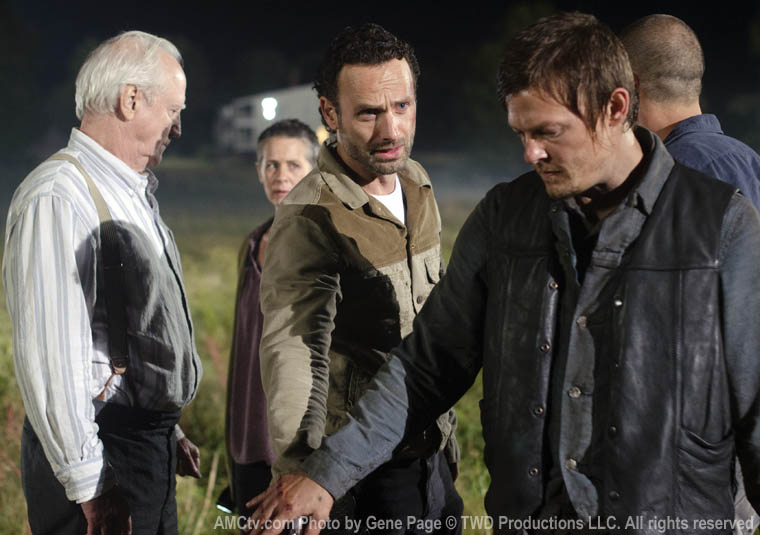
Post-credits, the survivors take stock of their situation. The impending winter will soon dry up the swamp and nearby creek, eliminating the natural barrier against the walkers. The farm is left open and vulnerable, and Hershel (Scott Wilson) is allowing the group to move into his house for refuge. As Rick barks guard duty and lookout tower instructions, it’s evident that he elevated Daryl Dixon (Norman Reedus) to his second-in-command, leaving Shane Walsh (Jon Bernthal) somewhat grumbling and bitter. Rick’s son Carl (Chandler Riggs) reveals to a stunned Shane his guilty feelings over Dale’s death. Later, Rick’s wife Lori (Sarah Wayne Callies) bares her soul to Shane, sharing her appreciation for him, but it’s a sly ruse to keep Shane with the group.

dead-walker[1]Later, Shane sneaks into the barn where the prisoner Randall (Michael Zegen) is held. Feigning discontentment with the group, he tricks Randall into taking him to his renegade comrades. On their way, he murders the boy then smashes himself into a tree to fake assault injuries to the group. A search party goes out for Randall, with Rick and Shane in one pair and Glenn (Steven Yuen) and Daryl in the other. The latter two find Randall, now re-animated as a walker, but suspiciously he has no bites. Meanwhile, Shane leads Rick further away from the farm; Rick sees through his trick and confronts him…

Please click on the link to Deadloggers to continue reading about Episode Twelve


Gory Climax

The pre-credits sequence for “Besides the Dying Fire,” the thirteenth episode and exciting season finale of season two of The Walking Dead, opens with the lead-in to the previous episode’s finale. In an eerie glimpse of deserted Atlanta, inhabited only by walkers, a helicopter passes overhead. As one walker mindlessly follows, hundreds soon join, forming a terrifying mass herd. Incapable of tiring, they shuffle on, day and night, drifting out of the city and into the countryside until they end up at the gate to Hershel’s (Scott Wilson) farm. The rickety, weather-beaten wood is no match for their sheer mass and the groaning undead crash through. Hearing the gunshot (that killed the re-animated Shane) they plod on in that direction, confronting Rick Grimes (Andrew Lincoln) and his son Carl (Chandler Riggs)…

barn walkers

Post-credits, the survivors in the farm react uneasily to Daryl Dixon’s (Norman Reedus) news that their prisoner Randall (Michael Zegen) re-animated with no bites. Daryl slips out of the house into the darkness to look for Rick but stops upon seeing the approaching walkers. Outside, Rick thinks fast; ordering Carl to follow, they run to the barn, dodging walkers on the way. Once inside, Rick sets it on fire and flees up to the barn’s hayloft with Carl. In the thrilling, twelve-minute action sequence, the other survivors arm themselves and prepare for the fight, but things turn awry: Jimmy (James Allen McCune) drives up to the barn, saves Rick and Carl (who jump onto the RV’s roof and to the ground), but the RV is overrun by walkers; Patricia (Jane McNeill) is killed; Andrea (Laurie Holden) and T-Dog (IronE Singleton) barely escape; Carol (Melissa McBride) is cornered but rescued by Daryl on his chopper; T-Dog picks up Lori (Sarah Wayne Callies) and Beth (Emily Kinney); and Glenn (Steven Yeun) escapes with Maggie (Lauren Cohan).

trapped gene pageHershel intends to stay and protect his land, hopelessly firing away with his shotgun, but is finally convinced by Rick to abandon ship. In the ensuing chaos Andrea, armed with only a pistol, gets separated from the rest and escapes through the woods. Running for her life, she stays alive, picking off walkers until running out of ammo…

Please click on the link to Deadloggers to continue reading about Episode Thirteen

Evan Rothfeld

Season Two Of The Walking Dead Concludes, Part I

bus-trap-gene-page

Cliffhanger Opening

Episode Ten: Episode ten of The Walking Dead’s second season, “18 Miles Out”, opens with a smash – literally. In an exciting pre-credits scene, walkers crash through the windows of an abandoned factory and chase Rick Grimes (Andrew Lincoln), Shane Walsh (Jon Bernthal) and last episode’s hostage, Randall (Michael Zegen) – his hands tied by rope – through the factory’s lot. As the trio attempt to escape it’s every man for himself: Shane holes up in a school bus, straining to keep the doors closed to prevent the walkers from swarming in; Rick runs from a walker, barely escaping; and Randall, abandoned by the other two, crawls to reach a knife a few yards away….

Post-credits, the events unfold via flashback. Deciding not to kill Randall, Rick and Shane agree to abandon him several miles away from the farm where he has a chance of survival. On the way, Rick – looking haggard and sounding hoarse and exhausted – stops the car at a quiet junction to have a much-needed and long overdue man-to-man with Shane. Laying it out calmly and carefully, but with a firm edge, Rick tells him that he knows the truth about Otis’ mysterious death and about Lori’s pregnancy. Shane questions Rick’s survival instincts, but Rick stresses that he is a fighter who will do what he needs to do to protect his family.

Continuing their drive, Rick thinks ahead, making survival suggestions for the group’s upcoming long, cold winter on the ranch. Shane is passive and pre-occupied with his thoughts. They pass a walker plodding through a nearby field; Shane sees it but says nothing.

Throwing A Wrench…

Reaching a creepy, abandoned industrial plant, they kill a couple of walkers and break in. As they explore the silent premises, they are shaken up by charred bodies lying in a gruesome outdoor pyre. Further in, they see two dead security guards lying side-by-side, methodically placed, but with no bites. Rick, staring at the bodies, episode 10 fightsurmises that it was scratches. They drag Randall to the perimeter, rip the duct tape of his mouth but leave his hands and feet tied, and then abandon him. As the two walk away, Randall desperately tries appealing to their sense of good will and reason, to no avail. Only after shouting that he went to school with Maggie do Rick and Shane stop – both know that this knowledge is dangerous. Thinking that he might find his way back to the farm, Shane prepares to shoot the boy. Rick kicks Shane’s pistol away, igniting a brutal fistfight. Bloody and bruised, the two ex-deputy sheriffs each take a beating, with Rick coming out slightly on top. Shane throws a huge wrench at Rick, who ducks but it smashes through the building window…and walkers alerted to the commotion start pouring out (hence the show’s opening)…

Please click on the link to Deadloggers to continue reading about Episode Ten

A Bunch Of Angry Men & Women

Episode Eleven: As the second season of The Walking Dead finishes up, the pre-credits scene of episode eleven, “Judge, Jury, Executioner” opens in the barn as Daryl Dixon (Norman Reedus) brutally interrogates Randall (Michael Zegen). The young hostage initially yields little info, but after Daryl’s beatings and not-so-subtle threats, he reveals that his renegade friends numbers thirty men, armed with semi-automatic rifles. He reveals to Daryl that they once kidnapped and gang-raped two farmer’s daughters and forced the farmer to watch. Daryl reacts furiously…

Post-credits, Daryl passes the grisly findings to Rick Grimes (Andrew Lincoln) and the others: if Randall’s friends pass through, the survivors are dead meat. Rick decides that the execution continues as planned; all agree except Dale (Jeffrey DeMunn), who argues that they have no right to take a life. Additionally, he puts forth that Randall is “just a kid”, he needs due process, etc. This leaves Rick unmoved. Dale next tries Andrea (Laurie Holden) and plays on her past as a civil rights lawyer, together with a call to maintain their humanity in the face of a changing world. This yields similar results, although Andrea agrees to guard Randall from the others.

Later, while Andrea is outside the barn guarding the young hostage as promised, Shane Walsh (Jon Bernthal) reveals to her his disgruntled suspicions that Rick will spare Randall at the last minute. Shane further reveals his thoughts about Rick’s incompetence and bad decisions as leader, coldly hinting about the need for “change”… Randall hears all this through a crack in the barn wall, but spots young Carl (Chandler Riggs) sitting on a loft in the barn watching him out of boredom. Using a slick buddy-buddy tone, he tries to persuade Carl to release him. Shane barges in and shoves a pistol to Randall’s face, but is stopped by Andrea. Shane warns Carl and promises not to tell his parents Rick and Lori (Sarah Wayne Callies).

Sentenced

While preparing for the hanging, Rick announces to Lori his intentions of clearing out the barn for the survivors’ new lodging, and strategically placing lookouts in the loft in preparation of the upcoming bleak, cold, and of course, walker-saturated winter. Even better, he suggests that they ask Hershel if they can stay in the house, to which Lori agrees.

stuck walkerAfter an incident in which Carl is rude to Carol (Melissa McBride) – calling her an “idiot” for believing in heaven – the young boy nicks a gun from Daryl and leaves camp, unsupervised. Ambling around the outside, he finds a walker stuck in the mud near a riverbed. He throws rocks at it, but gets too close: the walker frees one leg trying to get the young boy…

Please click on the link to Deadloggers to continue reading about Episode Eleven

Evan Rothfeld

2012 Doomsday Scenarios: Month Three

This premise may sound silly, and what doesn’t help are the ludicrous scientific explanations given in many films and shows. It’s probably why it’s not something that comes to mind when dealing with doomsday. But it’s now spring so let’s think about nature.  At one time, particularly during the 1950s and 1970s the concept of humanity’s comeuppance via nature wasn’t considered far-fetched by many. Usually the film would have protagonists encountering freaks of nature that threaten humanity if allowed to run rampant. Sometimes the creatures practically destroyed major cities. Tokyo and New York were preferred targets. Often, the culprits behind the mutations were byproducts of pollution or radiation. Godzilla comes to mind, actually he’s a prime example of…(drum roll please, add in an ominous voice)

Doomsday Scenario No. 10: When Nature Strikes Back

Sounds like the title for a Syfy Saturday night movie, doesn’t it? No surprise since the channel is now infamous for airing schlocky grade z sci-fi/horror films about mutated animals. There isn’t any need to list any of them here, just tune in to the channel say every third or so Saturday night to find one.

The heyday for nature striking back took place in two different eras; the 1950s when everyone lived in fear of nuclear weapons (we still do but for different reasons and it isn’t nature we fear but madmen determined to get WMDs) and the 1970s when pollution was the pc catchphrase for the decade.

Atomic Giants

In the 1950s people worried about the long-lasting effects of nuclear radiation. Many films reflected this fear with stories about nuclear bombs unleashing gigantic monsters that were either prehistoric or animals that were mutated into mammoth proportions. Filmmakers ran the gamut with the kinds of ordinary animals that were deadly when grown larger. Probably the best film dealing with giant animals was Them! It was about ants gigantically mutated by atomic tests that emerge out of New Mexico and wind up in the sewers of Los Angeles. Other films include The Deadly Mantis, Tarantula, and The Giant Behemoth. Quickly these films gained poor reputations as inferior filmmakers churned out low-grade movies to capitalize on the craze. These kinds of films tapered off years later but do pop up from time to time. Only the cause for the gigantism isn’t because of radiation but pollution or other reasons. They usually ranged from the ridiculous Night Of The Lepus  (which was about giant killer rabbits…seriously) and Empire Of The Ants to somber and violent films like Prophecy  (featuring a giant mutated bear) and Mimic (mutated, man-eating hybrid insects) to more tongue-in-check efforts like Eight-Legged Freaks.

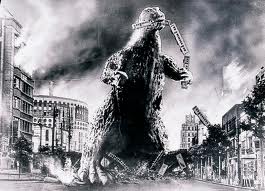
As shown with Godzilla, King Of The Monsters, atomic bombs woke up prehistoric behemoths slumbering for millions of years. But Godzilla wasn’t the first such creature unleashed to threaten humankind. The original nuclear dinosaur was the fictional rhedosaurus from The Beast From 20,000 Fathoms. But it was Godzilla that jumpstarted the giant monster craze from Japan that brought forth kaiju films that starred popular monsters like Gamera, Mothra, Rhodan and so on. They are still popular even though Toho, the company that produces the Godzilla films, stopped making them. There are plans to make another American version of Godzilla, but let’s hope they get it right the next time.

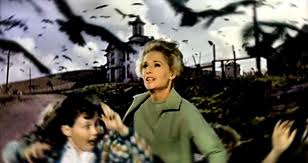
Things quieted down in the 1960s as fears about atomic mutants gave way to civil strife and cultural angst. Still, there are a couple of films in the time period that addressed the theme of nature fighting back. The best one was Alfred Hitchcock’s classic The Birds. For no explanation ordinary birds start attacking people en masse. Many of the scenes were quite chilling and show how helpless people can be against nature. It’s too bad the film studio didn’t let Hitchcock keep his original ending where flocks of birds have taken over San Francisco and presumably the world.

Another film is the original Planet Of The Apes. It doesn’t have an overt man vs. nature theme but it’s there and runs throughout the other films in the series including the recent Rise Of The Planet Of The Apes. Simians in the latter film were experimented on and they escaped to wreck vengeance on their human foes. Throughout the series, it’s stated that civilization falls when apes gain the upper hand against humans.

Pollutant Spawns

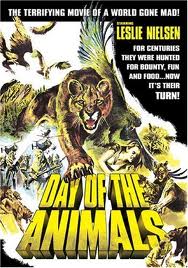
In the 1970s the big fear was man-made pollution and its effect on the environment. Godzilla even got into the act with Godzilla Vs. The Smog Monster where he faced off against a giant mutated slug that oozed deadly pollution. The premise in these nature-run-amok films is that humanity was being punished and the sentence was extinction. Of course, it rarely got that far but many of the offerings were interesting. Take this obscure film The Day Of The Animals. In this one, the ozone layer is depleted and increased ultraviolet radiation somehow brings upon animals, living in an altitude above 5,000 a rabies-like illness that makes them violent. Or how about this nugget of a film, Frogs, where animals sharing an island with a cantankerous landowner have had it with the constant pollution and take out the guests at the landowner’s birthday celebration. It was goofy yet creepy at times. Other films from this era include Squirm (killer worms), Kingdom Of The Spiders (William Shatner vs. you guessed it killer spiders), Ben (about swarming rats and yes Michael Jackson sang the title song), and Phase IV. The latter is about ants that evolve a hive mind and begin a successful dominion of the Earth.

These types of films aren’t as numerous as before probably because it is hard to pick out genuinely good films from so many awful ones that get more attention. Look at 2008’s The Happening which is about killer plants that cause people to kill themselves. It was so bad that the film’s star  Mark Wahlberg later publicly ragged about it. But they’re still being made because while most people realize that radiation and pollution won’t create monsters overnight there is still the fear that we are upsetting nature’s delicate balance and one day we will truly pay the price.

New Fringe & Supernatural: All Is Right!

Ah, last night was great for TV watching. Wasn’t home to see the new episodes of Fringe and Supernatural but I DVRed them and finally caught up to them today. Wow, both new episodes hit the mark(s) with some amazing, wonderful and disturbing developments.

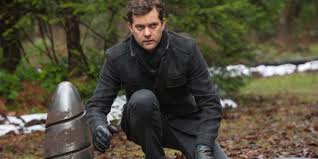
Fringe began its run of the final eight shows for the season (and maybe the series unless Fox renews it for a fifth season) with “A Short Story About Love.” There were basically three storylines; one about Olivia Dunham (Anna Torv) realizing the memories and feelings from the Olivia of Peter Bishop’s (Joshua Jackson) universe were supplanting her own. The problem is that Peter’s Olivia is in love with him, while the “regular” Olivia has no romantic feelings towards him. Meanwhile, Peter is following clues left behind by the Observer that apparently died in the previous episode. The third storyline was pretty average procedural junk about a deformed madman out to create a love potion from killing lovers. It was the kind of stuff you may find in a typical X-Files episode. Luckily, this storyline didn’t dominate the show.

The big reveals were pretty surprising. It turns out (SPOILERS AHEAD) that Peter is in fact in his own universe so that Olivia’s new feelings for him is probably the universe correcting itself. Luckily for us soft-hearts, Olivia independently decided to give in to her new memories and feelings and the end was so blissful and romantic. It was a heartwarming reminder to us cynics that love is the greatest force in the universe. Even on Fringe.

Supernatural began airing new episodes last week, and just as it all seemed hopeless for the ally-challenged Winchester brothers, Sam (Jared Padelecki) and Dean (Jensen Ackles) Castiel (Misha Collins) returned!

Yay! Our favorite stoic Angel that supposedly died earlier this season (and gave rise to those dumb Leviathan baddies) is back. In this week’s episode “The Born-Again Identity” Sam is committed to a psychiatric ward because the Lucifer hallucination in his head has driven him crazy. Desperately calling anyone for help, Dean finds out about this genuine faith healer. So when he goes to the guy’s place it turns out the healer is none other than Castiel. It turns out that he lost his memory and doesn’t remember being an angel or anything else.

Anyway, he decides to help Dean out. It was so great to see our pal Cass, it helps that he’s easy on the eyes LOL. Eventually, he remembers who he is and is wracked with guilt over his previous actions when he tried to play God. He gets to Sam in time to save him from a demon. But it turns out he can’t cure Sam of his hallucinations so in an act of self-sacrifice he transfers the debilitating hallucinations onto himself and he winds committed. Frankly it sucks that they had to leave him there in that ward. I guess the producers still wanted the brothers on their own to take on those Leviathan. Still sucks anyway because I know Castiel would kick the Leviathan’s butt all over the place. It just makes me wonder why can’t the Winchesters find some supernatural allies to help them with the Leviathan? Hopefully, they will be done with when the season finale comes around.

Annette DeForrester


Real Or Fake 3D Films

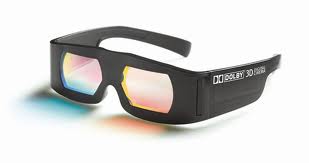
Once considered a novelty gimmick back from the ’50s 3D films look to be a mainstay in modern-day cinema. Specifically, f/x-laden genre spectaculars. It’s gotten to the point that a big-budget sci-fi or fantasy film without the 3D treatment seems to stand out or seem lacking. A prime example of that is the upcoming The Dark Knight Rises.

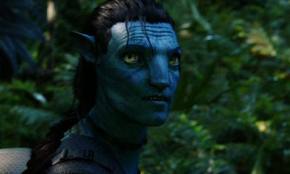
As anyone knows, this all started with the phenomenal success of James Cameron’s Avatar. There had been 3D film releases before Avatar but none of them were as hugely successful as Cameron’s sci-fi epic. Naturally, the film studios attributed Avatar’s success to the revolutionary 3D process that James Cameron utilized and set out to recreate that film’s success at the box office. This is why it seems as if every major genre or animated film is released these days in 3D.

All would be terrific if the 3D used was actually good on a consistent basis.

More and more often, audiences are complaining about the inferior 3D used in many films. Unlike Avatar, which was filmed using 3D cameras, most films released in 3D are post-converted. Usually it seems as if this process was slapped on at the last second and it shows. There are many rants that the films looked dark during some scenes, and actually seemed two dimensional at other times. These complaints were leveled at Clash Of The Titans, Green Lantern and Marvel Studios’ recent super hero films.

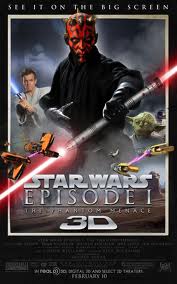
Film studios are in danger of killing any enthusiasm for a 3D film. What makes things worse is that the studios won’t reveal in their ads if the films were truly filmed in 3D or not. Add to that the higher ticket prices and it won’t be long before the bloom is off the rose so to speak. There are signs that this is happening already. Take the ticket sales of the newly released John Carter; despite the promotion that the sci-fi epic was in 3D (it was post-converted according to reports) it wasn’t a big hit. Or better yet, look at how Star Wars Episode I: The Phantom Menace did when re-released last month in 3D. It wasn’t a flop and did respectably but it wasn’t a mega hit. Of course, being that Star Wars Episode I was filmed over a decade ago, one couldn’t expect it not to be post-converted, and in that film’s defense the conversion was actually pretty decent. While some images appeared to be two-dimensional, some scenes looked good and at least there weren’t any scenes that looked dark.

The true 3D process using special cameras is costly, but in the long run, it would benefit studios since they can claim their films are true 3D films rather than something hastily done to earn a quick buck.

The good news is that while many upcoming films are using the post-conversion process, there are more and more films that do use actual 3D. While some of those films may not be appealing to some (feature-length animated films and horror films) they do point to the notion that 3D is becoming more mainstream. Perhaps a day will come when it becomes more economical for studios to produce true 3D films on a regular basis or at least improve the post-conversion process. (This improvement would benefit older films needing conversions like future Star Wars re-releases.)

This website reports which recent and upcoming films are true 3D films and which ones aren’t. The following is a partial list of upcoming films using both types of 3D.

Post-Converted: The Avengers, The Cabin In The Woods, Gravity, Men In Black III, Wrath Of The Titans

Actual 3D: Abraham Lincoln: Vampire Hunter, The Amazing Spider-Man, Brave, The Hobbit, Ice Age: Continental Drift, Madagascar 3: Europe’s Most Wanted, Prometheus, Resident Evil: Retribution

José Soto