The Influence of Matt Fraction & David Aja On Hawkeye

As we’re getting ready to watch the upcoming Hawkeye on Disney+ in a few days, many Marvel Comics fans have noticed how much influence the acclaimed comic book Hawkeye had on the show.

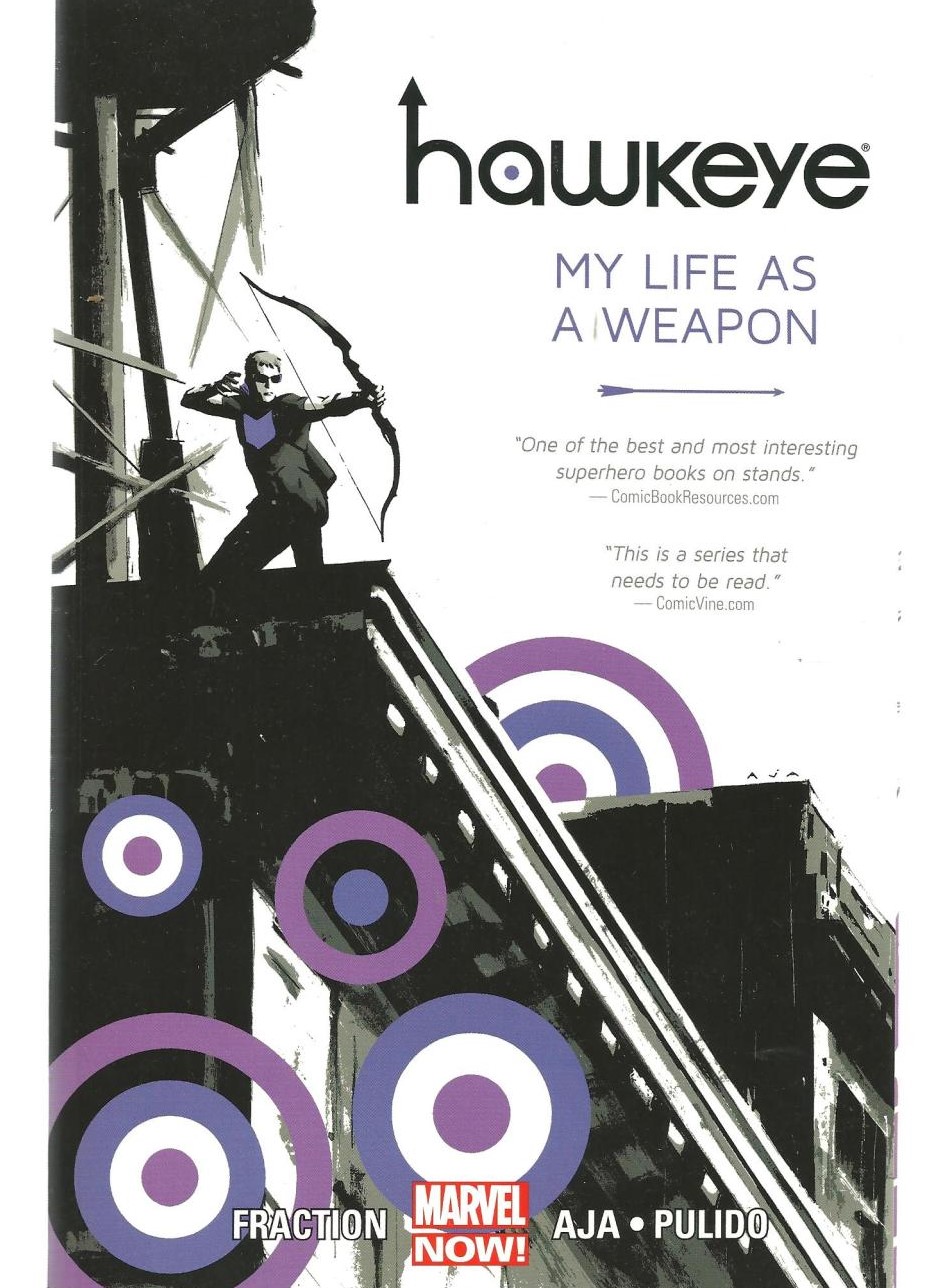
Written by Matt Fraction and drawn by David Aja, Hawkeye debuted in 2012 and instantly stood out among the crowded comic book marketplace thanks to the minimalist art from Aja and Fraction’s take on the archer superhero.
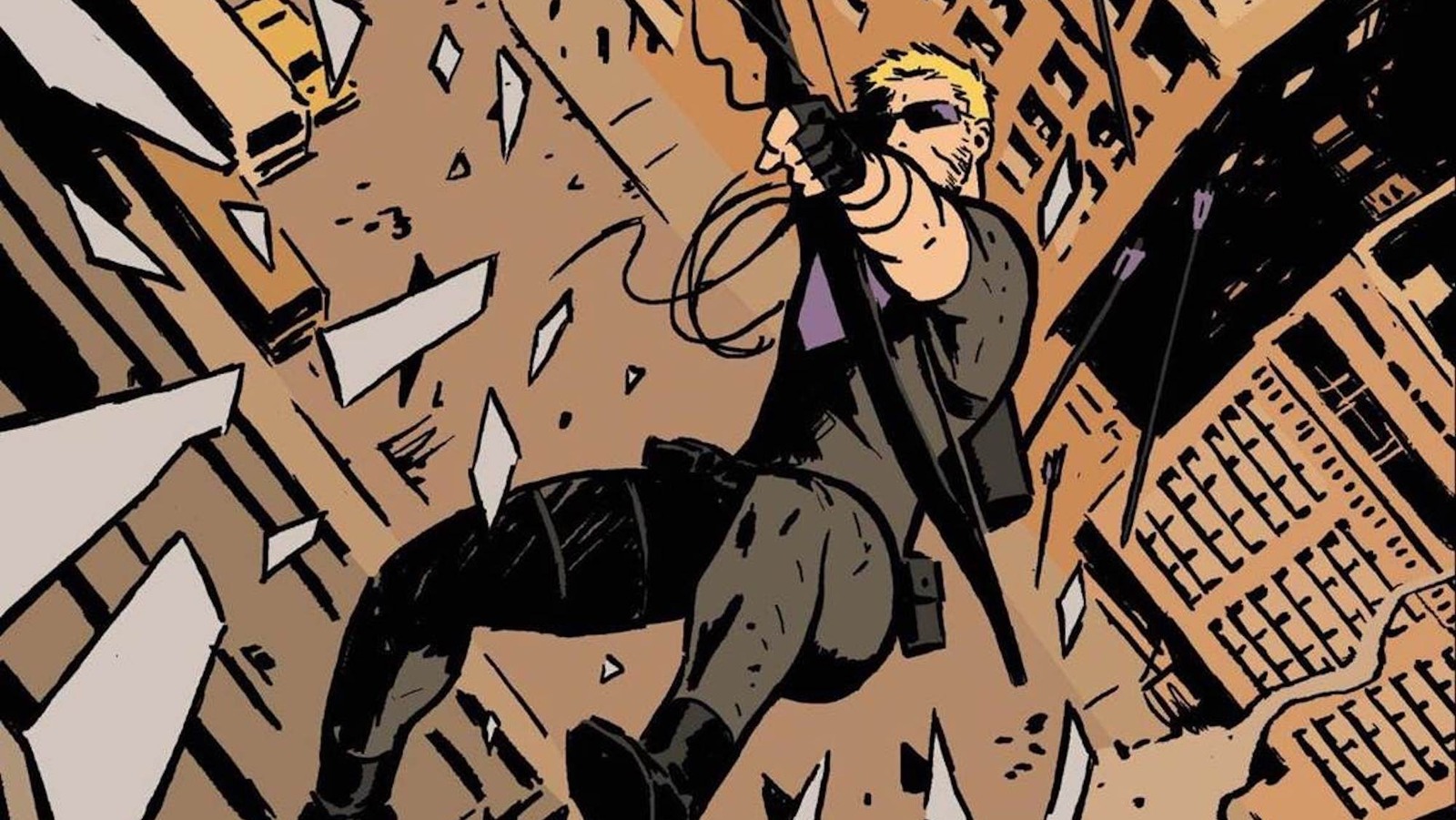
Instead of having Clint Barton aka Hawkeye run around and shoot endless supplies of trick arrows, the series grounded the superhero and leaned into his everyman pesonna who had to deal with more mundane problems, more believable villains, and much more relatable to the average reader. This Hawkeye did not wear his silly purple outfit as he dealt with world-ending events, although he kept his purple color scheme with his civilian clothing. He had to grapple with local thugs and more importantly, he could be hurt. Just look at the aftermath of many of his battles in the series where he came away all bandaged up and beaten. Yet, unlike Daredevil, the archer was never dour. though he seemed to suffer from depression.

What made Hawkeye more identifiable and someone to look up to was that in the series he always looked out for the vulnerable little guy. For instance. in the first issue he finds out that the tenants in the building he lived in were terrorized by their landlords, the RussianTrack Suit Mafia. So, Hawkeye helped them out by buying the building and became a kind landlord who was right at home joining the tenants in a barbecue. Later in the issue, he came to rescue of one of the series’ most beloved characters, Lucky the pizza dog, who was cruelly treated by his owner, a member of the Track Suit Mafia. Hawkeye wound up taking the dog from the mobster and adopting him.
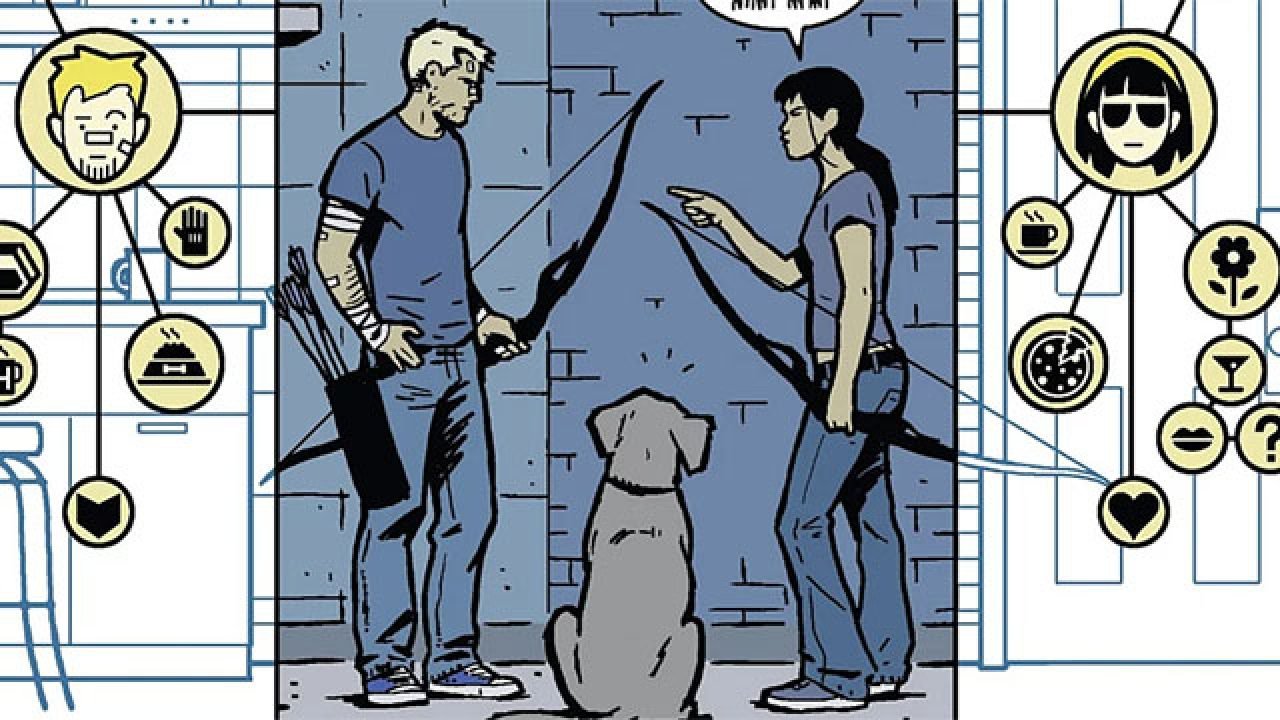
On a sidenote about Lucky, check out issue #11, which had the story “Pizza is My Life” and was told entirely from the point of view of Lucky. The way this was done was ingenious and inventive as Fraction and Aja used pictorgrams to illustrate the dog’s thought process as human dialogue faded in and out. The issue won an Eisner Award and it was well deserved. Thankfully, Lucky will appear in the TV series.

Another factor that made the series so memorable was Aja’s art which was very expressive, used bold lines and was similar to David Mazzucchelli’s art in Daredevil during Frank Miller’s “Born Again” story arc. The series used flat colors that conveyed mood and the emotional beat of the characters, which supported the series’ gritty tone.

Of course, what made the 22-issue run exceptional was the teacher/student relationship between Clint Barton and Kate Bishop. The scenes between the two were full of lively banter and quiet reflective moments that explored Hawkeye’s more vulnerable side. Bishop was a great foil to Barton with her spunky attitude and vigor. She was never afraid to call her mentor out when she thought he was in the wrong. Meanwhile, Hawkeye respected the young superhero and readily took her under his wing like he was a protective big brother or uncle. Together they made a great archery team and the way they coordinated their fighting styles was terrific thanks to Aja’s art which made expert use of small panels to convey intense action.
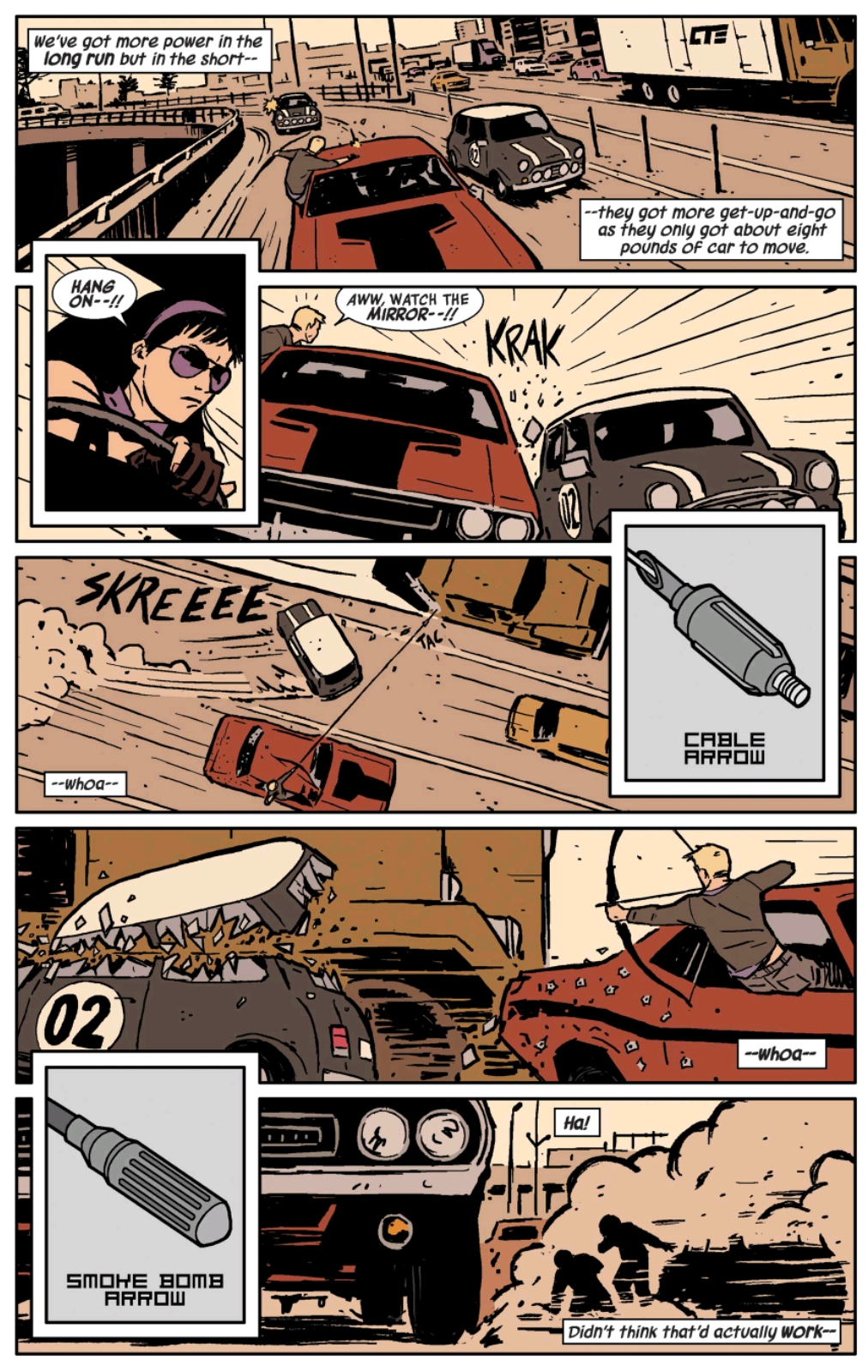
One of the more memorable fight scenes in the series was in issue #3, called “Beating the Odds”, and involved the two in a frantic car chase as they fled the Track Suit Mafia. Anyone who saw the recent preview clip of Hawkeye during the Disney+ Day event could tell that the car chase shown in the clip was inspired by the issue.

Be sure to check out the classic series run in the Hawkeye trade paperbacks which have the 22 issues of the Fraction/Aja run: My Life as a Weapon, Vol. 1, Little Hits, Vol. 2, L.A. Woman, Vol. 3, and Rio Bravo, Vol. 4. Or just pick up the collected works in a single volume. They’re worth every penny and are a nice way to see how classic run influenced the TV show.
Lucasfilm In Disarray?

Something is not right with Lucasfilm. It can be seen by the behind-the-scenes drama going on with the film studio once owned by George Lucas before he sold it to The Walt Disney Company nearly a decade ago. Another sign is the lack of solid information about their upcoming films and TV shows.

Lucasfilm has been mired in controversy for several years despite its early Disney-era success of Star Wars: The Force Awakens and Rogue One: A Star Wars Story. What is often overlooked with the latter film is that it had significant re-shoots which ultimately made the film a success. After that dilemma followed the film studio.

There was the heated reaction to Star Wars: The Last Jedi which sharply split Star Wars fans. Then the saga of revolving directors plagued Solo: A Star Wars Story and Star Wars: The Rise of Skywalker. With those two films the original directors were removed from the projects. Solo suffered greatly as the directors Phil Lord and Chris Miller were fired when filming was nearly complete and forced the film to be essentially redone from scratch.

Now that the final Sequel Saga Star Wars films have concluded nearly two years ago, there is little sign of new Star Wars films coming up. Of course, there are many Star Wars TV shows slated to stream on Disney+ and they are eagerly awaited. In fact, many rightly argue that the TV shows are what is keeping the franchise alive thanks to The Mandalorian, Star Wars: The Bad Batch and hopefully The Book of Boba Fett, which debuts next month.

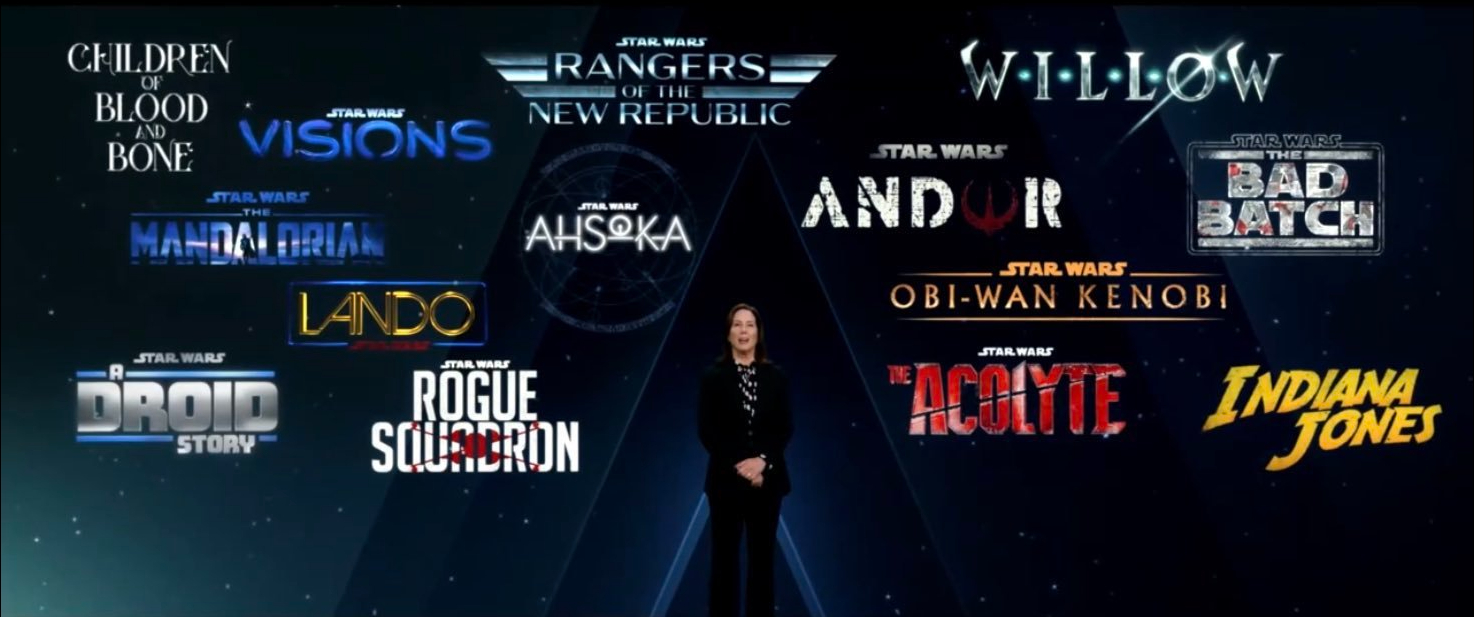
The upcoming TV projects such as Obi-Wan Kenobi, the new season of The Mandalorian, Andor, and Ahsoka are eagerly anticipated, but we have little news about those shows. The recent Disney+ Day event which revealed many exciting Disney, Pixar and Marvel projects failed to deliver anything significant that was Star Wars related. Only a documentary about Boba Fett, cast interviews of the upcoming Willow TV show, and a sizzle reel for Obi-Wan Kenobi streamed on Disney+ while other studios rewareded subscribers with first looks at upcoming projects. What is confounding are rumors that there were Star Wars trailers and footage planned to be unveiled, but for some reason this did not happen. In the end, while the sneak peaks at other Disney properties were impressive, Star Wars looked threadbare on the streaming platform.

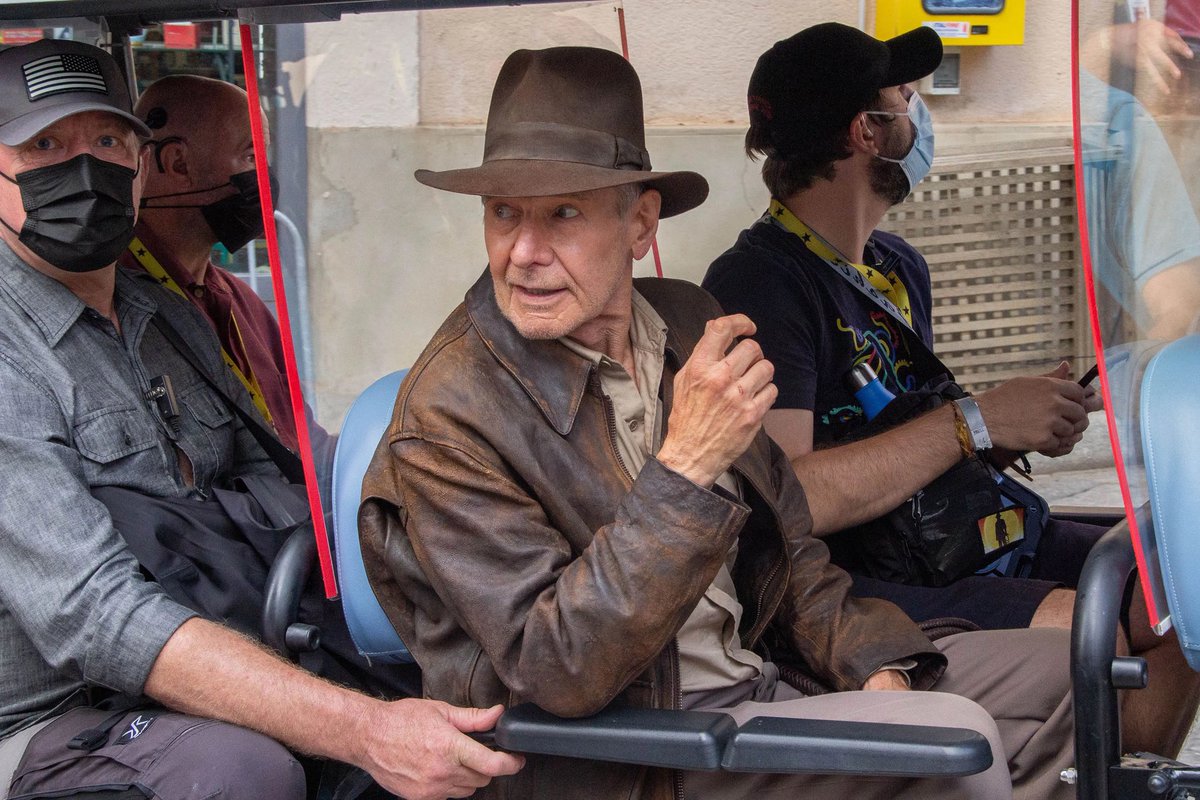
As for the films, there are more signs of trouble. The next Indiana Jones film was filmed and expected to come out next year, but has been bumped to 2023 with rumors of extensive re-shoots and revisions of the plot pending. This is alarming given the age of the film’s star Harrison Ford and declining interest in the film.

But the most disconcerting news came recently that director Patti Jenkins’ pet film project Rogue Squadron has been put on indefinite hold. Originally, the film was supposed to come out in 2023, but supposedly creative differences between the director and Lucasfilm derailed the project. Now, it is doubtful Rogue Squadron will ever be made. This is embarrassing for the film studio after all the hoopla they created last year when they released a video promoting Rogue Squadron that featured Patti Jenkins passionately talking about the film as she was shown next to a full-scale mock up of an X-Wing fighter. Talk about putting the cart before the horse!

That is not all, ballyhooed announcements of Star Wars films from director Rian Johnson and executive producers David Benioff and D.B. Weiss have led nowhere. What is next? Will the announced Kevin Feige-produced Star Wars film be shelved as well?

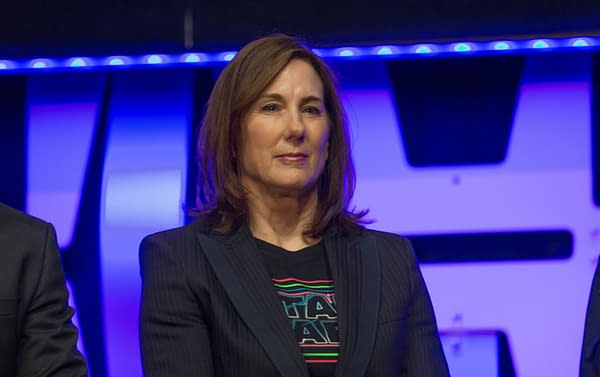
Many have pointed fingers and blame on Lucasfilm president Kathleen Kennedy. She has proven to be a somewhat controversial film executive who has enraged some fans and members of the alt-right. Despite the overreaction from some, she should accept the blame for the issues with the directors and the delays these events are causing because it is damaging the brand of Lucasfilm and its properties.

Given the image of Lucasfilm being in disarray, several fans have called for Kathleen Kennedy to be replaced by someone else, such as Jon Favreau, the showrunner of The Mandalorian. However, news has come out that Disney extended Kennedy’s contract for another three years. Surely, this demonstrates that the Disney executives have faith in Kathleen Kennedy, but can she turn things around? What convinced Disney that she deserved to continue running Lucasfilm? We have to hope that Disney’s continued faith in Kennedy is warranted because Star Wars as a film property sorely needs a win and there isn’t anything on the horizon. More importantly, Lucasfilm and Kennedy have to prove to fans that they can still deliver quality films and TV shows and time is running short.

Tom Hanks Delivers The Emotional Core In The Post-Apocalyptic Film Finch

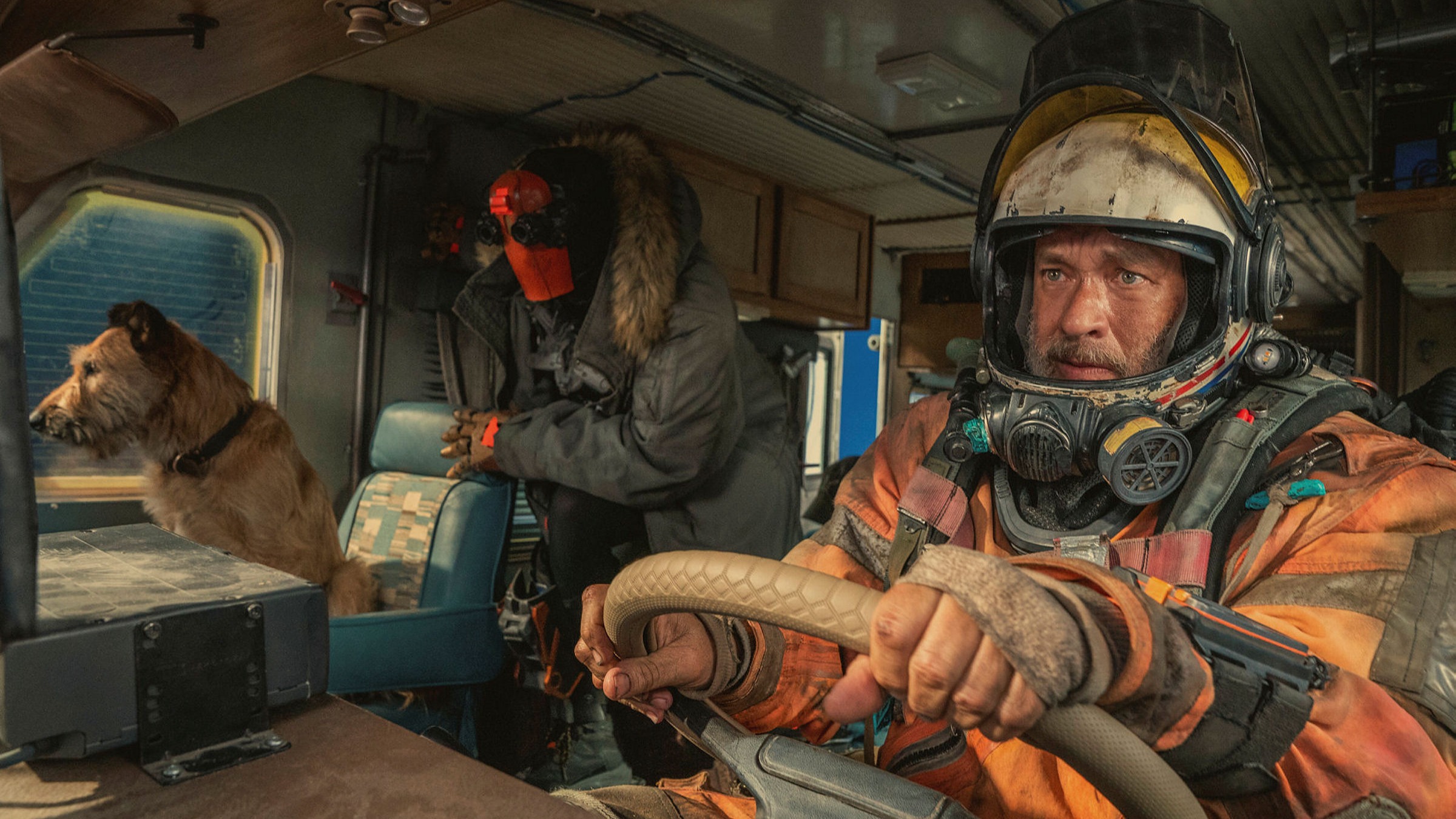
Finch, originally titled BIOS, is a post-apocalytpic film that was supposed to be released last year and is finally able on Apple TV+. The film is about a dying man (the title character Finch played byTom Hanks) in a barren world, who builds a robot to care for his dog after he dies.

Several years earlier in Finch, the Earth was devastated by a solar flare that shredded the ozone layer and blanketed the world with deadly ultraviolet radiation that killed most life. Finch Weinberg is a lonely robotics engineer in an abandoned and dust-covered St. Louis. He ventures out into the world with his UV suit just to scrounch for food and supplies for himself and his dog Goodyear (played by Seamus the dog). His only other companion is a small robot called Duey that has limited capabilities. Finch has a terminal illness (it’s not made clear in the film but it could be radiation poisoning or cancer) and wants Goodyear protected, so he builds an anthropomorphic robot that he names Jeff (Caleb Landry Jones).

Finch is not able to fully program Jeff because a devastating storm is approaching St. Louis that will last for weeks. The scientist already planned to move to the west coast of North America and so decides to head out early in his recreational vehicle with Goodyear and his two robots, even though Finch is not fully programmed. This means that as they set out on their road trip, Finch has to teach Jeff how to care for his dog and survive after he is gone. During their trip, the two grow a friendly bond as Jeff learns about humanity and experiencing life, while Finch has to trust that the robot will carry out his task. This is difficult for Finch because during his ordeal as a survivor he lost faith in others.

Directed by Miguel Sapochnik and written by Craig Luck and Ivor Powell, Finch is heartwarming film, though it does not have a deep plot. It has many aspects of post-apocalyptic and survival films like WALL-E and even Hanks’ own Cast Away. Still, the film knows just how to tug at the viewer’s heart and there are many moments in the film that require a box of tissues. One instance is the moment when Finch recalls how he came to adopt Goodyear, which led him to find a measure of atonement, culminating in the creation of Jeff.. The film has many beautiful and reflective moments of experiencing the simple joys in life that are buttressed by gorgeous cinematography by Jo Willems.

The dog Goodyear is not some kind of super smart animal with quirky personality traits that is seen in many dog-centric films and it’s clear to see how much Finch is attached to the animal. Be that as it may, being that the driving force is that Jeff must learn to care for Goodyear, the dog is not the main character. Those are Finch and Jeff. The robot is not fully developed emotionally and has an inquisitive nature that is humorous but never annoying, At the same time, this defect is a liability that could endanger his biological companions. However, Jeff has noble intentions and takes initiatives throughout the film that earns his creator’s trust and allows him to grow into the caretaker he was meant to be. The role was well performed and captured as the robot seems realistic thanks to his clumsy nature and a clunky look, which is how a cobbled-together robot would appear.

Of course, the main draw of the film is Tom Hanks, who proves once again why he is such a beloved acting icon. His heartfelt performance is the emotional core of the film. It is so easy to relate to Finch as Hanks injects a noble and gentle everyman demeanor. One cannot help but feel for him and his dog whenever he starts coughing blood or just see them playing a simple game of catch. Throughout the film Hanks delivers a quiet and thoughtful performance that helps keep the film grounded and endearing.

Some will argue that Finch may be emotionally manipulative and simplistic and that is a valid point. Given the film’s premise it can be easy to predict how the film will end up. However, in the end it works as it is easy to get emotionally invested in the characters and wonder what will come next for them. Just as important, despite its pathos, Finch never feels sentimental or cloy.

It is a bit of a shame Finch can only be seen on Apple TV+ since not many people have that streaming app. The film deserves to be seen in wider venues such as full theatrical releases and the powers that be should have waited a bit longer to do so. Hopefully, Finch may find an audience later on in additional venues because it is one of the better genre films for the year.

José Soto

Denis Villenueve’s Majestic Dune

Dune is a classic science fiction novel written by Frank Herbert in 1965 that tells the story of a young man in the far future who leads a desert planet people to freedom. It’s a very complicated tale that has a deep back story that has been difficult to translate to film due to its complexity. The first film adaptation directed by David Lynch in 1984 was met with a mixed reception. It was a lavish production that looked and felt like Dune, but also took liberties with the story and was edited and cut out much of Herbert’s vision. The Sci-Fi Channel released a mini-series in 2000 that was more faithful to the book and was longer than Lynch’s film, but was made on a limited TV budget that was sometimes evident with painted backgrounds and weird costumes. 

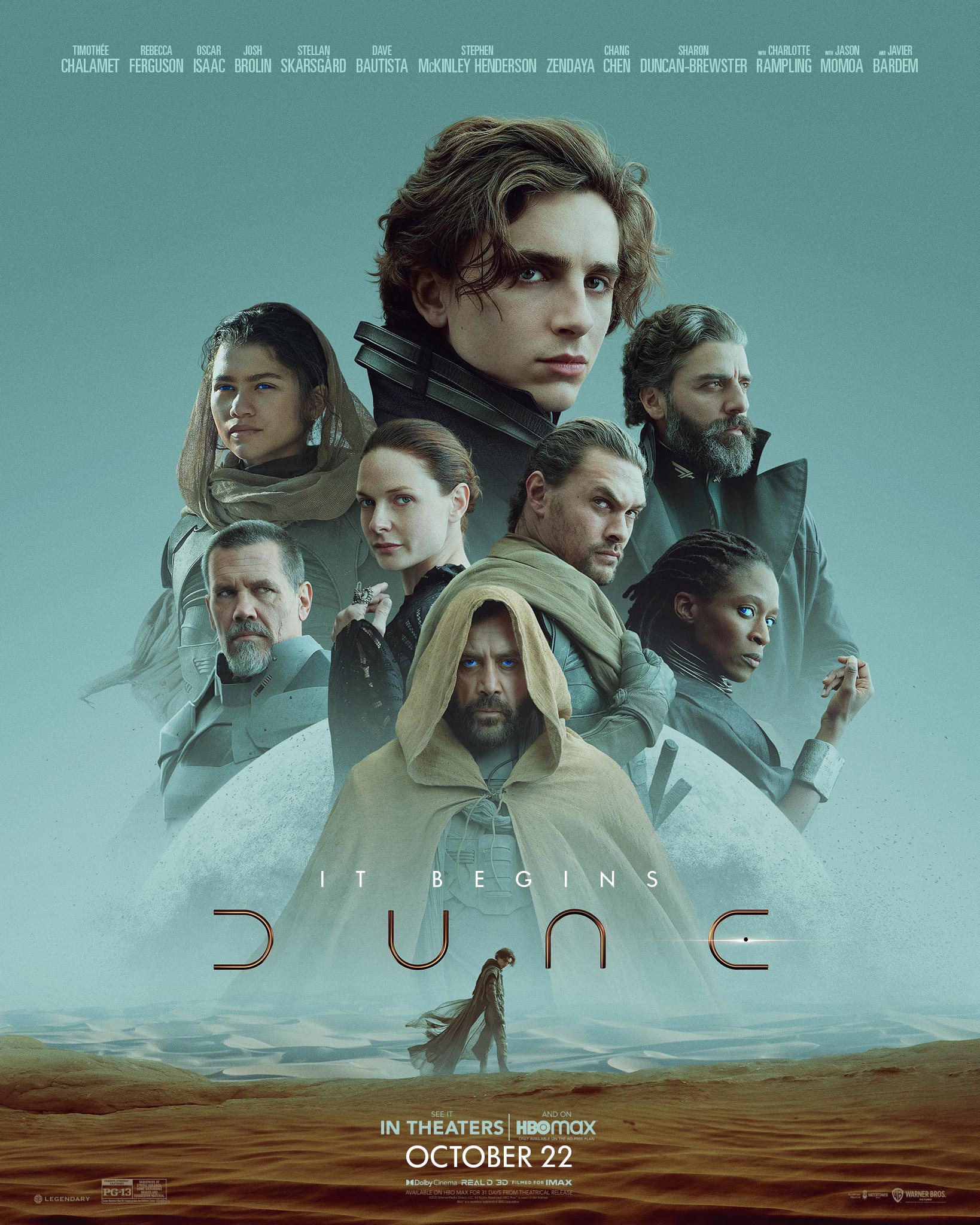
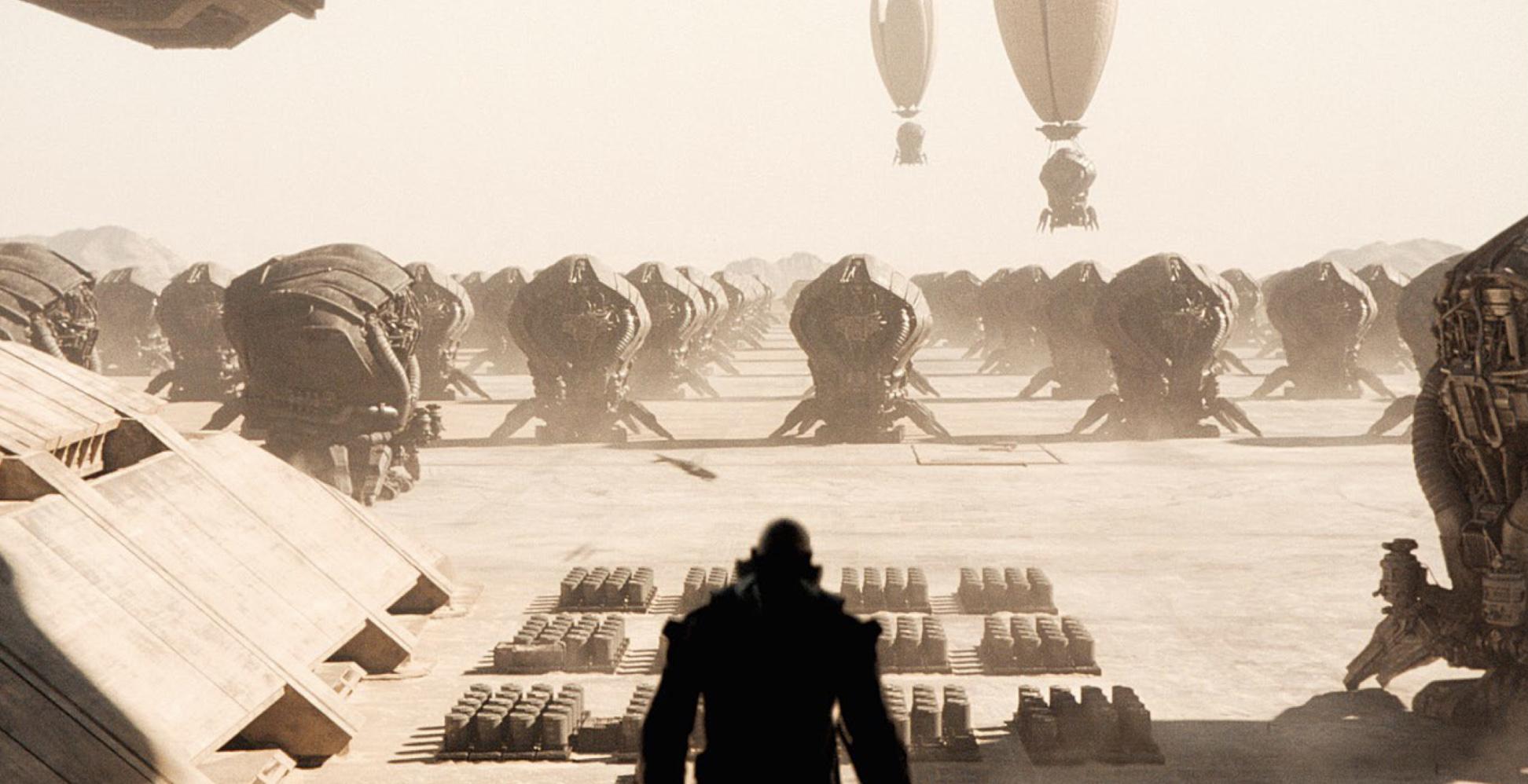
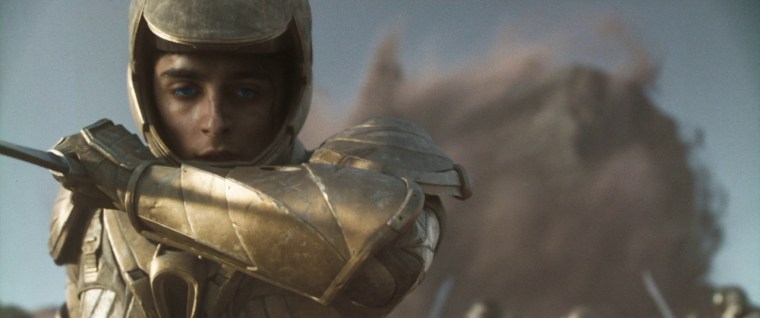
Denis Villenueve’s Dune is the latest adaption of this epic tale that takes place in the far future. Humanity has spread to the whole galaxy and is ruled by the Padisha Emperor, and that empire is controlled by an addictive substance known as spice that extends life, enables interstellar space travel, and allows some to see into the future. This precious resource is only found on one planet, Arrakis, also know as Dune, which is populated by a nomadic group of people known as the Fremen. They have a prophecy that a man from off world will lead them to glory and freedom. This man is young Paul Atreides (Timothée Chalamet), the son of Duke Leto Atreides (Oscar Isaac), who is gifted control of the planet by the emperor. This gift, however is a double edged sword, with plots against the Atreides hatched by the emperor and House Atreides’ sworn enemies, House Harkonnen. These machinations force Paul to embrace not just his future but the the destiny of the galaxy.

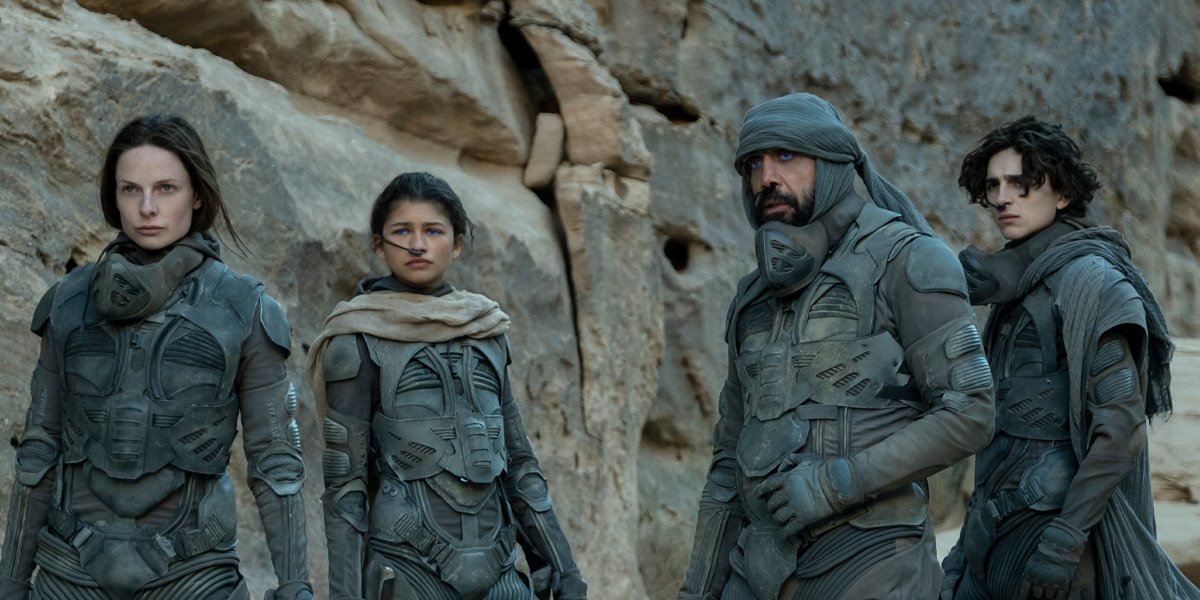
Villenueve’s take on the material is excellent and shows a great respect for the essence of the story. The movie has the best elements of previous adaptions, with the right look and feel of the 1984 film, along with the faithfulness of the mini-series. The new movie takes it time in telling the story which is the right way, since it is a deep and complex story of prescience, politics, and ecology to name a few things that make Dune a book that is still enjoyed and admired decades after its publication.  Paul’s frequent visions of his future with the Fremen and his future lover Chani (Zendaya) are shown in an interesting and mysterious way, and the appearance and mannerisms of the different factions of the Dune universe are also a highlight. From Mentats making calculations with their human computer minds to the emperor’s Sardarkaur troops speaking in a weird, guttural language, this feels like a different time and place, as it should since it takes place over 10,000 years into the future.

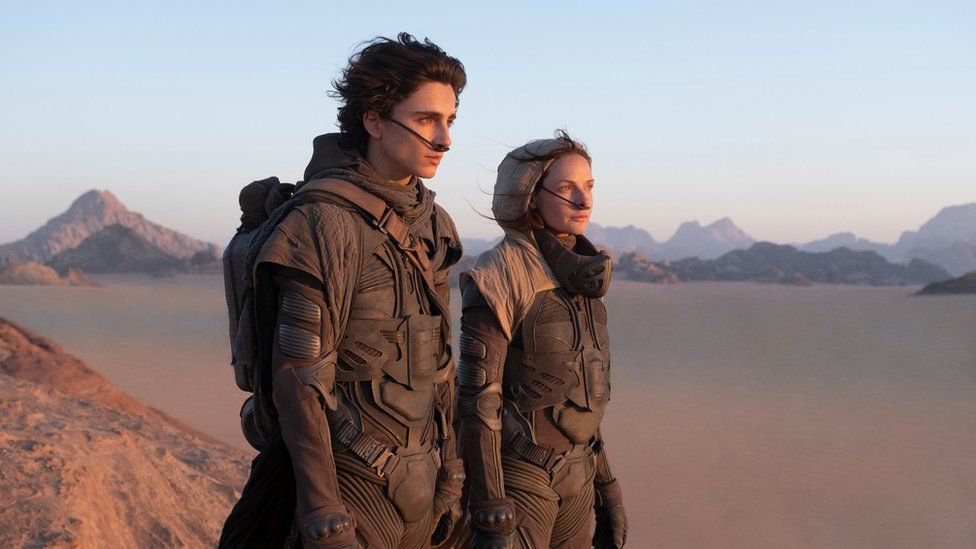
Paul’s journey from son of a Duke to the head of his family is done in a convincing way, with good performances from a great cast. Timothée Chalamet shows the conflicted nature of Paul, who can see his future and is reluctant to make it happen, yet feels obligated to continue his father’s work. Oscar Isaac, as his father Duke Leto, also does well as the heroic leader of House Atreides, who knows that the gift of Arrakis to his family is a trap, yet also feels the pull of duty to go forward in taking control of the spice while warning his son of what is to come. Paul’s mother, Lady Jessica is well portrayed by Rebecca Ferguson, who shows the agony of a mother giving her son over to a possible death at the hands of the Bene Gesserit Sisterhood, a group that has plans on genetically breeding a super human who can transcend time and space and see Paul as that potential being. The well-rounded cast includes other such names as Jason Momoa, Zendaya, Javier Bardem and Stellan Skarsgard as the Baron Harkonnen. All of which provide excellent interpretations of these iconic characters.

One issue I had with the movie, is that because of the strong focus on Paul Atreides and his mother, there are some characters that do not show up at all, such as Princess Irulan, Feyd Rathua Harkonnen, and Emperor Shaddam IV. These are important characters to the story, but due to the obvious time constraints in a two-and-a-half hour movie and the needs of a very complicated story, this is a consequence. Speaking of which, the title of the movie at the beginning says “Dune, Part 1”. Villenueve chose to make the movie based on the first half of the book. I think this was the only choice, since trying to cram the whole book into one film will lead to issues that can happen in film adaptations of books, where much of the plot can be lost or rushed. I would have liked to have seen perhaps a three-hour version, so that these missing characters could show up, and that the villainous Harkonnens could have more of the limelight. Having said that, it is still better to have a Dune film that lets the story unfold, which this one does. I have heard complaints about the ending of the movie, that it is supposedly abrupt, but I didn’t see it that way. It feels like a good ending point for that part of the journey, where Paul and Jessica embark on a new phase of their lives with the Fremen, and the Harkonnens still lurking as a major threat. Early indications are that the film is doing well and hopefully this will lead to the expected part 2 that will finish the tale of Paul Atreides’ rise to power, and the establishment of the legendary Dune universe.

C.S. Link

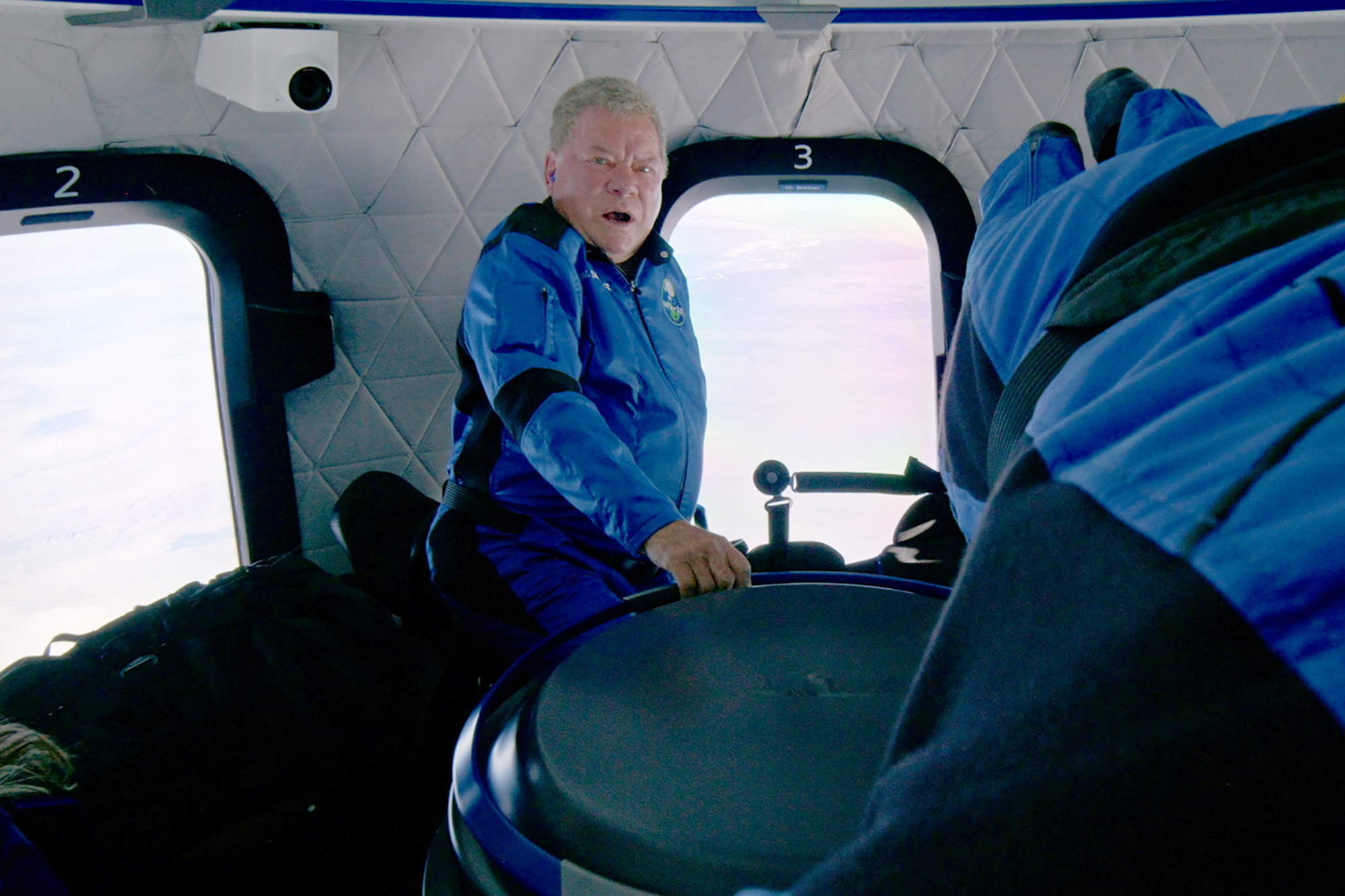
“The Most Profound Experience I Can Imagine” William Shatner Goes Where Few Have Gone Before

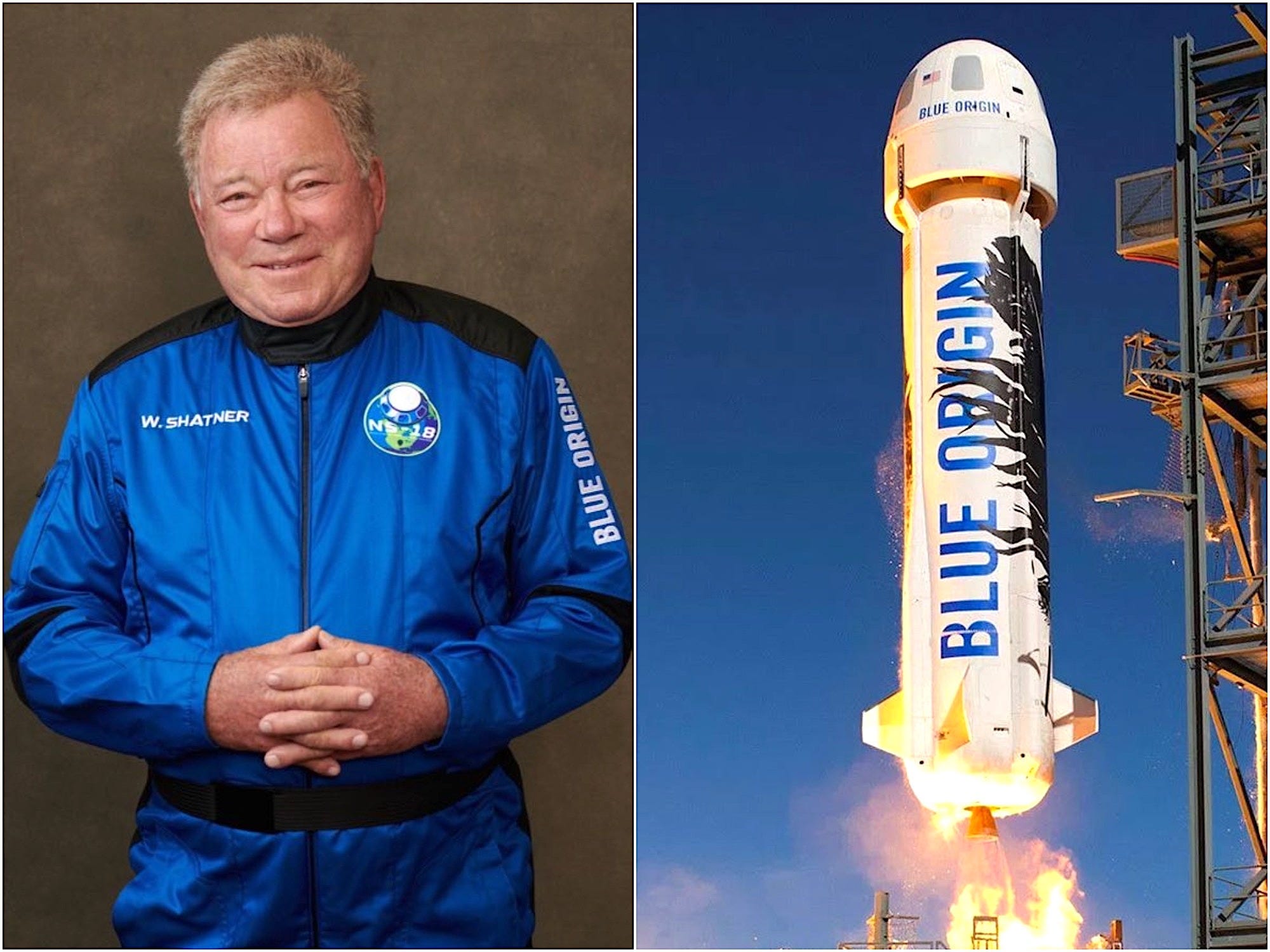
On October 13, 2021, history was made as sci-fi melded with science fact when actor William Shatner became the oldest person to ever go into space onboard Blue Origin’s New Shepard suborbital launch vehicle.

At 90 years young, Shatner is, of course, best known for portraying Captain James T. Kirk, in the original Star Trek and the first seven Star Trek films. The resusable suborbital system was conceived by Amazon CEO Jeff Bezos as a means of commencing space tourism. Bezos invited Shatner to become an astronaut/passenger for the New Shepard’s second crewed voyage, which included three other astronauts/passengers.

Obviously Star Trek and sci-fi fans were excited by the news as finally William Shatner would be able to in a sense emulate the sci-fi legend, who voyaged through space as he commanded the starship Enterprise. Needless to say, what Shatner accomplished paled to Kirk’s feats. After all, the actor simply took a suborbital flight while Kirk traversed the galaxy as if it was nothing. Yet Kirk appreciated the situation he was in, to explore and witness what few or none have before. Now, Shatner, too, was able to have as what he said was “the most profound experience I can imagine.”

Originally the flight was to take place on October 12, but was delayed due to weather. During pre-takeoff, it was clear that William Shatner was nervous about his flight and made no secret about his ambivalence. Still, he went through with the flight and was taken aback by the experience.

The New Shepard launched from Blue Origin’s launch site in West Texas at 10:49 a.m. in a short suborbital trajectory that was similar to astronaut Alan Shepard’s first suborbital flight in 1961. The capsule that Shatner and the other three astronauts were in only remained in suborbit for about 11 minutes before it descended back to Earth. Still, that so-brief voyage left a grand impression upon Shatner and his companions.

Once he landed and was greeted by Bezos, William Shatner gave a moving and visceral description of his journey and how it deeply moved him. “I hope I can never recover from this. I hope that I can maintain what I feel now. I don’t want to lose it.” Shatner confessed as he recounted his short voyage 65 miles above the planet.

Some will argue that the event was a publicity stunt for the very rich and that the cost of the flight could have been better used down at Earth. But these trips illustrate the potential of space toursim and open it up to everyday people who are not scientists or engineers. William Shatner’s journey to where few have gone before was truly inspiring and an excellent way to boost space tourism. He pointed out that observing Earth from afar made him appreciate how fragile and beautiful our world is and how it should be cherished. He also added that everyone should experience to see Earth in a new way. Many other space voyagers described a similar feeling and how it made them protective of our planet. Perhaps if more people experienced what the very few have then it could inspire them to take measures to protect Earth.

Eventually, space tourism will become more affordable and attainable for many people to the point that it can become as routine as taking a flight on an airplane. Shatner’s experience and the way he eloquently described it are excellent ways to promote space tourism and inspire countless others.

So, what next? Will Patrick Stewart be invited for a future flight or antoher Star Trek actor? How about Mark Hamill, Sigourney Weaver, or any other prominent sci-fi actor? How about prominent sci-fi visionaries, such as George Lucas or James Cameron? It’s easy to imagine Cameron staying in orbit to film his next sci-fi blockbuster. They could, as Shatner demonstrated, be the best ambassadors to motivate others and who knows? Space tourism could soon become commonplace. Anyway, no matter what, it was a blast to see a small measure of science fiction becoming reality as we can now envision what it is like for Captain Kirk to be in space as the actor who helped create the character took that next step into the final frontier.

José Soto