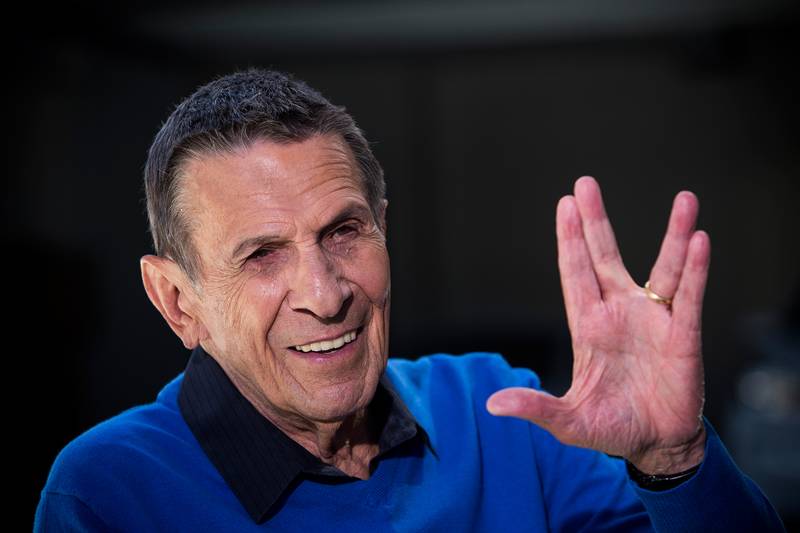
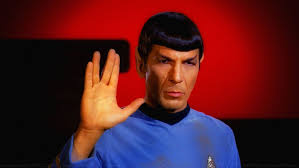
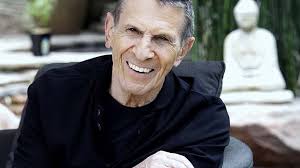
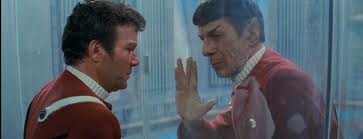
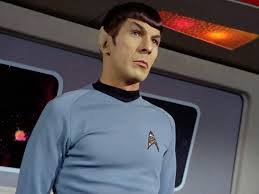
It’s still hard to believe that Leonard Nimoy, the Star Trek icon, is gone. As we celebrate his contribution to sci-fi culture let’s look at some of his best moments playing the unforgettable Mr. Spock on TV and film. From stoic, calm and collected to comical or out of character to poignant these are some of truly memorable moments. Live long and prosper, indeed.
Leonard Nimoy, who played Spock the first officer of the starship Enterprise on Star Trek, has died today at the age of 83.
Nimoy not only was renowned for portraying the stoic, emotionless Vulcan, but he was a noted film and TV director, photographer, musician and poet. Among his best known directorial pursuits were Star Trek III: The Search for Spock, Star Trek IV: The Voyage Home and Three Men and a Baby. The first two films helped to increase interest in Star Trek , which led to numerous successful spinoff films and TV shows. Nimoy also capitalized on his fame and appeared in or lent his distinctive deep voice to other well received TV shows and films like Star Trek: The Animated Series, Invasion of the Body Snatchers, A Woman Called Golda, Columbo, Mission: Impossible, Night Gallery, The Big Bang Theory, The Simpsons, Atlantis: The Lost Empire and The Outer Limits. He also hosted the ’70s paranormal documentary TV show In Search of…, which still has a cult following. His other prominent genre work was appearing as the enigmatic scientist Dr. William Bell in several episodes of Fringe.
But Nimoy will be best remembered for his portrayal of Spock. The cool and logical alien on Star Trek was an instant hit with fans and helped popularize the fledging show back in the mid ’60s. Although Star Trek only lasted three seasons, the show’s popularity grew afterwards in syndication and has become an integral part of our modern culture. A large part of merit is due to Nimoy’s performance, which garnered him Emmy nominations.
Still despite his fame, Nimoy was enigmatic about the benefits of having played Spock and feared being typecast. His ambiguous feelings led to him writing his famous autobiography I Am Not Spock. He was so ambivalent about the Spock character that he was hesitant to reprise the role when Star Trek was revived as a series of films. This was why Spock was killed off in Star Trek II: The Wrath of Khan, since the death would allow him to have some closure with the character. However, as we all know the film was so well done and Nimoy had a positive experience while filming it, that he changed his mind and was willing to continue playing Spock. This led to him directing the next two Star Trek films, the latter being considered one of the series’ best films. He also reprised the role in Star Trek V: The Final Frontier, Star Trek VI: The Undiscovered Country, two episodes of Star Trek: The Next Generation and in the last two Star Trek films. By this time, he had embraced the character and realized how it helped open other opportunities for him like his directing and artistic endeavors.
With his passing, we are again reminded how the past is slipping away from us being that three of the original Star Trek actors are now deceased. But his boundless legacy, which includes introducing the world to the most famous alien in sci-fi culture, will live long and prosper long far into the future.
12 Monkeys is the latest sci-fi TV show from Syfy and an adaptation of the classic Terry Gilliam time travel classic film from 1995 (which itself was a remake of an obscure French short film called La jetée).
The TV show follows the same premise as the original film. Mankind has been driven nearly to extinction by a deadly virus that begins in the near future and a few decades from now, scientists send back in time a lone man to learn how the calamity started so that it can be undone. But there are many differences, many of which were done to fit a serialized TV format.
The time traveler, James Cole (Aaron Stanford), isn’t a prisoner forced to volunteer, but a drifter willingly recruited by a scientific group to undergo the temporal jumps. In the original film, when he voyaged to contemporary times the film had us guessing if he was insane. Not so here. In fact, he is quickly able to convince his present-day comrade, virologist Dr. Cassandra Railly (Amanda Schull) that he is a time traveler. In the course of the series, Cole and Cassandra track a doomsday cult called the Army of the Twelve Monkeys, who are responsible for unleashing the virus. That differs significantly from the film and as with these TV shows finding the cause of the virus and stopping it isn’t accomplished within two hours like in a film.
In each episode, Cole uncovers an important facet of the virus or the army and goes back to 2043 to report his findings. Of course, this hampers the TV show because if he is successful then the virus is stopped, humanity is saved, his timeline is erased and the show ends. However, to its credit 12 Monkeys has explored the headaches of time travel and it impacts on future timeline for better or for worse. For this reason, scenes that take place in the present aren’t nearly as interesting as those set in the future. It’s a well realized post-apocalyptic future with barren and broken buildings and roving armies of scavengers. One of the best episodes to date called “Atari” largely took place in the future and explored Cole’s tortured past.
The piecemeal revelation that Cole wasn’t exactly a good person in the past is a good twist and makes him a more interesting character. It’s fascinating to see some of his morally questionable acts and why he decided to help change the future in the episodes. A lot of that has to do with his close friend in 2043, Ramse (Kirk Acevedo), who acts as Cole’s conscious. Ramse is so well played by Acevedo that we have to wonder why he wasn’t chosen to play Cole. After all, with his bald head he looks more like Cole as portrayed by Bruce Willis in the original film and is a better actor to boot.
The other characters are hit or miss. Jennifer Goines (Emily Hampshire), an insane math whiz whose father is believed responsible for the virus, is overdone with her Hollywood crazy method acting. Meanwhile, Katarina Jones (Barbara Sukowa), the enigmatic creator of the time machine, is a mysterious, though sympathetic character that is quietly desperate to change time.
On the whole, 12 Monkeys seems at times to be your standard time travel show, but it is still generally entertaining despite its faults. It’s not in any way up to the level of the original film, but it’s a worthwhile adaptation.
The recent announcement by Netflix that it will be developing an original TV series bases on the iconic TheLegend of Zelda video game series has caught many by surprise including myself. Nintendo’s only other foray into live action movies or TV based on their games was the not so well received Super Mario Bros. from 1993.
Another odd fact is that there is no major voice acting in the games. Link, the hero of the story doesn’t talk. You only hear him scream or grunt. It will be very interesting to hear him say something for the first time, let alone seeing him portrayed in live action by an actor. Having said that, the fact that their next project is based on Zelda while unexpected, actually makes a lot of sense.
The Zelda universe has a vast and rich mythology that spans almost 20 games released over a span of almost 30 years. Each game is a tale set in a fantasy world called Hyrule, which is somewhat reminiscent of J.R.R. Tolkien’s Middle-earth, populated by goblins, wizards, all sorts of fantastic creatures, and a race of elf-like beings that struggle against the evil Ganon. He is a huge villain obsessed with obtaining the all powerful Triforce, a relic from an ancient time that bestows ultimate power to anyone who has it. Again, very much like the One Ring to rule them all from the epic The Lord of the Rings saga.
The success of both Peter Jackson’s The Lord of the Rings and The Hobbit movies and the HBO TV show Game of Thrones, demonstrate that there is a market for live-action epic fantasy stories. The key to the success of any Zelda show will be who Netflix hires to translate the great stories told in each game to the TV screen. As with movies that are based on books demonstrates, this can be a tricky task. However, since this will be a TV series, it will have many hours to tell any such story, instead of the restricted two- hour-plus limit of a movie. This can definitely be a positive since the saga of The Legend of Zelda is as complex as it is interesting. Hopefully, whoever is hired will be able to do justice to the highly regarded Zelda series, which has set a very high standard for quality in all of its games. Nintendo, who is known for protecting all of their characters should be able to make sure this happens.
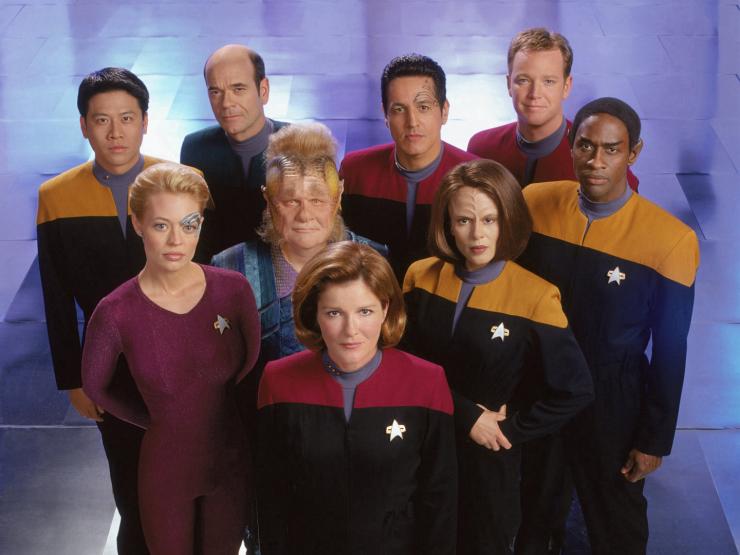
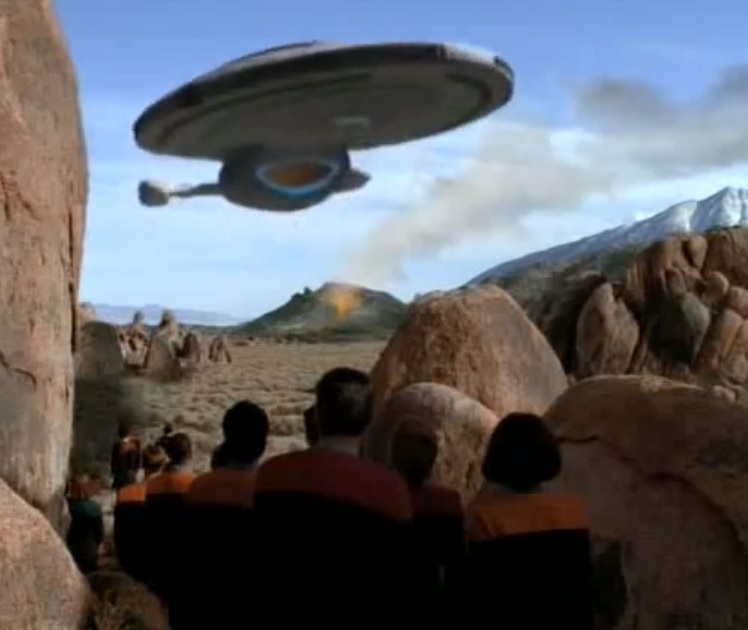
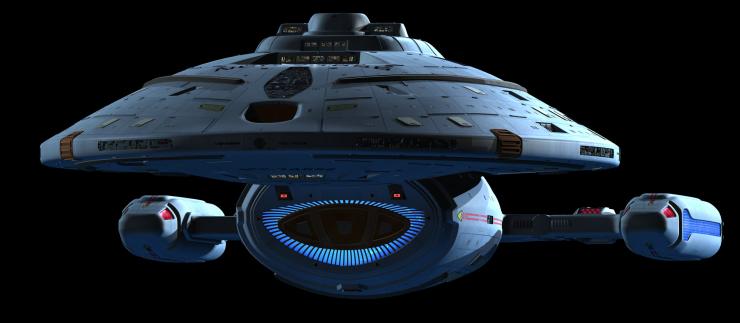
This month marks the 20th anniversary of Star Trek: Voyager, the saga of a lost Federation starship in a distant corner of the galaxy trying to make its way home. Ever since the third Star Trek spinoff made its debut on the UPN channel it’s been considered as an inferior Star Trek show. That is a somewhat unfair claim, although many episodes were formulaic there were many that were worthy of the Star Trek name. These are twenty of the best episodes of Star Trek: Voyager.
20. “The Chute”Voyager crewmembers Tom Paris (Robert Duncan McNeill) and Harry Kim (Garrett Wang) undergo a harrowing ordeal while being held prisoner in brutal space prison.
19. “Lineage” B’Elanna Torres (Roxann Dawson) grapples with accepting her half Klingon heritage during her pregnancy since she doesn’t want her unborn daughter to face the same persecution she underwent as a child.
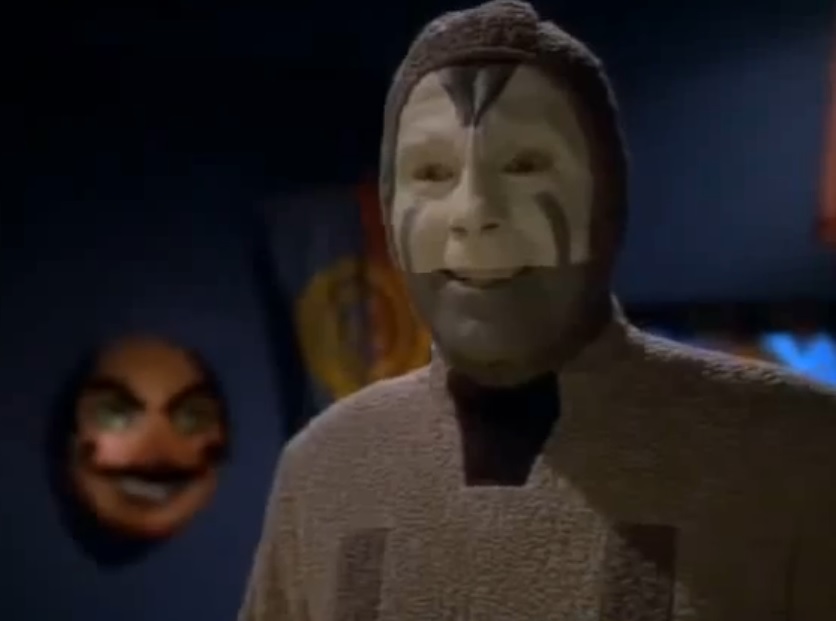
18. “The Thaw” Harry and B’Elanna are mentally trapped in a virtual reality by a malicious clown computer program (Michael McKean), who tortures them to gain release from its cyber trap.
17. “Maneuvers” First Officer Chakotay (Robert Beltran) tries to track down his former lover Seska (Martha Hackett) and her Kazon colleagues after they raid the Voyager and steal transporter technology.
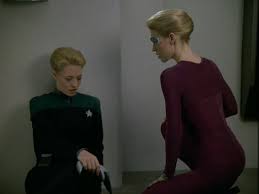
16. “Scorpion, Parts 1 and 2”An exciting two-parter introduced the popular Seven of Nine (Jeri Ryan) as the Voyager is forced into an uneasy alliance with the evil cybernetic Borg against an even deadlier threat–Species 8472.
15. “Relativity” Seven of Nine is recruited by a Federation starship crew from the distant future. Her mission: travel through different time periods to prevent the destruction of the Voyager.
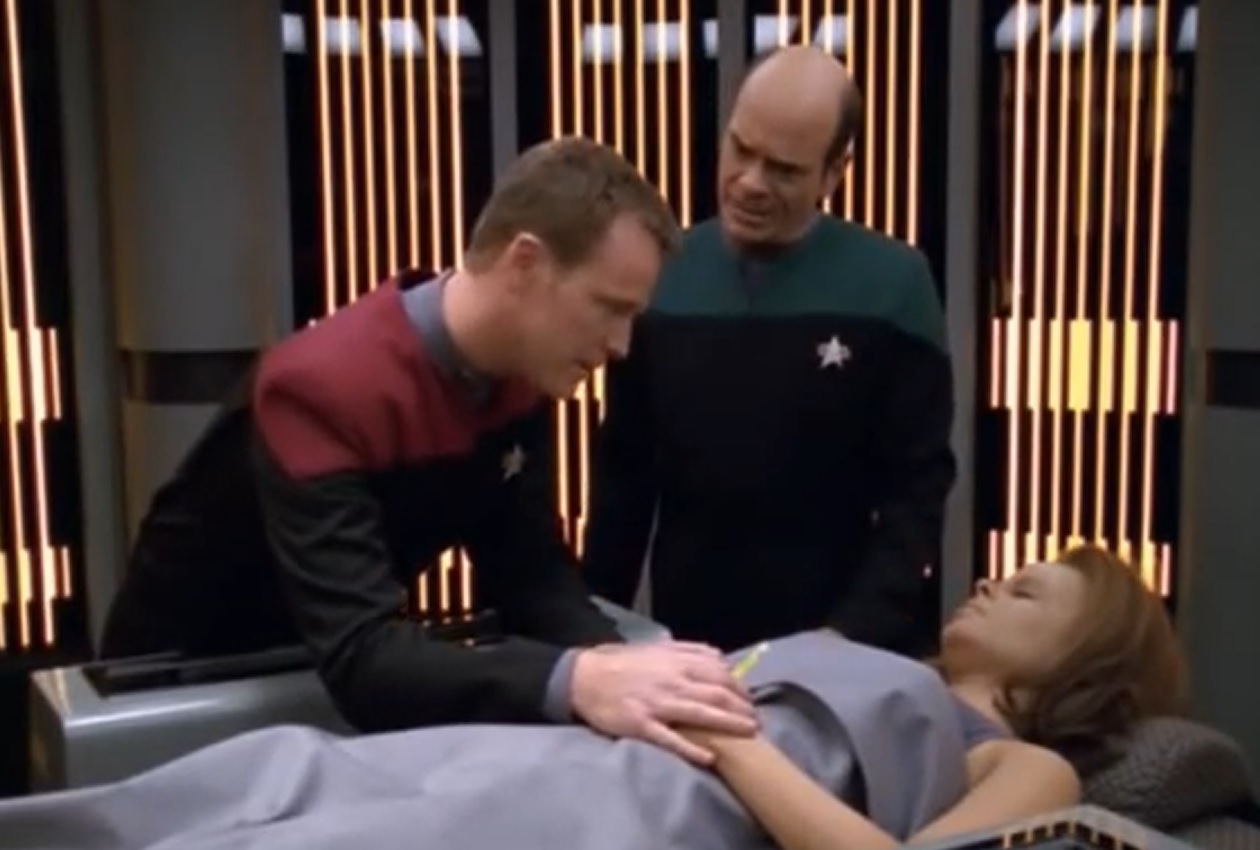
14. “Latent Image” The ship’s Emergency Medical Hologram (EMH) a.k.a. The Doctor (Robert Picardo) discovers that for some reason certain parts of his memories are being erased. His investigations lead to uncovering a tragic moment in his past and his reaction afterwards was very engrossing to watch.
13. “Basics, Parts I and 2” The crew of the Federation starship Voyager have a final conflict with the barbaric Kazons, who coveted the advanced Starfleet ship and its technology. This two-part episode had many thrilling moments and cliffhangers as most of the Voyager crew were defeated and stranded on a primitive world.
12. “Equinox, Parts 1 and 2” The Voyager comes to the aid of another Federation starship also stranded in the distant Delta Quadrant. What is supposed to be a joyous occasion at encountering kindred spirits turns into conflict when the Voyager crew learns of the other crew’s unethical actions against an alien race.
11. “Dark Frontier” Seven of Nine’s background is explored as Captain Kathryn Janeway (Kate Mulgrew) leads efforts to steal Borg technology that will hasten their journey home. During a pivotal raid, Seven is captured by the Borg, who plan a biotech attack on humanity. Meanwhile, Janeway mounts a rescue mission.
10. “Hope and Fear” The sudden appearance of an advanced, unmanned, supposed Federation starship could be the means to finish the Voyager crew’s years-long voyage home or a trap. Guest star Ray Wise excelled in his role as a tortured alien whose race was assimilated by the Borg.
9. “Blink of an Eye” The Voyager is trapped in orbit around a planet with a dense gravitational field. So what passes for hours on Voyager is actually centuries for the planet’s inhabitants, which means that the ship becomes part of that planet’s history as its people advance technologically and socially.
8. “Before and After” An elderly, dying Kes (Jennifer Lien) in the future begins to travel backwards in time to many events including her birth. Among the fascinating future moments explored included a foreshadowing of the Voyager crew’s encounter with the Krenim.
7. “Distant Origin” The premise that some dinosaurs on Earth actually evolved into a spacefaring race was intriguing enough. But this episode’s first contact scenario smartly focused on an allegory of Galileo’s plight as scientific progress and knowledge conflicted with societal and religious dogma.
6. “Deadlock” After going through a technobabble anomaly the Voyager and its crew are duplicated, but both ships are attached to each other. Events dictate that only one ship and crew can survive, but which one? The episode was a novel way of resetting the status quo after disastrous events without using time travel.
5. “Message in a Bottle” The Doctor is transmitted to an advanced Starfleet prototype ship in the Alpha Quadrant in order to make contact with the Federation. Once there, he must join forces with that ship’s EMH Mark 2 (Andy Dick) to fight off Romulans, who have captured the ship.
4. “Course: Oblivion” In this tragic episode, things seem fine at first onboard Voyager. Tom and B’Elanna get married and the ship will reach Earth in a two years. However, it’s soon discovered that the ship is deteriorating, as well as the people onboard. After realizing that they and the ship are just copies of the actual Voyager and crew, it’s a race against time to seek help before it’s too late.
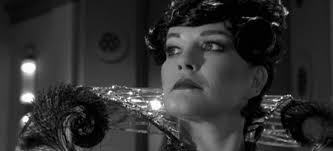
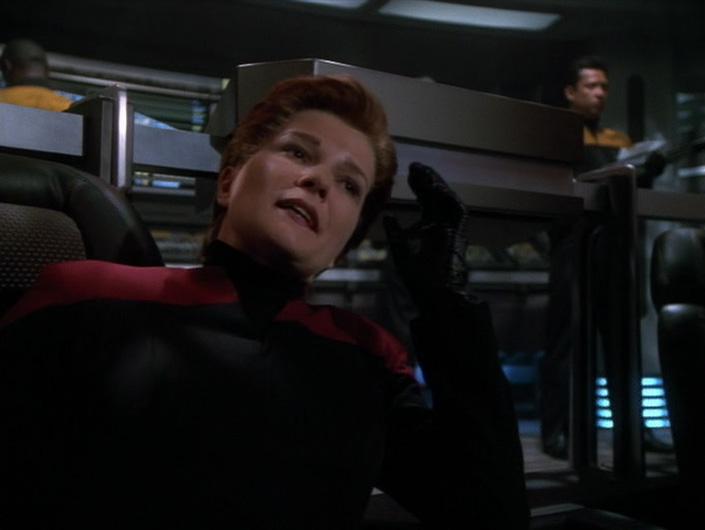
3. “Bride of Chaotica!” A wonderful and whimsical tribute to old sci-fi serials in the tradition of Flash Gordon has the Voyager crew coming to the aid of photonic, extra-dimensional aliens, who are at war with the evil fictional characters from Tom’s holodeck program The Adventures of Captain Proton. Hilarity ensues as the crew assume the overdramatic roles of the program and endure old sci-fi clichés.
2. “Living Witness” In the far future on another planet, a copy of the Doctor is activated by a museum curator (Henry Woronicz), who is fascinated by the “warship” Voyager’s visit to his planet in the distant past. Appalled at the gross inaccuracies about the visit and the Voyager crew, who are shown to be basically space pirates, it’s up to the Doctor to clear his former comrades’ names for history’s sake.
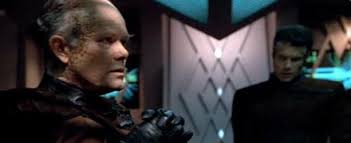
1. “Year of Hell, Parts 1 and 2”Star Trek: Voyager had many epic two-part episodes and this one wasn’t only the best of those, but the best episode for the entire series. The Voyager passes through a region of space controlled by the despotic Krenim. Janeway and the crew soon find out that the Krenim uses time as a weapon by altering timelines. Leading these alterations is Arronax (Kurtwood Smith) a Captain Nemo type obsessed with time tinkering. Over the course of a year, the Voyager is badly damaged and falling apart, but Janeway must find a way to defeat Arronax. “Year of Hell” was riveting and presented a gritty view of a desperate Voyager crew on their own, plus Smith gave a great performance as the tortured Arronax.
 It’s still hard to believe that Leonard Nimoy, the Star Trek icon, is gone. As we celebrate his contribution to sci-fi culture let’s look at some of his best moments playing the unforgettable Mr. Spock on TV and film. From stoic, calm and collected to comical or out of character to poignant these are some of truly memorable moments. Live long and prosper, indeed.