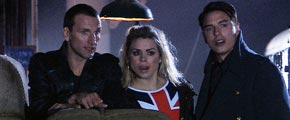
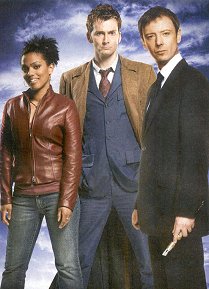
Best Of 2011

Short and sweet here’s our rankings of the best (and worst) in sci-fi, fantasy, comics, etc. in film, TV, etc.

Best Sci-Fi TV Show

Fringe, with all the mind-bending twists, parallel universe visits, inter-dimensional funkiness, and John Noble’s brilliant portrayal of half-mad scientist Walter Bishop, this show has outdone The X-Files It’s a shame its ratings are plummeting making a fifth season not guaranteed. Please Fox, if you intend on canceling it, give the creators time to wrap up the show.

Best Horror TV Show

The Walking Dead, just the premiere episode in its second season made it scarier and more terrifying than anything shown in theaters. With many contenders for the title like Supernatural, True Blood and American Horror Story, The Walking Dead ate out the competition.

Best Fantasy Show

Finding Bigfoot–just kidding! Actually it’s a tie between True Blood and Game of Thrones. Sure the latter has many horror elements like vampires and witches, but the entire Sookie and the Faerie angle took the show into the fantasy realm.

Best Documentary/Reality Show

Prophets of Science Fiction, airing on the Science Channel offers viewers involving examinations of the lives of sci-fi literary greats and how their works influenced culture.

Best Cancelled TV Show

Stargate Universe, it’s too bad Syfy got impatient with this program thatdecided to jettison all the cowboy antics of previous Stargate shows and concentrate on the wonder of space travel. One truly got the impression that the people onboard the ancient starship Destiny were out exploring the unknown. Too bad viewers never got a proper series conclusion, which is nothing new with genre shows even on networks supposedly dedicated to them. But that’s another rant.


Best TV Character

Walter Bishop (John Noble) in Fringe. His mad scientist antics are very funny while also full of pathos. As stated online everywhere it’s a crime Noble hasn’t been nominated for an Emmy.
 

Most Missed TV Character

Castiel from Supernatural, our favorite deadpan angel sadly bit the dust shortly after the seventh season premiere. His death has overshadowed the rest of the season, even the supposed death of the Winchester Boys’ surrogate father Bobby.

Most Improved TV Character

The Eleventh Doctor as portrayed by Matt Smith in Doctor Who. After a shaky first season, Smith has grown comfortable with the role and showrunner Stephen Moffat has let the wild complexity of time travel define this show.

Best Series Finale
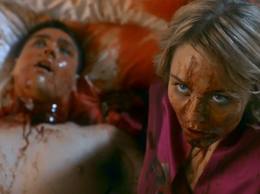
V, technically it was only a season finale but the show was cancelled. Nevertheless, people who still tuned in watched in glee as hated characters,especially annoying teenage son Tyler Evans (who incidently gets the title for Worst TV Character), get killed and the aliens apparently conquered the Earth with some kind of cosmic enrapturing that left most of the populace in a trance-like state of alien worship. Cool, the bad guys won!

Worst Series Finale

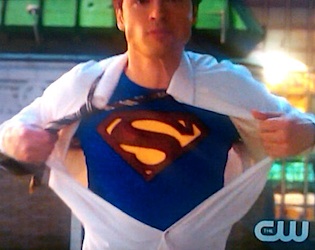
Smallville gave fans who waited ten years for Tom Welling a.k.a. Clark Kent the moment to finally put on the Superman suit and the show did not deliver it right. Sure Welling ripped open his shirt at the very end to reveal his S Shield and there were a couple of bad far away CG shots of Superman but that figure could’ve been anyone!
Best Sc-Fi Film
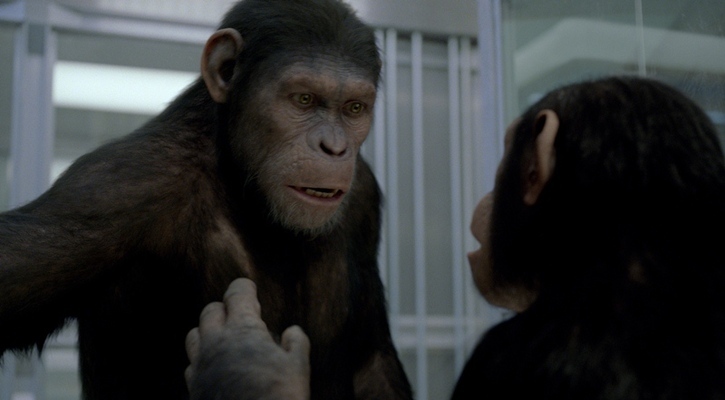
Rise Of The Planet Of The Apes, a genunine surprise given how disappointing Tim Burton’s 2001 remake was. This emotional film reinvigorated the franchise and took it in a new direction in a way that was better done than most ofther reboot attempts, including J.J. Abrams’ Star Trek. Also the year’s best film line was heard in this movie: “NO!”

Best Horror Film

Insidious, made by the creators of Saw and Paranormal Activity used many ingredients for a memorable horror movie: creepy kids, demons, haunted houses, ooh time to sleep with the lights on.

Best Fantasy Movie

Harry Potter and the Deathly Hallows, Part II brings the film saga to a spectacular finish. Now the question remains will Potter mania stand the test of time? We think so.

Best Animated Film

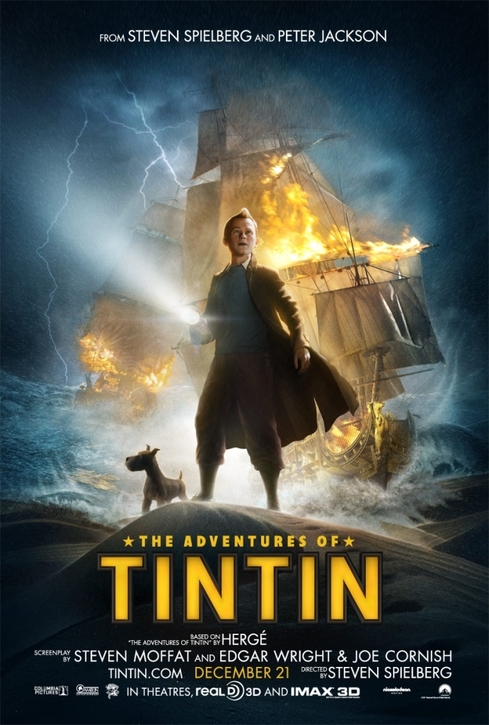
TIE: Kung Fu Panda 2 and The Adventures of Tintin, Steven Spielberg gives us another rousing adventure film in the vein of Indiana Jones but using beautiful animation but Kung Fu Panda 2 had more heart in its story of Po the panda trying to discover his roots and inner self.
Best Super Hero Film

Captain America: The First Avenger, everything could’ve gone wrong but instead was a nearly perfect rendition and ode to one of Marvel’s earliest heroes.

Best Super Hero On Film

Captain America from Captain America: The First Avenger, see above and add in Chris Evans’ heartfelt portrayal of an average man who only wants to do good and became someone greater.

Biggest Disappointment

Green Lantern could’ve been so great but it wasn’t. In a summer with a patriotic hero, a larger than life thunder god and retro mutants this film presented a tepid origin story with forgettable villains and the 3D stunk. Unbelievably a sequel is still being planned.

Best Guilty Pleasure/Action Film
Battle: Los Angeles, the basic message of this alien invasion story told from the point of view of grunt marines is KILL, KILL, KILL! But there were many tense moments with great and gritty action sequences. Many claimed it was a mashup of Black Hawk Down and Transformers and they were right.

Best Use Of 3D In A Film

Transformers: Dark of the Moon may be dumb, noisy and be stricly for watching stuff blow up, but the 3D was nearly perfect and added depth to the film.

Best Trailer For An Upcoming Film

Prometheus, seriously we just don’t get tired of seeing this preview about Ridley Scott’s return to the Alien universe.

Best Comic Book Event
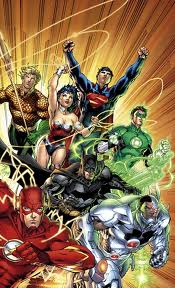
DC’s The New 52, was the game changer for the comic book world. It updated all the DC characters with a comprehensive reboot and the company’s aggressive push into digital online comics could pave the way to comics’ salvation.

Best Comic Book

Justice League, Jim Lee’s vivid art and the restructuring of the team’s personalities and relationships made this a can’t-miss comic.

Best Super Hero In Comic Books

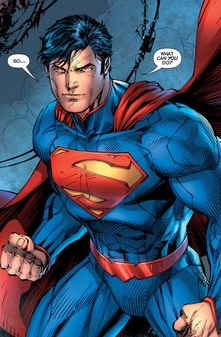
TIE: Superman and Spider-Man, both flagship characters had their ups (Superman updated again but this time the changes largely work and readers are given two distinct versions of the character in his two books) and downs (Spider-Man is still suffering the damage of Marvel boss Joe Quesada’s boneheaded decision to have Spidey make a deal with the devil and erasing his marriage, still the Spider-Island story arc was whacky fun) yet continue to shine no matter their trappings. Honorable mentions go to Batman, The Flash and Captain America.
Top Ten Butterfly Effects

One theme that runs through many time travel stories is that of the Butterfly Effect. Most famously demonstrated in Ray Bradbury’s short story “A Sound of Thunder” where time travelers go back to prehistoric times on a dinosaur safari and inadvertently change the future by carelessly killing a butterfly in the past. The most recent example of the Butterfly Effect is in Stephen King’s newest literary release 11/22/63; in that book the assassination of John F. Kennedy is prevented resulting in a radically altered timeline.

This list will cover some of the best Butterfly Effects presented on several media that I’ve seen or read (sorry haven’t read Lest Darkness Fall or The Time Ships yet), and are based on Effects directly due to time travel and the amount of time spent exploring those altered worlds.

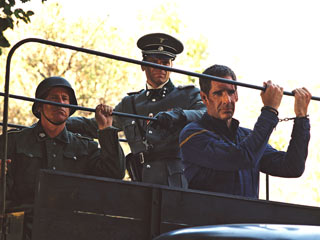
10. “Storm Front, Part I & II” from Star Trek: Enterprise; the fourth season opener concluded the maligned and confusing temporal cold war storyline. Captain Archer and the Enterprise crew are trapped on Earth during World War II in a timeline altered by aliens. This resulted in the Nazis being more technologically advanced and occupying parts of the U.S.

9. “Turn Left” from Doctor Who; the episode examines what would have happened if Companion Donna Noble never met the Doctor. It’s a grim timeline that features the deaths of the Tenth Doctor, Martha Jones, Sarah Jane Smith, Torchwood and Britain under martial law.

8. “Year Of Hell, Part I & II” from Star Trek: Voyager; the crew of the lost starship Voyager stumble upon an obsessed alien intent on using time as a weapon in his region of space then as a means to restore his wife after utilizing the weapon erases her from history. The Voyager crew literally go through hell as they try to track down the alien and restore the timeline. It was so well done many fans grumbled when things went back to normal!

7. Flashpoint; The DC Comics mini-series and its spin-offs has the Flash preventing his mother’s death while time traveling, which forever alters the DC Universe. First the Flash is trapped in a nightmarish, violent version of the DC Universe with many altered heroes and villains then the storyline concludes with the creation of the New 52 titles running today with updated versions of the DC heroes.

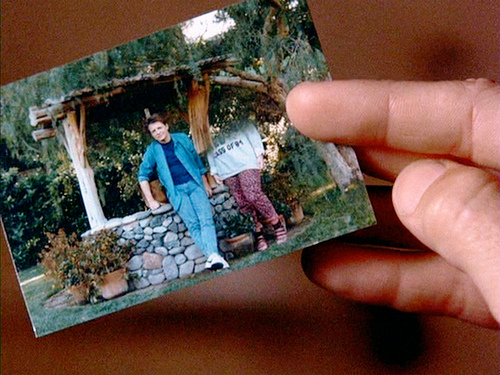
6. “The Hanged Man” from Journeyman; it’s a short-lived series from 2007 that in a similar vein to Quantum Leap had the hero (reporter Dan Vasser-played by Kevin McKidd) uncontrollably time traveling and changing history. In this episode, Dan leaves behind a digital camera in 1984 that is reverse engineered. When he returns, not only is technology more advanced but his young son is erased and instead has a daughter, leaving him with a deep moral dilemma.

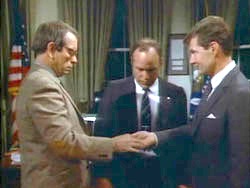
5.” Profile In Silver” from The Twilight Zone of the 1980s; the late Lane Smith portrays a history professor who goes back in time to study the assassination of his ancestor, John F. Kennedy, and winds up saving him. This of course begins a cataclysmic chain of events due to time trying to compensate for the alteration. In other words World War III is about to erupt. In true Twilight Zone fashion, the ending is a real twist.

4. The Guns Of The South; Harry Turtledove’s masterpiece is about what happens when Confederate soldiers are armed with AK-47s by time-traveling racist white South Africans. Obviously this turns the tide of the Civil War in the Confederate’s favor and readers learn that Lincoln loses re-election, Robert E. Lee becomes president of the C.S.A., the U.S. gets into a war with Britain and the Confederacy becomes a technologically advanced nation.

3. The Age of Apocalypse Storyline from the X-Men books; Professor X of the X-Men is accidently killed in the past by his son. This chain reaction leads to the villainous mutant Apocalypse conquering America and committing genocide on non-mutants. For months the crossover X-books featured alternate versions of mutants such as a heroic Magneto leading the X-Men, Wolverine with a missing hand and teams with different members some of whom are villains in the regular books like Sabretooth.

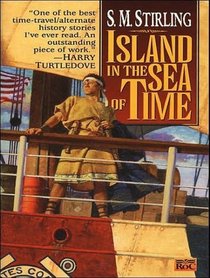
2. The Nantucket Trilogy comprised of S.M. Stirling’s books Island In The Sea Of Time, Against The Tide Of Years and On The Oceans Of Eternity; the storyline has the island of Nantucket, its modern-day inhabitants and a Coast Guard ship sent back in time to the Bronze Age. Their necessary interactions with the people in that time period lead to early introductions to gunpowder, primitive air travel and increased global trade and contact. Naturally trouble starts when renegades leave Nantucket and begin to carve out their own kingdoms leading to armed conflict.

1. The Back To The Future Trilogy; Robert Zemeckis’ three films about a time-traveling teenager and his buddy scientist is actually a fantastic examination of the Butterfly Effect. In the first film, Marty McFly travels from the 1980s in a DeLorean to the 1950s and prevents his parents from falling in love. The obvious effect is that he and his siblings are being erased so he has to restore the timeline (audiences are helped by the rapid fire explanations of Doc Brown about the nuances of time travel). He succeeds for the most part. While his parents do wind up together they are changed due to their future son’s influence and this results in Marty’s family being better off when he returns to the ’80s.

In the second film, a trip to 2015 results in a more dire Butterfly Effect. The trilogy’s villain Biff Tannen steals the DeLorean and travels to the ’50s to make his younger self rich. When Marty McFly and his friend Doc Brown return to the ’80s, their hometown has been transformed into a nightmarish vision. Seedy casinos and chemical plants are everywhere,

crime is rampant and even Richard Nixon is still president while the Vietnam War rages on. Marty’s family life is radically changed as his father is dead and his mother is married to Tannen. In the third film, the Butterfly Effect is reflected in the duo’s adventures in the 1880s; chiefly with their confrontation with Tannen’s murderous ancestor which could lead to their premature deaths. The Effect is last touched upon in the end when we see a landmark renamed and Marty McFly altering an event in the ’80s that has an unknown yet hopeful alteration to his future.

José Soto

Top Ten Modern Doctor Who Episodes

For us Yanks across the pond the season finale of Doctor Who will air this weekend with “The Wedding of River Song.” That said, let’s look at the ten best episodes from the modern era which started with Christopher Eccleston in 2005 and is running currently with Matt Smith. This list will only include regular episodes, not the Christmas specials and other shows that have popped up over the years.

10. “The Girl in the Fireplace” The Doctor has a brush with romance (aside from the tension between him and Companion Rose Tyler) when he meets Madame de Pompadour via time portals on a derelict spaceship.

9. “The Eleventh Hour” Our first introduction to Matt Smith as the Eleventh Doctor and Karen Gillan as Amelia “Amy” Pond showed the kismet the two had as partners across time and space.

8. “School Reunion” Old-time companion Sarah Jane Smith (the late Elizabeth Sladen) returns to the Who-verse and it’s a joy to see her holding up quite well; the scenes where she and Rose (Billie Piper) exchange Companion stories were great.

7. “Bad Wolf/The Parting of The Ways” The Ninth Doctor’s swan song is epic without being too overblown and bittersweet while giving us one of the best modern Dalek storylines and radically changes the dynamic of the show.

6. “The Girl Who Waited” This one illustrates the danger of time traveling with the Doctor when Amy enters the wrong door in a planet and winds up trapped for over thirty years waiting for rescue while time passes by normally for her husband Rory (Arthur Darvill) and the Doctor.

5. “Human Nature/The Family of Blood” An amnesiac Doctor hides from predatory aliens out to feed on him by transforming into a human that falls in love; then we are given a glimpse as to how coldly vengeful the Doctor can be when he regains his memories and dispatches them.

4. “The Empty Child/The Doctor Dances” When the Ninth Doctor first appeared he was an angry, morose person but here he starts to lighten up in the second part of this creepy World-War-II era episode, which features great visual sights, frights and introduces Captain Jack Harkness (John Barrowman).

3. “The Doctor’s Wife” This Neil Gaiman-written episode has the TARDIS’ core matrix is transferred by an evil sentient asteroid into Idris (Suranne Jones) an enchanting, attractive woman who is dying. The asteroid transfers its mind into the TARDIS and tortures Amy and Rory as the Doctor and Idris (showing us a rare examination of their relationship) try to recapture the Time Lord’s ship.

2. “Utopia/The Sound of Drums/Last of the Time Lords” A three-part epic that brings back Jack Harkness from Torchwood and re-introduces the classic Who villain The Master (played first by Derek Jacobi and then with devilish glee by John Simm) who is found literally at the end of time by the Doctor and Martha Jones (Freema Agyeman). Then he is reincarnated into a Tony Blair type of politician who infiltrates modern-day British politics and becomes Prime Minister, instituting a reign of terror.

1. “Blink” Any fan can see that guest star Carey Mulligan’s Sally Sparrow  is a prototype for Amy Pond. She’s pretty, smart, young and quite resourceful when dealing with the best of the new Who villains, the Weeping Angels. They appeared as angelic statues that steal a person’s temporal energy by sending them back in time, which they did to the Doctor and Martha. Trapped in the 1960s, the Doctor communicates to Sally via DVD Easter eggs, and the entire episode is a brilliant use of time travel and genuinely frightening villains. The last few seconds with the Doctor warning viewers not to blink are unforgettable.

José Soto

Top Ten Marvel Movie Villains

With Marvel’s superheroes blazing their way across movie screens, one factor for the films’ success is the supervillain(s) the heroes face. As any good storyteller will tell you, the vital ingredient for a gripping yarn is a formidable foe to put the story’s protagonist to the test.

marvel movie villain

Being that the Marvel superheroes have such memorable enemies and that they translate well to the screen it’s one reason why the Marvel films have been successful. Naturally, with future Marvel films coming up, this list will change, but that’s part of the fun in making up these lists. So for now, these are the top ten villains to appear in Marvel movies…and the five worst.

Ivan Vanko10. Ivan Vanko in Iron Man 2 (Mickey Rourke): Combining elements of Whiplash and the Crimson Dynamo for the big screen, Vanko is a cold, deadly and enraged Iron Man foe who was much more engaging than the original film’s Obadiah Stane or this one’s Justin Hammer.

9. Emil Blonsky/The Abomination in The Incredible Hulk (Tim Roth): Come on, the guy had the balls to go up against the Hulk man to man! That’s one tough SOB, and yes when he becomes The Abomination and fights the Hulk it looks like something out of  a video game. But it was a lot more fun than that turgid Ang Lee film.

8. Bullseye in Daredevil (Colin Farrell): One of the bright spots in that film, Bullseye had a maniacal sense of energy, ego and deadliness that upstaged Daredevil and gave him a personal motivation for trying to defeat the title hero.

7. The Red Skull/Johann Schmidt in red skull hugo weavingCaptain America: The First Avenger (Hugo Weaving): A bit one-dimensional but well-played by Weaving  as an uber Nazi whose ambitions elevate his evil to another level altogether.

green goblin spidey 16. The Green Goblin/Norman Osborn in Spider-Man (Willem Dafoe): The outfit stunk otherwise the Goblin would’ve ranked higher. Dafoe, however, gives Osborn his all as a crazed CEO with fantastic gadgets and (aside from the outfit) largely works as a villain.

5. Col. William Stryker in X2 (Brian Cox): Despite not having any powers, Stryker is one terrifying person whose bigotry and fear of mutants is a driving force that threatens the lives of the film’s mutants whether they’re hero or villain.

4. The New Goblin/Harry Osbron in new goblinSpider-Man 2 and Spider-Man 3 (James Franco): A true tragic villain, Harry doesn’t become bad until the end of Spider-Man 2 where the agony of his father’s death and his own inadequacies unhinge him. His hatred for Peter Parker/Spider-Man, the means he goes about seeking vengeance and his final tragic redemption are the best things in the third Spider-Man film.

doctor octopus3. Doctor Octopus/Otto Octavius in Spider-Man 2 (Alfred Molina): The best of the science-driven-mad villains. Molina gives us a very dimensional Doc Ock who isn’t driven by world conquest or revenge but to achieve a scientific goal. Never mind that trying to create his version of fusion threatens the world. Calculating and arrogant even before his accident, Octavius paid the price for his arrogance and was a formidably tough foe for Spider-Man.

2. Loki in Thor (Tom Hiddleston): One loki in thorof the biggest surprises wth Thor is how subtle and crafty Loki came off. It would’ve been easy with a title as God of Mischief to have him be a Norse god version of The Joker and be cackling and chaotic. Instead, thanks largely to Hiddleston’s quiest expressions, Loki is seen sympathetically as the seemingly less-favored son who holds a secret grudge against his brother Thor. The film successfully shows why Loki detests his situation and why he turns on his family; it’s more layered than him finding out his true origin. Rather his envy and anger are due to his own insecurities, Thor’s arrogance and is his validation for taking over Asgard through crafty means.

old magneto1. Magneto/ Erik Lehnsherr in X-Men, X2, and X-Men: The Last Stand ( Ian MacKellen): As one of the deadliest and most powerful villains, Magneto is someone you can’t help empathize with considering his background; he’s a World War II concentration camp survivor. He developed a hatred for non-mutants who persecuted his own kind,  thus making him feel justified in his actions against society. Magneto was usually one step ahead of Professor X and willing to go the extra distance to achieve his goals whether it involved harming a young girl or firing a gun point blank at a cop with his magnetic powers. Despite his age, Magneto was someone to take seriously as a foe and was also the mirror image, in terms of idealogy, of Professor X’s dream of peaceful co-existance with humans. Sadly, many of humanity’s actions throughout the original trilogy only added fuel to his cause and made viewers wonder as to who was truly evil or misguided.

new magnetoSpecial shout outs in no particular order go to Mystique (Rebecca Romijin Stamos) in the X-Men films, Venom/Eddie Brock (Topher Grace) in Spider-Man 3, The Kingpin/Wilson Fisk (Michael Clarke Duncan) in Daredevil, Jared Nomak (Luke Goss) in Blade II, and Magneto/ Erik Lehnsherr (Michael Fassbender) in X-Men: First Class.  Fassbender’s portrayal of Magneto was good enough to make the top ten list but for most of the movie he is actually an anti-hero who only becomes truly villainous by the film’s end.

And now for the five worst. Before getting to the these turds let it be noted that all it takes to sink a film (sometimes singlehandedly) is a poor villain. When coming up with a screenplay attention must be paid to the villain’s motivation, execution and threat level. It’s a hard thing to pull off; when it works you have a great movie when it doesn’t you have a franchise killer. So here they are, the Marvel movie villain Hall of Shame inductees:

5. Howard Saint in The Punisher (John Travolta): You know as a villain you’re in trouble when the colorful assassins you send after the Punisher like the Russian are more interesting than you.

4. Toad in X-Men (Ray Park): Talk about hamming it up! That scene at the Statue of Liberty when Toad tries to mock Storm with his silly dancing earned him a good lightning strike that ensured that he didn’t return in the sequels.

3. Blackheart/Legion in Ghost Rider (Wes Bentley): Boring, boring, boring! Generic demonic foe that looks more like a goth reject than the son of Mephisto. His father was a more intriguing foe yet this film chose to focus instead on this bratty emo.

doctor doom 2005

2. Dr. Doom/Victor Von Doom in Fantastic Four (Julian McMahon): This is miscasting at its worst. McMahon was terrific as the narcissistic plastic surgeon in Nip/Tuck but lacked the gravitas to be Marvel’s most infamous and regal villain. Everyone expected an Eastern European despot but got your standard egotistical CEO and coming so soon after Willem Dafoe’s Green Goblin performance it just drew unfavorable comparisons. In trying to tie his origin with the Fantastic Four and making him a mutated being, this film robs the character of his rich backstory and menace. In this film he’s just a poor Goblin/Magneto/Electro knock-off. He was more like his comic book counterpart, power-hungry and more Machiavellian in the sequel but that film’s awfulness wiped out any improvement made to Doom’s character.

1. Galactus in Fantastic Four: Rise of the Silver Surfer: Destroyer of worlds, nearly omnipotent, a force of nature personified by a giant being with that wonderfully whacky Kirby outfit, that is how fans conceive of Galactus. Do we get this on film? No! We get a cloud. A stormy cloud. Seriously how lazy is this? What’s equally laughable is the filmmakers’ attempt to explain why they went with a cloud, apparently they wanted to leave it up to whoever did a Silver Surfer film to have a free reign designing Galactus. All this did was help to scuttle that film and any followups to the Fantastic Four. The execution reeks of not being imaginative and/or having a limited f/x budget. It was the ultimate payoff that never happened and signified the film’s problems. There was too much going on in the movie to adequately explore the most famous Fantastic Four story, it would have been better to end it with a cliffhanger even if it never happened. It would have left less of a bad taste.

José Soto