Chappie Displays Heart Despite Its Harshness

chappie poster

Director Neill Blomkamp’s latest film Chappie is engaging and emotive as it evokes other movies about robots like WALL-E.

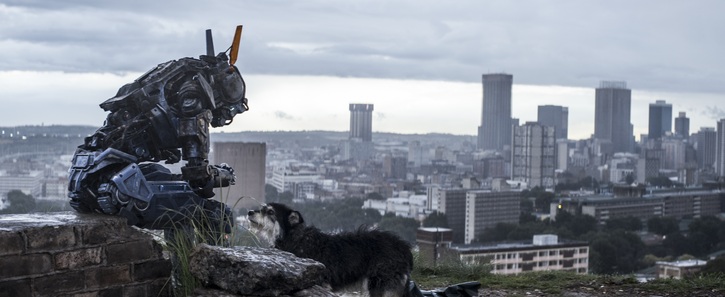
Chappie is based on Blomkamp’s 2004 short film Tetra Vaal and stars Sharlto Copley, who voices the eponymous character and does motion capture for Chappie as well. It takes place in Johannesburg in the near future and robots have replaced humans as the city’s police force. These humanoid robots are built by a weapons company and are the brainchild of Deon Wilson (Dev Patel), a young genius engineer who is trying to create a true artificial intelligence. His success rubs his engineering rival, Vincent Moore (Hugh Jackman), the wrong way. That is because Moore’s own robotic enforcer, the MOOSE, has been rejected by the company’s CEO (Sigourney Weaver), since the Wilson-designed robots are highly effective.

?????????????????

Despite his success, Wilson is unable to get approval to develop his AI program and he decides to continue working independently using a deactivated robot that is due for the scrap heap. Concurrent to this storyline, the film showcases the downtrodden lives of a trio of gangsters (Yo-Landi Visser, Watkin Tudor Jones and José Pablo Cantillo), who have to pull off high-paying heists to pay off their debts. They concoct a plan to kidnap Wilson so they can get him a way to deactivate the robotic police force, thus clearing their ability to rob and steal.

When they do kidnap Wilson in his van, his vehicle happens to carry the discarded robot and the AI software. In their lair and under the threat of his life, Wilson downloads the program to the robot who is reactivated. At first, the robot displays an innocent and timid child-like demeanor. Showing signs of sentience, Chappie (as he is named by Yolandi, the gangster that he considers his “mommy”) ?????????????????starts learning about the world and bonding with the thugs and Wilson. Unfortunately, Chappie is subjected to cruelty by the head gangster, Ninja (Jones), who only sees him as way to garner money. Insisting he is Chappie’s father, Ninja begins imprinting a gangster ethic into Chappie and before long the robot is bopping along , swearing like a mechanical ghetto thug and committing crimes. Yet, the emotional Chappie develops a sense of morality thanks to Wilson, who he dubs “the Maker”. This helps endear him to his human compatriots and allows him deal with the vicious nature of the gangster world and later Moore. That is because as Chappie undergoes his life lessons, Moore devises a sinister plot to discredit the robotic police and promote his MOOSE. Eventually, both plots collide as Chappie handles the unpleasant nature of humanity.

?????????????????

Watching Chappie is at times a disheartening experience. That is because Chappie is clearly a child, he delights in reading children’s books and art, yet he is thrust into a nasty environment. Imagine WALL-E or Number Five from Short Circuit having to deal with the criminals from The Wire, ?????????????????who think nothing about attacking him without remorse and engaging in criminal behavior. Chappie is essentially corrupted and manipulated by these criminals that generate little empathy with viewers. They’re largely heartless and cruel, except for Yolandi, who bonds with the robot and considers Chappie to be a surrogate son. It’s hard to feel any kinship with these unrepentant characters, which adds to the empathy for Chappie. In a way, Chappie is a metaphor for gangster youth. All children are born innocent, but some become tainted by their environment and commit criminal acts. This is what happens with Chappie, only we the audiences feel more sympathy towards this robot than with a normal human juvenile delinquent. But despite these hardships, Chappie is able to grow, learn and most of all show a profound, curious nature that questions the nature of humanity, hatred, family and mortality.

For that reason, Chappie is less predictable than other films about robots and androids who gain sentience. He isn’t nurtured by his creator and on the run from evil military types who want to use him as a weapon or destroy him. The twist is that Chappie’s moral being has been distorted by bad influences, but he doesn’t become the Terminator. Chappie isn’t evil, just naive and easily misled and he does have redeeming qualities such as his love for “Mommy” and “the Maker”, and a sense of forgiveness. He is a gentle soul and it breaks one heart to see him stuck in a vicious, unkind environment. That is why he is someone to root for, especially in the last part of the film when he faces off against the MOOSE, who is like a bigger, better armed version of ED-209.
?????????????????

After faltering with Elysium, Blomkamp has bounced back with Chappie. It’s not as good as District 9 because of some plot holes, namely the lacking security in the weapons factory that allows Wilson and Moore to carry out their schemes. Another fault is the editing that allowed some characters to disappear for long stretches. Finally, the gangsters are so unpleasant that it’s difficult to care about them and they’re the primary characters along with Chappie. Nonetheless, Chappie is still a solid addition to his filmography.

Lewis T. Grove
A Look At Leonard Nimoy’s Best Spock Moments

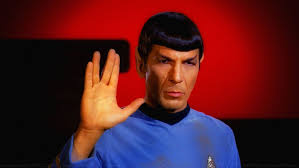
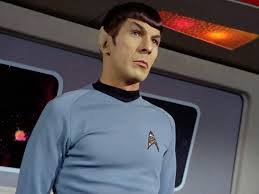
spock overheadIt’s still hard to believe that Leonard Nimoy, the Star Trek icon, is gone. As we celebrate his contribution to sci-fi culture let’s look at some of his best moments playing the unforgettable Mr. Spock on TV and film. From stoic, calm and collected to comical or out of character to poignant these are some of truly memorable moments. Live long and prosper, indeed.

Most logical…

A brief moment for love

Funny times

Jammin’ Spock

Continue reading

Leonard Nimoy: His Legacy Will Live Long & Prosper

rip leonard

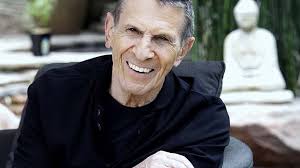
Leonard Nimoy, who played Spock the first officer of the starship Enterprise on Star Trek, has died today at the age of 83.

Nimoy not only was renowned for portraying the stoic, emotionless Vulcan, but he was a noted film and TV director, photographer, musician and poet. Among his best known directorial pursuits were Star Trek III: The Search for Spock, Star Trek IV: The Voyage Home and Three Men and a Baby. The first two films helped to increase interest in Star Trek , which led to numerous successful spinoff films and TV shows. Nimoy also capitalized on his fame and appeared in or lent his distinctive deep voice to other well received TV shows and films like Star Trek: The Animated Series, Invasion of the Body Snatchers, A Woman Called Golda, Columbo, Mission: Impossible, Night Gallery, The Big Bang Theory, The Simpsons, Atlantis: The Lost Empire and The Outer Limits. He also hosted the ’70s paranormal documentary TV show In Search of…, which still has a cult following. His other prominent genre work was appearing as the enigmatic scientist Dr. William Bell in several episodes of Fringe.

But Nimoy will be best remembered for his spockportrayal of Spock. The cool and logical alien on Star Trek was an instant hit with fans and helped popularize the fledging show back in the mid ’60s. Although Star Trek only lasted three seasons, the show’s popularity grew afterwards in syndication and has become an integral part of our modern culture. A large part of merit is due to Nimoy’s performance, which garnered him Emmy nominations.

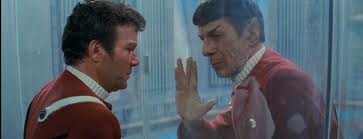
nimoyStill despite his fame, Nimoy was enigmatic about the benefits of having played Spock and feared being typecast. His ambiguous feelings led to him writing his famous autobiography I Am Not Spock. He was so ambivalent about the Spock character that he was hesitant to reprise the role when Star Trek was revived as a series of films. This was why Spock was killed off in Star Trek II: The Wrath of Khan, since the death would allow him to have some closure with the character. However, as we all know the film was so well done and Nimoy had a positive experience while filming it, that he changed his mind and was willing to continue playing Spock. This led to him directing the next two Star Trek films, the latter being considered one of the series’ best films. He also reprised the role in Star Trek V: The Final Frontier, Star Trek VI: The Undiscovered Country, two episodes of Star Trek: The Next Generation and in the last two Star Trek films. By this time, he had embraced the character and realized how it helped open other opportunities for him like his directing and artistic endeavors.

goodbye spockWith his passing, we are again reminded how the past is slipping away from us being that three of the original Star Trek actors are now deceased. But his boundless legacy, which includes introducing the world to the most famous alien in sci-fi culture, will live long and prosper long far into the future.

José Soto

Top Ten Oscar Nominated Genre Films

GRAVITY

For those who are still griping about the Oscars and what gets nominated for Best Picture just remember that the Academy often snubs genre films.

To date only eight science district 9fiction films received the Best Picture nominations. While fantasy films have received nominations since the 1930s, only one has actually received the Oscar for Best Picture. Everyone knows that was The Lord of the Rings: The Return of the King, which some feel was a consolation prize to Peter Jackson for the body of his work.

Many of the genre films that have been nominated are still considered groundbreaking classics, especially when compared to what the films that won. Here are the top sci-fi/fantasy films that have been nominated for Best Picture and lost.

clockwork 210. A Clockwork Orange: Stanley Kubrick’s masterpiece was a dark and disturbing look at violent youth in the near future. Even more disquieting were the rehabilitation methods to cure criminal behavior.

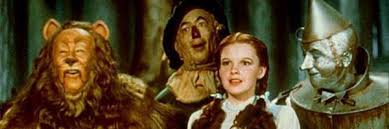
9. The Wizard of Oz: One of the earliest genre films to be nominated for Best Picture is an immortal classic to this day. The enduring legacy of this musical fantasy is due to its well realized characters and plotline.

oz 2

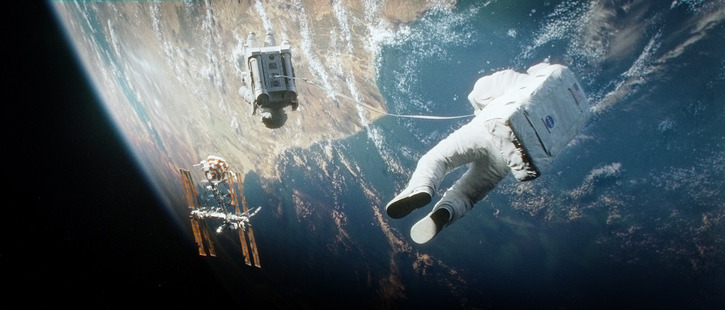
8. Gravity: Alfonso Cuarón’s tour de force sci-fi/space disaster film was a riveting and tense survival film featuring a terrific performance by Sandra Bullock as a stranded astronaut struggling to return to Earth.

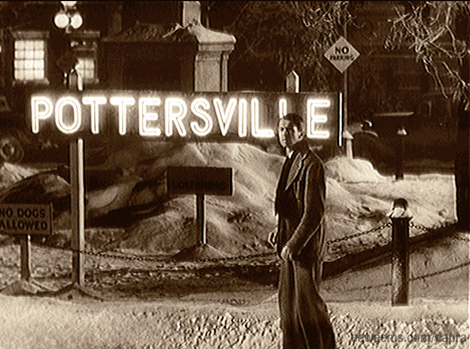
7. It’s a Wonderful Life: Frank Capra’s immortal classic is the must-see film during Christmas and it’s no wonder. George Bailey is given a special look into how his world around him would’ve changed if he hadn’t existed. It’s still powerful to this day and a Christmas staple.

avatar sully

6. Avatar: James Cameron’s sci-fi epic about disabled veteran who gets a new alien body on another world was a stunning visual experience. A meticulously created world and dazzling special effects buttressed the film’s story of a man finding a cause and a second lease on life.

5. E.T. The Extra-Terrestrial: Steven e,t,Spielberg’s most personal film about the bond between a young boy and a stranded alien is spiritually stirring. Sadly, by the time the awards were handed out it experienced a backlash and the supposedly more important movie Gandhi won instead.

4. District 9: This dark look at humanity’s racism extending to stranded aliens in South Africa gave audiences food for thought. It also did the impossible by turning ugly, insectoid alien creatures into sympathetic characters to root for when they faced off against human bigots.

raiders 3

3. Raiders of the Lost Ark: The true fantasy element isn’t revealed until the end, but hints of the supernatural are peppered in this Steven Spielberg/George Lucas romp that is better remembered for being an ode to the old matinee serials and one of the best action films of all time.

balrog

2. The Lord of the Rings: The Fellowship of the Ring: This is considered the best of the Rings trilogy and it blew away many fans’ minds with its sweeping, majestic scenes and the complex realization of Tolkien’s world of Middle-earth. It was a truly epic fantasy come to life.

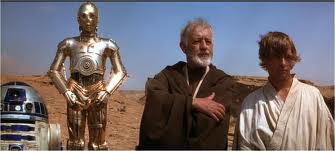
luke ben1. Star Wars: One of the greatest science fiction films of all time with its ambitious scope, philosophical undercurrent and beloved characters lost out to Woody Allen’s Annie Hall. Come on! How narrow minded are Academy members? Apparently as narrow as an exhaust port on the Death Star. This snubbing probably best encapsulates the inane voting done by Academy members throughout the history of the awards.

Academy members have to broaden pottersville_470their horizons and be willing to look past their prejudices. They keep awarding the prizes over and over again to forgettable pieces of drek like A Beautiful Mind and Shakespeare in Love, yet wonder why so many dislike their choices or why the ratings for the shows are going down.

This list left out other genre favorites like Jaws, Inception and Toy Story 3, but these are just my personal picks. If anyone wants to add their own picks, go ahead and comment below.

Lewis T. Grove

12 Monkeys Is A Worthwhile TV Adaptation

12 monkeys

12 Monkeys is the latest sci-fi TV show from Syfy and an adaptation of the classic Terry Gilliam time travel classic film from 1995 (which itself was a remake of an obscure French short film called La jetée).

The TV show follows the same premise as the original film. Mankind has been driven nearly to extinction by a deadly virus that begins in the near future and a few decades from now, scientists send back in time a lone man to learn how the calamity started so that it can be undone. But there are many differences, many of which were done to fit a serialized TV format.

pallid man torturesThe time traveler, James Cole (Aaron Stanford), isn’t a prisoner forced to volunteer, but a drifter willingly recruited by a scientific group to undergo the temporal jumps. In the original film, when he voyaged to contemporary times the film had us guessing if he was insane. Not so here. In fact, he is quickly able to convince his present-day comrade, virologist Dr. Cassandra Railly (Amanda Schull) that he is a time traveler. In the course of the series, Cole and Cassandra track a doomsday cult called the Army of the Twelve Monkeys, who are responsible for unleashing the virus. That differs significantly from the film and as with these TV shows finding the cause of the virus and stopping it isn’t accomplished within two hours like in a film.

time traveler

In each episode, Cole uncovers an important facet of the virus or the army and goes back to 2043 to report his findings. Of course, this hampers the TV show because if he is successful then the virus is stopped, humanity is saved, his timeline is erased and the show ends. However, to its credit 12 Monkeys has explored the headaches of time travel and it impacts on future timeline for better or for worse. For this reason, scenes that take place in the present aren’t nearly as interesting as those set in the future. It’s a well realized post-apocalyptic future with barren and broken buildings and roving armies of scavengers. One of the best episodes to date called “Atari” largely took place in the future and explored Cole’s tortured past.

2043

The piecemeal revelation that Cole wasn’t exactly a good person in the past is a good twist and makes him a more interesting character. It’s fascinating to see some of his morally questionable acts and why he decided to help change the future in the episodes. A lot of that has to do with his close friend in 2043, Ramse (Kirk Acevedo), who acts as Cole’s conscious. Ramse is so well played by Acevedo that we have to wonder why he wasn’t chosen to play Cole. After all, with his bald head he looks more like Cole as portrayed by Bruce Willis in the original film and is a better actor to boot.

going backThe other characters are hit or miss. Jennifer Goines (Emily Hampshire), an insane math whiz whose father is believed responsible for the virus, is overdone with her Hollywood crazy method acting. Meanwhile, Katarina Jones (Barbara Sukowa), the enigmatic creator of the time machine, is a mysterious, though sympathetic character that is quietly desperate to change time.

On the whole, 12 Monkeys seems at times to be your standard time travel show, but it is still generally entertaining despite its faults. It’s not in any way up to the level of the original film, but it’s a worthwhile adaptation.

Lewis T. Grove