Captain America: The First Avenger Celebrates Marvel’s Premier Hero

Captain America: The First Avenger at its very best makes audiences emotionally invested in the core character of Steve Rogers a.k.a. Captain America. That’s largely in part to Director Joe Johnston, who shows a clear love and respect for the character and the Marvel-ous world of Cap and the casting of Chris Evans as the title character.

Not since Christopher Reeve was picked as Superman or Robert Downey, Jr. took on the reins of Iron Man or Chris Hemsworth picked up Thor’s hammer has a casting decision been so perfect. There were some doubts among fans as to the casting of Chris Evans for Steve Rogers , but he pulls it off in a big way. Forget about Ryan Reynolds as Hal Jordan/Green Lantern. Reynolds had the look but no personality. Evans, however, makes you care about his character, he just nails it and that is the biggest and most pleasant surprise about the film.

Regarding Johnston, Marvel Studios was very wise in giving him the director’s chair and his track record bears him out. Johnston provides plenty of action but heart as well. From what I’ve read, he took on the assignment under the condition that the film be set in World War II, which is faithful to the original stories. And also that he be given reign in casting, setting the look and other aspects. The f/x were top notch and successfully blends CGI with practical effects, you could tell a lot of care was placed in getting the film just right. Johnston creates a larger-than-life world of fantastic and bizarre Nazi super weapons, film montages that are reminiscent of Raiders of the Lost Ark that harkens back to that era and a rousing score by Alan Silvestri.
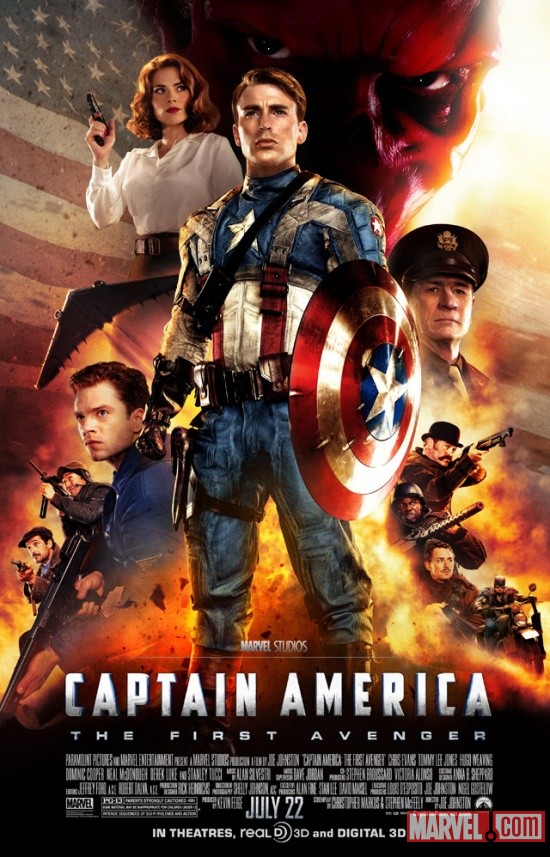
For those not familiar with the character, Captain America (created by Joe Simon and Jack Kirby) was originally a World War II-era 4F reject from Brooklyn who desperately wanted to serve his country. Volunteering for an experimental U.S. Army program, Rogers is physically transformed into the ideal super soldier, becoming a bulked up, athletic fighter who dons the patriotic duds of his country in war. At first he is used by the army as a celebrity in USO shows in Europe because he is considered too valuable to risk in combat. Then his true calling comes when he meets his arch nemesis the Red Skull (Hugo Weaving), a disfigured uber Nazi who establishes his own evil organization called Hydra in order to conquer the world. Teaming up with Bucky Barnes (Sebastian Stan) and Peggy Carter (Hayley Atwell), Captain America sets out to find the Skull’s bases and defeat the Skull. Not to worry you don’t have to be a die-hard fan to enjoy and understand this movie.

As for Marvel fans, well they should take notice, to me this is the most Marvel Universe-centric film to date. It’s the fourth stake of movie tent pole that sets up audiences for next summer’s film The Avengers–arguably the most ambitious and grandest superhero film. You will get plenty of Easter eggs such as references to the original Human Torch, SHIELD, Iron Man and others (and as you’ve heard it’s vital to stick around after the credits to not just see Cap’s final fate but to get a teaser for next year’s Avengers movie). More importantly, this film combines four distinct aspects of the main character. We get the original 1940s version created by Simon and Kirby, complete with the triangular shield; then there’s the kinetic and iconic version done by Stan Lee (who has a very sweet cameo) and Kirby from the 1960s; then there are aspects of the brutal and gritty Ultimates Captain America imagined by Mark Millar and Bryan Hitch, and finally the recent version done by Ed Brubaker and Steve Epting. It was a tricky task but the filmmakers were able to reinvent Cap by picking the best parts of those four different interpretations. Some liberties were taken with altering Cap and his supporting cast but they were for the best. Examples of that include tying the Red Skull’s origin more closely to Cap’s and making his sidekick Bucky older and grittier, which is more in tuned with the current version of that character.

IMO, a superhero film like Captain America: The First Avenger only comes along about every 40 years and is easily on my top three list of superhero films. It’s the most profound and emotional portrait of a Marvel hero that I’ve seen. The enthusiastic audience reaction in the theater where I saw it is a testament to the joy and thrills anyone will get from watching this film. Needless to say it’s the best of the four superhero flicks released this summer.

GEO
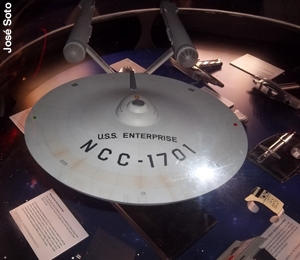
Star Trek: The Exhibition at the Kennedy Space Center

The traveling exhibit Star Trek: The Exhibition is currently running through this summer at the Kennedy Space Center (KSC) as part of the Center’s Sci-Fi Summer. Showcasing the world of Star Trek, the Sci-Fi Summer program presents how the science fiction world of Trek helped to influence the development of our technology. It’s a great place to go if you are a Star Trek or science fiction fan not just because of the Trek-themed exhibits and attractions but because it melds that sci-fi aspect to NASA’s real life world. You get to see where we’ve been and how far we have to go.

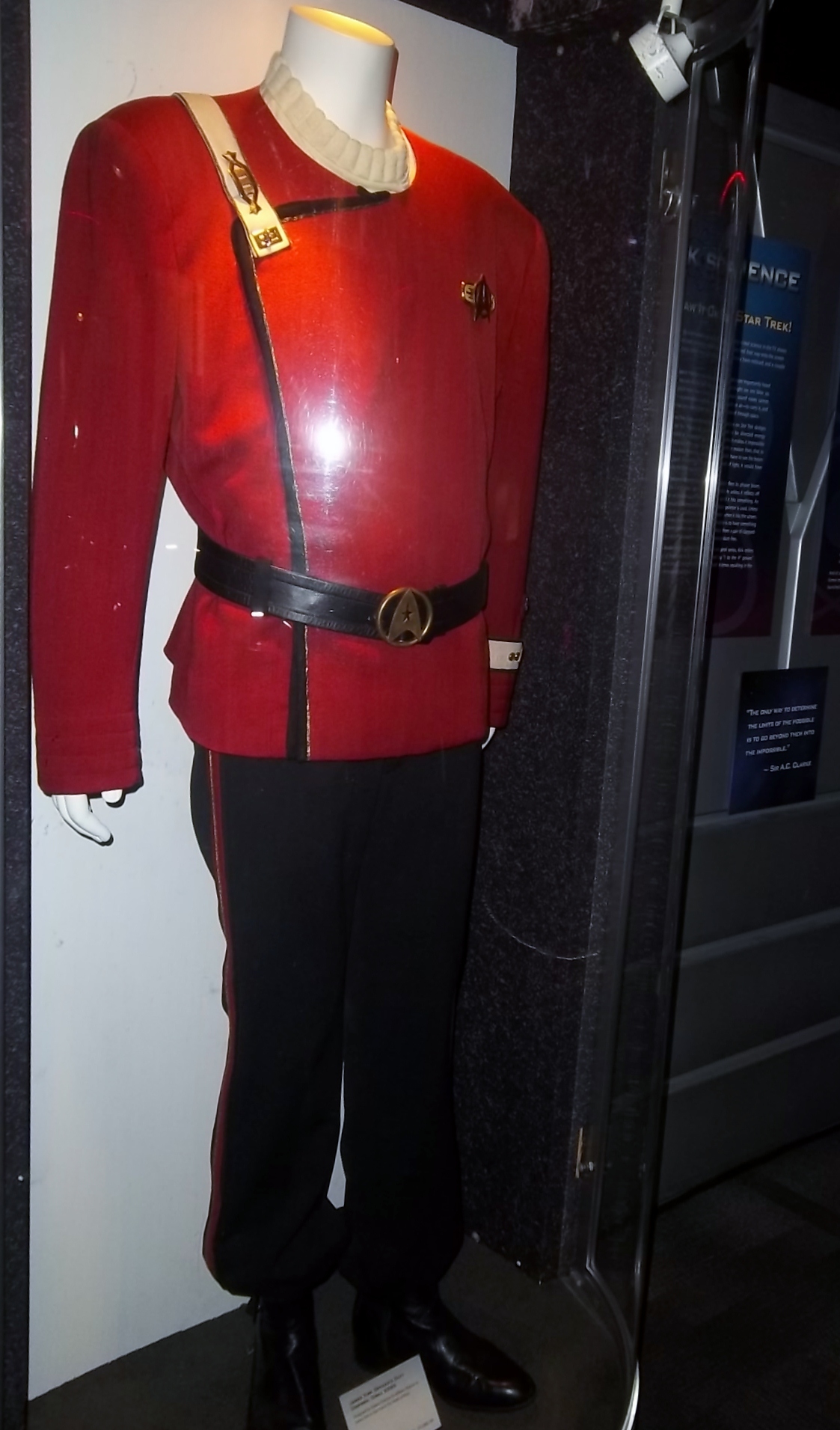
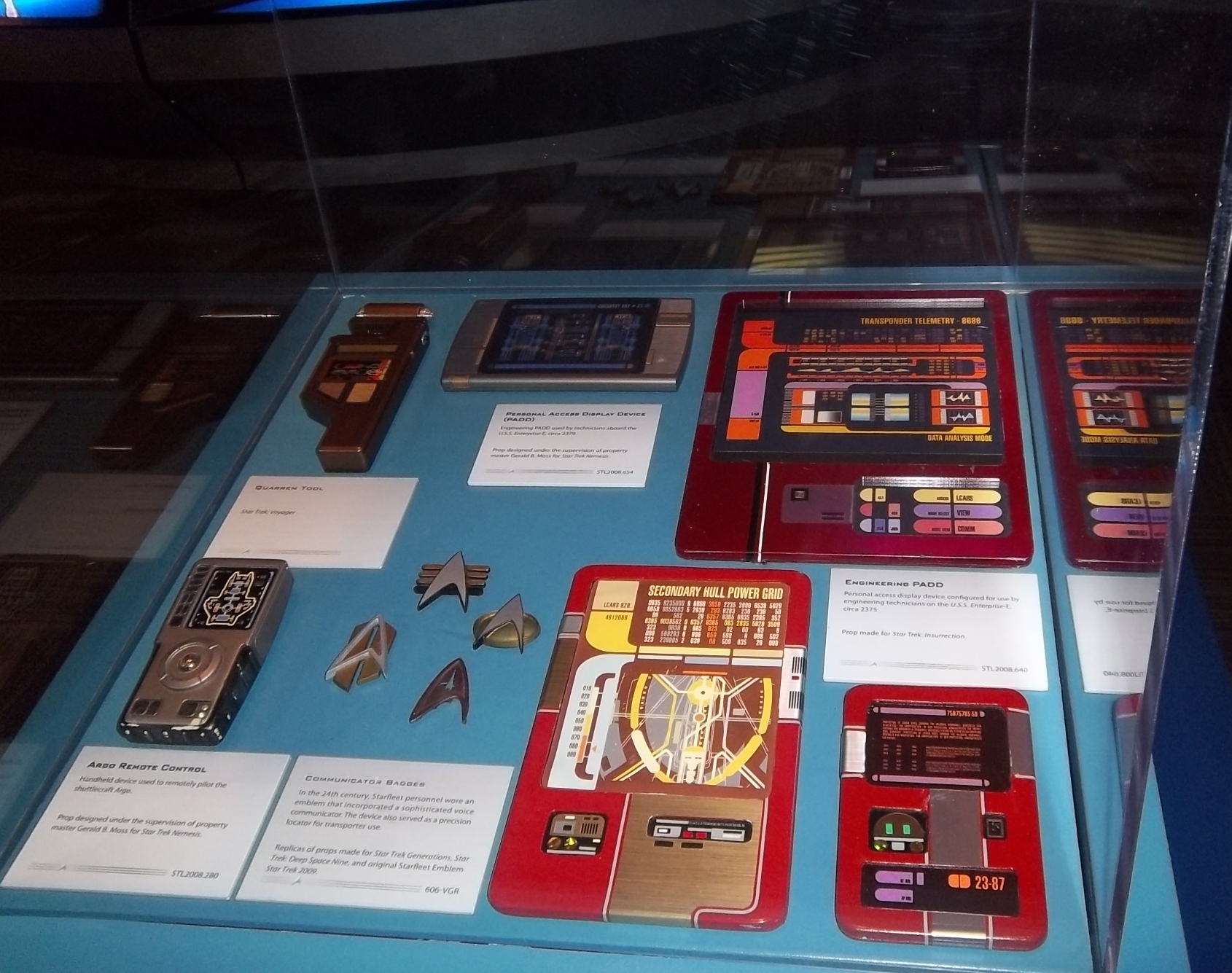
Star Trek: The Exhibition features a scale model of the Enterprise, and the actual props and costumes used in the Star Trek shows and films. At the KSC, the exhibit is broken up into two different buildings. One where IMAX films are shown (and is currently presenting Transformers: Dark of the Moon in 3D) has a room dedicated to the original Star Trek series, though props and costumes from the Kirk-era films can be seen. The highlight is a well-detailed replica of the original Enterprise bridge complete with dedication plaque, consoles and the captain’s chair that anyone can sit on for golden photo opportunities.

At another building near the tour bus terminal is a larger exhibit room dedicated to Star Trek: The Next Generation,  as well as Star Trek: Deep Space Nine and Star Trek: Voyager. This exhibit displays a mock-up of the Reman Scorpion fighter craft seen in Star Trek: Nemesis and partial recreations of the Enterprise D’s sickbay and engine room. There are models,  numerous props and costumes worn and used by the actors and a Klingon chair that you can sit on (there are also captain chairs from the Enterprise B and D but those are roped off). Additionally one side of the exhibit’s wall has a mural with a detailed timeline of NASA and Trek history. The opposing wall displays the costumes. A nice touch to this exhibit were two actors dressed as Vulcans from the far future who stayed in character and interacted with visitors. The uniforms they wore were the ones worn by 29th century Starfleet officers as seen in the Voyager episode “Relativity.”

The KSC has Trek costumes and factoids peppered throughout the facility with several famous delta shield symbol on the grounds that act as arrows to guide visitors to Trek-related exhibits and attractions. For example one path lead sto the rocket garden where a floor painting shows how large the Enterprise ships are in comparison to the horizontally displayed Saturn 1B rocket. It’s staggering to consider how large the Trek ships are when you walk the length of the rocket. There was so much to see at the KSC that one could easily spend an entire day on the grounds. Continue reading

A Brief Look Back At Star Trek: The Experience

From January 3,1998 to September 1, 2008 Star Trek fans had a haven to call their own when the Las Vegas Hilton ran the attraction Star Trek: The Experience. Part indoor theme park, part museum; the $70-million-dollar attraction had components that all faithfully recreated the science fiction world of Captains Kirk, Picard and the shows’ other heroes and villains.

Visitors were greeted at the entranceway by an enormous hanging model of Kirk’s Enterprise from the movies. Inside the attraction’s main circular layout, which recreated the Deep Space Nine (DS9) Promenade from Star Trek: Deep Space Nine, (the Experience’s fact sheet claimed that the entire area was 65,000 square feet), other overhead models of ships from Star Trek’s many incarnations were a sight to behold. For the record, also greeting visitors were the Enterprise D from Star Trek: The Next Generation, the Voyager from Star Trek: Voyager and a Klingon Bird-of-Prey ship seen from the movies. Guests could just dine in the attraction’s center, or do some shopping off to the left and take in the sights. As they gawked at the intricate detailing of the place, actors dressed and made up as aliens from the shows such as Klingons and Ferengi interacted with visitors and stayed in character.

But most came for the main attractions. Originally, that was just the Klingon Encounter and History of the Future Museum, but BORG Invasion 4D was added in 2004 (at one point in 2005 there were plans to add another area devoted to the original 1960s series that featured Kirk and Spock but alas that never came to fruition.). Fans paid admission for both shows and experienced them as many times as they wanted. After paying, they turned a sharp right from the cashier off to the entrance’s right and walked up a long, twisting walkway that took them through the museum.

It featured an exhaustive timeline of our history and that of the shows and movies. But what was most interesting were the huge collection of genuine Star Trek props going back forty years. In fact, the people behind the attraction claimed the museum had the largest, permanent collection of props. After browsing through the winding museum, visitors stood in line and chose whichever attraction they wanted to try first.

In the Klingon Encounter, guests were somehow transported (through backstage effects) on board a flawless recreation of the Enterprise D’s interior complete with actors playing futuristic spacemen. What happened was that a visitor would line up to board a simulator ride then suddenly the lights would go out. There was a blast of air and quick strobe lights in the pitch darkness. Then the lights would go on and voila the visitor was standing on the transporter pads of the ship’s transporter room. Guests were then given a quick tour of the Enterprise’s corridors and bridge before being whisked away into a shuttle that confronted the Klingons. Of course, the shuttle was really a simulator ride that concluded the show. Basically the  storyline was that the Klingons traveled back in time to modern-day Earth and tried to abduct the visitors but the Enterprise intervened and transported the people on board. The twist was that someone in the group turned out to be the ancestor of Captain Picard. Both Jonathan Frakes and Levar Burton reprised on viewscreens their roles as Riker and LaForge.

The future was also visited in BORG Invasion 4D as fans entered a futuristic space station that came under attack by the villainous cyber beings, the Borg. As in the first show, actors stayed in character and the sets were flawless recreations of Federation architecture. Like in Klingon Encounter, guests were evacuated to a shuttle but contrary to the first attraction, this one concluded with the visitors sitting in a theater and being part of a 4D interactive film. It was similar to what you would find in the Disney or Universal parks with tactile experiences enhancing the show. In this film, the Borg were trying to assimilate the audience before being stopped by the starship Voyager. Robert Picardo, Kate Mulgrew and Alice Krige reprised on viewscreens their roles as the ship’s Emergency Medical Hologram, Admiral Janeway and the Borg Queen. Continue reading

NASA’s Next Chapter Awaits

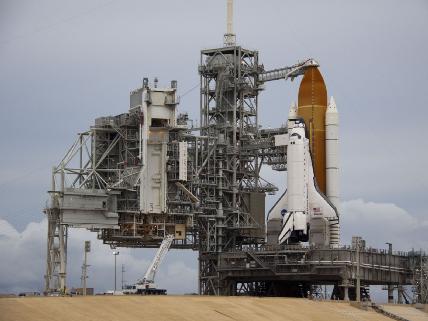
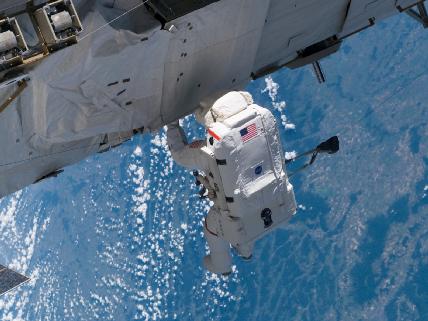
The space shuttle Atlantis lifted off today on its final shuttle mission closing a 30-year chapter in NASA’s manned space program. Looking around the news casts obsessed with Casey Anthony, the dismal jobs report, and other headlines it was hard to find substantial mention of Atlantis’ mission to the International Space Station (ISS).

This just underscores the sad state of America’s space program and it seems as if the shuttle fleet is being retired with a whimper. It’s almost as if NASA and the government want to downplay the fact that there are no concrete future plans.

After President Obama all but scuttled NASA’s manned space program, the agency has been left grasping at straws to remain relevant. Meanwhile Russia, China and other nations are pushing on with their space efforts. So why not us? Blame it on cost-cutting politicians, an apathetic public and NASA’s bureaucracy; there are plenty of reasons. But it could be traced to a lack of long-term planning.

Back in the 1960s, President Kennedy proclaimed his famous goal of landing a man on the moon before the decade ended. Then the U.S. was in a very public space race with a very competitive Soviet Union. One added impetus was that the Russians were winning. It fired the public’s imagination and will for America to forge ahead despite setbacks like the Apollo 1 tragedy. Once Armstrong and Aldrin landed on the moon, everyone celebrated and collectively went on the next thing. NASA’s budget was slashed and bit by bit the agency’s ambition withered; goals like sending astronauts to Mars by the 1980s went by the wayside. The most recent setback was with Obama effectively killing the agency’s plans to return to the moon in a few years.

Now with the shuttle fleet retired, current plans are to develop a new successor to the mammoth Saturn rockets, building spacecraft that can leave Earth’s lower orbit and vague plans to reach an asteroid by 2025 and orbit (not land on) Mars in the 2030s. Frankly that is too far away in time to capture the public’s imagination. For all the hand wringing by NASA, the fact is that the technology to send people to Mars and colonize our moon exists today, actually it has existed for years. What kept that from happening was the lack of will from everyone. Politicians didn’t want to invest their capital on projects that paid off way into the future, NASA seemed to be more interested in conducting tests in space that the average Joe didn’t care about, and the public complained about the costs and necessity of the space program. In truth, the budget for the space program is very small compared to other expenses. To do away with it completely won’t cure our financial woes.

NASA needs clear goals that regains the public’s interest, and more importantly the drive to push the envelope. It may take another nation pulling off a genuine feat to light America’s fire again. Perhaps commercial space craft development will do it (the company SpaceX has plans for a test run to the ISS this year). Or maybe the sight of American astronauts piggybacking on Russian space capsules might do something to boost our motivation. For now though, the next chapter in the U.S. manned space program is still on the launch pad.

J.L. Soto

Falling Skies Ahead


Last month, TNT premiered Falling Skies,  the new Dreamworks sci-fi series executive produced by Steven Spielberg about survivors of a modern-day alien invasion.

Unlike what its teaser commercials suggested, Falling Skies’ pilot did not feature the typical initial alien arrival, contact and pyrotechnic invasion scenario. Rather it begins several months after the aliens (called “skitters”) have wiped out the world’s armies and have laid waste everywhere. This is clearly not Independence Day  or even Battlestar Galactica in terms of big budget effects scenes. This can be disappointing for some but it’s a different take and risky, while also being budget conscious. And it largely works.

Why? It’s a good hook for audiences who have to be able to catch up with what is going on. Here’s the skinny, the show takes place in and around Boston and focuses on the efforts of a ragtag group of civilians, soldiers and recruits who form a militia group called the Second Massachusetts to fight back against the aliens. Apparently the humans in the show are just as much in the dark as the viewer is when it comes to knowing who the aliens are or why they came to Earth. To its credit the show gives out adequate morsels of information about the situation and characters to keep you interested.

Jumping into the middle of the premise helped draw me into the characters’ storyline since everything wasn’t laid out. Unfortunately, this approach was used to a much greater effect in AMC’s excellent series The Walking Dead.  That show had more engaging and memorable characters. Also, at times Falling Skies gets a little too preachy or sentimental. Additionally, some of the military stuff seems far-fetched specifically when it comes to logistics (having soldiers sleep indoors but not civilians? Nice way to sow resentment, plus doesn’t that leave civilians more vulnerable to the aliens?).

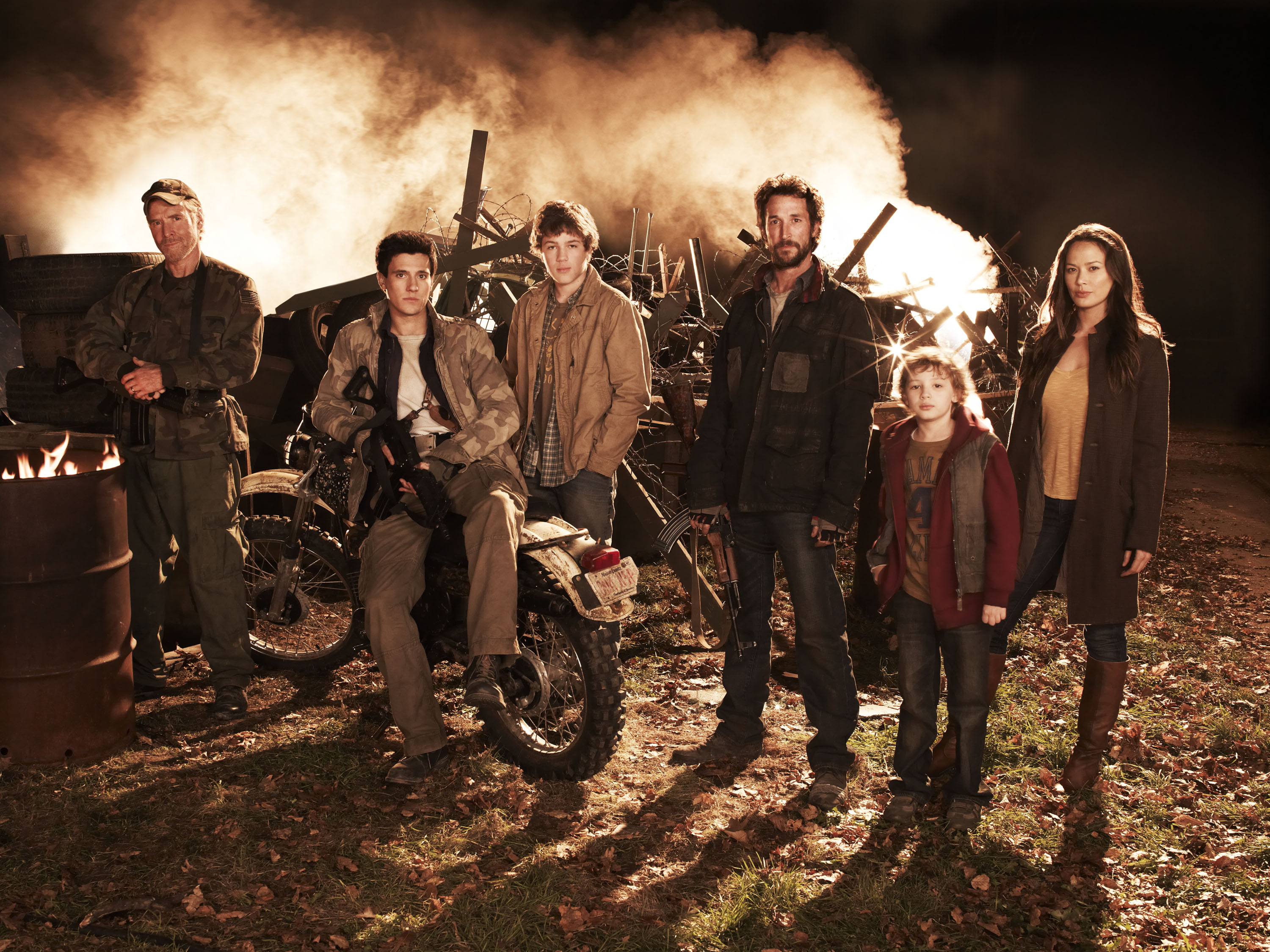
As the main character of the show, it falls on Tom Mason (Noah Wyle), a widowed history professor and second in command of the militia group,  to be the reason why audiences tune in. He’s got an interesting story, his wife was killed recently by aliens and one of his three sons has been kidnapped and turned into a zombified slave for the aliens through a horrifying biomechanical device attached to his back (in the show, children are being taken by the aliens and turned into a labor force through these devices). So his driving focus is to rescue his son. Yet it can be a challenge to be invested in Mason. I think it’s because sometimes he comes off as too moral, too optimistic while everyone around him is all doom and gloom. He spouts off analogies about history showing that invading forces are always repelled by indigenous populations but no one seems to take him seriously when he does that, not even histwo other sons. This doesn’t quite gel with the survivor mentality that pervades many of the show’s characters.

But in Falling Skies’ defense the characters are already becoming more fleshed out. Mason has shown a grittier side, and it appears that he probably projects this image for his children’s sake (though being that his youngest son already wants to join him on missions makes me wonder how successful Mason is, but I get the feeling that will be explored). Also, some of the other characters are beginning to stand out. Chiefly Moon Bloodgood’s Anne Glass, a pediatrician who becomes the group’s chief doctor and moral compass, Will Patton’s Captain Weaver, the no-nonsense commanding officer of the group who struggles to keep his people (and especially Mason) focused on the larger goal of winning the war, and Colin Cunningham’s John Pope, an ex-convict and former gang leader who was captured in the pilot for kidnapping Mason and others in exchange for weapons. In lots of ways, Pope comes off as a loose but effective cannon in the same vein as was Michael Ironside’s Ham Tyler in V.

The production values are remarkably good, effectively conveying a destroyed landscape that just barely resembles towns and cities. I also like the attention to local detail in regards to Boston’s geography which adds authenticity. The special effects are top notch and a blessing considering how poor they were in some recent TV shows.

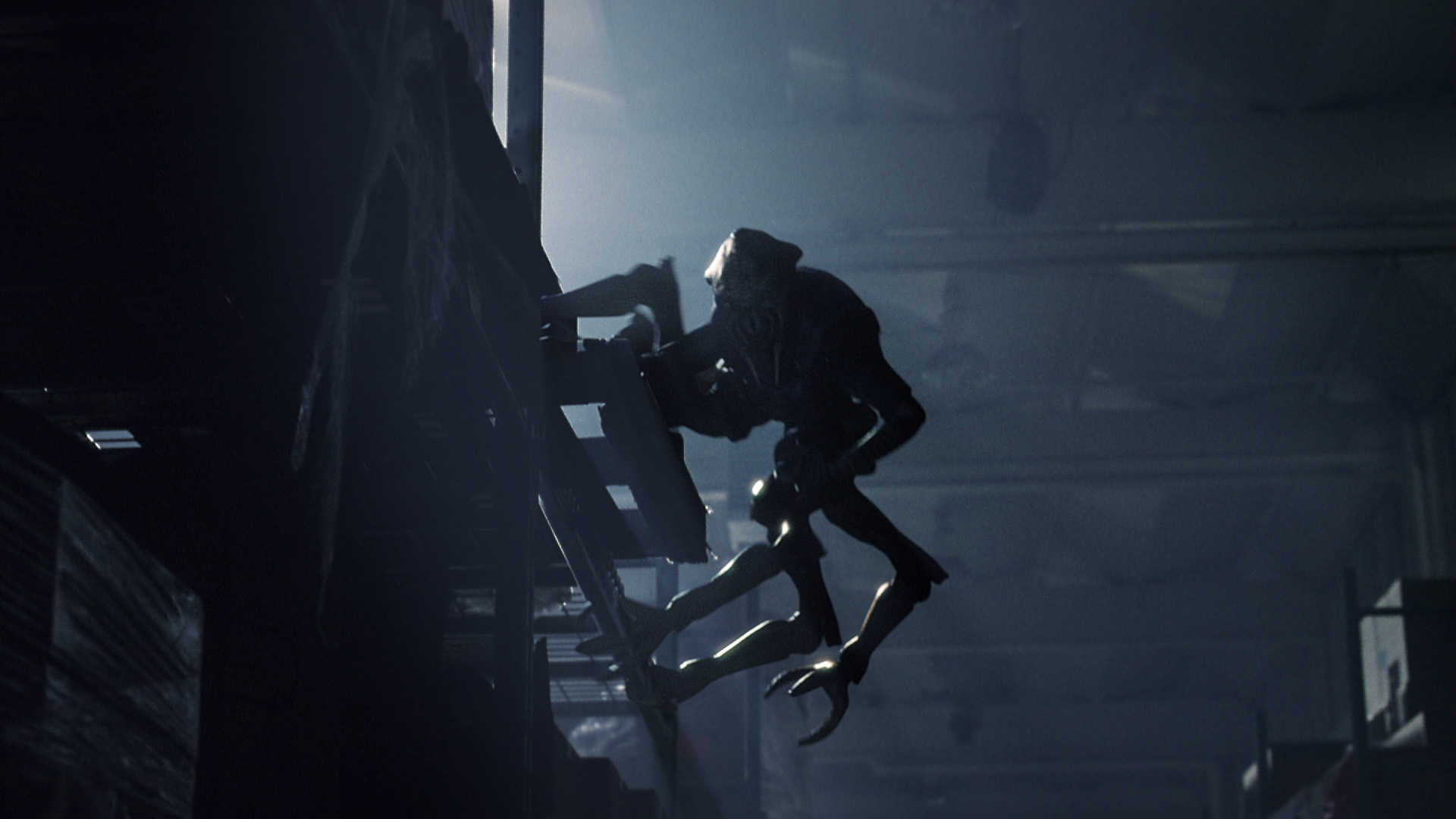
It’s really great that the skitters are shown to be non-bipedal creatures, a rarity for TV shows, and are an excellent special effect. However, the mechanical soldiers that the skitters use look more like obvious CGI. Many scenes are too dark and sometimes hard to follow. But it does add to the tension that’s sometimes felt in those scenes. Perhaps it’s to hide the budgetary constrictions but hopefully this will change in the future.

On the whole, I think Falling Skies is a good, entertaining show with potential. The growing pains are obvious.  It doesn’t hit the ball out of the ballpark like The Walking Dead did but it feels like a solid score. At this point early into the series, making a final judgment is premature however I’m devoting time to keep watching and see how it plays out, and that’s a good sign.

J.L. Soto

Images courtesy of TNT, cast photo by Frank Ockenfels