Exploring The Ending Of Arrival

arrival-ship

WARNING: This article will contain huge spoilers about the alien contact film Arrival. Anyone who hasn’t seen it yet should skip what lies ahead….

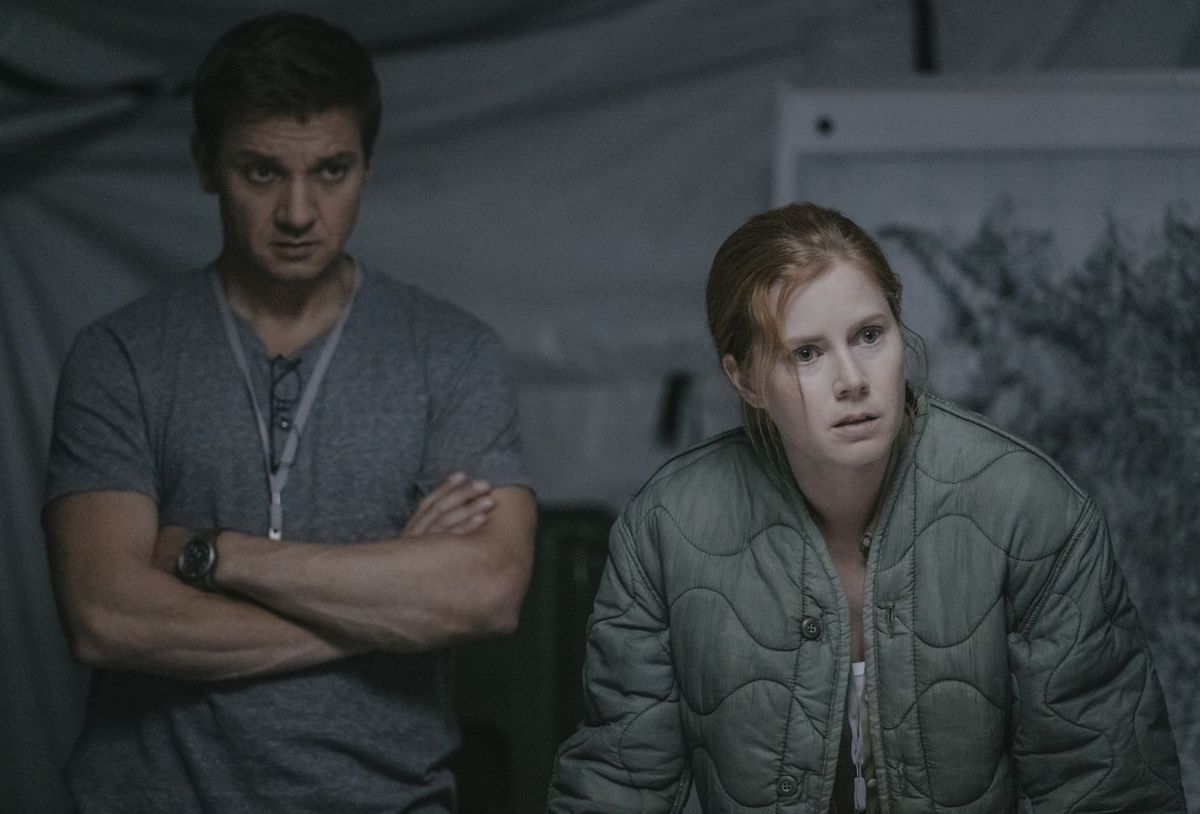
What set Arrival apart from other sci-fi films about the First Contact scenario had to do with it’s ending, which upended the meaning of much of the film. Throughout Arrival, there were numerous flashbacks regarding the linguist Louise Banks and her young daughter Hannah. We witness Hannah being born, living her young life and dying from a disease. This was done to set up Louise as a tragic figure, but we learn late into the film that these sequences are actually flashforwards. We were actually seeing what happened to Louise Banks after the aliens (heptapods) left Earth.

So why were we seeing these glimpses into the future?

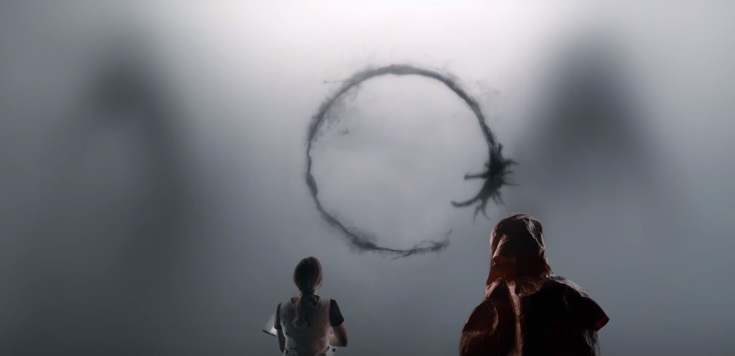
It all goes back to her attempts to communicate with the heptapods. The only way human and alien were able to communicate was through written language. The aliens’ language, which consists of a series of circular inkblots, was quite complex and to understand it, one had to think non-linear. This is because the heptapods do not perceive time as cause and effect like we do…they can see into the past and future. It’s why they came to Earth in the first place. As they reveal to Louise, they arrived to establish relations with us because the heptapods will need humanity’s help 3,000 years in the future. They had the foresight to see that they would need our help and we needed a jumpstart. Hence, their gift to us in the form of their language.
arrival-glass

With the language, a person will be able to perceive time in a non-linear way. This will have a profound effect on how we carry on our lives if we are able to accurately perceive the future. But is this possible?

In the film, it’s mentioned that in order to understand a language, the wiring of one’s brain, so to speak, has to be radically altered. Imagine if that happened when deciphering a language from a completely non-human species. But for humanity to completely understand the heptapods’ language, our minds would have to evolve. So how was Louise able to perceive time differently?

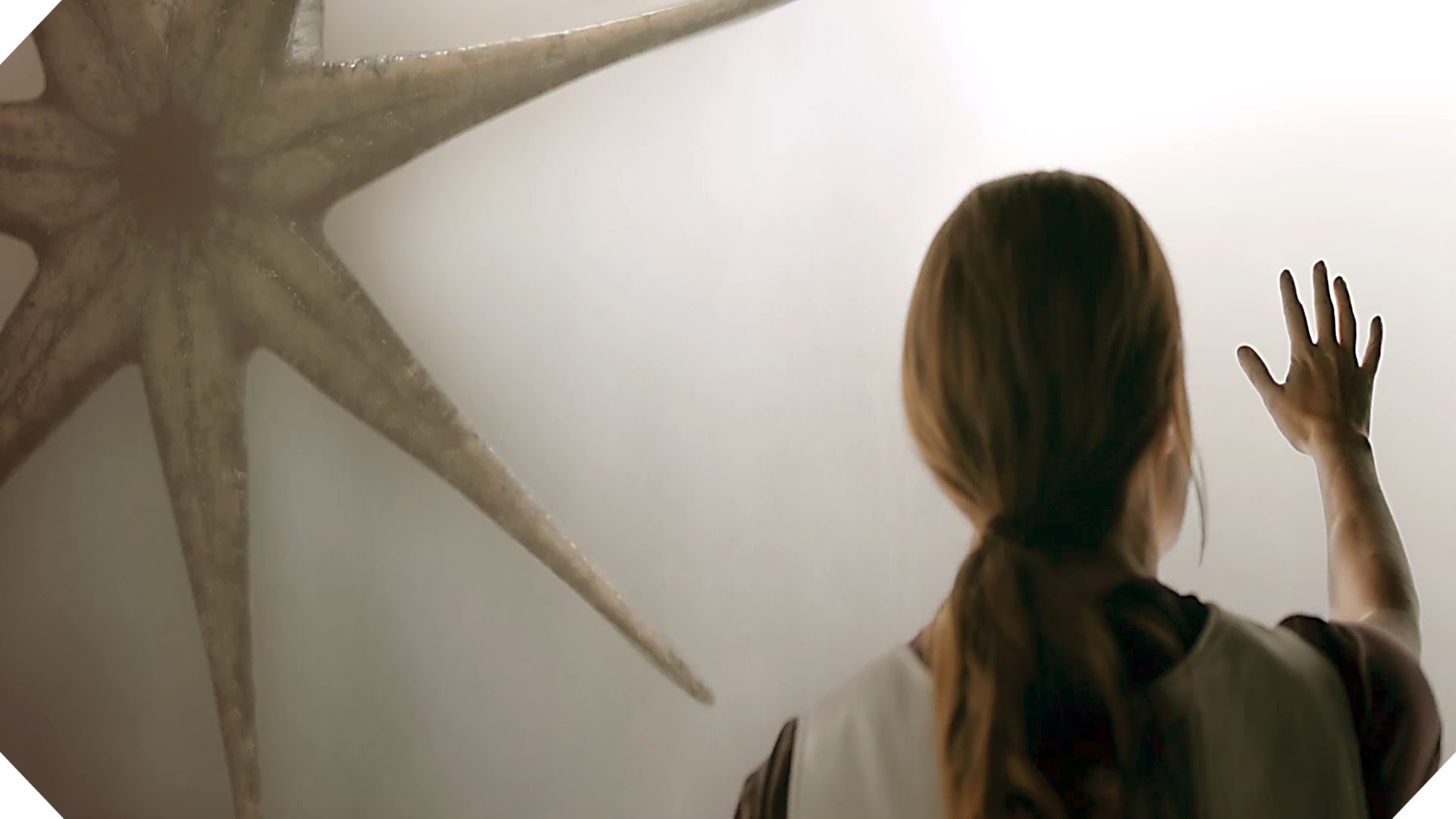
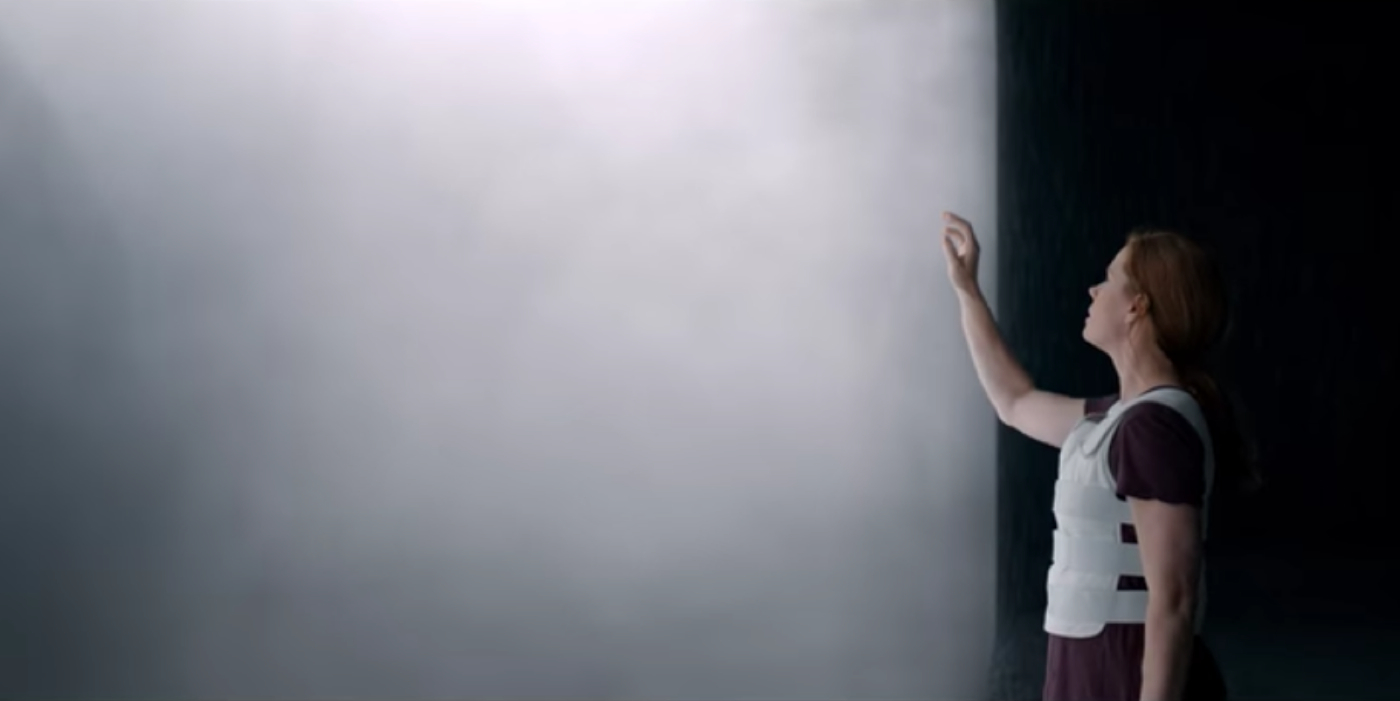
The answer is that she was altered by the heptapod, Costello, when she was brought into the aliens’ ship. It’s established in Arrival that the aliens inhabit an environment that isn’t Earthlike and do not even breath our air. Whenever human and alien communicated there was a glass barrier separating the two environments. However, when the situation turned dire in the final act as the Chinese military was about to attack the heptapods, Louise was brought into the aliens’ environment without an environmental suit. She couldn’t have survived in the inhospitable environment and the only way she could have existed was if they altered her physiology during the transit to their ship. Minutes after she meets Costello face to face she is able to fully see into the future and understands their written language without the aid of computer programs.

That is the true tragedy in Arrival’s ending. While Louise is able to prevent a war thanks to taking advantage of being able to perceive time differently, now she has the terrible foreknowledge of her doomed daughter. She is fully aware that she will give birth to daughter that will die at a young age. This brings up the question of predestination and fate. During Arrival’s ending, she could have made the choice to not let Hannah be born to spare her the suffering.
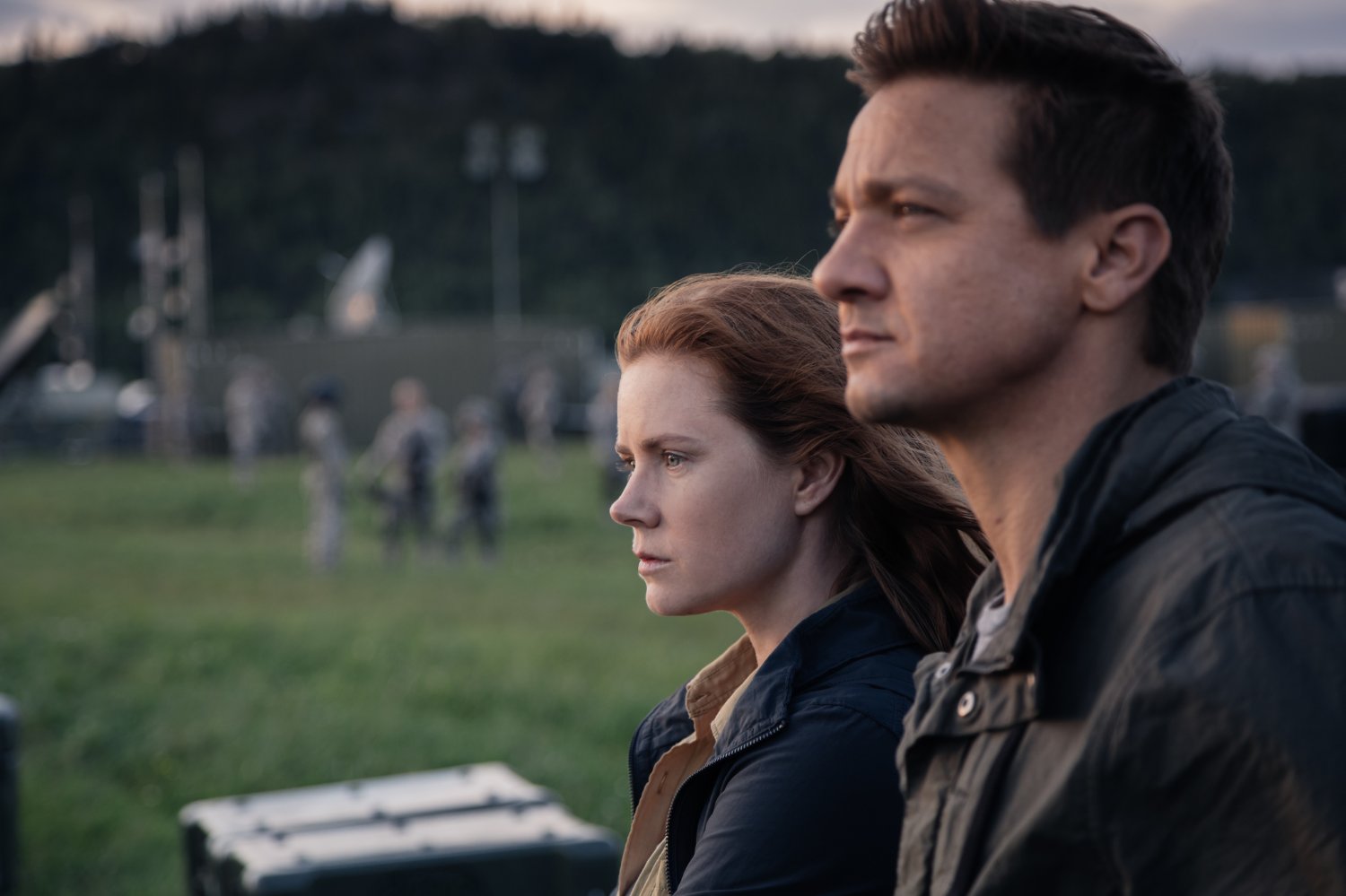
louise-and-ian

Instead, she gives in to fate and allows herself to love her colleague Ian Donnelly, the mysterious never-seen father of Hannah in the flashforwards. Thus, she sets forth her predestiny and Hannah’s, as well. Why do this? Why not use her ability to find a way to cure Hannah? Perhaps, she was afraid of the Butterfly Effect unraveling the initial contact with the heptapods that could have doomed humanity. It is strongly hinted in the film, that this was why Louise and Ian broke up. This just adds more to the tragic element. Louise knows the pain that awaits her, yet she makes the personal sacrifice for the sake of preserving the future and humanity and in doing so, Louise Banks becomes an even more heroic figure in Arrival.

Lewis T. Grove

Arrival Brings Non-Linear Food For Thought

arrival-poster

Arrival is the new sci-fi First Contact movie directed by visionary director Denis Villeneuve and stars Amy Adams as Dr. Louise Banks, a linguist recruited by Colonel Weber (Forest Whitaker) of the U.S. military to help communicate with newly arrived aliens. These aliens arrived on Earth in twelve giant spaceships that have taken up spots around the world and no one is able to communicate with them. What is at stake are rising tensions and paranoia due to the aliens’ arrival. As world powers grow more and more trigger happy, it’s up to Banks to find a way to break through the insurmountable language barrier between the two races before it’s too late.

louise-and-ian-arrival


In film, the First Contact scenario isn’t anything new and Arrival echoes aspects of past sci-fi films in this subgenre like Contact, Close Encounters of the Third Kind and The Day the Earth Stood Still. Arrival also borrows elements from films such as Signs and Interstellar in regards to the worldwide reaction to alien arrival and head-spinning scientific concepts. What sets Arrival apart from other films in the subgenre is its mature tone and exploration of the hurdles humanity would face in this scenario.

These beings that have come to Earth are genuinely alien. Without spoiling their appearance, what can be stated is that they aren’t the standard humanoids with bumpy foreheads. In fact, their appearance belies the fact that they came from an environment totally unlike Earth’s and that was quite refreshing to see. Also welcome, was that the focus of the film was not on alien invasion with evil E.T.s and heroics from the military. Rather the fundamental dilemma, the driving force of the film is how can we communicate with beings from a completely foreign environment without any relatable frame of reference. It is bad enough that we have trouble communicating with each other so how can this be done in a First Contact situation without leading to war?

arrival-aliens

Instead of going for pyrotechnics, Villeneuve sticks with this concept and the result is a slow burn of a film that delivers so much food for thought, especially in the final act. It’s a thought-provoking and wondrous journey thanks to Villeneuve’s careful direction and the cinematography. Every frame is carefully and beautifully staged to tell a story in a visual sense that quietly engages the viewer, while telling a personal story about Banks. Adams gives one of her best performances as her character feels the enormity of her task since she sees all around her the consequences of her failure to properly translate the aliens’ language.

alien-language

Without giving anything away, the last third of Arrival ramps up the tension while bringing forth high-brow concepts of non-linear time and how we perceive time in general. It should be pointed out in reference to the film’s tagline of why they are here, although this question is on the mind of many characters, the answer isn’t dwelled upon. Instead, the emotional climax of the film is on Banks herself and her own personal story, which has relevance to humanity’s plight in trying to establish a dialogue with the aliens.

For some, Arrival may be too slow moving, but it has a satisfying payoff for the patient viewer who does not go into the film expecting pyrotechnics or shoot-em-ups. This film is more serious and weighty without being pretentious. There is much to recommend about Arrival, from the performances from Adams, Whitaker and Jeremy Renner as Ian Donnelly, a physicist helping Banks, to Villeneuve’s strong directing and the visual look of the film. But the script by Eric Heisserer, which is adapted from the award-winning short story by Ted Chiang called “Story of Your Life”, is to be commended as well for taking audiences into unfamiliar territory and in examining how a First Contact situation between us and extra-terrestrial might actually play out.

Lewis T. Grove

The Mind-Bending World Of Doctor Strange

doctor-strange-poster

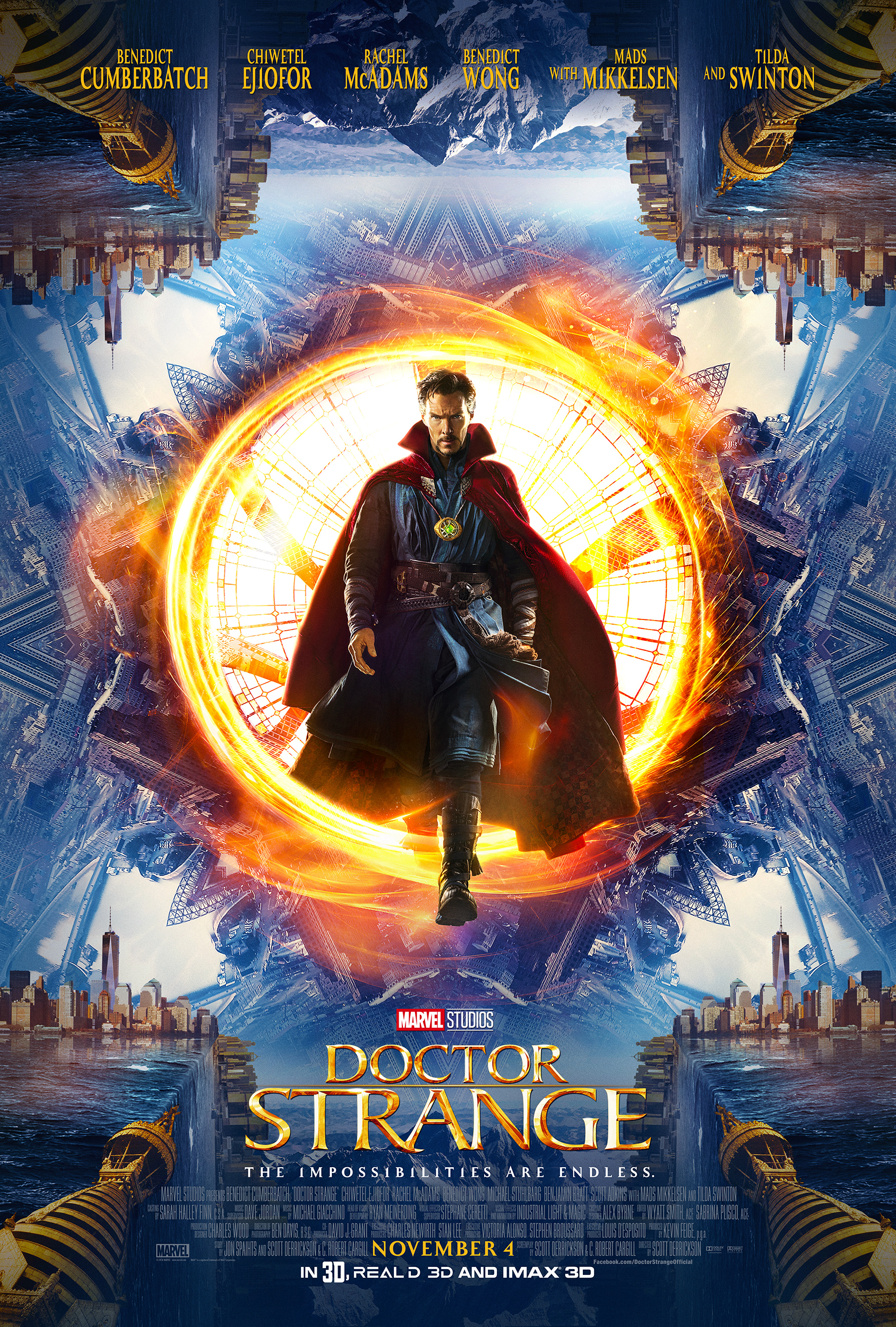
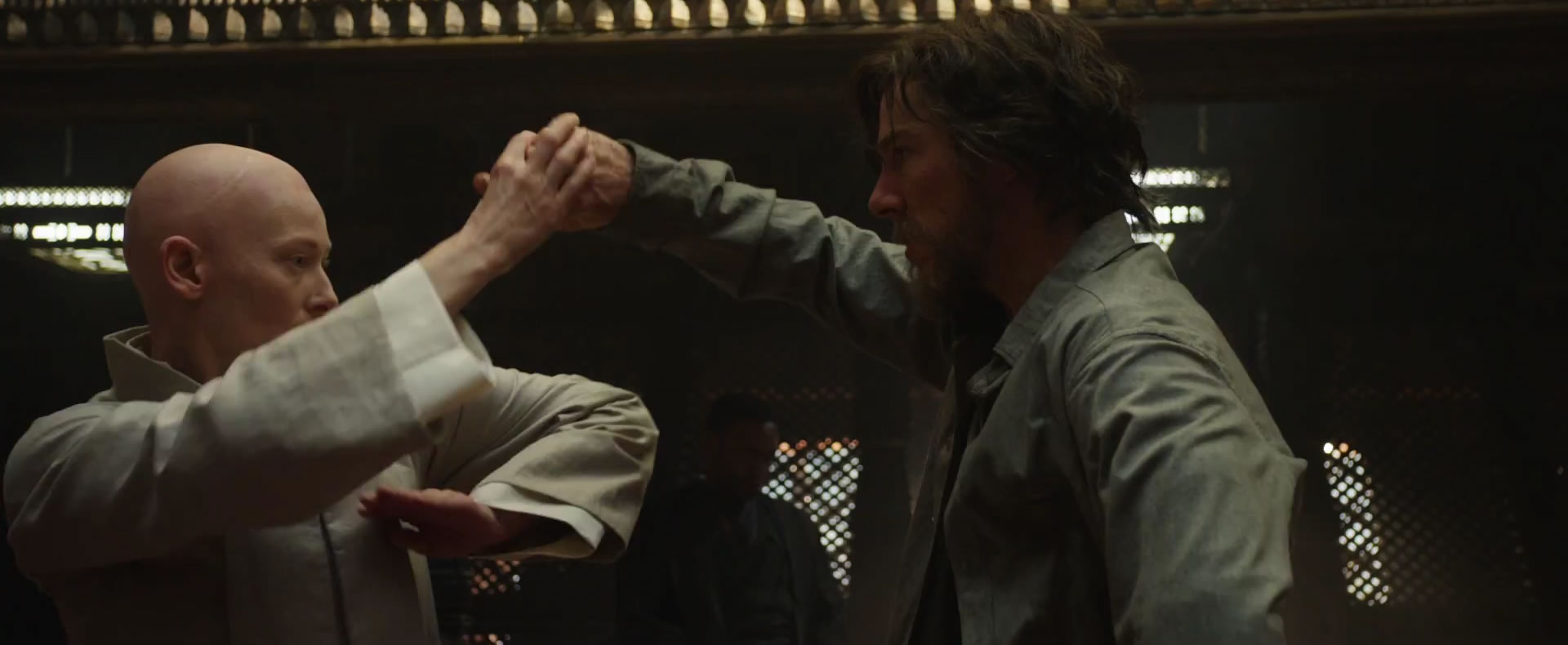
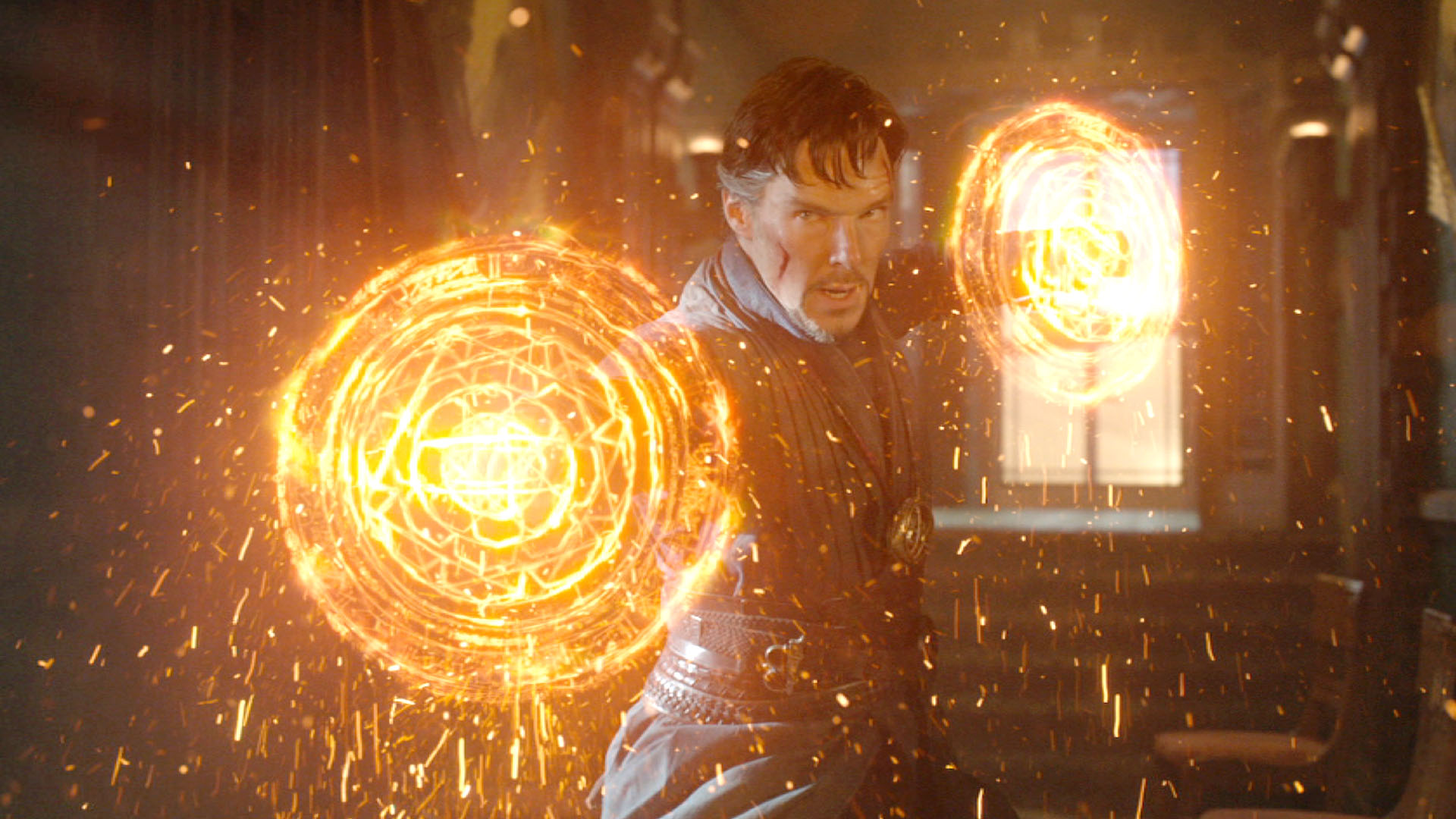
Marvel Studios’ latest foray into the mega-successful Marvel Cinematic Universe (MCU) is Doctor Strange. Benedict Cumberbatch plays the title character, a former brilliant neurosurgeon who becomes a sorcerer after a reluctant personal journey.

strange-and-ancient-one

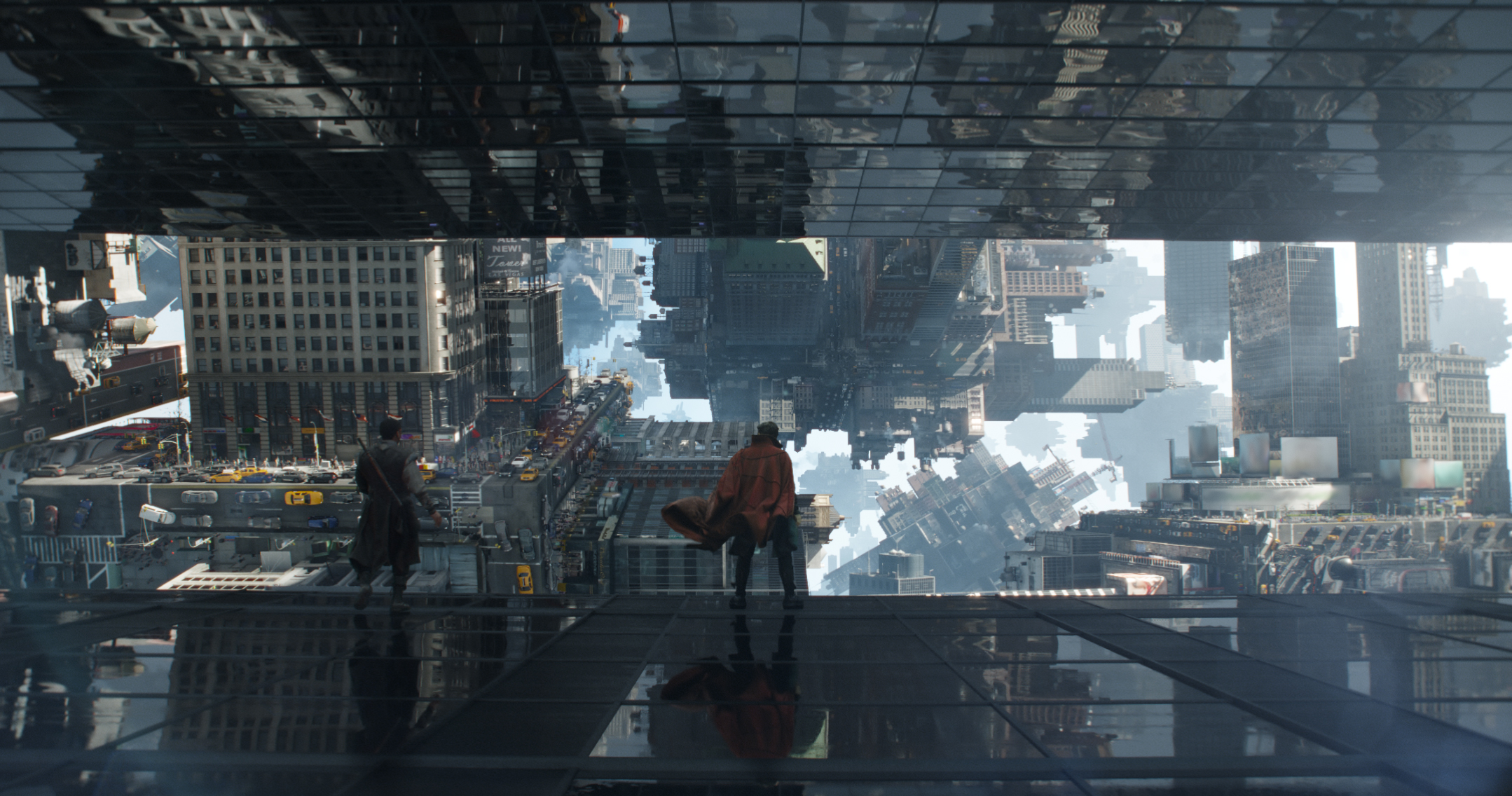
Basically, Doctor Strange is an origin story that introduces audiences to the sorcerer and his world. After a car accident shatters the nerves in his hands, Dr. Stephen Strange is desperate to repair the nerve damage so he can resume his shallow, entitled lifestyle. Think of a less charming version of Tony Stark before he became the heroic Iron Man. His desperation takes him to Nepal where he comes across a secret sect of sorcerers led by the Ancient One (Tilda Swinton) and her lieutenants Mordo (Chiwetol Ejiofor) and Wong (Benedict Wong). The sorcerers introduce Strange to the mind-bending reality of the multiverse with its indescribable dimensions and its evils. Their mission is one of seeking enlightenment and of guarding the Earth and our dimension from evil. In this case, the extradimensional being Dormammu and its disciple, Kaecillus (Mads Mikkelson) a former student of the Ancient One who embraced the dark side of sorcery and wants to learn the secret of immortality.

Doctor Strange would have been a standard coming-of-age origin story if not for the wildly trippy visuals and the performance by Cumberbatch. Once again Marvel Studios strikes gold with its casting in the pivotal role of the sorcerer, and remarkably enough with Swinton. With the latter, the casting choice is controversial because of the racial and gender-swapping nature being that the Ancient One in the Marvel Comics is an elderly Asian male. But Swinton does nicely in her critical role.

Twisting reality of Dr. Strange

The drawbacks to Doctor Strange have to do with a common complaint about most MCU films, namely the villains. There isn’t any depth to Kaecillus, he’s very one-dimensional and is upstaged late in the film by the gigantic visage of Dormammu, who should’ve had more screen time. Even there, the supposedly powerful foe was handled fairly easily by Strange. Other characters were hit or miss. Mordo had an interesting arc where his fundamental belief system is shaken to the core, while Dr. Christine Palmer (Rachel McAdams) was forgettable and didn’t have any screen presence or chemistry with her former lover Strange.

The story itself was serviceable but on the whole comes off as formulaic for an MCU film. It goes like this; unlikeable or self-centered main character gains super powers and undergoes an emotional journey as a reluctant hero before fully embracing his destiny as a full-fledged hero.

multiverse

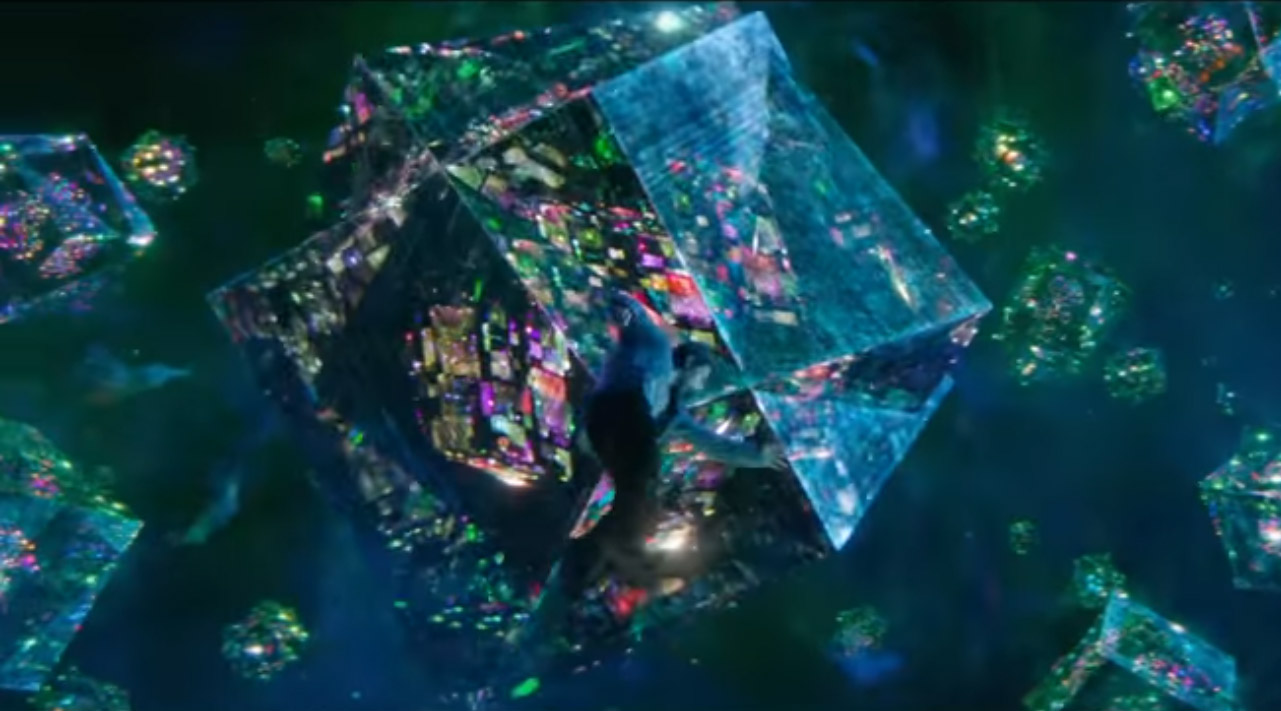
Still, Doctor Strange is an entertaining MCU film that should be placed in the upper mid tier of the other MCU films thanks to director Scott Derrickson’s vibrant eye for colorful optics. There are many imaginative visuals and effects shots that have never been seen on the large screen. Stephen Strange’s forays into the multidimensional void are alone worth the price of admission, especially in 3D. Many shots perfectly mirror Dr. Strange co-creator Steve Ditko’s unique look, which is astonishing to behold in live action, while unnerving at the same time.

strange-fights

With this film, Marvel Studios has successfully introduced another novel and spectacular corner of the expanding MCU. Even though the script could have used some more work to match its eye-popping scenery, Doctor Strange is a welcome addition to the MCU and hopefully the good doctor/sorcerer will take an even greater role in it.

José Soto


The Strain Finishes Its Third Season With A Literal Bang

the-strain-season-3

Forget about The Walking Dead, the horror TV show that is on my must-watch list is on FX. No, not American Horror Story, though that show is great. I’m talking about The Strain. Based on Guillermo Del Toro and Chuck Hogan’s novels, The Strain is about a vampire virus that devastates the world today, specifically New York City. Its third season just finished and wow it ended with a literal bang!

One thing I like about the show is that it takes a pseudo-scientific approach to vampires or strigoi as they are called in the show. One of the heroes, Dr. Ephraim Goodweather (Corey Stoll) is a former CDC scientist desperately trying to find a cure or a way to stop the vampire plague while battling the bottle. At the same time, the show dwells a lot into the history of the vampires and that is best shown with the other hero, the elderly vampire hunter but total badass Abraham Setrakian (David Bradley) and the main villain, former Nazi and current vampire Thomas Eichorst (Richard Sammel). The two are great foils for each other and the actors greatly convey their mutual hatred. That’s just a mere sampling of the show’s many interesting and unconventional characters.

the-strian-villains-meet

I have to admit, The Strain is unabashedly grade B fare, but it’s rarely dull, and moves along at a fast pace. By the time the third season ended, humanity is on the verge of becoming cattle for the spreading vampires. Goodweather’s idiotic son Zack (Max Charles) nuked the Statue of Liberty in retaliation for Goodweather killing his vampire mom (Natalie Brown). Never mind that a few minutes earlier the mom was eyeing the kid for her next snack. That kid is so annoying, I can’t wait until he gets his, not for being a moron but for killing thousands of New Yorkers. What he did was carry out the vampires’ master plan of detonating a nuke to create a nuclear winter and plunge the city into eternal darkness. Of course, this means the vampires can now roam all over the place without fearing the sun and that is where the show ended.

quinlan

Loosely following the storyline in the novels, The Strain will come to an end next year. Unlike some shows, it knew not to overstay its welcome and have a beginning, middle and end. Unlike the meandering zombie show that basically repeats itself, The Strain is often always fun to watch and sometimes creepy and gross. Looking forward to seeing the slurping vampires one more time next year.

T. Rod Jones

The Walking Dead Goes Too Far In Its Season 7 Premiere

negan

The following will contain spoilers from the season 7 premiere of The Walking Dead...

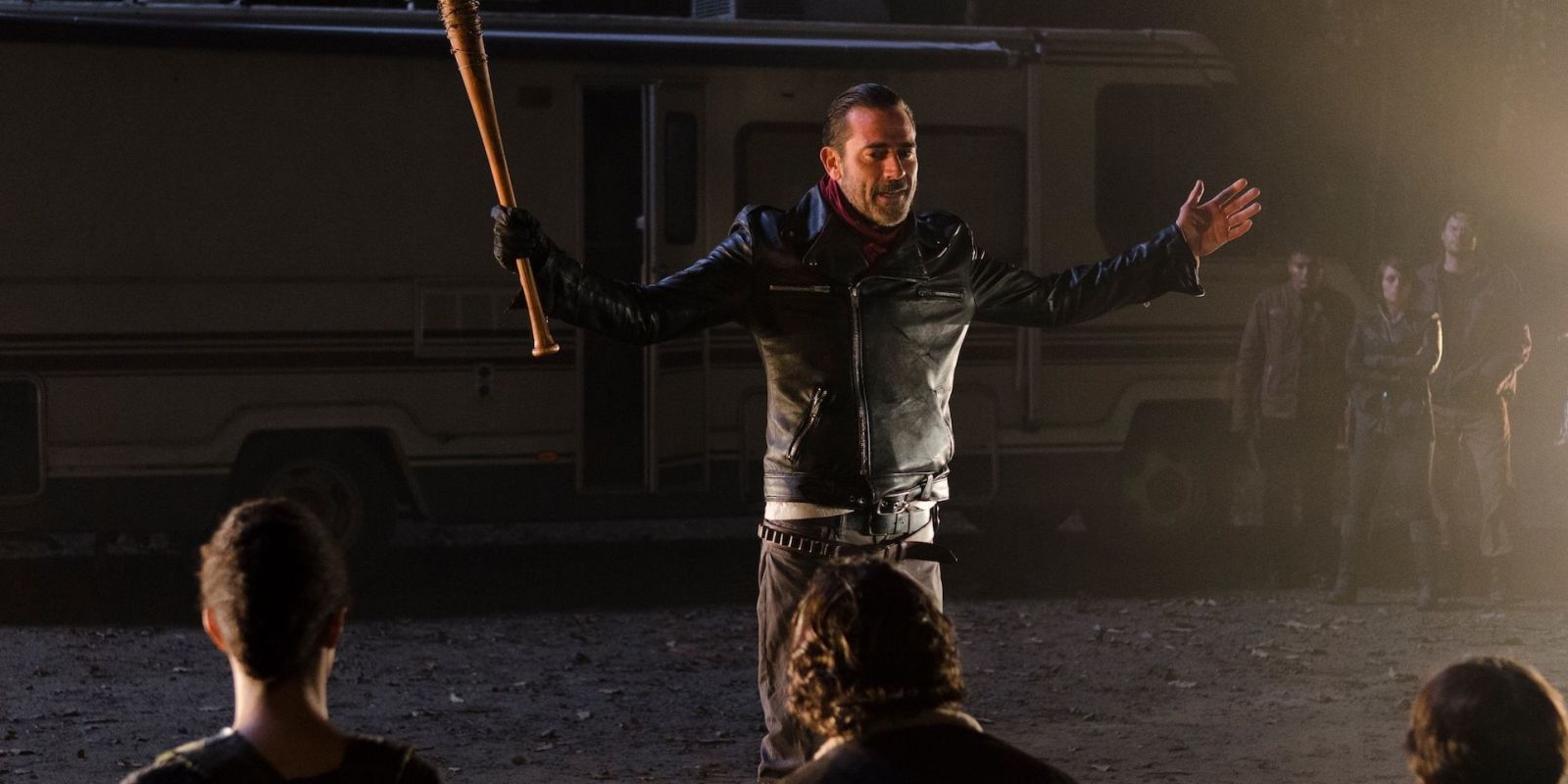
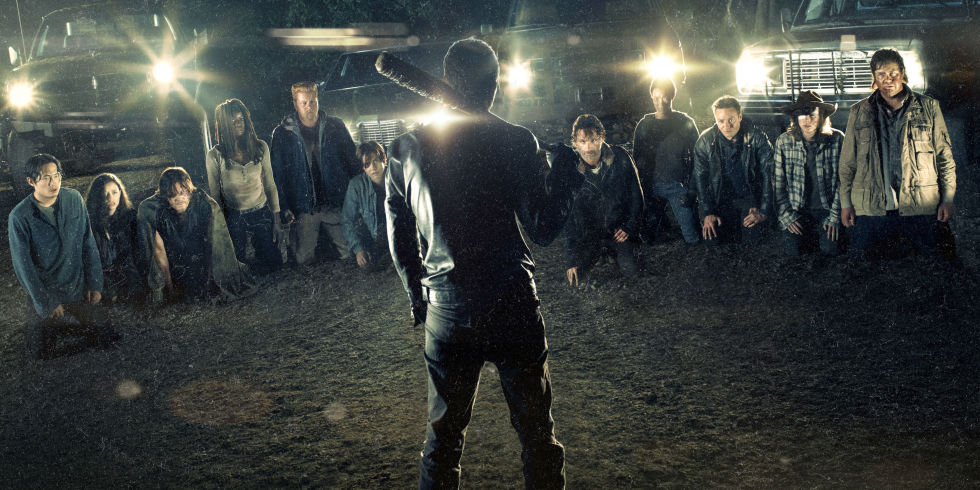
The question that we all wanted to know and not know has been answered this past Sunday with the season 7 premiere of The Walking Dead. That question being who Negan (Jeffrey Dean Morgan) killed among Rick Grimes’ (Andrew Lincoln) group. It turned out that the madman didn’t just kill one, but two beloved characters; Abraham Ford (Michael Cudlitz) and Glenn Rhee (Steven Yeun). Let’s be clear, this episode was brutal, raw and frankly, it went overboard in its portrayal of violence and depravity.

That isn’t to say that the episode “The Day Will Come When You Won’t Be” isn’t without its merits. abe-ford-killedTechnically it was well done, well acted, well shot; it emoted tension like you wouldn’t believe. But the  bottom line is while it was too gruesome, it had the air of a bad car wreck. You want to look away but can’t help but look. However, you often wind up regretting watching what was on the screen because it was so gratuitous to the point that it bordered on torture porn. Did we really have to see Negan repeatedly bash in Abraham and Glenn’s skull until mush was left? Sure, creator Robert Kirkman and the showrunners probably wanted to convey some message about helplessness and the ugliness of violence. The problem isn’t just the violent display of Negan’s sadistic violence, but what went on before and the presentation.

For months, we had to wait to find out who was Negan’s victim. The season 6 finale was overhyped (as was the season 7 premiere with all the images of Negan and his barb-wired bat Lucille) and we were all expecting to see Negan kill someone. But we didn’t. Instead we had to wait for months to find out that the reveal  largely followed what happened in the comic books. In The Walking Dead #100, Negan bashed in Glenn’s skull, but Abraham had been killed beforehand issues past. So “the Day Will Come When You Won’t Be” threw off viewers with Abraham’s death.

negans-choice

The only problem with that death was that it was very telegraphed in season 6 of The Walking Dead. Abraham has had a death wish for much of the season. He seemed aimless with little to live for. In the season finale though, he began to muse about a life where he can settle down…a dead (forgive the pun) giveaway in The Walking Dead that he is doomed. This happens to all characters who find a measure of peace (look out Morgan, you’re next), except Rick. Another clue was when he told his friend Eugene Porter (Josh McDirmett) that he’s come a long way and  become capable of taking care of himself. It was a way for the two men to say goodbye to each other and it was obvious by that small scene that Abraham wasn’t long for the world.

Continue reading