

Blue Beetle, the latest live-action film based on a DC Comics superhero, is a fun and charming adventure that could not have come at a better time for DC films.
The track record for DC films has been troubled for several years now. Most of them have not been well received by fans or critics and performed poorly in the box office. Sadly, Blue Beetle will not rake in the big bucks while it’s in theaters (it was just released yesterday in late August, a dumping ground for films). But whether or not it flops, it does signal a return to form for DC films not centered on Batman.
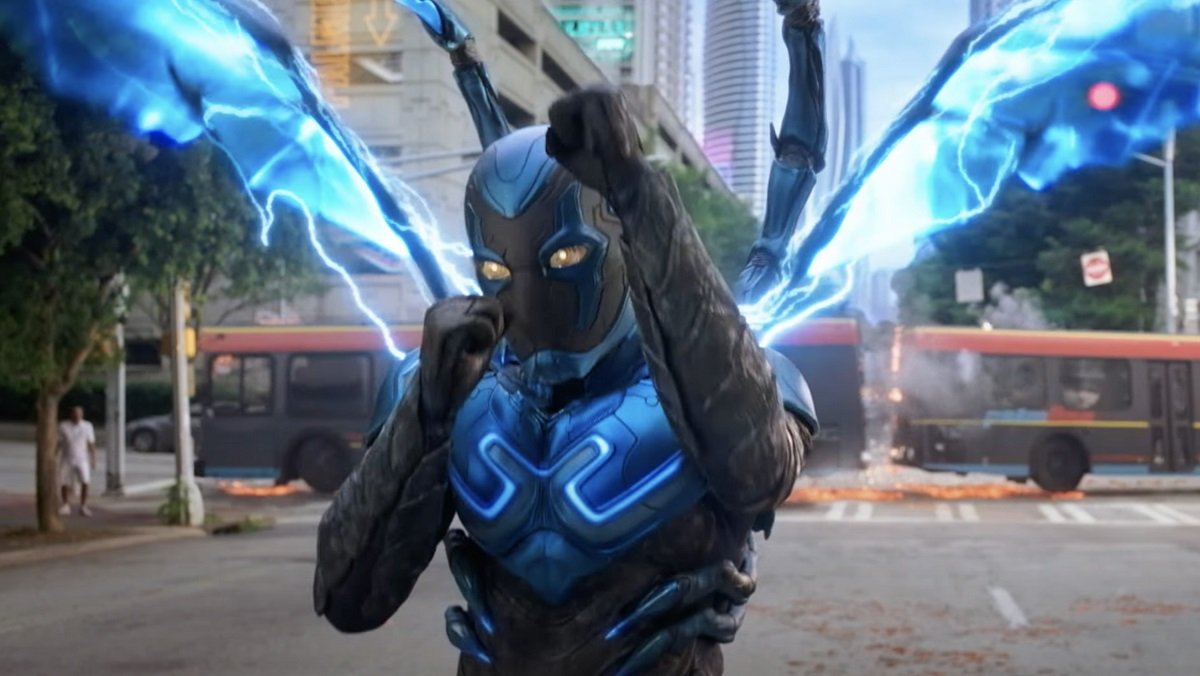
Blue Beetle stars Xolo Maridueña as Jaime Reyes, a recent college graduate who returns to his lower-class home in the hope of finding a good job to help his family. He goes to Kord Industries in Palmera City to meet with Jenny Kord (Bruna Marquezine) for a job opportunity and gets involved in corporate espionage. Jenny steals a strange object shaped like a blue scarab from her company and entrusts it to Jaime. She does this because she does not trust her aunt, Victoria Kord (Susan Sarandon), the CEO of Kord Industries, because Victoria is focused on trying to create exo-skeletal armored suits called O.M.A.C.s (One Man Army Corps) by using the scarab.
After Jaime brings the scarab home, it activates itself and attaches to Jaime’s spinal cord. The scarab then forms a blue exo-skeletal armor around Jaime complete with futuristic nano weaponry. It’s revealed that the scarab is extra-terrestrial, sentient, and forming a symbiotic relationship with Jaime as its reluctant host.
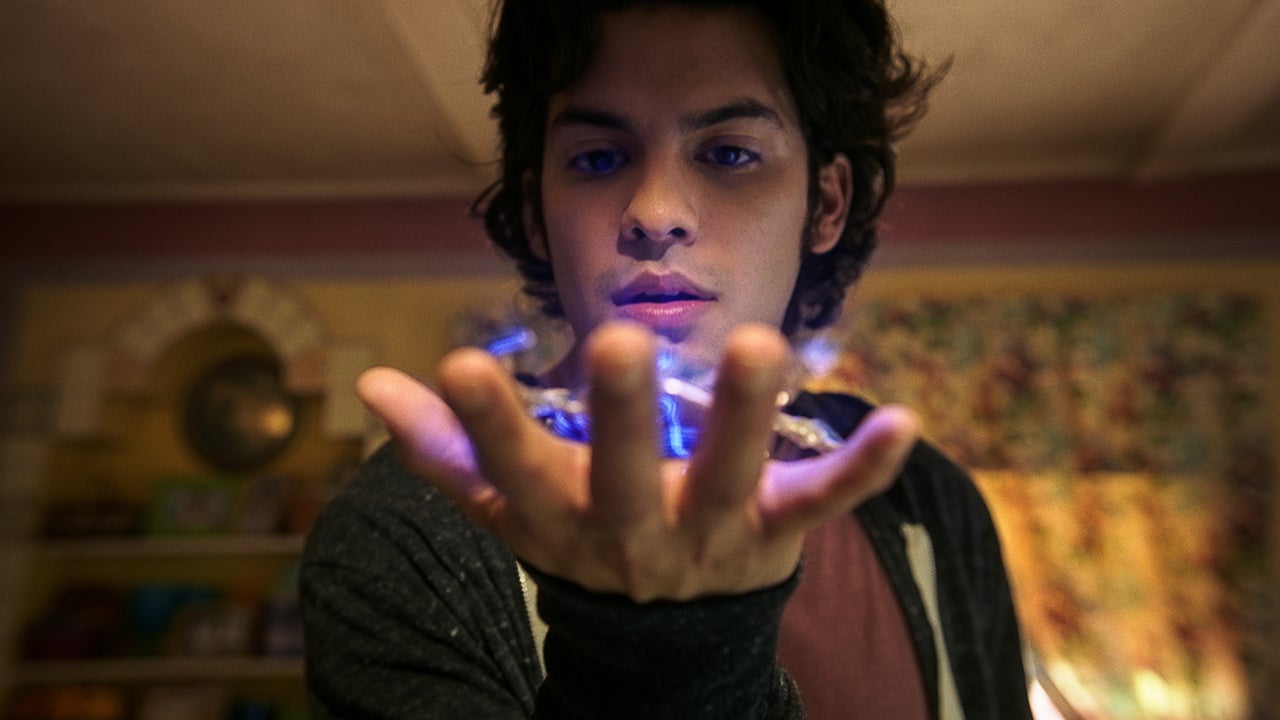
Before long, Victoria learns that Jaime has the scarab and sends her forces led by her bodyguard Carapax (Raoul Max Trujillo) in his own O.M.A.C. suit to find Jaime and obtain the scarab at any cost. This not only endangers Jaime but his family and Jenny, as well, and it is up to them to confront Victoria and her forces.
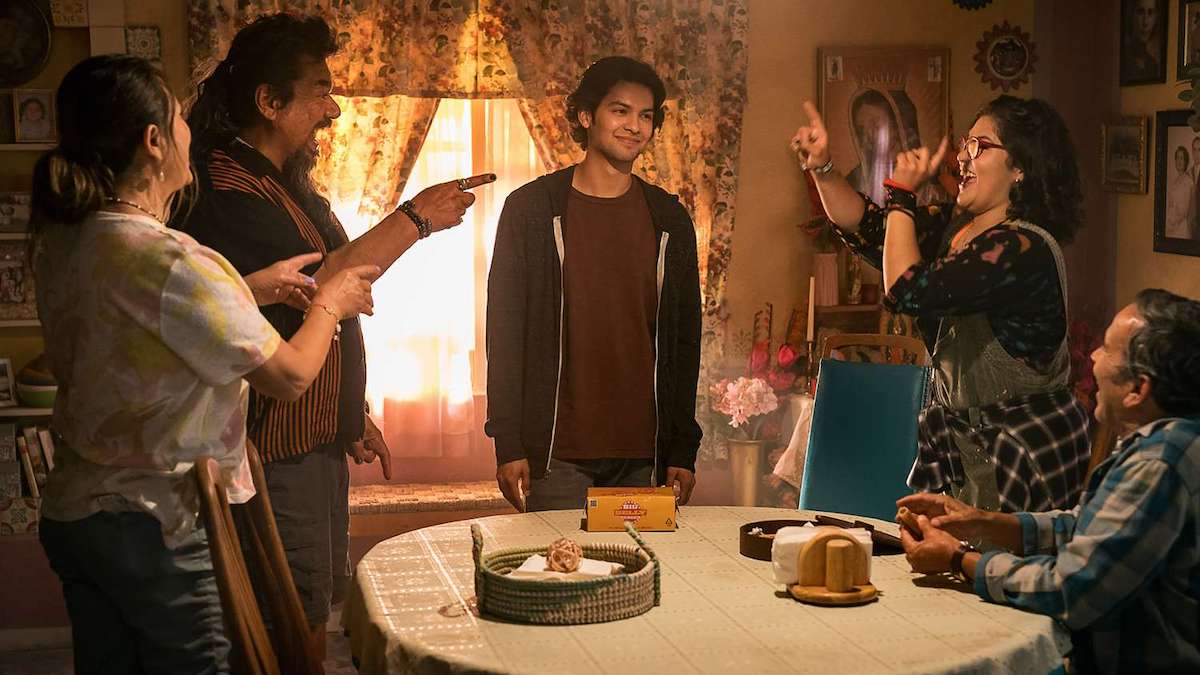
On paper, Blue Beetle sounds like your typical superhero origin film and to an extent that is true. Much of what is seen in Blue Beetle we have seen before in other films like Iron Man, Venom, Black Panther, and so on. But it stands out in many ways. It is largely centered on Jaime’s Latino family and their interactions are one of the best parts of the film. Thanks to the performances of the actors like George Lopez, Adriana Barraza, and Belissa Escobedo the family dynamic is humorous and endearing. It is clear that they are a close-knit family who care about each other and will go through any length to support each other. Also being that the main character is Latino and his culture is represented in the film, it actually helps the film stand out from other superhero films.
What also makes Blue Beetle so winning is the charming performance by Xolo Maridueña who perfectly pulls off the reluctant young hero who only wants to do what is right. He is the core of the film and his journey was quite engaging as he learns to embrace his new role as a superhero. The film itself has some terrific action scenes and moves briskly. What is even more amazing is that the film’s budget is around $100 million and its special effects are more impressive than some of the recent superhero films that boasted larger budgets. Its director Angel Manuel Soto should be commended for delivering an enjoyable and fun superhero film.
Of course, the familiar superhero tropes are a drawback to the film. They include the theme of the hard-luck everyman type who reluctantly has to deal with the life-changing aspect of becoming a superhero. This aspect also comes complete with pep talks by trusted family figures that help him on his emotional journey. Another gripe is that the villains, especially Sarandon’s Victoria Kord, are one dimensional, although Carapax has an interesting revelation at the end. As much fun as Blue Beetle was, it was very goofy and silly at times, especially with the scenes where his grandmother starts blasting away goons with a futuristic Gatling gun. Still, Blue Beetle on the whole is a fun viewing experience that exceeds expectations.

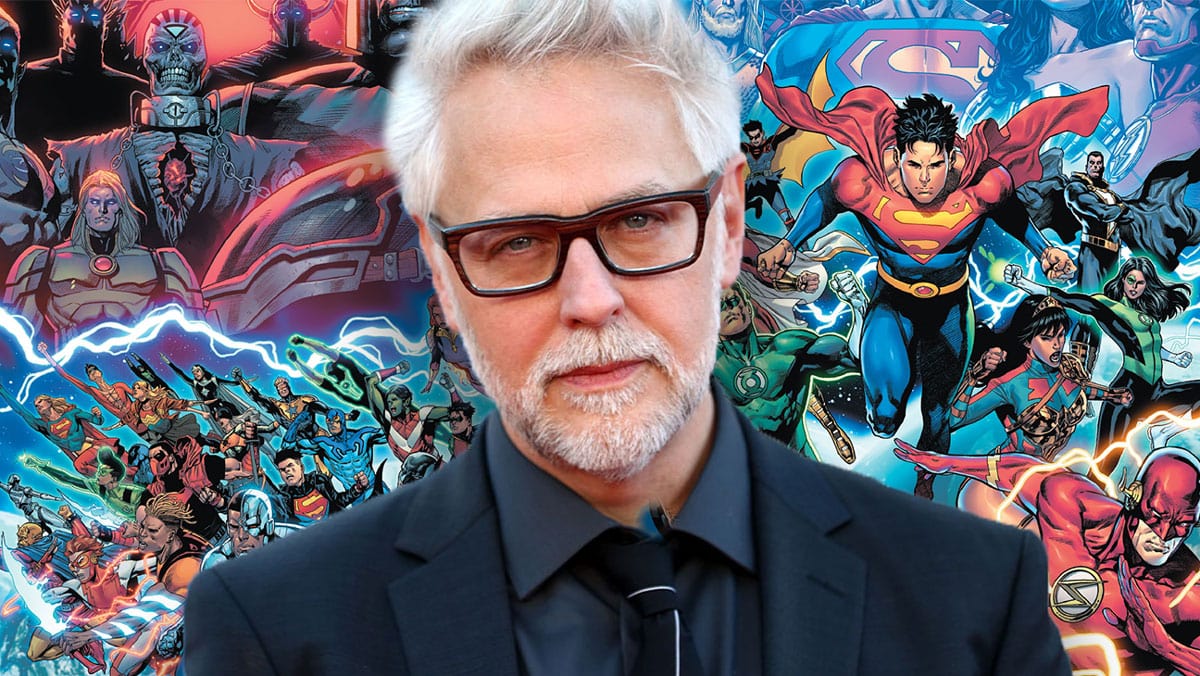
Thankfully, James Gunn, the head honcho of the DC films has already announced that Maridueña and his character will be part of the new DC Universe (DCU) films that will replace the troubled DC Extended Universe (DCEU) films. Blue Beetle was made while the DCEU was still in existence but it barely acknowledges that it is part of any film universe aside from a couple of throwaway lines to a handful of DC superheroes. This was a wise move since it is not clear which universe Blue Beetle takes place in. It could be part of another universe altogether like The Batman is for all we know. But even if the film does not make a lot of money, the characters in this film deserve to return and be part of the DCU. While Gunn keeps claiming that the upcoming Superman: Legacy will be the official start of the DCU, given how winning and charming Blue Beetle is, it should be given that honor instead.
José Soto


 Starloggers