A Look Back At Star Trek: Voyager

It has been 30 years since the first episode of Star Trek: Voyager debuted, yet it is still fondly remembered today, especially when it is compared to many modern Star Trek TV shows. Let’s take a look back at Star Trek: Voyager as its 30th anniversary is celebrated.

Flagship Show
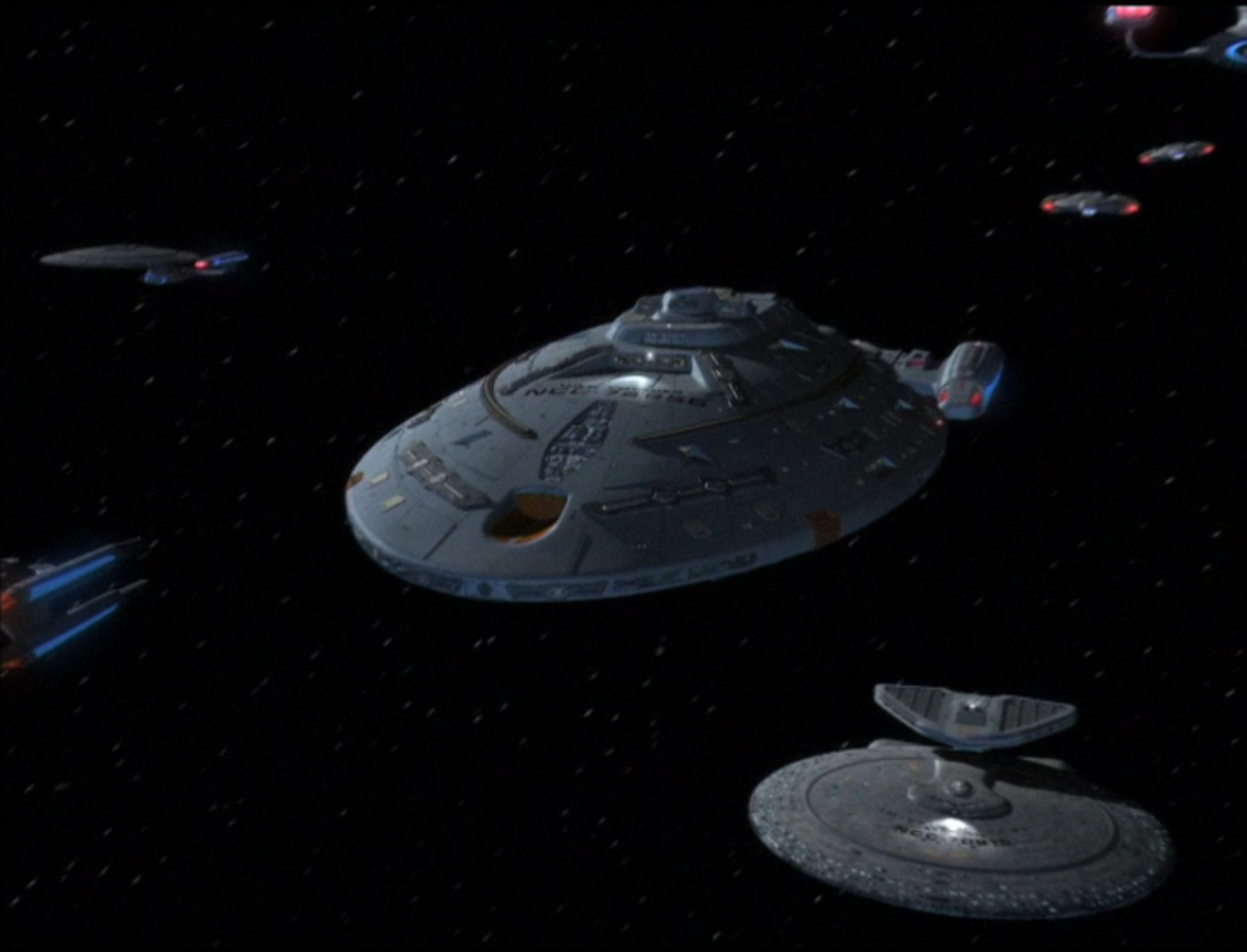
Star Trek: Voyager was the flagship TV show of the fledgling United Paramount Network (UPN) that launched on January 16, 1995, with the airing of “Caretaker” the pilot episode of Star Trek: Voyager. When the TV show premiered it was largely anticipated though many fans had reasonable reservations about yet another Star Trek TV show. After a decades-long drought, fans were inundated with TV shows starting with Star Trek: The Next Generation (TNG), which was followed by Star Trek: Deep Space Nine (DS9), and then Star Trek: Voyager. It was supposed to address complaints Paramount Pictures executives had about DS9 for straying too far from standard Star Trek.

Showrunner Rick Berman, who also ran TNG and DS9, was reportedly hesitant to produce another Star Trek TV show that would run concurrently with DS9. However, the Paramount Pictures executives were adamant about creating another Star Trek TV show that more closely followed the standard starship-visiting-planets formula to help launch UPN. Given this task, Berman and his associates sought to differentiate Star Trek: Voyager from other Star Trek TVshows.

A Lost Crew in Space
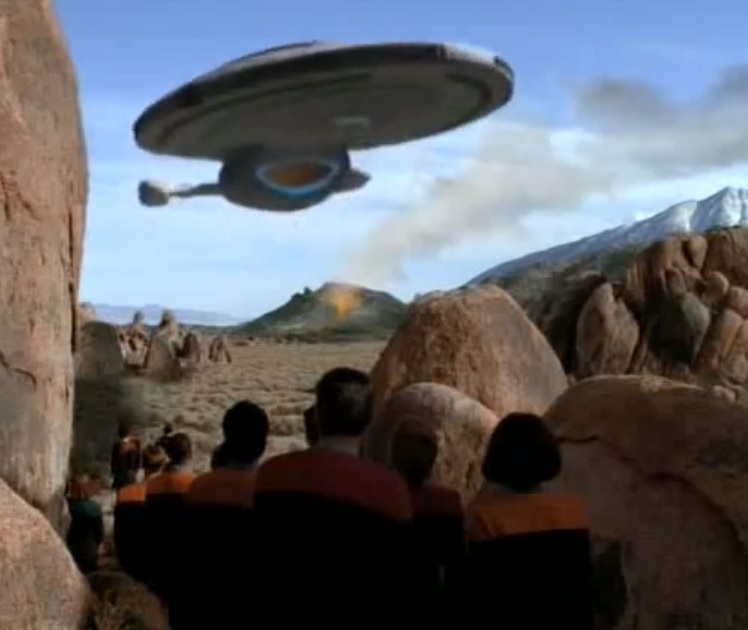
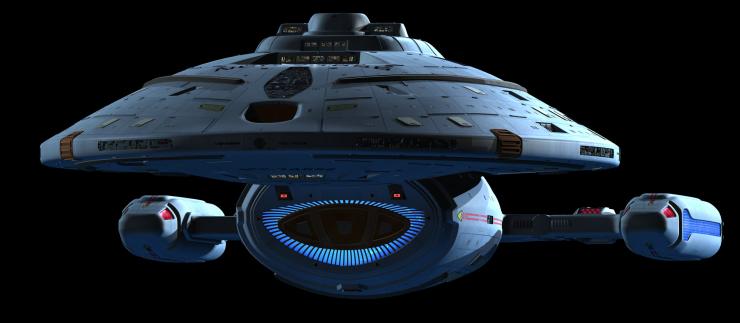
The premise was fairly simple, a starship called Voyager from the United Federation of Planets and Earth is flung to the far corner of the galaxy (the Delta Quadrant) with a crew made up of Starfleet officers and renegade Maquis freedom fighters (more on them later). With limited resources and on their own, the Voyager crew has to find a way back home while exploring on the side and encountering strange new worlds, yada yada.  

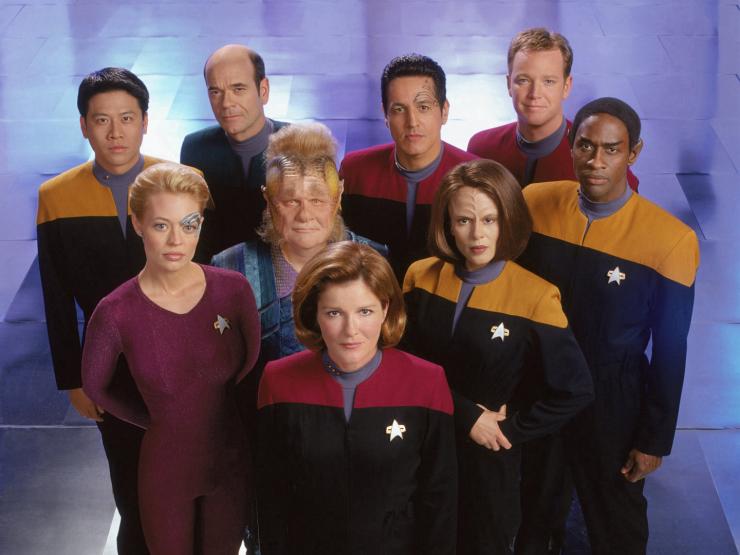
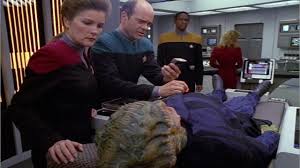
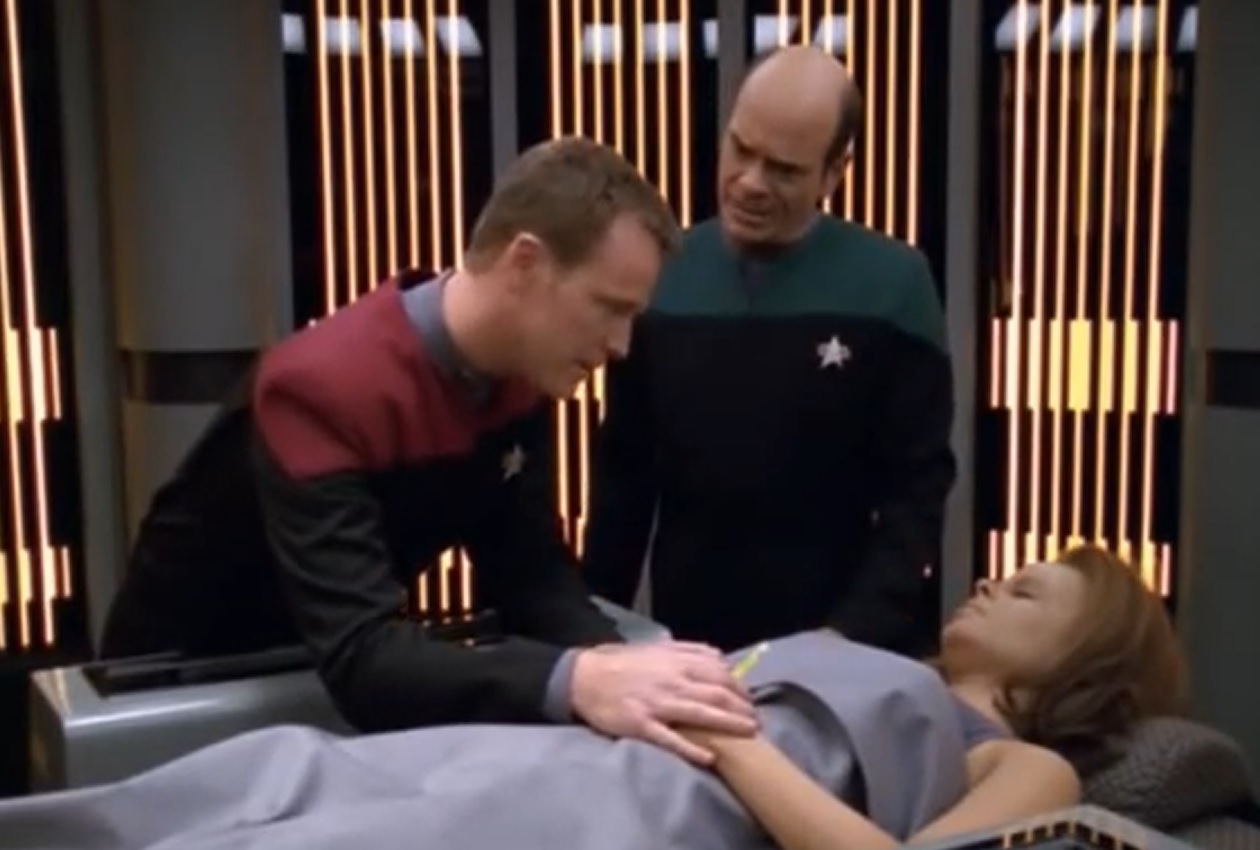
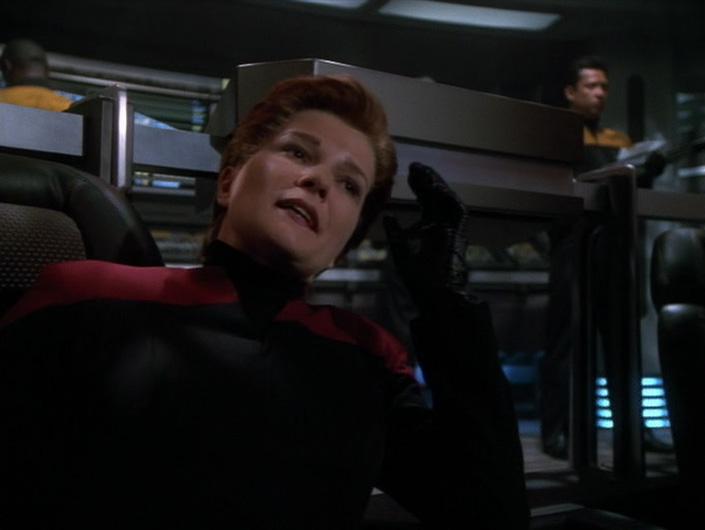
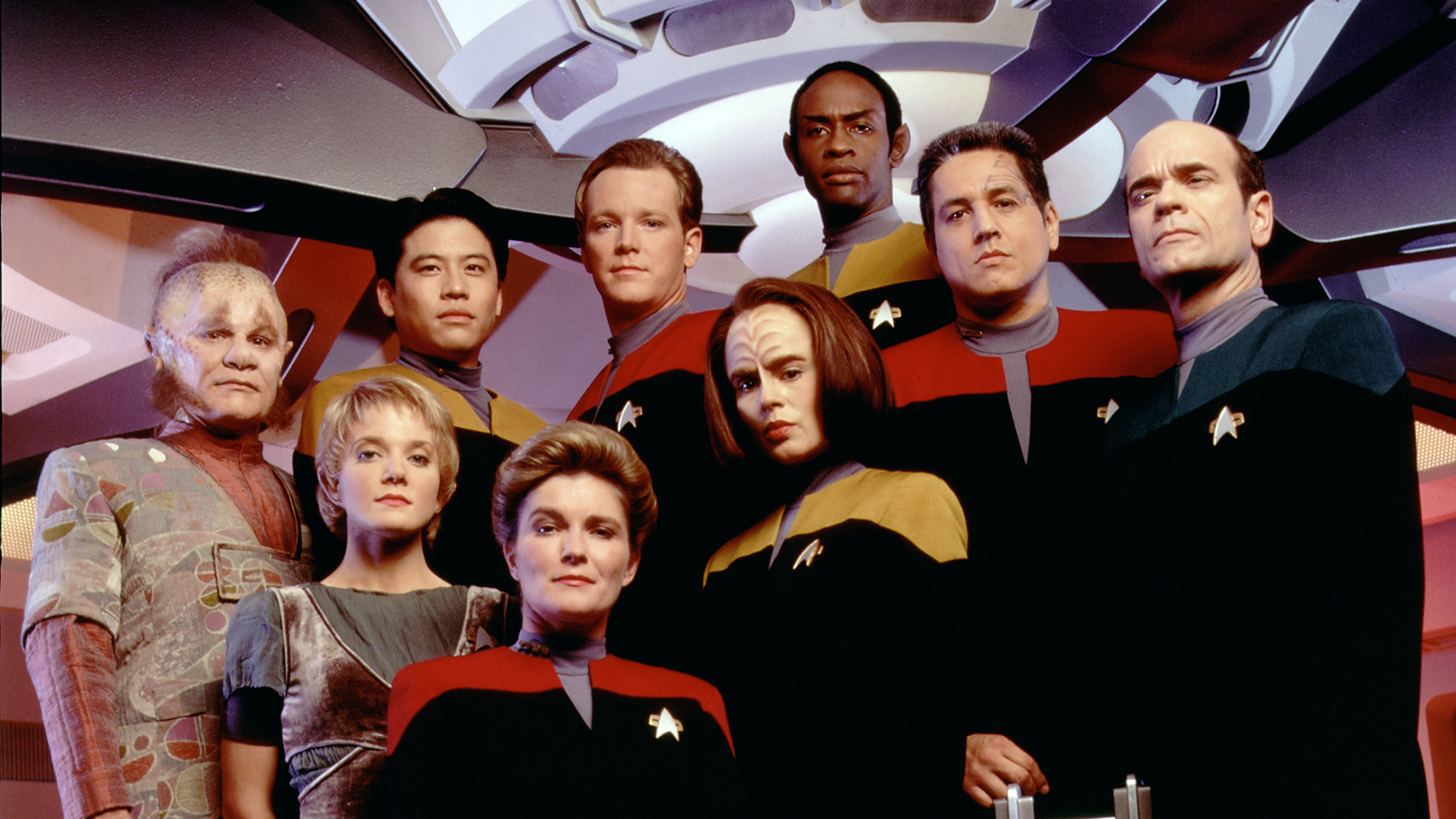
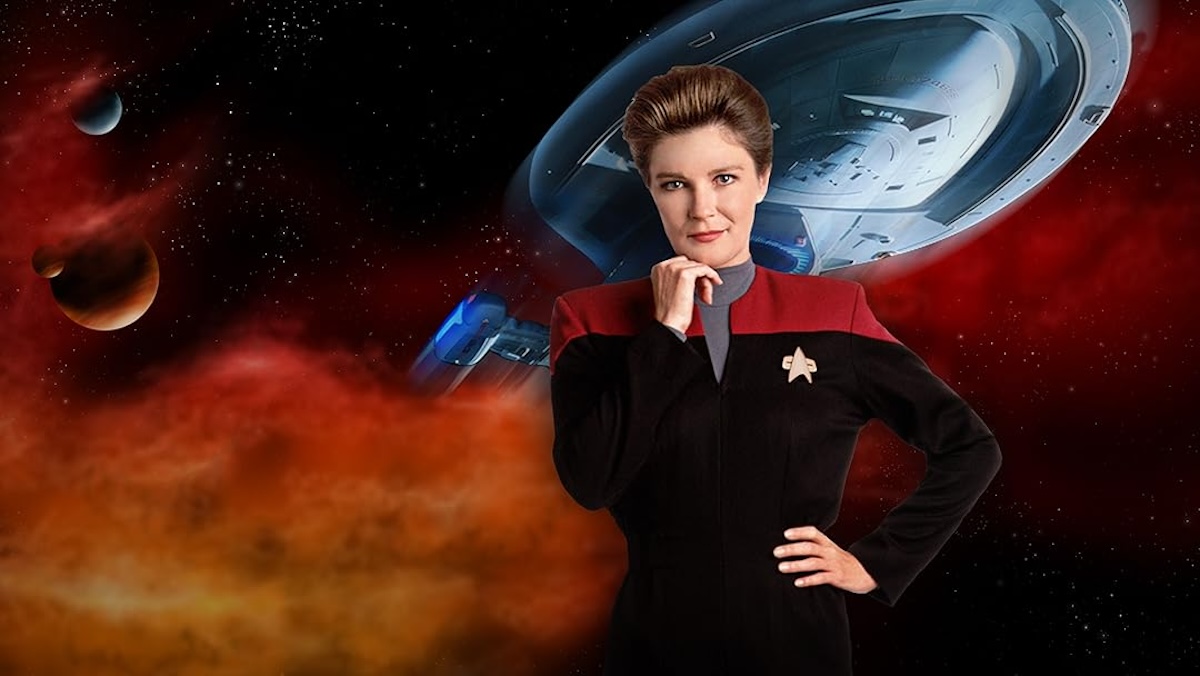
Kate Mulgrew starred as Captain Kathyrn Janeway, who commanded the Voyager and was dedicated to upholding Starfleet’s ideals while protecting her crew. At the time of her casting, there was a lot of hoopla and celebration because the main character of a Star Trek TV show was a woman. Other characters included the ship’s first officer, Chakotay (Robert Beltran), the leader of the Maquis and a former Starfleet officer, Tuvok (Tim Russ), the ship’s stoic Vulcan security officer, Tom Paris (Robert Duncan McNeill), a disgraced former Starfleet officer who gets his chance at redemption by serving as Voyager’s helmsman, B’Elanna Torres (Roxann Dawson), a half-Klingon Maquis member who became Voyager’s chief engineer, Harry Kim (Garrett Wang), a young Starfleet ensign on his first assignment, and the Doctor (Robert Picardo), a holographic medical program that performed the duties of the ship’s chief medical officer.
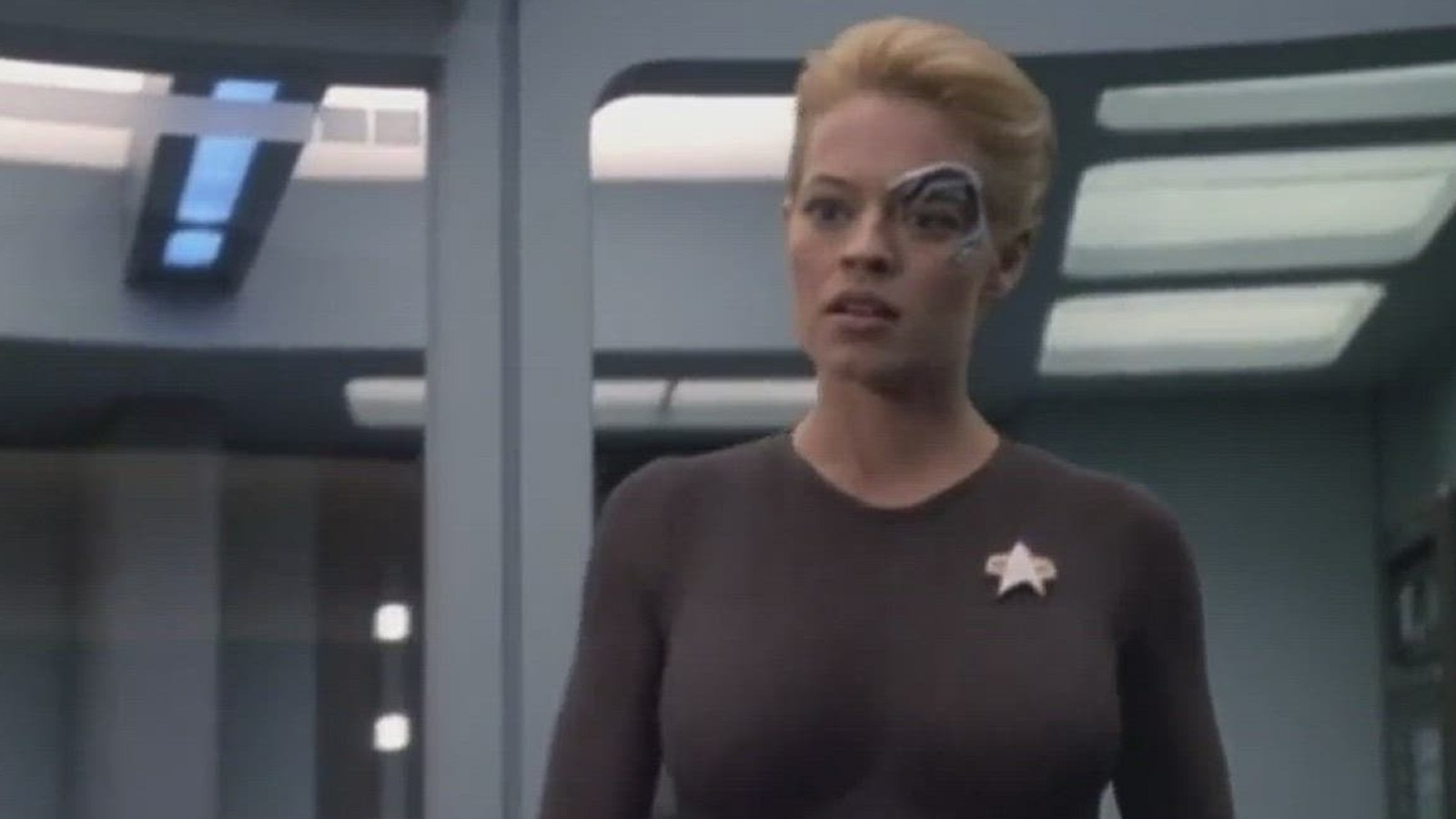
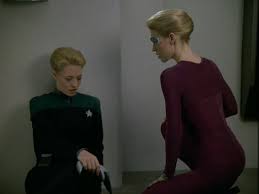
At the end of “Caretaker”, Voyager picked up two alien shipmates who are native to the Delta Quadrant and bring needed knowledge about the local space. They are Neelix (Ethan Phillips), a Talaxian drifter who ends being the ship’s cook and ambassador of sorts, and his girlfriend Kes (Jennifer Lien), an Ocampan who operates as the Doctor’s medical assistant and helps the program develop a personality. As the series progressed, it added Jeri Ryan to the cast as the former cybernetic Borg drone called Seven of Nine while Lien departed the series. Seven of Nine became the show’s breakout character thanks in part to the performance of Ryan as she served as the show’s version of Spock. In other words, a stoic outsider who questioned humanity while discovering her own.

Essentially, the TV show combined aspects of the original Star Trek and Lost in Space, and it worked for the most part. Yet, there was glaring issues with the TV show which turned out to be a harbinger for the creative drought the Star Trek franchise was beginning to suffer from at that time.

Continue reading
In Celebration of Star Trek: Prodigy

During the recent official celebrations for the 57th anniversary of Star Trek, its many spinoffs, and the 50th anniversary celebration of the original Star Trek animated TV show, it was noticed by many how the powers-that-be conveniently failed to mention Star Trek: Prodigy. It was so glaring because in the Paramount + Star Trek Day special and related promo material, even though all the Star Trek TV shows were noted, the animated TV show, Star Trek: Prodigy, was absent as if it never existed.

This is peculiar because until a few months ago, Star Trek: Prodigy was streaming on Paramount + until it was yanked out of the schedule and cancelled. This was part of a wider cost-cutting move by Paramount Pictures with its streaming platform that saw the cancellation of many projects. The sudden cancellation of Star Trek: Prodigy was unusual because a second season was already under production and the TV show was removed from the platform mere days after the cancellation announcement.

Honestly, this move by Paramount was disrespectful to the Star Trek franchise and its fans that were only starting to discover Star Trek: Prodigy. This action only reminds fans of how the studio is disdainful of its franchise.

Star Trek: Prodigy was met with a skeptical eye from many fans when it was first announced. Many automatically dismissed it as a kid’s TV show and what did not help was the prominent Nickelodeon logo plastered on top of the TV show’s logo and the announcements in promo materials that it was aimed at children.

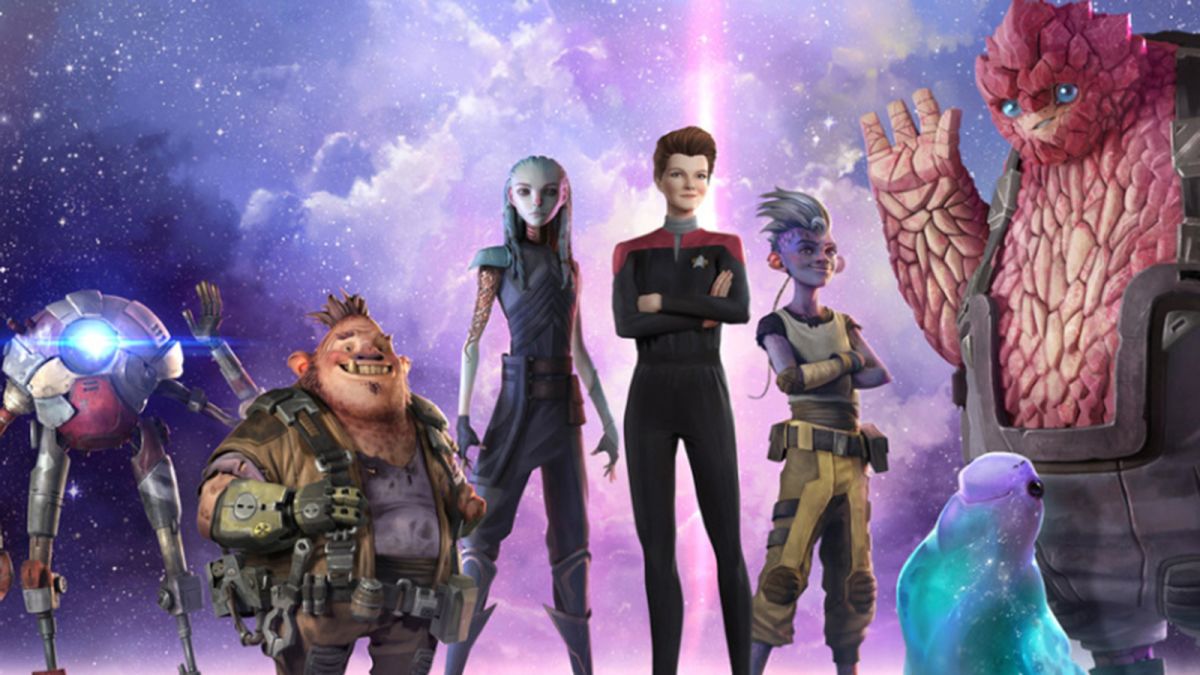
While this reaction was understandable many missed out on how unexpectedly solid Star Trek: Prodigy turned out. Yes, it was not as complex as some other Star Trek shows but its stories were imaginative and embraced the Star Trek lore. It actually felt like it was part of Star Trek thanks to its stories, themes and characters. It also boasted beautiful 3D animation that showcased truly unique aliens and landscapes, while being grounded in the Star Trek Universe.

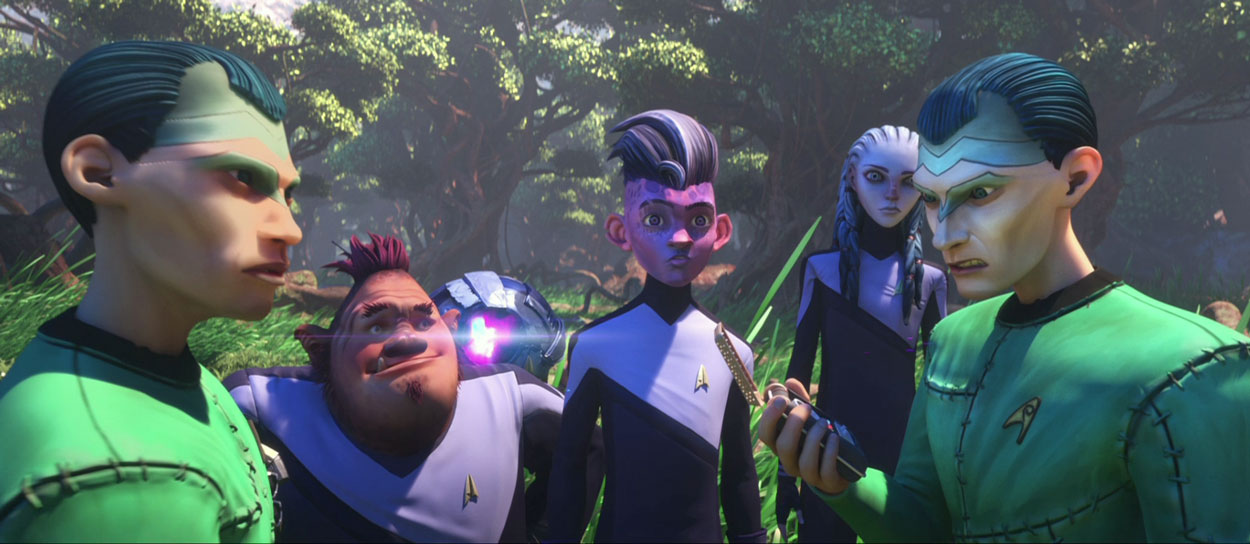
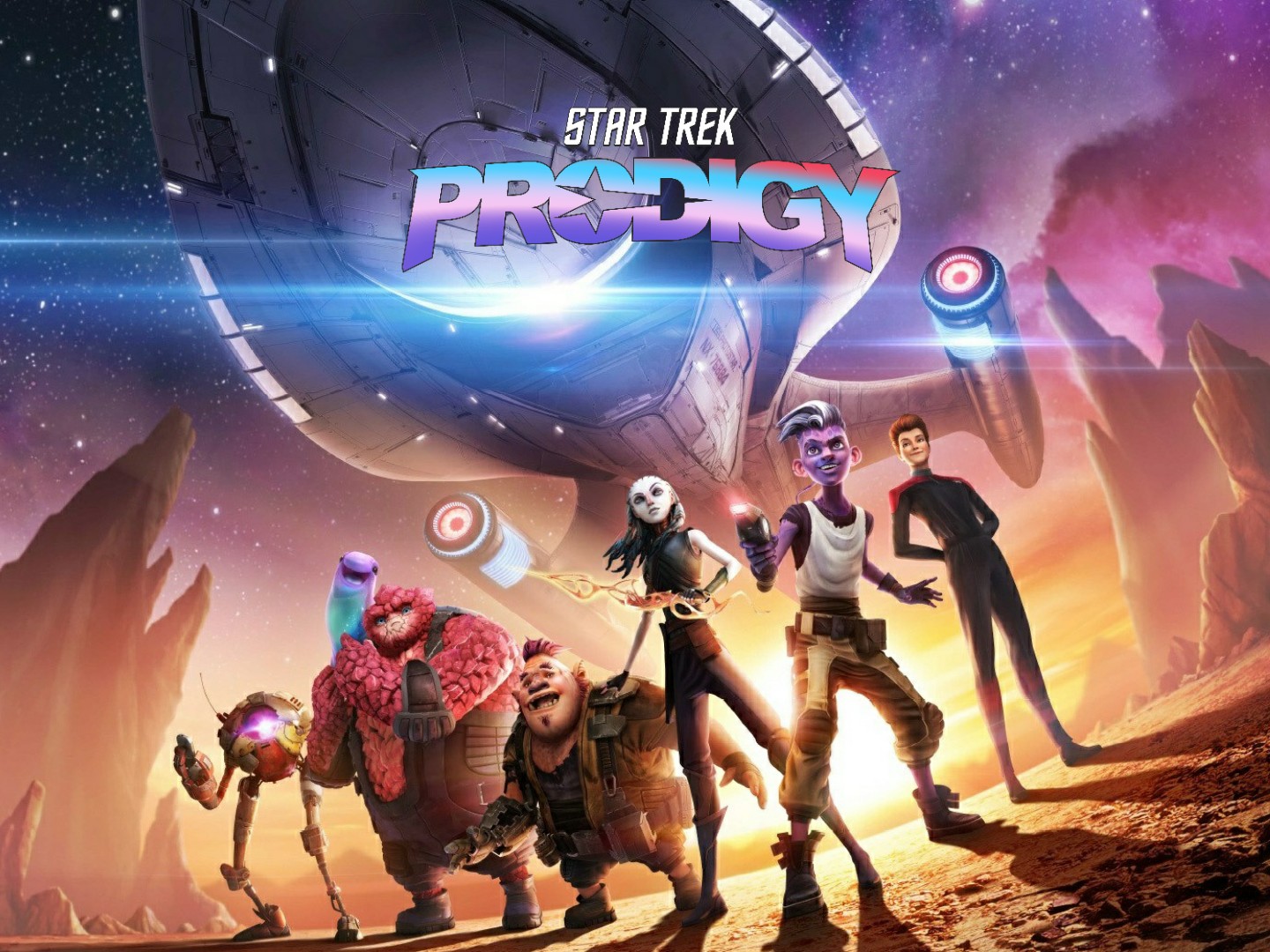
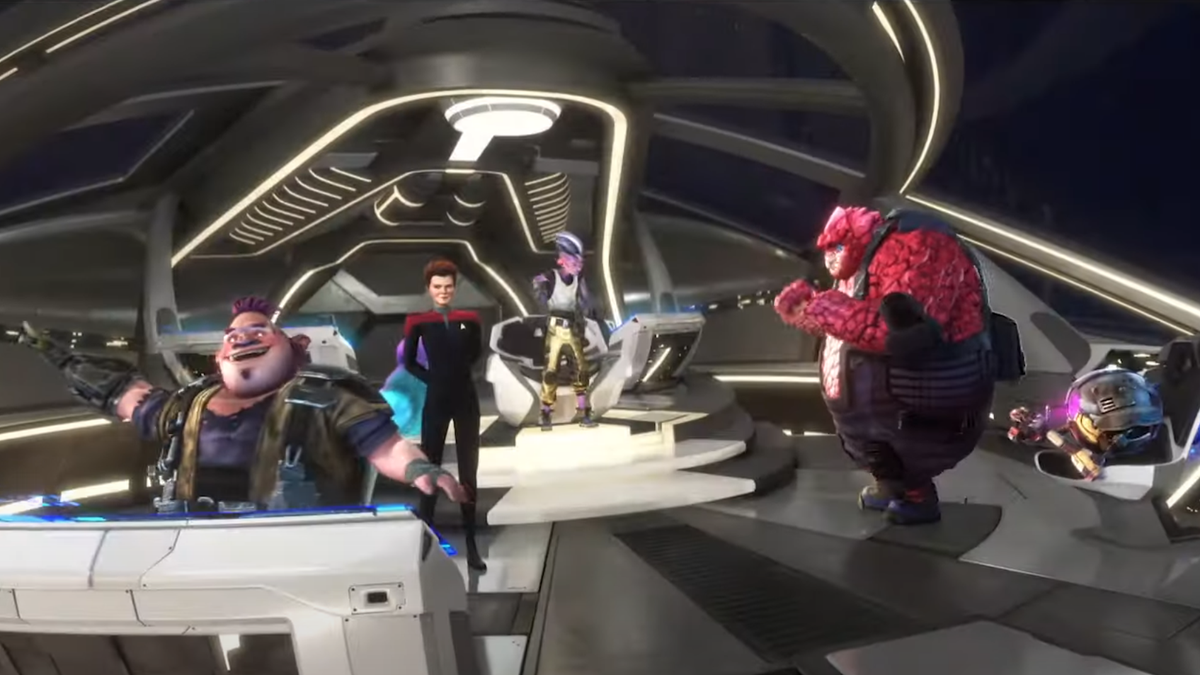
Star Trek: Prodigy takes place in the distant Delta Quadrant at a prison mining colony where a young alien prisoner named Dal R’El (Brett Gray) discovers in a mine an abandoned Starfleet ship called the Protostar. He activates the ship and escapes the colony with his companions who include Gwyndala (Ella Purnell), the daughter of the show’s antagonist, Jankom Pog (Jason Mantzoukas), a young Tellarite mechanic, Zero (Angus Imrie), a Medusan in a floating containment suit, Rok-Tahk (Rylee Alazraqui), a huge rock-like alien who is actually a brilliant young girl, and a gelatinous alien called Murf (Dee Bradley Baker). On the Protostar, they meet a training hologram that is patterned after Kathryn Janeway (Kate Mulgrew). She helps them run the ship and mentors Dal and the others on becoming Starfleet officers. The motley crew decides to embark on a voyage to return the Protostar to the Alpha Quadrant and the United Federation of Planets. Along the way they carry on with the Starfleet mission of exploring new worlds and civilizations in the hope they can become Starfleet officers once they return the ship.

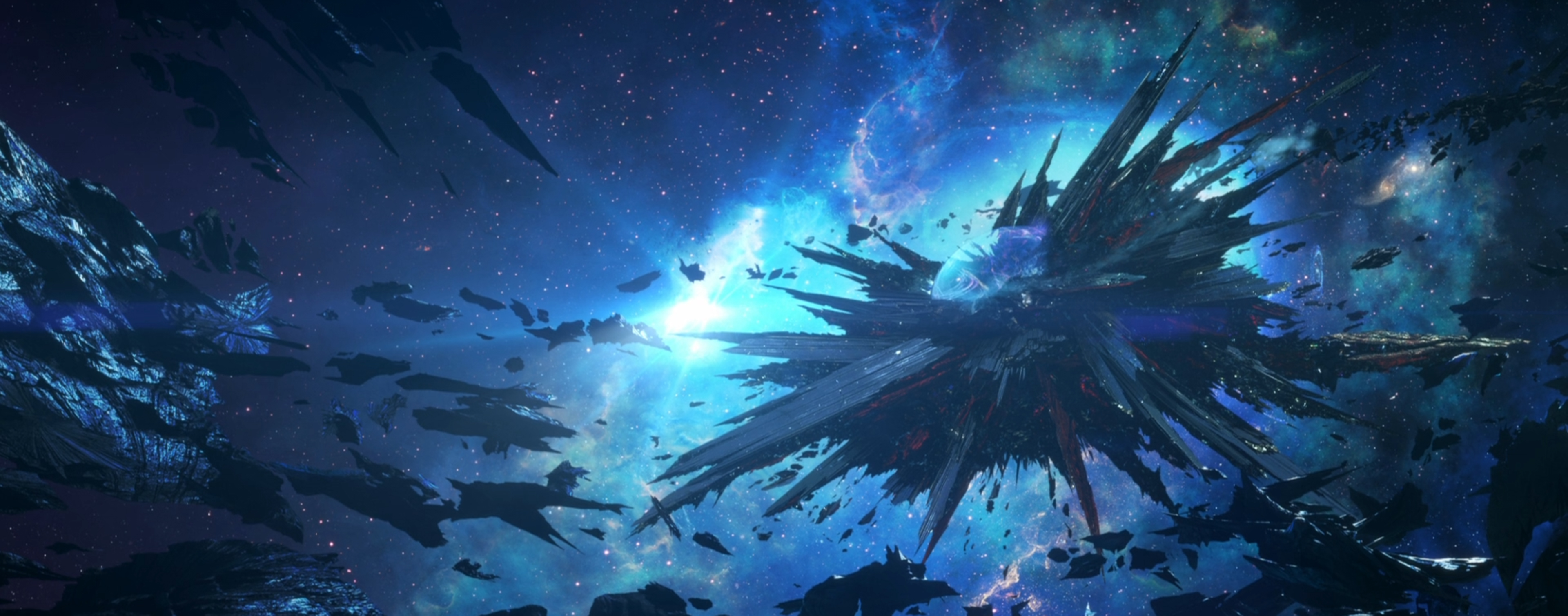
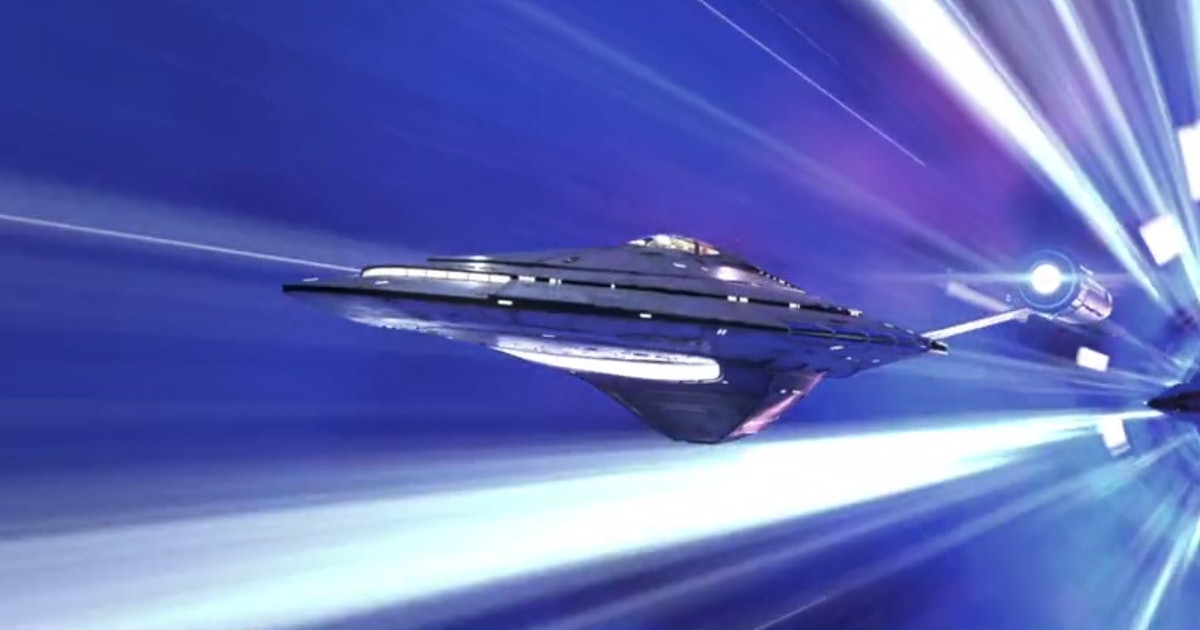
The Protostar is an experimental starship that actually changes its shape to travel at tremendous speeds in warp space. The starship and its new crew are hunted across the galaxy by Gwyndalla’s father, the Diviner (John Noble), who rules the prison colony and has a personal vendetta against the Federation and its Starfleet. He covets the Protostar to use it as a Trojan Horse to decimate the Federation.

Also pursuing the Protostar is the real Janeway, who is now a Starfleet admiral commanding another Starfleet ship. Years ago, the Protostar was lost in the Delta Quadrant along with its crew, which was commanded by her former first officer, Chakotay (Robert Beltran).

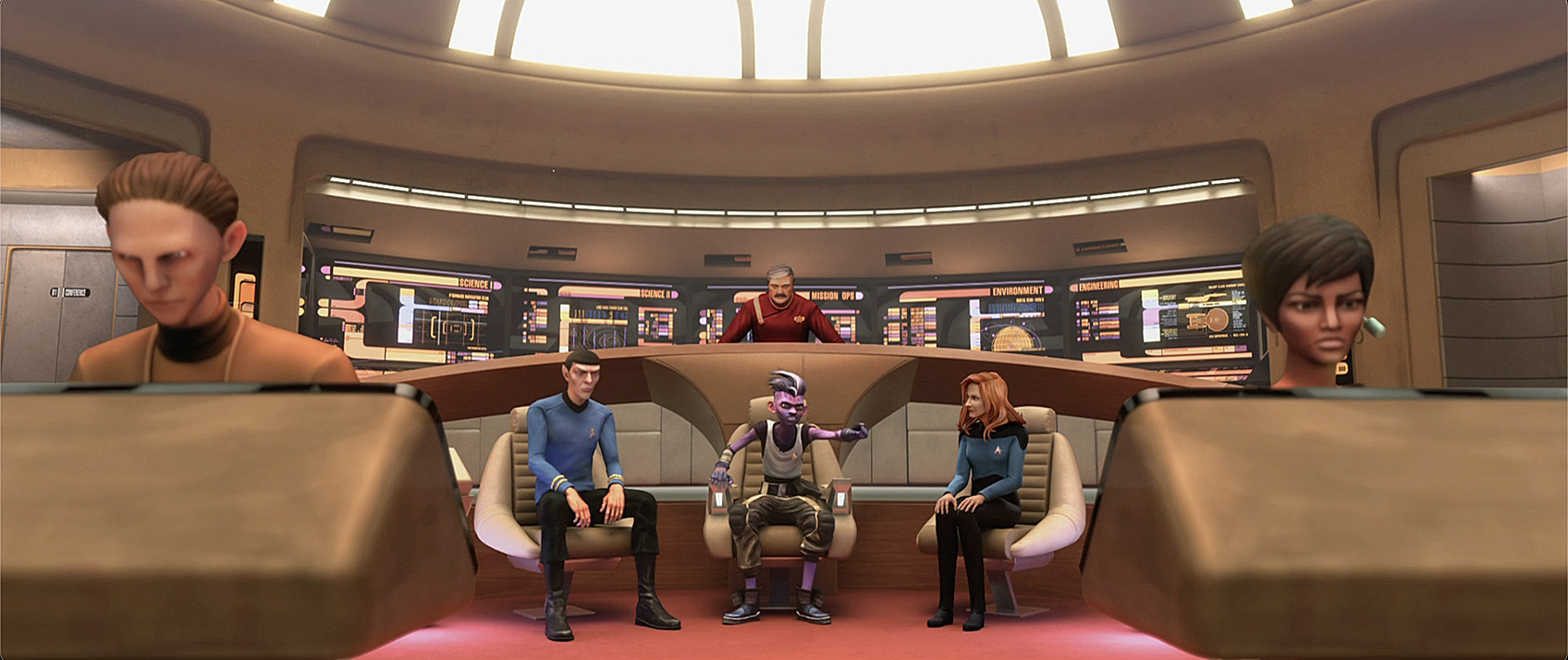
For a TV show supposedly oriented towards children Star Trek: Prodigy has a surprising amount of depth considering that many episodes featured character arcs that fully developed the characters. Throughout the first season we see Dal change from an impulsive and rebellious teenager into a responsible and mature person who had the qualities for a Starfleet officer. The best episode that illustrates his development was “Kobayashi”. Dal activates a holo-training program that is the famous Kobayashi Maru test given to Starfleet cadets where they hopelessly try to rescue a freighter from Klingons. Making up his crew in the simulation are popular Trek characters like Spock (Leonard Nimoy) from the original Star Trek and Scotty (James Doohan) from the original Star Trek films. As Dal tries to win the test’s no-win scenario and learns some hard lessons about command, he interacts with these characters, which was amazing since some of the actors voicing the roles are no longer alive. It was a nice way to give tribute to the franchise.

Most of the other characters saw significant development, as well. Gwyndala fought an inner battle within herself as she was at first hostile towards Dal and the others but gradually formed a deep bond with them. In the episode “Time Amok” Rok and the others are trapped in different temporal loops. Being that in Rok’s loop time runs at the slowest rate she uses this as a chance to learn to become a scientist and save the crew. Many of the others have tragic backgrounds and this journey on the Protostar serves as a means to give them some meaning in their lives.

The best way to think of Star Trek: Prodigy is to compare it to Star Wars: The Clone Wars or Star Wars: Rebels. On the surface both TV shows were apparently made for children, but before long they evolved and became more complex and appealing to adults who otherwise might have been turned off by them. I’m pretty sure that if Star Trek: Prodigy was not cancelled and allowed to fully tell its story, which included the search for Chakotay, the show would have reached the same level of admiration that the animated Star Wars TV shows has received.

Cancelling Star Trek: Prodigy was one thing, but to remove it from Paramount + and having it unavailable to easily view elsewhere was a foolish decision. Even though it was not a massive hit it still would have found an audience. Right now the only way to see Star Trek: Prodigy is to buy it through Amazon Prime, Vudu or other video on demand services or to actually purchase it on physical media. It’s certainly worth buying and will help hold us over until season two is ready. As of this writing, post-production of season two of Star Trek: Prodigy is underway and the show’s producers are finding another place to air it. Given the way the actors and writers strikes have ground film and TV productions to a halt Paramount should reconsider its decision and bring back Star Trek: Prodigy to its streaming platform to at least let the fans see the final season.

José Soto

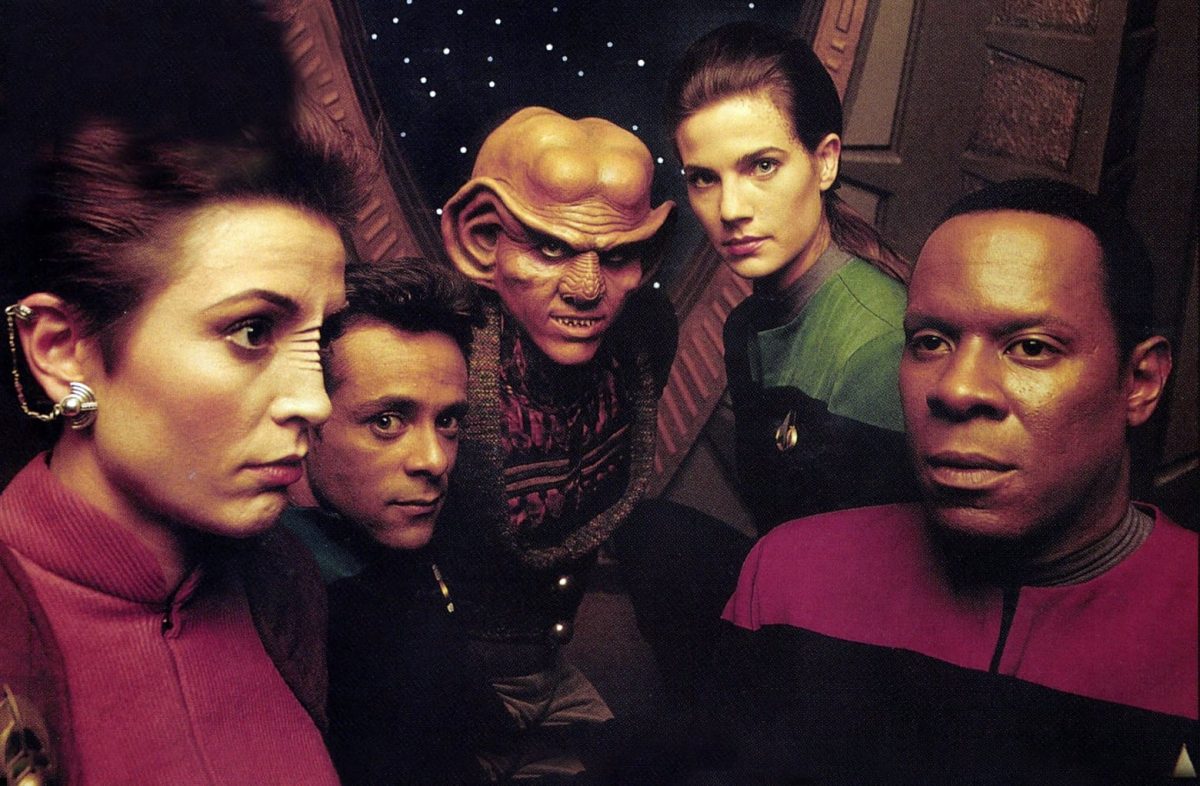
Where Are the Star Trek: Deep Space Nine Followups?

As we get ready for the second season of Star Trek: Picard to stream in a few short days and we have seen Kathryn Janeway (Kate Mulgrew), or rather her hologram, appear as a one of the main characters in Star Trek: Prodigy, these developments begs the following question. Where are the Star Trek: Deep Space Nine (DS9) followups?

Ever since DS9 aired its final episode back in 1999, we have yet to see any meaningful followup or sequel to the show. Its reputation has increased significantly over the years as fans have come to appreciate how innovative and unique DS9 was compared to other Star Trek shows.

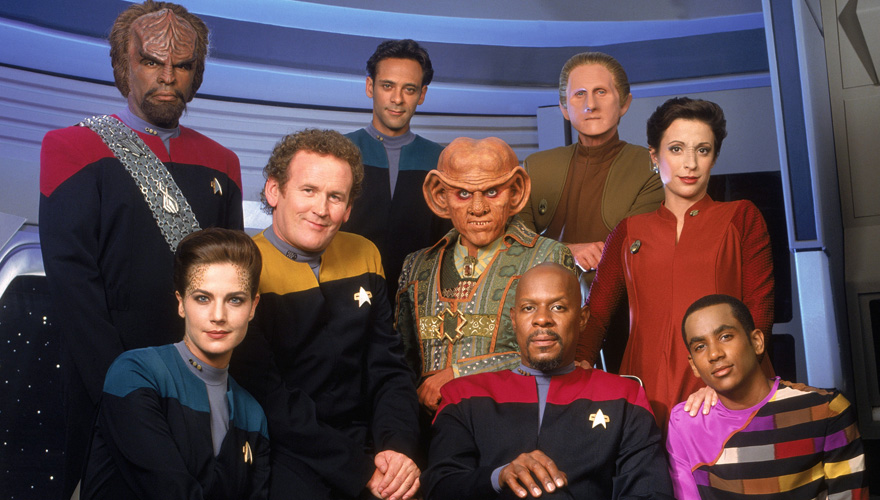
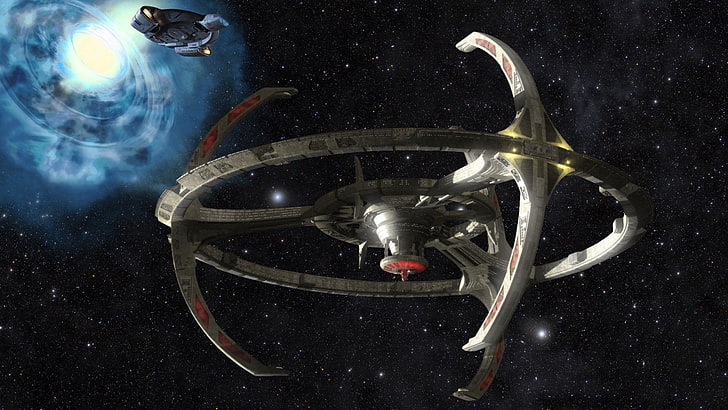
What set Star Trek: Deep Space Nine apart were several factors. Start with its premise, it took place on a space station, not a starship. This helped develop long-running arcs and storylines over several episodes and seasons that explored the socio-political landscape of Star Trek. What was interesting was that this predated the current model of TV shows with their season-long arcs. What also set DS9 apart from other Trek shows (at least, until recently) was that it had a darker, grittier tone with more mature and grounded stories and characters. No one was purely good or evil, not even its main character Benjamim Sisko (Avery Brooks), who suffered from PTSD over a Borg attack that killed his wife. In one infamous episode “In the Pale Moonlight” he manufactured evidence to entice the Romulans to enter the Federation’s war against the Dominion. The show was riddled with anti-heroes such as Quark (Armin Shimerman), the greedy Ferengi bartender, and Garak (Andrew J. Robinson), a former Cardassian spy with a nebulous past. Many of the characters like Major Kira (Nana Visitor) struggled to adjust to a new life. In her case, Kira was a former terrorist/freedom fighter who found herself as Sisko’s second in command and operating under Federation rules. Star Trek: Deep Space Nine explored controversial issues such as racism, religion, and the impact of war. In fact, DS9 was noted for running a long storyline where the Federation was at war with the Dominion and many of its related stories had clear anti-war messages.

Even though Star Trek: Deep Space Nine was a success, it was not as well regarded by fans and critics because it deviated too much from traditional Star Trek tropes. However, over the years, more and more people have come to appreciated DS9 for its unique merits and is now considered one of the best, if not the best, Star Trek TV shows.

But, ever since “What You Leave Behind”, the final episode of DS9, aired there has not been any meaningful followup or sequels to the show, aside from other media like books and comics. There have been some minor references to the show in other Star Trek TV shows and film over the years. The most notable one was an appearance of Odo (René Auberjonois) as a holographic character in the Star Trek: Prodigy holodeck-centric episode “Kobayashi”. Meanwhile, Star Trek: The Next Generation continues in Star Trek: Picard, characters from Star Trek: Voyager such as Janeway and Seven of Nine (Jeri Ryan) are currently appearing in Star Trek: Picard and Star Trek: Prodigy, respectively.

So, why hasn’t DS9 been revisited? A full reunion is not possible anymore since Auberjonois and a couple of other DS9 actors have passed away, and Brooks is no longer actively acting. Still, it would be great if several DS9 characters could reappear in current Star Trek TV shows or have some episodes or films take place in the DS9 station or nearby locales. There are many lingering questions about Star Trek: Deep Space Nine that fans want answered. Will the Dominion return to threaten Earth and the Federation? What happened to the planet Bajor? Did it ever join the Federation? What happened to the Cardassians after they were defeated in the war? Will Sisko return after joining the Prophets in their non-linear plane of existence? Being that he now exists outside of time and space, he can in theory return to our existence at any time, including the current Star Trek shows.

OK, showrunners. We the fans of Star Trek: Deep Space Nine have been very patient. We are waiting to revisit this innovative and novel corner of the Star Trek universe. Let’s make this happen.

Top 20 Star Trek: Voyager Episodes

voyager cast

This month marks the 20th anniversary of Star Trek: Voyager, the saga of a lost Federation starship in a distant corner of the galaxy trying to make its way home. Ever since the third Star Trek spinoff made its debut on the UPN channel it’s been considered as an inferior Star Trek show. That is a somewhat unfair claim, although many episodes were formulaic there were many that were worthy of the Star Trek name. These are twenty of the best episodes of Star Trek: Voyager.

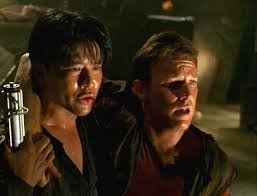
20. “The Chute” Voyager crewmembers Tom chuteParis (Robert Duncan McNeill) and Harry Kim (Garrett Wang) undergo a harrowing ordeal while being held prisoner in brutal space prison.

19. “Lineage” B’Elanna Torres (Roxann Dawson) grapples with accepting her half Klingon heritage during her pregnancy since she doesn’t want her unborn daughter to face the same persecution she underwent as a child.

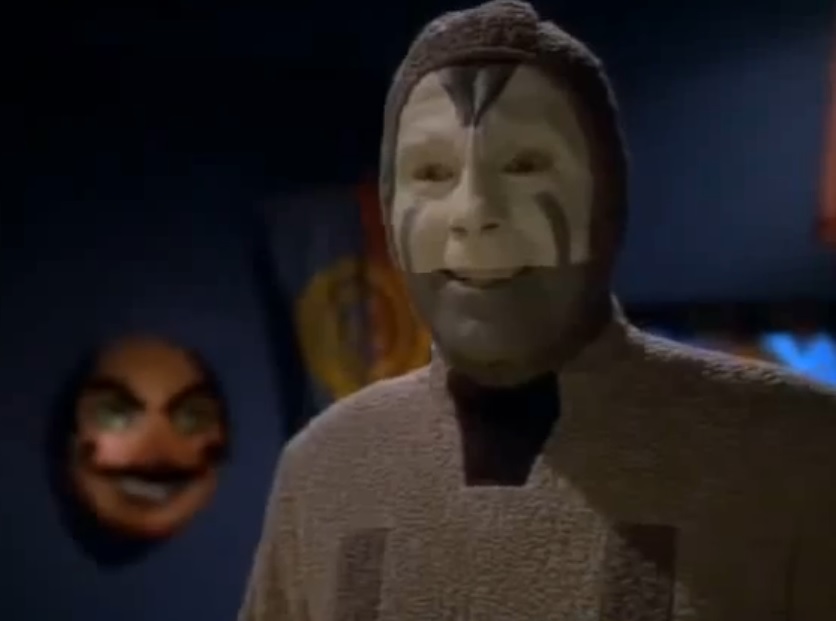
18. “The Thaw” Harry and B’Elanna are mentally trapped in a virtual reality by a malicious clown computer program (Michael McKean), who tortures them to gain release from its cyber trap.

thaw

17. “Maneuvers” First Officer Chakotay (Robert Beltran) tries to track down his former lover Seska (Martha Hackett) and her Kazon colleagues after they raid the Voyager and steal transporter technology.

16. “Scorpion, Parts 1 and 2”An exciting two-parter introduced the popular Seven of Nine (Jeri Ryan) as the Voyager is forced into an uneasy alliance with the evil cybernetic Borg against an even deadlier threat–Species 8472.

relativity15. “Relativity” Seven of Nine is recruited by a Federation starship crew from the distant future. Her mission: travel through different time periods to prevent the destruction of the Voyager.

14. “Latent Image” The ship’s Emergency Medical Hologram (EMH) a.k.a. The Doctor (Robert Picardo) discovers that for some reason certain parts of his memories are being erased. His investigations lead to uncovering a tragic moment in his past and his reaction afterwards was very engrossing to watch.

13. “Basics, Parts I and 2” The crew of the Federation starship Voyager have a final conflict with the barbaric Kazons, who coveted the advanced Starfleet ship and its technology. This two-part episode had many thrilling moments and cliffhangers as most of the Voyager crew were defeated and stranded on a primitive world.

basics 2

12. “Equinox, Parts 1 and 2” The Voyager comes to the aid of another Federation starship also stranded in the distant Delta Quadrant. What is supposed to be a joyous occasion at encountering kindred spirits turns into conflict when the Voyager crew learns of the other crew’s unethical actions against an alien race.

11. “Dark Frontier” Seven of Nine’s DFrontbackground is explored as Captain Kathryn Janeway (Kate Mulgrew) leads efforts to steal Borg technology that will hasten their journey home. During a pivotal raid, Seven is captured by the Borg, who plan a biotech attack on humanity. Meanwhile, Janeway mounts a rescue mission.

10. “Hope and Fear” The sudden appearance of an advanced, unmanned, supposed Federation starship could be the means to finish the Voyager crew’s years-long voyage home or a trap. Guest star Ray Wise excelled in his role as a tortured alien whose race was assimilated by the Borg.

9. “Blink of an Eye” The Voyager is trapped in orbit around a planet with a dense gravitational field. So what passes for hours on Voyager is actually centuries for the planet’s inhabitants, which means that the ship becomes part of that planet’s history as its people advance technologically and socially.

8. “Before and After” An elderly, dying Kes (Jennifer Lien) in the future begins to travel backwards in time to many events including her birth. Among the fascinating future moments explored included a foreshadowing of the Voyager crew’s encounter with the Krenim.

distant origin7. “Distant Origin” The premise that some dinosaurs on Earth actually evolved into a spacefaring race was intriguing enough. But this episode’s first contact scenario smartly focused on an allegory of Galileo’s plight as scientific progress and knowledge conflicted with societal and religious dogma.

6. “Deadlock” After going through a technobabble anomaly the Voyager and its crew are duplicated, but both ships are attached to each other. Events dictate that only one ship and crew can survive, but which one? The episode was a novel way of resetting the status quo after disastrous events without using time travel.

5. “Message in a Bottle” The Doctor is transmitted to an advanced Starfleet prototype ship in the Alpha Quadrant in order to make contact with the Federation. Once there, he must join forces with that ship’s EMH Mark 2 (Andy Dick) to fight off Romulans, who have captured the ship.

course oblivion1

4. “Course: Oblivion” In this tragic episode, things seem fine at first onboard Voyager. Tom and B’Elanna get married and the ship will reach Earth in a two years. However, it’s soon discovered that the ship is deteriorating, as well as the people onboard. After realizing that they and the ship are just copies of the actual Voyager and crew, it’s a race against time to seek help before it’s too late.

3. “Bride of Chaotica!” A wonderful and chaowhimsical tribute to old sci-fi serials in the tradition of Flash Gordon has the Voyager crew coming to the aid of photonic, extra-dimensional aliens, who are at war with the evil fictional characters from Tom’s holodeck program The Adventures of Captain Proton. Hilarity ensues as the crew assume the overdramatic roles of the program and endure old sci-fi clichés.

witness2. “Living Witness” In the far future on another planet, a copy of the Doctor is activated by a museum curator (Henry Woronicz), who is fascinated by the “warship” Voyager’s visit to his planet in the distant past. Appalled at the gross inaccuracies about the visit and the Voyager crew, who are shown to be basically space pirates, it’s up to the Doctor to clear his former comrades’ names for history’s sake.

1. “Year of Hell, Parts 1 and 2” Star Trek: Voyager had many epic two-part episodes and this one wasn’t only the best of those, but the best episode for the entire series. arronax2The Voyager passes through a region of space controlled by the despotic Krenim. Janeway and the crew soon find out that the Krenim uses time as a weapon by altering timelines. Leading these alterations is Arronax (Kurtwood Smith) a Captain Nemo type obsessed with time tinkering. Over the course of a year, the Voyager is badly damaged and falling apart, but Janeway must find a way to defeat Arronax. “Year of Hell” was riveting and presented a gritty view of a desperate Voyager crew on their own, plus Smith gave a great performance as the tortured Arronax.

voyager 2

Honorable Mentions: “Nemesis”, “Caretaker”,”The Gift”, “The Void”, “Author, Author”, “Pathfinder”, “Prophecy”, “Alliances”, “Think Tank”, “Endgame”

José Soto