The Emotional Journey Of Project Hail Mary

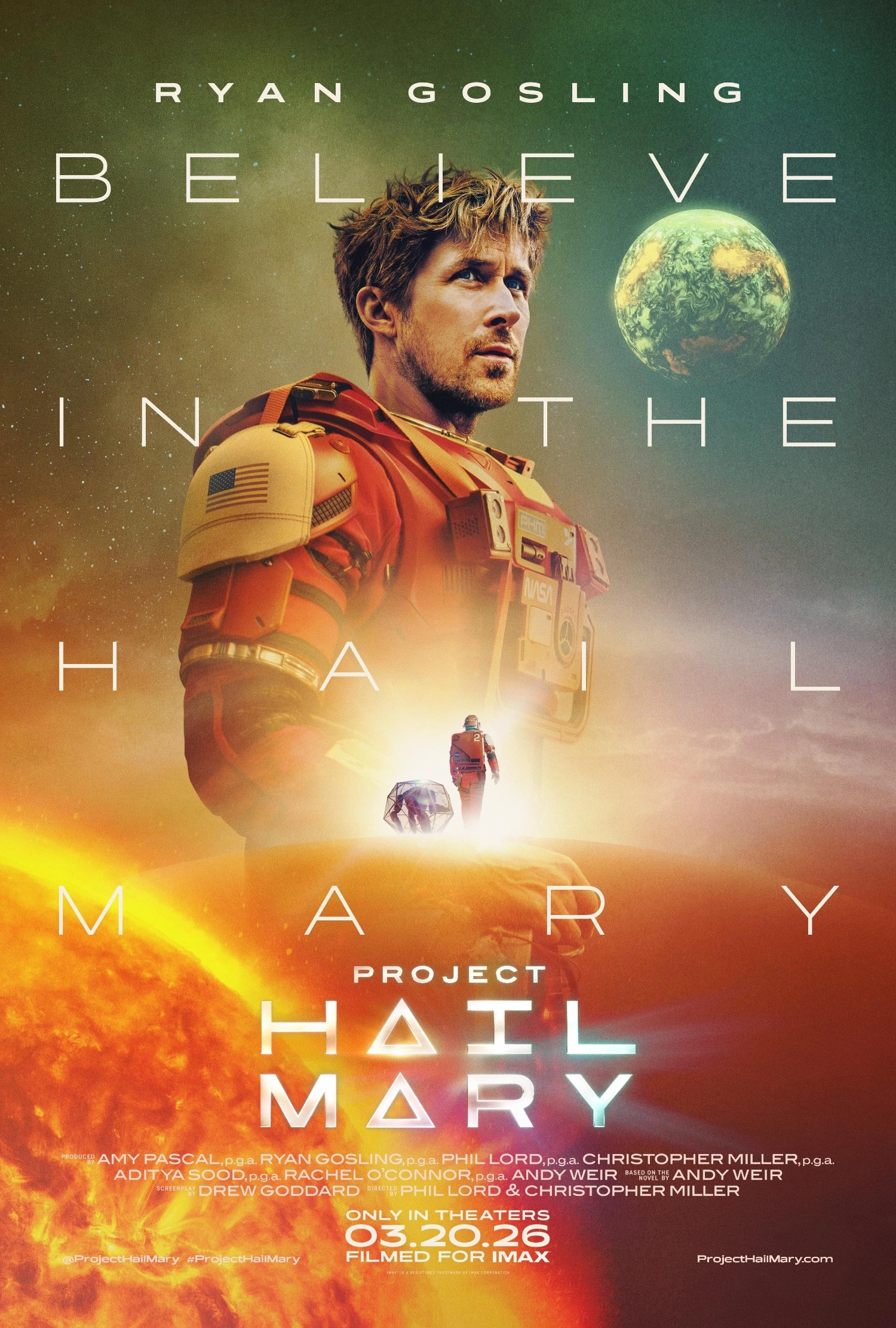
Project Hail Mary is the big-screen adaptation of Andy Weir’s book of the same name and stars Ryan Gosling as Dr. Ryland Grace, a science teacher and former molecular biologist recruited by an international space agency to journey to the star system of Tau Ceti to investigate a strange phenomena. What he finds at his destination or rather who he encounters forms the emotional core of this uplifting sci-fi film.
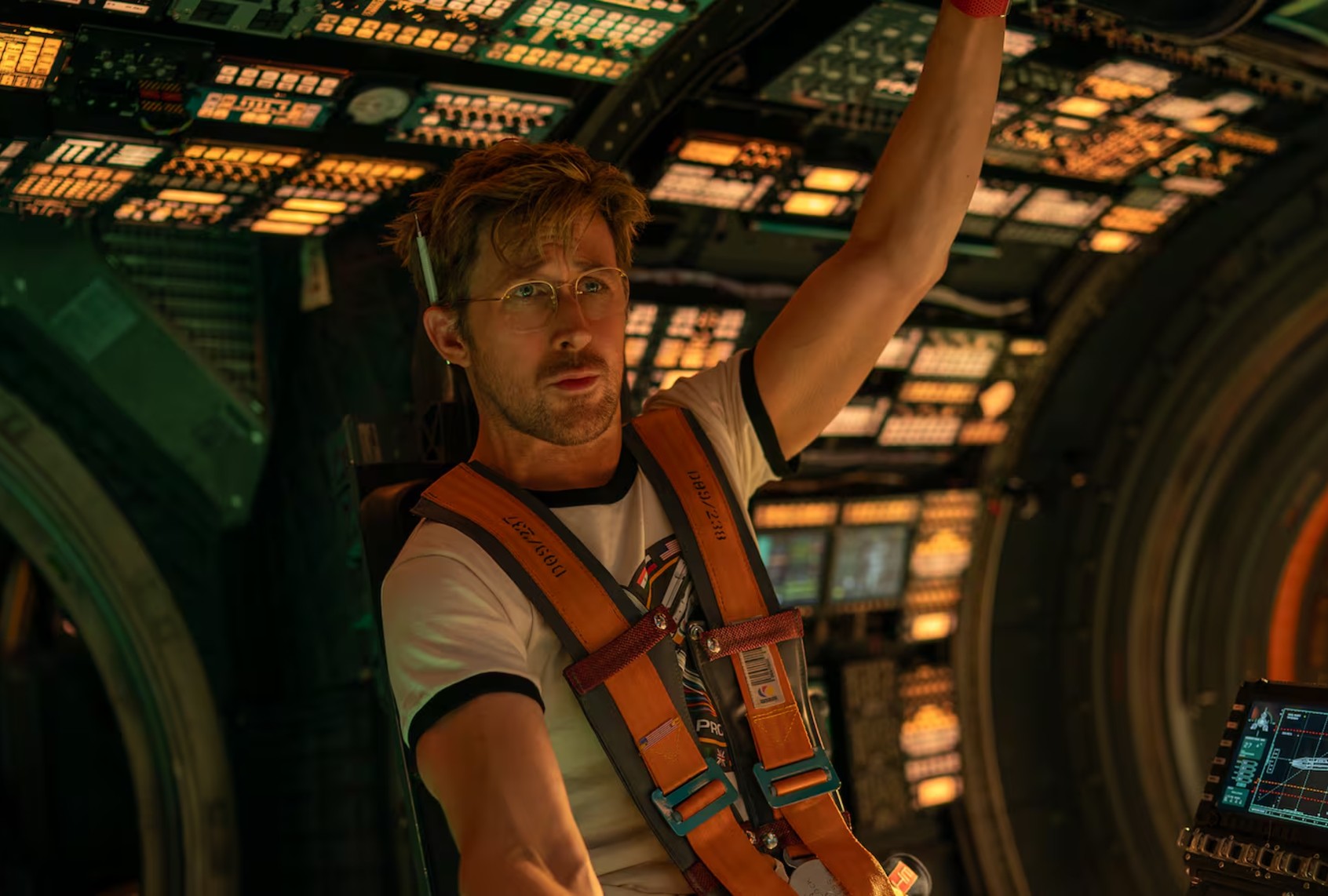
Grace’s story on Earth is told through flashbacks where we learn that the sun is slowly starting to dim because of these interstellar microorganisms called astrophage. They form a line to the planet Venus because the planet’s atmosphere of dense carbon dioxide allows them to breed, but they are slowly consuming the sun’s energy and in 30 years, the Earth will suffer a catastrophic global cooling that threatens life. Grace, who discovers that the astrophage are alive, learns that all the nearby stars are undergoing the same situation except for Tau Ceti and he is recruited to join the crew of the spaceship, Hail Mary, on a one-way voyage to investigate why the star is still intact.

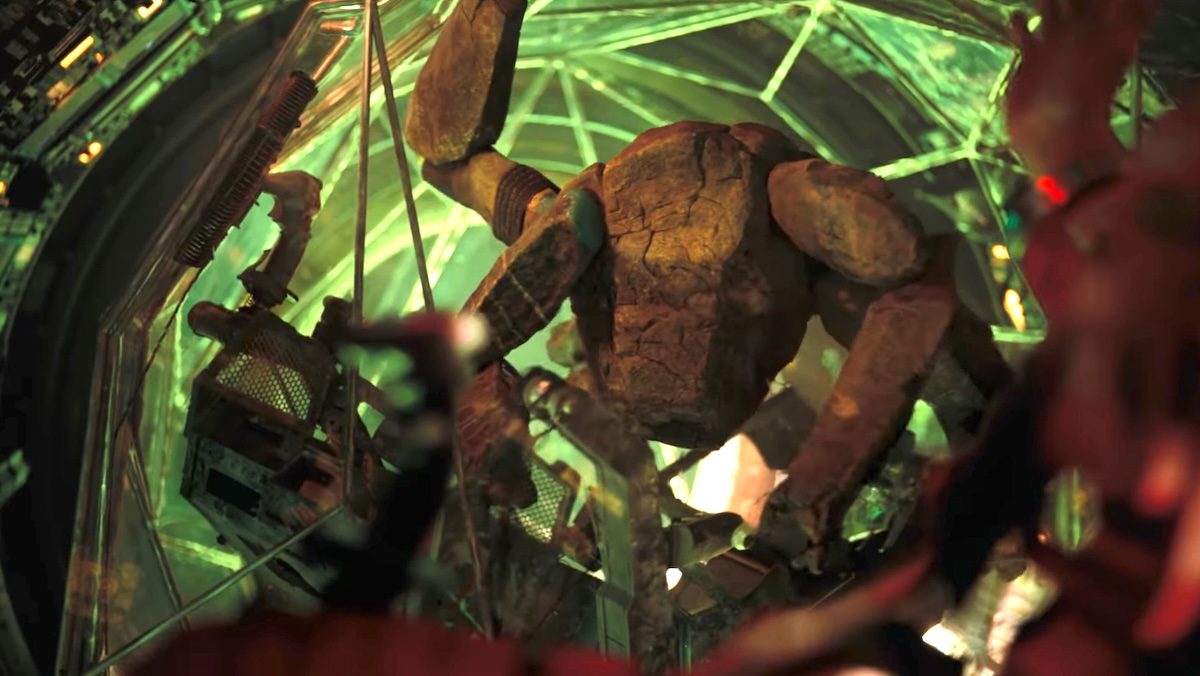
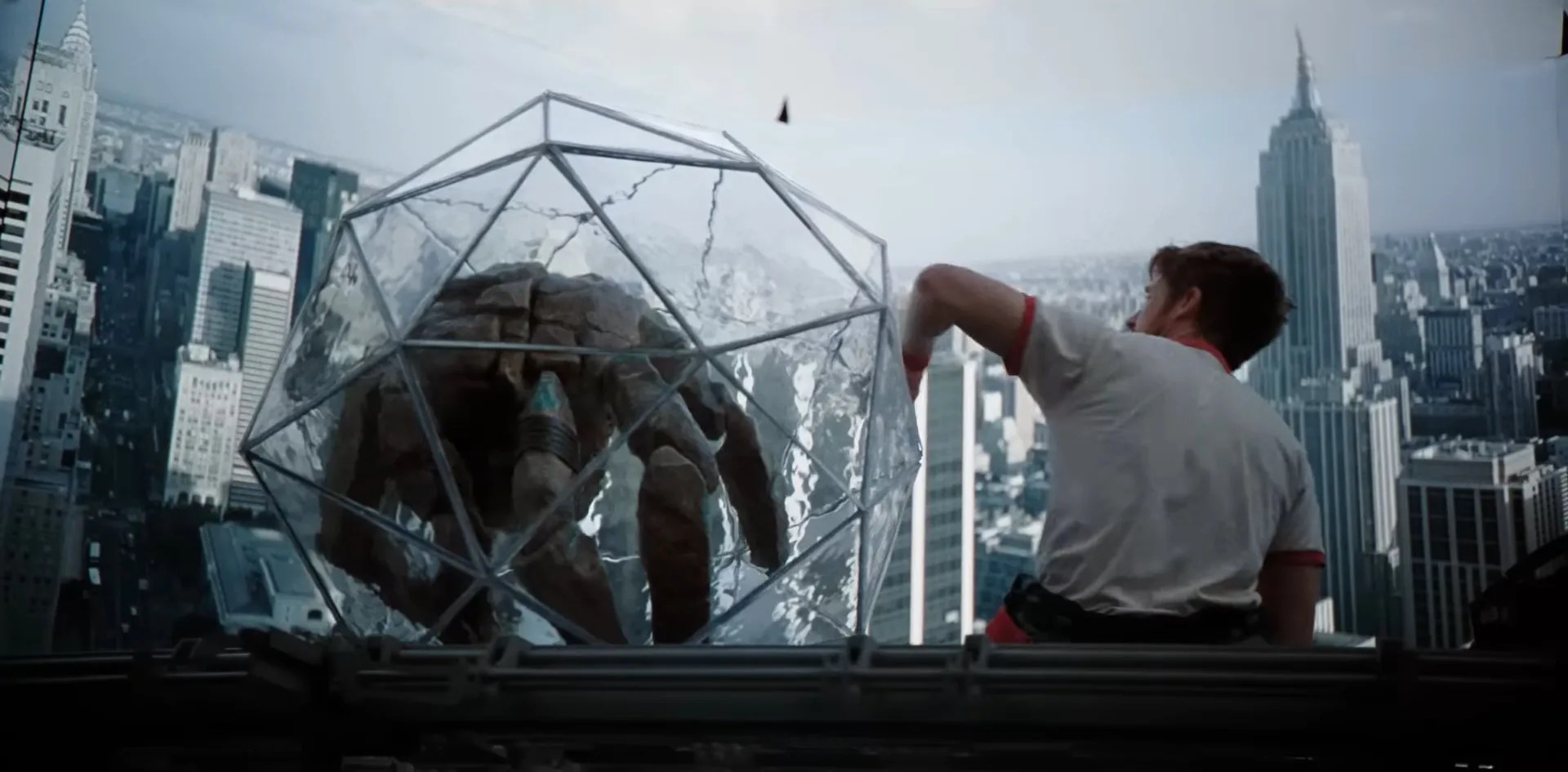
After he arrives and is awoken from cryosleep, Grace finds out his crewmates died during the voyage and that an alien spaceship is approaching the Hail Mary. The spacecraft is piloted by a non-humanoid, possibly silicate-based, being that Grace nicknames Rocky (voiced and animated by James Ortiz) because of his rock-like appearance. After some back and forth in learning to communicate with each other, Rocky informs Grace that he is also the sole survivor of a mission from his world 40 Eridani, which is also infested with the astrophage. Together, the two beings work to find out why Tau Ceti is not dimming, how they could save their worlds, and along the way, the two also form a close friendship.
Putting aside the stunning special effects and that Project Hail Mary is unafraid to dwell on actual science, the most engaging aspect of the film is the relationship between the two beings. It is inspiring to see these two go through herculean efforts to learn to communicate, learn about their cultures, and form an unlikely friendship. The two were lonely in their quests and had to find some kind of emotional connection to help drive their efforts to save their worlds.

Of course, what sells this friendship is Ryan Gosling’s emotional performance and his interactions with Rocky. Gosling should be applauded in one of his strongest performances for engaging audiences as a flawed but likeable and lonely man who is able to connect with the strange alien. What’s amazing is that Rocky was largely brought to life with a puppet instead of CG, and this is why we are able to emotionally connect with him. For a strange, five-legged rock creature, Rocky feels not just alive but as a genuine sentient being that we come to care about. This was best seen at certain points in the film when the two made personal sacrifices to save each other.
One thing to note is that though Project Hail Mary is very emotionally intense at times, it is still very uplifting and showcases the best of humanity. Sure, Grace has his doubts and fears like the rest of us, but he is able to convey a sense of goodness that wins out in the end. In addition to the heartwarming relationship, the film is a visual wonder that explores the beauty of space, and the wonder of Earth. It’s just a bit regrettable that we did not get to see much of Rocky’s world or his spaceship, but that would have probably made this long film even longer!

Project Hail Mary is an emotional triumph that puts the heart into space exploration and first contact. Directors Phil Lord and Christopher Miller and screenwriter Drew Goddard have put together an engaging sci-fi wonder that must be celebrated for engaging audiences and instilling a sense of awe, warmth, and friendship across the stars.
This Beautifully Crafted Blade Runner 2049 Does Not Replicate The Original Classic

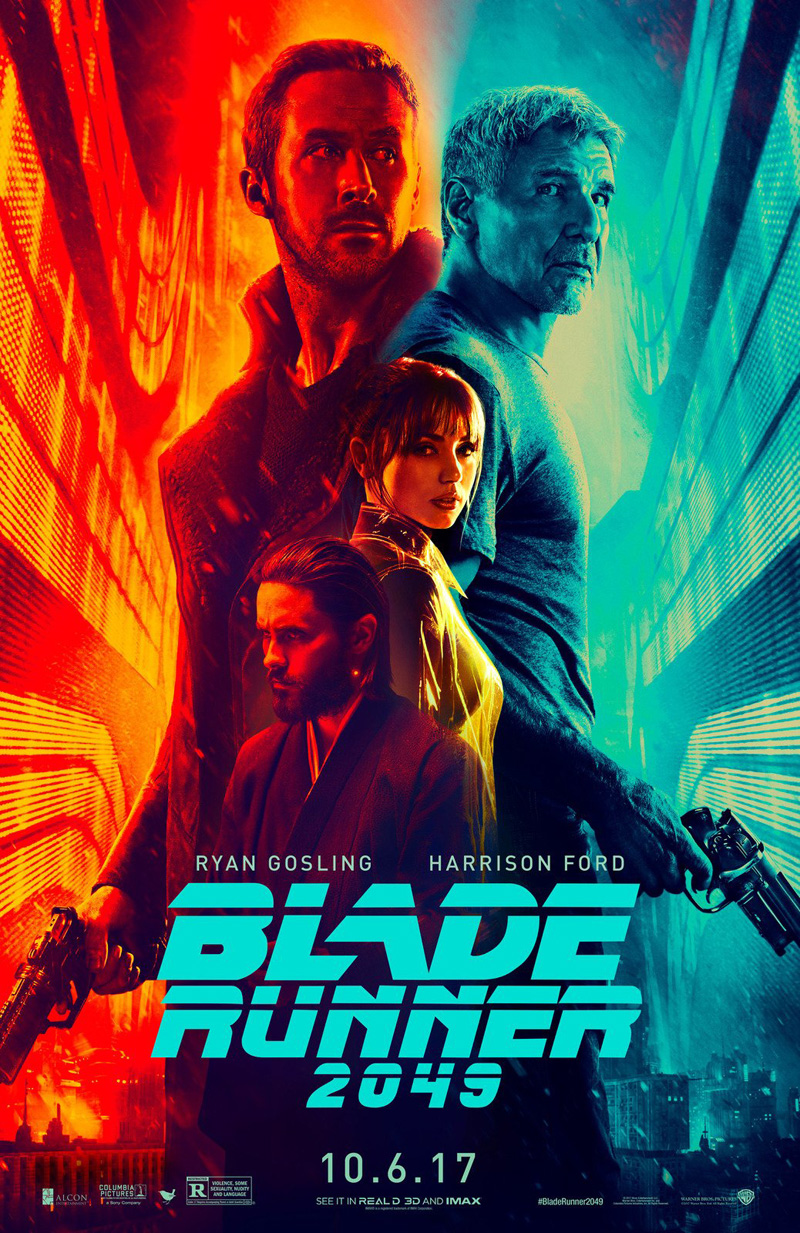
blade runner 2049 poster

Blade Runner 2049 is the sequel to the Ridley Scott sci-fi neo noir classic film that came out 35 years ago. It takes place in the same dystopian Los Angeles introduced in the original film, which took place just two years from now, yet seems uncomfortably accurate today. Now thirty years later the world is even more ruined but further technologically advanced. Humanity is still utilizing  race of artificial humans called replicants as slave labor. Whenever a replicant escapes or rebels, special police officers called blade runners are dispatched to kill them.

In Blade Runner 2049, replicants no longer have limited life spans and are more integrated into society. However, they are still second-class citizens who are derided by humans. The main protagonist in this film is K (Ryan Gosling), a replicant who is actually a blade runner that hunts down his own kind without remorse. Early in the film during an assignment he uncovers a baffling mystery. He discovers a long-dead body and this leads him on a mission to find out more about the deceased person because it has important connotations for replicants and society itself.

Denis Villeneuve directed this sequel and he is an inspired choice for the job because his visual style and storytelling techniques are very reminiscent of Ridley Scott. The landscapes are still breathtakingly chilling with the towering and crumbling skyscrapers, large intrusive holographic advertising and constant rain, which signal the climate change ravaging our planet. Only now snow and ash pelt the inhabitants of the futuristic Los Angeles. This does not mean that Blade Runner 2049 is a copy of the original. It tells its own original story without rehashing the beats of the first film, while further exploring the theme of what it means to be human. Gosling does his usual stoic act, which fits perfectly with his soulless character. But as he digs deeper into the mystery, he comes to question his own self and wonders if he has a soul. If so would that make him human despite how he is treated?

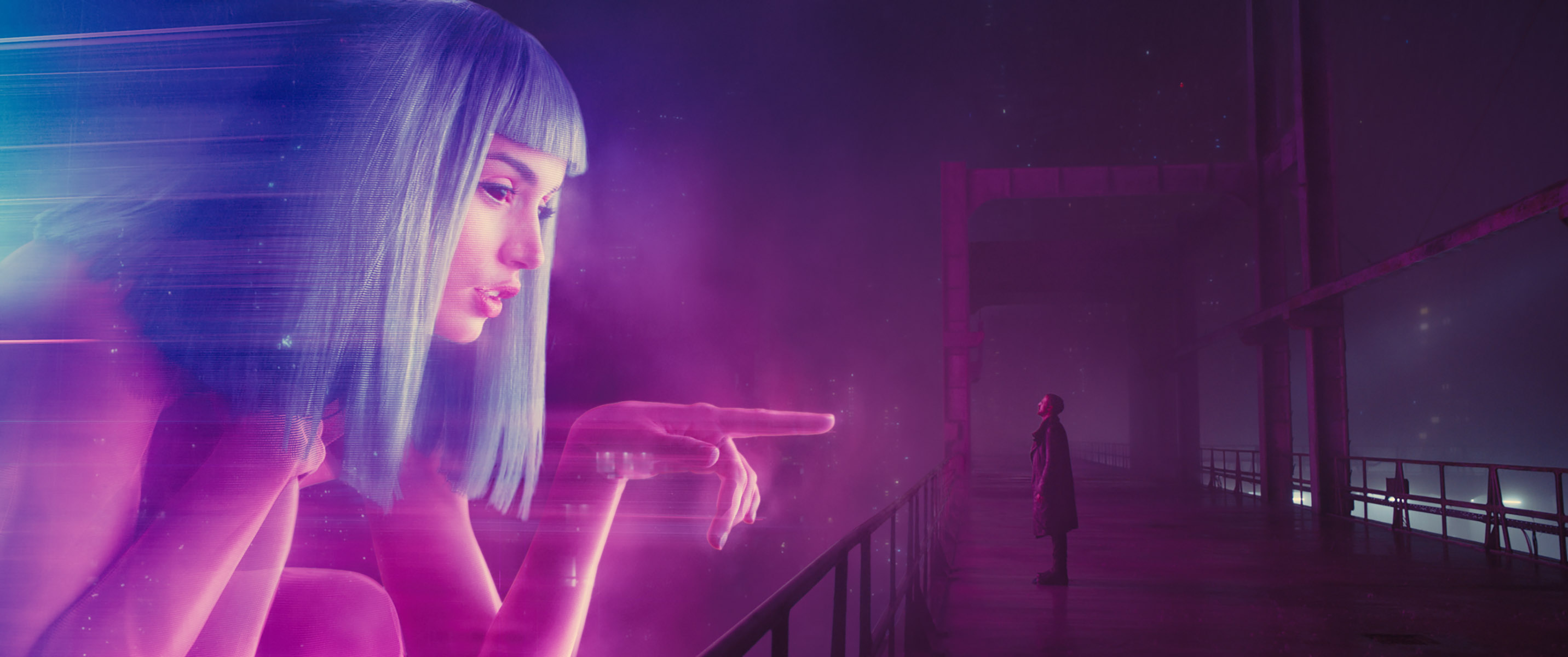
The sequel even takes time to examine the nature of sentience with K’s holographic home AI, Joi (Ana de Armas). At first glance, Joi just seems to be a household tool to K, sort of an advanced Siri or a Google Home but with holographic projectors. What was interesting about this set up is that a subservient non-human intelligence services a second-class citizen who isn’t considered human himself by society. How K and Joi treat each other in their tender,  growing relationship formed the heart of this film and featured in its best moments.

Another highlight is Harrison Ford himself, who reprises his role in the first film as Deckard, the blade runner who fell in love with a replicant. He is a welcome face and believe it or not helps lighten the mood in this dour film. Ford’s Deckard is a reminder of a world that has been lost and only now exists as a distant, treasured memory. Although Ford is a scene stealer, Gosling with his tortured character is the focus in this film.The most important question is about how Blade Runner 2049 compares to the original. Honestly, this is the kind of film that will be many things to many people. Already, some are hailing this as a masterpiece, while others are writing it off as dull. Bottom line, the original is the better film for several reasons. Starting with the story, the first Blade Runner had a tighter plot that was quite clear: Deckard had to find a group of renegade replicants. In this film, the mystery (and plot) are laid out but it seems more muddled and sometimes it is easy to lose track of what is going on. Later in the film, a new development occurs that is disjointed and clumsily inserted into the film. What is worse is that this development does not lead to anything and just reeks of an obvious plot thread for a sequel. This does not mean the film is dull as some are claiming. Just like the first Blade Runner, this is a slower, more contemplative film than what most of today’s audiences are used to, which is not a bad thing. Also, while it emulates the look and themes of the first film, Blade Runner 2049 fails to replicate (pardon the pun) that memorable future noir atmosphere that made the first film stand out. For a film that centers on a mystery it feels less like a detective story than the first Blade Runner. Another vital drawback is with the villain. Roy Batty so wonderfully played by Rutger Hauer was a much more realized and dimensional villain. He was motivated by a desire to be free and extend his short life span. That is something we can all identify with, which is why we mourned his fate at the end of the film. The villain in this sequel does not have a clear motivation and as a result comes off as one dimensional.Blade Runner 2049 is nonetheless a beautifully crafted film that honors the original while being able to stand on its own. Denis Villeneuve demonstrates again why he is one of the most lauded film directors today and this is a great entry in his filmography. The film’s cinematography is simply gorgeous even though it depicts a sadly decaying world. Every shot is expertly composed and should be seen at least once in the big screen. It goes without saying that the special effects are as grand and spectacular as the first film. But these technical aspects are just window dressing for the film’s central themes about humanity and how we treat each other. Those are the film’s true highlights and what will leave the greatest impression upon audiences.

Lewis T. Grove