
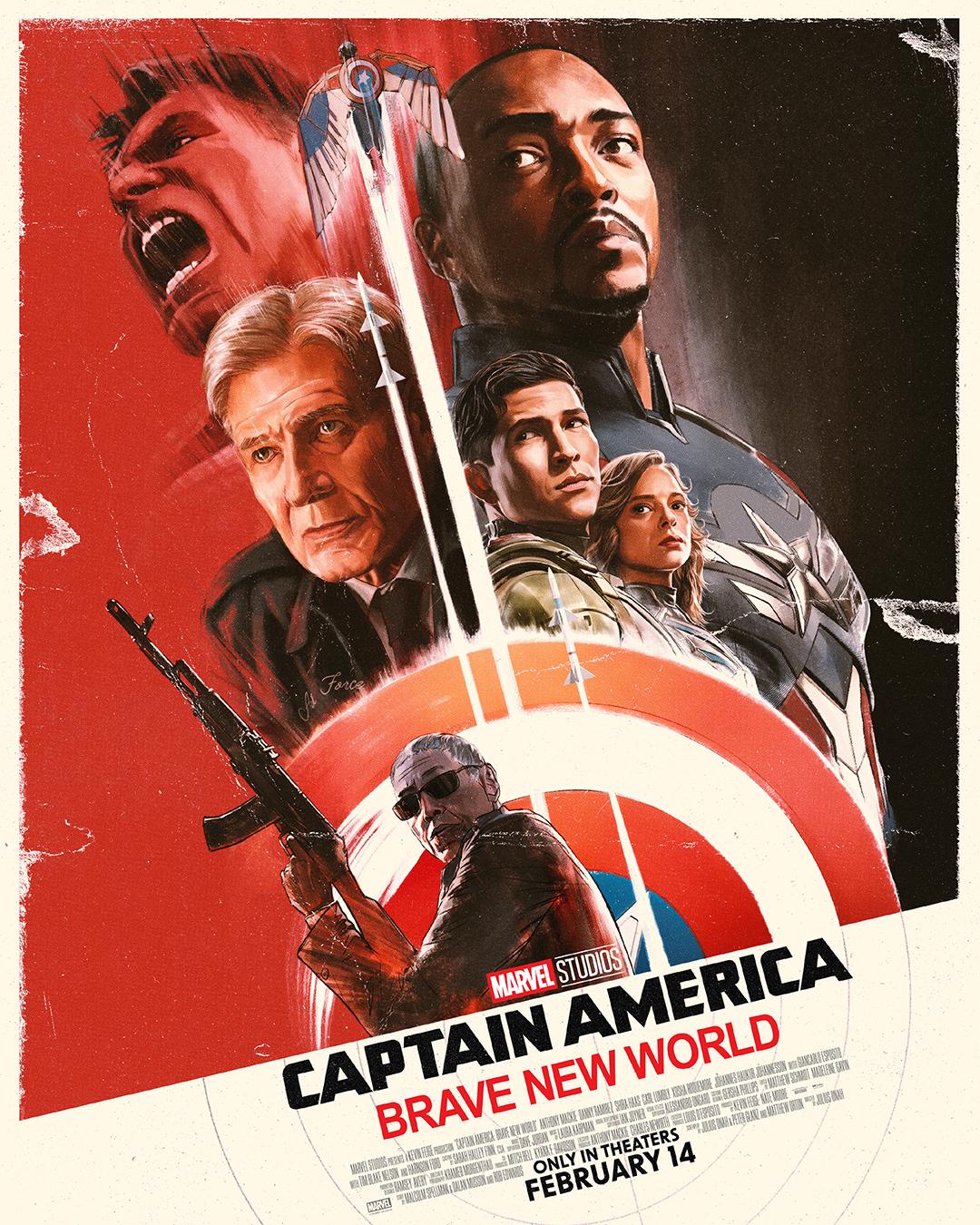
The New Captain America Faces A Brave New World

Despite what many people are claiming online, the fourth Captain America film, Captain America: Brave New World, is not a misfire. It’s not perfect and has to be ranked fourth in the Captain America film series of the Marvel Cinematic Universe (MCU). Yet, it largely hits the mark and is a solidly good political thriller. There will be SPOILERS.

The film serves many functions. It is a continuation of the Disney + TV show, The Falcon and the Winter Soldier and a semi-sequel to the film The Incredible Hulk. At the same time, it sets up future events in the MCU while answering a nagging question from Eternals.
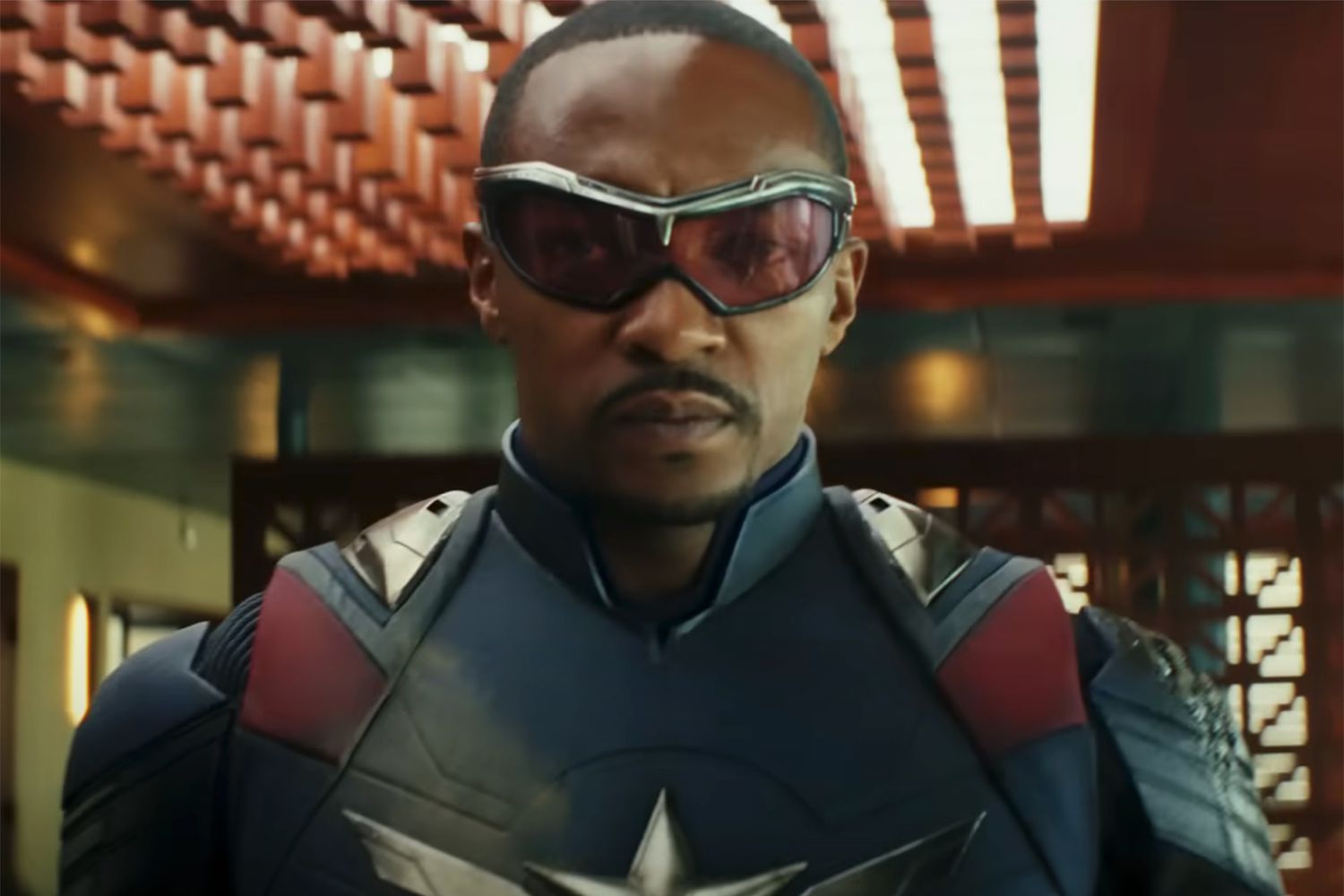
This is the first Captain America film to not feature Steve Rogers as the superhuman soldier. Instead, the mantle is taken up by Steve’s former partner and friend Sam Wilson (Anthony Mackie), a non-superpowered former soldier. In addition to his combat training and wits, Sam dons an armored suit made of vibranium that provides protection with its unique property of absorbing and dispelling kinetic energy. The suit also allows Captain America to fly and is adorned with drones called Redwing. Then there is Captain America’s nearly indestructible shield which was given to him by Steve. Even with all these adornments, Sam is conflicted about his capability to live up to the name of Captain America. But thankfully, by the end of the film he dispels his self-doubts.

Captain America: Brave New World begins with the U.S. presidential election of former general Thaddeus “Thunderbolt” Ross (Harrison Ford taking over the role from the late William Hurt). Despite his political victory, Ross is devastated over the fact that his daughter Betty (Liv Tyler) no longer talks to him due to his obsession in the past with hunting down her boyfriend Bruce Banner aka the Hulk.
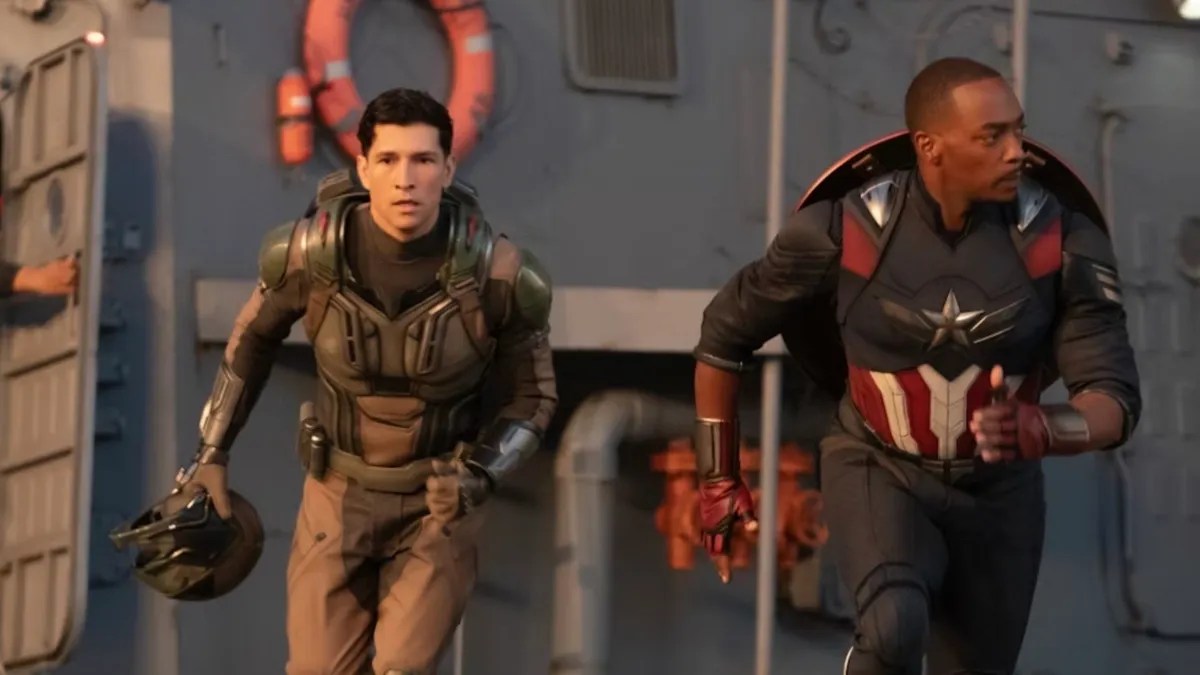
Five months later, Captain America is working with the U.S. military to recover classified items from a terrorist group called the Serpent Society, who are also holding hostages. Sam lets his friend and partner Joaquin Torres aka the new Falcon (Danny Ramirez) recover the items while he rescues the hostages. During the rescue, Wilson meets the group’s leader Seth Voelker/Sidewinder (Giancarlo Esposito), who escapes.

President Ross invites Sam and Torres to a White House summit with world leaders including those from India, Japan and France. Before the summit, Sam invited his friend Isaiah Bradley (Carl Lumbly) to the summit. Bradley was introduced in The Falcon and the Winter Soldier as a recipient of the super-solider formula that gave Steve Rogers his powers, but because he is Black, he was horribly treated and jailed by the U.S. government in the 1950s.
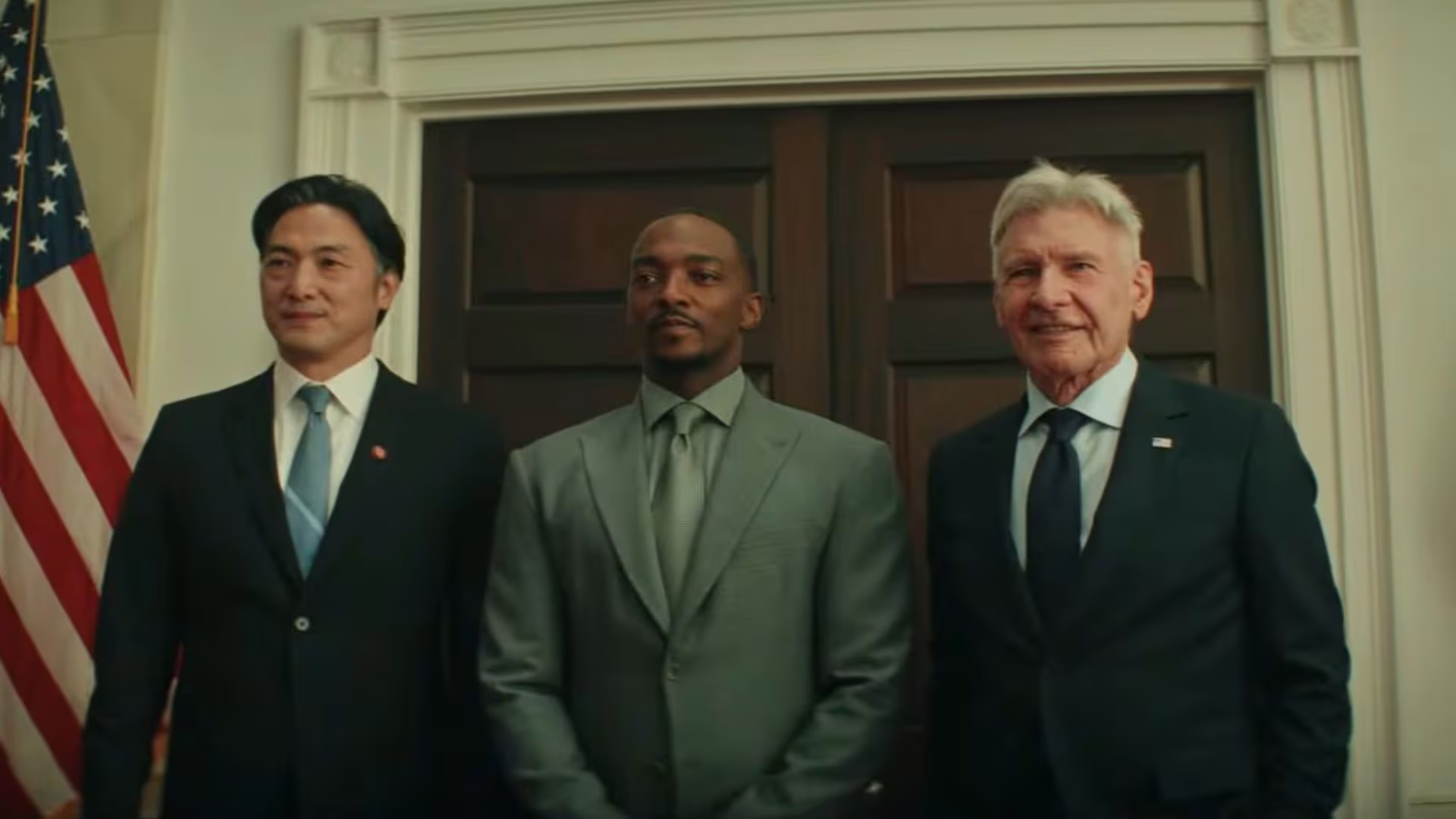
At the summit, Ross tries to make amends with Sam due to the antagonistic relationship he had with superheroes like Sam and Steve in past MCU films. He also asked Sam to rebuild the Avengers team, but Sam is hesitant because the team would have to answer to Ross. Still, Ross is willing to negotiate with Sam.

During the summit, it’s revealed that the items Sam and Danny recovered were Japanese samples of a new metal called adamantium that is stronger than vibranium. This metal was found on the newly created Celestial Island in the Indian Ocean and is part of the remains from the Celestial that the Eternals killed in their film. Ross proposes a treaty to mine and distribute the adamantium worldwide as a counter to the nation of Wakanda who exclusively owns vibranium. The event is going well until Bradley and few government agents get a musical signal which triggers them to attempt to assassinate Ross.
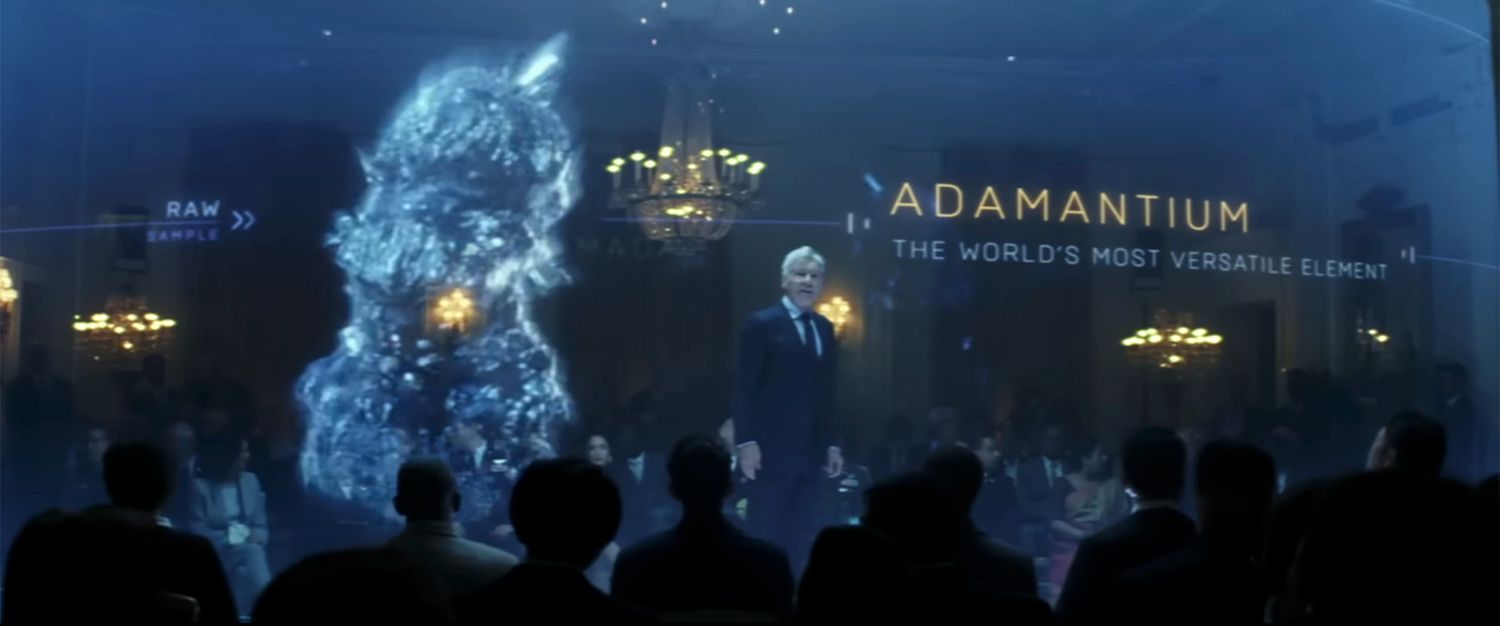
Even though Ross is saved, the summit is considered a failure as Japan blames the U.S. for the theft of the adamantium and threatens to pull out of the treaty. Sam, Danny and Ross realized that the person behind the theft and the assassination attempt was Dr. Samuel Sterns (Tim Blake Nelson). During the events of The Incredible Hulk, Sterns was infected by Banner’s gamma-irradiated blood and became a disfigured mutate called the Leader with an exposed cranium and the capability of a quantum computer. After that film, Ross imprisoned Stearns and secretly used Stearns’ advanced intellect to advance his career and keep him healthy.

After Sam and Danny try to confront Stearns, he escapes custody and launches a new plot to create a war between the U.S. and Japan and ruin Ross politically to get revenge on Ross. It is clear that Ross is having trouble dealing with the stress, which threatens to get out of control, and leads to Stearns’ trump card on Ross by turning him into a Red Hulk.  

Continue reading
DC Wins The TV War…For Now, Part One

 old DC

One of the great corporate rivalries is the one between the comic book giants Marvel Comics and DC Comics. It’s a competition that has spilled over to other media. When it comes to films, Marvel has won the war on that front due to the monumental successes of their Marvel Cinematic Universe (MCU) films. However, take a quick glance at the current TV schedule. From looking at that and television history, it’s obvious that DC has won the TV War…for now.

Head Start

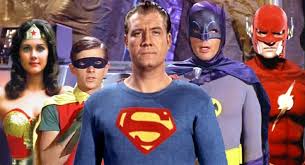
In reality, DC had the war won for decades now. This goes way back to the 1950s with the success of the first TV show based on Superman. That would be, of course, the landmark series Adventures of Superman, which starred George Reeves. It’s well known that the series was very popular and helped cement Superman’s legendary status in pop culture. Marvel at that time period didn’t even exist, nor did their most popular heroes because the company was concentrating on non-superhero comic books.

Following the cancellation of Adventures of Superman, the next DC superhero to bask in the television spotlight was Batman. Beginning in 1966, Batman was an instant hit and a genuine pop culture phenomenon. Starring Adam West and Burt Ward as Batman and Robin, the show was a decidedly goofy sendup of comic books and introduced characters like the Joker and Catwoman to non-comic book readers. Although, it was and is still popular, many decried the way Batman belittled the Caped Crusader and comic books in general.

wonder woman

In the 1970s, there were a few TV shows and specials based on DC Comics superheroes. The best known was Wonder Woman, starring Lynda Carter and it aired from 1975 to 1979. The show wasn’t as cheesy as Batman, nor as popular, but it was noted for its pro-feminist stance since the title character was a superhuman woman. The women’s lib messages obviously went over the heads of most younger viewers, who were enamored with Lynda Carter and her skimpy outfit.

Other TV shows airing in the 1970s were strictly aimed at children like Shazam! and The Secrets of Isis. In fact, these half-hour programs only aired on Saturday mornings and had limited appeal.

Around this time period, Marvel got into the hulk showact with the premieres of TV shows and TV films based on their characters. The first superhero to make a live-action appearance was Spider-Man, who made non-speaking appearances on The Electric Company. Some of the Marvel TV films and shows were truly awful like Captain America and The Amazing Spider-Man, which thankfully did not last long as a series. But a couple were actually decent like Doctor Strange and Marvel’s biggest hit on TV The Incredible Hulk. Airing in November 1977 and starring Bill Bixby and Lou Ferrigno, the TV film was a big hit and led to a successful TV series the following year.

Second Wind

superboyThe decade that followed, the 1980s, was slow for comic book properties on TV. After The Incredible Hulk was cancelled in 1982 there wouldn’t be another superhero TV show until the syndicated program Superboy debuted in 1988. Coming after the film disaster Superman IV: The Quest for Peace, Superboy was a welcome respite for fans who just wanted to see good, old-fashioned superheroics and teenage angst. Plus, Superboy was a competent place holder until DC and its parent company Warner Bros. could bring out another Superman TV series or film.

On a side note, there were a trio of TV films that continued the Hulk’s adventures and the first two introduced live-action versions of Thor and Daredevil. The Hulk and his alter ego David Banner actually died at the end of the third film, but there were plans to do more TV films. However, those ended after Bixby’s untimely death in 1993.

The humongous success of the film Batman in 1989 helped jumpstart new DC-based TV shows in the 1990s. Not wanting to rest with the success of Superboy, Swamp Thing: The Series premiered on the basic cable channel USA Network in 1990, while a show based on the comic book Human Target aired briefly on ABC in 1992.

old flashThere were two shows that made the largest impact in that decade. They were The Flash and Lois & Clark: The New Adventures of Superman. The Flash, starring John Wesley Shipp, premiered in the fall of 1990 fresh off the success of Batman and seemed to copy the stylistic direction of the Tim Burton film. Even though it only lasted one season, the show is revered by fans because of its fun stories, dazzling effects, and character work. Lois & Clark: The New Adventures of Superman, which aired on ABC, was targeted more towards women since it concentrated more on the relationship between Lois Lane (Teri Hatcher) and Clark Kent (Dean Cain). The superhero aspects of Superman took a back seat to the romantic shenanigans and it was laden with light humor. Of course, this displeased some fans, but it was still a successful program.

As for Marvel, the 1990s was a decade best left forgotten. There were DOA pilots based on Power Pack, Generation X and Nick Fury. As for the syndicated show Night Man, the less said about it the better.

Animation Dominion

young justiceAs DC dominated the television medium, there was another TV venue that it conquered. That was with their animated TV shows. Since the 1960s, there have been numerous TV shows that aired on Saturday mornings and on syndication based on DC’s superheroes. DC enjoyed early successes like Superfriends in the 1970s, but their animated shows weren’t acclaimed until Batman: The Animated Series premiered in 1992. Boasting memorable characters, villains and plots, the show was a huge hit and led to other superior animated gems like Batman Beyond, Superman: The Animated Series and Justice League. DC’s animated renaissance probably culminated with the recent Young Justice. It just lasted two seasons, but its smartly written scripts, mature themes, and complex character development won wide appraisals from fans and critics.

In this venue, Marvel actually presented itself as a viable counterpart to DC since the 1960s with series based on Spider-Man, the Hulk, the Avengers and other stalwarts. The results were quite admirable in many instances, but DC on the whole produced more noteworthy animated TV shows.

New Century, New Renaissance

As DC celebrated their animated successes in the 1990s, the live-action field was stagnant after the cancellation of Lois & Clark in 1997. There was an infamous pilot made for the Justice League that thankfully never made it into a series. It can be found on Youtube for anyone that is curious.

The live-action drought ended a few years later in 2001 with Smallville. This long-running show starred Tom Welling as Clark Kent in his teenage years and early twenties. It ran on The WB and later The CW networks and explored many aspects of the Superman mythos while concentrating on Clark’s emotional development and how he came to be Superman. It had its faults like the producers’ insistence of “no tights, no flights”, which meant Clark never put on his iconic Superman suit. (The final episode doesn’t count since he was never fully shown wearing it.) This was strange because many other superheroes featured on Smallville like Green Arrow, the Justice Society and Supergirl were allowed to fully embrace their comic-book roots. The Warner Bros. network tried to capitalize on the success of Smallville with other programs, but weren’t successful. Efforts included the short-lived Birds of Prey in 2002 and a pilot for Aquaman.

Around the time that Smallville came to an end, the superhero genre exploded in theaters. Super hits like The Dark Knight, Iron Man, and The Avengers cemented the permanence of arrowsuperhero films. As it goes, whenever there is a mammoth box office hit, TV executives take notice and follow suit. Warner Bros. and DC took advantage of the heightened interest in superheroes and produced many TV shows. Not all of them bore fruit like pilots for Aquaman and Wonder Woman, or another iteration of Human Target, but others blossomed and are now hit shows. These include Arrow, The Flash, Gotham and to a lesser extent Constantine. And that is just the beginning.

José Soto and Lewis T. Grove

To Be Continued