
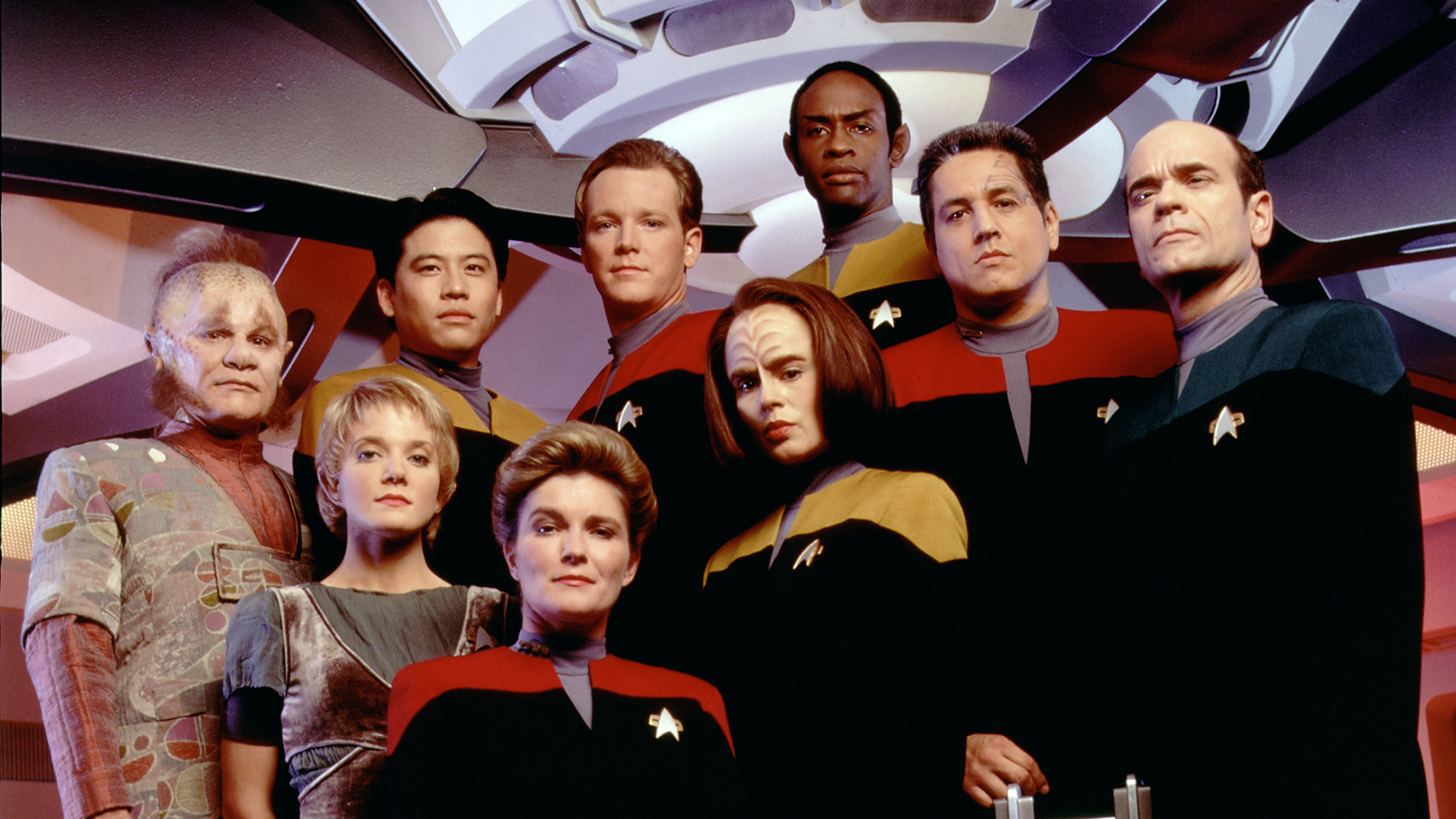
It has been 30 years since the first episode of Star Trek: Voyager debuted, yet it is still fondly remembered today, especially when it is compared to many modern Star Trek TV shows. Let’s take a look back at Star Trek: Voyager as its 30th anniversary is celebrated.
Flagship Show
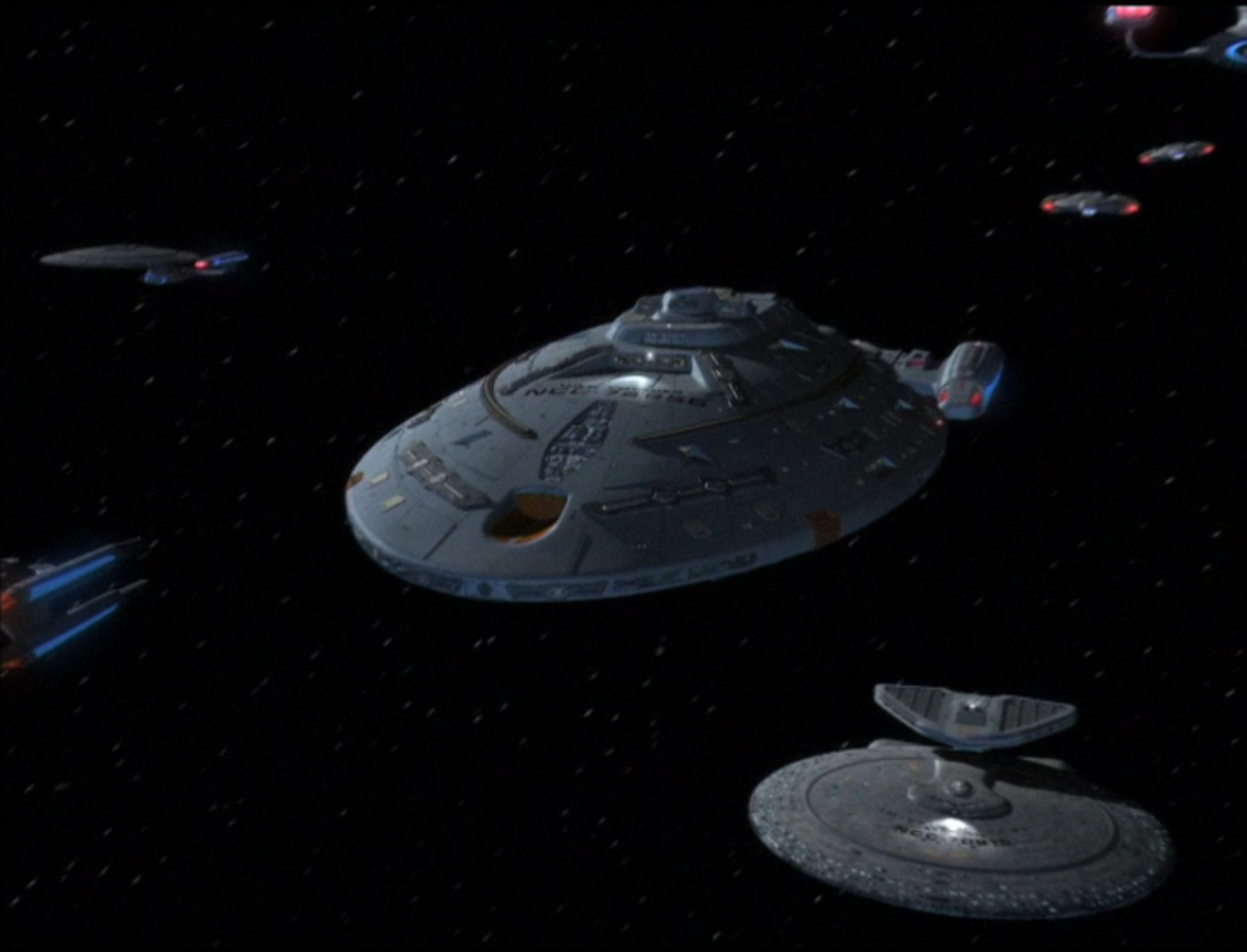
Star Trek: Voyager was the flagship TV show of the fledgling United Paramount Network (UPN) that launched on January 16, 1995, with the airing of “Caretaker” the pilot episode of Star Trek: Voyager. When the TV show premiered it was largely anticipated though many fans had reasonable reservations about yet another Star Trek TV show. After a decades-long drought, fans were inundated with TV shows starting with Star Trek: The Next Generation (TNG), which was followed by Star Trek: Deep Space Nine (DS9), and then Star Trek: Voyager. It was supposed to address complaints Paramount Pictures executives had about DS9 for straying too far from standard Star Trek.
Showrunner Rick Berman, who also ran TNG and DS9, was reportedly hesitant to produce another Star Trek TV show that would run concurrently with DS9. However, the Paramount Pictures executives were adamant about creating another Star Trek TV show that more closely followed the standard starship-visiting-planets formula to help launch UPN. Given this task, Berman and his associates sought to differentiate Star Trek: Voyager from other Star Trek TVshows.
A Lost Crew in Space
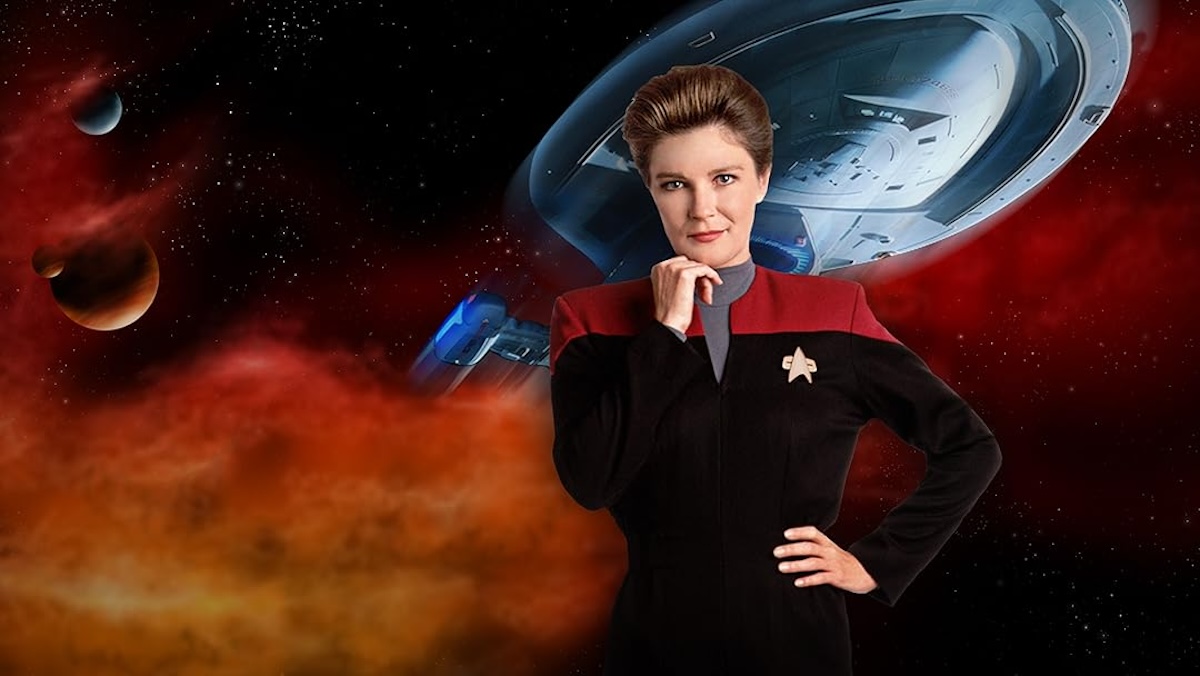
The premise was fairly simple, a starship called Voyager from the United Federation of Planets and Earth is flung to the far corner of the galaxy (the Delta Quadrant) with a crew made up of Starfleet officers and renegade Maquis freedom fighters (more on them later). With limited resources and on their own, the Voyager crew has to find a way back home while exploring on the side and encountering strange new worlds, yada yada.
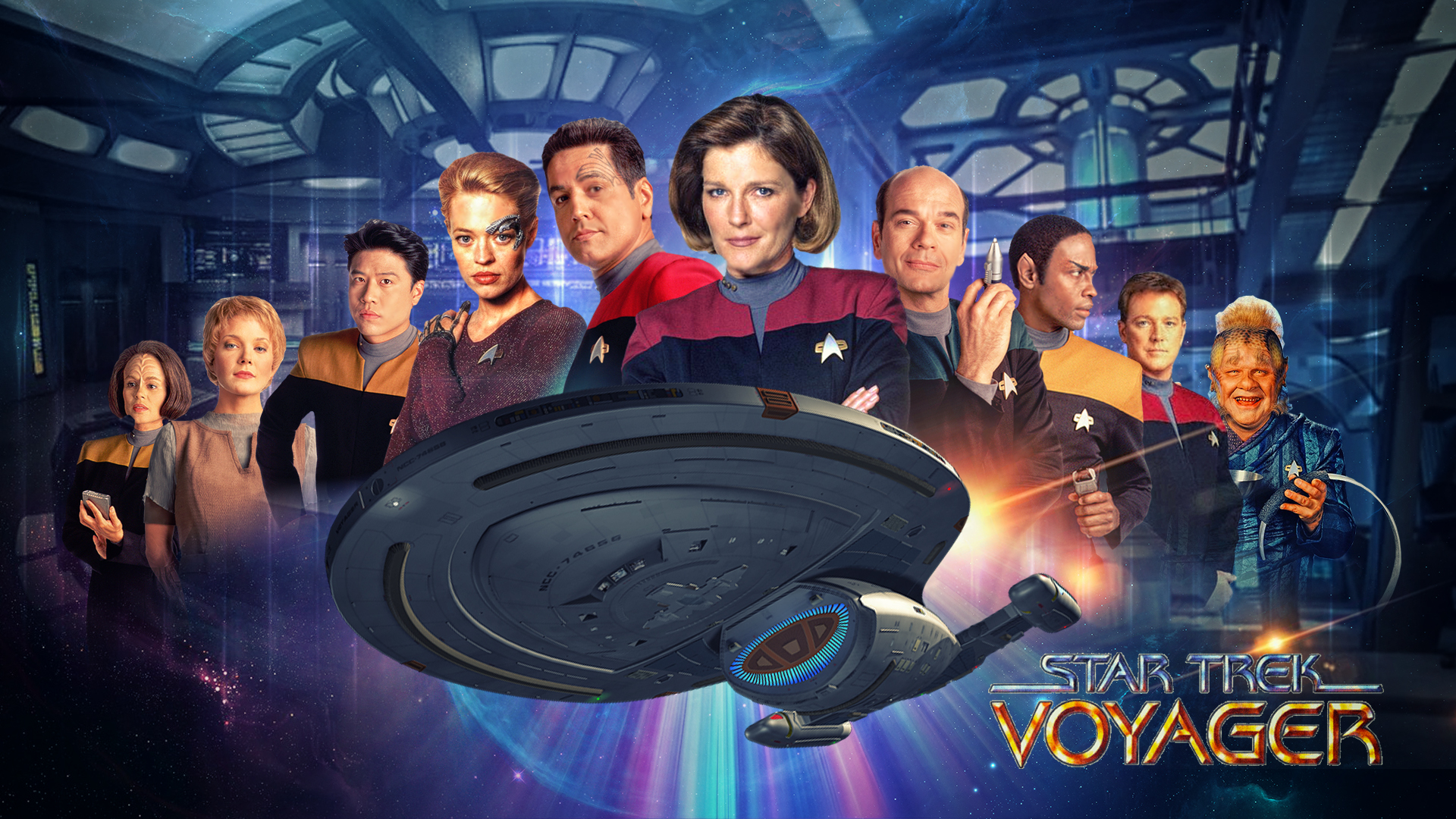
Kate Mulgrew starred as Captain Kathyrn Janeway, who commanded the Voyager and was dedicated to upholding Starfleet’s ideals while protecting her crew. At the time of her casting, there was a lot of hoopla and celebration because the main character of a Star Trek TV show was a woman. Other characters included the ship’s first officer, Chakotay (Robert Beltran), the leader of the Maquis and a former Starfleet officer, Tuvok (Tim Russ), the ship’s stoic Vulcan security officer, Tom Paris (Robert Duncan McNeill), a disgraced former Starfleet officer who gets his chance at redemption by serving as Voyager’s helmsman, B’Elanna Torres (Roxann Dawson), a half-Klingon Maquis member who became Voyager’s chief engineer, Harry Kim (Garrett Wang), a young Starfleet ensign on his first assignment, and the Doctor (Robert Picardo), a holographic medical program that performed the duties of the ship’s chief medical officer.
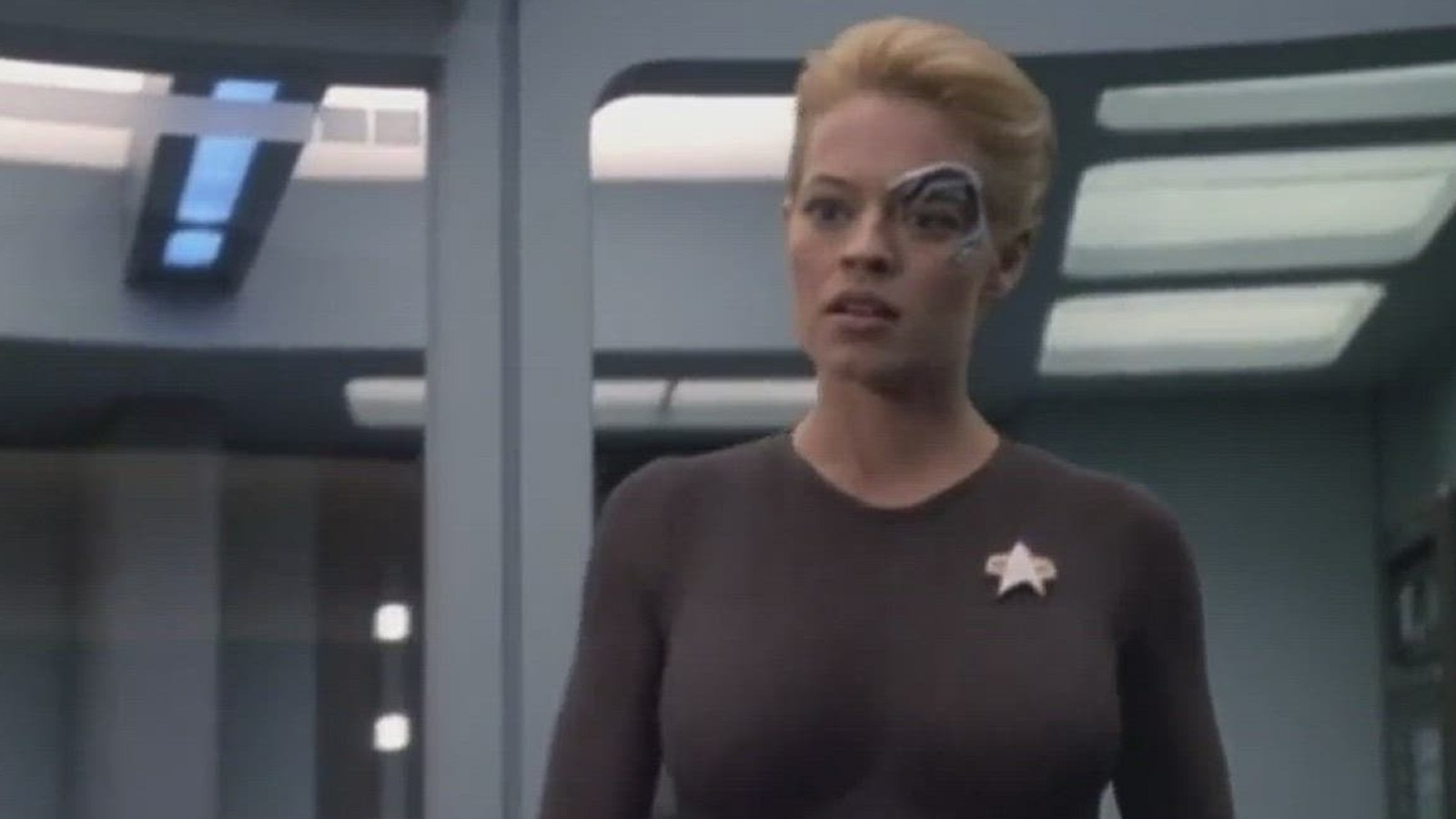
At the end of “Caretaker”, Voyager picked up two alien shipmates who are native to the Delta Quadrant and bring needed knowledge about the local space. They are Neelix (Ethan Phillips), a Talaxian drifter who ends being the ship’s cook and ambassador of sorts, and his girlfriend Kes (Jennifer Lien), an Ocampan who operates as the Doctor’s medical assistant and helps the program develop a personality. As the series progressed, it added Jeri Ryan to the cast as the former cybernetic Borg drone called Seven of Nine while Lien departed the series. Seven of Nine became the show’s breakout character thanks in part to the performance of Ryan as she served as the show’s version of Spock. In other words, a stoic outsider who questioned humanity while discovering her own.
Essentially, the TV show combined aspects of the original Star Trek and Lost in Space, and it worked for the most part. Yet, there was glaring issues with the TV show which turned out to be a harbinger for the creative drought the Star Trek franchise was beginning to suffer from at that time.
Playing it Safe & Formulaic

Many episodes were formulaic and seemed to either recycle scripts from TNG or went with rejected story lines from that show. Some episodes were indefensibly dumb like “Threshold”. At times, Star Trek: Voyager played it too safe. Often, there were little consequences that befell the crew of the Voyager. The ship always looked pristine and luxurious, the crew did not seem to want for anything, and when you think about it, the impression the episodes gave was that the crew did not seem to be in a hurry to get home. Of course, this was not the case, it just depended on the plot of the episode.
Some things did not make sense, during the early episodes, the ship was pursued by an enemy race called the Kazons. Their technology was not as good as Starfleet’s and they wanted to capture the ship to steal the technology. This was a good idea, but how far ranging were the Kazons? Shouldn’t the Voyager have left their space after a couple of episodes? If the Kazons were not as advanced as the Federation they would not have had a significant footprint in the Delta Quadrant, yet the Starfleet ship ran into them time and time again in the early episodes. On the other hand, the show let a potentially great enemy race languish. In the episode “Phage” the ship’s crew encountered a race called the Vidiians who were collectively suffering from an uncurable disease. The only way they could treat the disease was by harvesting body parts from other races. There could have been a plot development were the mostly human crew had something unique in their genetic makeup that the Vidiians coveted, who had the advanced technology to pursue the Voyager. Sadly, the Vidiians were seldom seen.
Then there was the Borg. This cyborg race is usually considered to be the Federation’s greatest threat as they are practically invincible. Yet, starting in the fourth season, the Voyager ran into them every few episodes and always managed to defeat the Borg. Keep in mind that in the classic TNG episodes, “The Best of Both Words, Parts I and II” one Borg ship easily defeated an armada of Starfleet ships. But Voyager by itself always managed to escape and get the upper hand on those cyborg drones.
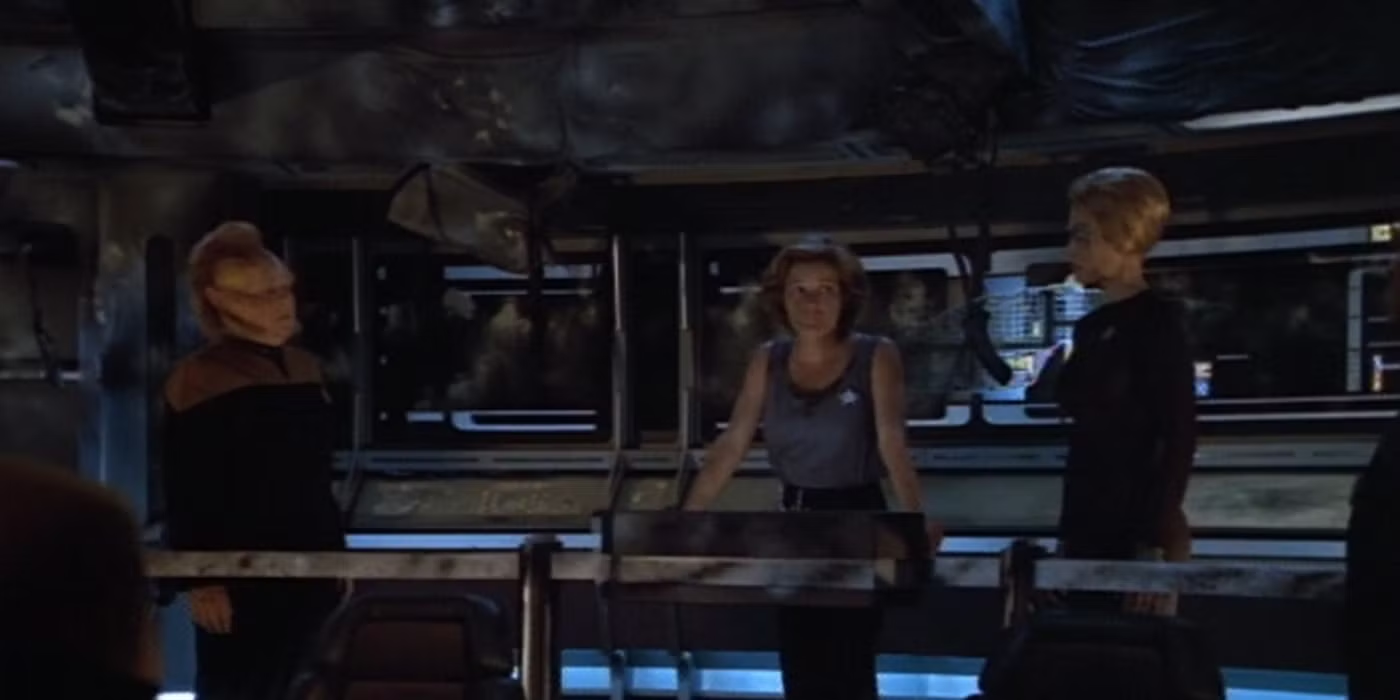
Keeping this in mind, one of the very best storylines was the two-part episode “Year of Hell” which chronicled a year where the Voyager and its crew were pushed to the limit as they encountered an enemy that used time as a weapon. The time machinations did not always make sense, but what made the episodes memoralbe was that they presented the actual strife the Voyager would go through. The ship was in disrepair, many crewmembers died or were badly injured without adequate medical supplies to treat them. Tuvok wound up going blind and Janeway became more and more embittered as her ship crumbled around her. There were genuine consequences; it seemed more realistic. But by the end of the storyline, time was reset, and everything went back to normal.
Unrealized Tensions
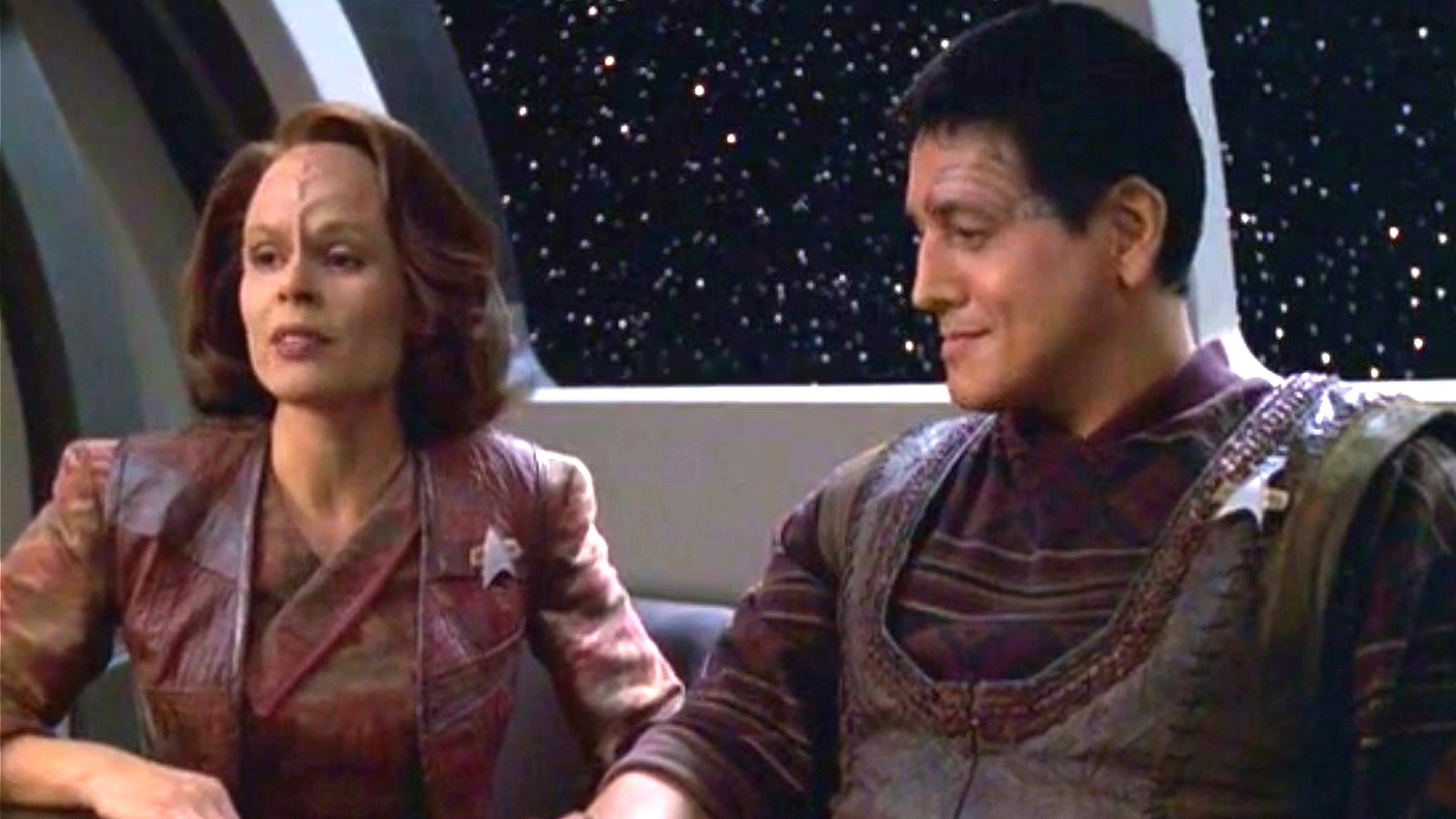
This glossing over of the day-to-day challenges that the ship and crew should have faced was detrimental to the show. Everyone got along without any issues. The combined Starfleet/Maquis crew acted as if their political differences were as non-consequential as them being fans of two different football teams.
When Star Trek: Voyager premiered, a lot was made of the fact that the Maquis was combined with the Starfleet crew. The Maquis first turned up in episodes of DS9 and were former Federation colonists who rebelled against the organization and an enemy alien race called the Cardassians. The two sides eventually agreed to a peace treaty, but it meant that the Federation had to give up worlds to the Cardassians. The colonists in those worlds refused this and became a resistance group called the Maquis who threatened the peace.
In “Caretaker” the Voyager was assigned to find a missing Maquis ship that had Tuvok onboard as a Starfleet spy. As it turned out, both ships were transported to the distant Delta Quadrant and the Maquis ship was soon destroyed. Janeway and Chakotay, the Maquis leader, decided to unify both crews to increase their chances of getting home. This was a situation that had a lot of potential, would the crew get along with each other? Would the Maquis try to take over Voyager? Well, not really. See, any significant tension would be gone by the third episode and the Voyager crew seemed like any other Starfleet crew. The showrunners stated in interviews that they did not want to dwell on any tensions, but this robbed Star Trek: Voyager of any meaningful character tension, at least when it came to the Maquis.
A Star Trek Show Not Without Its Merits
Despite all these gripes, Star Trek: Voyager was well done with excellent acting and production. Many of the characters were interesting and had engaging arcs, notably Janeway, the Doctor and Seven of Nine, and to a lesser extent Torres and Paris, who eventually married each other. Kudos have to go to the actors and the writers who were able to inject some personality into the characters. Nowadays, toxic fans would decry the TV show for being a DEI fest jammed with PC characters and that did occur during the show’s run. But the sex and race of the characters were inconsequential. Janeway was a natural and passionate leader who had her faults (and at one point in the pre-production, male actors read for the role), along with the other characters. These were not Mary Sues or noble minorities, as the characters had their own personal issues and flaws to overcome.
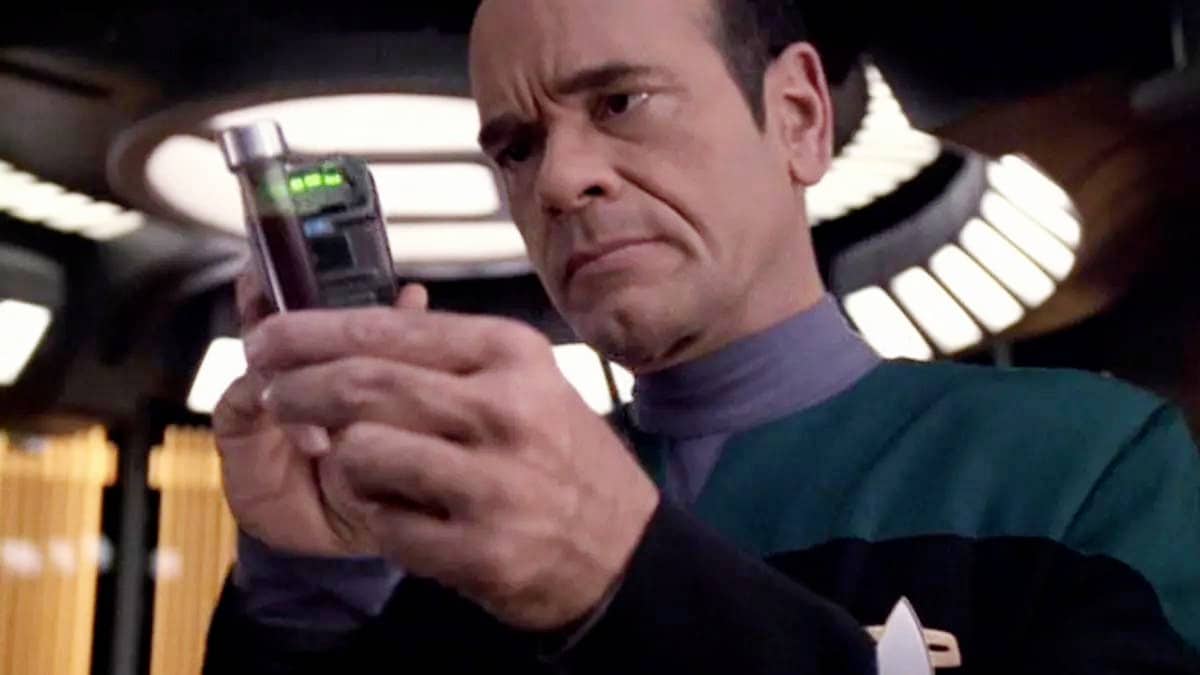
The Doctor was one of the most fascinating characters in Star Trek history who had existential and philosophical musings about what it is to be conscious. Naturally, he was the main asset in several episodes like “Living Witness” where a copy of him is activated in the distant future on a planet and he has to defend Voyager’s record. In another memorable episode, “Latent Image”, ethical dilemmas are raised when Janeway erased the Doctor’s memories against his knowledge to prevent him from undergoing a psychotic breakdown after being forced to choose between saving the lives of either Kim or a Starfleet redshirt. The Doctor was also the main star in more action-oriented episodes like “Message in a Bottle” where he is transmitted temporarily to the outer edges of Federation space and has to fight enemy Romulans.
What Star Trek: Voyager also got right was that the ship made progress in its journey home. This wasn’t like Lost in Space or Gilligan’s Island, where every effort ended up in failure and doomed the show to a status quo. Voyager was able to shorten its journey in some episodes and even established continuous communication with Starfleet. Even though most of the episodes were standalones, the TV show did have a limited amount of serialization, which we take for granted these days with modern TV shows. Star Trek: Voyager would have benefitted greatly if it followed a serialized format, but it did what it could.
During its journeys, the ship had many instances where it could have gotten home but couldn’t for whatever reason. There was “Timeless” where Kim and Chakotay returned to Federation space but had to time travel to save the Voyager and its crew who did not survive an attempt to shortcut their journey. Another sad twist of an episode was “Course: Oblivion” where we see the ship on the verge of making it home thanks to new technology but after several people and the ship itself began to liquify it’s revealed that this crew were duplicates of the actual Voyager and crew. Still, we wound up caring deeply about them.
As noted, many episodes were very imaginative and more importantly engaging. It’s just regrettable that the show was not always consistent with the quality of its stories. That said, the best seasons of Star Trek: Voyager were the fourth and fifth seasons which had many great episodes. Even the other seasons had their share of memorable episodes such as “Caretaker”, “Basics, Parts I and II” (the final episodes with the Kazons), “Deadlock” (a strange episode where the ship and crew were duplicated and stuck together), “The Chute” (a prison episode that showcased the friendship of Paris and Kim), and the final episodes, the two-parter “Endgame”.
Despite its misgivings, Star Trek: Voyager is well regarded today and beloved by many. It came at a time when Star Trek as a franchise was at its peak, and it represented the best and worst of the franchise. It introduced many unique and iconic characters who still show up in today’s Star Trek, such as Janeway, who is now an admiral, Seven of Nine, the future captain of the Enterprise-G and the Doctor, who will appear in Star Trek: Starfleet Academy and turned up in Star Trek: Prodigy along with Janeway and Chakotay. Star Trek: Voyager is justifiably celebrated today, 30 years later, for what it accomplished by telling some of the best Star Trek stories.
José Soto
 Starloggers
I really enjoyed Voyager. It’s often labelled as being formulaic but I welcomed its almost back to basics approach to Star Trek. The lost in space and voyage hope premise was pretty innovative and led to some terrific stories – especially during Season 4 which was where the show really hit its stride IMOP. There was always a sense of progression in their voyage, either through their long voyage back to the Alpha Quadrant, or characterisations and relationships / friendships between the crew. Yes, they did weaken the fear factor of the Borg by overusing them, and the final episode was very anticlimactic, but Voyager still a great show of its time.
I have a better appreciation for Voyager than when it first aired. It’s surprisingly rewatchable, and many of the characters were very well developed.
It would be great if the powers that be could reunite the cast and do a special streaming mini series or film to show us what became of the characters though most of them have turned up elsewhere.
Some things we may each have better appreciations for after a certain amount of time, and others just the reverse. I may be a bit mixed in that regard when it comes to specific things about the Trekiverse. When it comes to trying to diverge most profoundly in several of the newer Treks for this generation, it’s all the more appreciable that Voyager’s storytelling was more toned down for its time. Even in the wake of what DS9 was achieving. Thank you for your review.
I agree, I’d love to see a return to DS9 or the Voyager crew. If only to just catch up and see where they all ended up and what happened next, especially Voyager as that ending was so abrupt.
The way that DS9 ended was most thought-provoking compared to other Treks. With whatever awaited Sisko in his new realm of existence, and how they left things off with the love story between Kira and Odo, perhaps Quark’s last words in a way said it best: “The more things change, the more they stay the same.” So perhaps a return to DS9 somehow wouldn’t have the same problems that Picard did. Although I can’t imagine it being the same enough without Rene as Odo and Aron as Nog.
Trying to do a DS9 follow up now would be problematic given that a few actors are no longer alive or have retired from acting.
That is why a Voyager follow up should be done soon since the actors are still around and seem willing for a reunion. If they could give us a last hurrah for the TNG crew, why not the other 90s Trek?
Very sad though about what’s happened with Jennifer Lien who played Kes. Because I really liked Kes. I didn’t like her final episode where she returned in a negative way. But she was an adorable character.
True, the way they handled her was inconsistent with the episode “The Gift” where she supposedly transformed into a non corporeal being. But then she comes back full of rage? Didn’t make sense.
I agree that the ending of Voyager was too abrupt. They should have shown us the immediate aftermath of the events to give closure to the characters. But it was still a decent series finale.
Great post! You thoughtfully shared the best and worst parts of the series. What I would give for a Star Trek: Legacy series that could bring back characters from Voyager, TNG and DS9! I loved Captain Janeway so much- it meant a lot to me to have a series with a female captain.
The 90s were a good decade for strong female role models in sci-fi TV. With all the headway that The X-Files with Dana Scully, Babylon 5 and Earth 2 had already made, it was most fitting that the Trekiverse would finally have a female Captain to helm a new series.
Janeway being the lead character, certainly proved how Trek was ahead of its time.
I loved Scully in the X-Files, such a great example!
Glad you liked it. I wasn’t a fan of Voyager at first, but it grew on me after some time, and I came to appreciate it, especially when compared to a lot of modern Trek.
“Flashback” where George Takei and Grace Lee Whitney guest starred would be my favourite Voyager episode. It had one of the best Trek SF twist reveals in my book.
“Year of Hell” 2 parter was my favorite because it showed how dire things got for Voyager. The wear and tear the crew and ship suffered seemed more realistic than the pristine look that was prevalent with most episodes.