
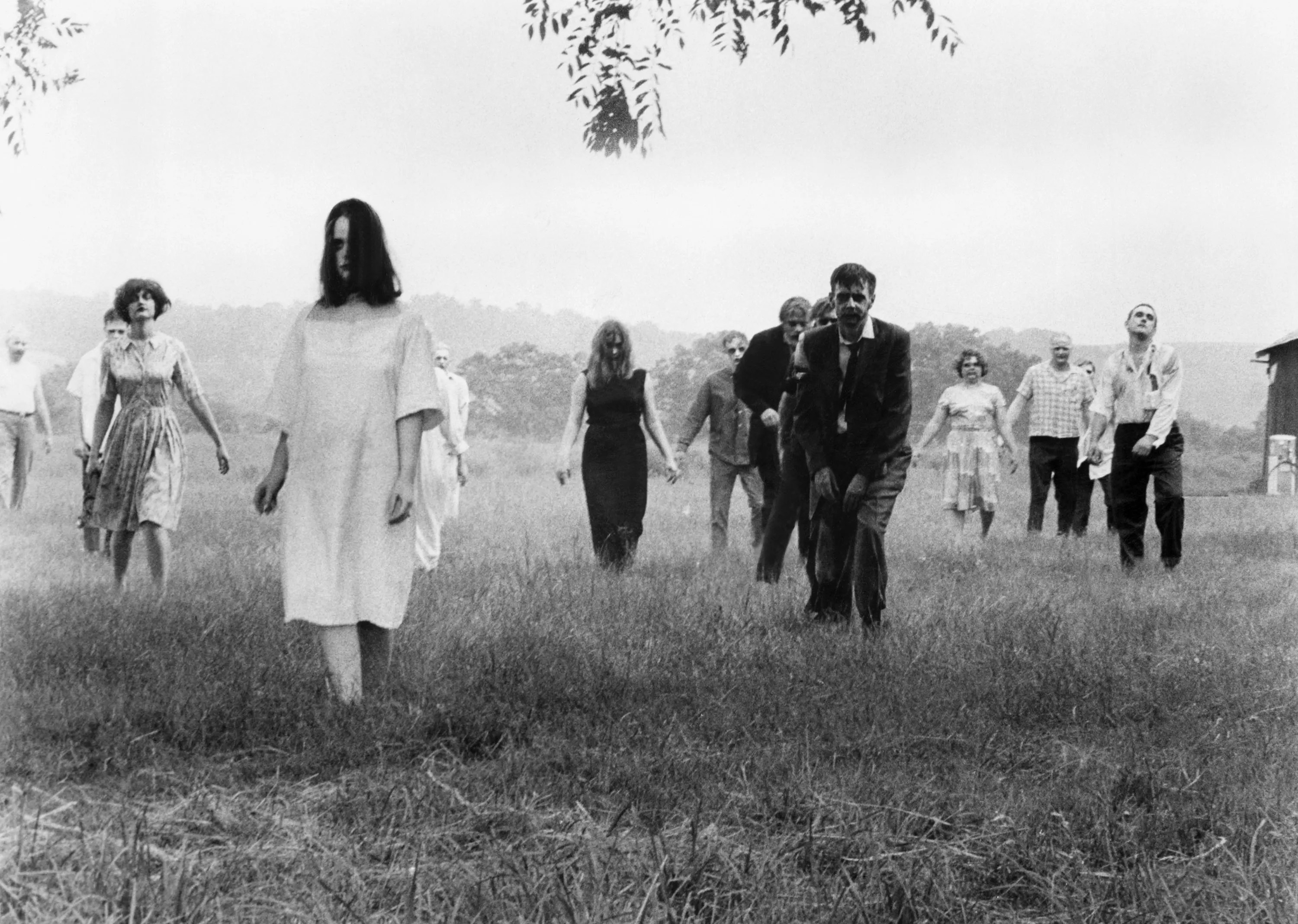
George A. Romero is rightly regarded as the godfather of the zombie genre, seeing as he ushered in a new era of zombie horror with his classic Night of the Living Dead in 1968. The franchise it spawned will see its conclusion next year with the release of Twilight of the Dead, starring Kate Beckinsale and directed by the Paz brothers. This group of films that he created both horrified and fascinated audiences with their graphic depiction of society falling apart as reanimated corpses ravaged the world and sent surviving humans scurrying for safety wherever they could find it. His first film, Night of the Living Dead, is the quintessential zombie film that basically every other movie of its type has copied ever since.
It starts with a woman, Barbara, and her brother visiting their father’s grave before they are attacked by a seemingly crazed man who chases the women to an empty farm house, where she and others including the main hero, Ben, barricade themselves against the onslaught of other creeping ghouls who attempt to break into the house. The eventual and seemingly inevitable triumph of the zombies against the humans is highlighted by the films shocking conclusion when a still living Ben is shot by hunters who think he is one of the living dead.
This first film wasn’t the first one to show zombies as there were others from decades past such as I Walked With a Zombie. But those creatures were basically reanimated by some crazed shaman or sorcerer to do his bidding and were more like stumbling corpses rather than dangerous predators. Romero changed all of that with the introduction of zombies that devoured the flesh of living humans. This is seen in the gory conclusion of Night of the Living Dead, when the shambling ghouls are seen eating the remnants of certain characters who tried to escape in a truck but meet with an explosive end. The stark images of violence and death stunned audiences in the late 60s, while the film also explored the issues of racial tensions and violence in society, This was best seen with Ben’s disturbing death because he was a Black man who was killed by a mob of white vigilantes . Also disturbing was the scene near the end when a mother, Helen, was killed by her recently deceased daughter, a young girl who was reanimated as a deadly ghoul. Such themes were.something that Romero would explore in his later zombie films.
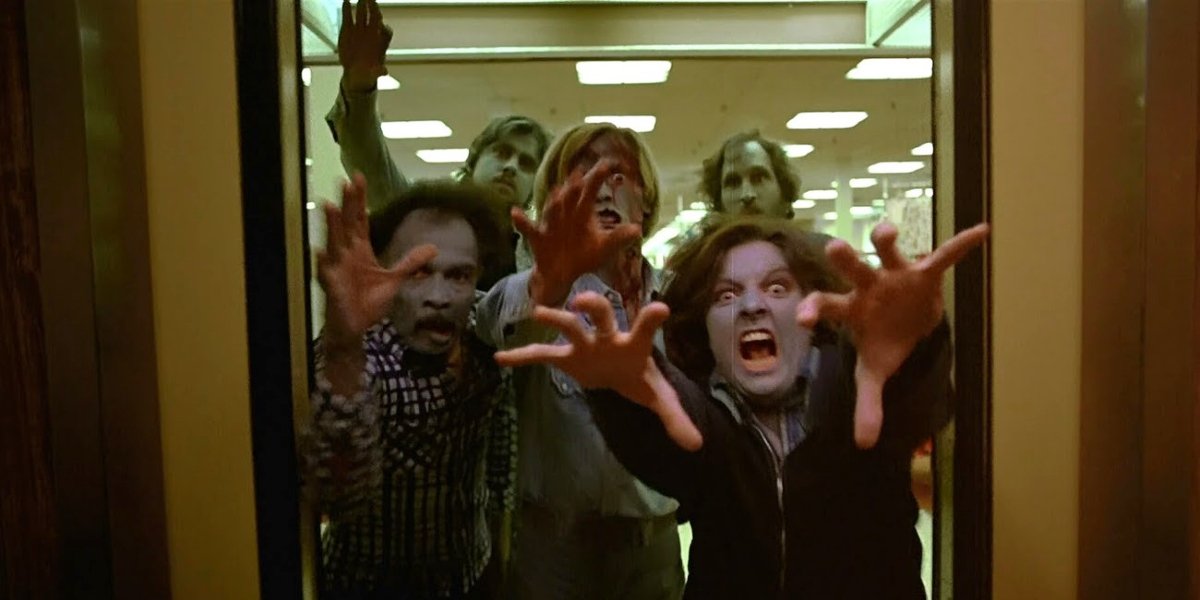
This would continue in his next film, regarded as one of the greatest, if not best zombie movie of all time, Dawn of the Dead in 1978. The movie shows the zombie epidemic spreading to the rest of the world and follows four human survivors, (two SWAT agents, a traffic reporter and his girlfriend) who escape a Philadelphia descending into chaos and flee via helicopter and find safety in an abandoned outdoor shopping mall. They clear it of the undead and at first, see it as a refuge with all of the luxuries they could ever want, but they soon realize their luck will eventually run out as zombies converge on the mall and a roving band of humans threatens their safe haven. Romero continued his social commentary, this time on the risks of consumerism and apathy that would eventually prove to be our protagonists downfall. Again, the horror of the situation is expertly shown with groundbreaking special effects and gory scenes of carnage as the human population falls to the living dead outbreak.
His third film, Day of the Dead in 1985 would showcase a world that has fallen completely to the zombies, while a small group of scientists and soldiers are holed up in an underground military complex, desperately trying to find a cure for whatever caused the dead to rise. It introduced the idea of the zombies becoming more intelligent where one particular zombie named Bub was being trained to not want to attack humans by the resident mad scientist. This along with the despair of not finding other survivors would cause tensions between the two groups that ultimately dooms their fate. This holds a mirror to real-life conflict between similar segments in society that again shows Romero’s skill in showing audiences what he sees in the world today, while at the same time telling a scary zombie tale that terrifies us.
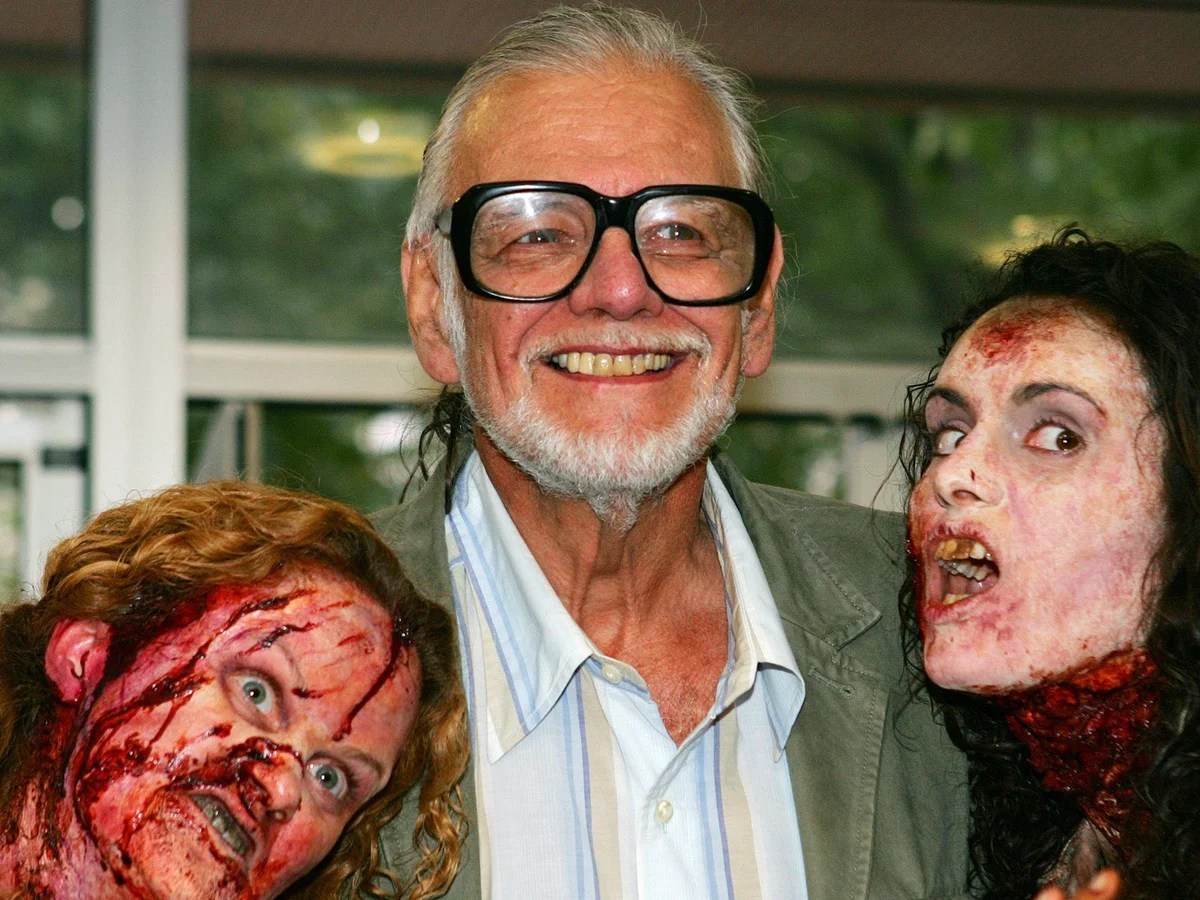
The last film in this timeline would be Land of the Dead in 2005. It presents a post-apocalyptic society that lives in walled off cities, where the rich elite attempt to ignore the issue of the living dead outside the walls, while a larger underclass try to somehow survive on the outskirts of this city. It would also demonstrate a continuation of the idea of the evolution of the zombies, who were becoming more intelligent, with one in particular, named Big Daddy, leading the ghouls to a sort of uprising against the city dwellers, further demonstrating Romero’s ideas about the problems that lead to the breakdown of the fabric of societies, with the haves increasing their stranglehold on the essentials of life, while the have nots are left to rot.
There was a remake of Night of the Living Dead that came out in 1990 and was written by George Romero. This time the film was directed by Tom Savini, the makeup effects artist who worked with Romero on Dawn of the Dead and Day of the Dead. The remake had a mixed reception when it was first released but has since developed a cult following.
Romero would make two more zombie films, both set in a new continuity, starting with Diary of the Dead in 2008 which takes place at the start of the zombie epidemic and is told via the viewpoint of a student filmmaker and his handheld camera and his companions. It’s an interesting take on the genre and was a worthy film in the franchise. The followup to Diary was Romero’s final film, Survival of the Dead in 2009, which follows two national guardsmen who also appeared in Diary. They travel to an island where two feuding families are in conflict while dealing with a population of zombies that threaten to overrun the place. This film has some interesting concepts but I think is the least of his movies that doesn’t have the same sense of dread that permeates his other films.
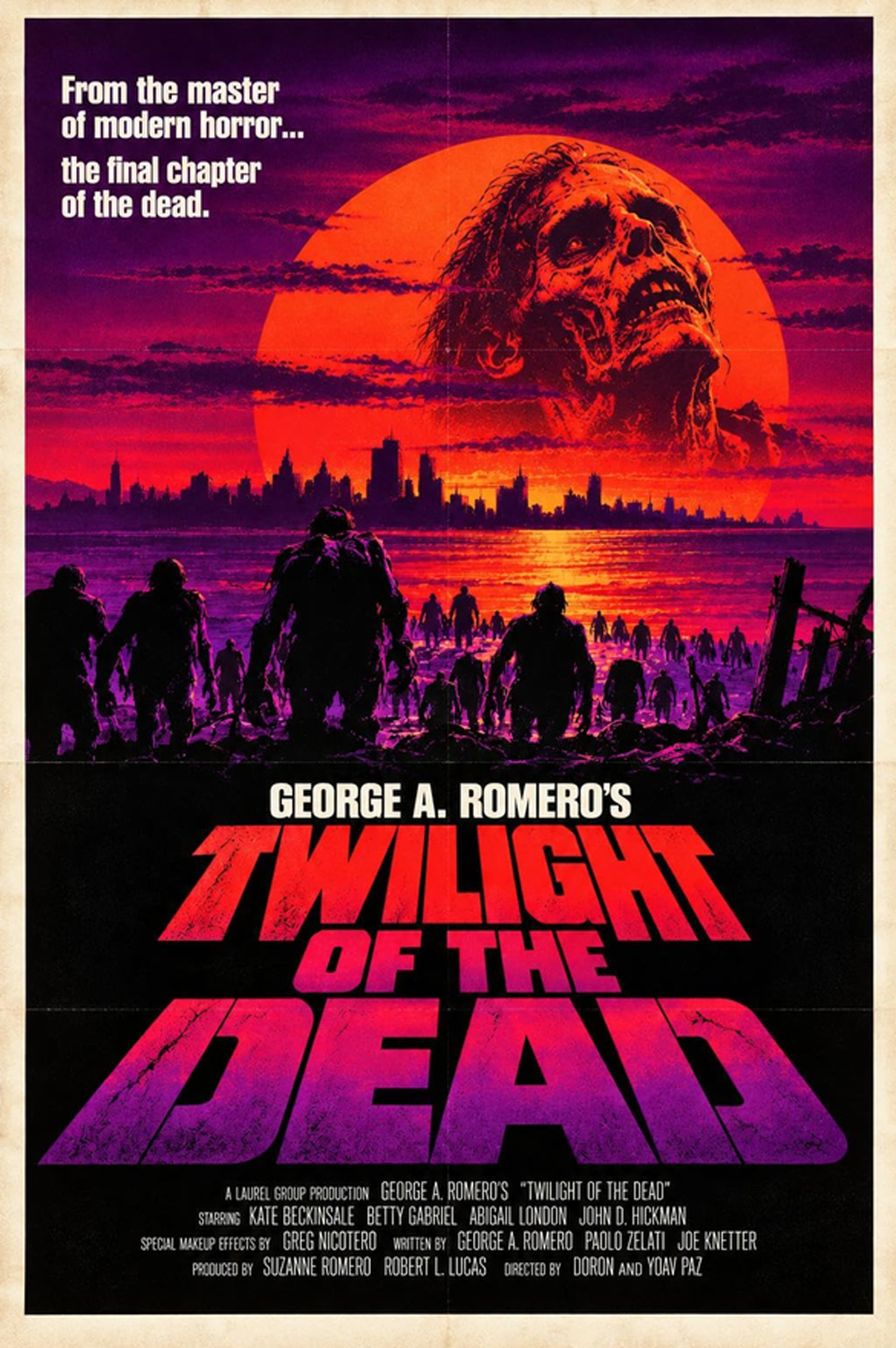
Before his death in 2017, Romero wanted to return to his original timeline of films that started with Night of the Living Dead, and make one last film that would conclude the story of the zombie apocalypse, He wrote a treatment that his widow would later use with other filmmakers to create his last chapter, Twilight of the Dead. After numerous stops and starts, the film was finally made and filming has been finished as of October 2026 for a release next year. The story description states that the film is set on a tropical island where the last of humanity are caught between factions of the undead. Hopefully this new film will capture the essence of what make George Romero’s movies so memorable, the palpable sense of doom that you could feel from the start to the end, and the smart characters and situations that made these movies more than just another monster film. These movies started a whole new horror sub-genre that has continued in the ensuing decades, most notably with AMC’s The Walking Dead, as well as a slew of other remakes and films that all exist thanks to George Romero and his vivid and scary imagination.
C.S. Link

