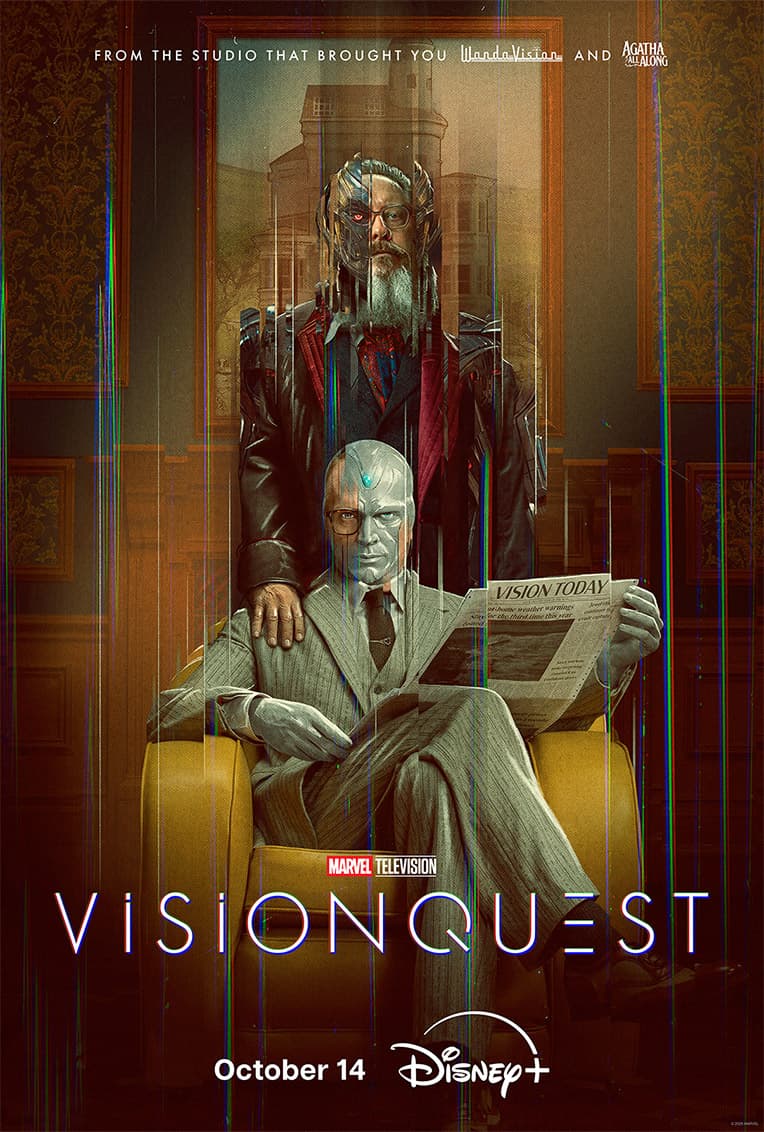
The second and final spinoff from WandaVision, the first Disney+ TV show based on the Marvel Cinematic Universe (MCU) concludes the trilogy that began with WandaVision and continued with Agatha All Along. Starring Paul Bettany as android or synthezoid called the Vision, the TV show partly takes place in the Vision’s AI environment and in the MCU as the Vision struggles to find his identity. Vision’s quest to find meaning and identity is a well written and presented TV series that utilizes organically its MCU setting while serving as an important lead up to the forthcoming Avengers: Doomsday.
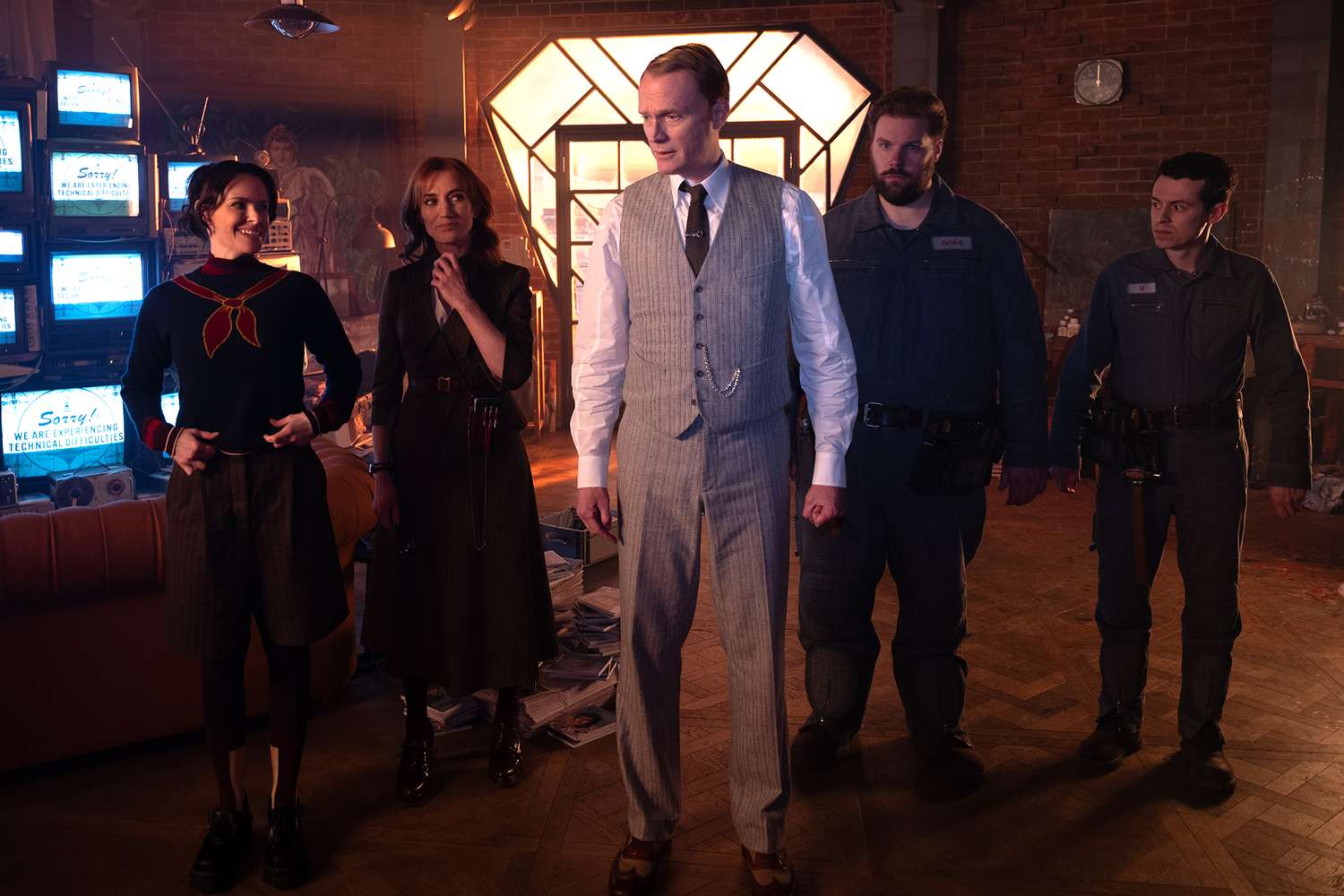
The series begins with an intimate look into the Vision’s AI personna which is represented as a too-perfect mansion and surrounding grounds and inhabited by several other AI programs that Vision keeps in his head. MCU fans will recognize them from previous MCU appearances but now personified by human avatars. They include J.A.R.V.I.S. (James D’Arcy), Tony Stark’s initial AI assistant, F.R.I.D.A.Y. (Orla Brady), who succeeded J.A.R.V.I.S., E.D.I.T.H. (Emily Hampshire), who was the AI assistant of Spider-Man in Spider-Man: Far From Home, and D.U.M.E. (Henry Lewis) and U (Jonathan Sayer), two early AIs that assisted Stark in his workshop during the early Iron Man films. BTW, Vision’s mind is also the refuge for a copy of the deadly Ultron (James Spader) AI that threatened humanity in Avengers: Age of Ultron.
At the end of WandaVision we learned that even though Vision died in Avengers: Infinity War, the synthezoid was reconstructed by a government agency and reactivated but without his memories during the events of WandaVision. A spiritual construct of Vision in Wanda Maximoff’s hex reality contained the Vision’s memories and during a confrontation, the hex construct of Vision transferred the original Vision’s memories into the reconstructed Vision (seen as a pure white android instead of the red, yellow and green Vision). To date, this Vision struggled to understand the memories and the feelings behind and he tries to process his feelings through interactions with the other AIs and in the real world as hired help in bar in Edinburgh, Scotland.
As Vision’s interactions with the AIs and humanity go on, he is soon targeted by a mysterious bounty hunter called the Palladin (Todd Stashwick), who has access to state-of-the-art weapons and technology. A mysterious person known only as the Client hired Palladin to capture Vision for unknown reasons and Palladin draws out Vision by capturing Thomas Shephard (Ruaridh Mollica), a young grifter in Edinburgh whose soul is merged with Tommy Maximoff, one of Wanda and Vision’s sons that were conjured into existence in the hex reality. Thomas is struggling with the memories of Tommy and soon begins manifesting Tommy’s mutant powers of super speed.
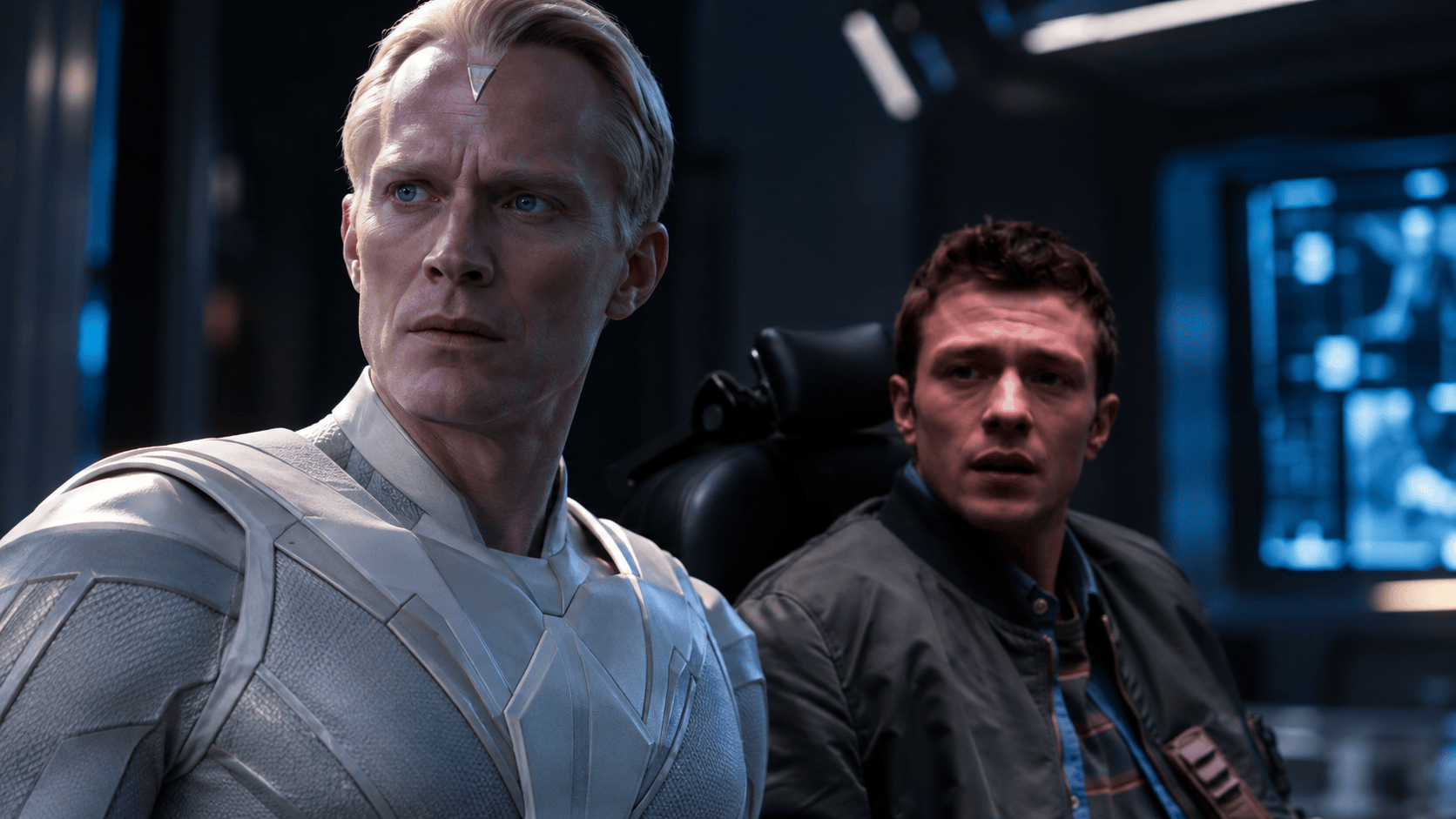
Vision is able to rescue Thomas but not before being damaged by Palladin, which for budgetary reasons nerfs his full power set. At the same time, Ultron and Vision have a battle of wits in the AI world about the faults of humanity as Utlron plots his escape, with his ultimate motives being unknown.
Despite being the third act in a trilogy and the less-than-spectacular reception most MCU TV shows received, VisionQuest not only sticks the landing for the WandaVision trilogy but stands out as one of the best MCU TV shows to date. Putting aside the action and the special effects, what makes the TV series such a standout is the writing, as well as the terrific performances, especially from Bettany as the psychologically tortured Vision. This was best seen in the episode “Immolation” where Vision finally confronts his innermost feelings and has an emotionally cathartic moment where he acknowledges the grief in losing his wife and sons and accepts who he is. When this happens with the Vision, we are provided with more details about the history of the MCU and how it closely matches Marvel Comics with the inttroduction of Dr. Phineas Horton and the original Human Torch/Synthetic Man (both played Bettany). With these new characters we find out how fundamental they are not just to events of the MCU but with the spiritual and intellectual background to Vision and Ultron’s psyche. Bettany’s acting was purely brilliant as he portrayed several distinct characters at the same time.
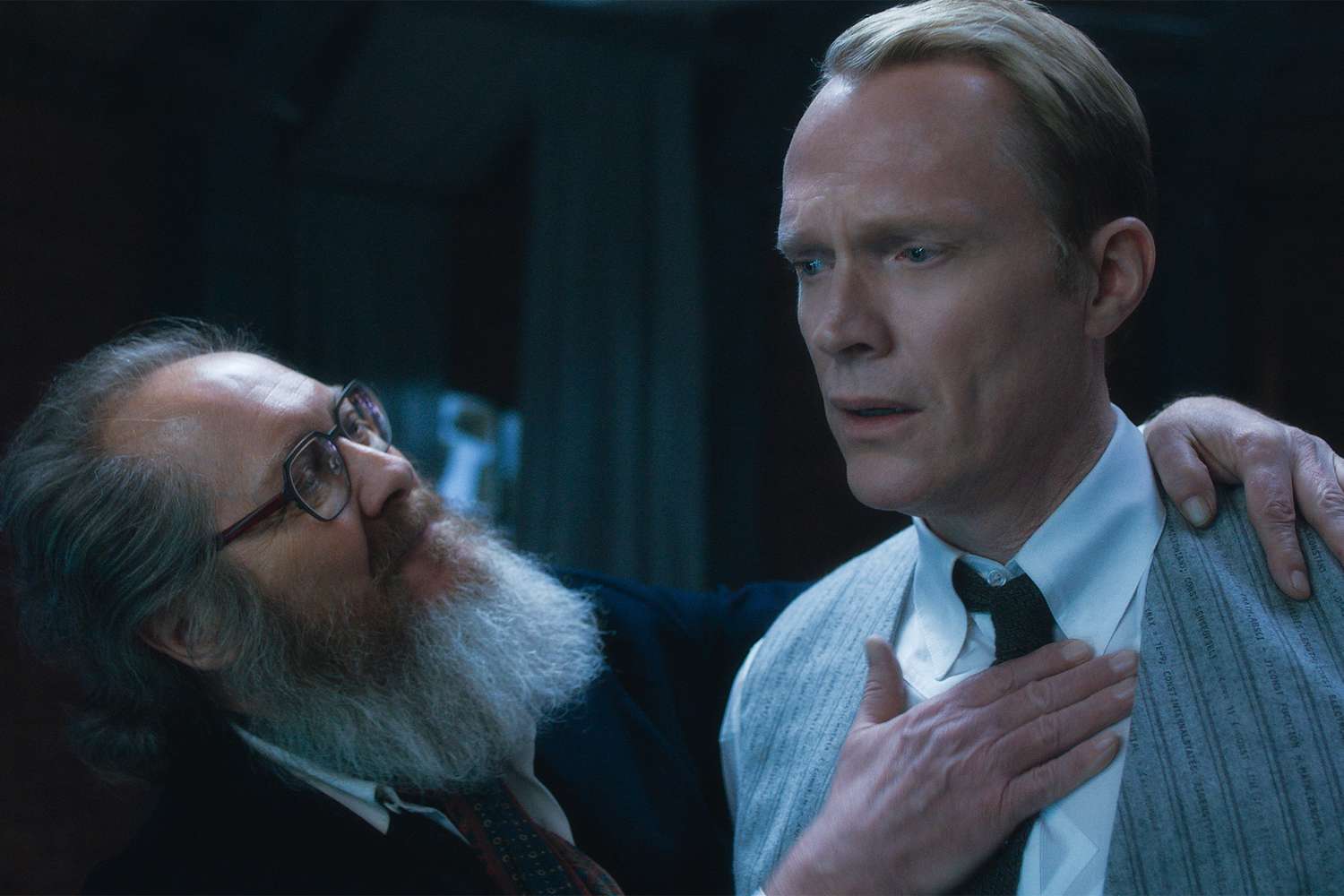
What also stood out were the interactions between Vision and Ultron. Despite being mostly shown as a human avatar, Ultron was able to convey an uneasy and unpredictable sense of menace where we never knew what he was planning. His actions such as his tricking Vision to allow him to take over his body in the episode “Malware” and then kills an AI creator was a complete surprise and kept us guessing over what he would do next. Ultron’s presentation in VisionQuest in many ways redeems him and the film Avengers: Age of Ultron by embellishing his character and background. We understand why Ultron is murderous with his mercurial personality. One moment he can’t help but admire the beauty of artwork created by humans, the next he is ready to exterminate the species because he is convinced this is what humanity actually desires.
The interactions Vision has with his AI companions are also memorable as each of them display unique personalities, even the nearly silent D.U.M.E. and U stand out with their presence that is gently humorous given their appearance as a large man and a small one aptly helping the others.
Much of the credit for how well the show ended up goes to executive producer Terry Matalas, the man behind 12 Monkeys and the triumphant third season of Star Trek: Picard. He has a deep understanding of the characters and the MCU. He was able to imbue each episode with subtle cues and references to the MCU that do not overwhelm casual fans but thrill hardcore fans. Just with the exploration of Palladin we get references to Daredevil, the Punisher and Werewolf By Night, and even Spider-Man is alluded to when E.D.I.T.H. complains that the first person she assisted was a high school student (accompanied with a subtle musical cue of Spider-Man’s theme).
Throughout the series, VisionQuest serves as a more than satisfactory conclusion to the WandaVision trilogy. It answers many questions and resolves long-gestating plot lines, particularly the fate of Wanda and Vision’s children and the post-credits scene is revealed to have an important connection to Avengers: Doomsday. While the show did not feature the bizarre recreations of TV sitcoms that were peppered throughout WandaVision, its final episode “Forever” presented an at-times hysterical AI simulation of a sitcom complete with a generic laugh track which the Vision uses to intellectually confront Ultron. The way it played out was brilliantlly written and directed by Terry Matalas. If Matalas never returns to the world Star Trek (and given how unpredictable Trek’s parent company has revealed itself to be with the turmoil they created recently by firing DC Studios head James Gunn), Marvel Studios must lock him down to run future TV shows. He not only knows how to run a TV show but has a reverance for a TV show’s universe and uses it to a show’s advantage.
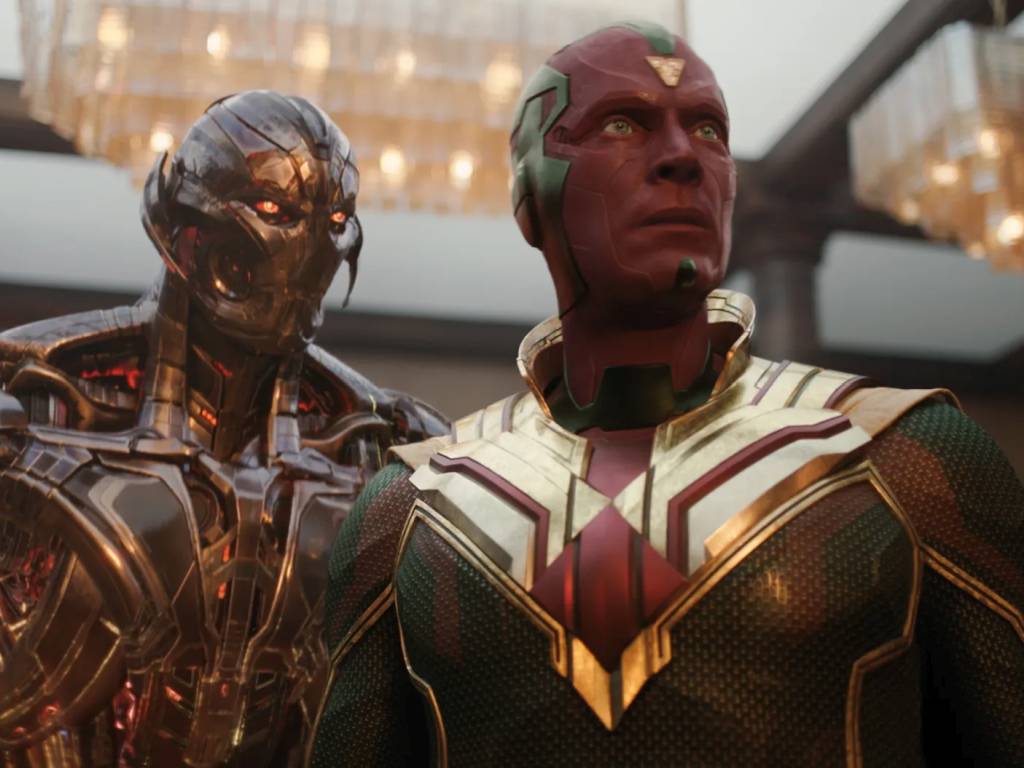
VisionQuest is hands-down one of the best MCU TV shows and given its reception, maybe we will not see the last of them. Despite Marvel Studios wanting to focus back on films, this TV show proves that the MCU can flourish well in the TV medium with the right showrunner(s) in charge.

