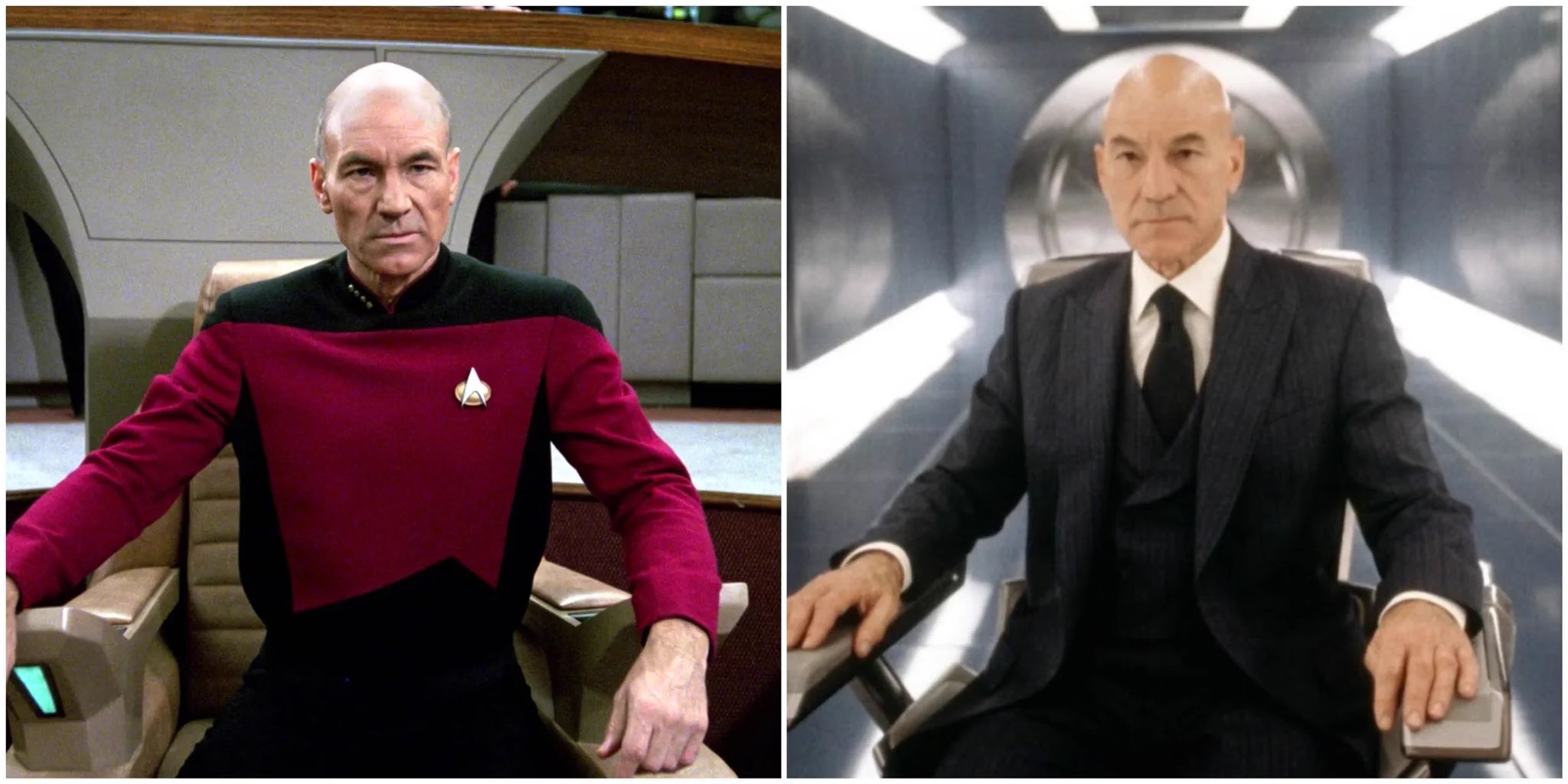
Make it so” Captain Jean-Luc Picard, Star Trek: The Next Generation
The Worlds of Star Trek and Marvel are still numb and devastated by the news that Star Trek and Marvel Legend Sir Patrick Stewart passed away last week at the age of 86 following a brief battle with Alzheimer’s Disease and Lewy body dementia. The tragic announcement of his death on October 28, 2026 was a double gut punch for Star Trek fans and in many ways even more devastating news following the death of Walter Koenig a couple of days earlier. Despite the tragic loss, Stewart lived a full life and left behind a glorious acting legacy that was highlighted by his iconic performances as Captain Jean-Luc Picard in Star Trek: The Next Generation (TNG) and Star Trek: Picard, and as Professor Charles Xavier/Professor X in the X-Men films.
Early Life & Career
Born in Mirfield, United Kingdom, Stewart developed a passion for acting when he was a child and studied drama. He soon participated in local theater and continued to develop his acting skills while working as a journalist. Eventually, he chose to devote his career on acting and made his debut onstage at the Theatre Royal, Bristol in a production of Cyrano de Bergerac. He then became a member of the Royal Shakespeare Company and honed his acting skills in several minor television roles and stage productions. Stewart preferred classical theater, even though he began to gain the attention of Hollywood thanks to his strong baritone voice and stage presence. Probably his best known work in the 1970s was his role as Sejanus in the BBC TV drama I, Claudius in 1976. He won the prestigious Laurence Olivier Award for his work in Antony and Cleopatra in 1979.
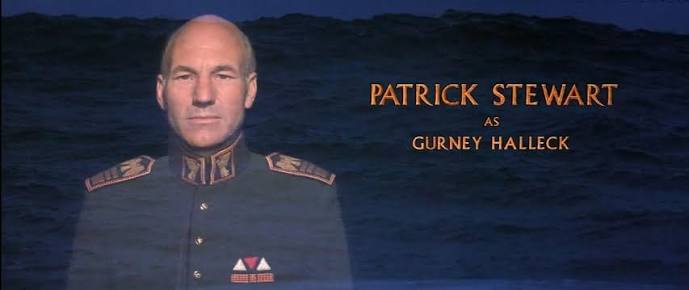
Stewart entered the realm of live-action genre with his small but impressive role in Excalibur (1981) and especially as Gurney Halleck in Dune (1984). One of the few highlights in that film was his character’s unexpected reunion with Paul Atreides in the battlefields of Arrakis. The moment when the two men hugged each other in the chaotic battlefield was quite heartfelt and emotional as it genuinely conveyed the deep friendship they shared. Stewart also appeared in the sci-fi/horror film Lifeforce.
The Next Generation Begins
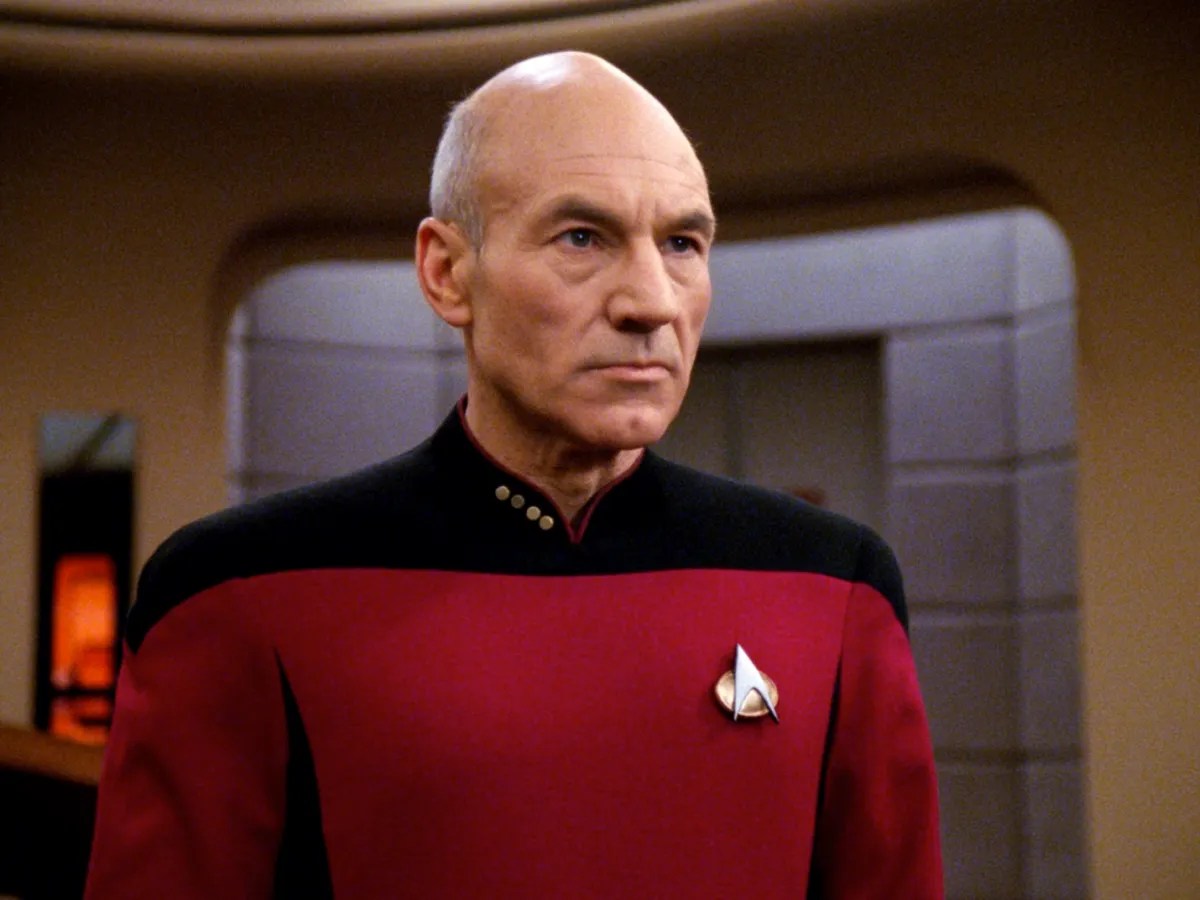
When Star Trek: The Next Generation went into pre-production in 1986, there was an exhaustive search to find the right actor to play the Enterprise’s captain. During this period, executive producer Robert Justman saw Stewart giving a lecture about Shakespeare in UCLA and knew instantly that he would be perfect to play Jean-Luc Picard, though he was considered for the role of Data.
Stewart’s casting as Picard was not an easy road, as Star Trek creator and showrunner of TNG Gene Roddenberry did not favor Stewart. Roddenberry felt that Stewart, as a bald, middle-aged Shakespearean actor, did not fit the role of a virile starship captain and preferred Patrick Bauchau and Stephen Macht instead. It should be noted that other prominent actors like Yaphet Kotto and Edward James Olmos were considered. Thankfully, Justman persevered and finally convinced Roddenberry and other TNG executives that Stewart was the best actor for the role due to his auditions.
The rest as they say is history. When Star Trek: The Next Generation made its debut in syndicated television in the fall of 1987, many were skeptical that a Star Trek series without the original cast would work. Unfortunately, due to the tepid first season, those doubts were justified, but one thing that stood out in the early TNG episodes was Stewart’s performance. His Picard had a commanding presence with a confident and eloquent manner that quickly established that Captain Picard was a natural leader in a way that stood apart from Captain Kirk.
After a couple of seasons, TNG found its stride and gained acclaim by fans and critics as it ushered in the Star Trek Renaissance in the 1990s. Over time, thanks to Stewart and others, TNG became well regarded in many instances lauded as the best Star Trek TV series. Being that Picard and the other characters were quite different from the original Star Trek characters, the world and scope of Star Trek was able to grow into a rich and diverse universe with new characters that fans eventually embraced. During his tenure on TNG Stewart turned in some brilliant performances, notably in “The Measure of a Man”, “Family”, “Tapestry”, “Chain of Command”, “Darmok” “All Good Things…”, and “The Inner Light”. He also directed several episodes of the TV series.
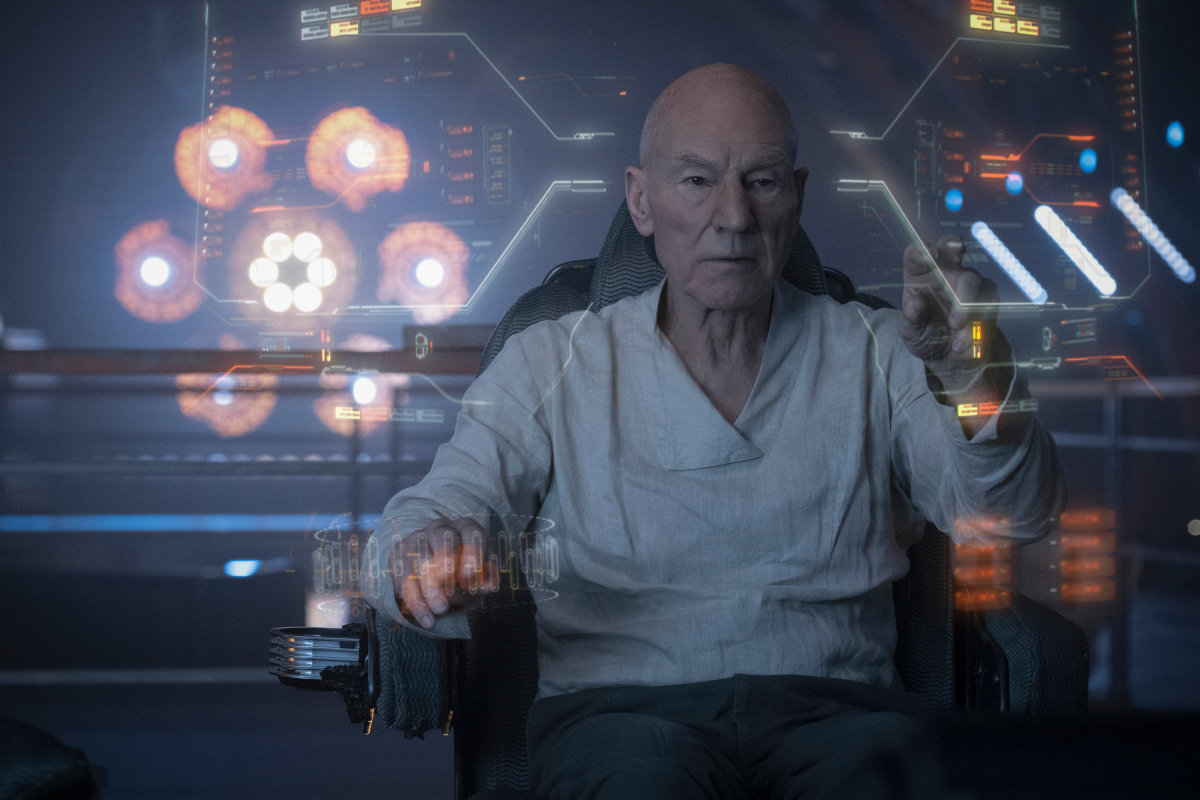
When the series ended after seven seasons, Stewart and the other TNG cast made their transition to films in 1994 with Star Trek Generations, which gave us the unforgettable moment with Captain Picard met the other legendary Star Trek Legend, Captain Kirk. The natural chemistry the two actors shared with each other was the best part of the flawed film and was delight for fans of the two series to watch. The TNG films ranged in quality but one constant about them was Stewart’s performances. Arguably his best TNG film performance was in Star Trek: First Contact where he emulated Captain Ahab (a role he later played in a television production of Moby Dick) in his obsessive drive to defeat the Borg.
When the TNG film series ended in 2002 with Star Trek: Nemesis, Stewart took a break from Star Trek and excelled in other roles such as Charles Xavier in the X-Men film franchise, although he reprised his role in the video game Star Trek: Legacy and lent his voice to the Star Trek: The Experience theme park attraction Klingon Encounter. However, he returned to the role that made him famous in Star Trek: Picard for three seasons from 2020 to 2023. The TV show had a mixed reception, but its third and final season was well beloved as it finally reunited the core TNG cast, as well as featuring other great Trek characters and plot lines. Given that he is no longer with us, it is quite fortunate that we were able to get a reunion of the TNG characters for one last trimuphant hurrah.
Enter The X-Men

While many successful actors are best known for one iconic role, Stewart defied tradition and made another role his own, that of Professor X/Charles Xavier. Before X-Men was even in pre-production, many fans of the Marvel Comics superhero team fan-casted Stewart as Charles Xavier, chiefly for his bald look and commanding presence. It turned out this was a case where the fan-casting was spot on. Even though the X-Men films were noted for the star-making performances by Hugh Jackman as Logan/Wolverine, Stewart’s telepathic Professor X had a calm, measured presence that served as a perfect foil for Jackman’s rash and impulsive Logan and an advocate for the rights of mutants.
The best moments between the two actors was in 2017’s Logan, which was supposed to be the final film appearance of both characters. At the twilight of their lives, Xavier and Logan formed a touching elderly father/aging son relationship that was instantly endearing. Seeing the once strong and collected Professor X degenerated into a feeble old man with a neurological disorder was heartbreaking to watch. Even more unbearable was seeing Xavier expressing guilt over inadvertently killing most of the X-Men, and his final moments when he and Logan share a quiet and heartfelt final meal together with a family that invited them for supper. Dammit, Stewart should have received an Academy Award nomination for his performance in Logan. Even though Logan was supposed to be the swan song for Charles Xavier, the character, or rather variants from other realities, returned in Doctor Strange in the Multiverse of Madness and the upcoming Avengers: Doomsday, which marks Stewart’s final acting performance.
For Stewart, the X-Men films also featured other notable screen shares, especially with Sir Ian McKellan, who played his frenemy Magneto. The two versatile actors displayed impressive gravitas as the two enemies who verbally combatted one another at times and on other occasions teamed up to protect mutants. During the latter moments, we got to see the old friendships and felt dismayed knowing that the relationship eventually crumbled, but got repaired in the end as the two held obvious respect for one another. This was best seen with their moments in X-Men: Days of Future Past. What enhanced the performances of Stewart and McKellan was their real-life friendship.
Other Works
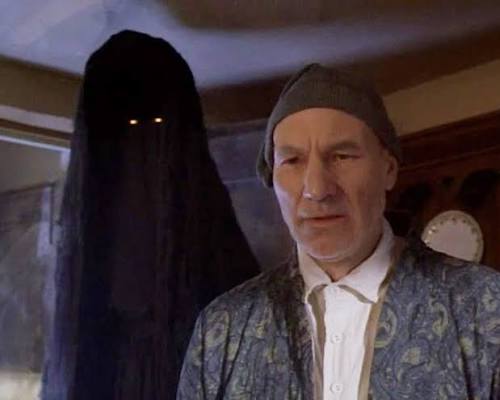
Patrick Stewart was able to excel in his acting career thanks to his exemplary skills. This enabled him to avoid being stereotyped for his role as Picard, though he always expressed his delight in the role. Aside from the X-Men films and Star Trek, Stewart appeared in numerous films, television shows and stage productions.
There are too many to list, but some highlights include his one-man stage performance in A Christmas Carol (which was later remade into a television film also starring Stewart), Moby Dick, Mysterious Island, Frasier, Jeffrey, The Lion in Winter, King of Texas, and Green Room. Stewart’s performance in A Christmas Carol was widely acclaimed as it demonstrated the range of his acting ability and earned him a Drama Desk Award for Outstanding Solo Performance, while his role in Green Room as a vicious white supremacist terrified viewers.
Stewart also turned in impressive voiceover work for a wide range of films and TV shows such as Bambi II, American Dad!, Family Guy, Chicken Little, Animal Farm and lastly in this year’s The Sheep Detectives. What made his work stand out was of course his distinctive rich baritone voice that was very commanding.
For his work, Stewart received many prestigious nominations and awards, including Emmys, Golden Globes and a Tony. He won a Grammy for Best Spoken Word Album for Children in Prokofiev: Peter and the Wolf in 1996, another Laurence Olivier Award in 2009 for Hamlet, a Critics Choice Award in 2021 for Star Trek: Picard, and several Saturn Awards for his work on Star Trek: The Next Generation, Star Trek: Picard, and Logan. However, the best recognition Stewart received was in 2010 when he was knighted by Queen Elizabeth II for his services to drama.
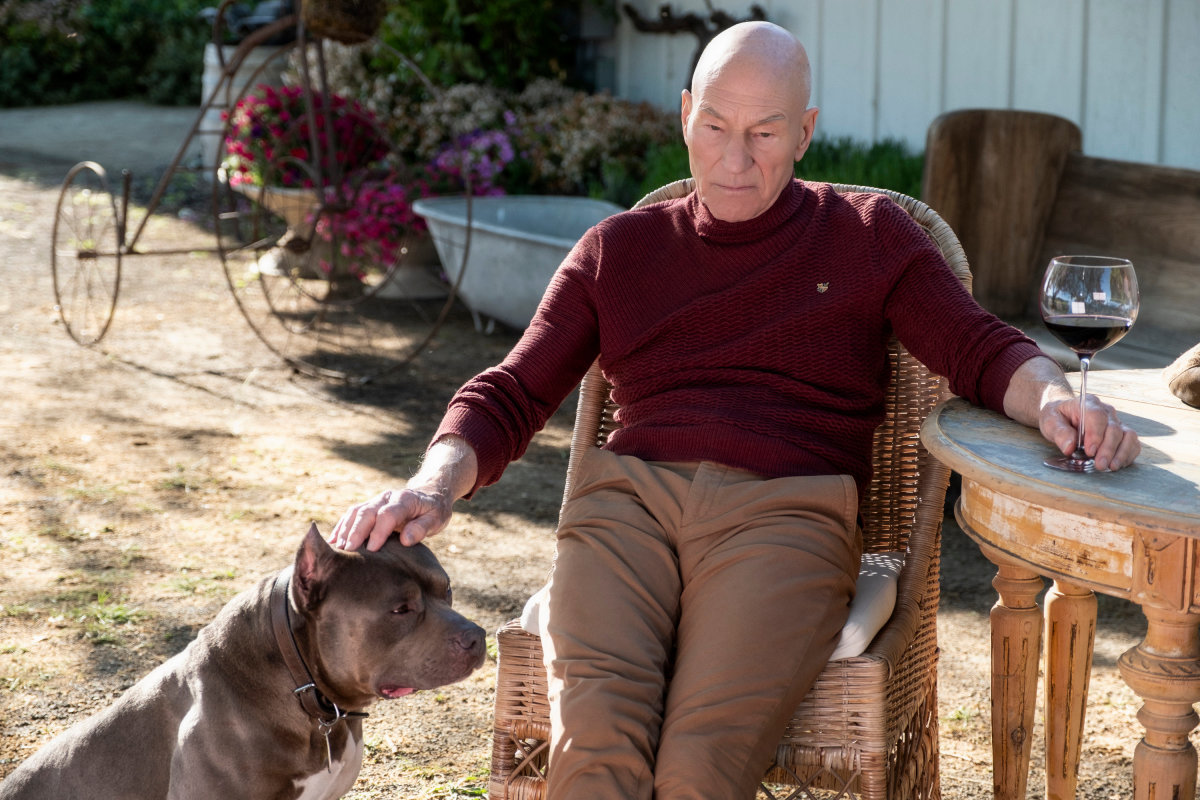
Aside from his acting work, Patrick Stewart was an advocate for women’s rights, pit bulls, and supported charities helping soldiers with PTSD. Stewart often spoke out against domestic violence due to his experiences as a child when his mother was physically attacked by his father who suffered from PTSD. He also fiercely spoke in support of pit bulls and fostered many of them, as he wanted to combat the stigma that the dogs were vicious. In the early episodes of Star Trek: Picard, his character had a beloved and sweet-natured pit bull that he kept in the family farm that was called Number One. The ASPCA honored Stewart with the Pit bull Advocate & Protector Award in 2021.
The world, no, the stars themselves feels emptier without Sir Patrick Stewart. His acting presence will be missed and his contributions not just to Star Trek and Marvel films but to acting and humanitarian works will be remembered for ages to come. He left behind a rich tapestry of work that will endure forever, and for that we should celebrate the man and his accomplishments and how he forged a new way forward with Star Trek that will continue to expand into the future and the stars. Make it so.
José Soto

