Coyote: Allen Steele’s Gateway Novel To A Bold New World

Some of the best sci-fi books to read during the summer months are those from author Allen Steele’s Coyote universe. Starting from Coyote and concluding with Coyote Destiny, these books explore a few tried and tested themes seen in science fiction literature. Chiefly among them are the ideas of man versus nature and of man versus his government, which are first seen in the first novel of the series Coyote. Subtitled “A Novel of Interstellar Exploration” this book deals with a group of space colonizers who rebel against an evil American government in the late 21st century and like the early pilgrims in our history, set out for a new land or rather a new planet.
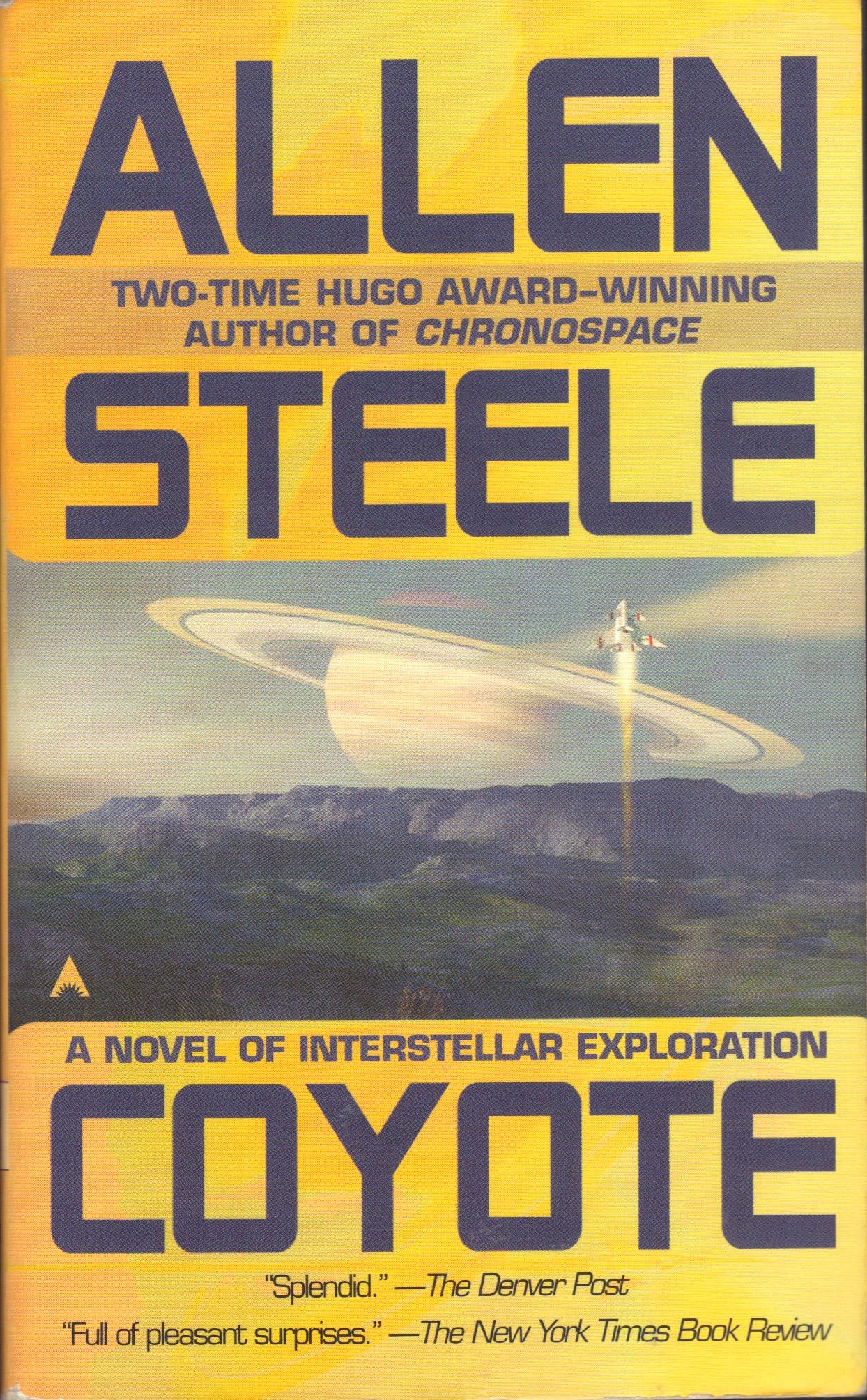
coyote 1Actually this novel that was published back in 2003 is a collection of short stories that have been gathered into one book which explains the episodic nature of the novel. It’s not a complaint since each storyline while self contained and sometimes focusing on some characters does advance smoothly the overall story and gives a good perspective on the aspects of colonizing an alien world.

The book opens with the main characters on Earth. In the future, the United States has fallen and replaced by an ultra conservative dictatorship called the United Republic of America. It’s a dismal place where the government represses people, is fighting guerillas and separatists and is isolated from the world. The U.R.A. is also launching a colony starship with colonizers to its destination being Coyote, a moon that can support life and orbits the planet Bear in the 47 Ursae Majoris system. Unknown to the tyrannical U.R.A. is that the starship’s captain Robert E. Lee – – yes, he’s a descendant of the actual Lee from our history, and a group of conspirators plan to hijack the ship during its voyage. It won’t really spoil anything to say that they succeed and that the reason they do so is that his group wanted to escape the government and they figured that their destination was beyond the grasp of the U.R.A.

Before they arrive on Coyote, the novel spends a segment on the actual voyage. The starship, the U.R.S.S. Alabama, won’t reach Coyote for 230 years so the crew goes into biostatis, a type of induced hibernation. Unfortunately, one of the crewmembers, Leslie Gillis, is awakened only three months into the journey. Unable to go back into biostasis, Gillis is condemned to spend the rest of his life in solitude on board the ship or commit suicide. He chooses the former and the novel details how he spends time which was surprisingly interesting. One plot point which is brought up and so far never resolved is the fact that Gillis finds evidence of alien intelligence in the form of a passing spaceship. Steele never reveals in Coyote what was it that Gillis spotted and it’s frustratingly tantalizing.

Midway through the book, the colonists coyote maparrive and the rest of the story deals with the hardships they face in settling in the new world. Steele wisely spends some time going over the alien environment that while Earth-like is still an alien world. It makes the world of Coyote seem like a character unto itself. One way this was shown was when it’s shown  that the world has longer seasons. This adds to the hardships the colonists face since a month lasts about ninety days so winter for instance is that much longer.

The story shifts to Carlos Montero a teenager who sets out with his girlfriend Wendy Gunther and his friends to explore the world’s vast equatorial river system. This plot doubles for a coming-of-age story which is heartfelt at times without being too saccharine. The story becomes more intense as his decision to take a Twain-inspired trip and his reckless behavior leads to death and Carlos is forced to become a man. Part of the way he does this is by his continuing the journey solo to find himself and spare his companions more hardship. The story at the same time doubles as a fascinating travelogue of Coyote as Carlos explores it and ultimately as a man makes a hard choice over what to do with his life.

From reading the novel it’s fairly obvious that it’s a retelling of our American history right up until the Revolution. The last part of the novel is a set up for the sequels. Another starship arrives and brings humans ready to share the spoils in the world the characters worked so hard to settle. This, of course, sets up the future conflicts seen in Coyote Rising and Coyote Frontier. The final two books in the series open up the Coyote universe as contact is made with alien civilizations. This premise spun off a trio of novels that largely take place away from Coyote: Spindrift, Galaxy Blues and Hex. Those books themselves are just as fascinating to read. On the whole, all these books are well written, never dull and are definite page turners. In other words, prime summer reading for sci-fi fans. It will take a while to go through all of them, but it’s best to start with Coyote, the one that started it all. With this first book, readers will easily find that Allen Steele has created an engaging story, world and cast of characters that warrant these sequels and spinoffs.

José Soto
Khristmas Klingon Style

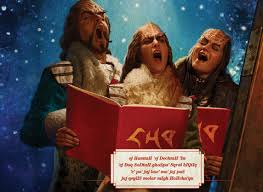
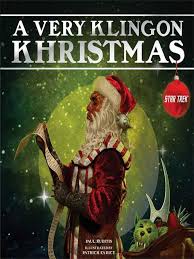
klingon khristmasOne of the stranger gift requests I received for this Christmas is the new Star Trek book A Very Klingon Khristmas by Paul Ruditis. It’s obviously a parody about the holiday season done Klingon style. Sure, there are many absurd Klingon parodies floating around pop culture out there, but this is one of the more better made ones. BTW, the honor for the most bizarre, yet hysterical spoof is the Klingon video parody of Psy’s famous dance song “Gangnam Style”.

Getting back to A Very Klingon Khristmas, the book looks at the holiday from a Klingon point of view. The holiday being celebrated tongue-in-cheek style is the birth of the mighty Klingon warrior Kahless. In the Klingon holiday, Santa Claus has retractable claws and leaves tribbles in the stockings of the naughty kids, and so on. But, what really sells the book are the Norman Rockwell-like paintings (by Patrick Faricy) that capture the festive, family mood of Christmas with a Klingon spin.

klingon carolers

It’s a cute and fun book for Star Trek fans that isn’t too pricy, (less than $20) though the hardcover is only 32 pages long. That’s something to consider if you’re doing some last minute shopping and need to get something for a Star Trek fan. Look at it this way, A Very Klingon Khristmas will last longer in a fan’s memories than another Star Trek calendar.

So this can be the start of a new kind gift idea. Who knows? Maybe they’ll do other Christmas-themed Star Trek books. Personally, I’d like to read a A Ferengi Christmas Carol. 😀

Annette DeForrester

Remembering Photo Novels

bsg bookDuring the ’70s and early ’80s photo novels (sometimes called movie novels) were popular movie or TV tie-in book adaptations. Following the format of a comic book, these adaptations used picture stills instead of artwork to tell a story. Either word balloons or off-panel dialogue were used and the photo novels were an innovative concept that didn’t go for the traditional adaptation that were sometimes a chore to read.

In an age before the VCR or DVD or even the digital download these books were great for fans who wanted to relive in a small way the experience of watching their favorite film or TV show. And there were hundreds of stills that were never seen before. The best books were the large format adaptations of Alien and Outland since the larger book size meant the pictures were bigger. Of course, the trade off was the cover price ($8.95 for Alien as opposed to $2.95 for Star Trek: The Motion Picture!).

Sadly, as new technologies emerged and print costs went up these types of books were discontinued in the early ’80s, trek pagealthough one was made for The Blair Witch Project in 2000. Many knew something was amiss when the Star Trek II: The Wrath Of Khan photo novel came out in black and white. The obvious reasoning behind this move was to cut production costs while keeping the book at a reasonable price for consumers. While it featured terrific and rare stills from the movie, the thing wasn’t in color and not visually appealing.

On a side note, photo novels are still produced for online viewing. The BBC’s website has several for Classic Doctor Who stories. There are also fan-made and professional photo novels with original stories that are online for Star Wars and other properties. Comic book artist and writer John Byrne announced in June this year of his intent to make an original Star Trek photo novel.

page 2There weren’t many photo novels produced (no Star Wars, darn it!) during its heyday, but they are great collectibles for anyone who can find them or unforgettable gifts for fans.

The list includes: Alien, Buck Rogers In The 25th Century (the pilot TV film released in theaters), Close Encounters Of The Third Kind, Outland, The Lord Of The Rings (the animated version), Invasion Of The Body Snatchers (the 1978 remake), The Rocky Horror Picture Show, Star Trek: The Motion Picture, Star Trek II: The Wrath Of Khan, The Incredible Hulk (TV pilot), Battlestar Galactica (the TV pilot), and assorted Star Trek episodes (“Amok Time”, “The Trouble With The Tribbles”, The Deadly Years”, among others).

Waldermann Rivera

John F. Kennedy: Time Travelers & Alternate Historians’ Favorite Subject

kennedyThe myth and aura of President John F. Kennedy has permeated many aspects of our culture, including the worlds of fantasy and science fiction. This is due to the circumstances of his tenure as U.S. president and his assassination. Even though the Space Age began before he took office, JFK helped invigorate the nation’s space efforts with his pledge to land a man on the moon by the end of the ’60s. His short time in office also saw the closest moment to date of a full-scale nuclear war with the Cuban Missile Crisis. Then there is the tragedy of his assassination that even today is fraught with controversy.

Needless to say, almost all of these stories have to do with either time travel scenarios or alternate history. Often, the time travel yarns lead to alternate timelines where the slain president is never killed in 1963. Ironically, it turn out that JFK living past that fateful day usually leads to a disastrous timeline. It’s interesting to note this considering the admiration that many have for the slain leader. Of course, the reason is because these stories need some drama.

Literary Speculations

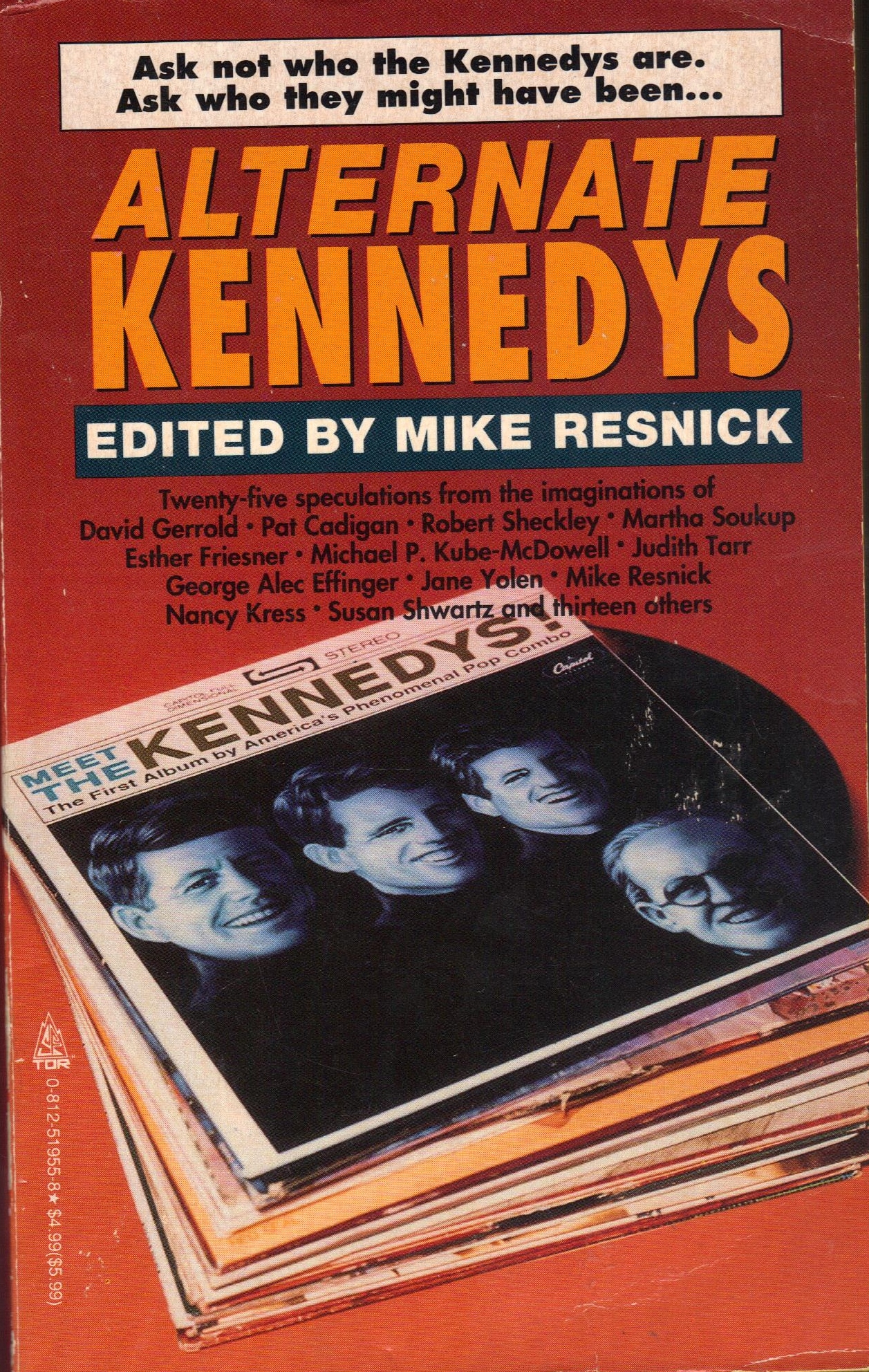
alt kennedys.jpgThere are too many sci-fi and fantasy books to list here that explore JFK and altered history. Some notable entries include Alternate Kennedys, a collection of short stories that featured alternate history accounts, as well as decidedly fantasy and comedic tales of JFK and his family. Some of the better stories in that collection are “The Winterberry”, “The Kennedy Enterprise” (in this tale, the Kennedy brothers are the big stars of a famous sci-fi TV franchise), “A Fleeting Wisp Of Glory”, and “Prince Pat”.

Stanley Shapiro penned a time travel book called A Time To Remember, which was made into a TV film Running Against Time that starred Robert Hays as a professor who wants to save his brother from dying in the Vietnam War. So he goes back in time to save JFK and thus prevent that war from happening.

Another novel about JFK living past 1963 being detrimental to history is Prologue by Greg Ahlgren. In this book, JFK never died and wound up pulling out of Vietnam. This decision led to the communistic takeover of the world, causing the book’s protagonists to travel in time back to JFK’s era and rewrite history.

One recent, high-profile work is Stephen King’s novel 11/22/63 where the story’s main character time travels to the past and stops Oswald. The resulting timeline leads to George Wallace, and later Hillary Clinton, into becoming presidents and the Vietnam War escalating into nuclear war.

jfk king

Putting aside the fantastic novels and stories, recently many historians have written essays and books seriously exploring alternate timelines about JFK. Many of them are well worth reading for history buffs and fans of alternate history. The most recent example is If Kennedy Lived: The First And Second Terms Of John F. Kennedy: An Alternate History by Jeff Greenfield, a followup to his essay collection Then Everything Changed. In that latter collection of essays, Greenfield explored a timeline where Kennedy was killed before he was inaugurated. This terrible event led to the Cuban Missile Crisis becoming a nuclear war.

Getting back to fiction, there are novels about  alternate versions of the Cuban Missile Crisis. In these accounts the crisis turned into full-scale nuclear war between the U.S. and the Soviet Union, leading to terrifying results. They include Resurrection Day by Brendan DuBois and When Angels Wept: A What-If History Of The Cuban Missile Crisis by Eric G. Swedin. Continue reading

The Hunger Games & The Movie On Fire

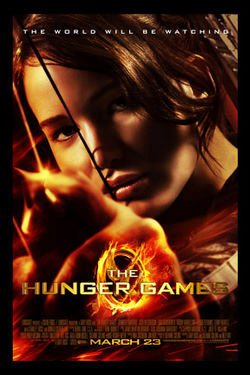
HungerGamesPoster “Up, up, up. It’s going to be a big, big, BIG day!” This was how I started the morning of March 22, 2012; almost expecting to wake up to a knock on the door by the manically upbeat Effie Trinket herself. Instead it was by my fellow fans getting ready for the midnight premiere of The Hunger Games. For months we had been eagerly awaiting the movie release based on the popular and controversial young adult novel of the same name by Suzanne Collins. We couldn’t wait to finally see District 12, the gritty Hob, the dreaded arena, the wickedly fashionable Capitol, and just how much violence would make it into a PG-13 rating. As a Panemaniac myself, I was excited to see if the book-to-screen adaptation would burn like an inferno, or fizzle out into ashes.

I was drawn into the futuristic dystopian world that Collins had created in her book, where reality television has taken a twisted new edge to entertain its audience with a blood sport. In The Hunger Games, Panem is a nation in what used to be known as North America. It consists of twelve districts and ruled over by a totalitarian government from the Capitol, located in the Rocky Mountains. As a punishment for a long-past, failed uprising, once a year each district must hold a lottery to chose one boy and girl between the ages of 12 to 18 years old. These “tributes” are forced to compete in a nationally televised event called “The Hunger Games.” Like gladiator games enjoyed in ancient Rome, the tributes not only have to battle one another, but any lethal obstacle thrown at them by the Gamemakers. Twenty-four contestants enter the arena, but only one can survive to be the winner.

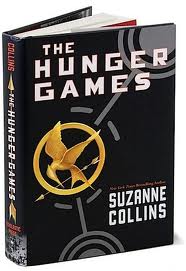
We follow the journey of Katniss Everdeen, a sixteen-year-old girl from District 12, a coal-mining town in the poorest part of Panem. Due to the tragic death of her father she is forced to break the Capitol’s law and hunt for game in order to save her family from starvation. In this world, the Capitol keeps such strong food regulation on the districts that many people are literally starving to death.hunger games book Katniss uses her wits and her hunting skills with her father’s bow and arrows to provide food for her mother and younger sister, Primrose. When her sister’s name is drawn for the 74th Hunger Games, Katniss volunteers as the female tribute, saving her sister, but condemning herself to death. Along with fellow tribute, Peeta Mellark, and their unstable mentor Haymitch Abornathy, they try to find a way to survive against all odds, but at a terrible cost.

I was intrigued by the author’s view of how easily a society could break down. Panem is a society that has become so desensitized by excess and ignorance that they celebrate the slaughter of innocent children as if it were the Super Bowl. Meanwhile, the districts’ citizens live without the comfort of having so much as a steady meal. I was also disturbed by the haunting idea of teenagers being taken from their families and forced to kill other children, or be killed themselves. Collins drew me into this world with her complex characters, descriptions of food and fashion, and her ultimate tale of love and just how far one is willing to sacrifice for freedom.

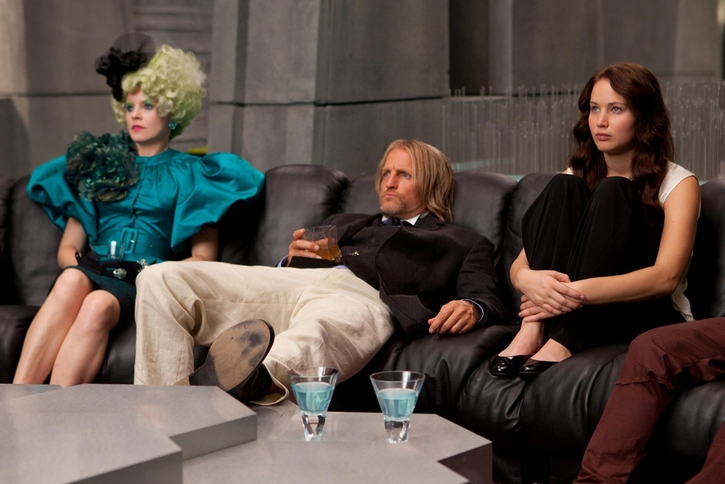
?????????????In anticipation for the movie, many of us showed up to the theater dressed as our favorite characters. It was the complex range of characters that really made me fall in love with this story. Right away, I was thrilled with the casting choices. Jennifer Lawrence was perfect as the tough and clever Katniss. Josh Hutcherson made us pine for the puppy dog-eyed Peeta Mellark. Amandla Stenberg as Rue, made us ache at the mere sight of her angelic face. And Lenny Kravitz stole the show as fashion genius Cinna simply by being himself. Sadly, there were a few characters that had been toned-down to keep things more suitable for the audience. Although Woody Harrelson was a convincing Haymitch, he was much more subdued than his tormented, alcoholic book version. Elizabeth Banks as Effie Trinket was not nearly as over the top as her wardrobe. Even worse, their most memorable quotes had been altered or dropped completely, leaving out major developments in their characters.

???????????????

Certain adaptations by director Gary Ross were actually better than the print version. Instead of telling the story through Katniss’ inner monologue, we got to see events from multiple points of view. The charming Stanley Tucci made the Hunger Game’s emcee, Caesar Flickerman, a very minor part in the book, unforgettable. And while Seneca Crane had been little more than a name to us, Wes Bentley and his dapper Capitol-stylized beard could not have enough screen time.

The downside was the too-fast-paced speed of the film. Scenes rushed past before we could emotionally deal with them. I had hoped to see more details of certain things fans would recognize in the novel. The blood bath in the arena was not nearly as violent as what we had imagined. The deaths, while agonizing to watch were not as painful as the shaky camera work. Mostly it just ended up causing headaches. I was disappointed that Ross did not express how the people of the districts were truly desperate for food. It is difficult to get an American audience to think of what it’s like to be really hungry. And finally, the romance, or lack thereof, between Peeta and Katniss was never developed. We left the film not knowing if it just was all for the Games or not.

I was pleased with this film. It was not perfect and there were things that could have been improved, but it was an exciting ride. I’m looking forward to the story continuing in The Hunger Games: Catching Fire.

Jennifer Drucker