2012 Doomsday Scenarios: Month Ten

Among the many well-known apocalyptic worries, the idea of supernatural creatures rising up and destroying our world, while hardly unlikely, captivates many people.

Doomsday Scenario No. 3: Vampires, Zombies & Monsters, Oh My!
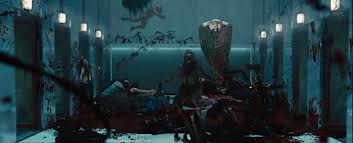
Supernatural monsters have been a mainstay in many cultures going back centuries. They were convenient scapegoats for things that went wrong and filled in the dark void of the shadows. These monsters either won so that a moral could be learned or were vanquished by the forces of good. Lately, stories have appeared where the monsters have triumphed and defeated humanity en masse. Certain monsters are more popular than others and fit into a doomsday scenario more easily than others. Of course, these supernatural monsters are impossible, right? Well science fiction has found ways to make them plausible.

Vampires In The Blood

The stylish and grotesque vampires have populated many blood curdling tales for centuries. As true creatures of the night, vampires arose from their coffins after sunset to prey on the living. The way to become a vampire isn’t to just die but to be bitten by one. That suggests that these creatures probably transmit a virus that transforms a living person into a vampire.
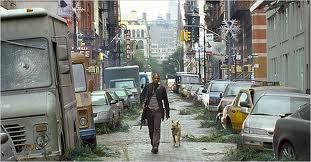
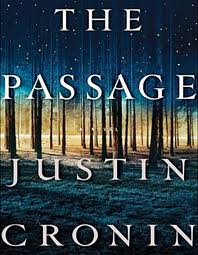
Richard Matheson’s classic novel I Am Legend has a vampiric virus decimating humanity and resurrecting them as vampires and taking over the world. The book and the films based on it (The Last Man On Earth, The Omega Man and most recently I Am Legend) presented us with an empty, decimated world with a sole human survivor and his desperate fight not just against countless vampires but to develop a cure.  There are other works about viruses that turns people into vampires and imperils the world. Two books that come to mind are The Strain by Guillermo Del Toro and Chuck Hogan and The Passage by Justin Cronin. The Passage is set in the near future where a virus quickly transforms most of humanity into vampire-like creatures who take over the world. The anthology novel Under The Fang features several short stories about humanity conquered by vampires.
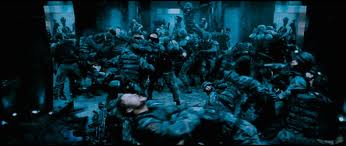
As for films about vampires ruling the world, in addition to I Am Legend, there was Daybreakers, which took place a few years after a virus turned most of humanity into bloodsucking creatures. Daybreakers showed a world literally turned upside down as the vampire denizens populated major cities, but lived underground away from the sun and basically carried on with their lives. They just needed to farm the few remaining humans for nourishment. A variant of the vampire virus is the sci-fi film Lifeforce, which was based on the book The Space Vampires by Colin Wilson. This time vampire-like aliens were brought back to Earth by astronauts and it wasn’t blood that the aliens fed on. It was the titular lifeforce of people. As an added bonus, many of their victims also became vampiric and hunted humans for their lifeforce.
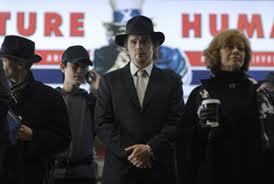
Zombie Apocalypse
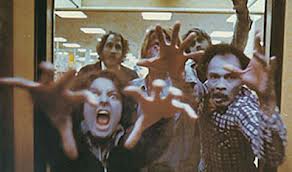
The undead flesh eaters are undeniably the most popular monsters to use for post-apocalyptic tales. Look no further than the hit AMC series The Walking Dead. It wasn’t always so, until the late 1960s zombies were relegated to stale horror yarns usually dealing with voodoo. Then George Romero came along and changed the sub-genre forever. His classic film Night Of The Living Dead gave us a world on the brink of a societal breakdown as undead corpses roamed the countryside and feasted on the living.
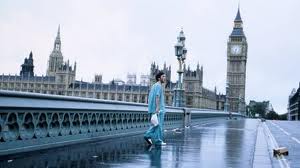
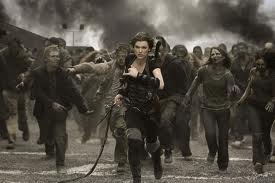
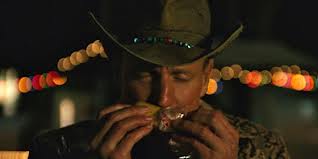
Romero directed sequels that were very popular but the zombie apocalypse genre didn’t reach maturation until around the millennium, which coincided nicely with all the jitters about the coming apocalypse. Video games like Resident Evil, comic books like The Walking Dead, books like World War Z and films like 28 Days Later (not technically about zombies but it follows the same route) reinvigorated and amped up the zombie genre. The zombie apocalypse is so prevalent in pop culture that even the CDC put out  a comic book detailing how they would deal with such an event. Zombies are perfect metaphors for the chaos and decay that will follow the fall of civilization as humans are displaced as the apex predators. Also these stories are useful for illustrating how we would behave during the downfall of society. Will we return to our savage ways? Will we use our pluck and ingenuity to survive? How much stress can we withstand before we break down completely? And how will we find that perfect Twinkie? (Note: see Zombieland for more on that last question.)
Monsters, Etc.
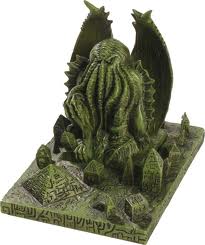
Humanity has always feared monsters as seen in various mythologies. This morbid fascination continued well into modern times with countless books, stories and movies about monsters both large and small terrorizing the world. An often used motif is that of an ancient, slumbering giant that is awoken by modern humans and then wrecks destruction across the world. Godzilla is an excellent example and best personifies the Japanese kaiju films. But Godzilla had predecessors that need to be mentioned. One of the earliest modern imprisoned monsters is the famous Cthulhu first written about in H.P. Lovecraft’s short story “The Call Of The Cthulhu”.  An ancient entity described as part human, part dragon and part octopus, the Cthulhu had a cult that wanted to unleash the giant monster onto our world. This entity has been alluded to in other works by Lovecraft.
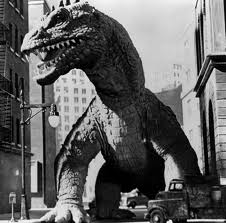
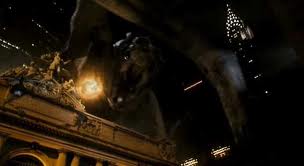
In film, the very first giant monster to be unleashed was the fictional rhedosaurus in The Beast From 20,000 Fathoms. Loosely based on Ray Bradbury’s short story “The Fog Horn”, the rhedosaurus was a dinosaur woken up by a nuclear blast and thus threatened the world not just with its destructive path but by its radioactive emissions. Destructive monsters have since plagued the silver screen with the Japanese kaiju films and American works like Q, Gremlins, John Carpenter’s In The Mouth Of Madness, Reign Of Fire, Cloverfield, The Cabin In the Woods and the upcoming Pacific Rim. In these films, the giants were mysterious and awakened inadvertently by humanity. Once unleashed they outmatched our military might and upended civilization as they destroyed cities and killed many people. Often entire cities and famous landscapes are decimated as seen in Cloverfield. And sometimes it was shown that the monsters won as the misshapen horrors from In The Mouth Of Madness  or the dragons in Reign Of Fire overran the world.
Recast Daredevil


Bit by bit, Marvel Entertainment is reclaiming its film properties under their own Marvel Studios. The latest acquisition is the blind superhero Daredevil. As recently as this summer Fox, who had the rights to the Daredevil property, tried to greenlight a Daredevil reboot but were unable to pull it off.

Whether or not Marvel Studios will launch their own reboot remains to be seen, but it seems likely given Daredevil’s popularity. Obviously Ben Affleck and the original cast won’t reprise their roles so who would be the best choices to play Daredevil and his gritty supporting cast? These are some possibilities:

 Ben Urich: The hard-nosed Daily Bugle reporter and Daredevil ally needs to be portrayed by someone who exudes integrity and intelligence. Tony Shalhoub should be offered the role in a Daredevil reboot.

 Stick: Daredevil’s blind mentor and sensei who taught him how to fight and use his extraordinary senses was a genuine old bad ass. Many online fans have opined that Scott Glenn would make a great Stick and frankly they are correct.

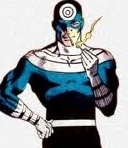
Bullseye/”Benjamin Pointdexter”: The mysterious master assassin and skilled marksmen is Daredevil’s deadliest adversary. The best actor for Bullseye has to give off a psychotic, vicious presence. He is someone who can be terrifying with his nihilistic demeanor and ability to make anything into a weapon. Jackie Earl Haley, who played a rebooted Freddie Krueger and Rorschach in Watchmen, makes a perfect Bullseye.

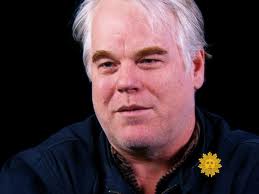
 Kingpin/Wilson Fisk: Daredevil’s greatest and most insidious enemy is a rotund powerhouse and master crime lord. Michael Clarke Duncan was an excellent Kingpin in Daredevil, sadly he’s no longer with us so he cannot reprise the role in a Daredevil reboot. Among the many other choices left to play the Kingpin, Philip Seymour Hoffman is the top pick (assuming he’s willing to shave his head or at least wear a bald cap), the actor is large and can do menacing villains, plus he’s one of the best actors around.

 Elektra Natchios: As a master assassin and Daredevil’s conflicted lover, Elektra needs to be played by someone who is strikingly beautiful and athletic. The wrong choice will doom the character from the start. That is one reason many say the original Daredevil didn’t work. There are plenty of superb candidates out there but Olivia Wilde is a dead ringer for Elektra. Tron: Legacy showcased her talents, looks and athletic prowess so she can do the role in her sleep.

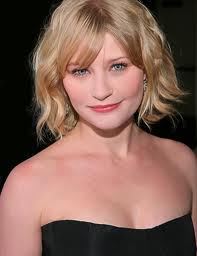
 Karen Page: At first seen as a traditional secretary who later became Matt Murdock’s girlfriend, Karen Page has had a tortured history in the comic books. She eventually fell from grace, became a junkie who sold out Murdock’s secret identity before finally being killed off. She’s a tortured soul who needs to be portrayed by an actress who is beautiful and can do pathos. Emilie de Ravin, as seen on Lost, can break ground by bringing Karen Page to life on the big screen for the first time.

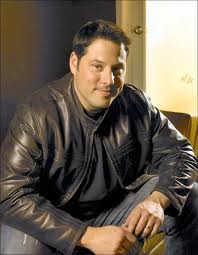
 Foggy Nelson: Matt Murdock’s law partner and best friend, Foggy seemed like the comic relief sorely needed by the grim comic book. But the slightly overweight lawyer was written as a complex, sympathetic person and one of Murdock’s strongest allies, who was often there for him when times were tough. Foggy Nelson shouldn’t be played strictly for laughs; check out the extended cut of the original Daredevil to get an idea of how he should be portrayed. For that reason, fan favorite Greg Grunberg seen in Alias and Heroes is an excellent pick for Foggy Nelson.

 Daredevil/Matt Murdock: Casting the blind superhero isn’t an easy task. Directors can’t just go with any stud actor. The person to take over the role of Matt Murdock from Ben Affleck needs to present viewers with a man possessing inner toughness, while having a conflicted nature. At the same time, this actor has to be able to pull off the lawyer act, in other words, he needs to be believably smart and convicted. At one point, one of the assigned directors of Fox’s failed reboot was interested in Tron: Legacy’s Garrett Hedlund. Although he’d be fine as Murdock, a better choice would be James Badge Dale. For comparison check out his roles in 24 (he played Jack Bauer’s junior partner in season three), The Pacific and Lexicon. Dale has all the qualities needed to play Matt Murdock and Daredevil.

The following enemies while not as prominent as say Bullseye would still make interesting secondary foes in a Daredevil reboot. The right casting and writing would make them very memorable. Also, the evil ninja group The Hand must make an appearance at some point in a reboot.

The Gladiator/Melvin Potter: Dwayne Johnson

Mister Fear/Larry Cranston, Alan Fagan: Bob Odenkirk

The Owl/Leland Owlsley: Oliver Platt

The Purple Man/Zebediah Killgrave: Robert Knepper

Typhoid Mary/Mary Walker: Milla Jovovich

José Soto

Humanity Vs. Vampires: Our Advantages, Their Weaknesses

In many forms of media, vampires have been feared by humans and for good reasons. But one frightening element about them is their physical superiority to mere humans. Vampires in most stories possess superhuman strength, speed and reflexes. They’re also semi-telepathic and can fly, not to mention are nearly immortal. Recent tales have vampires living in complex secret societies and only tolerate humans who they consider to be glorified cattle.

So if it came down to it, how would humanity fare if vampires decided to take over? Well it wouldn’t be an automatic victory for vampires.

Think about it, sure vampires have all these fantastic powers but they have a severe weakness­­ ­— they’re vulnerable to sunlight. At best, as in the original Dracula novel, vampires while able to survive in the daytime are very weak. At worst, see an episode of True Blood or Being Human were vampires literally burst into flame when exposed to sunlight. If they were to actually exist that could be why they haven’t come out and conquered us. If there were an open war between humans and vampires, humans only need to wait until dawn to open coffins containing the vampires and expose them to direct sunlight. One thing that sunlight contains is ultraviolet radiation. Perhaps that radiation can be weaponized for night battles.

They have other weaknesses as well. Traditionally, they’re sensitive to garlic, holy water and religious symbols like crosses. Modern vampire tales like those written by Anne Rice have it that those so-called weapons are useless and have no effect on vampires. In Stephen King’s Salem’s Lot, it’s stated that for a cross to work, the human bearing it must have religious faith. However, vampires in modern tales are still vulnerable to wooden stakes and sometimes silver (as seen in True Blood where the metal is used to incapacitate the night creatures).

Aside from sunlight and wooden stakes, a good beheading is a guaranteed way to kill vampires. Just ask the Winchester Brothers in Supernatural. In that TV show, beheadings are the only way to kill vampires, which early in the show’s run were considered an endangered species.

Movies like Blade and The Lost Boys feature heroes who come up with unique and clever adaptations of vampire weaknesses. For instance, the young heroes in The Lost Boys filled up ordinary water guns with holy water. Let’s not get into how formidable Blade was with his weapons. He was a bonafide one-man army against the undead with all the stabbing weapons and guns. In True Blood and the books the show is based on (known as The Southern Vampire Mysteries by Charlaine Harris) vampires openly exist alongside humans, so police and militia groups routinely use wooden bullets against vampires along with silver. In one of the recent episodes when the Vampire Authority began to run amok, a human general threatened them. He revealed that humanity’s armies had already devised weapons to be used in the event of a war with the undead. Viewers got a taste of what a war would look like in second season episodes of True Blood where a radical, armed religious group threatened to wipe out vampires.

So if a state of war were to occur, humanity though physically outmatched has many aces up its collective sleeves. It’s been implied in many modern stories that humans far outnumber vampires which is one reason why they haven’t tried to conquer the planet. In the case of war, the huge numbers of humans will be a decided advantage and don’t forget that time and time again, we have shown an ability to adapt and refine battle tactics.

Probably the only way that vampires can counter humanity is in the form of a fast spreading virus. There are many page-turning books about a world overrun by vampires. The most famous one is Richard Mathesen’s I Am Legend, which was adapted three times into film. In I Am Legend, a pandemic is responsible for turning Earth’s population into vampire-like creatures. Other recent books that explore this theme of a virus transforming people into vampires are Justin Cronin’s The Passage and The Strain by Guillermo Del Toro and Chuck Hogan.

The recent film Daybreakers is also about a world where a virus transforms humans into vampires. The outbreak was so severe that in the space of a few years, vampires had overrun human civilization, reducing the few humans left into cattle.

But unless a virus  quickly devastates humanity in the same way as shown in I Am Legend, don’t be so sure to count out humanity if war broke out against vampires. Sure one on one, a human probably cannot beat a vampire but it’s being demonstrated in these tales that a vampire can lose.

Waldermann Rivera

2012 Doomsday Scenarios: Month Nine

As intriguing as it is to conjure up many doomsday scenarios, one common worry is the likelihood of them. But one scenario is especially disconcerting because it’s entirely plausible and based on recent events all too likely. What is it? What is the greatest threat? Why us, of course, and it need not be anything exotic, all the ingredients for an apocalypse are right here.

Doomsday Scenario No. 4: Our Own Worst Enemy

Take a pick, there are so many mundane yet deadly ways to bring about our downfall. The result may not necessarily mean humanity’s extinction or the end of the world but our way of life, our society, order itself can easily topple due to the following:

Social Unrest & Despots

Look around the news and see all the upheavals and strife throughout the world. The Middle East as always seems to be on the precipice of Armageddon with all the saber rattling, riots and terrorist attacks. Here in the West we think we’re somewhat inoculated from all that anarchy. But it’s always there. In the U.S. there is brewing antagonism between those on the left and right. It is a powder keg that isn’t going away. All it takes is for some protestor or anarchist or an overwhelmed officer or citizen to light the fuse. Back in the 1960s the controversial Vietnam War nearly led to a civil war in the U.S. In fact, throughout U.S. history there have been many tenuous moments with the worst being the Civil War. The country and others will always be dealing with keeping order. In Star Trek: Deep Space Nine there was a two-part episode “Past Tense” where Ben Sisko accidently time travels to the 2020s and takes part in the social movement called the Bell Riots. It’s stated in those episodes that the aftermath of that deadly period of time led to positive societal changes and ultimately the founding of the Federation.

Though social discourse can lead to positive changes, other times it can usher in dark historic chapters. Sad examples of that includes Germany, Cambodia, Bosnia and Rwanda where evil despots and their minions rose to power and unleashed horrendous genocides against others.

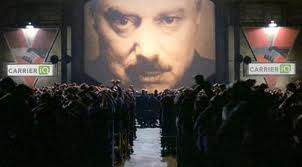
In science fiction, there are countless novels and films dealing with future dictators coming to power and creating totalitarian societies. One of the more famous sci-fi dictators is Khan from Star Trek, but the original show often made references to future human despots named Krotus and Lee Kuan. The most famous dictatorships is in George Orwell’s 1984, where citizens live under perpetual surveillance and paranoia. In Allen Steele’s Coyote novels, North America is ruled in the late 21st century by an extreme right-wing government and later by a left-wing power. Both of which spurred the migration to the habitable moon Coyote. The popular book and film The Hunger Games details the totalitarian country Panem, which arose from the ashes of the U.S. sometime in the future. In The Handmaid’s Tale, a theocratic dictatorship rules what was once the U.S. and persecutes its citizens. Another instance of harsh theocratic rule comes in Octavia Butler’s Parable Of The Sower where non-Christians are placed in re-education camps in a North America withered by poverty and scarce resources.

Scarce Resources

One underlying cause of war and societal stress boils down to resources. Right now, energy is the primary resource that is driving and hampering our civilization. There is the issue of oil and finding a viable alternative. The problem with oil is that it is becoming scarce and contributes to global warming. Until a successful alternative is found, we’re stuck with it. The Persian Gulf War was fought because Iraq’s conquest of Kuwait and threat to Saudi Arabia would’ve affected oil production and global economies.

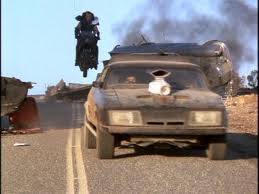
There is a special that often runs on the National Geographic channel called Aftermath: When The Oil Runs Out that explores what would happen if that event occurred. Basically, civilization is turned upside down as martial law then conflicts and famine strike the world.  In the Road Warrior, major battles are fought between factions over dwindling gasoline supplies.

But energy isn’t the only resource to fight over. There is food, land, and raw materials. Native Americans were driven off their ancestral lands by Americans in order to exploit the riches found in those lands. Avatar was of course a metaphor for what happened with the Native Americans. However, a now plentiful resource is on its way to becoming scarce and tomorrow’s most sought after commodity: water. Many predict that wars will be fought in the near future over dwindling water supplies. Cameron Stracher’s book The Water Wars depicts a future where the scarcity of fresh water decimates society.

Economic Meltdown

The U.S. is in the grip of Great Recession while Europe is facing an economic collapse. This is a genuine cause for alarm since the specter of an economically devastated nation will have a cascading effect. Just look at the Great Depression to get an idea of what will happen. Mass migration, social strife, riots, overwhelmed communities, the list goes on. And it’s a prime opportunity for radicals and dictators to gain power. Basically chaos will reign unhindered. Many sci-fi works like the TV mini-series The Fire Next Time predict that economic collapse will come from extraordinary events, with The Fire Next Time it was global warming. In the TV show Dark Angel, the U.S. was in the midst of a crippling depression caused years before by an EMP detonation. While those factors will indeed destroy economies, mundane events like the current housing crises can just as easily disrupt our global economy.

In Norman Spinrad’s novel Russian Spring, America is a nation in economic decline while Russia is experiencing an economic renaissance and has become the de facto super power in the world. The consequence is that some of the main American characters wound up leaving the U.S. for better opportunities abroad.
On the other hand, there is a fear that corporations will dominate our governments. Many would say that has happened already. Transnational corporations control the world in Kim Stanley Robinson’s Mars trilogy, and this concept was seen in the film Rollerball. If  governments give up sovereignty to companies, what would happen to our rights?

State Of War

The idea of world peace is a noble one, but no matter how many times it seems to be on the horizon, our dark side emerges. Today many are rightfully concerned by the threat of Iran acquiring nuclear weapons and a military response. It’s believed this could cause World War III. But the Middle East isn’t the only tinderbox to potentially ignite a Third World War. One could easily begin in Asia as China gains more power. Already there are new tensions between China and Japan. Then there is the issue of Taiwan, the U.S. is committed to protecting it from China. Plus, look at North Korea, the people there live in complete despair yet seem all too eager to die for their insane leaders.

The fictional Oceania in 1984 always seemed to be in some state of war as its citizens were constantly whipped up into a war fervor over that country’s rivals. H.G. Wells novel The Shape Of Things To Come, showcases a world under the grip of a decades-long, alternate account of World War II that lasted much longer than in real life. Eventually civilization collapses and is reformed under a so-called benign dictatorship that brings order.

Conclusion

The above are just some issues that our society faces. Humanity needs to undergo a fundamental change to purge dark impulses. Perhaps an evolutionary step is needed where it becomes ingrained not to give in to our hatred and fear. That will take a very long time and much more misery. Maybe a cataclysmic event will do it, which is what happened with the Vulcan culture in Star Trek. The Vulcans are renowned for their peaceful ways but only true fans know that once they were a barbaric race that nearly killed themselves off with nuclear wars. Only by turning to a new belief system, in their case logic, did they save themselves.

Looking back at history, it’s apparent that society is always straddling between order and peace and war and chaos. The fact that we’re aware of our faults and are trying to fight them is a reason to hope for a better tomorrow.

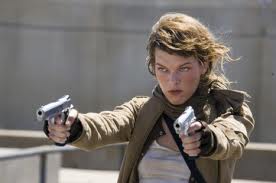
Why The Resident Evil Movies Are Popular

With the release of the fifth Resident Evil movie Resident Evil: Retribution coming up soon, the question has been asked, why are these movies popular enough to warrant so many sequels? Here are some ideas I have.

The Resident Evil movies are based on the phenomenal video game series of the same name that has players fighting all types of zombies created from a bioengineered virus. They are really the only big budget adaptations of video games out there that have been successful. Most of the other video game movies that have been released have been low budget and not well received. Examples include super Mario Bros., Bloodrayne, Doom and Double Dragon. The only other franchise I can think of that had some success was Tomb Raider with Angelina Jolie. But that franchise only lasted two movies since the second one was not as successful or well received as the previous movie.

Director Paul W.S. Anderson, who directed the first Resident Evil movie and the fourth and fifth one, is another reason for the movie franchise’s success. While not a great director Anderson is at least competent in what he does, making good action movies. I think his other movies have been well done like Event Horizon and the first Alien Vs. Predator. They are certainly better than those Michael Bay movies that are basically loud, mindless and difficult to follow in terms of action (the Transformers movies come to mind).  Having his wife Milla Jovovich starring as Alice in these films doesn’t hurt either. Plus, while he didn’t direct the second and third movies, he has written and produced all five of them, which kept him involved with the series.

Another point is that the movies loosely follow the games and have branched off to have their own storylines. So what happens next is a surprise to long-time players of the games.  Lastly, the Resident Evil movies continue to be made probably because the video games themselves are still very popular. This fall, Resident Evil 6 will be released for the PS3 and Xbox 360. And the previous games in the series have all been huge sellers. Capcom, the company that makes the games, has also released CG animated movies and continues to do so. In short, Resident Evil continues to be relevant, which keeps the movies highly anticipated with fans of the horror/sci-fi franchise.

C.S. Link