Ray Bradbury Takes His Place Among The Stars

The science fiction and fantasy world lost a true visionary today with the death of Ray Bradbury. The man was a true poet who penned some eloquently profound stories and novels. Among his greatest works are Fahrenheit 451, Something Wicked This Way Comes, The Martian Chronicles, I Sing The Body Electric, R Is For Rocket and The Illustrated Man. His short stories are well regarded by critics and readers and were adapted for comic books (notably EC Comics), TV shows like The Twilight Zone, plays and films. They include “the Flying Machine”, “There Will Come Soft Rains”, “The Fog Horn” (which inspired The Beast From 20,000 Fathoms), and “A Sound Of Thunder”. The latter of which popularized the time travel paradox concept of the Butterfly Effect.

Bradbury also wrote the screenplays for John Huston’s film adaptation of Moby Dick, the film adaptation for Something Wicked This Way Comes, Alfred Hitchcock Presents, The Ray Bradbury Theater (which he hosted), and more. Ray Bradbury won an Emmy award for his script The Halloween Tree, which was based on his book of the same name. He also won numerous awards and citations including a 2007 Pulitzer Prize Special Citation.

Born in Illinois in 1920, Ray Bradbury was a dreamer who inspired many to dream and look up to the stars and wonder at the beauty of our universe. Even at an early age, his writing gift was evident and he soon began publishing numerous short stories. While many of his works are lyrical and inspiring, he also didn’t shy away from exploring humanity’s darker side. Many stories served as warnings about ourselves, while offering a glimmer of hope.

This is probably best presented with his masterpiece Fahrenheit 451, which is a personal favorite, in the futuristic society of that novel, books and all literature are outlawed as the populace is deliberately kept ignorant by the government to better control them. Bradbury played with many ironies in his body of work, and Fahrenheit 451 wasn’t an exception. In the book, firemen aren’t used to put out fires, rather they create fires as they storm into the homes of suspected book owners and set libraries on fire. While the majority of the book is a bleak look at how shallow and empty we can be, Bradbury provided a main character (the fireman Guy Montag) who slowly comes to his senses about the horror of book burning. Montage redeems himself (and society at large) by becoming part of an underground movement to bring literature back to society in order to save it.

Bradbury’s contributions to the world of literature and science fiction and fantasy cannot be measured. While Ray Bradbury may no longer be with us, his spirit is now rightfully in the heavens above us and his works will continue to inspire many for as long as there are dreamers and visionaries.

José Soto

The Alien Movies Ranked

The Alien movies are some of the most well-loved films in science fiction and with the upcoming prequel Prometheus about to be released in the U.S., here are the films that preceded it in order of my personal preference:

1. Alien (1979) Ridley Scott’s sci-fi/horror masterpiece set the standard for this genre. Over the years I have come to regard this one as the best of the bunch because of how well it works. These are the elements that work: the claustrophobic feel of the freighter ship, the slow, but scary, build up to the mystery of what is on the planet that the crew land on and what exactly is picking them off. The infamous chestburster scene is still effective to this very day. The director’s cut on DVD and blu-ray is also very good and even shows a scene where Ripley (Sigourney Weaver) finds Captain Dallas in a cocoon after being attacked by the alien and burns him alive to put him out of his misery.

2. Aliens (1986) James Cameron created a sci-fi war epic that is one of the best films ever made. It created the image of the space marine that is so prevalent in films and video games today and is a great thrill ride from start to finish. The main character Ripley was joined by Newt (Carrie Henn), Hicks (Michael Biehn), Hudson (Bill Paxton) and others that  audiences grew to love. The extended edition shows the back story of the colony Hadley’s Hope and how the aliens took it over. On a side note there will be a video game next year entitled Aliens: Colonial Marines for the PS3 and Xbox 360 that will continue the story.

3. Alien 3 (1993) An underrated David Fincher film that is striking in its visuals and feel. Lone survivor Ripley crash lands on a  prison planet and is followed by a single alien that proceeds to wipe out the prison population harkening back to the original film.  I think this movie is excellent and unfairly hated because fan favorites Newt and Hicks were killed off. Many wanted a follow up to Aliens and instead got a dark almost existential film about Ripley at the end of her rope. This film had a video game adaptation for the Super NES in 1993 that actually played like a side scroller action game with lots of guns and aliens to fight. Quite different from the actual movie. There is also an alternate cut of the movie available on blu-ray and DVD. It restores a subplot of one of the prisoners worshipping the alien and releasing it when it was trapped by Ripley and shows the alien bursting out of an ox instead of a dog as in the theatrical version. Definitely something for fans to check out.

4. Alien Vs. Predator (2004) I’m putting this one ahead of the 4th film Alien: Resurrection since it is simply a better movie. Why it is hated so much is strange. A very good film that shows predators coming to Earth to hunt aliens in the south pole that they placed there as a rite of passage for their young. The set up with the archaeologists finding the eggs and alien queen in the underground temple is great and the battles between the two franchise monsters is lots of fun.

5. Alien: Resurrection (1997) The last Alien film with Ripley. It is set 200 years after her death and has her cloned to extract an alien queen from her body. It has interesting concepts with Ripley actually having alien DNA and blood in her system. The scene where she finds the previous versions of herself is both fascinating and disturbing. The movie returns to the idea of multiple aliens chasing down a rag tag group of mercenaries trying to escape a doomed ship. Seeing Ripley finally returning to Earth is also a nice way to finish her story.

6. Alien Vs. Predator: Requiem (2007) This entry is the only real misfire of the bunch. A follow up to the much better Alien Vs. Predator, the idea of a predator/alien hybrid sounds okay but looks kind of dumb when seen on film. The characters are very forgettable and the whole thing feels more like a bad Syfy movie of the week. Although it is neat to see the aliens crawling around a present-day town in Colorado, since most of the other movies are set in space and the future. I get the feeling that under another director this would have been so much better since the core story of a single predator hunting down aliens on earth is good and there are some good battles between the creatures.

C.S. Link

2012 Doomsday Scenarios: Month Five

Sure we celebrate the exploits of our favorite superheroes on screen and print, but many comic book fans know about the dark side of having super powers. Whether they’re extremely powerful villains out to destroy the world or well-intentioned heroes who lose control over their powers, super-powered individuals are a world threat, at least in fiction.

Doomsday Scenario No. 8: Man and Superman

Of course, the real world isn’t threatened by superhumans. That doesn’t mean that it cannot happen sometime in our future. With advancements in bioengineering it is feasible to create super-powered humans, but that is a long way off. What is more plausible in the near future are new technologies to create battle suits like Iron Man’s. But that is another subject.

Who Watches Them? So what would happen if superhumans were to emerge? If artificially created for military use ala Captain America, this would set off a new kind of arms race as nations try to acquire their own super-powered operatives to keep up with rivals. Never mind trying to get nukes, having superhumans would give any country a definite edge. This theme has been explored somewhat in comic books and Captain America was a response to the creation of his enemy the Red Skull. In an obscure Epic mini-series called The One, the United States and the Soviet Union unleash superhumans against each other after nuclear weapons are made obsolete by an advanced entity. Also, who will keep them in check? Will the heroes in turn rule us as seen with the Squadron Supreme mini-series? It really becomes a case of “who watches the Watchmen?” as shown by DC Comics’ Kingdom Come and Watchmen or Marvel Comics’ Civil War. But even if the superhumans can be controlled what is their place in society? Can they fit in? It’s doubtful, since humanity tends to hate and fear what is different. Sadly, it is very easy to imagine a scenario where superhumans become ostracized; this will inevitably lead to conflicts between the superhumans and normal humans. The X-Men and its numerous spin-offs are perfect examples of this concept as the comic book mutants endured bigotry and hatred from humans. This hatred motivates villainous mutants like Magneto and frankly can anyone blame them for wanting to strike out against humanity? This ambiguity is what makes the X-Men comics so well-renowned. Is it possible to live harmoniously with superhumans? Well, humans have never been known to be the sharing type. It’s theorized that humanity drove Neanderthals to extinction from competition and humanity used its advantages to dominate the world. In that case, superhumans will have an edge over ordinary people and conquer or destroy us. Many supervillains try to do just that in comic books and movies.

With Great Power… Another worrying aspect are superhumans with incredible God-like powers. One of the Watchmenheroes, Dr. Manhattan was the only person in that world that possessed super powers and had the ability to destroy it. Lucky for them, he wasn’t interested in doing that and had complete control over his ability. Unfortunately, the same couldn’t be said for Solar.

Art by Barry Windsor Smith

He was a superhero that appeared in Valiant and Dark Horse Comics (having made his debut in Gold Key Comics) and had the power to manipulate energy much like Dr. Manhattan. During the course of his story it was revealed that he accidently destroyed his universe and wound up recreating it. The inability to control power was also shown in the classic X-Men storyline the “Dark Phoenix Saga” where mutant telepath Jean Grey is unable to reign in her growing powers and ultimately kills herself before she wound up destroying the Earth (this was also to atone for her destruction of an alien sun which destroyed an alien society). The endowment of such power on one person is very terrifying. The bottom line is that powers do bring great responsibility but staying in control is very difficult. In these instances, power does corrupt. This was seen earlier this year in the film Chronicle where a lonely teenager develops telekinetic powers and becomes dangerous despite his sympathetic background. Even Star Trek very early in its history explored the aftermath of developing super powers with its second pilot “Where No Man Has Gone Before” and of course, the famous episode “Space Seed” that introduced the genetic superhuman Khan. Then there is the Star Trek: The Next Generation episode “Hide And Q” where Commander Riker is gifted with Q’s vast powers and learns some harsh lessons. Seriously, if such people were to come into existence there isn’t any way to counteract them. Humanity and the world will be doomed or at the least changed radically. Thankfully, this isn’t going to happen to us soon. But these comic book tales and movies and TV shows should serve as a reminder to us about the ramifications of having super powers.

Summer Of 1982 Revisited


It’s strange to say but even back in the spring of 1982 many genre fans knew that summer would be special when it came to movies. Unlike previous summers, it seemed as if many film releases were catered to genre fans and that was a correct assumption.

Conventional wisdom has it that the summer season begins with the Memorial Day weekend. While that’s true for many aspects of summer, for the past few years it seemed as if the summer movie season didn’t begin with that holiday but on the first weekend of May. That reputation began with the release of several movies based on Marvel superheroes, which by the way, coincides with Free Comic Book Day. But even back in 1982, the summer movie season began in mid-May with the release of Conan The Barbarian, Arnold Schwarzenegger’s first big hit.

While previous summer movie seasons boasted huge genre hits like The Empire Strikes Back and Alien, often there weren’t many genre films released in that time period. 1982 was the first year that the summer schedule was full of films that would appeal to fans of sci-fi, fantasy and horror. Since 1982, many summers featured a plethora of genre films; some were big hits, others didn’t do well and that continues to this day (case in point, the runaway success of The Avengers and the dismal box office performances of Battleship and Dark Shadows).

What makes the summer of 1982 so memorable for fans is that not only was it the first time there were many films to choose from but that so many of them are classics. For instance, Star Trek II: The Wrath Of Khan is considered to be the best Star Trek film to this day, then there’s Blade Runner, Ridley Scott’s masterpiece about a human hunting down rogue replicants in a decaying, future Los Angeles. Or there are the two opposing alien visitation films that are as different from each other as night and day, and are both classics, Steven Spielberg’s E.T. The Extra-Terrestrial and director John Carpenter’s remake of The Thing. The sad thing about these two films is the general audience’s reaction to them. While E.T. won universal acclaim and became the biggest box office hit until the mid-90s, The Thing was scorned by critics and audiences. In fact, it made its debut near the bottom of that week’s top ten and disappeared from theaters quickly. It’s unfortunate that people back then weren’t open to a dark and horrifying movie about an alien invader because of the happy feelings they were getting from a stranded, friendly alien and his buddy human boy.

Blade Runner suffered a similar fate, while its opening was better than The Thing’s, many viewers and critics didn’t take to Scott’s moody, future noir tale. With Harrison Ford as the lead, fresh off his breakthrough hit Raiders Of The Lost Ark, many expected a similar rousing adventure film. But both Blade Runner and The Thing had happy endings as many discovered the films on cable and home video, elevating their statures from cult hits to genuine masterpieces (Blade Runner actually made AFI’s list of 100 Years…100 Films, along with E.T.).

Of course, there were a few stinkers and some films that were generally good, but didn’t leave a lasting impression. The most infamous stinker is Megaforce, a poor man’s G.I. Joe directed by Hal Needham (who helmed those awful Burt Reynolds car chase films) and it is laughably bad. Then there’s this terrible Scott Baio comedy called Zapped about a student who gets psychic powers and the less said about it the better. Meanwhile, some underrated genre films worth looking out for are Clint Eastwood’s Firefox (about a fighter pilot who steals an advanced, thought-operated Soviet plane), and Don Bluth’s first animated film The Secret Of NIMH (astonishing, Disneyesque animation highlighted this tale about a wood mouse and rats with advanced intelligence).

While the rest of that year featured some great films like The Dark Crystal, the summer of 1982 will always be fondly remembered and the milestone to compare with other summer movie seasons. The following are some of the more noteworthy films that were released that summer and thrilled fans thirty years ago. If you haven’t seen any of them, check them out.

Conan The Barbarian, Poltergeist, Star Trek II: The Wrath Of Khan, E.T. The Extra-Terrestrial, The Thing, Blade Runner, Tron, The Road Warrior

José Soto

For Dakota

DC, It’s Time For A Justice League Film

OK DC, Marvel has thrown down the gauntlet. Look at the result: The Avengers film looks to be one of this summer’s biggest blockbusters-maybe the biggest one. The buzz and hysteria surrounding this film is phenomenal. Toys based on the film are selling well and other merchandise is getting hard to find. Marvel Studios took a gamble and were patient. They carefully nurtured the film properties, which increased awareness for their characters. For The Avengers, Marvel Studios managed to corral the actors originating the super hero roles (with the exception of Edward Norton who didn’t reprise Bruce Banner/The Hulk) and bagged a director (Joss Whedon) who is an unabashed fan. Well it paid off in a super way-an opening weekend draw of over $200 million isn’t anything to sneeze at. So now the question remains: when will DC and Warner Brothers get their act together and put out a Justice League film? We’re not talking about some animated or motion capture film but an actual live-action film featuring Batman, Superman, Green Lantern, Wonder Woman, The Flash and DC Comics’ other great heroes.

Honestly how difficult is it to pull off? Marvel managed to do it, and DC’s characters has had more film and TV exposure so it would be easy to generate enthusiasm for such a film. And Marvel’s efforts are quite considerable if one takes into account how their properties have been scattered among many Hollywood studios. Warner Bros. has owned DC for some time so the logistics of gathering all their characters into one film should not be difficult. Of course, the ideal would be to bring aboard the most recent actors who’ve played the super heroes like Christian Bale or Ryan Reynolds, but it’s not really necessary as seen with Mark Ruffalo taking over the Bruce Banner/Hulk role in The Avengers and Superman and Batman have been recast throughout the years.

It isn’t as if The Avengers sprung up out of nowhere. The first inkling about a film starring Marvel Comics’ heroes came about at the end of the first Iron Man film in 2008 and later that year with The Incredible Hulk. In those films and others since then put out by Marvel Studios there have been many Easter eggs for fans that showed a shared universe. Captain America’s shield was in the background during a scene from Iron Man, the spy organization S.H.I.E.L.D. turned up, Hawkeye and Black Widow made cameos (Hawkeye in Thor and Black Widow in Iron Man 2) and even the Infinity Gauntlet was shown briefly in Thor. The point of all this was that for four years, Warner Bros./DC and everyone in the world knew Marvel Studios was building up to an Avengers film. Yet DC and Warner Bros. didn’t do anything to match that concept. Their releases didn’t give any indication of a shared universe (the last time this idea was explored were vague railroad PA announcements for a train headed to Gotham City in Superman Returns). It was so simple and would’ve excited fans.

That’s not to say that they haven’t tried to bring the Justice League to life. Putting aside the incredibly awful 1990s TV show pilot and a simplified version of the team appearing informally in Smallville, Warner Bros. was close to producing a Justice League film in 2008. A script was commissioned, George Miller was hired to direct it and he was casting roles, in other words, Justice League was in actual preproduction. But the Writers Guild strike of that year gave Warner Bros. a chance to pause and ultimately kill the project.

Reportedly, the studio wanted to emulate Marvel’s pattern of releasing solo super hero films that would culminate in a Justice League movie. But as of this writing, there is very little evidence that they are working toward such a film.

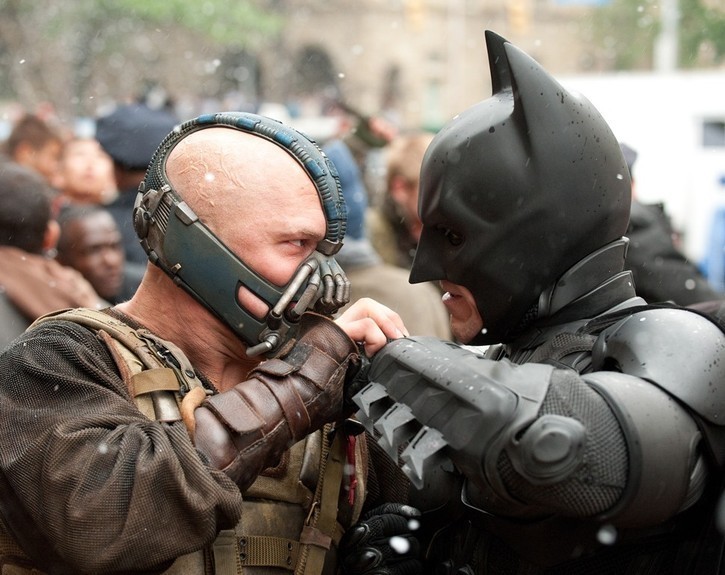
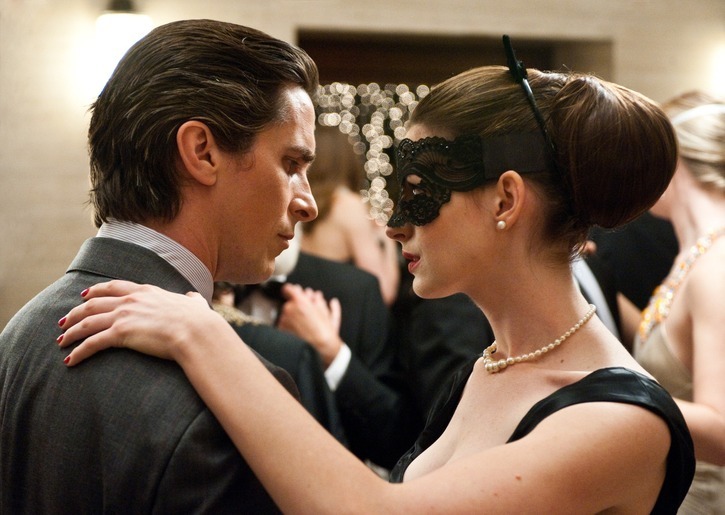
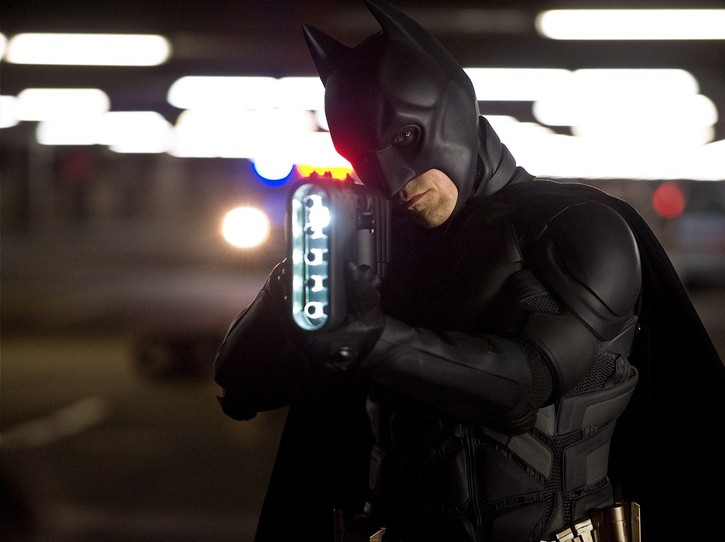
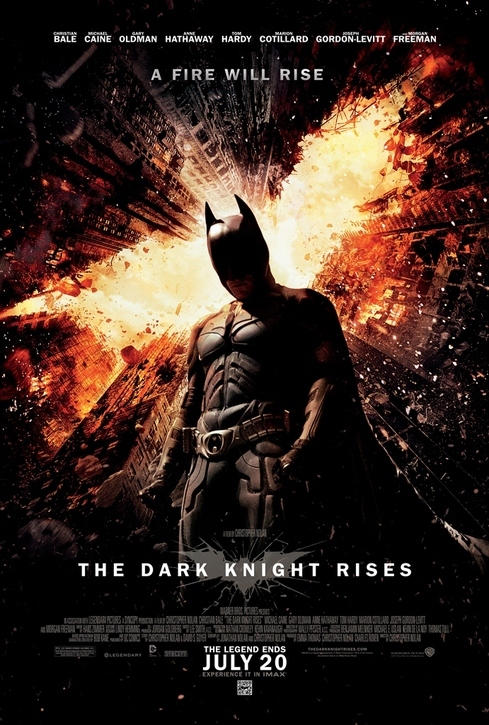
One worrying factor about building up to a Justice League film is the recent track record of DC movies. Aside from the recent Batman films, Superman Returns, Green Lantern, Constantine, Jonah Hex and Watchmen have been box office disappointments. The Dark Knight Rises is a guaranteed hit but this can’t be stated for next year’s Man Of Steel. Superman has proven to be a difficult character to translate to the big screen unless the right director is chosen and The Man Of Steel’s director, Zack Snyder has had a spotty record at the box office. So if the new Superman film doesn’t deliver it could mean another long drought before Superman returns to the silver screen and could delay a Justice League film.

Christopher Nolan, the director behind the successful Batman reboot, was rumored to be in line for directing a Justice League movie but there isn’t anything concrete stated about that notion. What is troubling for some fans is that Christopher Nolan as said in interviews that he wishes to keep the worlds of the individual heroes separate from each other. So, as with The Dark Knight, there probably won’t be any acknowledgement of Metropolis or Central City in The Dark Knight Rises. Ditto for Man Of Steel, which he is producing.

This mentality is shared by DC Entertainment as well. Diane Nelson, DC Entertainment President, said to IGN back in 2010, “We do have a very different attitude about how you build a content slate. And it isn’t necessarily about connecting those properties together to build a single thing. We think we’ve got great stories and characters that will lend themselves to great standalone experiences.”

Perhaps after looking at how much money The Avengers is making and the film’s popularity, DC and Warner Bros. may change their mind.

Lewis T. Grove